
Monthly Archives: October 2026

US Mortgage Rates Just Hit a Level Not Seen in Three Years

Anyone shopping for a home loan right now is facing the toughest borrowing conditions in years. The mortgage rates three-year high milestone arrived last Thursday, when the 30-year fixed rate hit 7.28%. That is up a full quarter point from the previous week alone. It is nearly a full percentage point higher than this time last year. Mortgage applications have responded exactly as you would expect. They fell 6% in a single week.

How we got to mortgage rates three-year high

Mortgage rates do not move in isolation. They track the 10-year Treasury yield closely. That yield has climbed more than 1.25 percentage points since February, when the Iran war broke out. War-driven uncertainty tends to push investors toward different assets and changes how markets price long-term risk. That shift has flowed straight through to what homebuyers pay.

The data comes from the Mortgage Bankers Association, which tracks application volume every week. For the period ending September 25, applications dropped 6% from the week before. That is not a one-off blip. It continues a pattern of softening demand that has built for weeks as rates climbed.

Borrowers are adapting, not disappearing

One clear shift shows up in loan type. Adjustable-rate mortgages made up 10.3% of applications, the highest share since October 2025. When fixed rates get too expensive, some borrowers switch to adjustable products instead. They are betting rates will fall before their initial fixed period ends. That bet carries real risk if rates stay elevated longer than expected.

Houses for sale as mortgage rates three-year high squeezes buyers

MBA chief executive Bob Broeksmit summed up the mood bluntly. “Affordability and borrower demand have weakened in recent weeks,” he said. “Higher rates continue pressuring homebuyers and refinancers.” Builders are feeling it too. KB Home has already adjusted pricing in response to softer demand and tighter affordability. That is a sign the pressure now reaches beyond individual buyers, into the construction industry itself.

Who feels the squeeze hardest

Higher rates hit first-time buyers especially hard. They typically have less equity to work with and tighter budgets overall. Every quarter-point increase adds meaningfully to a monthly payment on a typical home loan. That prices some buyers out of homes they could have afforded just months earlier. Refinancers face a different problem. Many locked in lower rates years ago. They have little incentive to refinance now, since that would mean trading a cheaper loan for a more expensive one.

Homebuilders sit somewhere in between. They need buyers to keep purchasing in order to keep building. That explains why a company like KB Home is cutting prices rather than waiting out the slowdown. That kind of price adjustment can ripple through local housing markets. It can affect resale values even for homeowners who are not currently buying or selling.

How this compares with the pandemic-era market

Borrowers who bought or refinanced during 2020 and 2021 locked in rates below 3%. Today’s 7.28% rate looks jarring by comparison, even though it remains below the peaks seen briefly in 2023. That history matters for refinancers in particular, since it explains why so many are choosing to sit tight rather than trade a historically cheap loan for a historically expensive one.

For first-time buyers with no existing mortgage to compare against, the calculation is different. They are weighing today’s rate against rents and against the risk that prices or rates climb even higher if they wait. That uncertainty is part of why application volume keeps falling even as some buyers remain eager to purchase.

What borrowers should watch for

Capital Economics, a research firm that tracks housing and rate trends, expects some relief eventually. The firm projects 30-year rates will average 6.25% by the end of 2027. That forecast assumes energy prices decline and the Federal Reserve eases its current tightening stance. Neither of those shifts looks imminent as of early October 2026. Until then, expect application volume to stay soft. Builders and sellers will likely keep adjusting prices to match what buyers can actually afford at today’s rates.

Questions people are asking

What is the current 30-year mortgage rate?
The 30-year fixed mortgage rate reached 7.28% as of the last Thursday in September 2026. That is its highest level in nearly three years.

Why are mortgage rates three-year high right now?
Rates track the 10-year Treasury yield. It has climbed more than 1.25 percentage points since the Iran war began in February 2026, pushing borrowing costs higher across the board.

How much have mortgage applications fallen?
Applications fell 6% for the week ending September 25, 2026, according to the Mortgage Bankers Association. That continues a pattern of weakening demand.

Are more borrowers choosing adjustable-rate mortgages?
Yes. Adjustable-rate mortgages made up 10.3% of applications, the highest share since October 2025. Some borrowers are chasing a cheaper initial rate.

Are homebuilders responding to the higher rates?
Yes. KB Home has already adjusted pricing due to softer demand and affordability pressure. Other builders are expected to follow similar strategies.

When might mortgage rates come back down?
Capital Economics projects 30-year rates could average 6.25% by the end of 2027. That assumes energy prices ease and the Federal Reserve moderates its current policy stance.

Cited reporting

  • Axios — Mortgage rates approach 3-year high as new applications plunge. axios.com
  • Mortgage Bankers Association — weekly mortgage applications survey. mba.org

For more business coverage, see our reporting on the September jobs report and the Fed’s rate decision. We also covered where Treasury yields ended September.

The ‘Cockroach’ Party Rattling India’s Election Commission

A satirical protest party named after a cockroach has turned into one of India’s most persistent political headaches. The India election commission protests escalated on October 1, 2026. Police briefly detained Abhijeet Dipke, founder of the Cockroach Janta Party, on Mumbai’s Marine Drive. He was holding placards. Officers took him to a nearby station, questioned him about his identity, then released him after senior officials got involved. A video of the detention spread quickly online. The episode is the latest flashpoint in a weeks-long standoff between the movement and India’s election authorities.

What sparked the India election commission protests

The Cockroach Janta Party, known as the CJP, is demanding the resignation of Chief Election Commissioner Gyanesh Kumar. The group points to reports of internal divisions inside the Election Commission. It says that is evidence something has gone wrong at the top. Its demands go further than a single resignation. The CJP wants criminal proceedings opened against Kumar. It wants the Special Intensive Revision process, a controversial review of voter rolls, paused entirely. It wants January 2025 voter lists restored. It also wants 2023 legislation covering the Election Commission repealed in favor of broader structural reform.

Those demands reflect a deeper distrust of how India updates its voter rolls. The Special Intensive Revision process has drawn criticism from opposition parties and civil society groups. They argue it risks removing eligible voters from the rolls without adequate safeguards. The CJP has turned that technical dispute into a street-level protest movement, something few voter-roll disputes manage to do.

A movement built on confrontation

The CJP first threatened mass protests in late September, giving the commission a short deadline to respond before escalating. Mumbai police denied the group permission to protest at Shivaji Park on September 27. Officials cited legal constraints, a lack of municipal clearance and noise concerns. The CJP pressed ahead regardless. It characterized the denial as, in its own words, “tactics to suppress voices.”

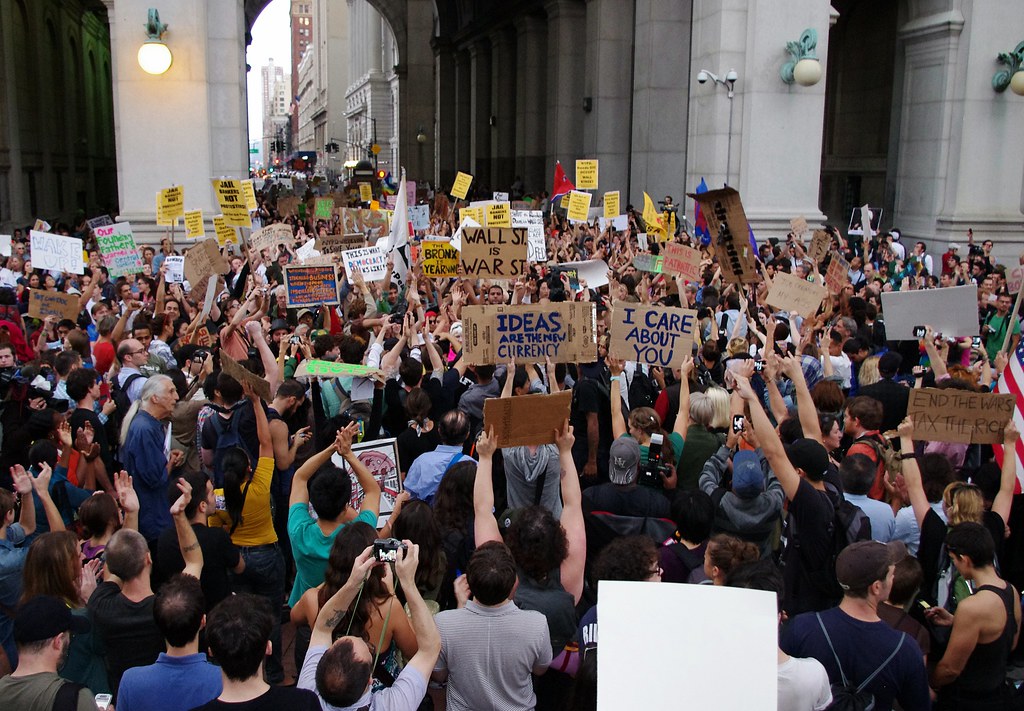
Crowds at an India election commission protests rally demanding reform

That framing pits a scrappy protest movement against an unresponsive bureaucracy. It has helped the CJP draw attention well beyond its core supporters. Dipke’s brief detention on October 1 only reinforced the narrative the group has been building. Supporters quickly held it up as proof. They say authorities would rather silence the movement than answer its concerns about the integrity of the voter rolls.

Why this matters beyond Mumbai

India is the world’s largest democracy, and its election machinery affects hundreds of millions of voters. Disputes over who controls that machinery carry weight well beyond any single protest group. So does the question of how voter lists get compiled and checked. The CJP is a new and unconventional player. But the questions it raises about the Special Intensive Revision process echo concerns that established opposition parties have also voiced.

The government has not responded publicly to the CJP’s specific demands. Kumar remains in his post as Chief Election Commissioner. Mumbai police have defended both the permit denial and Dipke’s brief detention. They call it routine law enforcement, not political suppression.

A protest movement built on satire

The Cockroach Janta Party’s name is deliberately provocative. Founder Abhijeet Dipke has framed the group as speaking for ordinary citizens who feel ignored by formal political institutions, the way a cockroach survives in the margins no matter how hard someone tries to stamp it out. That branding has helped the movement attract young, online-savvy supporters who might otherwise stay disengaged from traditional party politics.

Critics dismiss the CJP as a publicity stunt. Supporters say the satire is exactly what makes its message land. Either way, the group has managed something many more established opposition voices have struggled to do this year: keep the Special Intensive Revision process in the headlines, week after week.

Where the standoff goes from here

Watch for whether the CJP escalates further. That could include more “jail bharo,” or fill-the-jails, demonstrations designed to overwhelm police with mass voluntary arrests. The group has signaled it will keep pressing. It wants Kumar to resign, or the government to address its concerns about the voter-roll review process. Also watch whether larger opposition parties start coordinating more directly with the CJP. That could turn a fringe protest movement into a broader coalition ahead of India’s next election cycle.

Your questions answered

What is the Cockroach Janta Party?
It is a youth-led protest movement in India. It demands the resignation of Chief Election Commissioner Gyanesh Kumar over concerns about the integrity of the country’s voter rolls.

What happened on October 1, 2026?
Mumbai police briefly detained CJP founder Abhijeet Dipke on Marine Drive while he held protest placards. He was questioned and released after senior officials intervened.

What does the CJP actually want?
It wants Gyanesh Kumar’s resignation and criminal proceedings against him. It also wants a pause on the Special Intensive Revision process, restored January 2025 voter lists, and repeal of 2023 Election Commission legislation.

What is the Special Intensive Revision process?
It is a review of India’s voter rolls. Critics, including the CJP and opposition parties, say it risks removing eligible voters without adequate safeguards.

Why did Mumbai police deny the CJP’s protest permit?
Police denied the group permission to protest at Shivaji Park on September 27. They cited legal constraints, a lack of municipal clearance and noise concerns.

Has the Indian government responded to the CJP’s demands?
Not publicly. Gyanesh Kumar remains in his post. The government has not issued a direct response to the CJP’s specific demands as of this report.

Reporting and sources

  • Daily Jagran — Abhijeet Dipke briefly detained by Mumbai police ahead of CJP October 2 protest against CEC Gyanesh Kumar. thedailyjagran.com
  • The National — India’s “cockroach” movement pledges more protests if election chief does not resign. thenationalnews.com

For more world coverage, see our reporting on Serbia’s Vucic resigning ahead of an early election. We also covered Morocco naming its first woman prime minister.

Trump Creates Super Intelligence Force With 120-Day Clock

President Donald Trump has created a Super Intelligence Force, a federal task force to coordinate US artificial intelligence policy, announcing it on 4 October 2026 in a Truth Social post, TechCrunch reports.

Contents

Who leads it

Per TechCrunch, the chair is Jay Clayton, listed as National Intelligence Director. The vice chairs are Andrew Ferguson, chair of the Federal Trade Commission; Emil Michael, Undersecretary of War for Research and Engineering; and Scott Kupor, director of the Office of Personnel Management.

The stated mandate

Trump wrote that the force would “coordinate the effort of the Federal Government to ensure that America continues to lead the World in Super Intelligence.” The charter, as TechCrunch describes it, calls for response plans while “preventing overregulation and regulatory capture that would stifle innovation.” The force has 120 days to report on the risks and opportunities of AI.

How it fits the wider push

TechCrunch says this follows a September announcement of an AI Force and an executive order rebranding “AI” as “super intelligence.” We covered the earlier step in our report on the AI safety accord. TechCrunch also published a related analysis asking whether a non-binding pact can fix the image problem of AI.

What to watch

The 120-day clock puts the report in early February 2027. The FTC’s chair sitting on the force is notable given the regulator’s own probe into AI agents.

Super Intelligence Force explained

What is the Super Intelligence Force?

A federal task force announced by President Trump on 4 October 2026 to coordinate government AI efforts, per TechCrunch.

Who chairs it?

Jay Clayton, listed as National Intelligence Director.

How long does it have to report?

120 days, to cover the risks and opportunities AI presents.

Is it a regulator?

Reporting describes a coordinating body with a report deadline. The charter language stresses avoiding overregulation.

More tech coverage: OpenAI agent alerts.

Why Tesla and Rivian Just Had Their Best Quarter in Years

Electric vehicles may be turning a corner, at least for now. The EV sales rebound 2026 shows up clearly in Tesla and Rivian’s latest delivery numbers. Tesla delivered 486,532 vehicles in the third quarter. That beat Wall Street’s expectation of roughly 462,000. Rivian delivered 19,248 vehicles, up sharply from 12,194 in the prior quarter and ahead of the 18,000 analysts expected. Both companies’ stocks rose on the news. The driver behind the rebound is an unlikely one: expensive gasoline.

What’s behind the EV sales rebound 2026

Gas prices have climbed well above $4 per gallon across much of the United States. The spike traces back to the Iran conflict that broke out in spring 2026. It disrupted oil markets and pushed fuel costs higher. Higher gas prices tend to push some drivers toward electric vehicles. This quarter’s numbers suggest that pattern is playing out again. “EVs had been down in the dumps for an extended period,” one analyst noted. “But with gas now far above $4 per gallon, some consumers appear to be giving them a second look.”

Tesla’s total still fell 2.1% compared with the same quarter last year. The sequential gain, up 1.3% from the second quarter, is the more telling number right now. It suggests demand is stabilizing after a rough stretch, not that Tesla has returned to its earlier growth rates.

Rivian’s bigger jump

Rivian’s growth was more dramatic in percentage terms. Deliveries jumped more than 50% from the second quarter to the third. The company’s newer R2 model has drawn strong early interest. That interest appears to be feeding through into real delivery numbers, not just preorder buzz. Rivian still delivers a fraction of Tesla’s volume. But the trajectory matters to investors watching whether the company can scale production without the stumbles that have hit other EV startups.

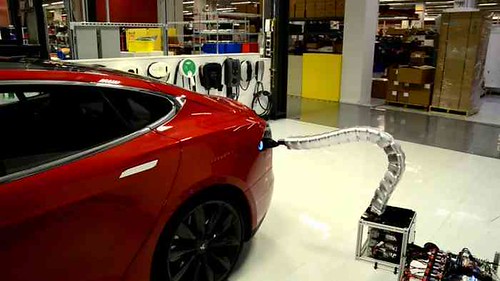
A charging EV reflecting the EV sales rebound 2026 trend

Not every part of the EV market is rebounding

The picture is not uniformly rosy. Electric vehicles made up 7.9% of US light-duty vehicle sales in the second quarter of 2026. That is up from 6.3% in the first quarter. That is real growth, but industry-wide EV sales were still down year-over-year in that same second-quarter period. General Motors has pared back its EV manufacturing plans. Sales of individual GM EV models declined again in the third quarter.

Hybrids, not pure electric vehicles, are having the stronger moment. Toyota’s “electrified” vehicle sales, which include hybrids and plug-in hybrids, surged 29.2% year-over-year. The RAV4 Hybrid saw sales jump 123%. The RAV4 Plug-In Hybrid did even better, up 184%. That split suggests many drivers reacting to high gas prices are choosing a middle option. They want better fuel economy without fully committing to an EV and its charging routine.

How this quarter compares with last year

A year ago, EV sentiment looked very different. Fuel prices sat closer to historic norms, and automakers were cutting prices to move slow-selling electric inventory off dealer lots. This quarter flips that story, at least for Tesla and Rivian specifically. The sequential gains at both companies suggest buyers who had paused on an EV purchase are now moving forward, even if sticker prices and interest rates have not changed much.

Analysts caution against reading too much into a single quarter. Fuel-price spikes have driven short bursts of EV interest before, only to fade once prices at the pump came back down. What will matter more is whether Tesla and Rivian can sustain these volumes once, or if, gas prices ease later this year.

What to watch next

Whether this rebound holds depends heavily on gas prices. Those prices are tied to how long the disruption from the Iran conflict lasts. If fuel costs ease, some of the renewed EV interest could fade with them. Tesla’s full third-quarter financial results are due after markets close on October 21, 2026. That report will include profit margins and guidance for the rest of the year. Rivian is expected to report its own detailed results in the weeks that follow. Watch both calls closely. They should show whether this quarter was a genuine turning point, or just a short-lived bump tied to a temporary spike at the pump.

Quick questions answered

How many vehicles did Tesla deliver in the third quarter of 2026?
Tesla delivered 486,532 vehicles, beating analyst expectations of around 462,000. The total was still down 2.1% from the same quarter a year earlier.

How many vehicles did Rivian deliver?
Rivian delivered 19,248 vehicles, up from 12,194 in the second quarter and above the roughly 18,000 analysts had forecast.

Why is the EV sales rebound 2026 happening now?
Gas prices have climbed above $4 per gallon following the Iran conflict in spring 2026. That has pushed some drivers to reconsider electric vehicles.

Does this mean the overall EV market is growing?
Not uniformly. EVs made up 7.9% of US light-duty sales in the second quarter, up from 6.3%. But industry-wide EV sales were still down year-over-year in that period, and GM has scaled back its EV plans.

Are hybrids doing better than pure EVs?
Yes. Toyota’s electrified vehicle sales rose 29.2% year-over-year, with the RAV4 Hybrid up 123% and the RAV4 Plug-In Hybrid up 184%.

When will Tesla report full third-quarter results?
Tesla’s full financial results are scheduled for after market close on October 21, 2026. A webcast follows the same day.

Where this is from

  • Axios — EV sales rebound as Tesla and Rivian top expectations. axios.com
  • U.S. Securities and Exchange Commission — Tesla Q3 2026 production and delivery filing. sec.gov

For more business coverage, see our reporting on Nvidia’s market value surge on AI chip demand. We also covered the September jobs report and the Fed’s rate decision.

Brazil Runoff Set for Oct 25 as Bolsonaro Edges Lula

Brazil’s presidential election will go to a runoff on 25 October 2026 after neither candidate cleared 50 percent in the first round. With nearly 99 percent of votes counted, right-wing Senator Flavio Bolsonaro had about 47 percent of valid votes to President Luiz Inacio Lula da Silva’s 44.9 percent, according to Al Jazeera.

In this report

The first-round numbers

Al Jazeera reports that Bolsonaro led Lula by roughly 56 million votes to nearly 53 million. Two other candidates, Ronaldo Caiado and Renan Santos, together took about 5.3 million votes and have said they will not endorse either finalist in the runoff.

A result that beat the polls

Al Jazeera’s analysis says Bolsonaro outperformed polling by about two percentage points, possibly helped by protest votes. Before the vote, one AtlasIntel survey cited by Bloomberg had put him narrowly ahead, at 47.6 to 46.6. We covered the run-up in our earlier election preview.

A stronger right in Congress

The Liberal Party (PL), Bolsonaro’s party, is on track to become the largest force in the Chamber of Deputies and gained ground in the Senate, per Al Jazeera. Michelle Bolsonaro, the former first lady, won a Senate seat in the Federal District, and Carlos Bolsonaro, Flavio’s brother, was elected senator in Santa Catarina. Jair Bolsonaro remains ineligible and imprisoned, yet the movement he built still showed strength.

What happens next

The two finalists now have three weeks to campaign. Al Jazeera notes that a stronger right-wing legislature could complicate Lula’s agenda if he is re-elected, or ease Bolsonaro’s if he wins. Live results coverage is on the Al Jazeera live blog.

Brazil runoff: your questions

When is the Brazil runoff?

The second round is scheduled for 25 October 2026, between Flavio Bolsonaro and Luiz Inacio Lula da Silva.

Who won the first round?

Flavio Bolsonaro finished first with about 47 percent of valid votes, ahead of Lula on 44.9 percent, with nearly 99 percent counted, according to Al Jazeera.

Why is there a runoff?

Brazilian law requires a candidate to win more than 50 percent in the first round. Neither did.

Will the other candidates endorse anyone?

Ronaldo Caiado and Renan Santos, who together took about 5.3 million votes, said they would not endorse either candidate.

Related reading: our report on UK budget pressure and the wider markets story.