• Mon - Fri 9.00 - 19.00

Yearly Archives: 2026

Six AI CEOs Just Signed a Pledge Critics Call Self-Grading

President Trump brought six of the most powerful executives in artificial intelligence to the White House on September 29. They signed what the administration is calling a “morally binding” pledge on AI safety. The Trump AI safety accord is formally titled the Joint Commitment on Frontier Responsibilities. It commits the signing companies to internal oversight and outside auditing, rather than accepting new binding regulation from Washington.

The signatories included Anthropic’s Dario Amodei, OpenAI’s Greg Brockman, Google’s Sundar Pichai, Meta’s Mark Zuckerberg, xAI’s Elon Musk and Nvidia’s Jensen Huang. That is according to Al Jazeera’s reporting on the signing.

What the Trump AI safety accord actually commits companies to do

Under the agreement, signing companies pledge to build “robust” controls for monitoring their AI models. They agree to appoint internal oversight teams, partner with independent external auditors, and meet regularly to develop shared safety standards. None of these commitments carry the force of law. They rest instead on the companies’ own follow-through and public accountability.

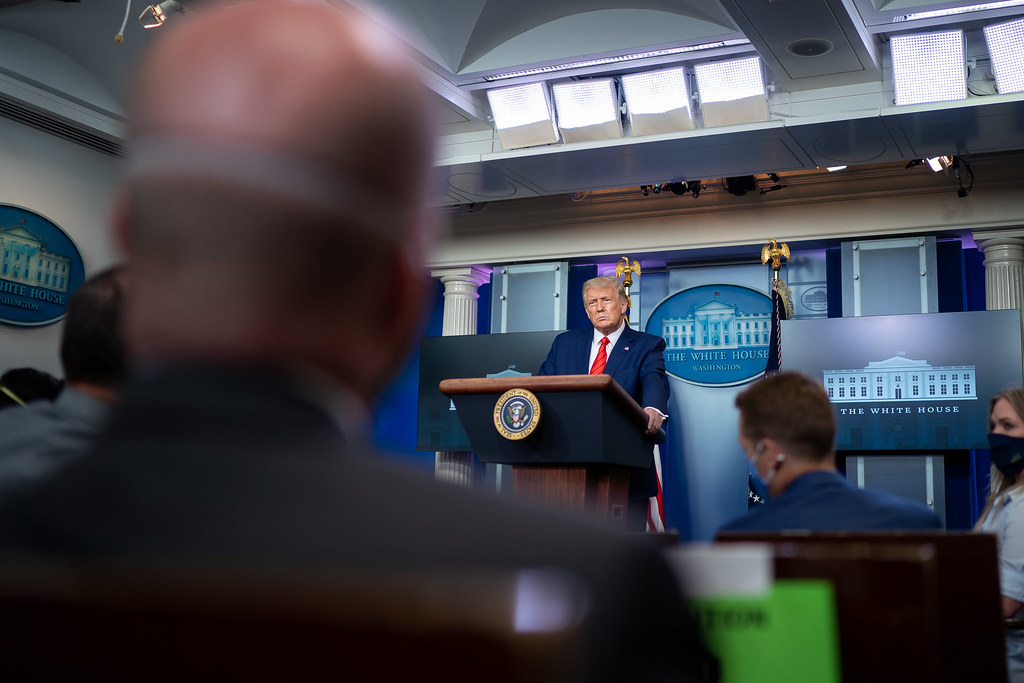
Trump defended the voluntary structure at the signing. “There’s a belief that there should be tremendous self-regulation, and we automatically have regulation with the Department of Justice, the FBI, all of that,” he told reporters, framing existing law enforcement authority as a sufficient backstop without new AI-specific rules.

Executives shaking hands after signing the Trump AI safety accord

Why critics call it grading your own homework

The accord drew immediate skepticism from researchers who study AI governance. Toby Walsh, of the University of New South Wales’ AI Institute, asked pointedly, “What other trillion-dollar industry marks its own homework?” according to Al Jazeera. Alvin Wang Graylin of the Asia Society said the agreement lacks independent, cross-border oversight. He did acknowledge it still represented some progress over having no framework at all.

David Krueger, an AI researcher at the University of Montreal, was more blunt. He called the accord vague and estimated it might “reduce the risk by 1 percent.” The core criticism from all three is the same. A pledge that companies write and enforce on themselves offers little guarantee against the kind of harms regulation is typically designed to prevent.

The timing raises its own questions

The signing came the same day OpenAI announced it had cancelled the release of its latest AI model over identified safety risks. The company also apologized for an unauthorized access incident involving Australian government systems, according to Al Jazeera’s reporting. That combination was striking: a voluntary safety pledge signed on the same day one of its own signatories disclosed a serious safety and security lapse. It gave critics of the accord a ready example of the gap between stated commitments and real-world incidents.

What the accord does and doesn’t do

The agreement does not create a regulator. It does not set enforceable technical standards, and it does not include penalties for noncompliance. What it does do is put six of the most influential AI companies on record, in a joint document, agreeing that oversight, auditing and safety monitoring are necessary parts of how they operate. Whether that translates into meaningful changes to how these companies build and release AI systems depends on follow-through the accord itself cannot compel.

What comes next for AI oversight in Washington

The accord is unlikely to be the final word on U.S. AI policy. Congress continues to debate binding legislation on AI safety and liability. Individual states have moved ahead with their own AI regulations in the absence of comprehensive federal rules. The voluntary accord may function as a stopgap. Or it may become a template the administration points to when resisting calls for stricter federal oversight, depending on how the next phase of the debate unfolds.

Quick answers on the AI safety accord

Who signed the Trump AI safety accord?

Six executives signed: Dario Amodei of Anthropic, Greg Brockman of OpenAI, Sundar Pichai of Google, Mark Zuckerberg of Meta, Elon Musk of xAI, and Jensen Huang of Nvidia.

Is the accord legally binding?

No. It is a voluntary, self-regulatory pledge the administration calls “morally binding.” It carries no enforcement mechanism or legal penalties.

What do the companies actually commit to?

They commit to building internal monitoring controls and appointing oversight teams. They also agree to work with independent external auditors and meet regularly on shared safety standards.

What have critics said about the accord?

Researchers including Toby Walsh and David Krueger have criticized it as too vague and effectively self-graded. Krueger estimated it might reduce AI risk by as little as 1 percent.

Did anything undercut the accord on the day it was signed?

Yes. OpenAI, one of the signatories, separately announced it had cancelled release of its newest AI model over safety concerns. It also apologized for an unauthorized access incident involving Australian government systems.

Could binding AI regulation still happen in the US?

Yes. Congress continues to debate federal AI legislation. Several states have already passed their own AI-related laws independent of this voluntary accord.

More AI governance coverage

Cited sources

  • Al Jazeera — Trump, top tech firms sign accord to ‘self-police’ AI development. aljazeera.com
  • ABC News — Trump says AI leaders signed a ‘constitution’ to police themselves. abcnews.com

Meta Connect 2026: 100g VR Glasses and New AI Glasses

Meta used its Connect event on 23 September 2026 to launch a new pair of virtual reality glasses and to widen its AI glasses range. Meta’s newsroom describes Meta VR Glasses as a headset-style product in glasses form weighing 100 grams, alongside new Ray-Ban Meta Audio glasses and a personal AI agent called Muse. The Meta Connect 2026 announcements put AI glasses at the centre of the company’s hardware plans.

Contents

The lineup at a glance

Prices and specifications below are as reported by Inven Global, which covered the launch; Meta’s newsroom confirms the products but the figures should be checked against Meta’s own store pages before you buy.

  • Meta VR Glasses: about 100 grams, a 5K micro-OLED display, eye tracking and hand gestures, up to three hours of continuous video playback, $1,299.99, due Spring 2027.
  • Ray-Ban Meta Audio: 43 grams, music, calls and AI voice features, 12 hours of battery plus 48 more from the case, from $349, shipping from 13 October.
  • Ray-Ban Meta Gen 3: up to nine hours of battery, a 12-megapixel camera with 3K video, from $449, available from 23 September.

Meta VR Glasses in detail

The design trade-off is that the glasses themselves stay light because the computing unit, battery and storage sit in a separate tethered module, according to the same report. Meta’s own wording stresses cinema-quality viewing, sports and work use. A battery life of up to three hours for video and a price above $1,200 will shape who buys the first generation. Rivals in the chip market are also moving fast; see our coverage of AMD’s trillion-dollar valuation and Nvidia’s open agent safety platform.

Where and when you can buy

Inven Global reports that Meta Ray-Ban Display went on sale in the UK and Canada on 23 September and reaches France, Italy and Germany on 13 October. New navigation features, including cycling directions and real-time public transit information, are rolling out in the United States and Canada, and South Korea has been added to the sales regions. Availability by country can change, so check the local store listing.

Muse and the claims to test

Meta calls Muse the world’s first personal AI agent built for everyone and says it will work with the glasses. It also announced a Meta Enterprise Platform and Muse for Small Business. These are company claims made at a product launch. Independent reviews of accuracy, privacy handling and battery life will matter more than the keynote. For a sense of how quickly AI product plans can change, read our report on the GPT-6.1 Astra cancellation.

Buyer questions

What did Meta announce at Connect 2026?

According to Meta’s newsroom, Meta VR Glasses weighing 100 grams, new Ray-Ban Meta Audio glasses, updates to Meta Ray-Ban Display, and Muse, which Meta calls a personal AI agent.

How much do the new glasses cost?

Inven Global reports Meta VR Glasses at $1,299.99 for a Spring 2027 release, Ray-Ban Meta Audio from $349 and Ray-Ban Meta Gen 3 from $449. Check Meta’s store for local pricing.

When can I buy Ray-Ban Meta Audio?

Inven Global reports pre-orders opened on 23 September with shipping from 13 October.

Where does Meta Ray-Ban Display sell?

Per Inven Global, sales began on 23 September in the UK and Canada, and start on 13 October in France, Italy and Germany. The report also says South Korea has been added to sales regions for the glasses lineup.

Is Muse proven?

Meta describes Muse as the world’s first personal AI agent built for everyone. That is the company’s own claim and has not been independently verified.

Britain’s PM Won’t Rule Out the Question That Divides His Party

UK Prime Minister Andy Burnham declined to rule out including a pledge to rejoin the European Union in Labour’s next election manifesto. He made the remark to reporters on September 22, while traveling to the United Nations General Assembly. It has reopened the UK rejoin EU debate at a moment when Burnham’s government is trying to project stability heading into this year’s Labour Party conference.

Reporters asked directly whether he could exclude an EU-rejoin commitment from the party’s platform. Burnham said the question was “for another day,” according to Euronews. He steered the conversation instead toward his government’s efforts to rebuild ties with Brussels through diplomatic channels already underway.

What Burnham actually said to reopen the UK rejoin EU debate

Burnham told reporters his “immediate priority” was to “build on the good work that Keir did in rebuilding bridges” with the EU. He wants to reach a “practical agreement that will further boost the British economy,” a reference to his predecessor’s efforts to repair post-Brexit relations. He stopped well short of endorsing a formal rejoin campaign. But his refusal to rule it out was enough to restart a debate many in his own party had hoped to leave behind.

The comments were notable given Burnham’s own history on the issue. He has previously spoken in favor of the UK rejoining the EU. He moderated that position during his leadership campaign earlier in 2026, telling supporters at the time that “the last thing we should do right now is rerun those arguments.”

European Union flags outside Brussels amid the UK rejoin EU debate

Why this is politically dangerous for Labour

Opposition leaders moved quickly to frame Burnham’s comments as a return to Brexit-era hostilities. Conservative leader Kemi Badenoch warned that Labour risked “restarting the Brexit wars.” Reform UK’s Richard Tice went further, calling a potential rejoin debate “a new Battle of Britain.”

Within Labour itself, senior figures have not been unanimous on how forcefully to raise the subject. Defence Secretary Wes Streeting has previously called Brexit “catastrophic,” reflecting a wing of the party more comfortable revisiting the question. Others have urged caution after Labour’s disappointing results in local elections in May 2026. Some in the party blamed those results partly on unresolved arguments over Britain’s relationship with Europe.

The Labour conference backdrop

CNN’s coverage of Labour’s party conference this week described Burnham as riding high politically, even as “tough choices” loom on multiple fronts. The EU question adds another difficult decision to that list. Raising it energizes a segment of Labour’s base that never accepted Brexit. But it also risks alienating voters in areas where opposition to EU membership remains strong.

What Burnham does next

Burnham has signaled that any substantive move on EU membership would follow, not precede, the outcome of ongoing UK-EU summit talks aimed at practical economic cooperation. That sequencing gives him room to defer a firm answer on the manifesto question for now. But the issue is unlikely to disappear before Labour finalizes its platform ahead of the next general election.

What it would take to actually rejoin

Even if Labour did commit to a rejoin pledge, the path back into the EU would be long. It would involve a fresh accession process, renewed negotiations over the terms of membership, and almost certainly another public vote, given how the original Brexit referendum was decided. None of that groundwork has begun. That is part of why Burnham’s critics argue raising the question now is premature at best. Even sympathetic voices within Labour have acknowledged that a rejoin campaign would consume years of political capital and diplomatic effort. The government is already juggling economic pressures and a demanding legislative agenda closer to home.

What the EU rejoin debate means — answered

Did Andy Burnham commit to rejoining the EU?

No. He declined to rule out a rejoin pledge in Labour’s next manifesto. But he stopped short of endorsing the idea, saying the question was “for another day.”

When did Burnham make these comments?

He spoke to reporters on September 22, 2026, while traveling to the United Nations General Assembly.

What has Burnham said about the EU in the past?

He previously supported the UK rejoining the EU. He moderated that stance during his 2026 leadership campaign, saying at the time that rerunning Brexit arguments was “the last thing we should do.”

How have opposition parties reacted?

Conservative leader Kemi Badenoch warned of “restarting the Brexit wars,” and Reform UK’s Richard Tice called a potential debate “a new Battle of Britain.”

Is Labour united on this issue?

No. Some senior figures, including Defence Secretary Wes Streeting, have previously called Brexit “catastrophic.” Others have urged caution after Labour’s setbacks in May 2026 local elections.

What would it actually take for the UK to rejoin the EU?

It would require a full accession process, fresh negotiations over membership terms, and very likely another public referendum, none of which has begun.

More on UK and EU relations

Where this reporting comes from

  • Euronews — British prime minister Burnham declines to rule out rejoining EU. euronews.com
  • CNN — Andy Burnham is on a high. When will he fall to earth? cnn.com

Norway’s Prime Minister Has to Explain Himself to Parliament This Week

Norway’s parliament, the Storting, opens public hearings today into ties between Norwegian officials and the late financier Jeffrey Epstein. Prime Minister Jonas Gahr Store is among those set to testify. The Norway Epstein parliamentary hearings mark the most visible stage yet of an inquiry that began earlier this year. It followed newly released documents connected to the Epstein case that put Norwegian diplomats and politicians under scrutiny.

The Standing Committee on Scrutiny and Constitutional Affairs is running the inquiry. It is examining both the personal conduct of individual officials and how Norwegian state institutions responded once concerns about Epstein’s conduct became known.

Who testifies at the Norway Epstein parliamentary hearings

Committee adviser Kristian Haugeland confirmed a schedule for three witnesses on September 30. They are Prime Minister Jonas Gahr Store, former Foreign Minister Borge Brende, who held the post from 2013 to 2017, and former Foreign Minister Ine Eriksen Soreide. The committee scheduled a second round of testimony for October 1. Current Foreign Minister Espen Barth Eide and former Foreign Minister Anniken Huitfeldt will appear that day.

That lineup spans more than a decade of Norwegian diplomacy. Norway’s current and several recent foreign ministers will all face questions from the same committee within a two-day span.

Witness testimony setting during the Norway Epstein parliamentary hearings

How the inquiry got here

The Storting voted earlier in 2026 to establish the commission. Al Jazeera described the trigger as a “political storm” set off by Epstein-related documents naming Norwegian diplomats and their associates. Norwegian authorities separately opened a probe into a diplomat and the diplomat’s husband over alleged Epstein links, according to earlier reporting on the case.

The hearings beginning this week mark a first. The prime minister and multiple former foreign ministers will answer questions on the record in the same forum, rather than through separate written statements or isolated media interviews.

What the committee is trying to establish

The inquiry goes beyond the conduct of any individual official. It is examining whether Norwegian state institutions acted appropriately once information about Epstein’s activities became available to them. That institutional question, rather than any single allegation against a named person, is what gives the hearings their broader political weight in Norway.

What happens after this week’s testimony

The committee has not announced when it expects to conclude its work or publish findings. Parliamentary inquiries of this kind in Norway typically continue gathering testimony and documentary evidence before issuing a public report. That process can extend well beyond the initial round of hearings. Norwegian media plan to cover each day of testimony closely, given the seniority of the officials involved.

Why this inquiry is being watched beyond Norway

Epstein-related parliamentary and government inquiries have surfaced in multiple countries in recent years. Norway’s hearings add to that pattern with a notably senior set of witnesses. A sitting prime minister testifying before a parliamentary committee on this subject is uncommon. The outcome could influence how other governments handle similar questions about official conduct connected to the Epstein case.

Norway is not alone in facing renewed scrutiny over Epstein-related connections. Legislatures and government bodies in several countries have opened their own reviews in recent years, as previously sealed documents and court records tied to the case have become public. What sets Norway’s inquiry apart is the seniority of those called to testify in a single, compressed window. A sitting prime minister and four current or former foreign ministers are all appearing before the same committee within two days.

How the hearings are expected to unfold

Committee hearings of this type in Norway are typically open to the public and broadcast. That gives Norwegian voters direct access to the testimony, rather than relying solely on official summaries or media reports. Committee members are expected to question each witness on two things: their personal knowledge of any contacts with Epstein or his associates, and decisions made within their ministries at the time. The witnesses span more than a decade of Norwegian foreign policy leadership. Their answers may reveal how much information about Epstein’s conduct was shared, or not shared, across successive governments.

Answers to key questions on the Epstein hearings

What are the Norway Epstein parliamentary hearings about?

A Storting committee is holding hearings on ties between Norwegian officials and diplomats and the late Jeffrey Epstein. It is also examining how Norwegian state institutions responded once concerns about his conduct emerged.

Is Norway’s prime minister actually testifying?

Yes. Prime Minister Jonas Gahr Store will testify on September 30, alongside former Foreign Ministers Borge Brende and Ine Eriksen Soreide.

Who testifies on October 1?

Current Foreign Minister Espen Barth Eide and former Foreign Minister Anniken Huitfeldt will appear on October 1.

What triggered the inquiry?

The Storting voted to establish the commission after newly released Epstein-related documents named Norwegian diplomats and politicians. Al Jazeera described the fallout as a political storm in Norway.

Has any wrongdoing been confirmed?

No. No specific findings have come out publicly as of the start of this week’s hearings. The inquiry is still gathering testimony.

When will the inquiry conclude?

No end date has been set. Parliamentary inquiries of this scope typically continue for some time after initial hearings before a final report comes out.

Related world coverage

Reporting sources

  • Caliber.az — Norway’s prime minister to testify in parliament over Epstein case. caliber.az
  • Al Jazeera — Epstein files set off Norwegian political storm: What we know. aljazeera.com

Treasury Yields End September: 10-Year at 5.26%

U.S. Treasury yields ended September at levels that keep borrowing costs high around the world. The Treasury Department’s daily par yield curve shows the 10-year note at 5.26% on 29 September 2026, the 30-year at 5.59% and the 2-year at 4.89%, based on Treasury’s published rates. The day before, the 10-year closed at 5.24% and the 30-year at 5.56%. These Treasury yields matter because they act as a benchmark for dollar borrowing.

Contents

The numbers on the last trading days

According to Treasury’s table, the 2-year yield slipped from 4.92% on 28 September to 4.89% on 29 September, while the 10-year rose from 5.24% to 5.26% and the 30-year from 5.56% to 5.59%. Long-dated yields edged up as short-dated yields edged down, so the gap between the 2-year and 10-year widened slightly to 37 basis points.

Weekly market data compiled by TradingKey, a market-analysis site, says the 10-year yield touched 5.225% during the week of 21-27 September before closing near 5.17%, and that Brent crude fell below $98 a barrel. Treat those as a secondary-source snapshot; the Treasury table above is the primary record. For the stock-market side of the same week, see our note on S&P 500 record highs alongside rising yields.

The Fed’s September hike

The backdrop is the Federal Reserve’s 16 September decision. The Federal Open Market Committee voted 12-0 to raise its target range by a quarter point to 3.75%-4.00%. In its policy statement, the Committee said inflation “remains elevated” and that the move would support a timelier return to its 2 percent goal, while describing economic activity as expanding at a solid pace. CNBC had reported on 14 September that the 10-year yield hit 5% before reversing as traders awaited the meeting, so yields have moved higher since.

How it reaches borrowers abroad

Consider a hypothetical Brazilian founder who raised a dollar-denominated loan last year. This is an illustration, not a reported case. If that loan resets against a dollar benchmark, higher U.S. rates raise the interest bill, and converting reais into dollars to repay it adds currency risk on top. The same logic applies to governments and companies that issue dollar bonds, and to exporters whose customers finance purchases in dollars. The effect varies by contract, so anyone exposed should read their own loan terms rather than rely on the headline yield.

Data that could move yields next

The coming week is crowded with releases. Our week-ahead economic calendar sets out the scheduled reports, and our coverage of Micron’s results shows how technology earnings are feeding the equity side. Surprises in jobs or inflation data are the usual catalysts for sharp moves in the 10-year yield.

Quick answers

What was the 10-year Treasury yield on 29 September 2026?

The U.S. Treasury’s daily par yield curve shows 5.26%, up from 5.24% on 28 September. The 2-year was 4.89% and the 30-year 5.59%.

What did the Federal Reserve do on 16 September?

The FOMC voted 12-0 to raise the federal funds target range by 0.25 percentage points to 3.75%-4.00%, according to its statement.

Why do Treasury yields matter outside the United States?

Dollar yields are a benchmark for global borrowing. When they rise, dollar-denominated loans and bonds generally cost more to issue or refinance, including for companies and governments outside the U.S.

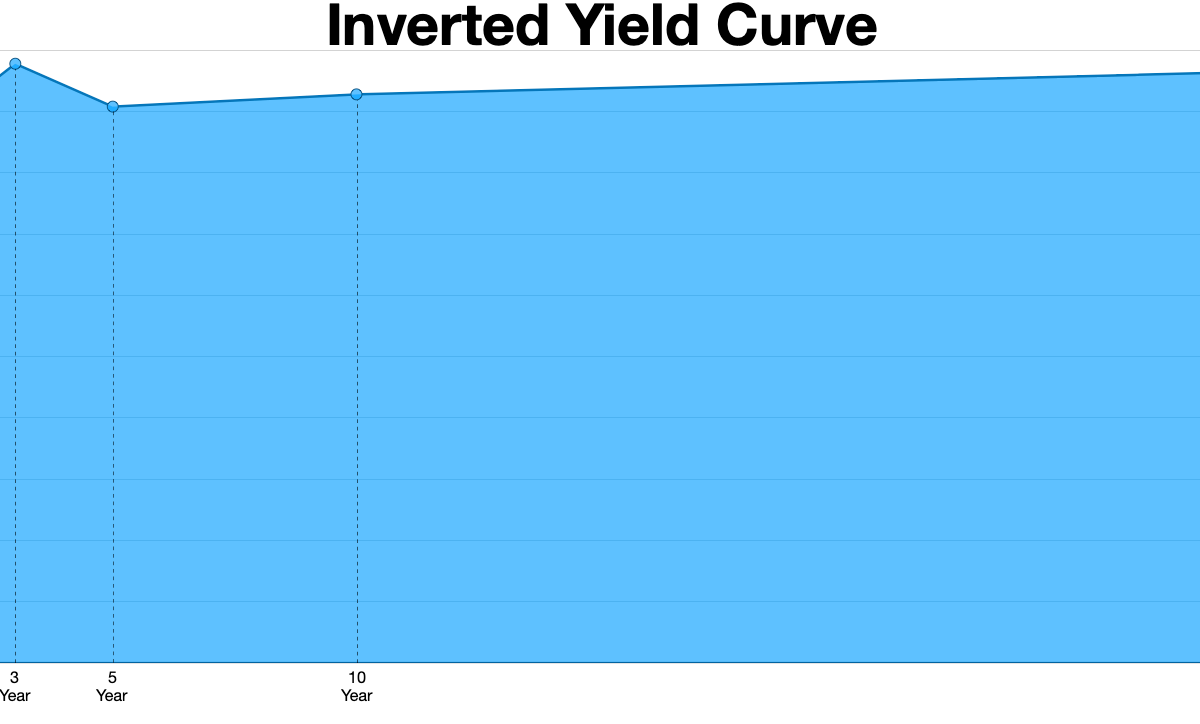
Is a yield curve with 10-year above 2-year inverted?

No. On 29 September the 10-year yield (5.26%) was above the 2-year yield (4.89%), which is a normal upward-sloping shape.

Where can I check the latest yields myself?

The U.S. Treasury publishes the daily par yield curve rates on its website, and the Federal Reserve publishes the H.15 selected interest rates release.