
Author Archives: Tamara News Staff

Author: Tamara News Staff

Tamara News is produced by the Tamara News editorial team, combining original research with AI-assisted drafting and editorial review before publication.

Nvidia Reports Earnings Today — Here’s the Number That Could Move the Whole Market

Nvidia reports fiscal 2027 second-quarter results after markets close today. Investors call it the most closely watched Nvidia earnings report today of the year. Wall Street expects revenue near $92.2 billion, up roughly 97% from a year earlier. Analysts forecast earnings of about $2.09 a share — nearly double what Nvidia posted in the same quarter last year. Nvidia’s own guidance, issued in May, pointed to revenue of $91 billion, plus or minus 2%. Nvidia’s chips sit at the center of the AI buildout. That’s why investors read today’s numbers as a referendum on the entire AI trade, not just one company’s quarter.

Why Nvidia earnings report today matters beyond Nvidia

Nvidia’s results ripple through chipmakers, cloud providers and other AI-linked stocks. So much of the current data-center spending boom runs through Nvidia’s GPUs. A beat or a miss today tends to move sentiment across the whole sector, not just Nvidia’s own share price.

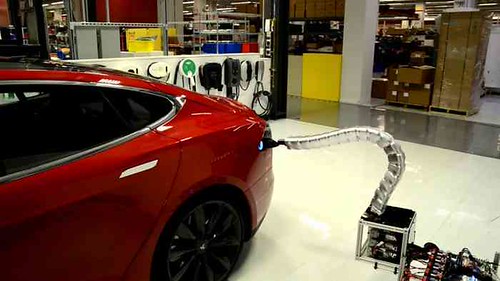
Semiconductor chip factory floor, ahead of the Nvidia earnings report today

What analysts are forecasting

Consensus estimates point to roughly $92.2 billion in revenue, up about 97.4% year over year. Analysts expect earnings near $2.09 per share — almost double the figure Nvidia reported in the same quarter a year ago. Nvidia’s own May guidance called for revenue of $91 billion, plus or minus 2%. That means Wall Street currently expects Nvidia to land at or slightly above its own target range.

The data center number to watch

Most of Nvidia’s growth should come from its data center business. GPU demand for AI workloads has stayed strong there. Investors and analysts will watch that segment specifically today. It’s the clearest signal of whether AI infrastructure spending is still accelerating or starting to plateau. A slowdown in that single segment would carry more weight with investors than almost any other line in Nvidia’s earnings report, given how much of the company’s total revenue now flows through data center GPU sales.

How the AI capex boom shapes today’s expectations

Nvidia’s results arrive as chipmakers across the industry lean on debt markets to fund AI infrastructure buildouts. That trend has drawn growing scrutiny from analysts, who question how sustainable current spending levels really are. This backdrop explains why today’s report carries weight well beyond Nvidia’s own balance sheet. If data-center demand shows any sign of cooling, the effect would ripple through the financing assumptions behind much of the sector’s current expansion plans.

How the stock has moved around past reports

Nvidia shares have a history of sharp moves in either direction right after quarterly results. That pattern has held across multiple reports this year. It’s one reason today’s release draws attention well beyond Nvidia’s own shareholder base.

What happens after the numbers land

Nvidia expects to post results around 4:20 to 4:30 p.m. Eastern time. The report also lands one day before the Jackson Hole Economic Policy Symposium, running August 27–29. Federal Reserve officials will face close scrutiny there for hints on the September rate decision. That gives markets two connected catalysts inside the same week. Investors will parse both Nvidia’s guidance for the current quarter and any commentary on AI capital-spending trends heading into fall.

What a beat or a miss would mean for the broader market

A strong report today would likely reassure investors that AI-related capital spending still has room to run into next year. A miss, or cautious guidance for the coming quarter, could reignite debate over whether the AI buildout has outpaced actual demand. Either outcome will shape trading well beyond Nvidia’s own stock price, since many other chip and cloud companies now get measured against Nvidia’s numbers as an implicit benchmark. That is part of why traders describe today’s report as one of the most consequential single events on this quarter’s earnings calendar.

Nvidia earnings: your questions answered

When does Nvidia report earnings today?

After the market closes on Wednesday, August 26, 2026. Results typically post around 4:20 to 4:30 p.m. Eastern time.

What revenue is Wall Street expecting?

Consensus estimates point to roughly $92.2 billion, up about 97% from the same quarter a year earlier.

Why does Nvidia’s report move other stocks?

Nvidia’s GPUs underpin much of the current AI data-center buildout. That makes its results a widely watched signal for the broader AI capital-spending trend.

What guidance did Nvidia previously give for this quarter?

In its first-quarter fiscal 2027 report, Nvidia guided to revenue of $91 billion for the quarter, plus or minus 2%.

Does this report affect the Federal Reserve’s decisions?

Not directly. But it lands just before the Jackson Hole symposium, where investors will parse Fed commentary ahead of the September rate meeting.

Should investors expect the stock to move sharply?

Nvidia shares have moved significantly after several recent quarterly reports — a pattern many investors are watching for again today.

What to watch beyond the headline numbers

Beyond revenue and earnings per share, investors will scan Nvidia’s commentary for supply constraints, export-rule impacts, and demand signals from major cloud customers. Executives often use the earnings call to address questions that raw numbers can’t answer, including how export controls on chips bound for China are shaping near-term sales. Any comment on that front today would connect directly to the export-policy questions already facing the wider chip sector.

Related coverage on Tamara News

Two People Just Died From Measles in Pennsylvania — the First U.S. Deaths This Year

Two unvaccinated residents of Lancaster County, Pennsylvania have died of measles. State health officials confirmed the deaths on Tuesday, August 25. Officials called them the first confirmed Pennsylvania measles outbreak deaths in 35 years, and the first measles deaths recorded anywhere in the US in 2026. Pennsylvania has now confirmed 393 measles cases. Health workers diagnosed 86 of those in just the past week. Hospitals have treated 70 people for complications. The deaths land amid the country’s worst measles year in more than three decades: the US had confirmed 2,777 cases nationwide as of August 20.

What happened in Lancaster County

Pennsylvania’s health department said both people who died were unvaccinated. Officials called the deaths the first in Pennsylvania linked to measles in 35 years. The department withheld further identifying details about the two residents, citing standard privacy practice around individual health cases.

Measles vaccine syringe, relevant to the Pennsylvania measles outbreak deaths

Inside the Pennsylvania measles outbreak deaths this week

State health officials confirmed the deaths on Tuesday. They called them the first confirmed measles-related fatalities recorded in the United States in 2026. Pennsylvania hasn’t recorded a measles death in 35 years. That makes Lancaster County’s outbreak the state’s most severe in a generation.

How the outbreak reached nearly 400 cases

Pennsylvania had confirmed 393 measles cases as of Tuesday. Health workers diagnosed 86 of those in the past week alone — a pace that suggests the outbreak is still accelerating. Hospitals have treated 70 people statewide for measles complications since the outbreak began.

The national measles picture in 2026

The Pennsylvania cluster sits inside a larger national surge. The US had confirmed 2,777 measles cases in 2026 as of August 20 — the highest annual count in 35 years. The CDC says it is “working closely with state and local health departments to strengthen response efforts, rapidly support affected communities across the state, and communicate the steps people can take to slow the spread of measles.”

Why vaccination rates matter here

Public health officials have long said outbreaks this size rarely happen in communities with high MMR vaccine coverage. Two doses of the vaccine give strong, durable protection against measles. Lancaster County’s outbreak has concentrated heavily among unvaccinated people, matching a pattern seen in several other clusters across the country this year. Officials keep urging families who are unsure of their vaccination status to check with a healthcare provider rather than wait for symptoms. Measles spreads through the air, and it can linger in a space for a period after an infected person leaves. That’s part of why health departments move fast to trace contacts once a case is confirmed.

What happens after these deaths

Pennsylvania’s health department continues to work with the CDC on containment. That includes case tracing and public messaging about vaccination. New cases keep appearing daily, and hospitalizations already stand at 70 statewide. Officials haven’t said when they expect the outbreak to peak. Case counts will likely keep climbing before any slowdown becomes visible.

How this outbreak compares with past years

Public health researchers have tracked measles case counts across the US for decades. This year’s national total, 2,777 cases as of August 20, already stands well above what health departments recorded in most recent years combined. Pennsylvania’s cluster is one of several driving that national number upward in 2026. Officials have not pointed to a single cause behind the broader surge. They consistently link outbreak size to local vaccination coverage, though. Health departments in neighboring states are watching Pennsylvania’s numbers closely. Outbreaks in one state can spread quickly to bordering communities when travel and school schedules bring people into contact. The state health department has not announced new school-based measures tied specifically to this outbreak, but officials have said they will keep monitoring case growth closely as the new school year begins.

Measles outbreak: frequently asked questions

Were the people who died vaccinated?

No. Pennsylvania health officials said both people who died of measles in Lancaster County were unvaccinated.

How many measles cases has Pennsylvania confirmed?

393 cases as of Tuesday, August 25, including 86 diagnosed in the previous week alone.

Is this the first US measles death in 2026?

Yes. State and national health officials say these are the first confirmed measles-related deaths in the United States this year.

How many measles cases has the US recorded overall in 2026?

2,777 confirmed cases nationwide as of August 20 — the highest count in 35 years.

Is measles contagious?

Yes. Public health agencies including the CDC describe measles as one of the most contagious viruses known. It spreads easily among unvaccinated people in close contact.

What is the CDC doing about the outbreak?

The CDC says it is working with Pennsylvania’s state and local health departments on response efforts and public messaging about vaccination and prevention.

What families in the outbreak area are being told

Pennsylvania’s health department has directed its outreach mainly at people in and around Lancaster County, where most cases have concentrated. Officials are encouraging anyone with an uncertain vaccination history to get checked before symptoms appear rather than after. That guidance mirrors standard CDC recommendations issued during measles outbreaks nationwide, not a new policy created specifically for this cluster. Local clinics and pharmacies in the affected area typically see a rise in vaccination requests once an outbreak draws wide public attention, a pattern health officials hope repeats here.

Related coverage on Tamara News

A NATO Ally Just Shot Down a Russian Drone Over Romania — And It Wasn’t the Host Nation

A Russian drone Romania airspace incursion turned into gunfire on the night of August 16. Radar caught the intruder at 4:44 a.m. local time. A Spanish F-18 on NATO air-policing duty shot it down about 17 minutes later, near Galați, close to the Moldovan border. NATO called this the fourth drone intercept over Romania this year. It was the first one flown by an allied jet rather than a Romanian aircraft. The incident adds one more entry to a growing list of drone incidents along NATO’s eastern edge.

Why a Russian drone Romania airspace intercept is different this time

Spain took over Romania’s NATO air-policing rotation from Britain’s Royal Air Force earlier in August. The Spanish detachment includes about 200 personnel, seven fighter jets and three helicopters. Tuesday’s shoot-down marked the first of 2026’s four intercepts flown by a rotating ally rather than a Romanian unit. NATO officials pointed to that detail as proof the alliance’s shared air-policing system works as designed.

NATO fighter jet involved in a Russian drone Romania airspace intercept

What happened over Galați

Ground radar picked up the intrusion at 4:44 a.m. local time on August 16. The object had entered Romanian airspace from Moldova, about 24 kilometers north of Galați. Spanish controllers scrambled the F-18. The jet engaged and destroyed the drone within roughly 17 minutes of the first detection. NATO later said “the drone appears to be Russian” — language that signals likely origin, not absolute certainty.

How NATO’s rotating air-policing mission works

NATO built its air-policing system roughly two decades ago. It covers alliance members that lack a full fleet of fast jets. Larger air forces rotate detachments through for months at a time. These crews fly quick-reaction alert missions alongside host-nation pilots. Romania keeps its own fighters on alert too. But like other eastern-flank allies, Romania now leans more heavily on reinforced rotations. Russia’s full-scale invasion of Ukraine in 2022 pushed drone and missile activity much closer to NATO’s borders. Spain’s current deployment is one of several reinforcements now rotating through the region.

The pattern building across NATO’s eastern flank

This was the fourth confirmed drone intercept over Romanian territory in 2026. Ukraine has also stepped up long-range drone strikes on Russian territory this month. That timing underlines how tightly the war’s drone campaigns now overlap with NATO’s own airspace. Regional officials say stray war debris and deliberate probing both remain plausible explanations for individual incidents. They also say it isn’t always possible to tell the two apart in the moment. Each confirmed incident still gets treated individually by NATO investigators, since attributing a specific drone to a specific actor takes time and technical analysis that a same-day statement can’t capture.

What comes next for air policing in Romania

Spain’s rotation continues. NATO has given no sign that it plans to change the mission’s rules of engagement. Each new intercept adds pressure on allied governments to keep reinforcing eastern-flank air defenses. Tuesday’s incident did not trigger a formal Article 4 consultation or any wider alliance response beyond the shoot-down itself. Allied officials expect the current rotation schedule, including Spain’s deployment, to continue as planned unless a major escalation changes that calculus.

Why Galați sits on a sensitive stretch of border

Galați sits close to where Romania and Moldova share a border, not far from Ukraine’s own border region. That geography puts the area near some of the drone activity linked to the Ukraine war. NATO has not said whether it expects more incursions specifically near Galați, but the alliance has treated each confirmed intercept over Romania this year as part of the same broader pattern along its eastern flank. Tuesday’s episode stood out mainly because Spanish forces detected and destroyed the drone quickly, before it could travel further into Romanian territory.

Common questions about the Romania drone intercept

What is NATO air policing?

It is a standing NATO mission. Allied air forces rotate through member states that lack enough fighter jets of their own, providing round-the-clock radar coverage and interceptors.

Has this happened before in Romania in 2026?

Yes. NATO said the August 16 shoot-down was the fourth confirmed drone intercept over Romanian airspace this year.

Who flew the intercepting jet?

A Spanish Air Force F-18. It belongs to the detachment that took over Romania’s air-policing rotation from the UK’s Royal Air Force earlier in August.

Was anyone hurt?

No. The drone was destroyed after entering from Moldova near Galați, and no injuries were reported.

Does NATO know for certain the drone was Russian?

NATO described the drone as one that “appears to be Russian.” That phrasing signals likely origin, not confirmed certainty.

What happens if these intercepts keep happening?

NATO has not announced any change to the air-policing mission’s rules. But a repeated pattern of intercepts usually pushes allied governments to sustain or expand eastern-flank air-defense rotations.

NATO’s broader eastern-flank posture

Air policing is only one piece of NATO’s presence in the east. The alliance has steadily added rotating troops, air-defense systems and naval assets to eastern member states since Russia’s 2022 invasion of Ukraine. An intercept like Tuesday’s does not count as a direct NATO-Russia clash. NATO treats it as a defensive response to an unidentified or hostile object, since no Russian aircraft or personnel were directly involved in the incident.

Related coverage on Tamara News

5 AI Customer Service Tools Qatar Businesses Actually Use in 2026

Answering customers at 2am used to mean a night-shift agent or an unanswered message. AI customer service in Qatar has largely closed that gap. A growing list of platforms now handle WhatsApp, Instagram and website chats around the clock, in Arabic and English. Businesses no longer need extra night staff to cover it. This roundup compares five platforms. It starts with a WhatsApp-first tool for small GCC businesses. Then it moves to the enterprise platforms bigger regional operations already run.

1. Replio: AI customer service built for Qatar businesses

Replio targets small and mid-size businesses with a WhatsApp-first AI customer service agent. It runs a Doha-based support line alongside its global product. It connects WhatsApp, Instagram DMs, Facebook Messenger, Telegram and a website chat widget into one shared inbox. It answers in more than 50 languages and reads photos and voice notes, not just typed text.

Replio builds its knowledge base from a business’s own FAQs, prices and policies. Answers reflect that specific business rather than a generic script. Beyond answering questions, Replio can take payments, book appointments and capture leads directly inside the conversation. It aims to complete the task itself, rather than log a ticket for a human to finish later.

Replio skips the usual technical hurdles during setup. WhatsApp connects in three clicks through Facebook login, with no developer account, API tokens or token-expiry issues to manage. Replio says the whole process takes under a minute. It needs no code and no in-house IT team.

Pricing starts free forever for Telegram and the web widget, capped at 50 messages a month. A WhatsApp-only tier costs $70/month. The Starter tier covers all channels at $150/month, Pro costs $300/month and Business costs $450/month, with discounts for annual billing. Businesses can try a 14-day free trial with no card required at the official Replio site.

2. Zendesk AI Agents: enterprise-grade customer service in Qatar

Zendesk ranks among the largest customer-service platforms in the world. Its AI Agents target teams that already run a full support desk. They hold a cross-channel conversation: a customer can start in chat, move to email, and finish on a phone call without repeating themselves. The agents support more than 80 languages, including switching languages mid-conversation. Agent Builder, a no-code tool, lets a business define its own policies and workflows without a development team.

Zendesk’s base Suite plans run from around $55 to $115 per agent per month, billed annually. Copilot costs $50 per agent as an add-on, and Zendesk bills AI Agent resolutions separately at roughly $1.50–$2 each. It suits larger support operations already using Zendesk, not a business setting up chat for the first time.

3. Freshworks Freddy AI: customer service automation for Qatar teams

Freddy AI is Freshworks’ AI suite across Freshdesk and Freshchat. It splits into two parts: an AI Agent that handles conversations independently, and a Copilot that assists human agents. The Copilot suggests replies, summarizes tickets and adjusts tone. It covers web chat, email and messaging channels including WhatsApp, Facebook and Instagram Messenger, and SMS, depending on the plan.

Freshchat has a genuine free tier covering a chat widget, shared inbox and basic permissions. This suits a small team testing live chat before paying for AI. Freshworks bills the Freddy AI Agent itself by session, at roughly $49 per 100 sessions. Copilot costs $29 per agent per month separately, on Pro and Enterprise plans.

AI customer service in Qatar

4. Fin AI (formerly Intercom): customer service after the Salesforce deal

Fin, previously marketed as Intercom’s AI agent, reads a customer’s question and searches the business’s own content for an answer. It replies in a human-like way. Salesforce agreed in June 2026 to acquire the company for roughly $3.6 billion. Salesforce says Fin already resolves around 76% of incoming requests on its own across its customer base. Once the deal closes, Salesforce plans to fold Fin’s technology into its Agentforce platform.

Salesforce prices Fin per outcome rather than per seat. A resolution, procedure handoff or disqualification costs $0.99; a qualified lead costs $9.99, with a 50-outcome monthly minimum. Running Fin stand-alone with a platform like Salesforce or HubSpot carries a $49.50 monthly minimum. Running it inside Intercom itself requires at least one paid seat, costing $29 to $139 a month.

5. AnswerForMe: WhatsApp customer service built for Qatar

AnswerForMe markets a WhatsApp-focused AI chatbot specifically to Qatari and wider GCC businesses. Its solutions page targets the local market directly. It says its AI resolves around 70% of inquiries without human intervention, handling customer service, sales questions and lead capture. Setup takes about five minutes and needs no technical knowledge. AnswerForMe doesn’t publish full pricing on its site, though it offers a free tier. Interested businesses must request a quote for paid plans directly through AnswerForMe’s Qatar page.

AI customer service in Qatar: how to choose

The right pick depends mostly on team size and existing tools. A business already running Zendesk or Salesforce gets the most value from Zendesk AI Agents or Fin. Both plug into infrastructure that’s likely already in place. A small or mid-size business messaging customers mainly on WhatsApp and Instagram does better with a WhatsApp-first tool like Replio or AnswerForMe. Neither needs a developer or a support-ops team to set up. Freshworks Freddy AI sits in between, useful for a team that wants a proper ticketing system alongside AI without Zendesk-level cost. If a business’s essential apps in Qatar already include WhatsApp and Instagram, a WhatsApp-native option usually answers customers fastest. This also applies to a company newly setting up in Qatar, since it skips the need for a night shift entirely.

AI customer service in Qatar: frequently asked questions

What is the best AI customer service tool for a small business in Qatar?
A business messaging customers mainly on WhatsApp and Instagram, without an existing help desk, usually sets up faster with a WhatsApp-first tool like Replio or AnswerForMe than with an enterprise platform.

Do these AI tools support Arabic?
Yes. Replio answers in more than 50 languages including Arabic, Zendesk supports more than 80 languages, and Freddy AI and AnswerForMe both operate in Arabic-speaking markets including Qatar.

Can AI customer service tools take payments in Qatar?
Replio can take payments directly inside a conversation. Zendesk, Freddy AI and Fin generally handle support and lead-handling rather than in-chat payments, though they can route a customer to a payment link.

Is Intercom still called Intercom in 2026?
The company’s AI product now goes to market as Fin. Salesforce agreed in June 2026 to acquire it and plans to fold its technology into Salesforce’s Agentforce platform once the deal closes.

Do any of these tools require a developer to set up?
Replio and AnswerForMe both set up without a developer or IT team. Zendesk’s Agent Builder is no-code but assumes an existing Zendesk account and support workflow; Freddy AI setup depends on the Freshdesk/Freshchat plan in use.

Is there a free option?
Replio offers Telegram and web-widget access free forever up to 50 messages a month. Freshchat has a genuine free tier for web chat. AnswerForMe offers a free tier without published limits. Zendesk and Fin don’t offer a meaningful free tier for AI agents.

F-1 Student Visa Grace Period Cut From 60 to 30 Days

International students in the United States are facing a significantly tighter timeline to wrap up their affairs after finishing a degree. Under a final rule published July 17, 2026, the F-1 visa grace period to depart the country after completing a program is being cut from 60 days to 30 days, effective September 15, 2026, as part of a broader overhaul that eliminates open-ended “Duration of Status” for foreign students.

What the shorter F-1 visa grace period changes

F-1 visa grace period

The Department of Homeland Security’s final rule eliminates Duration of Status for F, J and I nonimmigrants, replacing it with a fixed admission period, according to DHS. Previously, F-1 students could remain in the US as long as they maintained active enrollment, with a 60-day window to depart, transfer schools or change status after completing a program. Under the new rule, that departure window shrinks to 30 days, and students will be admitted for a fixed period tied to their program rather than an open-ended status.

Who is most affected

The shorter window creates the most risk for students who plan to transfer institutions, extend enrollment, or move onto Optional Practical Training (OPT) immediately after graduating, since there is now less time to complete paperwork. Students registered in the annual H-1B cap lottery face a particular complication: a shorter grace period can affect eligibility for change of status and for the F-1 Cap-Gap extension that normally lets selected applicants keep working until April 1 of the following year, according to guidance published by Yale’s Office of International Students and Scholars.

How this fits a broader immigration tightening trend

The change follows a pattern of US immigration agencies narrowing flexibility for both students and other visa categories this year. USCIS separately began allowing officers to deny applications without first issuing a request for evidence, a shift we detailed in our coverage of USCIS denials without an RFE, and travelers on advance parole have faced new re-entry risks outlined in our report on the BIA ruling on advance parole travel. Universities and international student offices are urging students to build in earlier planning timelines given the accumulating compliance requirements.

What students should do next

Universities and J-1 sponsoring organizations have until September 15 to update their compliance procedures and advise students on the new fixed admission periods. Immigration attorneys expect a wave of legal challenges to the rule, similar to past disputes over Duration of Status changes, though none have yet succeeded in delaying the effective date. Students nearing program completion are being advised to consult their school’s international office well before the deadline to map out OPT, transfer or change-of-status timelines under the tighter window. International education associations have also warned that the compressed timeline could disproportionately affect students from countries where visa processing for onward moves, such as a transfer to a third country, already takes longer than 30 days, effectively narrowing their options compared with students who can complete paperwork domestically within the shorter window.

F-1 grace period: frequently asked questions

When does the new F-1 visa grace period take effect?
The rule takes effect September 15, 2026, cutting the post-completion grace period from 60 days to 30 days.

What is Duration of Status and why is it ending?
Duration of Status allowed F-1, J-1 and I visa holders to stay in the US as long as they maintained active enrollment or program status; the new rule replaces it with a fixed admission period.

Who is most affected by the shorter grace period?
Students planning to transfer schools, extend enrollment, or move onto OPT face the most risk due to the shorter timeline.

Does this affect the H-1B Cap-Gap extension?
Yes, a shorter grace period can affect eligibility for change of status and the Cap-Gap extension that lets selected H-1B applicants keep working until the following April.

Can students still apply for OPT under the new rule?
Yes, but with significantly less buffer time, students are advised to file OPT applications as early as possible after the rule takes effect.

Is the rule being challenged in court?
Immigration attorneys expect legal challenges, though none have delayed the September 15, 2026 effective date so far.