Commonwealth Master’s Scholarships 2027 close at 16:00 BST on Tuesday 20 October 2026, and the Lester B. Pearson scholarship for the University of Toronto has its own October dates. The Commonwealth Scholarship Commission says applications for 2027/28 go through its CSC Central system, according to the CSC website.
Applicants must be citizens or refugees of an eligible Commonwealth country and permanently resident there, hold at least an upper second-class (2:1) degree, be unable to afford UK study without the award, and be available to start in September 2027. The CSC lists more than 40 eligible countries, including Bangladesh, India, Nigeria, Pakistan, Ghana and Kenya.
What it covers
The CSC says it covers approved tuition fees, a living allowance of £1,712 a month (£2,000 for London-area universities), return airfare, a study travel grant and a child allowance where applicable. You must also apply separately to a national nominating agency or approved NGO, and submit a passport copy, transcripts, two references and a development impact statement. Start the nomination step early, since it can have its own deadline.
Pearson at the University of Toronto
The University of Toronto says school nominations close on 9 October 2026, the admission application on 16 October and the scholarship application on 6 November. Eligible students are international students in their final year of secondary school in 2026/27 or who graduated after June 2026, starting in September 2027. Each high school may nominate one student. The award covers tuition, books, incidental fees and residence for four years, and about 37 Pearson Scholars are named each year.
How to plan
Consider a hypothetical Nigerian doctor with a 2:1 who wants a public-health master’s in the UK. She would confirm eligibility, contact her national nominating body this week, line up two referees and draft the impact statement before 20 October. A secondary-school student, by contrast, depends on the school nominating her by 9 October. Neither example is a real applicant.
The Palestinian legislative elections on 28 November 2026 will be the first national legislative vote in 20 years, and candidate nominations close on 7 October. Al Jazeera reports that about 1.24 million Palestinians in Gaza are eligible to vote, with jobs and security their top concerns.
President Mahmoud Abbas issued a decree on 9 July 2026 setting the date, covering the West Bank, East Jerusalem and Gaza, as Al Jazeera reported at the time. The last legislative election was in 2006, which Hamas won, leading to the split with Fatah and Hamas’s takeover of Gaza in 2007. Abbas has ruled by decree for more than 15 years despite being elected in 2005 to a four-year term, the same report notes.
The election timetable
Anadolu Agency’s account of the Central Elections Commission timetable says nominations run from 26 September to 7 October, campaigning starts on 6 November and ends with electoral silence on 27 November, security-force early voting is on 26 November and general voting on 28 November. Preliminary results are due within 24 hours, with final tallies within two weeks after appeals. The decree also raised council seats from 132 to 200 and lowered the candidacy age from 28 to 23, per the same timetable report.
What voters say they want
Al Jazeera quotes Ahmad Mohsen, 24, in Gaza: “The first thing I want is to be able to find a stable job with a decent salary so I can support myself and my family, and the second thing is to have security.” The report puts unemployment in Gaza at roughly 80 percent and links the vote to reconstruction after a three-year war that killed more than 74,000 Palestinians.
The obstacles to a credible vote
Al Jazeera’s July coverage lists three: Israel would have to allow voting in occupied East Jerusalem, as it blocked in 2021; Gaza faces destruction and displacement affecting nearly all 2.1 million residents; and population registries need updating. Correspondent Nour Odeh said France, Saudi Arabia and others want reform of the Palestinian Authority, which helps explain the timing. Whether those conditions can be met before 28 November is unresolved.
Watch the end of the nomination window on 7 October, which parties and independents register, and whether Israel and the Palestinian authorities agree on voting arrangements in East Jerusalem and Gaza.
Questions about the Palestinian elections
When are the elections?
General voting is on 28 November 2026, with early voting for security forces on 26 November.
Why do they matter?
They are the first Palestinian legislative elections since 2006.
How many voters are in Gaza?
About 1.24 million, according to Al Jazeera.
What changed in the rules?
Council seats rise from 132 to 200 and the candidacy age falls from 28 to 23, per Anadolu.
When are results expected?
Preliminary results within 24 hours; final tallies within two weeks after appeals.
Our world section will follow the nomination list when it is published, and our Sudan conflict report covers another humanitarian crisis.
The Bitchat India ban took effect on 3 October 2026, when Jack Dorsey’s Bluetooth messaging app disappeared from Apple’s App Store and Google Play for users in India. According to TechCrunch, India’s Ministry of Electronics and Information Technology issued the order, and the app’s website also became unreachable on Indian internet providers.
TechCrunch reports that Apple’s removal notice cited Section 69A of the Information Technology Act, the provision that governs government-ordered online blocking. The order covered the App Store, Google Play, the TestFlight beta service and the website. Bitchat sends encrypted messages over Bluetooth mesh networking, so it can work without mobile data or an internet connection.
The July precedent
This is not the first step. TechCrunch says Indian authorities ordered GitHub in July 2026 to remove repositories for the open-source app, citing concerns that its design prevents lawful interception and lets people communicate during internet shutdowns. The digital-rights group SFLC.in said that order was issued on 23 July by the Indian Cyber Crime Coordination Centre, gave GitHub three hours to comply, and relied on Section 79(3)(b) of the IT Act rather than Section 69A. SFLC argues the order lacked legality, necessity and proportionality. Those are the group’s views, not a court finding.
The legal dispute
TechCrunch quotes the Internet Freedom Foundation as calling the latest action unconstitutional, arguing that Section 69A “allows the government to block unlawful information but not a messaging app because of its ability to operate during internet shutdowns.” The government’s stated rationale in the July order, as SFLC describes it, was that the app would “impede the state’s ability to conduct lawful interception and surveillance.” We have not seen a public government statement accompanying the October removal.
Why it matters to users and developers
TechCrunch notes the app gained popularity during protests in July 2026 and accounted for roughly 85 percent of its global downloads in that period. For an Indian developer who built on open-source mesh tools, the practical effect is that the app can no longer be installed from official stores and its code has been taken down in India. The case also tests how far a blocking power can reach into software that has no central server to switch off.
Watch for a court challenge from digital-rights groups, any statement from Apple or Google about the legal basis, and whether people who already installed the app can keep using it. Bluetooth mesh apps already on phones are not obviously affected by a store removal, though that point has not been confirmed in the reports we read.
Questions about the Bitchat ban
Is Bitchat banned in India?
It has been removed from the App Store and Google Play in India and its website is unreachable on Indian ISPs, per TechCrunch. The order cites Section 69A of the IT Act.
Who ordered the removal?
India’s Ministry of Electronics and Information Technology, according to TechCrunch.
What happened in July?
Authorities ordered GitHub to remove Bitchat repositories, per TechCrunch and SFLC.in.
How does Bitchat work?
It uses Bluetooth mesh networking for encrypted messaging without mobile data or internet.
Who is challenging the order?
The Internet Freedom Foundation and SFLC.in have publicly criticised the actions as unlawful.
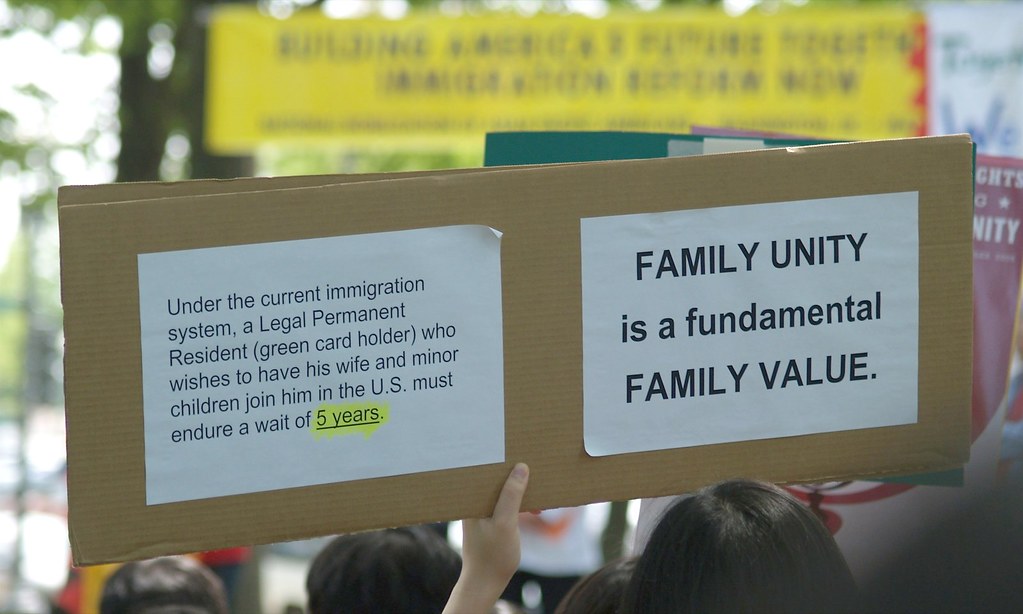
The United States has rolled back a four-year-old limit on green card reviews. It governs how immigration officers judge whether an applicant might depend on government support. The public charge rule change took effect on September 18, 2026. On that date, the Department of Homeland Security rescinded the 2022 public charge regulation. The move restores a broader test. Officers can again weigh age, health, family situation, finances, assets, liabilities, and education and skills together. They use this mix to judge whether an applicant is likely to become primarily dependent on government support. The change landed about two weeks before the start of a new government fiscal year. Its effects are still unfolding.
The Public Charge Rule Change Explained
“Public charge” has long been part of U.S. immigration law. It lets officers deny a green card or visa when they conclude an applicant will likely rely mainly on government benefits to survive. The concept dates back decades, but its practical meaning has shifted with each administration. One version took effect in 2019 with a wide list of weighable factors. Courts blocked parts of it, and a later administration withdrew it entirely in 2021. DHS then wrote a narrower rule in 2022. That rule limited which factors could count against an applicant. It leaned heavily on whether someone received specific cash assistance or long-term institutional care, and it set a higher bar for officers to deny a case on public charge grounds.
The public charge rule change undoes that narrower approach. DHS rescinded the 2022 regulation outright, not just parts of it. That detail comes from a Newsweek report on the October 2026 shift. Officers can again weigh a wider set of personal and financial factors when forming a public charge determination. They are no longer tied mainly to a short list of specific benefit programs.
DHS Regulation Rolls Back 2022 Protections
Officers can now weigh age. They can weigh health. They can look at an applicant’s family situation, finances, assets and liabilities, and education and skills. No single factor decides a case on its own. Together, these factors form a fuller picture. An officer uses that picture to judge future reliance on government support.
This brings the test closer to the broader 2019 standard. A court fight and a change in administration had replaced that standard with the narrower 2022 rule. The current DHS regulation keeps that 2022 version off the books entirely, effective September 18, 2026. Immigration lawyers describe the shift as a return to a wider lens, not a brand-new test, since the underlying public charge statute itself has not changed.
DHS has not released a new numeric scoring system alongside the rule change. Officers instead apply judgment across the full set of factors, case by case. That gives individual officers more discretion than the 2022 framework allowed.
Green Card Applications Now Face a Wider Review
The rule change affects most green card applications. That includes cases filed inside the United States and immigrant visa applications processed at consulates abroad. An officer reviewing a Form I-485 or a consular visa application can now ask for a fuller financial and personal picture. They can do this before approving the case.
The change lands alongside several other adjustments tied to the October 1, 2026 start of the government’s 2027 fiscal year. Annual visa number limits reset on that date. The EB-2 category’s Final Action Date for India, for example, moved to November 1, 2013. USCIS also selected the Dates for Filing chart for October 2026. That chart lets some applicants submit Form I-485 earlier than usual, ahead of their category’s Final Action Date.
Applicants are also tracking a separate narrowing of USCIS filing deadline extensions. That policy shift tightens how much extra time USCIS grants when paperwork arrives incomplete. Taken together, the fiscal year 2027 changes give applicants both new opportunities and new risks to manage in the same filing season.
Financial Criteria DHS Officers Can Weigh
Finances sit at the center of the public charge rule change. Officers can examine an applicant’s income, assets, liabilities and credit history. They can weigh these alongside the usual affidavit of support filed by a sponsor. Education and skills count too, since they relate to an applicant’s ability to support themselves over time.
Age and health remain part of the mix as well. A younger applicant in good health with marketable skills presents a different financial outlook than an older applicant with significant medical needs and few assets. Family situation matters too. An officer can consider household size and whether other family members contribute income or depend on the applicant.
DHS has not published new numeric thresholds for any of these factors. Officers weigh them together rather than applying a fixed formula. That approach gives the agency flexibility, but it also means two similar applicants could see different outcomes depending on how an individual officer weighs the same facts.
How This Changes a Green Card Interview
Applicants preparing for a green card interview should expect broader questions. An officer may ask about savings, debts, job history, education and health insurance coverage. That goes beyond the narrower set of benefit programs the 2022 rule focused on.
Thorough documentation helps. That includes recent bank statements, pay stubs, proof of health insurance, education records and a complete Form I-864 affidavit of support from a sponsor. None of this guarantees approval. Gaps in any one area now carry more weight than they did before September 18, 2026.
Immigration attorneys are advising clients to review their financial paperwork well before a scheduled interview. Officers now have more room to ask follow-up questions on any of the factors DHS restored. Applicants who update their documentation early tend to have fewer surprises at the interview itself.
What is the public charge rule change?
It is DHS’s September 18, 2026 rescission of the 2022 public charge regulation. It restores a broader set of factors officers can weigh, including age, health, family situation, finances, assets, liabilities, and education and skills, when deciding whether an applicant is likely to become primarily dependent on government support.
When did the new rule take effect?
September 18, 2026. October 2026 is the first full month processed under the restored framework.
Does the public charge rule change affect visa applications too?
Yes. It applies to green card applications filed inside the United States and to immigrant visa applications processed at U.S. consulates abroad.
What factors can officers now weigh?
Age, health, family situation, finances, assets and liabilities, and education and skills.
Is the public charge rule change connected to other October 2026 immigration changes?
Yes. It coincides with the fiscal year 2027 reset of annual visa number limits, a new EB-2 Final Action Date for India of November 1, 2013, and USCIS’s October 2026 Dates for Filing chart.
Where can applicants find official information?
The Department of Homeland Security publishes immigration policy updates on its own site.
Companies House identity verification is now mandatory for people running or controlling UK companies, and existing directors face deadlines during 2026. The requirement applied from 18 November 2025 to new director and person-with-significant-control appointments, according to a guide by advisory firm Hawksford. This article summarises that guide; confirm current rules with Companies House before acting.
Per Hawksford, the rules cover individual directors of UK companies and overseas entities registered in the UK, members of limited liability partnerships, and people with significant control, meaning those holding more than 25 percent of shares or voting rights or the power to appoint a majority of the board. That matters for non-UK founders who use a UK company as a base.
Deadlines for existing directors
Hawksford reports that existing directors must verify by their company’s next confirmation statement due in 2026, and that people with significant control who are not directors have a window tied to their birth month. Because dates differ by company, check your own filing calendar.
How verification works
The guide lists three routes: the GOV.UK One Login online service, in person at a Post Office, or through an Authorised Corporate Service Provider. Each verified person receives an 11-character personal code that works across all their roles, so verification happens once per person, not once per company.
What happens if you miss it
Hawksford says non-compliance can lead to rejected company filings, blocked new appointments, enforcement action with financial penalties and a public notation on the register. A founder whose filing is rejected may find a bank or investor asking awkward questions, so treat this as housekeeping with consequences.
Picture a Pakistani IT specialist who set up a UK limited company two years ago to bill European clients. She is the only director. Her next confirmation statement falls in 2026, so she should verify before that filing, not on the due date. This is a hypothetical example.
Verify early, keep your personal code somewhere safe, and check with your accountant or company-secretarial provider if you are unsure which deadline applies to you.
Questions about Companies House verification
Is ID verification mandatory?
Yes. Hawksford reports it became mandatory on 18 November 2025 for new directors and persons with significant control.
When must existing directors verify?
By their company’s next confirmation statement due in 2026, per Hawksford.
How can I verify?
Through GOV.UK One Login, at a Post Office, or via an Authorised Corporate Service Provider.
Do overseas directors have to verify?
The guide says individual directors of UK companies and overseas entities registered in the UK are covered.
Do I verify once per company?
No. One verification gives a personal code usable across all roles, per Hawksford.
More business and company-setup news is in our business section.