Cox Spectrum Rebrand Reaches Customers in Mid-September

The Cox Spectrum rebrand arrives in customers’ homes this month. Charter Communications completed its acquisition of Cox Communications on 20 August 2026, alongside a separate merger with Liberty Broadband, in a transaction valued at $34.5bn. The paperwork closed in August; the part customers notice — Spectrum branding, Spectrum pricing and Spectrum packaging replacing Cox’s — begins rolling into former Cox markets from mid-September.

What closed in August

Charter described the combined business as the leading broadband and video company in the United States, serving 37 million customers across 45 states. That figure is the company’s own, published in its completion announcement, and it counts customer relationships rather than individual services.

Two transactions closed together: the Cox acquisition and a merger with Liberty Broadband, the holding vehicle that had a large stake in Charter. Collapsing that structure simplifies the ownership chain at the same time as the operating footprint expands. Charter also filed the relevant disclosure with the SEC; the 8-K exhibit is the primary document.

The part customers see this month

For households in former Cox territories — Las Vegas, Phoenix, San Diego, Hampton Roads, Omaha, New Orleans and others — the change is a rebrand plus a repricing. Charter is moving its Spectrum products, pricing and packaging into those markets, which means the shape of the bill changes even where the underlying connection does not.

Charter has also said it will give former Cox internet customers who are not already on Cox Mobile a free year of mobile service. That is a company promotion with the usual purpose: convert broadband-only households into bundled ones, which are materially harder to churn. Treat it as a customer-acquisition offer rather than a windfall, and read the terms for what happens in month thirteen.

What does not change immediately: the physical network. The cable plant, the node splits and the fibre in the ground are the same assets they were in July. Service quality in a given neighbourhood is a function of that plant, not of the logo on the router.

The naming arrangement, which is genuinely odd

Within a year of closing, the parent company is due to take the Cox Communications name while continuing to operate its services under the Spectrum brand everywhere. So the acquirer adopts the target’s corporate identity and the target’s customers adopt the acquirer’s consumer brand. Variety covered the arrangement at closing.

The logic is family ownership. Cox is a long-held private family business, and preserving the name is the kind of term that gets negotiated into a deal of this size. For customers it is a distinction without a difference: the entity on the corporate filings will say Cox; the app, the bill and the truck will say Spectrum.

What a bigger cable company means for prices

Cable consolidation in the US has generally been approved on the argument that cable operators no longer compete against each other — their footprints do not overlap — so combining them does not reduce choice in any given street. That argument is technically sound and practically incomplete. Scale changes negotiating power with programmers, purchasing power for equipment, and the operator’s ability to fund fibre upgrades and mobile subsidies.

The competitive pressure that actually disciplines prices for most US households now comes from elsewhere: fibre overbuilders and fixed-wireless broadband sold by mobile carriers, which has taken meaningful share from cable over the past few years. A larger Charter is better placed to respond to that pressure — the free-mobile offer is exactly such a response — but it does not remove it.

What to watch: whether Spectrum pricing in former Cox markets lands above or below what those customers were paying, and how quickly promotional rates step up. Those two numbers will tell the story better than any merger statement.

Customer questions

Is Cox now Spectrum?

Yes for consumer-facing purposes. Charter completed the acquisition on 20 August 2026 and is rolling Spectrum branding, pricing and packaging into former Cox markets from mid-September.

How big was the deal?

$34.5bn, completed alongside a separate merger with Liberty Broadband.

How many customers does the combined company have?

Charter says 37 million customers across 45 states. That is the company’s own figure.

Will my equipment or connection change?

The physical network does not change with a rebrand. Equipment swaps happen over time as Spectrum standardises hardware, but the cable plant serving an address is the same.

What is the free mobile offer?

Charter has said former Cox internet customers not already subscribing to Cox Mobile are eligible for a free year of mobile service. It is a promotional offer; check the terms for what applies after twelve months.

Why will the parent company be called Cox?

Under the deal terms the parent adopts the Cox Communications name within a year while services continue to operate as Spectrum.


Continue with these

NSE IPO Price Band Set as India’s Biggest Listing Opens

India’s National Stock Exchange has fixed its NSE IPO price band at Rs 1,700 to Rs 1,785 a share, opening one of the largest share sales the Indian market has seen. Bidding runs from 17 to 21 September 2026, with anchor investors bidding a day earlier on 16 September. Allotment is expected on 22 September and the shares are proposed to list on 24 September — on the BSE, because an exchange cannot list on itself.

The numbers in one place

According to Business Standard, the offer is structured as follows:

  • Price band: Rs 1,700 to Rs 1,785 per share
  • Anchor book: 16 September 2026
  • Public bidding: 17 to 21 September 2026
  • Lot size: 8 shares
  • Minimum retail application: Rs 14,280 at the upper band
  • Allotment: expected 22 September 2026
  • Proposed listing: 24 September 2026, on the BSE

At the top of the band the issue raises roughly Rs 22,568 crore — on the order of $2.5bn — implying a valuation in the region of Rs 4.42 lakh crore. Indian business press has reported the offer as an offer for sale, meaning existing shareholders are selling down rather than the exchange raising fresh capital for itself. If that holds, none of the proceeds go to NSE’s balance sheet.

Why NSE shares will trade on a rival exchange

An exchange cannot supervise the trading of its own stock without an obvious conflict, so NSE’s shares are proposed to list on the BSE. This is not unusual — the same logic applies wherever a listed exchange operates — but it produces the slightly surreal outcome that India’s largest exchange by turnover becomes a line item on its smaller competitor’s board.

It also creates a durable oddity for traders. Price discovery for NSE happens on BSE; NSE’s own revenue depends on volumes that BSE does not capture. Anyone modelling the stock ends up modelling the health of the venue where it is not traded.

What a buyer is actually buying

Exchanges are, in business terms, toll booths. Revenue comes from transaction charges on cash and derivatives trading, listing fees, market data, index licensing and clearing. The economics are attractive when volumes are high: costs are largely fixed, so incremental volume drops through to profit at a high rate.

NSE’s position in Indian equity derivatives has been the centre of that story for years. That is the strength and the concentration risk in the same sentence: a business heavily levered to one product category, in one market, under one regulator that has repeatedly adjusted the rules for that category. Prospective investors should read the offer document rather than the headline valuation, since the composition of revenue matters more here than the multiple.

Zerodha’s IPO listing page and The Week’s dates roundup carry the mechanical details for applicants.

The risks the price band does not show

Three worth naming. First, regulatory: derivatives market structure in India has been under active review, and rule changes that dampen retail derivatives volumes hit the revenue line directly. Second, cyclicality: exchange earnings look like a utility in a rising market and like a brokerage in a falling one. Third, timing: the offer opens into a week when global markets are watching a US Federal Reserve decision, with oil recently trading above $100 a barrel. Grey-market chatter and listing-day pops are not a substitute for either of those.

There is a broader point here for readers outside India. Exchange listings are milestones for a market’s own development, not just for the company. An NSE listing puts India’s core market infrastructure under public-company disclosure for the first time, which over years produces better data for everyone analysing the market — regardless of what the shares do in the first week.

This is reporting on a share offer, not investment advice. Anyone considering an application should read the red herring prospectus and consider their own circumstances.

Questions about the offer

What is the NSE IPO price band?

Rs 1,700 to Rs 1,785 per share, with a lot size of 8 shares and a minimum retail application of Rs 14,280 at the upper end.

When does bidding open and close?

Public bidding runs 17 to 21 September 2026. Anchor investors bid on 16 September.

When is allotment and listing?

Allotment is expected on 22 September 2026, with listing proposed for 24 September 2026.

Where will NSE shares be listed?

On the BSE. An exchange does not list its own shares on itself because of the supervisory conflict that would create.

How large is the issue?

Roughly Rs 22,568 crore at the upper end of the band, implying a valuation in the region of Rs 4.42 lakh crore.

Does NSE receive the money raised?

Indian business press has reported the offer as an offer for sale by existing shareholders, which would mean proceeds go to the selling shareholders rather than to the exchange.

Related on our markets desk

Four of the World’s Biggest Companies Report Earnings This Week. Here’s What to Watch

This is a big tech earnings week on Wall Street. Apple, Microsoft, Nvidia and Google are all scheduled to report results between September 14 and 17, 2026. Major healthcare names join them too. Johnson & Johnson, UnitedHealth, Eli Lilly, AbbVie and Pfizer all report in the same window.

Why This Big Tech Earnings Week Matters More Than Usual

Earnings calendars show 24 companies reporting on September 14 alone. Roughly 8, 9 and 10 more follow on the 15th, 16th and 17th. That density gives investors a compressed read on two things at once. One is AI-driven tech spending. The other is broader corporate health, all inside four trading days. It arrives as markets digest a mixed macro picture. Equities rose in mid-September as oil prices eased. Yet the August inflation report showed prices ticking up. That leaves traders unsure whether the Federal Reserve has room to move on rates.

What Investors Are Watching in Each Report

big tech earnings week

For Nvidia and Microsoft, the focus is AI infrastructure spending. Investors want to know if it’s still accelerating. Or if it’s starting to plateau, after a run of multibillion-dollar sector deals this year. Nvidia’s own acquisition activity is part of that run. Apple’s report lands days after its September 9 event. There, it introduced Siri rebuilt on Google’s Gemini models and its first foldable iPhone. This call is the first chance for Apple’s finance team to frame how that launch affects the current quarter. For Google, advertising trends and cloud growth remain the two numbers analysts flag first. Any commentary on the Gemini partnership with Apple will draw extra attention too.

The Market Backdrop Heading Into Results

US indices posted modest gains heading into the reporting stretch. The S&P 500 rose 0.86%. The Dow gained 0.98%. The Nasdaq added 0.96% in recent sessions, according to market data cited by CNBC. Even so, a wholesale inflation surge pushed producer prices higher earlier this month. That surge remains a live concern for how the Fed reads the economy. It’s a factor that can move tech valuations on its own. Higher-for-longer rate expectations tend to weigh more heavily on high-growth stocks than on the broader market.

Healthcare Names Add a Second Storyline

The same week’s calendar includes major healthcare reporters. Johnson & Johnson, UnitedHealth, Eli Lilly, AbbVie and Pfizer are all on the list. That gives investors a parallel read on drug pricing and insurance margins. It also shows demand for GLP-1 treatments, which have reshaped pharma valuations over the past two years. A weak healthcare print alongside strong tech numbers would be a telling divergence. So would the reverse. Either is worth watching by week’s end.

How Currency and Rate Bets Complicate the Picture

None of these reports land in a vacuum. The dollar’s moves against other major currencies matter too. So do bond yields tied to Fed rate expectations. Both shape how investors price a company’s guidance for the next quarter. A tech company that beats profit estimates can still see its stock fall. That happens if its guidance disappoints against a backdrop of rising rate expectations. Analysts describe this particular week as a test of market mood, not just of any one company’s fundamentals.

Small Earnings Surprises Can Move Markets More Than Usual

In a normal reporting week, a single company missing estimates by a small margin rarely shakes broader indices. This week is different, because so many results land in such a short window. A disappointing Nvidia print, for instance, could drag down other AI-adjacent stocks purely on sentiment, even if their own fundamentals haven’t changed. Traders are bracing for that kind of spillover effect more than usual this time around.

What Comes After This Week’s Numbers Land

Once results are in, attention shifts quickly to two things. One is the Federal Reserve’s next policy signals. The other is the European Central Bank’s own rate path. Both are more likely to move on aggregate economic data than any single earnings call. Analysts will also compare this week’s AI capital-spending commentary against deals already announced this year. That comparison should show whether spending plans are being revised up, down, or held steady heading into the final quarter of 2026. Retail investors, for their part, will be watching options market pricing for clues about how much post-earnings volatility traders expect from each of the four tech giants individually.

Frequently Asked Questions

Which major companies are reporting earnings this week?
Apple, Microsoft, Nvidia and Google all report between September 14 and 17, 2026. Johnson & Johnson, UnitedHealth, Eli Lilly, AbbVie and Pfizer report in the same window.

Why is this week’s earnings slate considered unusually dense?
Calendars show 24 companies reporting on September 14 alone. Roughly 8 to 10 more follow on each day through the 17th — a compressed window investors rarely see.

What will investors focus on in Apple’s report?
How the company frames the expected impact of its September 9 Siri and foldable iPhone launch. Analysts want to know what it means for the current quarter.

How does inflation data affect this earnings week?
A recent wholesale inflation surge has left markets unsure whether the Fed has room to cut rates. That uncertainty can move tech valuations regardless of individual results.

Are healthcare companies part of this earnings week too?
Yes. Johnson & Johnson, UnitedHealth, Eli Lilly, AbbVie and Pfizer are all reporting in the same window. That gives a parallel read on drug pricing and insurance margins.

Sources

  • Zenvesto — Stock Earnings Calendar, September 2026. zenvesto.com
  • CNBC — Stock market today, live updates. cnbc.com

Tesla’s Board Wants Its Lawsuits Judged in Texas. Investors Are Fighting Back

Tesla shareholders took their case to the Tesla Delaware Supreme Court on September 11. They asked the state’s top court to keep three fiduciary-duty lawsuits against the company and CEO Elon Musk in Delaware. The alternative is letting the cases move to Texas, where Tesla reincorporated in 2024.

Why the Case Landed at the Tesla Delaware Supreme Court

The dispute traces back to a Delaware Court of Chancery ruling earlier this year. That ruling sided with Tesla’s push to have the lawsuits heard in Texas instead. According to Law360’s coverage of the filing, the plaintiff-investors argue the cases belong in Delaware. Their reasoning: the alleged conduct, breaches of fiduciary duty by Tesla’s board and Musk, occurred while Tesla was still a Delaware corporation. Delaware courts also have decades of accumulated case law for interpreting those obligations. Tesla moved its corporate home to Texas in 2024, after a Delaware judge voided Musk’s 2018 pay package. Tesla and Musk publicly criticized that decision at the time.

What the Underlying Lawsuits Actually Allege

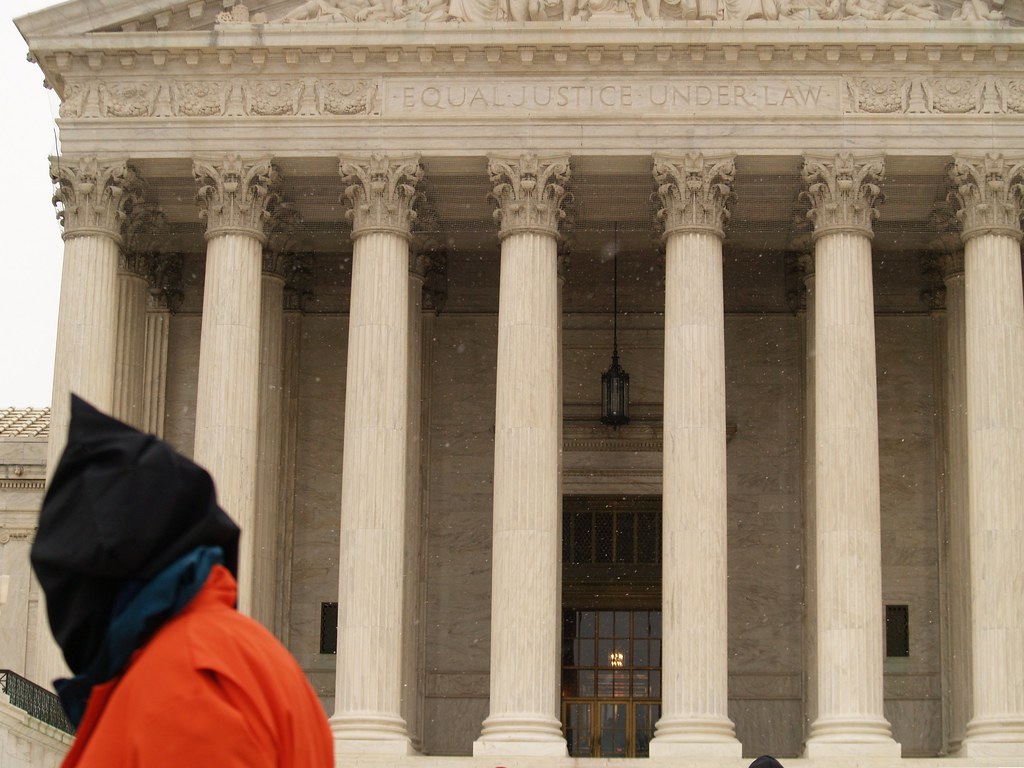
Tesla Delaware Supreme Court

The three suits accuse Tesla’s board and Musk of breaching their fiduciary duty to shareholders. The specific underlying conduct varies across the cases. Delaware’s Court of Chancery has a long history of applying heightened scrutiny to transactions involving a company’s own directors. That scrutiny runs especially high for a controlling or influential figure like Musk. Whether that same heightened-scrutiny approach would apply in a Texas court is part of what’s at stake here. Texas’s business court system is comparatively new. It remains untested on questions this specific.

Why This Is Bigger Than One Company’s Paperwork

Tesla is the most prominent company to reincorporate away from Delaware following shareholder friction. Corporate law specialists are watching this case closely. They see it as an early test of whether companies can use a change of incorporation state to functionally pick a friendlier court for pending disputes. If the Delaware Supreme Court allows the cases to move to Texas, other companies facing shareholder litigation may consider similar relocations. If it keeps the cases in Delaware, that would reinforce a different idea: a change of corporate domicile doesn’t automatically carry pending litigation to the new jurisdiction’s courts.

Where This Sits Alongside Tesla’s Other Legal Fights

The fiduciary-duty jurisdiction fight is separate from the regulatory scrutiny facing Tesla’s Cybercab robotaxi program. That scrutiny began after its Austin launch triggered a federal safety probe. Together, the two disputes show a company navigating legal and regulatory pressure on multiple fronts at once. One concerns how Tesla is governed as a company. The other concerns how its products are regulated on the road.

Why Delaware Still Matters to Corporate America

More than half of Fortune 500 companies are incorporated in Delaware, largely because of its specialized Chancery Court and its deep body of predictable case law. That predictability is exactly what Tesla’s move to Texas put in question for pending cases. A ruling against Tesla here wouldn’t just affect this one company. It would signal to every other Delaware-incorporated firm that reincorporating elsewhere doesn’t offer an escape hatch from litigation that started under the old rules.

What Legal Experts Are Saying

Corporate governance attorneys who don’t represent either side have described the case as a test of forum-shopping limits. Several have noted that Delaware’s Chancery Court rarely loses jurisdiction over cases this cleanly, given the strength of its precedent on fiduciary duty. Others point out that Texas actively courted Tesla’s move with a new business court system designed to compete for exactly this kind of corporate litigation, meaning the outcome here also tests whether that new system can attract cases as intended. A handful of smaller companies have already cited Tesla’s move as a template while weighing their own reincorporation decisions, according to legal trade publications tracking the trend.

What Happens Next in the Jurisdiction Fight

The Delaware Supreme Court has not set a public timeline for its ruling. A decision keeping the cases in Delaware would send them back to the Court of Chancery for further proceedings there. A decision upholding the move to Texas would restart much of the procedural clock in an unfamiliar court system. Either outcome is likely to get cited in future cases involving companies that reincorporate while shareholder litigation is pending. That makes this case worth tracking well beyond Tesla’s own shareholders, especially in a week already dominated by the market mood around big tech earnings.

Frequently Asked Questions

What did Tesla investors ask the Delaware Supreme Court to do?
They asked the court to keep three fiduciary-duty lawsuits against Tesla and Elon Musk in Delaware, reversing a Chancery Court ruling that would move them to Texas.

Why did Tesla move its incorporation to Texas?
Tesla reincorporated in Texas in 2024 after a Delaware judge voided Musk’s 2018 pay package, a ruling the company and Musk criticized publicly.

What do the lawsuits allege?
They accuse Tesla’s board and Musk of breaching their fiduciary duty to shareholders, drawing on conduct they say occurred while Tesla was still incorporated in Delaware.

Why does the choice of court matter so much?
Delaware has decades of case law applying heightened scrutiny to board and executive conduct; Texas’s business court system is newer and has less precedent on comparable questions.

Is this related to Tesla’s Cybercab safety probe?
No. That is a separate federal regulatory matter over Tesla’s robotaxi program; this case concerns shareholder governance claims and which state’s courts should hear them.

Sources

  • Law360 — Tesla Investors Press Del. High Court To Keep Cases In State. law360.com

Why the Lowest BTC/PHP Price Can Still Be a Bad Trade

When traders in the Philippines search for the best BTC/PHP rate, price is usually the first thing they check — and the last thing that decides whether a trade actually goes well. Bitcoin P2P Philippines trading works differently from a centralized exchange order book. Each offer comes from an individual trader, not a company, and the details around that offer — the peso amount, the payment app, the order limits, and how fast the other side responds — often matter more than the headline rate.

How Bitcoin P2P Philippines Trading Actually Works

On a P2P platform, buyers and sellers post their own offers instead of trading against a shared order book. A seller lists a BTC/PHP rate, a payment method, and a minimum and maximum order size. A buyer picks an offer that fits, and the platform holds the seller’s Bitcoin in escrow until the buyer confirms the peso payment has landed. CoinCola’s own guide to trading BTC for PHP walks through this flow in more detail, including how disputes get resolved when a payment doesn’t show up on time.

Platforms operating this way in the Philippines are treated as money service businesses. The Bangko Sentral ng Pilipinas’ Circular No. 1108 put virtual asset service providers under BSP licensing, anti-money-laundering, and consumer-protection rules. That framework is also why P2P platforms ask for ID verification before releasing larger trades.

Bitcoin P2P Philippines trader checking a GCash payment app

Why Your PHP Amount Changes the Math

A trader’s quoted rate usually applies within a specific order-size range. Ask for a small amount and the rate on a large-volume offer may not apply. Ask for a large amount and you may need to split the trade across two or three offers to stay inside each trader’s limit. The rate you see on the top of a list is only the rate you get if your peso amount actually fits that trader’s range.

GCash or Maya: The Payment App Decides the Deal

GCash and Maya carry most retail P2P payment volume in the Philippines, and most sellers only accept one or the other — not always both. A slightly worse rate from a trader who accepts your payment app beats a better rate from one who doesn’t, because a mismatched payment method usually means the offer is unusable to you in the first place. Confirm the accepted app before you commit to an order, not after.

Order Limits and Trader Reputation Matter as Much as Price

Every trader profile carries a completion rate, an average release time, and a trade history. A new or low-volume trader offering the sharpest rate on the page can still mean a slower release, more back-and-forth in chat, or a higher chance the order gets cancelled. Established platforms use escrow specifically so the seller’s Bitcoin cannot move until the buyer’s payment is confirmed — but escrow protects your funds, not your time. Checking a trader’s completion history before opening an order is still the fastest way to avoid a stalled trade.

Timing matters too. An offer posted minutes ago from an active trader tends to move faster than an older listing from someone who hasn’t confirmed a trade in hours.

Where Bitcoin P2P Trading in the Philippines Goes From Here

BSP oversight of virtual asset platforms has been tightening rather than easing. In mid-2026, the central bank approved a memorandum barring licensed platforms from listing privacy-focused tokens and requiring a documented due-diligence process before any asset goes live for trading. A moratorium on new VASP licenses, first put in place in 2022, was still in effect as of mid-2026 with only narrow exceptions. For traders, that points toward platforms that can show active BSP licensing and clear compliance history mattering more over time, not less.

CoinCola has been expanding its own P2P user base this year, including a migration program aimed at vendors displaced by NoOnes’ shutdown — a reminder that when a P2P platform exits a market, as covered in Tamara News’ earlier report on the NoOnes shutdown, the traders and reputation histories built on it don’t automatically carry over.

Frequently Asked Questions

Is Bitcoin P2P trading legal in the Philippines?

Yes. Virtual asset service providers are regulated by the Bangko Sentral ng Pilipinas under Circular No. 1108, which covers licensing, anti-money-laundering checks, and consumer protection.

Which is better for Bitcoin P2P trades, GCash or Maya?

Neither is universally better — it depends on which payment app the specific trader you’re dealing with accepts. Check the accepted method before comparing rates.

Why did my BTC/PHP rate change when I entered my order amount?

Most offers only honor their quoted rate within a set minimum and maximum order size. An amount outside that range may require a different offer or a split trade.

What protects my money in a P2P Bitcoin trade?

Reputable platforms hold the seller’s Bitcoin in escrow until the buyer’s payment is confirmed, so the coins can’t be released before the peso payment lands.

How do I avoid a slow or cancelled P2P trade?

Check the trader’s completion rate, average release time, and how recently they were active before opening an order — not just their quoted rate.

Sources