Russia Heads to the Polls This Month — But Is Anyone Really Voting for Change?

Russian President Vladimir Putin has signed a decree setting State Duma elections for a three-day voting window running from September 18 to 20, 2026. Dozens of other regional and local races fall on the same days. That makes it the largest single election event on Russia’s calendar this year.

The vote decides all 450 seats in the State Duma, Russia’s lower house of parliament. It comes as Vladimir Putin’s United Russia party looks set to retain its majority, according to election monitors and regional analysts tracking the race.

Russia last held a full Duma election in 2021. The chamber has since operated with United Russia holding a commanding majority throughout the war in Ukraine. Analysts say this vote is unlikely to shift that balance in any meaningful way. The bigger question, they argue, is different. It is how much domestic and international attention the process draws, given the current state of Russia’s relations with the West.

Turnout figures from past cycles offer a rough baseline for comparison. Officials typically report turnout above 50%, though independent monitors have long questioned how that figure gets calculated in regions with limited outside observation. Watchers of this cycle expect similar disputes over the raw numbers once results come in.

Election day itself will look ordinary to most Russians. Polling stations open as usual. Ballots get counted under the supervision of local election commissions. The real scrutiny happens afterward, when independent groups compare official tallies against whatever alternative data they can gather.

Why the Russia Duma election September vote matters now

The Russia Duma election September vote unfolds against the backdrop of Russia’s continued war in Ukraine and an economy increasingly shaped by sanctions. Domestic political competition inside Russia has narrowed sharply since the last Duma election. Independent monitors report that meaningful opposition candidates face significant barriers to running, from registration hurdles to legal risk.

Ballot box style voting equipment representing the Russia Duma election September vote

Regional analysts describe a United Russia majority as close to certain, given the current political environment. The European Platform for Democratic Elections has tracked preparations throughout the campaign. It has flagged concerns about ballot access and independent observation.

Who else is on the ballot

Beyond the Duma race itself, voters in numerous Russian regions will pick local legislatures on the same three days. That list includes votes in the Khanty-Mansi and Chukotka autonomous okrugs. Consolidating so many elections into a single window is now standard practice in Russia. Critics say the approach limits how closely independent media and monitors can cover any single race.

Russia has used the three-day voting format in previous elections. Election monitors argue it complicates independent oversight compared with single-day voting.

What outside monitors are watching for

International attention will center on turnout figures and the treatment of what remains of Russia’s registered opposition parties. Observers will also watch whether the limited independent monitoring inside the country documents any irregularities. Western governments are unlikely to recognize the vote as free and fair regardless of the outcome. That stance would be consistent with their response to Russia’s previous elections since 2022.

The election also lands weeks after the European Union began preparing a fresh sanctions package tied to a separate incident. That adds another layer of tension to an already strained relationship between Moscow and Western capitals during the voting period.

How this vote compares with 2021

Russia’s last full Duma election, held in 2021, already drew criticism from independent monitors over ballot access and candidate registration. Analysts tracking this cycle say the space for genuine opposition has narrowed further since then, not widened. Fewer independent candidates have cleared registration hurdles this time, according to regional reporting on the campaign. The consolidated three-day format, used again this year, remains a point of criticism from groups that argue it makes independent vote-counting harder to verify.

None of this is expected to change the practical outcome. United Russia entered the campaign with structural advantages that opposition parties have not meaningfully closed.

What comes after the vote

Once election commissions certify the results, the new Duma will begin its term against a backdrop of continued war spending, sanctions pressure and a tightly managed political landscape. Few analysts expect the outcome to alter Russia’s foreign policy direction. A United Russia majority would preserve the current balance of power inside the chamber.

The more consequential signal may come from turnout data and any documented irregularities. Those details will shape how the vote is characterized internationally, even without changing its outcome domestically.

Common questions about the September vote

  • When exactly is the vote? Voting runs across three days, September 18 to 20, 2026.
  • How many seats are being decided? The vote covers all 450 seats in Russia’s State Duma.
  • Is United Russia expected to win? Yes, analysts widely expect United Russia to retain its majority.
  • Are other elections happening at the same time? Yes, regional and local races are scheduled in numerous Russian regions on the same dates.
  • Will international observers monitor the vote? Independent monitoring inside Russia is limited, and groups like the European Platform for Democratic Elections have flagged access concerns.
  • Will Western governments recognize the results? Western governments are unlikely to formally recognize the results as free and fair, based on their response to recent Russian elections.

Related coverage on Tamara News

See our related reporting on the Witkoff-Kushner talks in Moscow, the EU’s Russia sanctions extension, and the AfD’s Saxony-Anhalt election win.

Sources

  • Interfax — Putin sets Russian State Duma elections for Sept 20, 2026. interfax.com
  • Meduza — Russia’s State Duma elections set for September 20, 2026. meduza.io
Hurricane Lowell Just Weakened Over Hawaii. Here’s What’s Still Closed

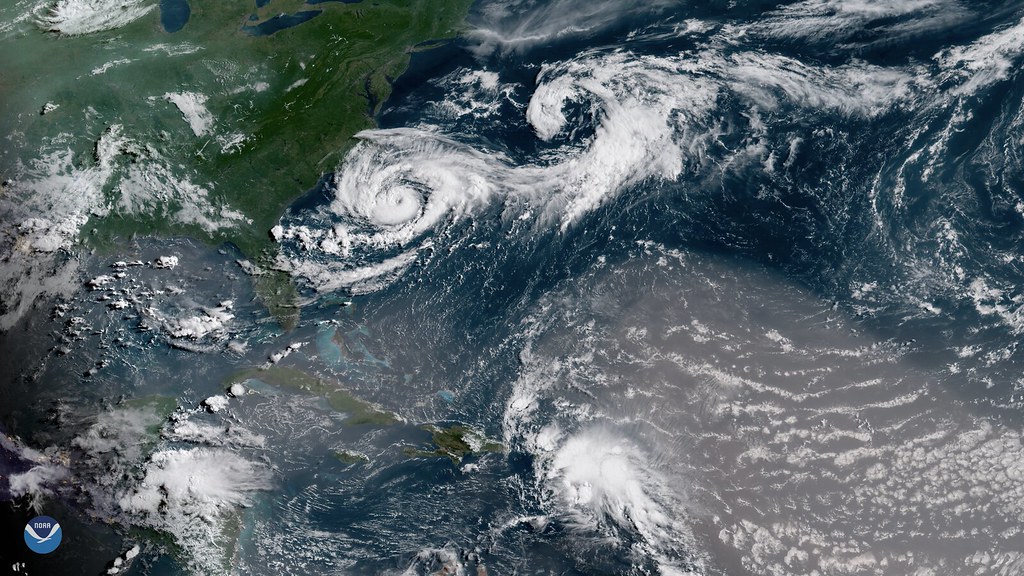
Hurricane Lowell Hawaii travel warnings have been lifted for Kauai County and Oahu. The storm weakened to a Category 1 hurricane with winds of 80 miles per hour by 8am on Tuesday, September 8, 2026. Conditions have improved significantly across the state, including on Niihau, Kauai and Oahu. Cleanup from the storm’s earlier impact still continues in several areas.

Current status of Hurricane Lowell Hawaii travel warnings

The Hurricane Warning previously in place for Kauai County has been cancelled, and the Tropical Storm Warning for Oahu has also been lifted, according to the Hawaii Emergency Management Agency. That marks a meaningful de-escalation from the storm’s most dangerous phase, when its forecast path shifted closer to the islands and warnings covered a wider area.

Hurricane Lowell Hawaii travel
Hurricane Lowell Just Weakened Over Hawaii. Here's What's St

Despite the downgrade, travelers should not assume normal operations have fully resumed. Emergency officials are still working through storm damage assessments, and some services affected during the storm’s peak have not yet returned to normal.

Where the damage was worst

Kauai County and Oahu sustained the most severe impact, including widespread power outages on Kauai and significant outages on Oahu as well, according to reporting from ABC7 San Francisco. Heavy rain and dangerous swells affected the state broadly in the days before the downgrade, with large swells generated by Lowell reaching Hawaiian waters even where the storm’s center passed further offshore.

Recovery crews are working to restore power in the hardest-hit areas. Travelers with accommodations in Kauai or Oahu should check directly with their property before assuming full utilities are available.

What visitors were told during the storm

Before Lowell’s closest approach, Kauai County officials advised visitors to remain at their accommodations rather than attempt travel around the island. Airlines adjusted schedules in response to the storm, and authorities urged travelers to confirm flight status directly with carriers before heading to the airport.

Hawaii State Parks issued closure notices ahead of the storm, and activity operators across the affected islands paused tours and excursions until conditions improved enough to resume safely.

What travelers should watch this week

Anyone with upcoming travel to Kauai or Oahu should confirm accommodation status directly. Power outages are still being addressed in parts of both islands. Checking with airlines before departure remains sound practice until airport operations are confirmed fully normal.

Hawaii State Parks and individual activity operators are expected to lift remaining closures on a rolling basis. Assessments are still being completed island by island, rather than all at once.

Rental car companies and ground transportation providers on Kauai have reported limited disruption beyond the storm’s peak days. Most report normal availability for travelers arriving this week, though it is worth confirming directly if picking up a vehicle soon after arrival.

Cruise lines with Hawaii itineraries adjusted a handful of port calls during the storm’s approach but have since resumed their normal schedules. Passengers on upcoming sailings should still check with their cruise line directly for the latest port information.

How this storm compares with past Hawaii hurricanes

Hawaii sees direct hurricane hits far less often than mainland U.S. coastal states, which makes any storm that forces warnings across multiple islands notable on its own. Lowell’s shift closer to the islands before weakening echoed a pattern seen in several past Pacific storms that looked more threatening days out than they ultimately proved on arrival.

Hurricane Hone, which affected the islands in a previous season, offers a useful comparison. That storm also prompted warnings that were later downgraded as its track shifted, though it still caused meaningful disruption to power and travel in the areas it passed nearest.

Emergency planners in Hawaii say the bigger risk with storms like Lowell often comes from swells and rain bands extending far from the storm’s actual center, rather than the eye itself making landfall. That is part of why warnings covered a wider area than the storm’s final path actually crossed.

Tourism officials in Hawaii have not reported significant cancellations beyond the immediate storm window. Hotels and resorts across the islands generally maintained standard operations once warnings lifted, though individual properties in the hardest-hit areas may still be managing repairs.

Questions travelers are asking about Hurricane Lowell

Is it safe to travel to Hawaii now that Hurricane Lowell has weakened?
Warnings have been lifted for Kauai and Oahu, but travelers should confirm accommodation and activity status directly given ongoing power outages and cleanup.

Which islands were hit hardest by Hurricane Lowell?
Kauai County and Oahu sustained the most significant damage, including widespread and significant power outages respectively.

Are flights to Hawaii still being affected?
Airlines adjusted schedules during the storm’s approach. Travelers should confirm flight status directly with their airline before heading to the airport.

Are Hawaii State Parks open again?
Closures are expected to lift on a rolling basis as damage assessments are completed, rather than reopening all at once.

How strong was Hurricane Lowell at its peak?
The storm reached hurricane strength before weakening to Category 1 with 80 mile-per-hour winds by the morning of September 8.

For related travel disruption coverage, see our reporting on Labor Day flight disruptions and Delhi airport flight delays.

Sources

Canada Just Banned AI From Writing Your Refugee Claim. Here’s the Fine Print

New Canada AI immigration rules took effect on September 7, 2026, governing how artificial intelligence can be used in immigration and refugee proceedings. The Practice Notice, signed by Immigration and Refugee Board Chairperson Manon Brassard on July 10, bars AI from generating or materially changing personal evidence such as Basis of Claim narratives, affidavits and witness statements.

What the Canada AI immigration rules actually ban

The rules apply across all four divisions of the IRB: the Refugee Protection Division, the Refugee Appeal Division, the Immigration Division and the Immigration Appeal Division, according to the official Practice Notice. Parties appearing before the Board can no longer use AI tools to generate or substantially alter the personal evidence at the core of a claim.

Canada AI immigration rules
Canada Just Banned AI From Writing Your Refugee Claim. Here'

The restriction targets a specific concern: officials say AI has been used to insert fabricated or embellished details into immigration and asylum applications, undermining the credibility of the evidence review process, according to reporting from The Globe and Mail.

What still requires disclosure, but isn’t banned

Not every use of AI is prohibited. Certain other applications trigger mandatory disclosure requirements instead of an outright ban. That covers AI that generates or materially changes content in any document submitted to the Board. AI-assisted translation or transcription must always be disclosed too, regardless of how minor its role in preparing a document.

That distinction matters for applicants and their representatives. Using AI to organize or translate existing material is treated very differently from using it to invent or embellish the underlying facts of a claim. The Board has said the line is deliberate, not incidental.

Representatives who miss a disclosure requirement do not automatically lose their case. Adjudicators retain discretion to weigh the omission alongside the rest of the evidence rather than applying an automatic penalty.

A separate but related immigration move this week

Canada also opened a new Express Entry draw on September 4, 2026, issuing 3,500 invitations to apply for permanent residence to healthcare professionals, including nurses, pharmacists and physiotherapists. The draw is unrelated to the AI rules directly but reflects the same week’s broader push on immigration policy adjustments.

Together, the two moves show Canada tightening procedural integrity on one track while continuing to actively recruit skilled workers on another.

How the new AI rules will be enforced

The Board has not detailed specific penalties for undisclosed AI use beyond the general credibility and evidentiary consequences that already apply to fabricated or embellished claims. Enforcement will likely rely on adjudicators identifying inconsistencies during hearings rather than a separate detection mechanism.

Legal representatives preparing claims will need to build disclosure into their standard intake process going forward, given that even legitimate AI-assisted translation now requires it.

Why immigration lawyers are paying attention

Legal representatives who prepare refugee and immigration claims say the rules will change how they work day to day. Many currently use AI tools informally, for tasks like organizing evidence or drafting early outlines. Under the new rules, some of that assistance now needs formal disclosure.

Immigration lawyers interviewed by Canadian outlets have generally welcomed the clarity, even where it adds paperwork. Before this Practice Notice, there was no formal guidance on AI use at all, which left representatives guessing at what was acceptable.

Refugee advocacy groups have raised a separate concern. Some worry that broad disclosure rules could penalize legitimate AI-assisted translation for claimants who do not speak English or French fluently. The IRB says translation disclosure serves a procedural purpose. Officials describe it as a record-keeping step, not a punitive measure.

Canada’s move also puts it ahead of several peer countries on this specific issue. Few other national immigration systems have published formal, binding rules on AI use in adjudicative proceedings, making the IRB’s Practice Notice an early reference point other jurisdictions may study.

The rules arrive as AI writing tools have become widely accessible, making it easier than ever for claimants or representatives to generate polished-sounding narratives regardless of whether the underlying facts are accurate.

Frequently asked questions on Canada’s AI rules

When did the Canada AI immigration rules take effect?
The rules took effect September 7, 2026, under a Practice Notice signed by IRB Chairperson Manon Brassard on July 10.

What exactly is banned under the new rules?
Parties may not use AI to generate or materially change personal evidence, including Basis of Claim narratives, affidavits and witness statements.

Is all AI use in immigration cases now prohibited?
No. Some AI use, including translation and transcription, remains allowed, but representatives must always disclose it to the Board.

Which parts of the immigration system do these rules cover?
All four IRB divisions: the Refugee Protection Division, Refugee Appeal Division, Immigration Division and Immigration Appeal Division.

Did Canada make any other immigration moves this week?
Yes. A September 4 Express Entry draw issued 3,500 invitations to healthcare professionals, including nurses, pharmacists and physiotherapists.

For related coverage, see our reporting on the US immigrant visa freeze explainer and the October 2026 visa bulletin.

Sources

Trump Will Host Xi in Washington This Month. Here’s What’s on the Table

The Trump Xi Washington summit is scheduled for September 24, 2026, when President Trump will host Chinese President Xi Jinping at the White House. The meeting aims to extend the trade truce the two sides reached in October 2025, which halted a rapid escalation in tariffs between the world’s two largest economies.

Why the Trump Xi Washington summit matters

A previous summit in May 2026, held in Beijing, ended amicably and is widely seen as the template for this month’s meeting. Trade officials on both sides have signaled they expect a similar outcome this time, extending the truce rather than renegotiating it from scratch, according to reporting tracked by the Foundation for Defense of Democracies.

Trump Xi Washington summit
Trump Will Host Xi in Washington This Month. Here's What's o

Markets have generally read the upcoming meeting as reducing near-term tariff risk. A truce extension would avoid a return to the sharp escalation both economies experienced in 2025. Investors in export-heavy sectors are watching the date closely. So are shipping and logistics firms exposed to trans-Pacific trade volumes.

The chip access question shadowing the summit

One issue expected to come up is whether Washington will keep allowing data centers in Southeast Asia to give Chinese AI firms cloud-based access to computing power built on Nvidia’s most advanced chips. That arrangement, sometimes called the cloud loophole, lets a Chinese firm barred from buying restricted chips directly instead rent computing time from an overseas data center running on them.

The U.S. Commerce Department is drafting a rule to close the loophole by targeting data centers in Thailand and Singapore specifically, according to Asia Times. Whether that rule advances before or after the summit could shape how the meeting’s tone plays out.

What each side wants from the meeting

Washington’s stated priority is preserving the truce while pressing for stronger enforcement against the chip-access workaround. Beijing has consistently pushed back against tightening export controls, arguing the restrictions unfairly target Chinese technology development.

Both governments have incentives to avoid a public breakdown. A return to rapid tariff escalation would raise costs across supply chains that both countries depend on, from consumer electronics to agricultural exports.

Ahead of the Washington summit

Expect pre-summit statements from both governments in the two weeks leading up to September 24. Possible market moves tied to leaked details of the agenda are likely too. Trade officials from both delegations are expected to hold preparatory talks before the leaders meet directly.

If the meeting proceeds as the May 2026 Beijing summit did, expect a joint statement extending the truce with limited new commitments. A comprehensive new trade agreement remains unlikely at this stage.

Diplomatic staff on both sides have described the preparatory mood as businesslike rather than tense. That tone, if it holds, would mark a contrast with earlier points in the broader U.S.-China trade relationship over the past several years.

What business groups are watching

Trade associations on both sides of the Pacific have quietly lobbied for a truce extension. Manufacturers that depend on Chinese components want tariff certainty heading into next year’s planning cycles. Agricultural exporters in the U.S. want continued access to Chinese buyers who resumed purchases after the 2025 truce.

Semiconductor firms sit in a more complicated position. Nvidia and its peers benefit from stable trade relations generally, yet also face pressure from Washington to support tighter export enforcement. That tension is likely to shape how forcefully U.S. negotiators push the chip-access issue at the summit itself.

Currency markets offer another signal worth watching. The yuan has traded in a relatively narrow band since the October 2025 truce took hold. A summit that clearly extends the truce would likely reinforce that stability. A breakdown, by contrast, could reintroduce volatility investors had mostly priced out.

Analysts covering both economies caution against expecting sweeping new commitments. Truce extensions in trade diplomacy tend to preserve the status quo rather than resolve underlying disputes. The chip-access question, in particular, may simply be deferred to working-level talks after the leaders meet.

Questions readers are asking about the summit

When is the Trump Xi Washington summit?
The meeting is scheduled for September 24, 2026, at the White House in Washington, D.C.

What is the summit expected to accomplish?
Officials on both sides expect it to extend the trade truce reached in October 2025, similar to the outcome of the May 2026 Beijing summit.

Will the chip export loophole be discussed?
It is expected to come up, specifically whether Chinese firms can keep accessing Nvidia-powered computing through data centers in Southeast Asia.

Has a summit between the two leaders happened before this year?
Yes. Trump and Xi met in Beijing in May 2026, and that meeting is seen as a model for how this one may unfold.

Could the summit fail to extend the truce?
It is possible, though both governments have strong incentives to avoid renewed tariff escalation, making an extension the more likely outcome.

For related coverage, see our reporting on the Anthropic-Nvidia compute deal and Xi Jinping’s recent visit to Egypt.

Sources

UK, France and Canada Just Banned These Goods. Israel Is Furious

The Israeli settlement goods ban announced this week blocks imports from Israeli settlements in the occupied West Bank. Britain, France and Canada unveiled the coordinated measure on September 8 and 9, 2026, citing concern over actions they say threaten the prospect of a two-state solution. A wider group of 12 countries has signaled it may follow with similar restrictions.

What the Israeli settlement goods ban covers

The three countries will block imports of goods produced in Israeli settlements in the West Bank, according to reporting from UPI. The UK went further, formally declaring Israel’s occupation of the Palestinian territories unlawful. London also announced sanctions on five settlers accused of carrying out or supporting violence against Palestinians, along with sanctions on companies tied to settlement expansion.

Israeli settlement goods ban
UK, France and Canada Just Banned These Goods. Israel Is Fur

A broader coalition of 12 countries said they intend to act too. That group includes Canada, Denmark, Finland, France, Iceland, Ireland, Norway, Poland, Portugal, Spain, Sweden and the UK. Some will introduce national restrictions. Others will support European-level measures or simply consider trade steps targeting settlements, according to ABC News Australia.

Why these governments moved now

The announcement came amid mounting international anger at the government of Prime Minister Benjamin Netanyahu over settlement policy. Officials in London, Paris and Ottawa framed the measures as a direct response to actions they say undermine any future Palestinian state. The step marks one of the most coordinated Western trade actions against settlement goods to date.

Trade volumes tied to settlement production are relatively small in the context of overall Israeli exports, so the economic effect is likely to be limited. The diplomatic signal is the larger part of the story: three major Western economies acting in concert, with a further nine considering similar steps.

Israel’s retaliation

Israel condemned the measures and announced retaliatory steps of its own, including the closure of the British consulate in East Jerusalem. Israeli Foreign Minister Gideon Saar accused Britain of interfering in Israel’s internal affairs. Israeli officials have not indicated any change to settlement policy in response to the announcement.

The reaction adds another point of friction between Israel and several of its traditional Western allies. It comes at a moment when the broader Middle East already faces significant strain from other ongoing conflicts.

What comes next for the settlement ban

Implementation details, including which specific goods and producers fall under the restrictions, are expected to be published by each government separately in the coming weeks. Whether the remaining nine countries in the 12-country coalition follow through with binding national measures, rather than statements of intent, will determine how far the policy actually extends.

Watch for a possible European Union-level discussion, since several EU member states are among the 12 countries named. A coordinated EU measure would carry more economic weight than individual national bans.

How trade experts read the move

Trade analysts describe the ban as more symbolic than economically painful for Israel in the short term. Settlement goods make up a small fraction of the country’s total exports. The bigger question, analysts say, is whether the coalition of 12 countries turns statements of intent into binding law.

Some economists point to a slow-burn effect instead. If the European Union eventually adopts a bloc-wide restriction, the impact would grow considerably. Several of the 12 countries named this week are EU members, which gives that scenario real weight.

Israeli exporters affected by the ban have not issued a unified public response yet. Trade groups in the settlements themselves have called the move discriminatory and warned of job losses among workers, some of whom are Palestinian, employed in settlement-based industries.

Diplomats in the region also note a secondary effect. The measure gives European governments a concrete policy tool short of full sanctions, which some had been calling for amid the wider Middle East conflict. It sits in a middle ground between statements of concern and harder economic penalties.

Common questions about the settlement goods ban

Which countries have banned imports from Israeli settlements?
Britain, France and Canada announced the ban this week. A wider group of 12 countries, including Denmark, Finland, Iceland, Ireland, Norway, Poland, Portugal, Spain and Sweden, has signaled it may introduce similar measures.

Does the Israeli settlement goods ban apply to all Israeli exports?
No. It applies specifically to goods produced within Israeli settlements in the occupied West Bank, not to Israel’s exports generally.

How has Israel responded?
Israel condemned the measures and closed the British consulate in East Jerusalem. Foreign Minister Gideon Saar accused Britain of interfering in Israel’s affairs.

Did the UK take any additional steps beyond the import ban?
Yes. The UK formally declared the occupation unlawful and imposed sanctions on five settlers and several companies tied to settlement expansion.

Is this expected to significantly affect Israel’s economy?
Trade tied directly to settlement production is a small share of Israel’s overall exports, so the immediate economic impact is likely limited compared with the diplomatic signal it sends.

For more on the region’s escalating tensions, see our coverage of Israeli strikes in southern Lebanon and the EU’s extended Russia sanctions.

Sources