
Saudi East-West Pipeline Shut After Drone Strikes From Iraq

Saudi Arabia has shut down the Saudi East-West pipeline, the 1,200-kilometre artery it uses to move crude from its eastern oilfields to the Red Sea, after a series of drone attacks launched from Iraq. The closure removes the kingdom’s main insurance policy against disruption in the Gulf at precisely the moment that insurance is most needed.

CNBC reported that the shutdown was precautionary, taken after drones struck the line in the Riyadh and Medina regions on Thursday morning, starting fires and causing some damage. Riyadh has not published a damage assessment or a restart date.

Why this particular pipeline matters

The East-West line carries up to 7 million barrels per day from Abqaiq in the east to the Yanbu terminal on the Red Sea. Its entire strategic purpose is to let Saudi crude reach world markets without passing through the Strait of Hormuz.

That mattered little for most of the past decade. It matters enormously now. With the United States and Iran contesting control of Hormuz, Saudi Arabia had been leaning on the East-West route to keep exports flowing westward. Closing it narrows the kingdom’s options to the very chokepoint it was built to bypass.

The timing compounds an already tight picture. Houthi forces took Yemen’s Red Sea coast last week, tightening their grip on the Bab al-Mandab Strait at the southern end of the same sea lane — a development we covered in our report on the fall of Mocha. A tanker leaving Yanbu now sails south toward contested water.

What the attack says about the conflict’s shape

The drones came from Iraq, not Yemen. That is a meaningful shift. Attacks on Saudi energy infrastructure have historically originated from Houthi-held territory to the south; an Iraqi launch point opens a second axis and puts central Saudi Arabia — Riyadh and Medina are far inland — within reach.

No group had claimed responsibility at the time of the initial reports. Al Jazeera’s account situates the strike within the wider Iran-aligned campaign that has intensified since American strikes inside Iran, including the recent attack on Kermanshah.

It also follows Houthi strikes on the kingdom earlier in the same week, which hit energy facilities and civilian assets. The pattern that emerges is not a single spectacular attack of the kind that took Abqaiq offline in 2019, but repeated smaller strikes on dispersed targets. That is harder to defend against and harder to price, because each individual hit is survivable while the cumulative effect on operating decisions is not.

The price response

Crude broke above $100 a barrel for the first time in months, with Brent trading above $107 on Friday. Prices finished the week more than 8% higher.

Two things are worth separating here. The first is the physical loss: a closed pipeline is barrels that cannot move on a particular route, not barrels that cease to exist. The second is the risk premium: traders are pricing the possibility that the next strike hits something harder to replace. Most of the move is the second thing.

That distinction matters for how long the price holds. If the line restarts within days and no further infrastructure is hit, the premium deflates. If attacks continue on a second front, it does not.

Where the cost lands

Higher crude reaches consumers through fuel, freight and the price of anything that moves. It has already begun feeding official data — US wholesale prices rose 0.4% in August on the back of energy, as set out in our coverage of that release.

Oil-importing economies absorb the hit most directly. Countries that subsidise fuel face a widening bill on top of the import cost, which turns an energy shock into a fiscal one.

Central banks face the familiar bind. An energy-driven price rise is a supply shock, and textbook practice is to look through it. Looking through it is harder when inflation is already running above target and a second shock arrives before the first has faded.

What to watch from here

Three signals will tell you which way this resolves.

  • A restart announcement. Saudi Aramco confirming the line is back would take the sharpest edge off the premium.
  • Whether Iraq-launched attacks repeat. One strike is an incident. A pattern is a new front, and prices will treat it that way.
  • Hormuz traffic counts. With the western route closed, Gulf transit volumes become the single best read on how much Saudi crude is actually reaching buyers.

Questions readers are asking

How much oil does the East-West pipeline normally carry?

Its capacity is about 7 million barrels per day, though it typically runs well below that. Actual throughput before the shutdown has not been disclosed.

Does the shutdown mean Saudi exports have stopped?

No. It closes one route. Crude can still be exported through Gulf terminals, but those cargoes must transit the Strait of Hormuz, which is the risk the pipeline existed to avoid.

Who launched the drones?

The drones were launched from Iraq. No group had claimed responsibility in the initial reporting, and Saudi authorities have not formally attributed the attack.

Will petrol prices rise?

Pump prices follow crude with a lag of roughly two to four weeks in most markets, and the pass-through depends heavily on local taxes and any subsidy. A sustained move above $100 would show up at the pump; a brief spike may not.

How long can the pipeline stay offline?

That depends on damage the kingdom has not disclosed. Precautionary shutdowns after limited damage have historically been measured in days, but no restart timeline has been given.

For the wider picture on how this conflict is reshaping trade routes and energy prices, see our continuing coverage of Red Sea shipping and the inflation data.

Seven Years for a Candle: Hong Kong’s Last Tiananmen Vigil Leaders Sentenced

Three of Hong Kong’s best-known pro-democracy figures learned on September 11 how many years they will spend in prison. Their offense: organizing a candlelight vigil. A Hong Kong court handed down sentences of five to just over seven years. The three led the group that had run the city’s annual Tiananmen Square remembrance. The Tiananmen vigil organizers sentenced this week were convicted of inciting subversion under Beijing’s 2020 national security law. The case began with their arrests in September 2021.

Tiananmen vigil organizers sentenced to years behind bars

Lee Cheuk-yan received seven years. Chow Hang-tung, a barrister who kept defending the vigil in public even after her arrest, received seven years and three months. That was the longest term of the three. Albert Ho, 74, was sentenced to five years and two months after entering a guilty plea. A guilty plea typically shortens a term under Hong Kong law. All three had already spent years in pretrial custody by the time the sentences were read (Al Jazeera).

Statue of Lady Justice outside a Hong Kong court where Tiananmen vigil organizers were sentenced

The group behind three decades of candlelight

The defendants led the Hong Kong Alliance in Support of Patriotic Democratic Movements of China. It ran the only large-scale public commemoration of the 1989 Tiananmen Square crackdown anywhere on Chinese soil. For 30 years, tens of thousands gathered each June in Victoria Park. They held candles and observed a minute of silence. That vigil has not been permitted since 2020. The Alliance itself dissolved under legal pressure in 2021 (NBC News).

A case widely read as a test of Hong Kong’s freedoms

Legal observers and rights groups call the prosecution a clear marker of how far Hong Kong’s civil liberties have narrowed. Amnesty International called the sentencing a “triple tragedy.” It pointed to the defendants’ years in custody, the loss of the vigil itself, and a broader erosion of protections that once set Hong Kong apart from mainland China. The United Nations and the European Union both issued statements criticizing the verdict. Hong Kong and Beijing maintain the prosecution followed due process under the city’s laws.

International reaction and what happens next

Governments in Europe and North America have called for the defendants’ release. Hong Kong authorities have rejected those calls as interference in the city’s judicial affairs. Chow Hang-tung and Lee Cheuk-yan have both indicated they plan to appeal. That process could take months to resolve in Hong Kong’s Court of Appeal. All three had already been detained since 2021. Their formal release dates will therefore fall several years earlier than the headline sentences suggest, once time served is factored in.

The case leaves Hong Kong without any organization permitted to publicly mark the 1989 crackdown, a gap now in its sixth year. Rights groups expect scattered, unofficial tributes to continue. None are likely to match the scale the Alliance once drew to Victoria Park. For background on how Beijing’s national security law has reshaped the city’s institutions, see Tamara News’ earlier coverage of the EU’s response to security incidents in Europe and its report on a separate high-court ruling reshaping political representation.

How the trial unfolded over four years

The three defendants were first arrested in September 2021. That came shortly after the Hong Kong Alliance voted to disband under mounting legal pressure. Prosecutors pointed to the group’s charter, which called to “end one-party rule” in mainland China, language used for decades. They argued it amounted to incitement once the national security law took effect in 2020. Defense lawyers countered that the wording predated the law by nearly 30 years. They called it a peaceful, long-standing political position, not a call to violence. The trial itself ran intermittently for roughly a year. The September 11 sentencing closed a legal process that outlasted the organization it targeted.

What the sentences mean for Hong Kong’s civil society

Legal scholars watching the case note the sentences fall within the range prosecutors sought. The court’s written reasoning leaned heavily on the defendants’ continued public advocacy after their 2021 arrests. Judges treated that advocacy as evidence of ongoing intent. Press freedom and rights organizations argue the outcome sends a clear signal to any remaining civil society groups in Hong Kong. In their reading, organizations that predate the national security law are not protected from retroactive scrutiny of their founding documents. Hong Kong’s government has repeatedly rejected that characterization. It maintains the prosecution addressed specific criminal conduct, not the Alliance’s broader existence.

Frequently asked questions

  • Who were the three people sentenced? Lee Cheuk-yan, Chow Hang-tung and Albert Ho, all former leaders of the Hong Kong Alliance in Support of Patriotic Democratic Movements of China.
  • What were they convicted of? Inciting subversion of state power under Hong Kong’s 2020 national security law.
  • How long are the sentences? Seven years for Lee, seven years and three months for Chow, and five years and two months for Ho, who pleaded guilty.
  • Will they serve the full terms? No. All three have been in custody since 2021, so time served counts toward their sentences.
  • Can the sentences be appealed? Yes. Lee and Chow have signaled they intend to challenge the convictions in Hong Kong’s Court of Appeal.
  • Does the Tiananmen vigil still take place in Hong Kong? No public vigil has been permitted in Victoria Park since 2020, and the organizing Alliance dissolved in 2021.

Sources

Why the US Just Struck a City Iran Rarely Sees Hit

The United States and Iran traded fire again this week, in one of the heaviest exchanges since their conflict began. Washington says the latest round of US strikes Kermanshah Iran targets answered an Iranian attempt to plant sea mines in the Strait of Hormuz. Officials also cite a separate attack on US troops in the region. Iran says four members of its Revolutionary Guard aerospace unit were killed in the western city of Kermanshah overnight.

US strikes Kermanshah Iran after Strait of Hormuz mine attempt

President Trump said on Truth Social that the strikes were retaliation for “the Iranians’ failed attempt at adding sea mines” in the Strait of Hormuz. A large share of the world’s seaborne oil passes through that waterway. US Central Command said it struck Iranian military sites after the Islamic Revolutionary Guard Corps tried to attack US troops and commercial shipping in the strait (NBC News).

Oil tanker in Gulf waters near the Strait of Hormuz, at the center of the US strikes Kermanshah Iran dispute

Four IRGC aerospace personnel reported killed

Iranian state media and the IRGC itself said four members of its aerospace force died in the Kermanshah strikes. Casualty figures in this conflict have come almost entirely from Iranian government and IRGC statements. That is not independently verified reporting. Tamara News is presenting this figure as Tehran’s own account, not a confirmed fact. Kermanshah is a city in western Iran with a significant military presence. It has not previously been named as a strike location in this round of fighting, marking an expansion beyond the Gulf shipping lanes where earlier exchanges concentrated.

The broader pattern behind the strikes

This exchange follows weeks of rising tension across the region. Houthi forces aligned with Iran seized Yemen’s port of Mokha in early September, tightening pressure on Red Sea shipping routes. Separate Iranian strikes hit US allies’ interests in the Gulf earlier this month. Analysts tracking the conflict describe the pattern as tit-for-tat escalation, not a single decisive campaign. Each side cites the other’s most recent action as justification for its own strikes.

What happens next in the US-Iran standoff

Neither side has signaled interest in formal talks since the latest strikes. A ceasefire brokered with Pakistani mediation earlier this year has already been tested repeatedly by exchanges like this one. Officials on both sides describe the current situation as a stalemate. At issue: Iran’s nuclear program, access to the Strait of Hormuz, and the terms of any sanctions relief. Oil markets have shown renewed sensitivity to the fighting. Shipping insurers are reportedly reassessing risk premiums for tankers transiting the strait.

For more on how the conflict has touched Red Sea shipping routes, see Tamara News’ earlier coverage of the Houthi takeover of Yemen’s Mokha port and the separate strikes on Gulf allies’ bases. Global oil markets are also watching OPEC’s upcoming output decision for signs of how producers plan to respond to the volatility.

How mediation efforts have struggled to hold

A Pakistan-brokered ceasefire and accompanying memorandum of understanding halted the largest wave of fighting between Washington and Tehran earlier this year. The arrangement has proven fragile since. Both governments have accused the other of violations on multiple occasions since it was signed. This week’s exchange over the Strait of Hormuz mine attempt is the most serious test of the agreement in over a month. Diplomats involved in the earlier mediation have not publicly signaled a fresh round of talks. Officials in both capitals have instead framed their recent actions as defensive responses, not opening moves toward negotiation.

The unresolved disputes driving the conflict

Three issues remain at the center of the standoff. They are the scope of Iran’s nuclear program, freedom of navigation through the Strait of Hormuz, and the terms under which sanctions on Iran’s economy might eventually ease. None of the three has moved meaningfully since the Pakistan-mediated ceasefire took hold. Each fresh exchange of strikes tends to harden both sides’ negotiating positions rather than soften them. Analysts describe a pattern in which military escalation and diplomatic stalemate now reinforce each other. That makes a durable settlement harder to reach the longer the current cycle continues.

Frequently asked questions

  • What prompted the US strikes on Kermanshah? The US says it acted after Iran attempted to place sea mines in the Strait of Hormuz and after an attack on US troops in the region.
  • Where is Kermanshah? Kermanshah is a city in western Iran, near the border with Iraq, and home to a significant Iranian military presence.
  • How many casualties were reported? Iran’s Revolutionary Guard said four of its aerospace personnel were killed; this figure comes from Iranian sources and has not been independently confirmed.
  • Is there a ceasefire in place? A Pakistan-mediated ceasefire exists on paper, but both sides have continued to trade strikes over alleged violations.
  • How is this affecting oil markets? Shipping through the Strait of Hormuz carries a large share of global seaborne oil, and insurers have reportedly begun reassessing risk premiums for tankers using the route.

Sources

Sweden Votes This Weekend — And the Far Right Wants a Seat at the Table

Sweden heads to the polls on September 13, 2026, in one of the most closely watched elections in the Nordic region this year. The centre-left opposition holds a narrowing lead over Prime Minister Ulf Kristersson’s right-wing coalition. The Sweden election 2026 could reshape how far a nationalist party sits inside mainstream European government. The Sweden Democrats are pushing for cabinet seats rather than the parliamentary support role they have played since 2022, a shift that would be closely watched across Europe.

Sweden's parliament building ahead of the Sweden election 2026

Sweden Election 2026: Where the Race Stands

Sweden’s centre-left opposition held a lead over the ruling right-wing bloc heading into the vote. That advantage has been shrinking. A poll conducted for public broadcaster SVT showed the gap narrowing from 9.5 percentage points in June to about 6.8 points more recently, according to reporting compiled by US News. Seat projections show Kristersson’s governing alliance — the Moderates, Christian Democrats, Liberals and the Sweden Democrats — winning around 45.8% of seats. That falls short of a majority on its own.

Why the Sweden Democrats Are the Story to Watch

The Sweden Democrats have propped up Kristersson’s government in parliament since 2022 without holding formal ministries. This time, the party is demanding cabinet seats as the price of continued support. The move would mark a notable shift in how directly Sweden’s nationalist right participates in government. Whether Kristersson agrees will shape not just this term, but how other Nordic and European centre-right parties approach similar coalition math going forward.

What’s Actually Driving Swedish Voters

The campaign has centered on cost of living, security, immigration, crime and energy supply. It is a similar mix of concerns to what has driven right-wing gains elsewhere in Europe this year. A factbox compiled by Yahoo News Canada notes that both blocs have leaned heavily on crime and immigration messaging. Those issues have featured prominently in Sweden’s public debate since a string of high-profile violent incidents in recent years.

Swedish flag ahead of the closely watched Sweden election 2026

What Happens After the Votes Are Counted

If the centre-left bloc’s lead holds, Sweden would see its first change of government since 2022. If Kristersson’s coalition claws back enough ground, the harder question becomes whether he brings the Sweden Democrats fully into cabinet. That decision is being watched closely well beyond Sweden’s borders, since it could shape coalition-building calculations for centre-right parties elsewhere in Europe.

What a Change of Government Would Actually Mean

A centre-left win would not reverse Sweden’s NATO membership, which enjoys broad support across the political spectrum since the country joined the alliance in 2024. The more immediate shifts would come on energy policy, welfare spending and how aggressively Sweden pursues its current, tougher approach to asylum and residency rules. A Social Democrat-led government would likely slow some of the stricter immigration measures introduced under Kristersson, while keeping the broad security posture largely intact. Business groups are watching the campaign’s tax proposals closely. Both blocs have floated changes to corporate and income tax rates that would take effect only after a new government is formally seated. Coalition talks could stretch for weeks after election day if the result is close. That pattern has played out in several recent Swedish elections where no bloc won a clear majority on the first count.

Frequently Asked Questions

When is Sweden’s 2026 election?

Sweden holds its parliamentary election on September 13, 2026, choosing all 349 seats in the Riksdag.

Who is currently leading in the polls?

The centre-left opposition leads Prime Minister Ulf Kristersson’s ruling right-wing bloc. The gap has narrowed since June, from roughly 9.5 percentage points to about 6.8 points in the most recent polling.

What is Kristersson’s coalition trying to do?

Kristersson is seeking to form a majority government with his existing partners, the Christian Democrats and the Liberals. For the first time, he may bring the Sweden Democrats into cabinet seats rather than just parliamentary support.

Why does the Sweden Democrats’ role matter?

The Sweden Democrats have backed Kristersson’s government in parliament since 2022 without holding ministries. Demanding cabinet seats after this election would mark a significant shift in how far a nationalist party has moved into mainstream Swedish governance.

What are the main campaign issues?

Cost of living, security, immigration, crime and energy supply have dominated the campaign. Those concerns echo elections seen across the region this year.

Could the governing coalition win a majority on its own?

Seat projections show the governing alliance winning around 45.8% of seats. That is short of the majority it would need without support from the Sweden Democrats or another partner.

Whatever the outcome, Sunday’s result will be parsed closely across the Nordic region and beyond. It is a test of whether nationalist parties can keep converting parliamentary influence into formal governing power. Neighboring Nordic governments are watching too. Coalition arrangements in one country often shape the political calculus in the others, particularly on shared regional priorities like energy policy and border security. Sweden’s vote follows a string of consequential European elections this year. See our coverage of the AfD’s win in Saxony-Anhalt and, for a very different kind of vote, Russia’s Duma election this month.

Sources

The Supreme Court Just Stepped In on Missouri’s Voting Map — Twice in One Week

The US Supreme Court blocked Missouri from using its newly drawn, Republican-favoring congressional map on September 10, 2026, in a closely watched order. Justices intervened in November’s midterm elections for the second time in a single week. The pause over the Missouri congressional map keeps the fight over district lines tied up in the courts just weeks before ballots go to print. Election officials and candidates alike are left waiting for clarity.

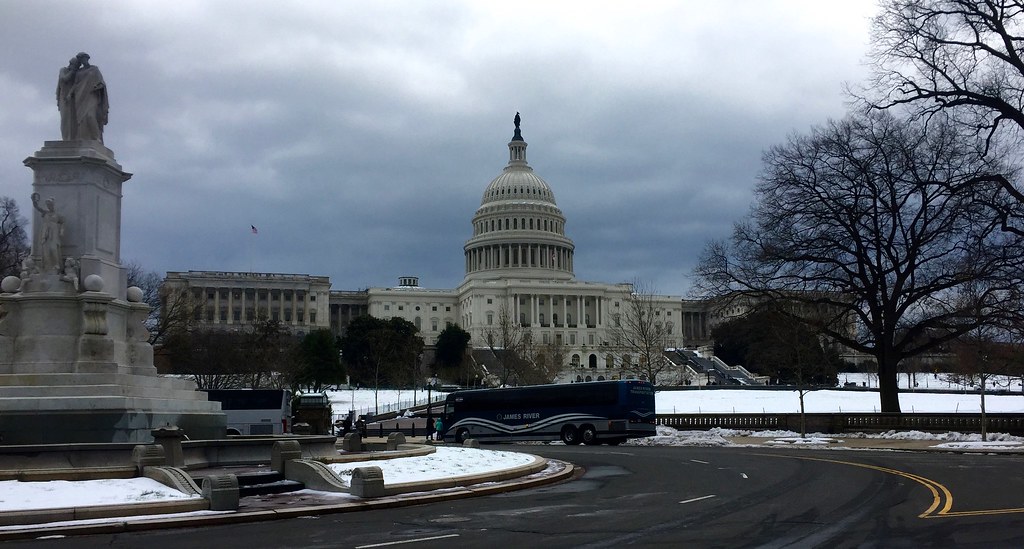
US Capitol building, focal point of the fight over the Missouri congressional map

Why the Missouri Congressional Map Ended Up at the Supreme Court

Missouri Republicans enacted a new congressional map in 2025. It was part of a broader, Trump-backed push to redraw district lines across GOP-controlled states ahead of the 2026 midterms. Opponents responded quickly by gathering signatures for a statewide referendum that would undo the new map entirely. The case has bounced between state and federal courts ever since. The Washington Post reported the Supreme Court’s Thursday order marked the second time in a week the justices paused the map’s use.

What the Missouri Supreme Court Already Decided

Earlier in September, the Missouri Supreme Court unanimously blocked the new districts from being used in the November election. It ordered a statewide vote on whether to keep or reject the Republican-drawn map, according to NBC News’ coverage of that ruling. That decision effectively froze the new map’s legal status while the referendum question makes its way to voters.

Which Map Missouri Will Actually Use

With the new map paused, Missouri is widely expected to fall back on its 2022 congressional map for November. That map currently splits the state’s seats six Republican to two Democratic. Legal analysts told NBC News the sequence of rulings likely signals the practical end of the fight over which map governs this cycle’s elections. The underlying referendum litigation may still continue in the background.

Voting machine used in US elections, relevant to the Missouri congressional map dispute

How This Fits the Bigger Redistricting Fight

Missouri’s case is one front in a nationwide, mid-decade redistricting push that has drawn in several Republican-led states this year. Similar legal battles are playing out elsewhere as both parties try to lock in favorable district lines before the midterms. What happens in Missouri could shape how aggressively other states pursue mid-cycle map changes. A Supreme Court willing to repeatedly pause a state’s preferred map sends a signal about how far courts will let legislatures go.

Other States Watching the Outcome

Missouri is not fighting this battle alone. Texas, Ohio and California have all pursued their own mid-decade map changes this year. It is part of a broader scramble by both parties to shore up House seats before November. Texas Republicans redrew their map earlier in 2026 with explicit encouragement from the White House, while California Democrats responded with a counter-effort of their own. Legal challenges are pending in several of those states too. The Supreme Court’s approach to Missouri could offer an early signal of how the justices might handle similar disputes elsewhere. Election administrators in Missouri face a practical deadline problem of their own. Ballots and voter information need to be finalized well before November, leaving a shrinking window to resolve which district lines apply.

Frequently Asked Questions

What did the Supreme Court do with Missouri’s map?

On September 10, 2026, the US Supreme Court temporarily blocked Missouri from using its newly drawn, Republican-favoring congressional map for the November elections. It was the second such block in a week.

Why was the Missouri congressional map redrawn in the first place?

Missouri Republicans enacted a new congressional map in 2025. It was part of a broader, Trump-backed push to redraw district lines in GOP-led states ahead of the 2026 midterms.

What did the Missouri Supreme Court rule?

Earlier in September, the Missouri Supreme Court unanimously blocked the new districts from being used in November. It ordered a statewide referendum asking voters whether to keep or reject the map.

Which map will Missouri use in November?

With the new map paused, Missouri is expected to fall back on its 2022 congressional map. That map currently allocates six seats to Republicans and two to Democrats.

Is this part of a bigger national redistricting fight?

Yes. Missouri’s case is one piece of a nationwide, mid-decade redistricting push led by President Trump. The push aims to redraw House district lines in Republican-controlled states before the midterms.

Does the Supreme Court’s pause end the legal fight?

Not fully. But legal observers say it likely signals the effective end of the battle over which map applies to the 2026 midterms. The referendum case itself continues in state court.

Missouri’s fight is a reminder that redistricting battles increasingly play out on compressed timelines, with courts, legislatures and voters all racing the election calendar at once. Whichever map Missouri ultimately uses, the dispute has already shown how a single state’s district lines can become a national flashpoint. In a closely divided Congress, a handful of seats can decide which party controls the chamber. For other elections shaping the fall political calendar, see our coverage of the AfD’s win in Saxony-Anhalt and Russia’s Duma election this month.

Sources