A Rock in the Red Sea Just Changed Who Controls 10% of World Trade

One of the world’s busiest shipping chokepoints has changed hands. The
Bab el-Mandeb takeover finished on Friday 12 September 2026, when Houthi fighters reached
Perim Island after Yemeni government forces withdrew. The rocky island splits the narrowest part of the
strait into two shipping lanes. Holding it, together with the Red Sea coastline and the Hanish Islands,
gives the group physical control of the gateway between the Red Sea and the Indian Ocean.

What the Bab el-Mandeb takeover actually changed

Perim, also called Mayyun, is a volcanic island of a few dozen square kilometres. Its value is position,
not size. It sits inside the strait and divides the passage into two channels.

Before last week, Houthi forces could reach shipping from the Yemeni mainland. Now they sit on both sides
of the traffic and in the middle of it. Al Jazeera reported that the group holds Yemen’s entire Red Sea
coastline alongside Perim and the Hanish Islands.

Houthi military spokesman Yahya Saree said maritime navigation remains safe for all companies except
Saudi ships. The group had already banned those. That is a statement of intent from an interested party, not
a guarantee. Shipowners will price it accordingly.

The capture came without a fight. Yemeni government forces withdrew, and the island changed hands. That
detail matters for anyone assessing how durable the position is. Ground taken without combat can be lost the
same way.
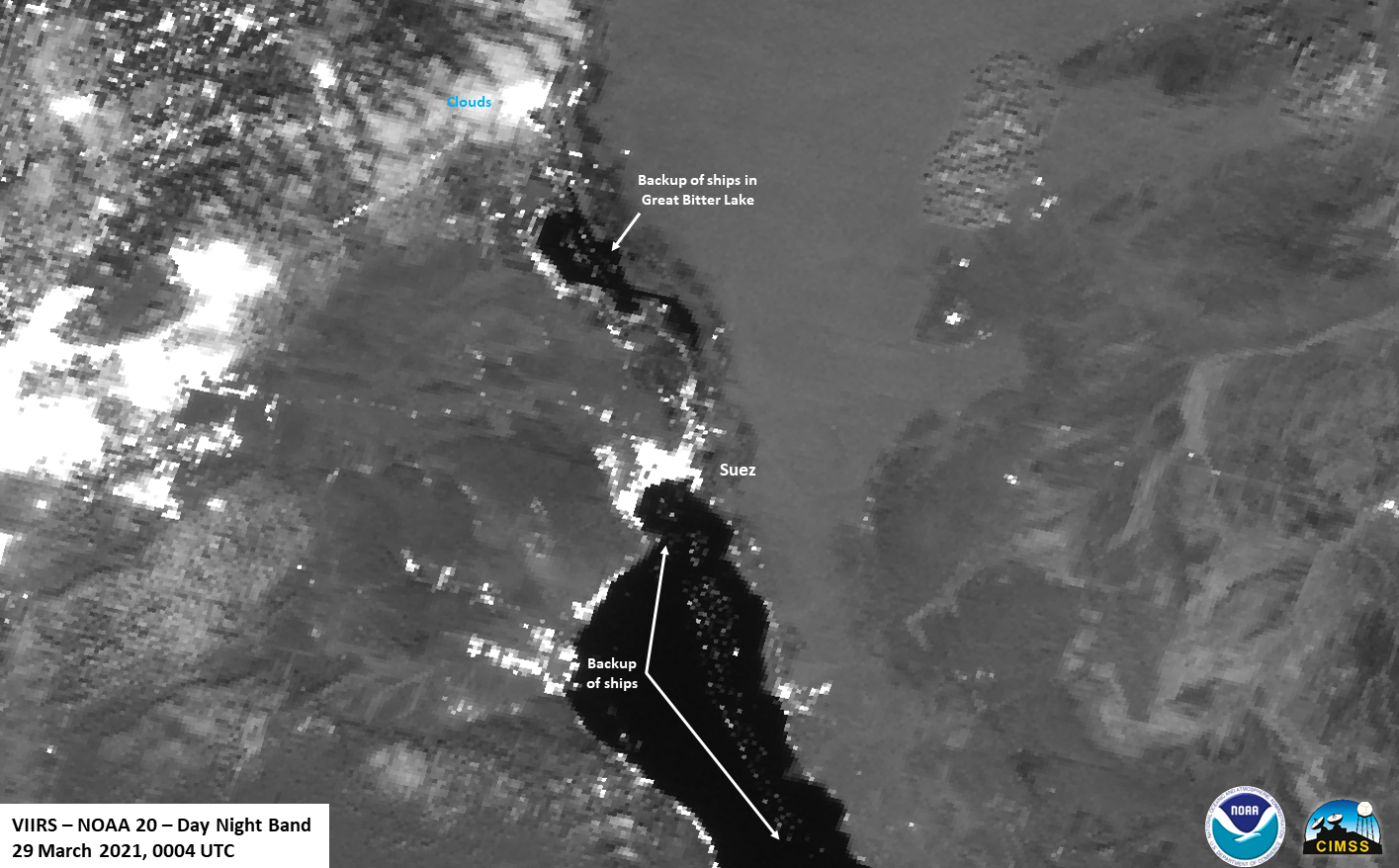
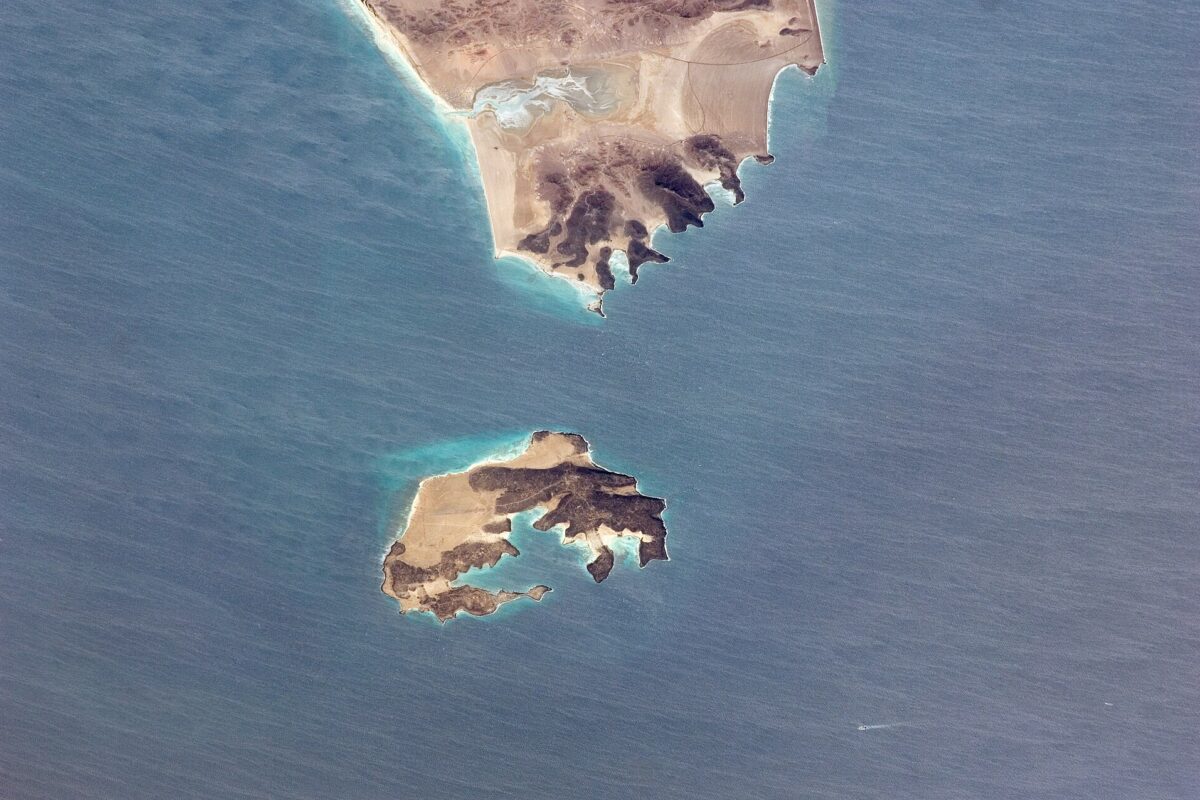
Satellite view of Red Sea shipping affected by the Bab el-Mandeb takeover
Red Sea shipping seen from orbit. Traffic through the strait feeds the Suez route to Europe.

Why this strait carries so much weight

Bab el-Mandeb connects the Red Sea to the Gulf of Aden and the Indian Ocean. Everything moving between
Asia and Europe through the Suez Canal passes it first. By Al Jazeera’s accounting the strait handles close
to 10 per cent of global trade and roughly 5 to 7 per cent of seaborne oil.

The alternative is the Cape of Good Hope. That route adds roughly ten to fourteen days on an Asia-Europe
voyage, plus the fuel to cover it. Carriers absorb some of that. They pass on the rest through surcharges.

Insurance is the faster-moving cost. War-risk premiums reprice within days of a change in control. They
reprice again after any incident. Owners often feel the insurance line before the freight line.

Schedules take the strain next. A longer route ties up more ships to run the same weekly service. Vessels
that are at sea cannot load elsewhere. Capacity tightens across unrelated trades, and rates rise on routes
that never touch the Red Sea.

Who feels the Bab el-Mandeb takeover first

Egypt feels it early. Suez Canal transit fees are a significant source of foreign currency, and traffic
that diverts around Africa never reaches the canal.

Saudi Arabia faces a narrower problem. With Saudi-linked vessels named as excluded, exports routed
through the Red Sea carry a specific risk that other flags do not. That follows the pressure already visible
after the shutdown of the
East-West pipeline
. The advance began further north, as our report on
the capture of Mocha
set out four days earlier.

East African economies sit in a different position again. Djibouti and Eritrea face the strait directly.
Port revenue, transhipment volumes and regional bunkering all depend on traffic that now passes a contested
gate.

Importers further along the chain feel it last and least precisely. A consumer-goods buyer in Europe sees
a longer lead time and a higher landed cost. There is no single line item to point to. Our earlier
reports on the oil price shock hitting
Asian economies
and the
displacement crisis inside Yemen
trace the two ends of the same conflict.

The next test for Red Sea shipping

Three signals will show whether the situation settles or deteriorates. Watch transit counts published by
the Suez Canal Authority, because diversion shows up there before it shows up in retail prices. Watch
war-risk premium quotes, which move faster than official statements. And watch whether the stated exemption
for non-Saudi shipping holds in practice over the coming weeks.

Naval escort arrangements are the other variable. Any expansion or withdrawal of escort operations would
change the calculation for owners deciding between the strait and the Cape.

Questions about the strait

Where is Bab el-Mandeb?

It is the strait between Yemen and Djibouti and Eritrea, linking the Red Sea to the Gulf of Aden and the Indian Ocean.

What is Perim Island?

A small volcanic island, also called Mayyun, that sits inside the strait and divides its narrowest part into two shipping lanes.

Is shipping through the strait now blocked?

No. Houthi spokesman Yahya Saree said navigation is safe for all companies except Saudi ships. That is the group’s own statement.

How much trade passes through?

Al Jazeera puts it near 10 per cent of global trade and roughly 5 to 7 per cent of seaborne oil shipments.

What is the alternative route?

Around the Cape of Good Hope, which adds roughly ten to fourteen days to an Asia-Europe voyage plus the extra fuel.

Where this reporting comes from

The Pentagon Finally Put Numbers on What the Iran War Cost It

The Defense Department’s inspector general has published the first formal accounting of what the
Iran war cost American forces. The Pentagon watchdog Iran report, released on Monday 14
September 2026, covers 28 February to 30 June. It tallies damage to bases across eight countries, the loss
of critical radar, and the strain on munitions stockpiles. It is the most detailed public picture of the
war’s early months so far.

What the Pentagon watchdog Iran report counted

Iranian strikes damaged or destroyed hundreds of buildings and structures at American bases, according to
the review. The affected countries span the Gulf and the wider region: Kuwait, Bahrain, Qatar, the United
Arab Emirates, Saudi Arabia, Iraq, Oman and Jordan.

Some losses mattered more than their replacement cost suggests. Missile defence radar installations were
among the assets destroyed in the war’s opening days. Radar is what turns an interceptor into a defence. Lose
the sensor and the shooter has nothing to aim at.

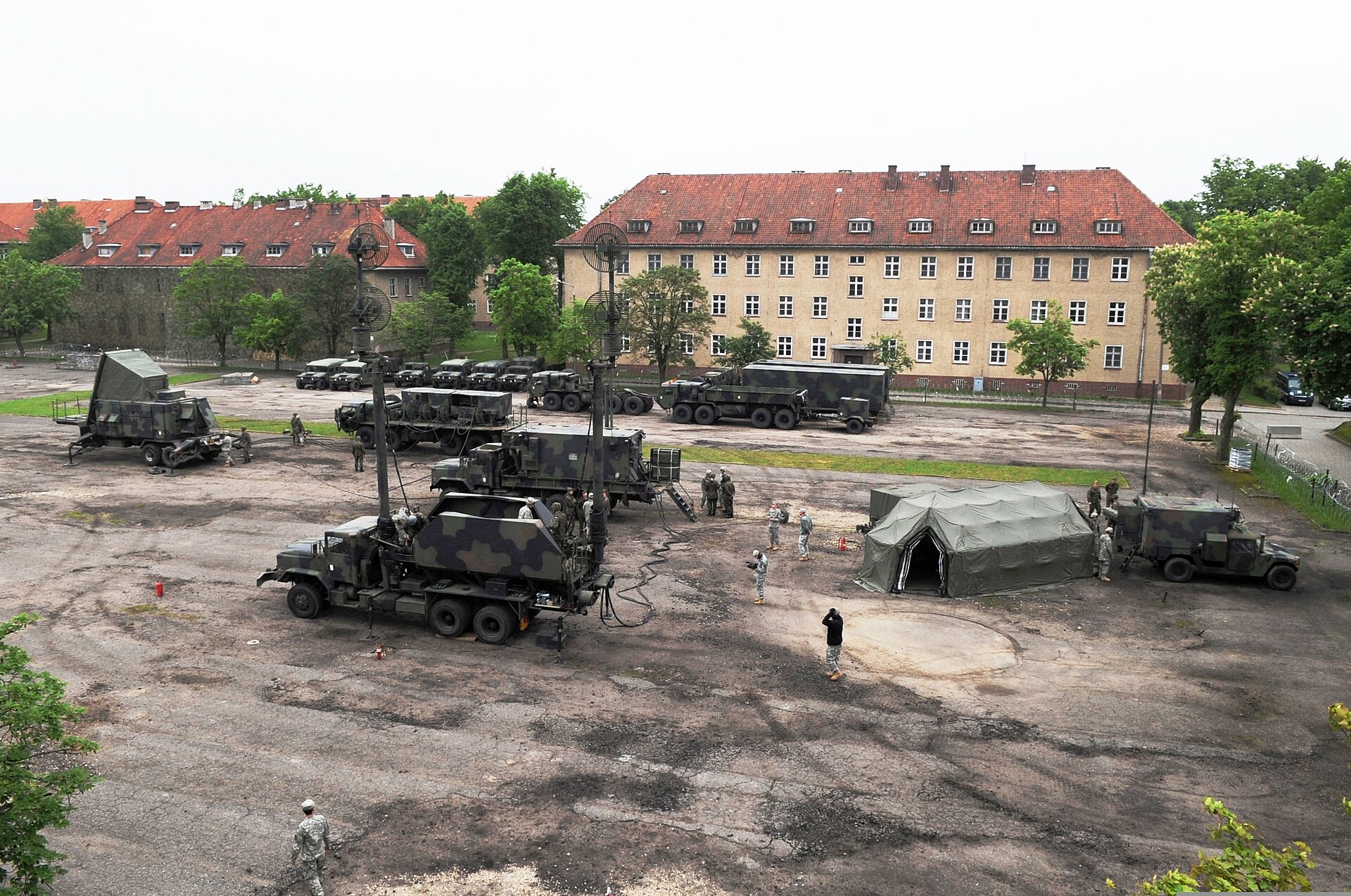
Air defence battery of the type covered in the Pentagon watchdog Iran report
A Patriot air-defence battery. The watchdog review found radar installations among the earliest losses.

Why losing Bahrain reshaped the naval map

The destruction of the Navy’s regional hub in Bahrain forced an improvisation. With the hub gone, the
Navy struggled to establish adequate bases and support ports in the region.

Diego Garcia took up much of the load. The British Indian Ocean Territory atoll sits roughly 2,400 nautical
miles from the Gulf. Using it as a sea logistics hub stretched resupply cycles to between 14 and 18 days.
That is a long time for a ship waiting on parts, fuel or ordnance.

Distance is not a footnote in naval operations. It sets how often a ship can be on station, how quickly a
damaged vessel returns to service, and how much of the fleet is in transit rather than in position.

The munitions question the review reopens

The report acknowledges depletion of key munition stockpiles. That is a notable admission, because the
Pentagon has repeatedly pushed back against reporting of a shortage. Defence officials have said the
military has every weapon it needs to fight any conflict.

Both statements can be technically true at once. A stockpile can fall sharply and still exceed the level
planners consider adequate. The gap between the two positions is a judgement about how much margin is
enough, not a dispute about arithmetic. Readers should note that the Pentagon’s position here is the
Pentagon’s own account of its readiness.

What the review does not settle is replacement time. Interceptors and precision munitions have long
production lead times. A stockpile drawn down over four months can take years to rebuild.

Production capacity is the constraint, not budget. Advanced interceptors need specialised solid-rocket
motors and seeker components from a small supplier base. Adding a production line takes years of tooling and
qualification. Money released today shows up as delivered rounds well after the crisis that prompted it.

What the findings mean for eight host governments

The report names the countries where American bases took damage. That list is diplomatically sensitive.
Several of those governments have discussed the strikes only in general terms at home.

Basing arrangements rest on a bargain. The host provides territory and access. The guest provides
security and, usually, economic benefit. A public accounting of damage tests both halves of that bargain in
front of domestic audiences.

Expect the review to surface in parliamentary questions and local reporting across the Gulf. It gives
critics of the basing arrangements a document to cite, and it gives governments a reason to press for
clearer defensive commitments before the next round of negotiations.

What the accounting signals beyond the Gulf

The findings land while the region is still unsettled. Energy markets remain sensitive to anything that
touches Gulf infrastructure, as our reports on
the shutdown of the Saudi
East-West pipeline
and the oil
price shock reaching Asian economies
set out. The diplomatic track is unsettled too — see our coverage of
the Iran sanctions panel
vote
.

For the eight host countries, the review is also a domestic political document. It puts numbers on damage
that governments in Kuwait, Bahrain and Qatar have discussed only in general terms.

The questions the report leaves open

The review stops at 30 June. Anything after that date falls outside it, so the current state of the bases
is not covered. Expect follow-up reviews, and expect congressional committees to ask for the classified
annexes.

Three questions will shape the next round. How long will radar and air-defence replacement take? What
does the Bahrain hub’s loss mean for permanent basing decisions? And will the munitions finding change
procurement budgets in the next request to Congress?

Reader questions on the report

Who wrote the report?

The Defense Department’s inspector general, the Pentagon’s own internal watchdog, in a special report released on 14 September 2026.

What period does it cover?

From the start of the war on 28 February through 30 June 2026. Later events fall outside its scope.

Which countries had bases damaged?

Kuwait, Bahrain, Qatar, the United Arab Emirates, Saudi Arabia, Iraq, Oman and Jordan.

Does the Pentagon accept there is a munitions shortage?

The report acknowledges stockpile depletion. The Pentagon has separately said it has the weapons it needs for any conflict.

Why does Diego Garcia matter?

It became a sea logistics hub after the Bahrain naval hub was destroyed, stretching resupply cycles to 14 to 18 days.

Reporting sources

The Iran Sanctions Panel Vote Facing a Russian and Chinese Veto

The UN Security Council is expected to hold an Iran sanctions panel vote on 17 September, according to diplomats cited by wire reporting, on whether to renew the mandate of the expert panel that monitors compliance with sanctions on Iran. The mandate expires on 26 September. France announced the vote; Russia and China have signalled they do not accept that the Council has the standing to hold it at all.

What the panel of experts actually does

A UN panel of experts is a small standing team that reports to a Security Council sanctions committee. It investigates alleged violations, tracks procurement networks and shipping, and publishes findings that member states use to justify enforcement. It has no power to punish anyone. Its value is evidentiary: without a panel, the sanctions committee is largely dependent on what individual governments choose to tell it, and those governments have interests.

That is why mandate renewals, which look procedural, matter. Letting a panel lapse does not lift sanctions. It removes the independent reporting that makes them legible.

How the Council got back to Iran sanctions

UN sanctions on Iran, including measures under resolution 1737 (2006), were reimposed on 27 September 2025 through the snapback mechanism, after findings of Iranian non-compliance with its nuclear obligations. Snapback was the enforcement device built into the 2015 nuclear agreement: it allowed a participant to restore previously lifted UN measures without a fresh Council vote that could be vetoed.

Since then the Council has been arguing about whether that reimposition was valid. At a Council session earlier this year, Russia and China challenged the legality of the snapback and the Council’s continuing role on the Iranian nuclear file. In a joint statement in March, the two governments said the Council “cannot proceed to re-establish the 1737 Committee or its Panel of Experts.”

Strip out the diplomacy and there are two incompatible positions. The Western position is that snapback was lawfully triggered, the pre-2015 sanctions architecture is back in force, and the Council therefore needs a committee and a panel to run it. The Russian and Chinese position is that the snapback was procedurally invalid, that the underlying resolution had already terminated, and that anything built on it — committee, panel, mandate renewal — has no legal basis.

Neither side can win that argument inside the Council, because the Council has no mechanism for ruling on its own competence. What it has is votes and vetoes. A renewal resolution needs nine affirmative votes and no veto from a permanent member, which is precisely the constraint in play.

The Security Council Report’s September forecast places this alongside a crowded month: continued attention to the Middle East and the effects of disruption to navigation in the Strait of Hormuz, possible meetings on Ukraine, and the 81st General Assembly’s high-level week, whose session opened on 8 September under a new Assembly president, Bangladesh’s Khalilur Rahman.

Three ways 17 September can go

The resolution is vetoed. The most widely anticipated outcome. The panel’s mandate lapses on 26 September, the sanctions committee continues on paper without independent monitoring, and enforcement shifts almost entirely to national and regional measures — US, EU and UK designations that operate outside the UN framework.

A short technical rollover passes. Councils under pressure often buy time with a brief extension that nobody treats as a precedent. It would require Russia and China to abstain rather than veto, which is a lower bar than support but still a concession on the legality argument they have been making.

The vote slips. With the mandate running to 26 September, the sponsors have a few days of slack. Postponing past high-level week is possible if they judge the numbers are not there and want to avoid a public defeat during the General Assembly.

Whichever way it goes, the practical effect on Iran’s economy in the near term is limited — the binding constraints are national sanctions and the wider regional conflict. The effect on the Council’s own authority is larger, and harder to reverse.

Common questions

When is the Iran sanctions panel vote?

Diplomats have indicated 17 September 2026, with the panel’s mandate due to expire on 26 September.

What is a panel of experts?

A small investigative team reporting to a Security Council sanctions committee. It documents violations and procurement networks but has no enforcement power of its own.

Why do Russia and China object?

They argue the 2025 snapback that reimposed the sanctions was procedurally invalid, so the committee and panel built on it have no legal basis. They stated in March that the Council cannot re-establish the 1737 Committee or its panel.

Would a veto lift sanctions on Iran?

No. It would end the UN’s independent monitoring mandate. The measures themselves, and separate US, EU and UK sanctions, would remain.

What is snapback?

A mechanism from the 2015 nuclear agreement allowing a participant to restore previously suspended UN sanctions without a new Council vote that a permanent member could veto.

How many votes does renewal need?

Nine of fifteen in favour, with no veto from any of the five permanent members.

Follow the thread

NAZA Documentary Venice Prize Sparks Israeli Citizenship Row

Israel’s culture minister, Miki Zohar, said he would move to revoke the citizenship of filmmakers Yuval Abraham and Rachel Szor after their Gaza documentary took a Special Jury Prize at the Venice Film Festival. The NAZA documentary Venice prize was announced at the festival’s closing ceremony; within days the minister had called the film vile, described the award as shocking, and said the pair’s actions amounted to treason against the state.

The statement and who made it

Zohar holds the culture and sport portfolio in the Israeli government and has previously intervened in funding and platform decisions involving Israeli film. His statement, carried by Israeli and international outlets on 13 and 14 September, named both directors and framed the award as a reward for betraying the country.

Abraham is not an unknown quantity in Israeli public debate. He co-directed No Other Land, which won the Academy Award for best documentary feature, and he has been a persistent critic of Israeli policy in the occupied territories. Szor was a cinematographer on that film. The Times of Israel logged the minister’s call in its liveblog; Deadline reported the same demand from the trade side.

What the film claims

NAZA runs 80 minutes. According to the festival’s official synopsis, it examines Israel’s use of AI-assisted targeting systems during the Gaza war, including a system referred to as Lavender, and argues that those systems produced mass civilian casualties. The film received a lengthy standing ovation at its premiere, reported at around 25 minutes.

Those are the filmmakers’ and the festival’s characterisations, and they should be read as such. Israel has consistently rejected the claim that it deliberately targets civilians in Gaza and has said its targeting process includes human review. The existence of AI-assisted target generation in the Gaza campaign has been reported by Israeli and international outlets since 2024; the disputed question is what weight those systems carried in decisions and what review they received. A documentary prize does not settle that dispute, and this report does not attempt to.

Speaking to Haaretz, the directors said they intend to distribute the film inside Israel — which would move the argument from a festival in Venice to Israeli cinemas and regulators.

Whether the threat can be carried out

Probably not by the person making it. Israeli citizenship law does not give the culture ministry any role in revocation. The power sits with the interior minister, on limited statutory grounds including breach of loyalty to the state, and its use requires a court. Israeli courts have treated the provision as exceptional and have been reluctant to leave people stateless, which international law disfavours.

So the realistic reading is that the statement is political rather than procedural: a signal to a domestic audience, and pressure on distributors, broadcasters and funding bodies that do answer to the culture ministry. That second effect is the one worth watching, because it does not need a court.

A pattern, not a one-off

Ministerial responses to Israeli films that criticise the conduct of the war have become routine since No Other Land‘s Oscar, ranging from funding threats to calls for boycotts of ceremonies. Meanwhile the diplomatic environment around Israel has tightened: several Western governments have moved on trade measures tied to settlements, and the Gaza war continues to shape votes at the United Nations.

What makes this case sharper is the target. Stripping citizenship is not a funding decision or a rhetorical boycott; it is a proposal to remove a person’s legal membership of the state because of the content of a film. Even as an unenforceable demand, it sets a marker that press-freedom groups are likely to contest.

What follows: watch for whether the interior ministry says anything at all, whether Israeli distributors take the film, and whether the attorney general’s office comments on the legality of the demand. Any of those three would turn a statement into a process.

Reader questions

What is NAZA?

An 80-minute documentary about the Gaza war by Israeli filmmakers Yuval Abraham and Rachel Szor, which won a Special Jury Prize at the 2026 Venice Film Festival.

What did Israel’s culture minister say?

Miki Zohar said he would act to revoke the two directors’ Israeli citizenship, called the film vile and the award shocking, and said their conduct constituted treason.

Can a culture minister revoke citizenship in Israel?

No. Revocation runs through the interior minister on narrow statutory grounds and requires a court. The culture ministry has no role in the process.

What does the film allege?

According to the festival synopsis, it examines Israel’s use of AI-assisted targeting systems in Gaza, including one referred to as Lavender, and argues they produced mass civilian casualties. Israel rejects the claim that it deliberately targets civilians.

Have these filmmakers won awards before?

Yuval Abraham co-directed No Other Land, which won the Academy Award for best documentary feature; Rachel Szor worked on that film as a cinematographer.

Will the film be shown in Israel?

The directors have said they intend to distribute it there. Whether Israeli distributors and cinemas take it is unresolved.

Keep reading on Tamara News

Bangsamoro Parliament Election: A Region Votes for the First Time

Voters in the Bangsamoro Autonomous Region in Muslim Mindanao began casting ballots on 14 September 2026 in the region’s first parliamentary election. The Bangsamoro parliament election fills an 80-seat legislature that will replace the appointed Bangsamoro Transition Authority, the interim body that has governed the southern Philippine region since 2019. It is the last major institutional step in a peace settlement that ended decades of armed conflict, and it has taken four postponements to reach polling day.

What was actually on the ballot

The Bangsamoro Parliament has 80 members, and they do not all arrive by the same route. Forty seats are filled through party-list proportional representation, in which voters choose a party rather than a person and seats are allocated in proportion to the vote. Thirty-two seats are single-member parliamentary districts decided by first past the post. The balance are reserved seats, set aside under the Bangsamoro Organic Law for constituencies that a purely geographic map would leave out, including non-Moro indigenous communities and settler communities.

That design is unusual for the Philippines, where most elections are candidate-centred contests. Here, the party-list block is the largest single route into parliament, which pushes parties to build regional platforms rather than rely solely on local personalities. The parliament will then choose a chief minister from among its members, a parliamentary rather than presidential arrangement, and that person heads the regional government.

Al Jazeera reported that polls opened across the Muslim-majority region on Monday morning, with results expected to be tracked through the day.

Four delays and how the date finally stuck

The election was originally scheduled for May 2022. It moved to May 2025 because of the pandemic and because the region had not yet passed its own Bangsamoro Electoral Code. It then moved again, to 13 October 2025, after the Supreme Court ruled that Sulu is not part of the Bangsamoro region — a decision that left a block of seats unallocated and the district map incoherent. A further postponement followed when the court found the districting laws unconstitutional. Congress passed a reset law in March 2026 that set 14 September 2026 as the date.

Four delays is not a footnote. Each one extended the life of the Bangsamoro Transition Authority, an appointed body in which the Moro Islamic Liberation Front holds the dominant share of seats under the terms of the 2014 peace agreement. Supporters argued the extensions bought time to build institutions. Critics argued that an unelected authority governing for seven years is difficult to describe as transitional.

Why the seat maths matters

The practical question is whether the former rebel movement that runs the transition authority can convert its position into an elected mandate, or whether established provincial political families take a controlling share. Both outcomes are live. The party-list component rewards organisation and regional reach; the district component rewards local machinery, which entrenched families have had far longer to build.

There is a second question underneath it. The Bangsamoro settlement was built on a bargain: armed groups would decommission in exchange for genuine self-government. An election that produces a parliament seen as legitimate strengthens that bargain. One seen as captured, or as producing a government unable to function, weakens it. That is why analysts writing before the vote described it as a turning point rather than a routine poll.

It is worth being plain about what the election does not settle. Sulu’s exclusion from the region remains a court-decided fact with unresolved political consequences. Decommissioning of combatants and the economic package attached to the peace deal run on their own timetables.

What happens next

Counting and canvassing follow polling day, with the Commission on Elections proclaiming winners once returns are consolidated. The new parliament then convenes, elects a chief minister and speaker, and takes over from the transition authority. Expect disputes: with 32 district races decided by plurality and a party-list allocation to compute, protests and recount petitions are close to inevitable in a first-time election.

For the wider Philippines, the result feeds into national politics at a tense moment, with the country’s vice president already facing legal proceedings and the 2028 national cycle beginning to form. For the region itself, the more useful measure over the next year is mundane: whether the elected government can pass a budget, deliver services and hold together a coalition.

The Philippine Daily Inquirer’s explainer and Rappler’s live results tracker are the closest things to primary-source coverage as returns come in.

Questions readers are asking

When did the Bangsamoro parliament election take place?

Polling took place on 14 September 2026, the date fixed by a reset law passed by the Philippine Congress in March 2026 after three earlier postponements.

How many seats are in the Bangsamoro Parliament?

Eighty. Forty are party-list seats allocated by proportional representation, 32 are single-member district seats decided by first past the post, and the remainder are reserved seats for sectors including non-Moro indigenous and settler communities.

Why was the election postponed so many times?

The first delay followed the pandemic and the absence of a regional electoral code. Later delays followed Supreme Court rulings that excluded Sulu from the region and struck down the districting laws, both of which made the seat map unworkable until Congress legislated again.

Who governed the region before this vote?

The Bangsamoro Transition Authority, an appointed interim parliament in place since 2019 in which the Moro Islamic Liberation Front holds the largest share of seats under the 2014 peace agreement.

Does the parliament choose the regional leader?

Yes. The Bangsamoro system is parliamentary: members elect a chief minister from among themselves rather than voters electing a regional executive directly.

Is Sulu voting in this election?

No. The Supreme Court ruled that Sulu is not part of the Bangsamoro region, and that ruling is one of the reasons the seat map had to be redrawn.

More from our world desk