UN General Assembly High-Level Week 2026: The Full Agenda

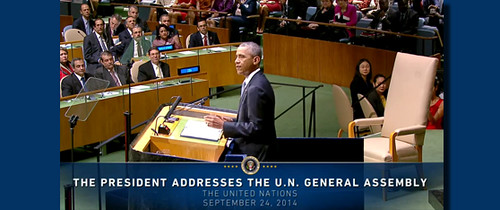
The UN General Assembly high-level week opens on 18 September 2026 and runs to 28 September, with heads of state and government gathering in New York for the 81st session under the theme “Restoring trust, managing transformation: A United Nations that delivers for all”. The calendar the UN has published is unusually front-loaded with formal outcomes rather than speeches alone.

Jump to a section

The dates that matter

The UN’s official high-level week page sets the window at 18 to 28 September. The week opens with the SDG Moment on 18 September, a three-hour session in the General Assembly Hall convened by the Secretary-General under General Assembly Resolution 74/4, which showcases national and community-level progress on the Sustainable Development Goals.

Two supporting platforms bracket the week. The SDG Media Zone, produced by the UN Department of Global Communications, runs 21 to 25 September. The Goals Lounge, convened by the Deputy Secretary-General and hosted by the UN Office for Partnerships, runs longer, from 14 to 25 September.

The General Debate

The General Debate runs 22 to 28 September in the General Assembly Hall. It is the annual meeting of heads of state and government at the opening of a session, where leaders set out national positions and priorities. Khalilur Rahman of Bangladesh presides over the 81st session.

The Secretary-General set the framing in June, returning to the Charter’s opening words. “The Charter of the United Nations begins with three simple words: ‘We the peoples,'” António Guterres said, adding that the phrase is not “we the powerful” or “we the victorious”. It is a deliberate signal ahead of a session in which several of the scheduled meetings turn on whether smaller states can get commitments from larger ones.

Climate action and the just transition

The Climate Summit on 23 September, convened by Guterres in the Trusteeship Council Chamber, is the week’s centrepiece on emissions. The UN’s own framing is notably blunt: ten years after the Paris Agreement, it says, the climate crisis has entered a new phase in which overshoot is now inevitable, even as the energy transition accelerates.

Leaders from major economies, developing and vulnerable countries, and major energy producers and consumers are being brought into the same room to set out how they will accelerate the transition, strengthen energy security and advance climate justice. The backdrop is a year of records — our report on the hottest August on record covers the temperature data leaders will be asked about.

Four high-level meetings

Beyond the debate and the climate event, four commemorative or negotiated meetings sit on the calendar.

On 23 September, a high-level meeting marks the 40th anniversary of the Declaration on the Right to Development, adopted in 1986. On 24 September, a high-level plenary addresses the existential threats posed by sea level rise, aimed at small island developing states and low-lying coastal areas.

On 25 September, the President of the General Assembly convenes a one-day meeting on pandemic prevention, preparedness and response, themed around a multilateral and intergenerational approach built on equity and solidarity. This is the one scheduled to produce a concise, action-oriented political declaration agreed by consensus through intergovernmental negotiations — the closest thing the week has to a binding output.

On 28 September, a high-level meeting marks the 25th anniversary of the Durban Declaration and Programme of Action on racial justice, followed on 29 September by the annual plenary for the International Day for the Total Elimination of Nuclear Weapons.

What to look for

Three tests are worth applying as the week runs. Whether the pandemic declaration survives consensus negotiation intact, or is thinned to language every delegation can accept. Whether the climate event produces named national commitments or restates existing pledges. And whether the sea level rise plenary moves from recognition to financing, which is the step small island states have pressed for across several sessions.

The geopolitical context is heavier than usual. Our coverage of the BRICS New Delhi declaration and of the EU’s renewal of Russia sanctions sets out the blocs that will be arguing past each other in the hall.

Where to follow it

All listed events are live-streamed on UN Web TV. Sessions in the General Assembly Hall and Trusteeship Council Chamber run on published times in New York, and the UN posts the speaker list for the General Debate as it firms up during the week.

Common questions about the session

When does the UN General Assembly high-level week run in 2026?

The UN lists high-level week as 18 to 28 September 2026, with the General Debate itself running from 22 to 28 September in the General Assembly Hall.

Who is presiding over the 81st session?

Khalilur Rahman of Bangladesh presides over the 81st session, under the theme “Restoring trust, managing transformation: A United Nations that delivers for all.”

What is the Climate Summit on 23 September?

It is a high-level event on climate action and the just transition convened by Secretary-General António Guterres, bringing together major economies, vulnerable states and large energy producers and consumers.

Is there a formal outcome document this year?

The high-level meeting on pandemic prevention, preparedness and response on 25 September is scheduled to conclude with a political declaration agreed by consensus through intergovernmental negotiation.

Where can the sessions be watched?

The UN streams the events on UN Web TV, and runs the SDG Media Zone from 21 to 25 September alongside the Goals Lounge from 14 to 25 September.
More world coverage

DRC Ebola Travel Restrictions Block US-Bound Flights

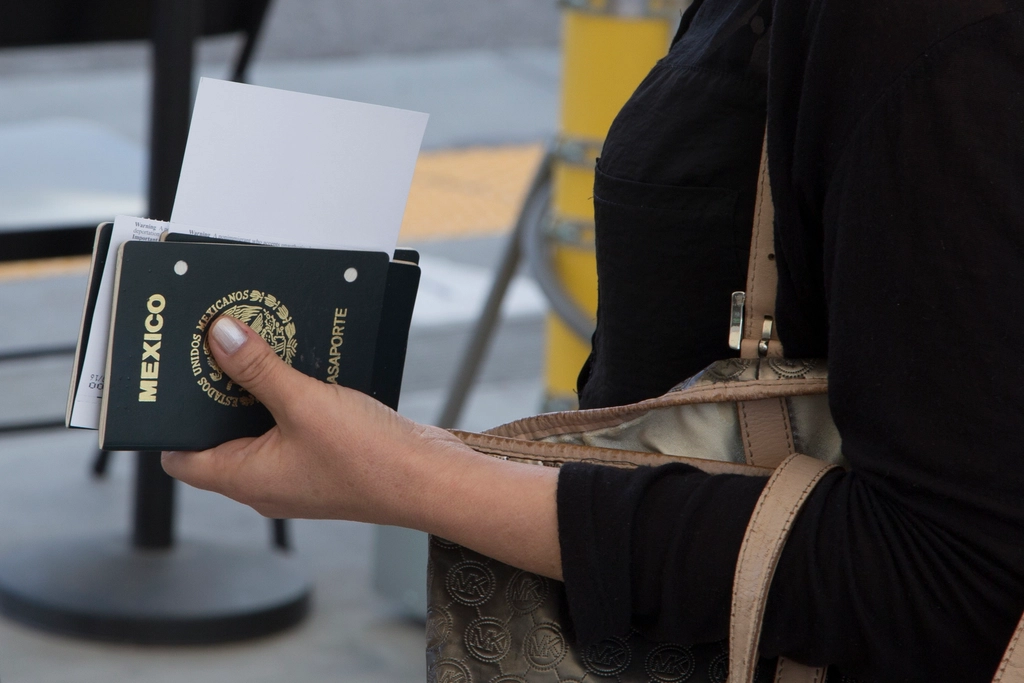
Travellers who have been in the Democratic Republic of the Congo face a hard block on flights to the United States, under DRC Ebola travel restrictions that the US Centers for Disease Control and Prevention says are in force while the country fights what it now calls the second-largest Ebola outbreak on record. The restriction applies to everyone, US citizens included, who has been in DRC within 21 days of departure.

Contents at a glance

The restriction in plain terms

CDC’s current situation summary, last reviewed on 11 September 2026, states that US entry for travellers recently in DRC is temporarily restricted. Travellers who have been in the country within 21 days of their flight will not be allowed to board commercial flights with US destinations.

Three details matter for anyone planning a route. First, the bar covers US citizens and US nationals, not only foreign passport holders. Second, it captures transit: passengers with an intermediate stop in DRC, or on multi-stop itineraries routed through DRC, are covered whether or not they disembark. Third, the 21-day clock is a waiting period, not a formality — CDC tells US citizens and nationals to plan on remaining outside DRC for 21 days before entering the United States.

A softer rule applies to the neighbouring outbreak zone. US citizens and nationals who were in Uganda or South Sudan, and not in DRC, within 21 days of arrival must enter through designated airports for enhanced screening rather than any port of entry. All of this sits on top of a standing CDC order under 42 CFR 71.40, which continued temporary entry restrictions for certain categories of traveller present in DRC, Uganda or South Sudan.

How large the outbreak has become

The outbreak is caused by Bundibugyo virus, one of the orthoebolaviruses, and is DRC’s seventeenth Ebola outbreak. CDC says it is spreading substantially faster than previous ones and is now the second largest on record.

The speed comparison is the striking part. CDC notes the outbreak passed 1,000 confirmed cases within 40 days of response activation. The 2018 outbreak in DRC took roughly 235 days to reach the same mark. Confirmed cases have been recorded in Haut-Uele, Ituri, North Kivu, South Kivu, South Ubangi and Tshopo provinces, with South Kivu reporting no confirmed case since 29 May.

Uganda reported cases at the same time DRC declared its outbreak — 21 confirmed and probable cases and three deaths, with the last confirmed on 21 June. Cases linked to the DRC outbreak have also been reported in Kampala.

CDC has about 500 staff working on the response, including more than 120 deployed to the affected countries. The European Centre for Disease Prevention and Control is running its own assessment for European travellers and health systems.

Where CDC says not to go

CDC’s travel health notices split DRC into tiers. Ituri and North Kivu provinces sit at Level 4, avoid all travel. Haut-Uele and Tshopo sit at Level 3, reconsider non-essential travel. The rest of DRC and Uganda sit at Level 2, practise enhanced precautions — which in CDC’s framing means avoiding exposure and monitoring for symptoms while travelling and for 21 days after leaving.

For travellers, the practical read is that the notice tier and the boarding restriction are separate instruments. A Level 2 notice does not soften the 21-day flight bar, because the bar keys off presence in the country, not the province visited.

Why this one is harder to contain

CDC lists the constraints bluntly. Health infrastructure in the affected areas is limited, including access to diagnostics, laboratory services and infection prevention supplies. Ongoing conflict creates security problems and complicates contact tracing. Health workers are being infected while treating patients, with violence against them and shortages of protective equipment both cited. Frequent population movement across borders raises the risk of spread to Uganda, South Sudan and Rwanda. And mistrust of government, compounded by misinformation, makes public health communication harder.

Those are the same pressures that have shaped regional mobility policy elsewhere this year. Our reporting on China’s revised exit and entry regulations and on Australia’s shifting visa processing priorities shows how quickly health and security considerations move into ordinary immigration rules.

The decisions to watch

Three things will determine how long the boarding restriction stands. The first is case trajectory: CDC’s own comparison with 2018 suggests the response is measured against how fast the curve flattens, not the absolute count. The second is the standing order under 42 CFR 71.40, which has been extended in 30-day increments and is the legal instrument that would need to lapse. The third is whether Uganda’s run of no new confirmed cases since June holds, since cross-border spread is the pathway CDC flags most often.

Travellers with fixed dates should assume the rule stands until CDC says otherwise, and build the 21 days into itineraries rather than hoping for a waiver. Airlines enforce the boarding bar at check-in, so there is no practical appeal at the gate.

Reader questions

Who exactly is barred from flying to the United States?

Anyone who has been in the Democratic Republic of the Congo within 21 days of their flight, including US citizens and US nationals, cannot board a commercial flight bound for the United States.

Does a connection through Kinshasa count?

Yes. CDC says the restriction applies to passengers with an intermediate stop in DRC or on multi-stop itineraries via DRC, whether or not they leave the aircraft.

What about travellers coming from Uganda or South Sudan?

US citizens and nationals who were in Uganda or South Sudan, but not in DRC, in the previous 21 days are not barred from flying but must arrive through designated airports for enhanced screening.

How long must travellers wait before flying to the US?

CDC advises planning to remain outside DRC for 21 days before entering the United States, which matches the maximum incubation period for Ebola disease.

Which parts of DRC carry the highest travel notice?

Ituri and North Kivu provinces carry a Level 4 notice advising against all travel. Haut-Uele and Tshopo carry a Level 3 notice advising against non-essential travel.

Has the outbreak reached the United States?

No. CDC says no cases associated with this outbreak have been confirmed in the United States and rates the likelihood of spread there as very low.

Related on Tamara News

Sweden’s Government Just Lost a Knife-Edge Election

Sweden’s opposition left-green bloc has narrowly unseated the governing right-wing coalition. That’s according to exit polls from the country’s September 13, 2026 general election.

The Sweden election result points to a tight finish. Novus exit polling put the left-green bloc at 51.3% and 182 seats. It put the governing Tidö parties at 47.0% and 167 seats. A separate SVT/Valu exit poll showed almost identical numbers: 51.3% versus 46.8%.

How the vote broke down by party

Sweden elects all 349 members of the Riksdag in one nationwide vote. Exit polling put the Social Democrats first, on 28.4%. The Moderates followed on 18.1%, then the Sweden Democrats on 17.2%.

Further down the ballot, the Left Party polled 8.0%. The Centre Party took 7.5%, and the Greens took 7.4%. Those smaller parties will decide which bloc can actually govern once every vote is counted.

Sweden election result

Why the Sweden election result is this close

Pre-election polling had shown both blocs running close for months. Cost-of-living pressure and immigration policy dominated the campaign.

A margin this narrow, if the final count confirms it, would give the left-green bloc a majority of roughly 15 seats in a 349-seat chamber. That’s workable, but not comfortable, for coalition talks.

What a change of government would mean

If the exit polls hold, Sweden would swing back to a Social Democrat-led government. That would follow a term under the Tidö coalition, which had governed with Sweden Democrat support.

Coalition talks in Sweden typically take weeks. The Social Democrats would need deals with the Left Party, Centre Party and Greens to turn a bloc majority into a working cabinet.

What the campaign was fought over

Cost-of-living pressure dominated the campaign. Both blocs promised relief on household energy bills and housing costs after a hard year for family budgets.

Immigration and integration policy also featured heavily. The outgoing Tidö coalition had leaned on Sweden Democrat support to tighten those rules. A Social Democrat-led government would likely take a different approach.

How Sweden compares with its Nordic neighbors

Sweden’s tight race echoes recent elections elsewhere in the Nordic region. Governing coalitions there have also struggled to hold together under similar budget and energy pressure.

A change of government would shift Sweden’s voice in EU-level talks too, including on migration policy and further sanctions on Russia.

What a narrow win means for governing

A 15-seat cushion sounds comfortable on paper. In practice, it leaves little room for defections on any single vote in the Riksdag.

Coalition governments built on narrow margins often move cautiously on their most contested promises. Sweden’s next government may need to soften some campaign pledges just to keep every partner on board.

What happens next as votes are finalized

Sweden’s election authority, Valmyndigheten, will publish the final certified count in the days after election night. That process can shift narrow exit-poll margins once postal and overseas ballots are counted.

Party leaders on both sides are expected to start coalition talks once the final numbers are confirmed. A new government could be in place before the Riksdag’s autumn session picks up.

Frequently asked questions

Who won Sweden’s September 2026 election?

Exit polls from Novus and SVT/Valu both point to a narrow win for the left-green opposition bloc, with roughly 51% of the vote against about 47% for the governing Tidö coalition.

How many seats does each bloc have?

Exit polling put the left-green bloc at 182 to 183 seats. It put the Tidö parties at 166 to 167 seats, out of 349 total seats in the Riksdag.

Which party got the most votes?

The Social Democrats led all parties with 28.4% of the vote. The Moderates followed at 18.1%, and the Sweden Democrats at 17.2%.

Is the Sweden election result final?

Not yet. Exit polls are the first estimate on election night. Sweden’s election authority publishes the certified final count in the days after, which can adjust narrow margins.

What happens if the left-green bloc’s win is confirmed?

The Social Democrats would likely lead coalition talks with the Left Party, Centre Party and Greens. Together they would form a new government, replacing the outgoing Tidö coalition.

Related coverage on Tamara News

Sources

6 Dead, 130 Missing: Inside the Java Sea Ferry Disaster

A ferry carrying more than 240 passengers and crew capsized in the Java Sea on September 13, 2026. It triggered one of Southeast Asia’s largest search operations in years.

The Java Sea ferry disaster began overnight. The Virgo Transport 8 lost contact with its operator while sailing from Surabaya, on Java, to Banjarmasin, on Borneo. Indonesia’s search and rescue agency, Basarnas, confirmed six deaths. It said roughly 130 people remained missing three days later.

What happened on the Virgo Transport 8

The vessel left Surabaya on Saturday evening. It was due in Banjarmasin the next day. Basarnas said the captain sent a distress call early Sunday. He reported waves up to three meters. The ship was tilting badly. Contact was lost soon after.

Rescuers had pulled 107 survivors from the water by the latest update. A joint task force searched a wide stretch of water between Java and Kalimantan. It included navy ships, maritime police boats and a helicopter.

The Java Sea ferry disaster has drawn comparisons to earlier Indonesian ferry sinkings. Officials say the final toll will not be known until the search ends.

Java Sea ferry disaster

Why the search is taking days, not hours

Indonesia is an archipelago of more than 17,000 islands. Ferries remain the main way people and cargo move between them. This route has no direct flight alternative.

Transport ministry officials are still trying to determine the cause. It could be weather, a technical fault, or human error. That finding will shape how regulators review the ship’s capacity and safety gear.

Search conditions have been difficult. Rough seas likely contributed to the sinking. Those same seas also slow small boats and divers. Debris can scatter widely overnight.

Indonesia’s record with passenger ferry safety

Ferry accidents recur across Indonesia’s inter-island network. Vessels often carry more passengers than their rated capacity. Safety inspections vary by region.

The government has pledged tighter capacity checks after past sinkings. This incident suggests enforcement gaps persist on routes linking Java to the outer islands.

How the region is responding

Neighboring provinces sent extra boats and medical teams to support the search. Indonesia’s transport ministry asked ferry operators on nearby routes to file updated passenger counts while the probe continues.

Local officials in Surabaya opened a crisis center for families still waiting on news. Indonesia has used this approach after past maritime accidents. It centralizes information and speeds identification of recovered victims.

How the Java Sea ferry disaster compares with past sinkings

Indonesia has recorded several large ferry disasters over the past two decades. Most involved overcrowded vessels caught in sudden storms on inter-island routes much like this one.

Each past incident triggered promises of tighter enforcement. Investigators will now examine whether those earlier reforms actually reached routes like Surabaya-to-Banjarmasin, or stalled after the news cycle moved on.

What happens next in the search and recovery effort

Basarnas says search teams will keep working while there is a realistic chance of finding survivors. The operation will then shift toward recovery. Families of those aboard have gathered at ports in Surabaya and Banjarmasin.

A formal transport ministry investigation is expected once the search ends. It will cover maintenance records, passenger manifest accuracy, and whether the ship carried more people than declared.

Frequently asked questions

How many people were on the ferry that sank in the Java Sea?

Indonesian officials said the Virgo Transport 8 was carrying more than 240 passengers and crew when it lost contact early on September 13, 2026.

How many people are confirmed dead or missing?

Basarnas has confirmed six deaths. Around 130 people remain missing. Rescuers have pulled 107 survivors from the water as of the latest update.

What caused the ferry to sink?

Investigators have not determined a cause yet. The captain reported waves up to three meters before the vessel began tilting. Officials say technical or human factors have not been ruled out.

Where was the ferry traveling?

The ship was sailing from Surabaya on the island of Java to Banjarmasin, a port city in South Kalimantan on the island of Borneo.

Is ferry travel common in Indonesia?

Yes. Indonesia’s more than 17,000 islands rely heavily on ferries for inter-island transport. Routes like this one often have no direct flight alternative.

Related coverage on Tamara News

Sources

Europe Could Only Agree to Keep Its Russia Sanctions for a Week

The European Union bought itself a week. The bloc’s
Russia sanctions renewal failed to clear its usual six-month extension on 14 September
2026, so ambassadors rolled the list forward by seven days instead. The listings now run to midnight on 22
September. France and Slovakia held out over which names stay on, and the Danish presidency confirmed the
short extension after unanimity proved impossible.

How the Russia sanctions renewal stalled

The EU’s designations under its Ukraine territorial-integrity regime run in six-month blocks. Every
renewal needs all 27 member states to agree. Miss the deadline and the listings lapse automatically.

This round, agreement did not arrive. Slovakia asked for Russian businessmen Alisher Usmanov and Mikhail
Fridman to come off the list. France joined the call on Usmanov from 11 September. The remaining states
objected.

Rather than let asset freezes and travel bans expire overnight, ambassadors agreed a seven-day technical
rollover. They meet again on 22 September to attempt the full six-month renewal.

EU officials in Brussels, where the Russia sanctions renewal stalled
EU officials in Brussels. Renewal of the designations requires unanimity across all 27 member states.

What is actually covered by the listings

The regime is large. Reporting on the deadline put the number of designated individuals and entities
near 3,000, targeted with asset freezes and travel bans.

The names at the top are familiar. Vladimir Putin and Sergei Lavrov are both on the list, alongside
military commanders, officials and business figures. Below them sit companies, banks and logistics
operators.

These personal designations are separate from the EU’s sectoral measures on energy, finance and
technology. Those sit under different legal instruments and were not at risk this week. It is the individual
listings that faced the midnight deadline.

The dispute is formally about individual names rather than the policy as a whole. Each designation rests
on its own evidence file, and a member state can argue that one file is weak without rejecting the regime.
That framing matters to the two capitals holding out. It also explains why the disagreement has not been
presented as a challenge to the sanctions policy itself.

Other member states read it differently. Slovakia has pressed for a broader loosening of the bloc’s
sanctions approach on previous occasions, which colours how its requests are received in Brussels.

Why a single name can hold up the whole list

Unanimity gives every capital a veto over the package rather than over one entry. A state that wants one
designation removed can only press its case by withholding consent from everything.

That structure turns individual disputes into bloc-wide deadlines. It also hands leverage to whichever
government is willing to run the clock down, because the alternative to agreement is total lapse rather than
partial.

The wider pattern is not new. Hungary and Slovakia have both slowed previous rounds. What is new here is
France appearing on the same side of a delisting request, which changes how the dispute reads politically.
We covered an earlier expansion of the regime in our report on
the new sanctions proposed
after the Leipzig drone incident
, and the parallel deadlock at the UN in our piece on
the Iran sanctions panel
vote
.

What a lapse would actually mean

If the listings expired, frozen assets inside the EU would become accessible again. Travel bans would
stop applying. Banks and registrars would need to act on the change quickly, because holding assets frozen
without a legal basis creates its own liability.

Reversal is not symmetrical. Re-listing a delisted person takes a fresh legal act, and that person can challenge it
in the EU courts. Assets moved in the interval are hard to reach again.

That asymmetry is why even sceptical member states have generally preferred short technical extensions
over letting a deadline pass. Our coverage of
the BRICS New Delhi
declaration
sets out the counter-bloc’s position on exactly this kind of unilateral measure.

What has to happen by 22 September

Three outcomes are possible. Ambassadors agree the standard six-month renewal, with or without quiet
technical delistings. They agree another short extension, which would signal deeper deadlock. Or the list
lapses, which would be unprecedented for this regime.

Watch whether the Danish presidency revives the idea of moving to a twelve-month renewal cycle. Fewer
renewal points would mean fewer chances to hold the package hostage, which is precisely why some capitals
resist it.

Questions on the deadline

What did the EU actually extend?

The EU’s listings of individuals and entities under its Russia sanctions regime, extended by seven days to midnight on 22 September 2026.

Why only seven days?

Member states could not reach the unanimity a six-month renewal requires, so ambassadors agreed a short technical rollover instead.

Who objected?

Slovakia asked the bloc to delist Alisher Usmanov and Mikhail Fridman. France joined the request on Usmanov from 11 September.

How many people and entities are listed?

Reporting around the deadline put the figure near 3,000, subject to asset freezes and travel bans.

Are energy and banking sanctions affected?

No. Sectoral measures sit under separate legal instruments. This deadline applied to the individual and entity designations.

What happens if the list lapses?

Frozen assets in the EU would become accessible and travel bans would stop applying. Re-listing later requires a fresh legal act.

Source material

Image credit: Olnnu, via Wikimedia Commons (CC BY-SA 3.0).