Two Drones Triggered a New Round of Airstrikes in Lebanon

The Israeli military struck southern Lebanon again on Sunday, September 6. Hezbollah had launched drones at Israeli soldiers stationed in the border security zone. The Israel strikes southern Lebanon operation killed four people and wounded at least 20 others, according to Lebanon’s Health Ministry, cited by Haaretz.

What triggered the strikes

The Israeli military said Hezbollah launched two drones toward its soldiers inside the security zone. No Israeli soldiers were hurt in that attack. Israel called the drone launch “a blatant violation.” It responded with strikes across several areas, including the town of Arab Salim. Residents there had already received evacuation warnings.
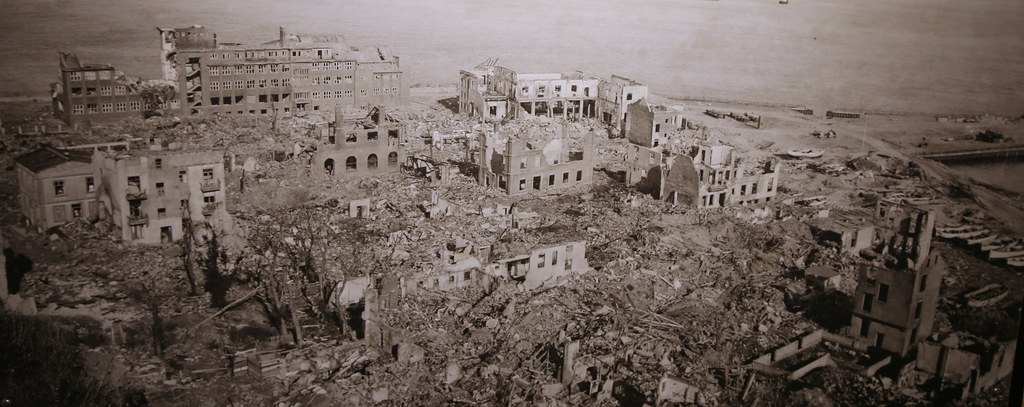
Israel strikes southern Lebanon
Southern Lebanon has seen repeated rounds of strikes despite a standing ceasefire framework.

Israeli warplanes also hit areas around Upper Nabatieh and the outskirts of Kfar Roummane. RTÉ reported the details. The Israeli military said the targeted buildings had links to Hezbollah activity, though it gave few specifics.

How this fits the current ceasefire arrangement

Israel and Hezbollah have operated under a US-mediated ceasefire for months. Both sides have accused each other of violations on a rolling basis throughout that period. Sunday’s exchange stands out. A drone launch from Hezbollah was followed within hours by lethal Israeli airstrikes. That is a sharper pattern than the smaller, contained incidents that have defined most of the ceasefire period.

France 24 separately reported that Lebanese sources put the recent death toll from Israeli strikes in the south at 13. That figure spans a broader window than Sunday’s operation alone. It shows how fluid casualty counts remain as reports arrive from multiple locations at once.

What civilians in the affected areas face

Residents of Arab Salim and nearby villages got Israeli evacuation warnings before the strikes hit. The Israeli military has used this pattern repeatedly in southern Lebanon operations. Warnings reduce casualties, but they do not eliminate them. Some residents cannot leave quickly. Others are unwilling to abandon homes and property on short notice.

What could happen next

Watch whether Hezbollah responds with more drone or rocket fire. That would test whether the broader ceasefire framework survives this exchange or unravels further. US mediators brokered the original ceasefire, and they have a direct interest in preventing a full return to open conflict. Diplomatic pressure on both sides typically intensifies within days of an incident this serious.

Lebanese officials will also face pressure to show they can restrain Hezbollah’s actions near the border, a demand Israel has repeated after nearly every recent incident in the security zone.

The ceasefire’s rocky history

The current Israel-Hezbollah ceasefire has never been fully quiet. Both sides have logged complaints against the other almost every month since it took effect. Most incidents involved small-scale fire that drew limited responses. Sunday’s exchange broke that pattern. A drone launch drew an immediate, lethal air campaign rather than a contained reply.

Lebanese officials have said before that they lack full control over Hezbollah’s actions near the border. Israeli officials counter that Lebanon’s government bears responsibility regardless. That disagreement has never been resolved, and it resurfaces after nearly every incident like this one.

Southern Lebanon’s residents live with that unresolved dispute day to day. Evacuation warnings like Sunday’s have become a recurring feature of life near the security zone. Each new round of strikes adds pressure on families deciding whether returning home is worth the risk.

US mediators face a narrow path here. Push Israel too hard and risk looking weak on security guarantees it has offered in the past. Push too little and risk watching the ceasefire erode incident by incident until it is a ceasefire in name only.

Hezbollah, for its part, faces its own balancing act. It answers to a domestic audience that expects a response to Israeli strikes, while also operating under a Lebanese government that wants to avoid a full return to war. That tension shapes how measured or aggressive its next move is likely to be.

Neither side has framed Sunday’s exchange as a turning point so far. History in this conflict suggests that framing can shift quickly if either side reads the other’s next move as an escalation rather than a one-off response.

For residents in the border villages, the label diplomats choose matters less than whether the strikes stop. That distinction, between a policy debate in distant capitals and daily life under threat, is easy to lose in coverage of any single incident.

Common questions

What started the September 6 strikes in southern Lebanon?

Hezbollah launched two drones at Israeli soldiers in the border security zone. Israel responded with airstrikes across several areas of southern Lebanon.

How many people were killed or wounded?

Lebanon’s Health Ministry reported four people killed and at least 20 wounded in the strikes, according to Haaretz.

Is there still a ceasefire between Israel and Hezbollah?

A US-mediated ceasefire has held for months. Both sides have repeatedly accused each other of violations, and incidents like this one test whether it holds.

Did Israel warn residents before striking?

Yes. The Israeli military issued evacuation warnings for areas including Arab Salim ahead of the strikes.

Where exactly did the strikes hit?

Reported strike areas include Arab Salim, Upper Nabatieh and the outskirts of Kfar Roummane in southern Lebanon.

Sources

  • Haaretz — IDF says it struck southern Lebanon after Hezbollah launched explosive drones. haaretz.com
  • RTÉ — Israel launches fresh strikes on southern Lebanon. rte.ie

Related coverage on Tamara News: the Strait of Hormuz tanker attack and Russia’s latest strikes on Kyiv.

Iran Just Fired on Three US Allies at Once — Here’s Why

Iran fired missiles and drones at three US-allied nations on September 2. The conflict with Washington had already widened fast. The Iran strikes Jordan Bahrain attacks followed new American strikes on Iranian military sites just a day earlier. It marks one of the broadest single-day escalations of the conflict so far, according to Gulf News.

What happened in each country

Jordan’s military said 13 Iranian ballistic missiles entered its airspace. Air defenses intercepted ten of them. Three landed in remote areas, and no one was hurt. Kuwait’s military said its air defenses engaged incoming missiles and drones over its territory. Bahrain reported that its systems intercepted and destroyed Iranian drones before they reached populated areas.

Iran strikes Jordan Bahrain
Regional air defense systems intercepted most of the missiles and drones fired during the exchange.

Al Jazeera reported the strikes followed US attacks on September 1. Tehran says those attacks killed 11 people inside Iran. The retaliation came fast, within roughly a day of the initial US strikes.

Why the Iran strikes Jordan Bahrain wave escalated so fast

Iranian state media framed the attacks as direct retaliation. Officials vowed “severe” consequences for what they called renewed American aggression. None of the three targeted countries hosts large numbers of US combat troops, unlike Iraq or Syria. That is what made the spread notable. Tehran chose to strike US-aligned governments broadly. It did not concentrate fire on American bases alone.

Regional air defense networks intercepted most of the incoming projectiles. Many of these systems were built or upgraded with US and European support over the past decade. That interception rate kept casualties at zero across all three countries, even as more nations were drawn into direct fire.

The bigger picture in the region

This exchange sits inside a wider war. It began after the US and Israel struck Iranian nuclear-linked sites earlier this year. Tehran had declined to halt uranium enrichment under US pressure. Fighting has flared and cooled in cycles since then. Diplomats on multiple sides say intermittent pauses look more likely than a durable ceasefire in the near term.

Where this goes from here

Jordan, Kuwait and Bahrain have not announced retaliation of their own. That is a signal. Each country appears to be avoiding direct combatant status, positioning itself instead as a target rather than an active participant. Airlines serving the Gulf have already adjusted routes because of the wider conflict. Further Iranian strikes on neighboring airspace would likely speed up those changes. Watch closely for any US response to this specific wave. A US counterstrike would mark another rung up the escalation ladder, not a step toward calm.

Insurance costs for shipping and aviation through the region have also climbed with each new round of strikes. That economic pressure adds a quieter but steady incentive for a wider truce, even as the military picture stays tense.

Airlines and shipping firms operating in the region have adjusted routes before during past rounds of this conflict, adding cost and travel time to avoid contested airspace. A wider strike pattern like this one tends to push more carriers toward the same caution, even without a formal government warning telling them to do so.

Governments in Jordan, Kuwait and Bahrain now face a harder balancing act than before. Each depends on close security ties with Washington. Each also wants to avoid becoming a recurring target simply by hosting American interests. That tension is unlikely to ease as long as the broader US-Iran conflict continues.

How the wider war reached this point

This war did not start with the September 2 strikes. It traces back to earlier in the year, when the US and Israel struck Iranian nuclear-linked sites. Tehran had refused to halt uranium enrichment despite US pressure. Iran responded with its own attacks in the following months. Each round has drawn in more of the region.

Gulf states have tried to stay out of direct combat while hosting US military assets. That balancing act got harder this week. Missiles crossed into the airspace of three countries that are not formal combatants in the US-Iran conflict. Analysts say this pattern raises the odds that a miscalculation, rather than a deliberate decision, could widen the war further.

Frequently asked questions

Which countries did Iran target on September 2?

Iranian missiles and drones hit toward Jordan, Kuwait and Bahrain. Each country’s military confirmed the attacks, as did Iranian state media.

Were there any casualties?

No casualties were reported in Jordan, Kuwait or Bahrain. Air defense systems intercepted most of the incoming missiles and drones.

Why did Iran strike these three countries specifically?

Iranian state media described the strikes as retaliation for US attacks on Iranian military targets a day earlier. Officials framed the three nations as hosts to American-aligned interests.

Did the US strike Iran first?

Yes. US forces struck Iranian military installations on September 1. Tehran says the strikes killed 11 people before Iran launched its retaliation the next day.

Is this part of a wider war?

Yes. This exchange is the latest flare-up in a conflict that began earlier in 2026. It followed US and Israeli strikes on Iranian nuclear-linked sites, with fighting easing and resuming in cycles since.

Sources

  • Gulf News — US Strikes Kill 11 in Iran as Tehran Retaliates With Missile and Drone Attacks on Kuwait, Bahrain and Jordan. gulfnews.com
  • Al Jazeera — Iran, US exchange new attacks: Who was hit in latest strikes? aljazeera.com

Related coverage on Tamara News: the Strait of Hormuz tanker attack and how Gulf flight schedules are being affected.

Trump’s Envoys Spent Three Hours With Putin — Here’s What They Want

US special envoys Steve Witkoff and Jared Kushner landed in Moscow on Saturday, September 5. They came to restart stalled Ukraine peace talks. The Witkoff Kushner Moscow talks mark the first face-to-face session between senior Trump administration officials and President Vladimir Putin in months. Negotiations had been frozen for roughly eight months. The Washington Post called the trip the clearest sign yet that Washington wants a deal before winter.

Why the Witkoff Kushner Moscow talks happened now

Russian presidential envoy Kirill Dmitriev met the two Americans on arrival. Putin then spoke with Witkoff and Kushner for three hours inside the Kremlin. Kremlin aide Yuri Ushakov called the session “useful” afterward. He said the American side had “prepared seriously” for the trip. That is a rare public compliment from Moscow toward a US delegation this year.

Witkoff Kushner Moscow talks
Diplomatic visits like this one are increasingly where Ukraine ceasefire terms get decided.

Talks had gone quiet earlier in the year. Both Washington and Kyiv grew frustrated with the lack of progress. This trip signals real urgency from the White House. Officials want movement before fighting settles into another winter stalemate.

A pause in the fighting, tied to the visit

Putin ordered Russian forces to hold fire on Kyiv for three days. The pause began at midnight Saturday. Officials linked it directly to the envoys’ presence. Ukraine matched the gesture. It agreed to hold off on strikes against Moscow through Sunday and Monday. Kyiv said it expected Russia to extend the same restraint in return.

Neither government has called this a ceasefire. Both describe it as a goodwill gesture tied to one visit. It is not a change in broader policy. A three-day pause proves little about what happens once the envoys leave.

What the Americans reportedly brought with them

President Trump hinted before the trip that his envoys carried a written ceasefire proposal. Ukrainian officials said the same. Neither government has released its contents. CBS News reported that Witkoff and Kushner plan to travel on to Kyiv next. It would be their first joint visit inside Ukraine. They intend to present whatever terms Putin discussed directly to President Volodymyr Zelenskyy.

That itinerary matters more than it might seem. Past shuttle diplomacy stalled when messages passed through go-betweens. Nuance got lost along the way. Sometimes one side felt it heard only a filtered version of the other’s position. A direct Kyiv stop removes that risk, at least for this round.

The road from here

Three days buys very little on its own. What matters is whether Kyiv accepts terms Moscow will actually honor once the cameras leave. Ukrainian officials have said before that any ceasefire needs real enforcement. A handshake alone will not hold, they argue, after past pauses collapsed within days.

Watch two things closely. First, does the strike pause survive past Monday? Second, does Zelenskyy’s meeting produce a public response, or only silence? Congress and European capitals will also want to know what Washington offered Moscow for three hours of Putin’s time. Sanctions relief, territorial language, or NATO-related commitments would each reshape the diplomatic map well beyond this single visit.

How past ceasefires here have played out

This is not the first attempt to pause fighting in this war. Earlier rounds of shuttle diplomacy produced short truces that collapsed within days. Each side blamed the other for violations. Analysts who track the conflict say the pattern has repeated at least three times since the war began. A truce gets announced. Strikes pause for a few days. Then an incident, real or disputed, restarts the fighting at full intensity.

What is different this time, according to officials close to the process, is the direct Kyiv stop. Earlier rounds relied on intermediaries passing messages between capitals. That created room for miscommunication. A face-to-face meeting in Kyiv removes one layer of that risk, even if it does not guarantee a different outcome.

Quick questions answered

Who are Steve Witkoff and Jared Kushner?

Witkoff is President Trump’s special envoy for international negotiations. He has led prior Middle East diplomacy for the administration. Kushner, Trump’s son-in-law, now advises on both Middle East and Ukraine-Russia diplomacy.

Did Russia and Ukraine agree to a full ceasefire?

No. Both sides agreed only to a short, mutual pause in long-range strikes on Kyiv and Moscow. It is tied to the envoys’ visit, not a broader deal.

What happens if the talks in Kyiv fail?

Neither government has outlined a fallback plan. Previous failed rounds saw fighting resume at prior intensity within days. A similar outcome is possible here.

Why did talks stall for eight months?

Officials on both sides point to disagreements over territorial lines. Security guarantees have also been a sticking point since talks froze earlier in the year.

Is this the first Trump-era visit to both capitals?

Yes. This is the first trip where Witkoff and Kushner plan to visit Kyiv right after meeting Putin in Moscow, rather than relaying messages separately.

Sources

  • Washington Post — U.S. envoys meet Putin in Moscow, pressing Russia-Ukraine peace talks. washingtonpost.com
  • CBS News — Trump’s envoys Witkoff and Kushner visit Moscow in latest push to end war in Ukraine. cbsnews.com
  • CNN — Witkoff and Kushner to take US peace push to Kyiv after meeting Putin in Moscow. cnn.com

Related coverage on Tamara News: Russia’s latest strikes on Kyiv, the EU’s stalled Russia sanctions renewal, and Germany’s consulate closure with Russia.

Flying Through Dubai or Abu Dhabi This Week? Check Your Flight First

Dubai Abu Dhabi flight disruptions have grounded or delayed dozens of services this week. Renewed hostilities between the United States and Iran are the trigger. Those tensions have forced airspace restrictions across parts of the Gulf. Travelers connecting through either hub should expect changes at short notice right now.

What’s behind the Dubai Abu Dhabi flight disruptions

The National tracked departures and arrivals on September 3 and 4. The data showed clusters of delayed and cancelled flights. Both Abu Dhabi’s Zayed International Airport and Dubai International Airport saw the impact. Disruptions concentrated on routes that cross or skirt sensitive airspace. The root cause traces back to renewed conflict between the US and Iran. That conflict has forced airlines to reroute or cancel flights that would otherwise pass near contested airspace.

Which airlines are hit hardest

A commercial airliner in flight, amid ongoing Dubai Abu Dhabi flight disruptions

Etihad Airways has been among the worst affected carriers. Delays span more than a dozen routes across Europe, Asia and the Middle East, according to Gulf News. Air Arabia Abu Dhabi and Air India Express have also felt the impact. Multiple routes to Cairo, Bahrain and Delhi have been disrupted. Emirates flight EK206 runs from New York to Dubai; it was cancelled on September 3. The carrier’s Dubai-to-Kuwait network remains suspended as well.

Airport authorities in both Dubai and Abu Dhabi have activated contingency staffing to help manage rebooking queues during the disruption. Ground handling delays have compounded the airspace issues in some cases, adding to wait times for passengers even on flights that ultimately depart close to schedule.

Why the Gulf’s airspace is suddenly a problem

The current disruption traces directly back to renewed exchanges between US and Iranian forces. Those exchanges raised the risk profile for commercial aircraft. Any plane operating near shared or contested airspace in the region now faces added scrutiny. Airlines have responded by rerouting flights, or simply cancelling them. Nobody wants to risk flying through zones flagged as unsafe. Past Gulf tensions followed a similar pattern. This time, the sheer volume of traffic through Dubai and Abu Dhabi complicates things further. Both are among the world’s busiest connecting hubs.

What travelers are being told to do

Airlines have issued a clear warning. Flight timings “remain subject to change at short notice,” carriers say. Both The National and Gulf News report the same advice for passengers. Anyone with connections through the UAE should monitor their itineraries closely in the days ahead. This applies even to travelers not flying to or from the country directly. Passengers with tight connections should build in extra buffer time. Considering alternative routings is also worth exploring where possible.

Cargo carriers operating through the region have also adjusted routings, with knock-on effects for freight schedules tied to Gulf hub connections. Shippers moving goods between Asia and Europe via UAE hubs have been advised to build extra time into delivery estimates until the airspace situation stabilizes.

What happens if the airspace tensions continue

Disruptions at Dubai and Abu Dhabi could extend well beyond the current window. That depends entirely on whether the underlying US-Iran tensions persist. Both airports remain central to long-haul connections between Europe, Asia and beyond. Airlines are expected to keep adjusting schedules day by day. Nobody is committing to a fixed recovery timeline yet. Everything hinges on how the regional airspace situation stabilizes in the coming days.

Travel insurers have reported a rise in inquiries related to Gulf routing changes, and several airlines have temporarily loosened rebooking fees for passengers affected by the disruptions. Analysts note that Dubai and Abu Dhabi’s role as connecting hubs means the ripple effects extend well beyond travelers who are actually flying to the UAE itself, touching itineraries routed through the region toward Asia, Africa and Europe.

FAQ: before you fly

What is causing the Dubai Abu Dhabi flight disruptions?
Renewed hostilities between the US and Iran have triggered airspace restrictions across parts of the Gulf. That has forced airlines to reroute or cancel flights.

Which airports are affected?
Dubai International Airport and Abu Dhabi’s Zayed International Airport are both seeing delays and cancellations.

Which airlines have been hit hardest?
Etihad Airways, Air Arabia Abu Dhabi, Air India Express and Emirates have all reported disrupted routes.

Was any specific flight cancelled?
Emirates flight EK206 from New York to Dubai was cancelled on September 3. The airline’s Dubai-Kuwait network remains suspended too.

Should I avoid connecting through Dubai or Abu Dhabi right now?
Airlines advise travelers with connections through the region to monitor their itineraries closely. Timings can change at short notice.

How long will the disruptions last?
There is no fixed timeline yet. Airlines are adjusting schedules day by day depending on how the regional airspace situation develops.

For related travel disruption coverage, see our reporting on KLM’s Beirut flight disruptions and the tanker attack in the Strait of Hormuz.

Featured image: Mhp1255, CC BY-SA 3.0, via Wikimedia Commons. In-content image: N509FZ, CC BY-SA 4.0, via Wikimedia Commons.

One Country Is Blocking the EU’s Russia Sanctions — Again

The EU sanctions Russia extension due to take effect this month is stuck right now. Slovakia is blocking a push to move the renewal cycle from six months to twelve. The deadline is close: current measures expire September 15, just 12 days out. The standoff covers sanctions against more than 2,700 Russian individuals. That list includes President Vladimir Putin and Foreign Minister Sergei Lavrov.

Why the EU sanctions Russia extension is stalled

Eastern Herald reported on the standoff’s real cause. Slovak Prime Minister Robert Fico’s government is resisting the European Commission’s twelve-month plan. It is not opposing the underlying sanctions themselves. Instead, it wants compensation for economic losses tied to lost Russian gas transit revenue. A unanimity rule in the European Council makes this possible. Any single member state can block renewal under that rule. Slovakia has used that leverage repeatedly throughout this year.

Why the Commission wants a longer renewal cycle

A jetliner on an airport runway, illustrating the aviation-adjacent tensions around the EU sanctions Russia extension

The European Commission wants to move from six-month renewals to twelve-month ones. Two goals drive this push. First, cutting administrative friction across dozens of listed individuals and entities. Second, reducing the leverage individual holdouts get from frequent renewal votes. A twelve-month cycle would mean fewer chances for governments like Slovakia’s to extract concessions at each deadline. That is precisely why Bratislava is resisting the change now, rather than later.

Not the first time Slovakia has held up sanctions

This is not an isolated incident by any measure. In March 2026, both Slovakia and Hungary blocked a sanctions renewal together. They sought the removal of two Russian businessmen from the EU’s blacklist: Mikhail Fridman and Alisher Usmanov. That pattern reveals something structural. The bloc’s unanimity requirement gives individual governments recurring chances to reopen negotiations most member states consider settled.

Energy markets have watched the standoff closely, since further sanctions could affect residual Russian gas flows still moving through European pipelines. Slovakia has historically depended more heavily on Russian energy imports than most EU members, which helps explain why Bratislava keeps returning to compensation demands rather than outright opposition to sanctions.

The broader push for tougher sanctions

European Commission President Ursula von der Leyen has separately made her own vow. She wants to intensify sanctions on Russia and close loopholes used to evade existing restrictions. That statement followed an August 4 incident. Germany attributed a drone found near Leipzig/Halle Airport to Russian intelligence that day. The episode has hardened rhetoric in Brussels. Meanwhile, the more mundane fight over the renewal mechanism keeps dragging on separately.

Ukrainian officials have urged the EU to resolve the standoff quickly, warning that any lapse in sanctions enforcement, even a brief one, could be read in Moscow as a sign of fracturing Western resolve. Kyiv has no formal vote in the process but has lobbied individual EU capitals directly on the issue.

What happens if Slovakia doesn’t budge by September 15

EU officials have a fallback option if no agreement emerges before the deadline. They will likely pursue a short technical extension instead. That would avoid the sanctions lapsing outright. This pattern already played out in previous standoffs with Slovakia and Hungary. A longer-term fix to the twelve-month proposal looks unlikely for now. Bratislava’s compensation demands need addressing first. This fight is likely to resurface at the next renewal point, regardless of how the current deadline gets resolved.

Diplomats in Brussels have privately described the twelve-month proposal as a test case for whether the bloc can insulate its Russia policy from being renegotiated every few months by whichever government feels most aggrieved. Hungary has stayed quieter on this particular dispute than in past rounds, suggesting Budapest may be waiting to see how Slovakia’s gambit plays out before deciding whether to align with it or not.

Questions and answers

What is the EU sanctions Russia extension dispute about?
The EU wants to extend its sanctions renewal cycle from six months to twelve. Slovakia is blocking the change ahead of a September 15 deadline.

Why is Slovakia blocking the extension?
Slovakia is seeking compensation for economic losses linked to lost Russian gas transit revenue. It is not objecting to the sanctions themselves.

How many people are covered by the sanctions in question?
More than 2,700 Russian individuals, including President Putin and Foreign Minister Lavrov.

Has Slovakia blocked EU sanctions before?
Yes. In March 2026, Slovakia and Hungary jointly blocked a renewal. They demanded two Russian businessmen be removed from the sanctions list.

What happens if no deal is reached by September 15?
The EU would likely pursue a short technical extension. That would prevent the sanctions from lapsing while negotiations continue.

Why does one country have this much power over EU sanctions?
Individual EU sanctions require unanimous approval from all member states in the European Council. That structure gives any single government an effective veto.

For related coverage, see our reporting on Germany’s consulate closure with Russia and the Latvia import ban on Russia and Belarus.

Featured image: European Parliament from EU, CC BY 2.0, via Wikimedia Commons.