Stuck on a Green Card Waitlist? October Could Finally Move It

A new fiscal year means a fresh batch of green card numbers. For hundreds of thousands of applicants stuck behind country caps, that reset can’t come soon enough. The October 2026 visa bulletin will open a new allocation of employment-based immigrant visas. Early predictions suggest some of the most backlogged categories could finally see meaningful movement.

The US government’s fiscal year runs from October through September. Each October, the State Department releases a fresh supply of numerically limited visas across employment and family categories. After a year of minimal movement in several employment-based lines, immigration attorneys are watching October’s release closely.

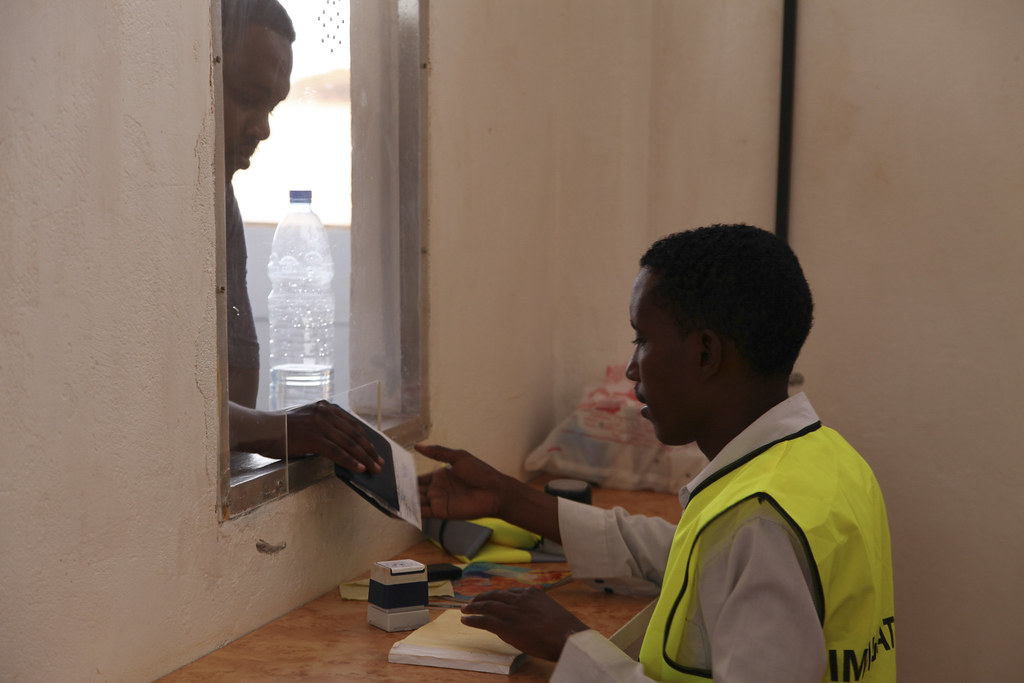
Passport and travel documents tied to the October 2026 visa bulletin

What the October 2026 visa bulletin is expected to show

EB-2 India reached its annual limit and became entirely unavailable earlier this year. It is expected to reopen with a new cutoff date once the fiscal year turns over on October 1. Attorneys tracking the category say a return to availability is close to certain. How far the cutoff date advances remains uncertain.

EB-1 India covers applicants with extraordinary ability, priority executives and outstanding researchers. Forecasters project strong forward movement, potentially recovering to dates from late 2023 or early 2024. EB-2 China is expected to stabilize after summer warnings of retrogression, with potential advancement into 2021 or 2022 priority dates.

Why this bulletin matters more than most

Visa bulletin predictions are just that: predictions. Actual cutoff dates published by the State Department can diverge from forecasts. Demand patterns only become clear once the new fiscal year’s applications start flowing. Even so, October’s bulletin traditionally carries outsized importance. It is the one month each year guaranteed to bring a full fresh allocation rather than incremental movement within an already-constrained pool.

Applicants who have waited years behind India and China country caps feel the psychological weight of the October reset. That is true even when the practical movement turns out to be modest. Immigration attorneys often see a spike in client inquiries in the weeks before the bulletin publishes.

What applicants should do while they wait

Applicants with cases in backlogged categories should ensure all supporting documentation, medical exams and biometrics are current. That way they can move quickly if their priority date becomes current in October. Cases that sit ready to file the moment a date becomes current typically process faster than those needing additional documentation gathered afterward.

Employers sponsoring workers in affected categories should also coordinate with immigration counsel on timing. A sudden advancement in a previously unavailable category can create a narrow filing window. Demand can push the date back out again quickly.

What happens after the bulletin publishes

The official October 2026 Visa Bulletin typically releases in mid-September. That gives applicants and employers a few weeks of lead time before the new fiscal year numbers take effect on October 1. USCIS separately announces each month which chart applicants can use. That is either the more favorable “Dates for Filing” chart or the more conservative “Final Action Dates” chart.

How this year’s backlog compares to prior years

Employment-based categories have faced unusually tight movement over the past several fiscal years. That has been driven by a combination of high demand from India and China and spillover effects from pandemic-era visa processing delays. Immigration attorneys say the backlog built during that period has not fully cleared, even as annual allocations have returned to normal levels.

Family-based categories face similar pressure. The political and legislative debate around increasing annual visa caps has not produced any changes to the numerical limits Congress set decades ago. Without a legislative fix, attorneys expect country-specific backlogs for India and China to persist for years. October’s reset offers only temporary relief.

What historically happens after an October reset

Past October resets have produced mixed results. Some years bring dramatic jumps in previously stalled categories. Other years see only marginal movement once real demand becomes clear. Attorneys who track the bulletin closely say the size of the October jump often depends on how many visas went unused in the prior fiscal year, since unused numbers can roll forward into the new allocation under specific statutory rules.

Applicants should treat early predictions as a guide rather than a guarantee. The State Department has occasionally reversed course within the same fiscal year when demand surged faster than expected, pulling a cutoff date back after an initial advance.

Frequently asked questions

When does the October 2026 visa bulletin come out?
The State Department typically releases the visa bulletin in mid-September, ahead of the new fiscal year that begins October 1.

Will EB-2 India become available again?
Predictions suggest EB-2 India, which hit its annual limit, will reopen with a new cutoff date once the fiscal year resets on October 1.

Why does the fiscal year reset matter for green cards?
Each October brings a fresh allocation of numerically limited visas, which often advances cutoff dates that had stalled during the prior fiscal year.

Should applicants file anything before October?
Applicants should ensure documentation, medical exams and biometrics are current so they can move quickly if their priority date becomes current.

For more on categories affected by annual visa limits, see our coverage of the immigrant visa freeze and the DV-2026 diversity visa lottery deadline.

Sources

  • US Department of State — Visa Bulletin For September 2026. travel.state.gov
  • Shusterman Law — Visa Bulletin Predictions For October 2026. shusterman.com
  • Foster Global — Visa Bulletin September 2026: Minimal Movement Across Employment-Based Categories. fosterglobal.com
September’s Visa Bulletin Just Warned EB-2 and EB-5 Applicants

The September 2026 Visa Bulletin holds final action dates steady from August, but the State Department is warning that several employment-based categories could still run out of room before the fiscal year ends. EB-2 India remains unavailable, and EB-2 for every other country now carries a retrogression risk.

What the September 2026 Visa Bulletin Changed

EB-1, EB-2, EB-3, and EB-5 final action dates all carried over from August without movement. EB-2 China sits at September 1, 2021. EB-2 India stays marked “U” for unavailable, a status it has held for months. EB-5 set-aside categories, covering rural, high-unemployment, and infrastructure projects, remain current.

September 2026 Visa Bulletin

USCIS confirmed it will continue accepting adjustment of status applications using the bulletin’s final action dates in September, not the more generous dates of filing chart. That detail matters for anyone timing a filing this month.

The Retrogression Warning Buried in the Fine Print

The State Department flagged three categories that could still move backward or close entirely before September 30. EB-1 India, EB-2 across all countries, and the EB-5 unreserved category all face possible retrogression. The risk grows if demand keeps pace with recent filing volumes.

This is a year-end mechanic, not a new policy. Consular officers and USCIS track how many visa numbers remain in each category’s annual allocation. When usage nears the ceiling, the State Department pulls dates backward. That step keeps the government from exceeding the legal cap before the fiscal year closes.

Immigration data from prior years shows this warning language does not always turn into an actual retrogression. Categories flagged in past September bulletins have sometimes held steady through month’s end, while others moved back by weeks.

Who Actually Feels This

Applicants with pending adjustment of status cases in EB-2 or EB-5 unreserved face the most exposure. A retrogression does not cancel an approved case. It can pause final approval until the new fiscal year opens more visa numbers on October 1.

The pattern echoes July’s bulletin, which froze EB-2 India and unreserved EB-5 outright. September’s bulletin holds those same categories in place. It adds a formal warning that other categories could follow before the month ends.

Applicants working with an immigration attorney should ask directly whether their specific category and country combination falls inside the categories the State Department flagged this month, since the warning does not apply evenly across every employment-based category.

Family-based categories are not part of this month’s warning. The retrogression risk is specific to the employment-based categories named above and does not extend to family sponsorship preference categories in the same bulletin.

How a Fiscal Year-End Squeeze Actually Works

Congress sets an annual cap on how many green cards each employment-based category can issue. The State Department tracks usage all year and adjusts final action dates to keep each category from exceeding its cap before the fiscal year closes on September 30.

When a category is close to its limit, the bulletin can move a date backward mid-cycle, sometimes with only a few weeks’ notice. That is exactly the scenario the September 2026 Visa Bulletin is warning about for EB-1 India, EB-2 worldwide, and EB-5 unreserved this month.

What a Fresh Fiscal Year Usually Brings

October 1 resets the clock. A new fiscal year opens a fresh annual allocation for every employment-based category, which typically restores or advances dates that retrogressed in the final weeks of the prior year. Applicants who see their category pull back in September have historically seen it recover, at least partially, once the new fiscal year’s numbers become available.

That recovery is not guaranteed to return a category all the way to where it stood earlier in the year, and high-demand categories like EB-2 India can still open more slowly than lower-demand ones.

What This Means for Your Priority Date

If your priority date already qualifies under the current final action date, file or continue your case as planned this month. If your category is one of the three flagged for possible retrogression, expect USCIS and consular processing to move faster in September. Processing in early October, once a new annual allocation resets the categories, could slow down again temporarily.

Immigration attorneys are advising clients in flagged categories to have all documentation ready now rather than waiting, since a mid-month retrogression can happen with little formal notice.

Employers sponsoring green card cases in flagged categories should coordinate closely with counsel this month, since a retrogression can affect start dates and onboarding plans for incoming hires already in the pipeline.

Frequently Asked Questions

Did EB-2 India move in the September 2026 Visa Bulletin?

No. EB-2 India remains marked unavailable, a status unchanged from recent months.

Which categories could still retrogress before September 30?

The State Department flagged EB-1 India, EB-2 for all countries, and the EB-5 unreserved category as at risk of retrogression before the fiscal year ends.

Does USCIS use final action dates or dates of filing this month?

USCIS confirmed it will use the final action dates chart for adjustment of status filings in September 2026.

What happens to my case if my category retrogresses?

An approved petition is not cancelled, but final approval of a pending adjustment of status case can pause until new visa numbers become available, typically at the start of the next fiscal year on October 1.

Related Coverage on Tamara News

Sources

USCIS Just Quietly Rewrote a Rule That Could Sink Your Green Card Case

US Citizenship and Immigration Services published new guidance on August 18, 2026. It updates how officers apply the USCIS public charge rule when deciding immigration benefit applications. This is the second major USCIS policy shift in two weeks. An August 5 change already lets officers deny incomplete applications without first requesting missing evidence.

Together, the two updates give USCIS adjudicators more discretion. They also face less obligation to let applicants fix problems before a case is denied. Immigration attorneys are watching the shift closely.

USCIS public charge rule

What the USCIS public charge rule guidance actually changes

Public charge determinations decide one thing. Is someone applying for a green card, or certain other benefits, likely to become primarily dependent on government support? The August 18 guidance instructs officers on how to weigh the standard factors. Those factors include age, health, financial resources, education, family status and any history of public benefit use. USCIS has revised its public charge guidance several times over the past decade. Different administrations recalibrated how strictly to apply the standard each time. This update continues that pattern.

The guidance changes officer discretion, not the underlying statute. Its practical impact will show up gradually. Individual case decisions will reveal the shift, not one dramatic announcement.

Public charge policy has swung significantly between administrations over the past ten years. One version expanded the list of benefits that count against an applicant. A later version narrowed it back to a more traditional cash-assistance standard. This latest guidance is best read against that back-and-forth history rather than as a permanent, final word on the subject.

How this connects to the August 5 RFE policy change

Two weeks before the public charge guidance, USCIS made another change. Officers can now deny applications and petitions outright if required initial evidence is missing. They no longer need to first issue a Request for Evidence or a Notice of Intent to Deny. That change removed a longstanding safety net. Applicants used to get a chance to supplement an incomplete filing before facing denial.

Viewed together, the two policies point the same direction. Officers now hold a revised standard for weighing public charge risk. They also carry less obligation to seek clarification before denying a case outright. Applicants filing incomplete evidence near a public charge determination face compounded risk from both changes at once.

Who the public charge rule affects most

The guidance carries the most weight for green card applicants and others in benefit categories where public charge is an explicit eligibility factor. It does not apply the same way across every visa type. Many nonimmigrant visa categories are not directly affected. One group faces the closest scrutiny: applicants with a history of public benefit use, limited financial resources, or health conditions requiring ongoing care.

What applicants should do before filing

Public charge guidance has shifted often across several administrations. Immigration attorneys generally advise applicants to review their financial documentation and benefit history carefully before filing. Do not assume an older approach to a public charge determination still applies. The RFE safety net has also narrowed. That makes a complete application on first submission more important than it was before August 2026. Expect USCIS to issue further procedural guidance as officers start applying both changes in practice over the coming months.

Community legal aid organizations often publish plain-language updates when USCIS guidance shifts like this. Checking a reputable, updated source close to the filing date is generally more reliable than relying on older articles or forum posts, given how often the underlying guidance has moved this year alone. A short consultation with an attorney before filing can catch issues an applicant might otherwise miss entirely.

Frequently asked questions

What did USCIS publish on August 18, 2026?

USCIS published new guidance for adjudicating officers. It covers how to assess whether an applicant for immigration benefits is likely to become a public charge.

What does ‘public charge’ mean in immigration law?

It is a legal ground of inadmissibility. It applies to people considered likely to become primarily dependent on the government, historically measured through cash assistance and long-term institutional care.

Does the new USCIS public charge rule affect all visa applicants?

No. The guidance mainly affects green card applicants and certain other benefit categories where public charge is an eligibility factor. It does not apply the same way to every visa type.

Is this related to the RFE policy change from earlier in August?

It is a separate action. On August 5, 2026, USCIS authorized officers to deny applications without first issuing a Request for Evidence, a distinct policy from the August 18 public charge guidance.

What factors do officers weigh under the public charge rule?

Adjudicators weigh an applicant’s age, health, family status, financial resources, education and skills. They also weigh past or current use of public benefits under the revised standard.

Should applicants get legal advice before applying?

Public charge guidance has changed often in recent years. Applicants with any history of public benefit use or financial uncertainty should consult a licensed immigration attorney before filing.

Related coverage on Tamara News

Sources

EB-2 NIW Self-Petition 2026: How African Professionals Skip Employer Sponsorship

The EB-2 NIW Self-Petition 2026 is the most powerful US green-card pathway for African professionals that almost nobody on the continent is using correctly. The National Interest Waiver allows applicants with advanced degrees (or exceptional ability) to skip the standard PERM labour certification and the requirement that an American employer sponsor them, provided they prove the work substantially benefits the United States. With USCIS now treating in-country Adjustment of Status as “extraordinary” under the May 2026 memo, NIW combined with consular processing has become a frontline strategy for Nigerian doctors, Kenyan climate researchers, Egyptian computer scientists, Ghanaian agronomists and South African energy specialists.

On this page

EB-2 NIW basics for self-petitioners

EB-2 is the second-preference employment green-card category for foreign nationals with an advanced degree (master’s or higher) or exceptional ability in sciences, arts or business. The standard EB-2 process requires a US employer and a Department of Labor PERM certification. The National Interest Waiver removes both requirements — you file Form I-140 directly with USCIS, supported by Form ETA-9089 NIW evidence package. Approval grants you the right to seek consular processing at a US embassy abroad once your priority date is current. The current EB-2 monthly Visa Bulletin still shows movement for African (Rest of World) chargeability, with cut-offs hovering around 18–24 months from priority date.

The Dhanasar three-prong test

USCIS adjudicates NIW under the 2016 Matter of Dhanasar framework, reinforced in 2026 guidance. The petition must establish: (1) substantial merit and national importance of the proposed endeavour (the field — public health, AI, semiconductor, renewable energy, food security, education — matters), (2) the petitioner is well-positioned to advance the endeavour (track record, credentials, training, plan and resources), and (3) on balance, it benefits the United States to waive the labour certification (impact, scale and the impracticability of an employer sponsor). African applicants typically win the substantial-merit prong easily on STEM, health and climate themes; the toughest prong is usually well-positioned, where evidence of citations, awards, prior funding and prior implementation needs to be loaded heavily.

Dr Chinonye, a Lagos-trained infectious-disease researcher, filed an NIW in February 2026. Her file led with 47 peer-reviewed citations, two WHO consultancies, a CDC collaboration letter, and a detailed five-year US research plan tied to public-health priorities. RFE-free approval in 7 months.

Evidence pack that wins approvals in 2026

USCIS officers in 2026 favour structured, cross-referenced evidence packs. Build three folders: credentials (apostilled advanced degree, professional licences, awards), impact (publications with citation counts, media coverage, conference invitations, original work products, funding letters), and endeavour (a detailed prospective plan stating exactly what you will do in the US, with whom, in which states, and the public benefit). Independent expert opinion letters from US-based academics, agencies or industry leaders are the single highest-leverage element — aim for 5–7 letters, not the cookie-cutter 3 letters most files include.

Have your NIW pre-scored by Travel Explore

Our team reviews NIW files against the Dhanasar prongs and current USCIS service-center trends before you spend on filing fees. Start the pre-score at https://wa.link/i9l1ec

Sequencing after the May 2026 memo

The May 2026 PM-602-0199 memo did not change EB-2 NIW eligibility — but it changed how you should use it. Three-quarters of NIW approvals previously led to in-country Adjustment of Status; the new memo signals that USCIS officers will treat I-485 filings as discretionary and disfavoured. Smart 2026 strategy: file the I-140 NIW from outside the US, wait for the priority date, then complete consular processing at the US embassy in your home country (or one of the still-functioning embassies in Africa). This avoids the discretion risk on the I-485 entirely. For applicants already in the US on H-1B or L-1, continue with I-485 but front-load discretionary factors in your file.

FAQ

Do I need to be in the US to file?

No. NIW can be filed from anywhere; consular processing happens at a US embassy abroad once the priority date is current.

Can I include my spouse and children?

Yes. Spouse and unmarried children under 21 are derivative beneficiaries on the same petition and consular case.

What advanced degree counts?

A US master’s, foreign equivalent master’s, or a bachelor’s plus five years of progressive experience qualifies as advanced. Exceptional-ability NIW is available without a degree but requires three of the six regulatory criteria.

How long does NIW take in 2026?

USCIS service-center processing for I-140 NIW runs 4–10 months; premium processing closes that to 45 days. Consular interview slots in Africa are typically 4–8 months after priority-date currency.

Will the US embassy in my country be open?

Most African posts remain operational. The May 2026 pause affected only Juba, Kinshasa and Kampala for immigrant visa services — most other posts continue routine NIW interviews.

Five moves to start your NIW this quarter

  • Pull a comprehensive citation report from Google Scholar and Scopus.
  • Draft a five-year US endeavour plan, anchored in a US policy priority document.
  • Identify 6–7 expert recommenders, at least 4 US-based, ideally from federal agencies or top-tier institutions.
  • Apostille your advanced degree and licences before filing.
  • Decide consular vs Adjustment of Status before you submit — sequencing is now strategy, not paperwork.

Get an NIW file that meets 2026 standards

Travel Explore prepares NIW petitions for African professionals — pre-score, drafting, recommender outreach, consular case. Start the file at https://wa.link/i9l1ec

Related reads

Share this story

  • You do not need a US employer. EB-2 NIW is the green card path African talent is sleeping on.
  • Dhanasar wins are about evidence, not credentials. Here is the 2026 evidence pack.
  • Skip the discretion trap. File NIW, process at the consulate, land cleanly.

Sources: USCIS Policy Manual EB-2 NIW guidance; Matter of Dhanasar (AAO 2016); USCIS Policy Memorandum PM-602-0199 (May 2026); travel.state.gov Visa Bulletin May 2026.