• Mon - Fri 9.00 - 19.00

Tag Archives: Iran

Trump Just Turned Down Iran’s Ceasefire Offer — Here’s What He’s Planning Instead

The Trump Iran ceasefire rejection reported by the Wall Street Journal on September 25 means Tehran’s offer of a seven-day pause in hostilities has gone nowhere. US officials now expect American strikes on Iran to resume once November’s midterm elections are behind the White House. The report, based on unnamed US officials, describes a president more focused on the political calendar than on closing out the conflict diplomatically.

Why the Trump Iran ceasefire rejection happened

Iran’s seven-day ceasefire plan was put forward as a way to pause the fighting. That fighting has continued intermittently since the Twelve-Day War earlier in 2026 and the May 7 US strikes on Iranian targets. According to Deccan Herald’s report on the Journal’s story, Trump rejected the proposal outright rather than countering with terms of his own. That is a sign the administration sees more value in leaving military options open than in banking a short pause.

The Strait of Hormuz becomes a talking point

Trump Iran ceasefire rejection Strait of Hormuz oil tanker traffic

Alongside the rejection, Trump posted an image on Truth Social showing the Strait of Hormuz relabeled as the “Trump Strait.” It is a symbolic gesture that underlines how central the waterway has become to the standoff. Roughly a fifth of global oil shipments pass through the strait, and any disruption there ripples quickly through energy markets, a dynamic that has already shown up in oil-price coverage this month.

Why the midterms are the real deadline here

The rejection is notable less for what it refuses than for the timeline it implies. Officials cited by the Journal describe an expectation that renewed strikes would follow the midterm elections rather than precede them. That suggests the administration wants to avoid a fresh military escalation clouding the campaign period. That leaves a window of several weeks in which Iran, regional governments and oil markets are left guessing about exactly when, not whether, hostilities might resume.

Regional aviation and shipping have already adjusted to the uncertainty. More than 20 carriers have suspended or rerouted flights connected to Iranian airspace in recent weeks, and insurers have raised premiums for vessels transiting the Gulf.

How Tehran is likely to respond

Iranian officials have not issued a public reply to the rejection at the time of writing. Previous ceasefire attempts this year broke down over verification terms and disagreements about which side would be required to stand down first. Tehran’s seven-day proposal was seen by some regional analysts as an attempt to buy time to rebuild air defenses damaged in the May strikes, an interpretation Washington has cited as one reason for its skepticism.

Congressional reaction has split along familiar partisan lines. Some lawmakers are pressing the administration to formally present its post-midterm plans to Congress rather than leaving the timeline to unnamed-official leaks, while others have defended the president’s discretion over military timing in an active conflict.

Gulf Arab states, several of which have hosted earlier rounds of indirect US-Iran contact, have publicly urged restraint from both sides without endorsing either government’s position. They remain wary of a wider regional escalation that could draw them in economically or militarily.

What comes after the rejection

With no counter-offer on the table, the most likely near-term outcome is a continuation of the current uneasy pause rather than an immediate resumption of strikes. Analysts tracking the conflict expect the real test to come after the midterms, when the political constraint the administration is reportedly weighing falls away. Until then, expect continued disruption to regional flights, elevated shipping insurance costs, and periodic oil-price moves tied to Hormuz headlines.

More on the Iran standoff

Catch up on related coverage: earlier ceasefire diplomacy, airlines cutting Iran-linked routes, and how oil prices have moved on war fears.

Questions readers are asking about the rejection

What did Iran actually propose?

A seven-day ceasefire intended to pause hostilities that have continued since the Twelve-Day War and the May 7 US strikes on Iranian sites.

Did Trump make a counteroffer?

No counteroffer has been reported. US officials cited by the Wall Street Journal say the proposal was rejected outright.

When might strikes resume?

Officials indicated bombing is expected to resume after November’s midterm elections, though no specific date has been confirmed.

Why does the Strait of Hormuz matter here?

About a fifth of global oil shipments pass through the strait, so any disruption tied to the conflict has an outsized effect on energy markets and shipping insurance.

Has this affected air travel?

Yes. More than 20 carriers have suspended or rerouted flights connected to Iranian airspace in recent weeks as the standoff continues.

Where these details come from

Why UN Investigators Say the Iran School Strike Was No Accident

UN Iran war crimes findings released this week say investigators found “reasonable grounds” to believe the United States committed war crimes in Iran. The findings cover two strikes from February 2026. One hit the Shajareh Tayyebeh Primary School in the southern city of Minab. The other hit a sports complex in Lamerd. Together, the strikes killed at least 178 civilians, the mission’s report says.

What the UN Iran War Crimes Findings Say

The findings come from the Independent International Fact-Finding Mission on the Islamic Republic of Iran. The UN Human Rights Council created this body in 2022. Bangladeshi jurist Sara Hossain chairs the mission. The council extended its mandate for two more years in January 2026.

UN Iran war crimes findings: investigators reviewing evidence documents

The mission submitted its report to the Human Rights Council in Geneva. It planned to present the findings to the 47-member council. The mission said it found “reasonable grounds to believe the United States committed the war crime of launching indiscriminate attacks,” resulting in civilian deaths, injuries and damage, according to a statement from the UN’s human rights office, OHCHR.

Investigators wrote that the school building in Minab “was the intended point of impact.” They ruled out an errant strike. They also ruled out collateral damage from a nearby military compound. The report is not legally binding. It could still feed into cases at international courts, since it documents witness accounts, satellite imagery and weapons analysis.

Inside the Minab School and Lamerd Strikes

The Minab strike happened around 10:30am local time on February 28. It hit Hormozgan province in southern Iran. Missiles struck the Shajareh Tayyebeh Primary School twice. The first hit the lower floor. Staff then moved children to a prayer room upstairs. A second strike hit the upper floor and killed many of them, the mission said.

The school sat roughly 72 metres from a naval facility linked to Iran’s Revolutionary Guard. A wall separated the two sites, and the school had its own entrance. Satellite imagery showed a functioning school with a playground and children’s murals. Local Iranian officials put the death toll at 156, including 120 schoolchildren and 26 teachers. Iranian state media reported 168 dead, most of them children. Weapons analysts identified fragments at the site as parts of a US Tomahawk missile, a weapon Iran does not possess.

Hours later, a separate strike hit the Shahid Haj Khalil Naimi Cultural and Sports Complex in Lamerd, Fars province. The mission said Precision Strike Missiles dispersed tungsten pellets over the complex and a nearby residential area. Local officials reported 22 deaths, including four children, and more than 100 injuries. The US has confirmed using Precision Strike Missiles in Iran for the first time in this conflict.

Why Investigators Call the Strikes ‘Reckless,’ Not Intentional

The mission did not accuse the US of deliberately targeting the school. Instead, it applied a legal standard known as recklessness. International law sometimes calls this “dolus eventualis.” This standard applies when a party knows of a serious risk of an unlawful outcome and proceeds anyway. Legal experts say this threshold, not intent, can establish the war crime of launching an indiscriminate attack.

The mission pointed to outdated targeting data as one factor behind the Minab strike. It also said the school was “readily identifiable” from the air and on satellite imagery. Other news organizations separately reported on a preliminary Pentagon investigation, which the mission cited. That investigation blamed outdated intelligence. The intelligence had wrongly linked the school to the adjacent military site.

Reed Brody, a human rights lawyer with the International Commission of Jurists, said not every violation of the laws of war rises to a war crime. But he said the mission’s recklessness finding rested on three points: stale targeting data, a building that was plainly civilian, and a wider pattern of the US scaling back safeguards meant to limit civilian harm.

How Washington and Tehran Have Responded

The US has not disputed that its forces struck the Minab school. In May, US Central Command’s Admiral Brad Cooper said preliminary Pentagon findings linked the strike to American forces. In June, President Donald Trump said “nobody” had purposefully attacked the school. The Trump administration has not released the full findings of its internal investigation into the Minab strike.

Washington does dispute responsibility for the Lamerd strike. US Central Command says the damage there matches an Iranian Hoveyzeh cruise missile. The mission rejected that. It cited weapons experts who found design differences ruling out a Hoveyzeh. Those experts instead pointed to a US-made Precision Strike Missile.

White House Deputy Press Secretary Anna Kelly rejected the report outright. She said the Human Rights Council “has accomplished nothing for human rights” for decades. She said Iran’s government is “the only party in this conflict that has committed war crimes,” citing its own crackdown on protesters and attacks in the Strait of Hormuz. The Trump administration withdrew the US from the Human Rights Council in February 2025. The State Department did not immediately respond to a request for comment from the Associated Press.

Iran has rejected the US denial over Lamerd. It points to both strikes as evidence of indiscriminate American attacks on civilians. Iranian officials have published their own casualty counts, which match the mission’s figures for both sites. Iran has separately called for international accountability over the strikes. The same UN mission, though, accused Tehran’s own security forces of crimes against humanity against protesters since 2025. It cited mass arrests, torture allegations and dozens of executions.

Neither Washington nor Israel gave the mission access to military personnel. Neither government answered the mission’s requests for information. Investigators relied instead on satellite imagery, verified video, weapons analysis and witness accounts.

Where These War Crimes Findings Go From Here

Legal experts say the report carries no automatic consequences on its own. Brody said such UN findings can still “form the basis for other proceedings.” He pointed to how past fact-finding reports fed into The Gambia’s genocide case against Myanmar. The US has withdrawn from the International Court of Justice’s general jurisdiction. Iran is also unlikely to join the International Criminal Court, since that would expose its own record to scrutiny.

Accountability will likely depend on political pressure, Brody said, not legal mechanics alone. He noted that Congress has grown more willing to press the administration as midterm elections approach. That could push the Pentagon to release its Minab findings. The mission itself urged the US and Iran to halt further violations. It also called for full reparations to victims and a lasting diplomatic end to the conflict.

Tamara News has covered the wider diplomatic backdrop to this conflict, including reporting on signals that the Iran war may be nearing an end and on a separate Pentagon watchdog review of the Iran strikes. For comparison on how war-crimes accountability has played out elsewhere, see our coverage of the war crimes sentencing of former Kosovo leader Hashim Thaci.

Frequently Asked Questions

What did the UN Iran war crimes findings actually conclude?
The mission found reasonable grounds to believe the US committed the war crime of launching indiscriminate attacks. This covers strikes on a school in Minab and a sports complex in Lamerd. Together they killed at least 178 civilians.

Did the UN accuse the US of intentionally bombing a school?
No. Investigators applied a recklessness standard. They said the US failed to verify the target properly, not that it deliberately chose to strike a school.

How has the US government responded?
The White House rejected the findings and accused the Human Rights Council of bias. The Pentagon has not released its internal investigation. The State Department did not immediately comment when the Associated Press asked.

Does the US dispute both strikes?
The US has not disputed hitting the Minab school. It denies responsibility for the Lamerd strike and blames an Iranian missile. The UN mission rejected that explanation based on weapons analysis.

Could this report lead to prosecutions?
Not directly. The report is not binding. Experts say the US and Iran’s positions outside key international courts make direct prosecution unlikely, though the findings could support other efforts.

Did the report also cover Iran’s own conduct?
Yes. The same mission said Iran’s government committed crimes against humanity against its own citizens during the 2025-2026 protest crackdown. It cited mass killings, torture, arbitrary detention and executions.

Sources

The Iran Sanctions Panel Vote Facing a Russian and Chinese Veto

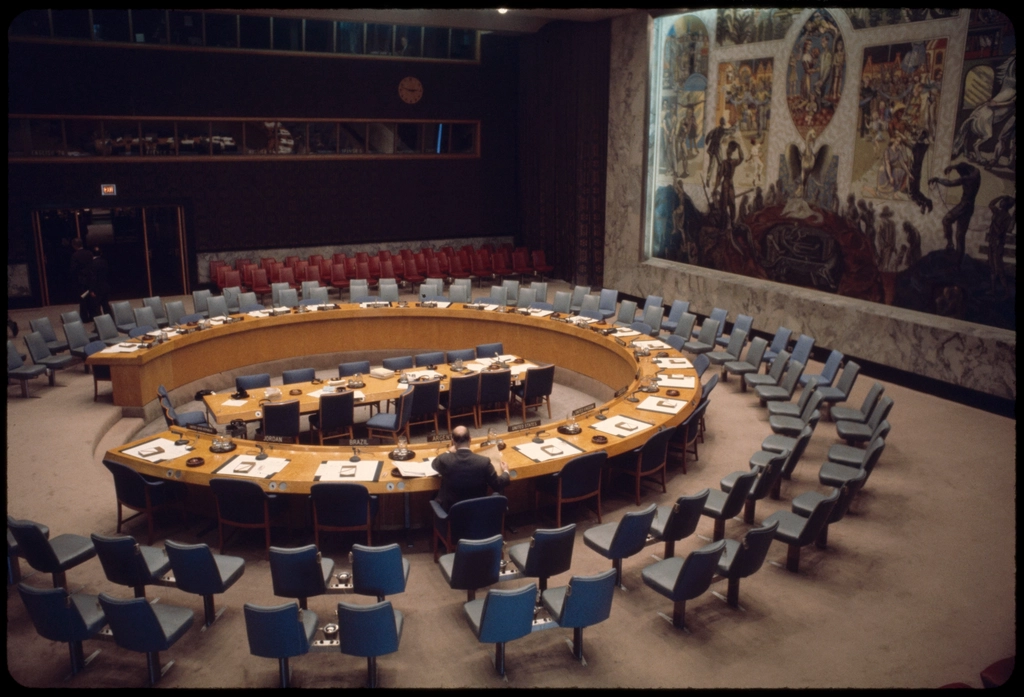
The UN Security Council is expected to hold an Iran sanctions panel vote on 17 September, according to diplomats cited by wire reporting, on whether to renew the mandate of the expert panel that monitors compliance with sanctions on Iran. The mandate expires on 26 September. France announced the vote; Russia and China have signalled they do not accept that the Council has the standing to hold it at all.

What the panel of experts actually does

A UN panel of experts is a small standing team that reports to a Security Council sanctions committee. It investigates alleged violations, tracks procurement networks and shipping, and publishes findings that member states use to justify enforcement. It has no power to punish anyone. Its value is evidentiary: without a panel, the sanctions committee is largely dependent on what individual governments choose to tell it, and those governments have interests.

That is why mandate renewals, which look procedural, matter. Letting a panel lapse does not lift sanctions. It removes the independent reporting that makes them legible.

How the Council got back to Iran sanctions

UN sanctions on Iran, including measures under resolution 1737 (2006), were reimposed on 27 September 2025 through the snapback mechanism, after findings of Iranian non-compliance with its nuclear obligations. Snapback was the enforcement device built into the 2015 nuclear agreement: it allowed a participant to restore previously lifted UN measures without a fresh Council vote that could be vetoed.

Since then the Council has been arguing about whether that reimposition was valid. At a Council session earlier this year, Russia and China challenged the legality of the snapback and the Council’s continuing role on the Iranian nuclear file. In a joint statement in March, the two governments said the Council “cannot proceed to re-establish the 1737 Committee or its Panel of Experts.”

Strip out the diplomacy and there are two incompatible positions. The Western position is that snapback was lawfully triggered, the pre-2015 sanctions architecture is back in force, and the Council therefore needs a committee and a panel to run it. The Russian and Chinese position is that the snapback was procedurally invalid, that the underlying resolution had already terminated, and that anything built on it — committee, panel, mandate renewal — has no legal basis.

Neither side can win that argument inside the Council, because the Council has no mechanism for ruling on its own competence. What it has is votes and vetoes. A renewal resolution needs nine affirmative votes and no veto from a permanent member, which is precisely the constraint in play.

The Security Council Report’s September forecast places this alongside a crowded month: continued attention to the Middle East and the effects of disruption to navigation in the Strait of Hormuz, possible meetings on Ukraine, and the 81st General Assembly’s high-level week, whose session opened on 8 September under a new Assembly president, Bangladesh’s Khalilur Rahman.

Three ways 17 September can go

The resolution is vetoed. The most widely anticipated outcome. The panel’s mandate lapses on 26 September, the sanctions committee continues on paper without independent monitoring, and enforcement shifts almost entirely to national and regional measures — US, EU and UK designations that operate outside the UN framework.

A short technical rollover passes. Councils under pressure often buy time with a brief extension that nobody treats as a precedent. It would require Russia and China to abstain rather than veto, which is a lower bar than support but still a concession on the legality argument they have been making.

The vote slips. With the mandate running to 26 September, the sponsors have a few days of slack. Postponing past high-level week is possible if they judge the numbers are not there and want to avoid a public defeat during the General Assembly.

Whichever way it goes, the practical effect on Iran’s economy in the near term is limited — the binding constraints are national sanctions and the wider regional conflict. The effect on the Council’s own authority is larger, and harder to reverse.

Common questions

When is the Iran sanctions panel vote?

Diplomats have indicated 17 September 2026, with the panel’s mandate due to expire on 26 September.

What is a panel of experts?

A small investigative team reporting to a Security Council sanctions committee. It documents violations and procurement networks but has no enforcement power of its own.

Why do Russia and China object?

They argue the 2025 snapback that reimposed the sanctions was procedurally invalid, so the committee and panel built on it have no legal basis. They stated in March that the Council cannot re-establish the 1737 Committee or its panel.

Would a veto lift sanctions on Iran?

No. It would end the UN’s independent monitoring mandate. The measures themselves, and separate US, EU and UK sanctions, would remain.

What is snapback?

A mechanism from the 2015 nuclear agreement allowing a participant to restore previously suspended UN sanctions without a new Council vote that a permanent member could veto.

How many votes does renewal need?

Nine of fifteen in favour, with no veto from any of the five permanent members.

Follow the thread

Iran Says It Hit Two US-Linked Gulf Bases — Washington Tells a Different Story

Iran’s military says it launched missiles and drones at two bases used by United States forces in Kuwait and the United Arab Emirates on September 3, 2026. Iranian state media called the operation the 31st phase of a retaliatory campaign. Tehran ties the campaign to the deaths of Iranian civilians and armed forces members earlier this year. A US defense official disputed that any American base was actually hit.

The strikes targeted Ahmad al-Jaber Air Base in Kuwait and Al Minhad Air Base in the UAE, according to Iran’s Army. Both facilities have hosted US personnel and equipment for years. They sit at the center of Washington’s regional posture in the Gulf.

The two bases play different roles in the US regional footprint. Ahmad al-Jaber has long served as a logistics and staging hub for American forces in Kuwait. Al Minhad has hosted transport aircraft and coalition personnel supporting operations across the wider Gulf. Analysts say both sites were chosen for their symbolic value as much as any operational target, since striking US-linked bases sends a clear political signal without directly targeting American troops on the ground.

How the Iran strikes Kuwait UAE bases unfolded

Iranian forces said their missiles and attack drones hit satellite communications installations, warehouses and fighter aircraft hangars at Ahmad al-Jaber. Radar systems and areas where US forces were stationed came under fire at Al Minhad. Tehran’s account, carried by state outlets and cited in regional reporting, claimed the strikes damaged communications systems and aircraft hangars. No independent evidence has accompanied that claim so far.

Fighter aircraft hangar linked to the Iran strikes Kuwait UAE bases report

An unnamed US defense official told anti-regime media outlets on the day of the strikes that the attack did not affect any US base. That directly contradicts Iran’s version of events. Neither government has released imagery, radar data or casualty figures. Outside observers currently have no way to verify either account.

Washington’s account doesn’t match Tehran’s

The gap between the two narratives is not new. Iran has repeatedly announced strikes on US-linked facilities in the Gulf, framing each one as retaliation for the deaths of its citizens and military personnel. US and allied officials have just as often downplayed or denied meaningful damage. Reporters lack independent access to either base, so the public record consists largely of dueling statements rather than confirmed facts.

Readers should treat Iran’s damage claims as Tehran’s own account, not as an established fact. Satellite imagery or on-record US military statements would be needed to corroborate them.

The wider Gulf tension behind the attack

The September 3 strikes did not happen in isolation. US aviation advisories issued in late August 2026 had already warned airlines that civil aircraft transiting the Gulf faced elevated risk. The advisories cited drone and missile activity tied to the broader conflict. Commercial carriers serving Dubai and Abu Dhabi have adjusted routings in response. Gulf capitals have spent much of 2026 balancing economic ties with Washington against the risk of being caught in a conflict they did not start.

Kuwait and the UAE have not issued public statements blaming Iran directly for damage. That caution reflects their position as hosts to US forces. Both governments still maintain working relationships with Tehran.

Why the Gulf keeps absorbing these exchanges

Kuwait and the UAE occupy an unusual position in this conflict. Neither country is a direct party to the underlying dispute between Washington and Tehran. Both host American forces as a matter of longstanding security agreements, which puts their territory in the path of any retaliatory strike aimed at US assets. Local officials have generally avoided public blame in past incidents, choosing quiet diplomacy over open confrontation. That pattern held again after the September 3 strikes, with neither government issuing a statement naming Iran as the source of any damage.

Regional airlines have adapted by building buffer time into schedules and monitoring official airspace advisories in real time. Passengers connecting through Gulf hubs have seen little visible disruption so far, though carriers say that could change quickly if tensions escalate further.

What happens after the strikes

Neither Washington nor Tehran has signaled a shift in posture since September 3. US Central Command has not announced new deployments to the two bases. Iran has not indicated the strikes mark an end to its campaign rather than one phase within it.

The likeliest near-term signal to watch is whether Gulf carriers further adjust flight paths around Kuwaiti and Emirati airspace. Whether the Pentagon issues an on-record confirmation or denial, beyond the anonymous official’s comments reported so far, will also matter.

Frequently asked questions about the Kuwait and UAE strikes

  • Did the strikes cause casualties? Neither Iran nor the United States has reported casualties from the September 3 strikes.
  • Which US installations were named? Ahmad al-Jaber Air Base in Kuwait and Al Minhad Air Base in the UAE.
  • Has the US confirmed damage? No. An unnamed US defense official said the strikes did not affect any US base.
  • Why does Iran say it carried out the strikes? Iran’s Army described the action as retaliation for the deaths of Iranian civilians and armed forces members.
  • Are commercial flights affected? US advisories have flagged elevated risk for civil aviation transiting the Gulf, and some carriers have adjusted routes.
  • Is this part of a wider Iran-US conflict? Yes. Iranian officials describe the strikes as one phase within an ongoing campaign dating back months.

Related coverage on Tamara News

For more on the surrounding conflict, see our coverage of the Iran strikes on Jordan and Bahrain, the escalation in Yemen, and Israeli strikes in southern Lebanon.

Sources

  • Middle East Eye — Iran confirms missile and drone attacks on US bases in UAE and Kuwait. middleeasteye.net
  • Critical Threats Project — Iran Update, September 3, 2026. criticalthreats.org

Iran US Military Strikes Escalate After Hormuz Attack

Iran US military strikes resumed on 31 August 2026. The clash ended a five-week pause in direct fighting between Washington and Tehran. Iran’s Islamic Revolutionary Guard Corps said it launched missiles and drones at the King Hussein and Al Azraq air bases in Jordan overnight. The attack came hours after the US military struck an Iranian-held position on Larak Island in the Strait of Hormuz. It marks the first confirmed clash between the two countries since a truce held through most of August.

What happened in the latest round of Iran US military strikes

Jordan’s military disputed Iran’s account of the damage. Officials in Amman said air defenses intercepted eight ballistic missiles before any could reach infrastructure or personnel. They reported no casualties. The United Arab Emirates’ Ministry of Defense separately said it shot down a drone launched from Iranian territory toward Emirati airspace. Iran’s state media claimed “heavy damage” to maintenance facilities and aircraft positions at the two Jordanian bases. Jordan rejected that claim outright.

Iran US military strikes

A senior Iranian source told Reuters that Tehran would respond to any American strike “dozens of times greater.” That language suggests further escalation, not a one-off retaliation. US President Trump said the United States was prepared to “hit them hard” if the attacks continued, CNBC reported.

Why the strikes restarted after a five-week lull

The renewed fighting follows a pattern set earlier in the summer. US and Saudi forces struck militia positions in Iraq. Iran responded with missiles aimed at American bases in the region. That July exchange ended with a Pakistan-mediated ceasefire and a memorandum of understanding. Both sides have since accused the other of violating that agreement. The weekend strike on Larak Island appears to have broken the truce entirely.

Energy markets are already pricing in the risk. Middle East hostilities keep pushing oil prices higher. Traders have pushed up expectations for a European Central Bank rate move later this month as a result. That dynamic ties this conflict directly to inflation readings far outside the region.

Who is bearing the direct risk from Iran US military strikes

Jordan and the UAE are absorbing the retaliatory fire. Both are US security partners, but neither is a direct party to the underlying dispute. Jordanian officials have repeatedly stressed that intercepting missiles over populated areas carries its own risk. Falling debris can still cause casualties even when interceptions succeed. Gulf carriers have also begun rerouting some flights away from Iranian and Iraqi airspace, echoing disruptions seen in July. Regional tourism boards have started fielding cancellation questions from travelers who booked trips for the coming weeks, even in countries well outside the immediate strike zones.

How markets are reading the new round of Iran US military strikes

Oil traders pushed benchmark prices higher within hours of the Larak Island strike becoming public. The move extends a rally that began with the June flare-up in hostilities. That earlier spike helped push the European Central Bank to raise its deposit rate for the first time in three years. Traders are now watching whether a second summer of Middle East volatility forces the Federal Reserve and the Bank of England to follow suit. Airlines flying between Europe and Asia have had to recost fuel-hedging positions twice in three months. That cost eventually shows up in ticket prices.

Insurance underwriters covering Gulf shipping routes raised war-risk premiums again after the weekend strikes. Higher premiums on tankers moving through the Strait of Hormuz tend to feed into fuel costs within weeks. That is one reason economists are treating this as more than a regional story.

What happens next

Diplomats involved in the earlier ceasefire talks are reportedly trying to reconvene. No date has been confirmed. Analysts widely expect at least one more exchange of strikes before either side agrees to de-escalate again, based on the pattern from July. Oil markets, Gulf aviation schedules, and the European Central Bank’s inflation outlook will likely move in step with whatever happens next. Regional carriers say they will keep reviewing flight paths daily rather than commit to a fixed routing until the situation stabilizes.

Frequently Asked Questions

Did the latest Iran US military strikes cause any confirmed casualties?

Jordan’s military reported no casualties from the intercepted missiles, and the UAE reported none from the drone it shot down. Iran’s own casualty figures, if any, have not been independently confirmed.

What triggered this round of fighting?

The US military struck an Iranian-held position on Larak Island in the Strait of Hormuz over the weekend of 29-30 August 2026. Iran responded with strikes on bases in Jordan and a drone toward the UAE.

Is this connected to the July 2026 ceasefire?

Yes. Both countries have accused each other of violating the Pakistan-mediated ceasefire and memorandum of understanding reached after the July exchange, and this weekend’s strikes appear to have ended that truce.

How is this affecting travel and energy markets?

Some Gulf carriers have rerouted flights away from Iranian and Iraqi airspace, and oil prices have risen on the renewed hostilities, feeding into inflation expectations at central banks including the European Central Bank.

Related Coverage

Sources