Sweden Votes This Weekend — And the Far Right Wants a Seat at the Table

Sweden heads to the polls on September 13, 2026, in one of the most closely watched elections in the Nordic region this year. The centre-left opposition holds a narrowing lead over Prime Minister Ulf Kristersson’s right-wing coalition. The Sweden election 2026 could reshape how far a nationalist party sits inside mainstream European government. The Sweden Democrats are pushing for cabinet seats rather than the parliamentary support role they have played since 2022, a shift that would be closely watched across Europe.

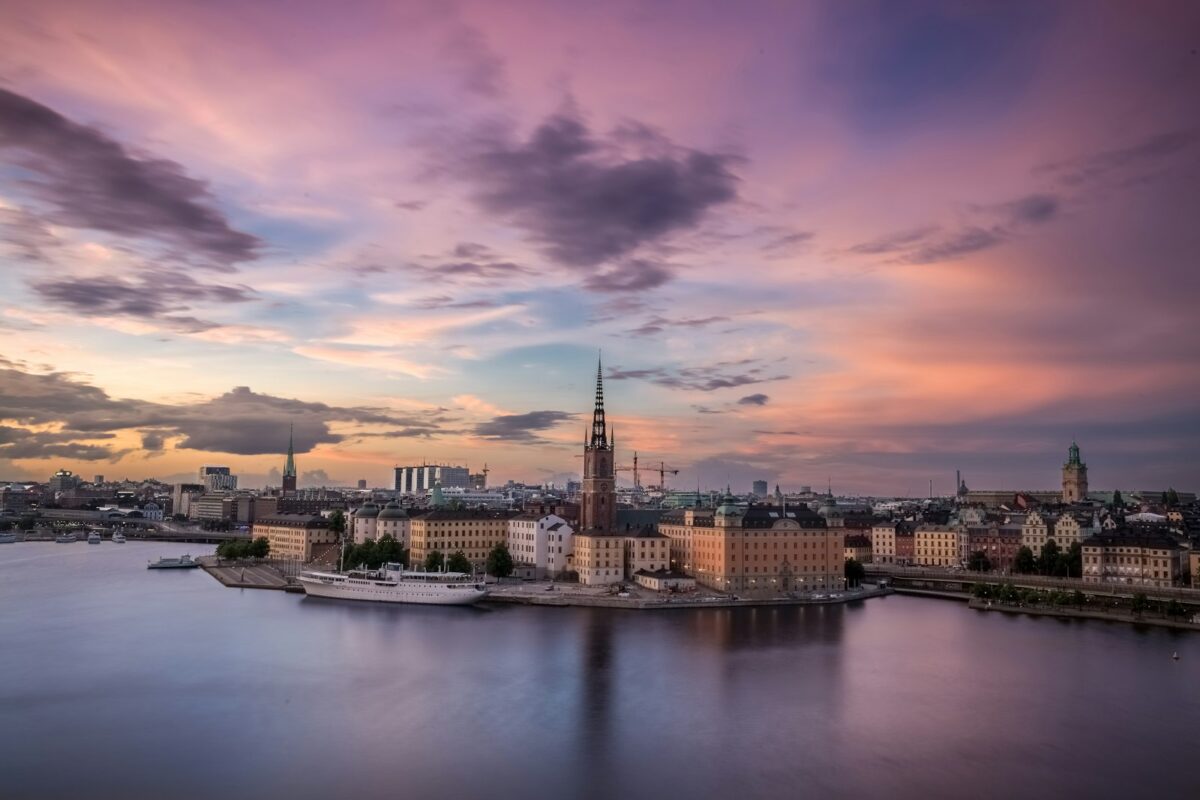
Sweden's parliament building ahead of the Sweden election 2026

Sweden Election 2026: Where the Race Stands

Sweden’s centre-left opposition held a lead over the ruling right-wing bloc heading into the vote. That advantage has been shrinking. A poll conducted for public broadcaster SVT showed the gap narrowing from 9.5 percentage points in June to about 6.8 points more recently, according to reporting compiled by US News. Seat projections show Kristersson’s governing alliance — the Moderates, Christian Democrats, Liberals and the Sweden Democrats — winning around 45.8% of seats. That falls short of a majority on its own.

Why the Sweden Democrats Are the Story to Watch

The Sweden Democrats have propped up Kristersson’s government in parliament since 2022 without holding formal ministries. This time, the party is demanding cabinet seats as the price of continued support. The move would mark a notable shift in how directly Sweden’s nationalist right participates in government. Whether Kristersson agrees will shape not just this term, but how other Nordic and European centre-right parties approach similar coalition math going forward.

What’s Actually Driving Swedish Voters

The campaign has centered on cost of living, security, immigration, crime and energy supply. It is a similar mix of concerns to what has driven right-wing gains elsewhere in Europe this year. A factbox compiled by Yahoo News Canada notes that both blocs have leaned heavily on crime and immigration messaging. Those issues have featured prominently in Sweden’s public debate since a string of high-profile violent incidents in recent years.

Swedish flag ahead of the closely watched Sweden election 2026

What Happens After the Votes Are Counted

If the centre-left bloc’s lead holds, Sweden would see its first change of government since 2022. If Kristersson’s coalition claws back enough ground, the harder question becomes whether he brings the Sweden Democrats fully into cabinet. That decision is being watched closely well beyond Sweden’s borders, since it could shape coalition-building calculations for centre-right parties elsewhere in Europe.

What a Change of Government Would Actually Mean

A centre-left win would not reverse Sweden’s NATO membership, which enjoys broad support across the political spectrum since the country joined the alliance in 2024. The more immediate shifts would come on energy policy, welfare spending and how aggressively Sweden pursues its current, tougher approach to asylum and residency rules. A Social Democrat-led government would likely slow some of the stricter immigration measures introduced under Kristersson, while keeping the broad security posture largely intact. Business groups are watching the campaign’s tax proposals closely. Both blocs have floated changes to corporate and income tax rates that would take effect only after a new government is formally seated. Coalition talks could stretch for weeks after election day if the result is close. That pattern has played out in several recent Swedish elections where no bloc won a clear majority on the first count.

Frequently Asked Questions

When is Sweden’s 2026 election?

Sweden holds its parliamentary election on September 13, 2026, choosing all 349 seats in the Riksdag.

Who is currently leading in the polls?

The centre-left opposition leads Prime Minister Ulf Kristersson’s ruling right-wing bloc. The gap has narrowed since June, from roughly 9.5 percentage points to about 6.8 points in the most recent polling.

What is Kristersson’s coalition trying to do?

Kristersson is seeking to form a majority government with his existing partners, the Christian Democrats and the Liberals. For the first time, he may bring the Sweden Democrats into cabinet seats rather than just parliamentary support.

Why does the Sweden Democrats’ role matter?

The Sweden Democrats have backed Kristersson’s government in parliament since 2022 without holding ministries. Demanding cabinet seats after this election would mark a significant shift in how far a nationalist party has moved into mainstream Swedish governance.

What are the main campaign issues?

Cost of living, security, immigration, crime and energy supply have dominated the campaign. Those concerns echo elections seen across the region this year.

Could the governing coalition win a majority on its own?

Seat projections show the governing alliance winning around 45.8% of seats. That is short of the majority it would need without support from the Sweden Democrats or another partner.

Whatever the outcome, Sunday’s result will be parsed closely across the Nordic region and beyond. It is a test of whether nationalist parties can keep converting parliamentary influence into formal governing power. Neighboring Nordic governments are watching too. Coalition arrangements in one country often shape the political calculus in the others, particularly on shared regional priorities like energy policy and border security. Sweden’s vote follows a string of consequential European elections this year. See our coverage of the AfD’s win in Saxony-Anhalt and, for a very different kind of vote, Russia’s Duma election this month.

Sources

Sweden Work Permit 2026: New SEK 33,390 Salary Threshold and the Shortage-Occupation Lane for African Skilled Workers

The Sweden Work Permit 2026 rules are tightening on 1 June. Migrationsverket has confirmed a new salary floor of SEK 33,390 per month — roughly 90% of the national median wage of SEK 37,100 — replacing the SEK 29,680 threshold that has been in force since June 2025. For African professionals eyeing Stockholm, Gothenburg or Malmö, the change is meaningful but not a closed door: a published list of 152 shortage occupations keeps a lower salary lane open, and applications filed before 1 December 2026 for jobs that started before 1 June still ride on the old floor.

What 1 June 2026 actually changes in Sweden

The big shift is the move from 80% to 90% of median wage as the legal anchor. Statistics Sweden (SCB) recalculates the median every spring; this year it landed at SEK 37,100, so 90% works out to SEK 33,390. Migrationsverket also announced a parallel package: stricter sanctions on employers who underpay sponsored workers, mandatory salary reporting through the Swedish Tax Agency, and a tighter timeline for residence-permit renewals. A Nigerian software engineer who would have crossed the SEK 29,680 line on an entry-level Stockholm offer last summer now has to be paid at least SEK 33,390 to qualify for a fresh Sweden Work Permit 2026 unless the role sits on the shortage list.

EY Sweden has flagged that the new package also closes a loophole some employers used: paying base salary at the threshold while keeping fringe benefits low so total compensation was effectively under-market. From June 2026, the threshold is measured against gross monthly base salary alone, not benefits-in-kind. The collective bargaining agreement still sets the floor for whichever sector you work in, so if the union scale for your role is higher than SEK 33,390, the union scale wins.

The Sweden Work Permit 2026 numbers in plain SEK

Three figures matter for any applicant doing the maths. First, the new floor: SEK 33,390 a month, gross, for every standard work permit issued from 1 June 2026. Second, the bridge: applications submitted before 1 December 2026 for jobs whose start date is before 1 June 2026 can still use the SEK 29,680 floor — useful if your Swedish employer is in the middle of a hire and wants to lock in the lower threshold. Third, the family budget: bringing a spouse or partner means Migrationsverket wants to see that the family can subsist after taxes, and that calculation now starts higher because your reported gross does.

  • Single applicant gross monthly minimum: SEK 33,390
  • Old threshold still useable on bridge filings: SEK 29,680
  • Annualised gross at the new floor: SEK 400,680
  • Approximate take-home after Stockholm municipal tax: SEK 24,900 a month
  • Application fee for a work permit (employed worker): SEK 2,200

A Kenyan civil engineer joining a Gothenburg infrastructure firm at SEK 42,000 a month clears the new floor comfortably and would not feel the change. The hires who get squeezed are entry-level retail, hospitality and warehouse roles that historically paid right at the old 80% line. Migrationsverket publishes the official wage page with both old and new figures.

The 152 shortage-occupation lane that keeps the Sweden Work Permit 2026 floor lower

The most useful clause for African applicants is the shortage-occupation exception. Sweden’s labour ministry has confirmed 152 roles where the 90%-of-median rule does not bite — these jobs can still be filled at the lower threshold so long as the salary matches the collective agreement. The list leans heavily on roles African professionals already cluster in: registered nurses, specialist physicians, biomedical scientists, IT specialists in software development and cybersecurity, metalworkers and welders, civil engineers, and certain agricultural specialists. EY Sweden published an early analysis of which sectors are affected alongside Migrationsverket’s own guidance.

Worth keeping in mind: shortage-list status is not permanent. The Public Employment Service (Arbetsförmedlingen) updates the catalogue annually, and roles can come on or off. A Ghanaian nurse who applies in July 2026 under the shortage exception is locked into the lower threshold for the duration of that permit; a renewal two years later, however, will be assessed against whatever list is in force then. So if you have a shortage-list job offer in hand, file early in the cycle to lock it in.

Stuck on the paperwork side of this? Start a free first review at https://wa.link/i9l1ec.

How African applicants put a Migrationsverket file together

The Sweden Work Permit 2026 application is employer-led. Your Swedish employer files first — they have to advertise the role across the EU for at least ten days, submit a job offer that matches sector union rates, and confirm insurance coverage. Only after the employer’s file is complete do you submit your applicant-side paperwork: passport bio page, marriage and birth certificates for dependents, and proof of your qualifications. Most Africans apply through the Swedish embassy in their home country for biometrics, then wait out a processing window that has averaged 2-4 months for standard files and longer for new sectors.

One operational detail that trips up applicants from Lagos, Accra and Nairobi: Migrationsverket wants the job offer signed by both you and the employer, with the employer’s organization number visible. A scanned PDF that says “letter of intent” is not enough. You also need to demonstrate that your degree is recognized — UHR (Universitets- och högskolerådet) issues recognition statements that most consulates now ask for upfront. A South African doctor heading to a Malmö hospital, for example, should request UHR recognition the week the job offer lands, not after the consulate asks.

  • Step 1 — Employer advertises across EU for at least ten days
  • Step 2 — Employer files the job-offer package via Migrationsverket’s e-service
  • Step 3 — Applicant pays SEK 2,200 fee and submits supporting docs
  • Step 4 — Biometrics appointment at the Swedish embassy
  • Step 5 — Decision; if approved, residence card issued on arrival

For a deeper comparison of Nordic-and-EU options, our breakdown of EU Blue Card 2026 thresholds across Germany, France and Netherlands may be useful, and African nurses specifically should read our guide to the five permits open to nurses in 2026.

Frequently asked questions about Sweden Work Permit 2026

Who has to clear the SEK 33,390 floor and who does not?

Every new work-permit applicant from 1 June 2026 has to clear it, unless the role is one of the 152 shortage occupations or the application qualifies for the transitional bridge before 1 December 2026. The threshold is gross monthly base salary — bonuses and benefits in kind are not counted toward it.

Can my employer pay less because they offer housing or a car?

No. Migrationsverket explicitly excludes benefits in kind from the threshold calculation from June 2026. The gross base salary line item on the contract has to be at least SEK 33,390, regardless of what else the employer wraps in.

Does the new Sweden Work Permit 2026 affect renewals already in process?

Renewals filed before 1 June 2026 are processed under the old SEK 29,680 floor. Renewals filed after that date are assessed against the new SEK 33,390 floor, even if the original permit was issued under the lower rule.

How long does processing take in 2026?

Migrationsverket has a service standard of 90 days for complete files, but real-world averages have been running at 100-150 days for new sectors and faster (under 60 days) for renewals and shortage-list roles. Hiring season peaks in May and September, so files lodged off-cycle often clear faster.

Can my family join me on a Sweden Work Permit 2026?

Yes. Spouses or registered partners and children under 21 can apply for dependent residence permits at the same time as your work-permit file. Dependents get an unrestricted right to work in Sweden once the permit is issued, which is a real advantage for two-earner African families.

Key takeaways

  • Sweden Work Permit 2026 raises the salary floor to SEK 33,390 a month from 1 June, anchored at 90% of median wage.
  • 152 shortage occupations — including nursing, IT, engineering and welding — keep the lower union-scale threshold.
  • The transitional bridge to 1 December 2026 lets pre-June jobs ride the SEK 29,680 floor.
  • Benefits in kind no longer count toward the threshold; gross base salary is the only metric.
  • African applicants should request UHR degree recognition the same week their job offer lands.

Talk to a Travel Explore consultant

Ready to start your Sweden Work Permit 2026 application? Talk to a Travel Explore consultant: https://wa.link/i9l1ec.

Related reads on Travel Explore

Share this story

  • Sweden just lifted its work-permit floor to SEK 33,390 — here is who still qualifies
  • Migrationsverket’s 152-role shortage list is the African applicant’s loophole in 2026
  • SEK 33,390 from 1 June: every African professional planning Sweden should read this