The Student Visa Rule Due Today Just Got Frozen by a Judge

A federal judge has frozen the rule that was due to end duration of status today. The
duration of status injunction came from the U.S. District Court for the District of
Massachusetts on 14 September 2026. It postpones the effective date of a Department of Homeland Security
final rule. That rule would have replaced open-ended admission with a fixed term for F-1 students, J-1
exchange visitors and I media representatives. DHS published it on 17 July. It was set to bite on 15
September. For now, it does not.

What the duration of status injunction actually does

Judge F. Dennis Saylor IV granted a nationwide preliminary injunction. The order postpones the rule’s
effective date while the case proceeds. It does not strike the rule down. That distinction matters. DHS can
still defend the rule, and an appeal court could narrow or lift the order.

The court found the plaintiffs likely to succeed on their claim that the rule breached the Administrative
Procedure Act. That statute governs how federal agencies write rules. Courts use it to test whether an
agency explained itself and followed the required process.

The plaintiffs are a coalition rather than a single school. They include NAFSA: Association of
International Educators, the Presidents’ Alliance on Higher Education and Immigration, and the Association
of Independent Colleges and Universities in Massachusetts. Three unions joined them: the American Federation
of Teachers with its Graduate Labor Organization local, the United Auto Workers with UAW Local 2322, and the
NewsGuild-CWA. The union presence reflects how many affected people work as teaching and research staff.
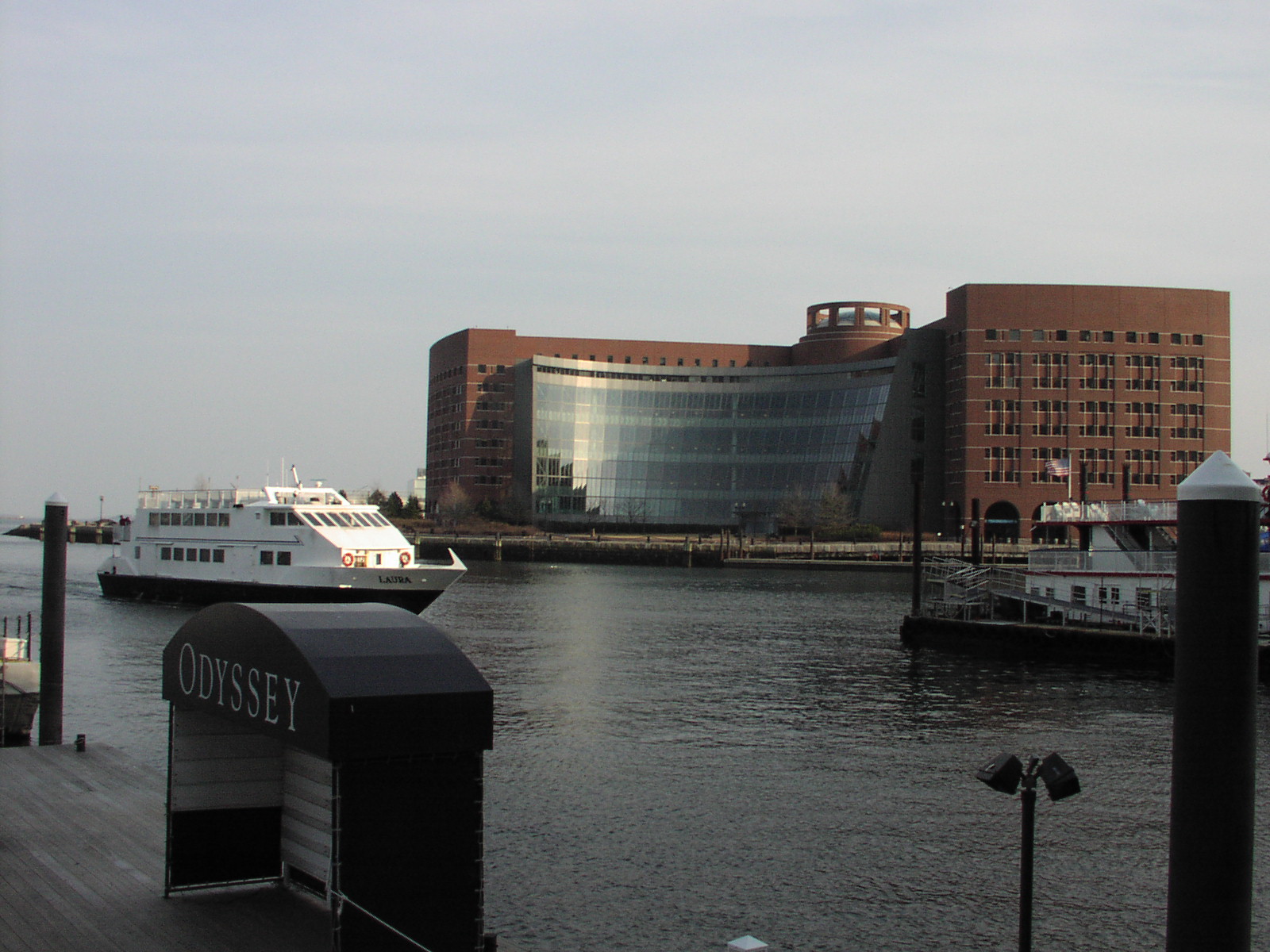
Federal courthouse in Boston where the duration of status injunction was issued
The Boston federal courthouse, where the order postponing the DHS rule was issued on 14 September 2026.

What the blocked rule would have changed

The July rule rewrote a system that has run since 1978. Under duration of status, an F-1 student stays
lawfully while they make progress in their programme. There is no end date stamped on the admission record.
The rule would have replaced that with a date certain.

The headline change was a cap. New admissions would run for the length of the programme or four years,
whichever was shorter. Anyone needing longer would file an extension of stay with U.S. Citizenship and
Immigration Services and show a compelling reason. A pending extension would carry an automatic 240-day
authorisation.

The grace period after finishing a programme would have dropped from 60 days to 30 for F visa holders.
Students who completed one level could move up to a higher degree, but not sideways or down. Graduate
students would have been barred from changing educational level or major at any point. Undergraduates would
have faced that bar in their first year, absent extenuating circumstances. Dependants would have followed
the same fixed-term structure.

Consider a doctoral researcher from India in year five of a six-year programme. Under the old system her
status simply continued. Under the new rule she would have needed an approved extension, filed on time, with
a reason a USCIS officer accepted.

Who the duration of status injunction reaches

The order is nationwide. It is not limited to the plaintiffs or to Massachusetts. Every F, J and I visa
holder in the United States sits under the old framework while it stands.

Harvard’s International Office had spent weeks urging students to be physically inside the country on 15
September. On 14 September it said the rule now has no immediate impact on visas, or on starting an autumn
programme. Other universities issued similar notices. Read institutional guidance rather
than social media summaries, because each school phrases the practical advice differently.

One caution is worth repeating. An injunction is provisional. Travel plans built on the assumption that
the old rules will last all year carry real risk. The advice many advisers gave before the ruling — avoid
non-essential international travel while the litigation runs — has not stopped being sensible.

Where the case goes from here

Three things decide what students face next. The first is whether the government appeals to the First
Circuit and asks for a stay. The second is how the district court rules on the merits, which can take
months. The third is whether DHS withdraws the rule and issues a revised version with a fuller
justification.

Meanwhile the paperwork built for the rule is still arriving. USCIS moved to new editions of Form I-539
and Form I-765 dated 09/15/26, drafted partly around the fixed-term framework. Our companion piece on the
new USCIS form editions taking
effect today
sets out what to file and when. We also covered
the rule itself when
its effective date was still standing
, and the separate
public charge test arriving
on 18 September
, which is not affected by this order.

Common questions about the ruling

Is the duration of status rule dead?

No. A court has postponed its effective date while litigation continues. The rule still exists and the government can defend it.

Do I still get an open-ended admission?

While the injunction stands, yes. F and J admissions continue under duration of status rather than a date-certain I-94.

Does this change my 60-day grace period?

The cut from 60 days to 30 for F visa holders was part of the blocked rule. It is not in force while the order stands.

Should I travel internationally now?

Speak to your designated school official first. An injunction can be stayed on appeal, and the rules at the moment of re-entry are what count.

Which court issued the order?

The U.S. District Court for the District of Massachusetts, in a case brought by NAFSA, the Presidents’ Alliance, AICUM and several unions.

Sources

The New Public Charge Rule Starts September 18

From 18 September, US immigration officers regain broad discretion to decide whether a green card applicant is likely to become dependent on public benefits. The new public charge rule rescinds the 2022 regulation that had narrowed that assessment to a defined set of benefits and factors, and restores a looser “totality of the circumstances” test.

The final rule was published in the Federal Register on 20 July 2026, following a DHS announcement on 16 July.

Discretion is the substance of the change

Public charge is an old provision of US immigration law: an applicant deemed likely to become primarily dependent on government support can be refused. What shifts between administrations is not the principle but how much room the adjudicating officer has.

The 2022 rule constrained that room. It specified which benefits counted, which factors could be weighed, and how. An officer worked within defined boundaries.

The new rule removes those boundaries and returns to an individualised judgement across the totality of an applicant’s circumstances — age, health, family status, assets, resources, financial status, education and skills.

The practical effect is variability. Two applicants with similar profiles can receive different outcomes from different officers, and there is less regulatory text to point to on appeal.

More benefits enter the calculation

The rule expands what may be considered. An applicant’s application for, approval for, certification to receive, or receipt of means-tested public benefits can be weighed — including categories generally excluded under the 2022 rule, such as certain Medicaid, SNAP, CHIP, food and housing benefits.

Note the breadth of the verbs. Having applied for a benefit may be considered, whether or not it was received.

The date that determines which rule applies to you

This is the part worth getting exactly right.

The new rule applies to applications for admission made on or after 18 September 2026, and to adjustment of status applications postmarked or electronically submitted on or after 18 September 2026.

Applications submitted before that date are assessed under the 2022 framework. Receipt of means-tested benefits before 18 September will also be considered consistently with the 2022 rule — so past benefit use is not retroactively reassessed under the new standard.

For anyone with a substantially complete filing, the submission date carries real weight.

Who is and is not affected

Public charge does not apply to every immigration category. Refugees and asylees are exempt, as are several humanitarian categories and applicants for naturalisation, where the test is not part of the assessment.

It applies principally to family-based and employment-based green card applicants, and to some applicants for admission at a port of entry.

A recurring problem in previous rounds of public charge tightening was the chilling effect: eligible people, including US citizen children, dropped out of benefit programmes they were entitled to, out of fear it would affect a relative’s case. Benefits received by other household members are not automatically attributed to the applicant, and the exempt categories remain exempt. Anyone unsure of their position should get advice specific to their category rather than withdrawing from support pre-emptively.

What applicants can reasonably do

  • Check your submission date against 18 September. If your filing is nearly ready, that date decides which framework governs it.
  • Assemble evidence of financial self-sufficiency. Under a totality test, the strength of the overall picture matters more than any single element — income, assets, employment history, education, skills, health insurance.
  • Confirm whether your category is subject to the test at all before changing anything about benefit enrolment.
  • Expect less predictability. Broader discretion means outcomes vary more between officers, which is an argument for a thorough filing rather than a minimal one.

USCIS maintains guidance on public charge determinations in its newsroom.

Read alongside the wider tightening

This is not an isolated adjustment. It arrives days after the end of duration of status for student visas, and follows fee increases on employer-sponsored routes covered in our report on the H-1B extension surcharge. The consular network is also being reorganised, as we noted when USCIS opened a new overseas office.

Applicants planning multi-year pathways should assume the rules governing the later stages may not be the rules in place today.

Questions on the public charge test

When does the new public charge rule take effect?

18 September 2026. It applies to admission applications made on or after that date and adjustment of status applications postmarked or filed electronically on or after that date.

What is the main change?

USCIS officers regain broad discretion to make an individualised “totality of the circumstances” determination, rather than being limited to the defined benefits and factors set out in the 2022 rule.

Which benefits can now be considered?

Means-tested public benefits including certain Medicaid, SNAP, CHIP, food and housing benefits that were generally excluded under the 2022 rule. Applying for or being certified to receive them may also be weighed.

Will benefits I received in the past count against me?

Benefits received before 18 September 2026 will be considered consistently with the 2022 rule, not the new standard.

Does public charge apply to all green card applicants?

No. Refugees, asylees and several humanitarian categories are exempt, and it does not apply to naturalisation. It applies mainly to family-based and employment-based applicants.

Should I withdraw from benefits I currently receive?

Not without advice specific to your category. Exempt categories remain exempt, and benefits received by other household members are not automatically attributed to the applicant.

Our immigration desk is tracking each of the autumn US changes as they take effect — see the H-1B fee increase for the employment-route side.

The Duration of Status Rule Ends Tuesday. Here’s What Changes

On 15 September the United States replaces “duration of status” with a fixed admission period for international students and exchange visitors. The duration of status rule has governed F and J visas for decades, and its removal is the largest structural change to the American student visa system in roughly fifty years.

The change comes from a Department of Homeland Security final rule published in the Federal Register on 17 July 2026.

What duration of status meant, and what replaces it

Under the old system, F and J holders were admitted for “D/S” — no fixed end date. As long as you were making normal progress in your programme or on authorised training, you remained in status. A PhD that ran seven years raised no immigration question.

From 15 September, new applicants are admitted for the length of their programme or four years, whichever is shorter, plus a 30-day departure grace period — reduced from 60 days for F visas.

Anyone needing longer must file an Extension of Stay with USCIS and demonstrate a compelling reason. A pending application carries an automatic 240-day extension.

The rules that will catch people out

Three provisions in the rule have less to do with time limits and more to do with academic freedom of movement:

  • Upward moves only. A student finishing at one level may go on to a higher degree — not a lateral move, not a lower one.
  • Graduate students cannot change educational objective at all. The rule defines that as educational level or major. Not in year one, not later.
  • Undergraduates cannot change in their first year, absent specific extenuating circumstances.

Dependents fall under the same fixed-term structure and extension requirements as the primary visa holder.

If you are already in the US, read this part twice

Students and scholars physically present in the United States in F or J status on 15 September get transitional protection. They may remain without filing an Extension of Stay until the later of the programme end date on their I-20 or DS-2019, or the expiry of post-completion work authorisation — up to a maximum of four years from 15 September. The 60-day F grace period and 30-day J grace period are preserved for this group.

That protection has one condition, and it is the single most consequential sentence in the entire rule: if you leave the United States and re-enter after 15 September, the new rule applies on re-entry.

Harvard’s International Office, whose guidance page is among the most detailed published by any institution, recommends that F-1 and J-1 students and J-1 scholars registered in on-campus programmes for the autumn term try to be physically in the United States on the effective date.

The travel trap

Travel after 15 September will result in a date-certain admission on your Form I-94, matched to the programme end date on your I-20 or DS-2019, rather than the open-ended D/S notation.

That reshapes ordinary decisions. A winter break trip home, a conference abroad, a family emergency — each converts an open-ended admission into a fixed one, which then governs how future extensions and post-completion work authorisation are handled.

Universities are still working through the implications for dual and joint degree programmes, where the “no change of educational objective” language interacts awkwardly with programmes designed around movement between schools.

The litigation, and why it does not change your planning

On 18 August, the Presidents’ Alliance on Higher Education and Immigration, the Association of Independent Colleges and Universities in Massachusetts, and NAFSA filed suit in the US District Court in Boston seeking to invalidate the rule. They also sought an interim stay that would suspend it during proceedings. We covered the filing in our earlier report.

The filings have no immediate effect. The rule takes effect on 15 September unless a court orders otherwise, and no such order has issued. Plan for the rule as written.

Practical steps before Tuesday

  • If you can be in the US on 15 September, be there.
  • Check the programme end date on your I-20 or DS-2019 now — after the change it becomes the date that governs your stay.
  • Postpone non-essential international travel until you have advice specific to your programme.
  • If you are considering a change of major or degree level, speak to your international office before the rule takes effect, not after.
  • Read the DHS FAQ for the government’s own reading of edge cases.

Answers for students and scholars

When does the duration of status rule end?

15 September 2026, per the DHS final rule published 17 July 2026.

How long will new students be admitted for?

The length of the programme or four years, whichever is shorter, plus a 30-day grace period for departure.

Does the rule affect students already in the US?

Those in F or J status and physically present on 15 September are covered by transitional provisions and can remain without filing an extension until their programme end date or the expiry of post-completion work authorisation, up to four years from that date.

What happens if I travel abroad after 15 September?

The new rule applies when you re-enter, and you will receive a date-certain I-94 matched to your programme end date rather than a duration-of-status admission.

Can I change my major under the new rule?

Graduate students cannot change educational level or major at any point. Undergraduates cannot in their first year, absent specific extenuating circumstances.

Will the lawsuit stop the rule?

It has not so far. The August filing sought an interim stay, but the filings have no immediate effect and the outcome is uncertain. The rule takes effect as scheduled.

Compare with the direction of travel elsewhere: Canada’s raised proof-of-funds threshold and the UK’s October rule changes.

USCIS Just Opened Its Newest Office — And It’s Not in the US

USCIS opened a new international field office in Addis Ababa, Ethiopia, on September 9, 2026. The office gives applicants across the country direct access to immigration services without traveling to a different region or country for in-person appointments.

The Addis Ababa office joins a small network of USCIS international field offices that handle immigration matters for applicants living outside the United States. That includes interviews, biometrics collection and case processing that previously required travel to offices serving multiple countries at once.

USCIS international field offices operate differently from domestic ones, since they primarily serve applicants who are not physically present in the United States. Staff at these offices coordinate closely with US embassies and consulates in the region, since many immigration cases require both agencies to complete different parts of the same application.

What the USCIS Addis Ababa office actually does

International field offices handle a range of services for people abroad who are part of the US immigration system. Green card applicants going through consular processing use them. So do US citizens abroad seeking documentation for family members. In some regions, the offices also handle refugee or asylum-related processing. The Addis Ababa office specifically will manage USCIS immigration matters for cases originating in Ethiopia.

Passport and visa documents representing the USCIS Addis Ababa office opening

Before this office opened, applicants in Ethiopia seeking in-person USCIS services often had to travel to field offices in other countries. That added cost, time and logistical complexity to an already lengthy immigration process. A local office removes that travel requirement for many routine appointments.

Travel costs for overseas immigration appointments can run into hundreds of dollars once flights, lodging and lost work time are factored in. For applicants in lower-income households, that expense has historically been a real barrier to completing required in-person steps on schedule.

A missed or delayed appointment can push a case back by months in some circumstances. Immigration attorneys often advise clients to build extra buffer time into travel plans for exactly this reason. A local office reduces that risk simply by cutting the travel step out of the process entirely.

USCIS has not published projected wait times specific to the Addis Ababa office. Applicants can typically expect an early operational period. Scheduling usually stays more limited then than it will be once the office reaches its normal staffing level.

Why USCIS is expanding its international footprint

USCIS has periodically opened or reorganized international field offices to better match where applicant demand is concentrated. East Africa has seen significant immigrant and refugee case volume in recent years. Locating an office directly in Addis Ababa reflects that regional demand and follows a broader pattern of USCIS adjusting its overseas footprint based on caseload data.

The move comes at a time when the US immigration system overall is processing significant volume shifts. Changes to student visa rules and green card categories have drawn attention throughout 2026.

What applicants in the region should know

Applicants with pending cases connected to Ethiopia should watch official USCIS communications for guidance on whether their case will now go through the Addis Ababa office rather than a previous location. USCIS typically sends a direct notice, by mail or through the applicant’s online case status portal, whenever a case moves between offices.

The agency has not said whether the new office will expand services beyond its initial scope in its first months of operation. Applicants should rely on official USCIS channels rather than third-party guidance for case-specific instructions.

How this fits the region’s broader immigration picture

Ethiopia hosts one of the largest refugee and immigrant populations in East Africa, and demand for US immigration services in the country has grown steadily over the past several years. Applicants from neighboring countries have also historically routed cases through regional US immigration infrastructure when a dedicated local office did not exist. A dedicated Addis Ababa office may reduce that cross-border routing for Ethiopian nationals specifically, though the agency has not detailed whether the office will accept cases from applicants based in neighboring countries.

Immigration attorneys who work with East African clients say a local office typically shortens wait times for biometrics appointments and interviews, based on how similar new offices have performed elsewhere.

What happens as the office ramps up

New international field offices typically take time to reach full operating capacity. Appointment availability expands gradually as staff are trained and case backlogs are assessed. USCIS has not published a specific timeline for when the Addis Ababa office will reach its full intended caseload capacity.

Applicants should expect standard USCIS processing times to apply once the office is fully operational. Early adopters of a newly opened office sometimes experience longer initial wait times as systems and staffing stabilize.

Questions about the new office

  • When did the office open? September 9, 2026.
  • What services does it provide? USCIS immigration matters for cases originating in Ethiopia, including interviews and case processing.
  • Who benefits most from this office? Applicants in Ethiopia who previously had to travel to a different country for USCIS services.
  • Will my case automatically transfer there? USCIS typically notifies applicants directly if their case is reassigned to a new office.
  • Is this USCIS’s only office in East Africa? The agency has not published a full comparison of its regional office network alongside this announcement.
  • Where can applicants get official updates? Directly through USCIS’s website and official case status communications.

Related coverage on Tamara News

See our coverage of the October 2026 visa bulletin, the DV-2026 diversity visa deadline, and the public charge rule changes for green card applicants.

Sources

What the Duration of Status Elimination Means for Your I-94

Duration of Status elimination for F, J, and I nonimmigrants takes effect on 15 September 2026. The change ends decades of open-ended “Duration of Status” admission for foreign students, exchange visitors, and foreign media representatives. The Department of Homeland Security published the final rule on 17 July 2026. It creates a fixed admission period with a specific expiration date on each affected traveler’s Form I-94. That replaces the flexible D/S framework, which let students remain as long as they kept full-time enrollment.

What Duration of Status elimination changes for students

Under the new rule, most F-1 students and J-1 exchange visitors will receive a specific Admit Until Date rather than an open-ended D/S notation. Admission periods are capped at up to four years for F-1 and J-1 holders, and up to 240 days for I nonimmigrants. That cap includes people already inside the United States under the old D/S framework when the rule takes effect. The change also limits how freely both graduate and undergraduate students can switch programs. It blocks foreign students who already completed a US degree from starting a second degree at the same academic level.

Duration of Status elimination

Who has to file for an extension, and when

Anyone who needs to stay in the country past their new Admit Until Date must file an extension-of-stay application with USCIS. They must also submit biometrics and demonstrate continued eligibility, well before the current authorization expires. Immigration attorneys are advising schools and exchange programs to start tracking individual expiration dates immediately. A missed extension filing under the new fixed-period system carries a harder deadline than the old D/S framework did. That older framework rarely forced a hard stop as long as a student stayed enrolled.

Why this rule is still not fully locked in

DHS has classified the rule as a “major rule” subject to congressional review under the Congressional Review Act. Congress retains a window to alter or block it, even after the 15 September effective date. DHS has said it will publish an additional Federal Register notice if that review process changes the effective date or terminates the rule outright. Universities and exchange-visitor sponsors are proceeding on the assumption the rule takes effect as scheduled. They are still watching for any congressional action that could shift the timeline again.

How many people the change actually touches

More than a million F-1 students and several hundred thousand J-1 exchange visitors were present in the United States as of the most recent government counts. Schools cite those figures in their own advising guidance. Not everyone will feel the change immediately. Students with admission periods that already carry years of runway will not need to file an extension right away. Every affected traveler now has a specific date to track, though, where before none existed.

Universities with large international enrollments say the administrative burden falls heaviest on them. That group includes many research institutions with multi-year PhD programs. Doctoral students often take five years or more to finish. That timeline runs well beyond the new four-year cap. Many of those students will need at least one extension filing before they graduate.

Designated school officials, the staff responsible for maintaining each student’s immigration record, now face a heavier compliance workload too. They must track individual Admit Until Dates across their entire enrolled population rather than a single shared D/S status. Several university systems have said they are hiring additional compliance staff specifically to manage the transition.

What happens next

International student offices across the country are updating their advising materials ahead of the 15 September effective date. They expect a wave of extension-of-stay filings in the following months, as fixed admission periods start expiring for students already well into multi-year programs. The rule adds to a string of changes affecting F and J visa holders this year. It follows a separate reduction to the F-1 grace period announced in August. Immigration attorneys expect further procedural guidance from USCIS as the first fixed-period expirations approach.

Frequently Asked Questions

When does Duration of Status elimination take effect?

The rule takes effect 15 September 2026, though it remains subject to congressional review under the Congressional Review Act.

Who is affected by the change?

F-1 students, J-1 exchange visitors, and I nonimmigrant foreign media representatives, including people already admitted under the old Duration of Status framework.

What replaces Duration of Status?

A fixed admission period with a specific Admit Until Date on the traveler’s Form I-94, capped at up to four years for F-1 and J-1 holders and up to 240 days for I nonimmigrants.

What happens if someone needs to stay longer than their new admission period?

They must file an extension-of-stay application with USCIS, submit biometrics, and demonstrate continued eligibility before their current authorization expires.

Can this rule still change before or after it takes effect?

Yes. DHS classified it as a major rule subject to congressional review, and the agency has said it will publish a further notice if that review changes the effective date or ends the rule.

Related Coverage

Sources