Monthly Archives: September 2026

Qatar’s 7 Ride-Hailing Apps Are Hiring — But Not Directly

Seven ride-hailing companies now hold Ministry of Transport approval in Qatar, and each of them needs drivers. Yet most people who ask how to join start in the wrong place. Becoming a ride-hailing driver in Qatar does not begin with an app sign-up form. It begins with a licence category many residents have never heard of. It also needs a sponsoring company, which must exist before any platform opens your file. Here is the route, in the order the authorities actually check it.

What a ride-hailing driver in Qatar needs before applying

Five things gate the job. Your residence permit must list “Driver” as your profession. You need a public driving licence, not the ordinary private one. A licensed taxi, limousine or bus company must sponsor you. That company must already hold a registration with the platform you want to drive for. And the company, not you, holds the car’s registration.

Miss any one of them and the application stops. Platforms do not have discretion here, because the rules sit in Qatari traffic law rather than in company policy.

The public driving licence sits at the centre of everything

The Ministry of Interior issued a public reminder on 27 August 2026. Taxi, limousine and public bus drivers must hold a valid public driving licence for that vehicle category. The Ministry pointed to Articles 30, 31 and 32 of Traffic Law No. 19 of 2007.

Article 30 creates the public vehicle licence. It covers taxis, limousines, passenger transport vehicles and public transport buses. Article 31 sets the general conditions. Applicants must be at least 21 years old and medically fit. They must already hold a mechanical vehicle driving licence for two years. They must obtain a certificate of good conduct. They must show adequate knowledge of Qatar’s key facilities and geographical areas.

Article 31 also asks for two things that catch people out. The applicant must work in the profession full time. Where a limousine, taxi or bus operator applies, that company must sponsor the applicant. The profession printed on the residence permit must read “Driver”.

Article 32 adds further conditions for public licences. Applicants need a clean record on offences involving dishonesty and on driving under the influence. They must have held a valid driving licence for at least two years. Familiarity with important facilities and locations across Qatar comes up again here.

Why a sponsor company sits between the driver and the app

Platforms do not employ drivers directly in Qatar. A licensed limousine company does, and the platform contracts with that company. Uber’s own Qatar requirements page spells the arrangement out plainly.

Uber asks new applicants for a valid Qatari ID showing sponsorship under a limousine company. That company must already hold an Uber registration. It asks for a valid Qatari light vehicle driving licence. It asks for a valid vehicle registration held in the limousine company’s name. It also asks for a forward-facing driver profile photo. A scan of a licence or another printed picture will not do. Applicants then sign up online, upload the documents, sort out a vehicle and activate the account.

The practical consequence matters more than the paperwork. Your route into the job runs through a company. Finding a limousine operator that recruits, and that holds a registration with your platform, becomes the real first task.

The five checkpoints, in order

Chart of the five licensing checkpoints for becoming a ride-hailing driver in Qatar
The five checkpoints between an applicant and a first fare. Sources: Ministry of Interior and Ministry of Transport.

Which licensed operators are recruiting

The Ministry of Transport published its list of approved ride-hailing companies on 7 June 2026. It names Uber, badrgo, Aabir, Karwa, Ryde, EzGo and wer2 GO. The Ministry also stated that legal action follows for any ride-hailing company or vehicle operating outside the licensing rules.

Mowasalat, the state transport company, operates Karwa. Karwa runs metered taxis alongside its own app. Uber publishes a documented driver requirements page for Qatar. The remaining operators direct applicants through their own websites and apps rather than through a single public standard. Requirements differ by operator, so check the platform’s current published list before gathering documents.

One point applies to all seven equally. The public driving licence and the sponsorship rule come from the state, not the platform. No operator can waive either one.

What the law says about driving without the right licence

Article 29(1) of the traffic law is short. A person may not drive a motor vehicle unless they hold the licence category authorising that vehicle. Article 94 sets the penalty.

SituationPenalty under Article 94
First offenceImprisonment of one month to three years, or a fine of QR10,000 to QR50,000
Second or later offenceImprisonment of one week to three years, and a fine of QR20,000 to QR50,000
Either case, at the court’s discretionSuspension of the driving licence, or the vehicle licence and plates, for one to six months

Enforcement is active rather than theoretical. In April 2026 the Ministry of Transport said it had intensified inspection campaigns with the Ministry of Interior. Inspectors check operating licences across commercial and service areas. It recorded 32 violations in the first quarter of 2026.

Where an applicant realistically starts

Work backwards from the sponsor. Identify limousine companies that recruit and that already hold a registration with the platform you want. Ask whether your residence permit can list “Driver” as the profession. That change runs through your sponsor. Then move on to the public licence application, the good-conduct certificate and the medical check.

Budget time rather than money for the early stages. Two conditions are simply waiting periods. You need two years of holding a mechanical vehicle licence, and a clean record across that span.

Our roundup of the licensed ride-hailing apps in Qatar covers the passenger side of the same market. Our guide to Karwa taxi fares in Qatar sets out the published metered structure. And our comparison of routes from Hamad Airport to Doha shows where airport work sits on cost and time.

Ride-hailing driver in Qatar: common questions answered

Can I drive for Uber in Qatar using my own car?
No. Uber’s Qatar requirements state that the vehicle registration must be held in the name of the limousine company sponsoring you.

Does a tourist or visitor licence qualify?
No. Article 30 of Traffic Law No. 19 of 2007 requires a public driving licence for taxis, limousines and passenger transport vehicles.

How old do I have to be?
Article 31 sets a minimum age of 21. It also requires medical fitness and two years of licence-holding.

Which companies can I apply to?
The Ministry of Transport’s approved list, published in June 2026, covers Uber, badrgo, Aabir, Karwa, Ryde, EzGo and wer2 GO.

What does my residence permit have to say?
The licensing conditions require the profession on the residence permit to read “Driver”.

What happens if I drive without the public licence?
Article 94 allows one month to three years in prison, or a QR10,000 to QR50,000 fine, for a first offence. A court may also suspend the licence or the plates.

Sources

  • The Peninsula Qatar — Taxi, limousine and bus drivers must hold public driving license in Qatar, MoI says (27 August 2026). thepeninsulaqatar.com
  • The Peninsula Qatar — Ministry lists licensed ride-hailing companies in Qatar (7 June 2026). thepeninsulaqatar.com
  • Uber — Requirements for drivers in Qatar. uber.com
  • Gulf Times — Ministry of Transport reaffirms safety compliance for ride-hailing and limousine services (15 April 2026). gulf-times.com

Featured photograph: Diverging traffic on Onaiza St, Doha, by Michael Coghlan via Wikimedia Commons, licensed CC BY-SA 2.0.
Related Guides

This Ukraine Weapons Depot Strike Is the War’s Deadliest Yet

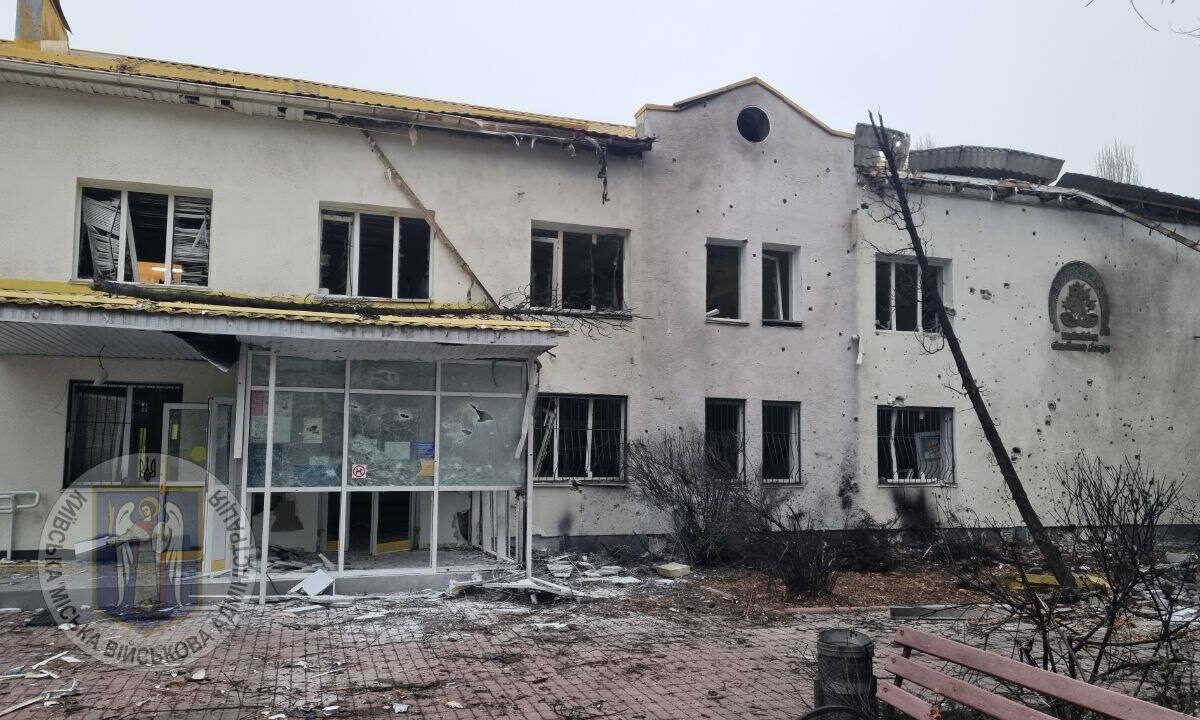
A Ukraine weapons depot strike in the village of Myla, just outside Kyiv, has killed at least 38 people. Ukrainian President Volodymyr Zelenskyy called it the deadliest single attack of the war so far this year. A Russian drone hit an ammunition depot late on 29 August 2026. The impact triggered a detonation that set off secondary explosions and fires. Emergency crews were still fighting those fires a day later.

What the Ukraine weapons depot strike destroyed

The blast injured dozens of people. Rescue teams evacuated hundreds more from the area around the depot as the fires spread. This was the second attack on a munitions storage site near Kyiv within two months. Ukrainian prosecutors have opened a criminal negligence investigation into how the depot was sited and secured. The strike landed as Russian air attacks on Kyiv stretched into a third consecutive day. Ukrainian officials say the intensification has accelerated since mid-August.

Ukraine weapons depot strike

Image credit: Ministry of Defence of Ukraine / Wikimedia Commons (CC BY 4.0)

Why this attack stands out from earlier strikes

Ukraine has absorbed thousands of drone and missile strikes since the war began. Attacks that detonate stored ordnance carry a distinct risk. Their blast radius and secondary fires can exceed what the original warhead alone would cause. That is part of why the death toll climbed so sharply. It rose from an initial count of 27 to 38 as rescue teams worked through the wreckage. Local officials said the scale of the secondary detonations made a final casualty figure hard to establish quickly.

How Kyiv and its allies are responding

Ukrainian authorities used the attack to press allies for faster delivery of air-defense systems. They argue that depots storing Western-supplied ammunition need better protection, given Russia’s apparent ability to track and target them. The strike also lands as the US Senate considers a fresh sanctions bill aimed at Russia’s energy exports. Kyiv has lobbied hard for that bill throughout the summer. European governments supply much of the ammunition stored at sites like the one hit in Myla. They now face renewed pressure to fund hardened storage facilities rather than rely on existing warehouses.

The human toll behind the casualty figures

Emergency responders described a chaotic scene in the hours after the strike. Secondary blasts made it too dangerous to enter parts of the site for several hours. Crews evacuated hundreds of residents in Myla and neighboring communities overnight. Some residents had already fled once before, after the earlier depot attack nearby two months ago. Local hospitals reported treating dozens of injuries, ranging from blast trauma to smoke inhalation. Officials cautioned that the toll could rise further as search teams finish clearing the wreckage.

Ukrainian officials have not released the nationalities or roles of all 38 confirmed dead. Early reports suggest the casualties include both military logistics personnel and civilian residents near the depot’s perimeter. That mix is part of why prosecutors opened a negligence investigation, rather than treating the deaths solely as a wartime casualty count.

How this fits the wider pattern of the war

Russia has shifted more of its strike campaign toward logistics and storage sites over the past year. Ukrainian military analysts attribute the change to diminishing returns from strikes on front-line positions alone. Targeting depots disrupts supply chains further back from the fighting. It also forces Ukraine to disperse storage across more, smaller sites, which is logistically harder and costlier to defend. The Myla strike fits that pattern closely. It hit a facility believed to store both Ukrainian-produced and allied-supplied ammunition, not a front-line position.

Western officials have previously raised concerns that consolidated storage sites make attractive targets. A single successful strike can destroy a disproportionate share of available ammunition. Ukraine’s own military has faced pressure to disperse stockpiles more aggressively. Doing so requires additional secure facilities and transport capacity, which take time to build even with allied funding.

What happens next

Kyiv’s criminal investigation into the depot’s security will likely take weeks. Its findings could shape how Ukraine and its allies store ammunition going forward. Ukrainian officials expect Russian strikes on logistics and storage sites to continue in the meantime. Moscow has increasingly targeted supply infrastructure, not just front-line positions, over the past year. Diplomats say the attack adds urgency to United Nations discussions expected once the General Assembly’s new session opens in September. Allied governments will likely announce specific air-defense pledges in the days ahead, since Kyiv has made that request the centerpiece of its public response.

Frequently Asked Questions

How many people died in the Ukraine weapons depot strike?

At least 38 people were killed, according to President Zelenskyy, after the death toll rose from an initial count of 27 as rescue crews worked through the site.

Where did the strike happen?

The depot was in the village of Myla, near Kyiv. It was the second attack on an ammunition storage site near the capital in two months.

What caused the high casualty count?

The drone strike triggered detonations of stored ammunition, which set off secondary explosions and fires that spread beyond the immediate impact zone.

Is this connected to the pending Russia sanctions bill?

Ukrainian officials have cited the strike while lobbying for a Russia sanctions bill moving through the US Senate, though the two are separate legislative and military developments.

Related Coverage

Sources

Iran US Military Strikes Escalate After Hormuz Attack

Iran US military strikes resumed on 31 August 2026. The clash ended a five-week pause in direct fighting between Washington and Tehran. Iran’s Islamic Revolutionary Guard Corps said it launched missiles and drones at the King Hussein and Al Azraq air bases in Jordan overnight. The attack came hours after the US military struck an Iranian-held position on Larak Island in the Strait of Hormuz. It marks the first confirmed clash between the two countries since a truce held through most of August.

What happened in the latest round of Iran US military strikes

Jordan’s military disputed Iran’s account of the damage. Officials in Amman said air defenses intercepted eight ballistic missiles before any could reach infrastructure or personnel. They reported no casualties. The United Arab Emirates’ Ministry of Defense separately said it shot down a drone launched from Iranian territory toward Emirati airspace. Iran’s state media claimed “heavy damage” to maintenance facilities and aircraft positions at the two Jordanian bases. Jordan rejected that claim outright.

Iran US military strikes

A senior Iranian source told Reuters that Tehran would respond to any American strike “dozens of times greater.” That language suggests further escalation, not a one-off retaliation. US President Trump said the United States was prepared to “hit them hard” if the attacks continued, CNBC reported.

Why the strikes restarted after a five-week lull

The renewed fighting follows a pattern set earlier in the summer. US and Saudi forces struck militia positions in Iraq. Iran responded with missiles aimed at American bases in the region. That July exchange ended with a Pakistan-mediated ceasefire and a memorandum of understanding. Both sides have since accused the other of violating that agreement. The weekend strike on Larak Island appears to have broken the truce entirely.

Energy markets are already pricing in the risk. Middle East hostilities keep pushing oil prices higher. Traders have pushed up expectations for a European Central Bank rate move later this month as a result. That dynamic ties this conflict directly to inflation readings far outside the region.

Who is bearing the direct risk from Iran US military strikes

Jordan and the UAE are absorbing the retaliatory fire. Both are US security partners, but neither is a direct party to the underlying dispute. Jordanian officials have repeatedly stressed that intercepting missiles over populated areas carries its own risk. Falling debris can still cause casualties even when interceptions succeed. Gulf carriers have also begun rerouting some flights away from Iranian and Iraqi airspace, echoing disruptions seen in July. Regional tourism boards have started fielding cancellation questions from travelers who booked trips for the coming weeks, even in countries well outside the immediate strike zones.

How markets are reading the new round of Iran US military strikes

Oil traders pushed benchmark prices higher within hours of the Larak Island strike becoming public. The move extends a rally that began with the June flare-up in hostilities. That earlier spike helped push the European Central Bank to raise its deposit rate for the first time in three years. Traders are now watching whether a second summer of Middle East volatility forces the Federal Reserve and the Bank of England to follow suit. Airlines flying between Europe and Asia have had to recost fuel-hedging positions twice in three months. That cost eventually shows up in ticket prices.

Insurance underwriters covering Gulf shipping routes raised war-risk premiums again after the weekend strikes. Higher premiums on tankers moving through the Strait of Hormuz tend to feed into fuel costs within weeks. That is one reason economists are treating this as more than a regional story.

What happens next

Diplomats involved in the earlier ceasefire talks are reportedly trying to reconvene. No date has been confirmed. Analysts widely expect at least one more exchange of strikes before either side agrees to de-escalate again, based on the pattern from July. Oil markets, Gulf aviation schedules, and the European Central Bank’s inflation outlook will likely move in step with whatever happens next. Regional carriers say they will keep reviewing flight paths daily rather than commit to a fixed routing until the situation stabilizes.

Frequently Asked Questions

Did the latest Iran US military strikes cause any confirmed casualties?

Jordan’s military reported no casualties from the intercepted missiles, and the UAE reported none from the drone it shot down. Iran’s own casualty figures, if any, have not been independently confirmed.

What triggered this round of fighting?

The US military struck an Iranian-held position on Larak Island in the Strait of Hormuz over the weekend of 29-30 August 2026. Iran responded with strikes on bases in Jordan and a drone toward the UAE.

Is this connected to the July 2026 ceasefire?

Yes. Both countries have accused each other of violating the Pakistan-mediated ceasefire and memorandum of understanding reached after the July exchange, and this weekend’s strikes appear to have ended that truce.

How is this affecting travel and energy markets?

Some Gulf carriers have rerouted flights away from Iranian and Iraqi airspace, and oil prices have risen on the renewed hostilities, feeding into inflation expectations at central banks including the European Central Bank.

Related Coverage

Sources