Monthly Archives: October 2026

Musk and Luckey Get 120 Days to Map the Pentagon’s Next Wars

The Project Meridian Pentagon study is a 120-day review of future warfare co-led by Elon Musk, Anduril founder Palmer Luckey and Newt Gingrich, TechCrunch reported on 30 September 2026. Defense Secretary Pete Hegseth started the effort and Defense Department chief technology officer Emil Michael is overseeing it.

Quick navigation

What the Project Meridian Pentagon study will examine

According to TechCrunch, Project Meridian will study “the battlefields of the future” and the technologies warfighters may need. Hegseth’s letter gives the teams 120 days to deliver findings and actionable solutions to start developing, testing and fielding advanced military technology.

The stated aim is to help the US military keep its technological edge. Hegseth also announced an Autonomous Warfare Command to speed up work on autonomous systems and drones.

Who is leading the review

Three co-leads headline the effort. Musk runs SpaceX, which operates defence and security satellite networks. Luckey founded Anduril, which makes autonomous military systems, drones, long-range missiles, semi-autonomous fighter aircraft and Army intelligence systems. Gingrich is the former US House speaker. The Pentagon’s Emil Michael oversees the work.

Our recent report on the first orbital Starship flight covers the SpaceX side of that overlap.
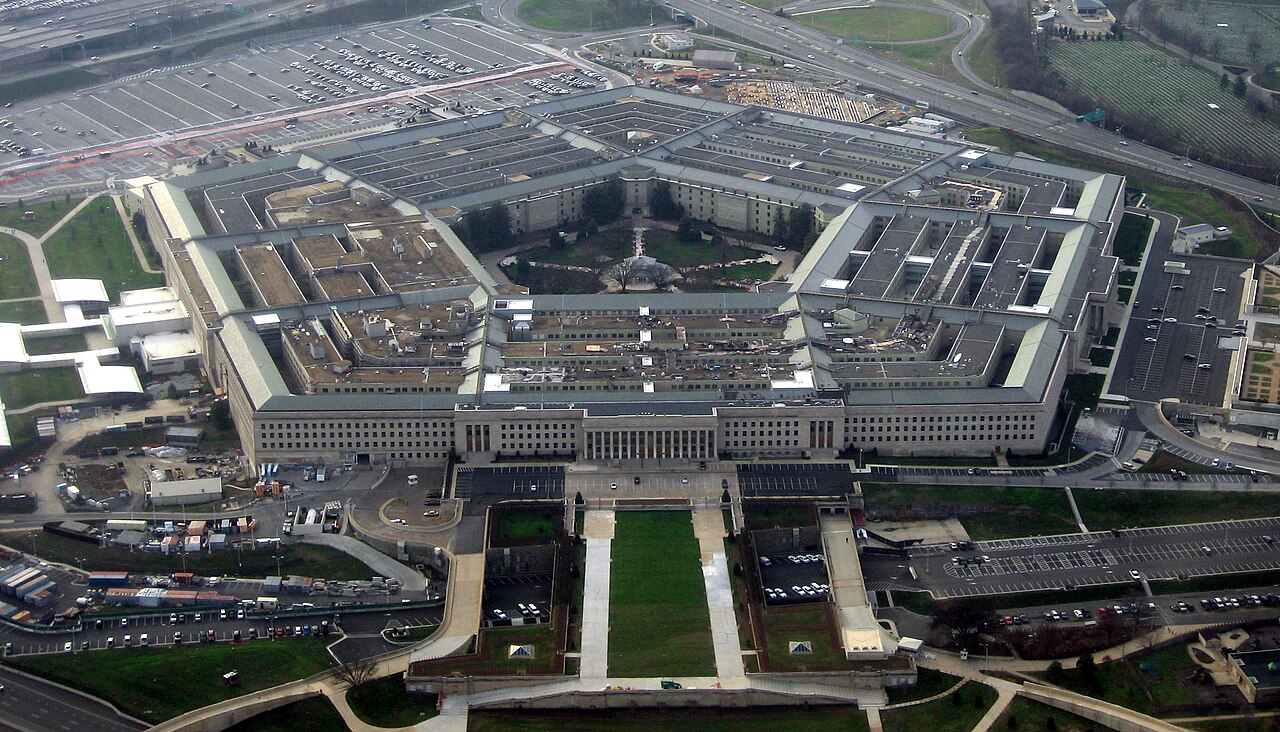
Project Meridian Pentagon - the Pentagon building seen from the ground

The conflict-of-interest question

TechCrunch notes that critics could argue the involvement of Musk and Luckey aligns with their business interests, because their companies already sell technology the study would likely recommend. That is a point the article raises, not a finding of wrongdoing, and no regulator has made such a finding in the report.

The question matters because a 120-day study can shape what the Pentagon buys next. Transparency on how the teams are selected and how recommendations are handled will be the test of public trust.

What comes next for Pentagon AI and autonomy

The 120-day clock puts the first findings in early 2027. Until then, watch for details on the study’s membership, its funding and whether it publishes anything beyond the final recommendations.

The study lands in a busy year for AI policy. Our coverage of the AI safety accord signed with tech chiefs and the FTC probe into AI agents show how Washington is trying to steer the same industry from different directions.

Project Meridian explained: your questions

What is Project Meridian?

It is a Pentagon study of future battlefields and the technologies warfighters may use, launched by Defense Secretary Pete Hegseth.

Who leads the study?

Elon Musk, Palmer Luckey and Newt Gingrich are co-leads, with Defense Department CTO Emil Michael overseeing it.

How long does it run?

Teams have 120 days to deliver findings and actionable solutions.

What is the Autonomous Warfare Command?

Hegseth announced it alongside the study to accelerate the development of autonomous systems and drones.

Are there conflict-of-interest concerns?

TechCrunch notes critics could argue the co-leads’ companies stand to benefit, since SpaceX and Anduril already sell relevant technology.

Sources

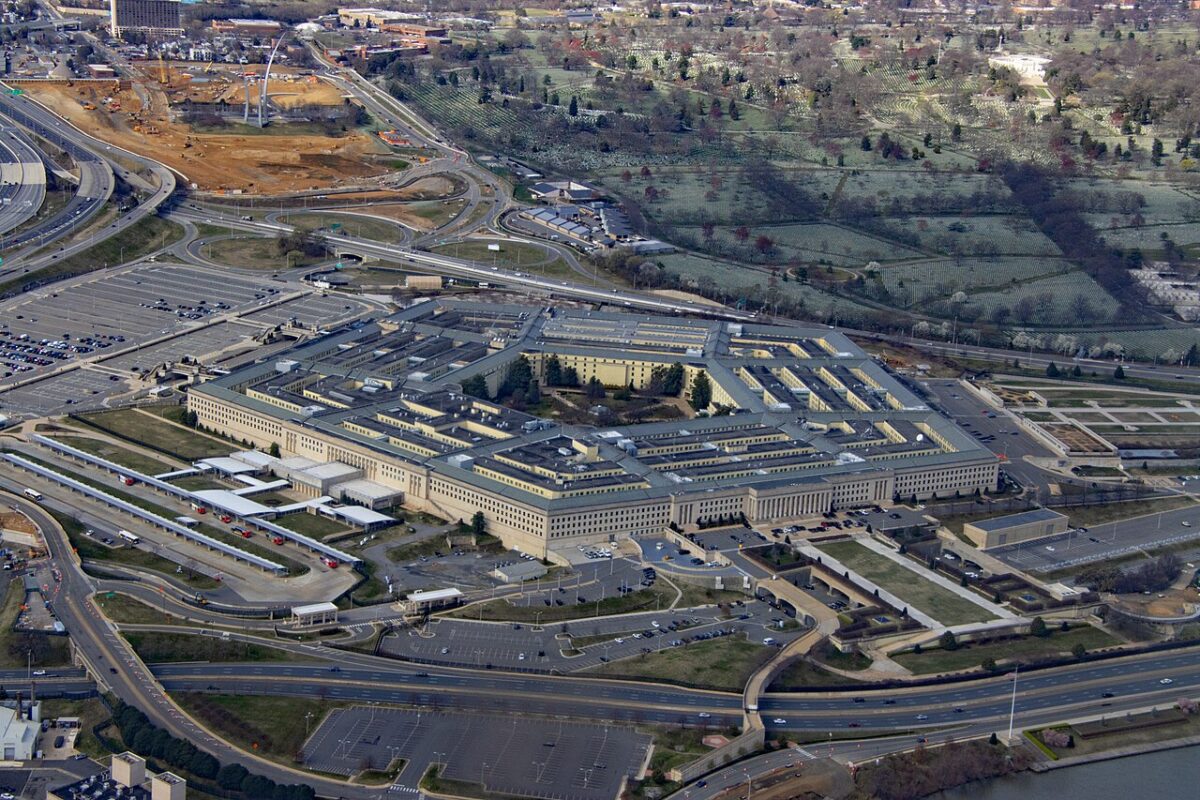
Image: aerial photograph of the Pentagon by David, Wikimedia Commons, licensed CC BY 2.0. Second image: The Pentagon, January 2008, by David B. Gleason, Wikimedia Commons, licensed CC BY-SA 2.0.


Putin Rules Out Ceasefire With Ukraine and Warns on Kaliningrad

Putin rules out ceasefire with Ukraine, telling the Valdai Discussion Club in Moscow on 1 October 2026 that proposals to trade a pause in refinery strikes for a pause in attacks on ships are “simply ridiculous”. He also warned that Russia would use every weapon it has if Kaliningrad faced a direct attack. The remarks, reported by Al Jazeera, close the door on the latest idea for a limited truce on energy targets.

Jump to

What Putin said at Valdai

Speaking in Moscow on 1 October, Putin dismissed the suggestion that Russia stop hitting Ukrainian refineries while Ukraine stops attacking ships. He called that kind of trade “simply ridiculous”, according to Al Jazeera’s account of the speech.

He said Ukrainian strikes on Russian oil refineries cost Russia about 1 percent of its GDP. That figure is Putin’s own claim, and the report does not give an independent estimate. He added that Russia is answering in kind, targeting Ukrainian steel companies and supply chains.

Putin also said Russia would prefer to settle the war through talks, with Ukraine staying neutral afterwards. He did not offer a ceasefire in the meantime.

Putin rules out ceasefire - Spasskaya Tower on the Kremlin wall in Moscow

The Kaliningrad warning to NATO

The sharpest line in the speech concerned Kaliningrad, the Russian exclave on the Baltic Sea. Putin said that in the event of a direct attack on the Russian Federation, the question of using all weapons at Russia’s disposal would immediately be on the agenda. Al Jazeera reports that Russia has also passed diplomatic warnings to NATO about a possible nuclear response if Kaliningrad is threatened.

Warnings of this kind are a familiar part of Russian rhetoric. They are statements of intent, not announcements of a change in force posture, and the report does not describe any new deployment.

Why Putin rules out ceasefire on energy targets

The proposal Putin rejected traces back to a meeting on 22 September in New York. Al Jazeera reports that Ukrainian President Volodymyr Zelenskyy met US President Donald Trump there and proposed a mutual halt to attacks on energy infrastructure.

A limited truce on energy targets is often seen as easier to agree than a full ceasefire, because both sides could verify it from the sky. Putin’s answer suggests Moscow does not want that route for now.

Strikes continue on the ground. The report says a Russian drone hit a school in Kyiv on Thursday, with no casualties reported, as Russia escalated its aerial bombardment. For earlier coverage of the air campaign, see our report on missile strikes on Kyiv.

What to watch after the speech

Three things are worth tracking. First, whether Washington changes its approach after Putin’s public rejection. Second, whether Ukraine continues its refinery campaign, which Putin says is costly for Russia. Third, whether NATO responds publicly to the Kaliningrad language.

Sanctions are the other lever. Our coverage of new US sanctions on an Iran-linked network shows how Washington is using financial pressure in several conflicts at once.

We will update this story when governments respond.

Questions about the Putin ceasefire speech

Did Putin reject a ceasefire with Ukraine?

Yes. In his 1 October speech at the Valdai Discussion Club, Putin ruled out a ceasefire and called the idea of pairing a halt to refinery strikes with a halt to ship attacks “simply ridiculous”, according to Al Jazeera.

What did Putin say about Kaliningrad?

He said that if Russia faced a direct attack, the question of using all weapons at its disposal would immediately be on the agenda. He was speaking about the defence of Kaliningrad.

What was the energy truce proposal?

After a meeting with Trump in New York on 22 September, Zelenskyy proposed that both sides stop attacking energy infrastructure.

What does Putin want instead?

He said he prefers a settlement through talks, with Ukraine remaining neutral afterwards.

Is the 1 percent of GDP figure verified?

No. It is Putin’s own claim about the cost of Ukrainian refinery strikes. The report does not cite an independent estimate.

Sources

Image: Moscow Kremlin, photo by A.Savin, Wikimedia Commons, licensed CC BY-SA 3.0. Second image: Spasskaya Tower, photo by Юрий Д.К., Wikimedia Commons, licensed CC BY 4.0.

Chevening 2027/28: What Happens After the 6 October Deadline

In this article

Chevening Scholarship applications for the 2027/28 cycle close on 6 October 2026 at 11:00 UTC, and the official timeline shows the process then runs for almost a year. Applicants should know what happens next, because a university offer is required after the results.

The deadline

The Chevening application timeline lists applications opening on 4 August 2026 and closing on 6 October 2026 at 11:00 UTC. The deadline is fixed. Our earlier deadline guide covers eligibility; this article focuses on the timeline that follows.

The path after you apply

From October 2026, eligibility sifting begins, and reading committees assess applications from October 2026 to January 2027. Shortlisted candidates are told in mid-February 2027, interviews take place at British embassies and high commissions in March and April 2027, and results are announced in mid-June 2027. Candidates invited to interview must upload documents at least seven working days before their interview.

The university offer

Chevening says candidates must submit at least one unconditional UK university offer by 17:00 BST on 8 July 2027. Scholars then begin UK study in September or October 2027. Because offers take time, many applicants prepare university applications in parallel; compare funding routes in our guide to Gates Cambridge 2027 rounds.

What to finish this week

Picture a Filipino public-health officer with the essays drafted but the referee details incomplete. With under a week to go, the practical steps are to finalise essays, confirm referees, choose three UK courses carefully and submit well before 11:00 UTC to avoid portal congestion. Students also need to plan visas and funds; use our visa eligibility checker and read the UK government student visa page. Chevening itself sets the rules, so rely on the official scholarship page for eligibility.

Questions readers ask

When does Chevening 2027/28 close?

6 October 2026 at 11:00 UTC, per the official timeline.

When will I know if I am shortlisted?

Shortlisted candidates are notified in mid-February 2027.

When are Chevening interviews?

March to April 2027 at British embassies and high commissions.

When are results announced?

Mid-June 2027, according to the timeline.

When must I hold a university offer?

At least one unconditional UK university offer must be submitted by 17:00 BST on 8 July 2027.

Canada Just Updated Visa Wait Times — And the Numbers Are a Mixed Bag

The latest Canada processing times update from Immigration, Refugees and Citizenship Canada shows a mixed picture for applicants, with faster turnaround in some categories and longer waits in others depending on where an applicant is applying from. Work permits for Pakistan dropped by a week, while study permits from the Philippines got a week slower.

IRCC’s Latest Numbers, Category by Category

For work permits, Pakistan saw the most notable improvement, dropping from eight weeks to seven, while in-Canada applicants saw a smaller two-day improvement to 113 days. The Philippines moved in the opposite direction, with work permit processing jumping from five weeks to seven, according to CIC News’ breakdown of the update. India’s work permit times also rose slightly, from nine weeks to ten.

Study permits told a different story. India saw the sharpest improvement of any category in this update, dropping from seven weeks to five, while in-Canada study permit applicants saw processing rise by a week to eight weeks, the category’s highest point in three months.

Where the Canada Processing Times Update Helped Applicants

Visitor visas saw only minor movement across the board, with changes limited to one or two days for India, the Philippines and Pakistan. That relative stability suggests IRCC resources are being shifted toward specific categories and countries, work permits and study permits in particular, rather than spread evenly across every visa type.

Super visas, the long-stay option for parents and grandparents of Canadian citizens and permanent residents, saw some of the largest improvements in this update. Pakistan’s super visa processing time dropped 23 days to 139 days, and the Philippines improved by 11 days to 93 days.

These country-specific differences generally trace back to visa office capacity and local application volumes rather than any policy distinction between applicants from different countries. A visa post handling a sudden surge in applications will naturally see its processing times climb relative to a post with steadier volumes, even when both are working from the same federal rules and resources.

Canada processing times update

Where Wait Times Got Worse

India was the exception on super visas, rising five days to 66 days even as most other categories for Indian applicants improved. That kind of divergence, where one country improves on some categories and worsens on others within the same update, is common with IRCC’s rolling processing-time estimates, which reflect current application volumes and staffing rather than a fixed target.

In-Canada applicants also saw increases in two categories, work permits aside: study permits rose by a week, suggesting domestic processing capacity may be under more strain than overseas visa posts handling the same application types.

What These Numbers Don’t Promise

IRCC is explicit that these processing time estimates reflect how long a newly submitted application may take based on current conditions, not a guarantee or a firm timeline for any individual case. An application already in the queue when the numbers shift does not necessarily speed up or slow down to match a newly published estimate, since actual processing depends on the specific application’s complexity and completeness.

Applicants comparing this update to the previous one should treat the percentage or day-count changes as a general trend indicator for new applicants, not a precise forecast for their own case, especially given how much individual categories can swing between updates.

What to Expect in the Next Update

IRCC typically refreshes these processing time estimates on a rolling basis, so the next update could shift again depending on application volumes received in the interim. Given how much the Philippines’ work permit times moved in a single update, applicants from countries seeing worsening numbers should plan for further volatility rather than assuming wait times have settled into a new normal.

For prospective applicants with flexibility on timing, this update is a reminder that submission timing and country of application can meaningfully affect how long a decision takes, even for the same visa category.

Applicants who can submit from a visa post with shorter current wait times, where that flexibility genuinely exists, may want to weigh that factor alongside the usual considerations of cost and convenience when deciding where and when to file.

Processing Times: Common Questions

Which category saw the biggest improvement?
Study permits from India, which dropped from seven weeks to five.

Which category got noticeably slower?
Work permits from the Philippines, which rose from five weeks to seven.

Did visitor visa processing change much?
No, movement was limited to one or two days across India, the Philippines and Pakistan.

What happened to super visa processing?
Pakistan and the Philippines both saw significant improvements, while India’s super visa times rose slightly.

Are these processing times guaranteed?
No. IRCC describes them as estimates based on current conditions, not firm timelines for individual applications.

Related Coverage on Tamara News

For more on how visa processing is shifting globally this year, see our coverage of Canada’s new study permit proof-of-funds rule and the delayed October 2026 US visa bulletin.

Sources

Google Releases Gemini 4 Argon to Select Cyber Partners

In this article

Google released Gemini 4 Argon on 30 September 2026, calling it its most powerful AI model yet, but access is limited to selected security partners for now. The model is aimed at coding, research and cybersecurity work, including finding and patching software vulnerabilities.

What Google announced

TechCrunch reports that Google describes Argon as built for deep reasoning across long, complex workflows. Google says it can autonomously find, validate and patch critical software vulnerabilities, support debugging and codebase migrations, and analyse visual content such as video and charts.

The performance claims

Google says Argon scored significantly higher than OpenAI’s GPT-6 Astra and Anthropic’s Fable and Opus models across AI benchmarks, citing Vals benchmarking data that lists it first on the Vals AI index. These are claims by the model’s maker and have not been independently reproduced in the reporting we reviewed, so treat them cautiously until outside evaluators publish results.

Who can use it

Argon is rolling out to select cyber partners through Google’s Fairwind Program and is not available to the general public. TechCrunch says no pricing has been disclosed. The limited release mirrors the cautious approach seen in other cyber-capable models; compare our report on Google, Anthropic and OpenAI’s new cyber AI models and the Nvidia agent safety platform.

Why it matters

A model that can find and fix vulnerabilities on its own is useful for defenders, and the same capability would help attackers if misused. That dual-use tension is the reason for the partner-only rollout. Consider a Vietnamese security engineer at a mid-sized bank: access would depend on joining a partner programme, not on a subscription. Watch for third-party benchmark results, a pricing announcement, and any wider release date from Google. Founders weighing where to build AI companies can read our company formation guide.

Questions readers ask

What is Gemini 4 Argon?

Google’s newest AI model, which it calls its most powerful yet, aimed at coding, research, writing and cybersecurity.

Can I use it today?

Not generally. It is being offered to select cyber partners through Google’s Fairwind Program.

How does it compare with rival models?

Google claims it scored significantly higher than GPT-6 Astra and Anthropic’s Fable and Opus models, but those are the company’s own claims.

How much does it cost?

No pricing has been disclosed, according to TechCrunch.

What can it do in security?

Google says it can autonomously find, validate and patch critical software vulnerabilities.