• Mon - Fri 9.00 - 19.00

Yearly Archives: 2026

Anthropic Just Gave a Consulting Firm the Keys to Watch Its Own AI

Anthropic announced on September 18 that it is bringing an outside firm inside its own walls to check its work. The Anthropic embedded evaluator arrangement gives Accenture’s specialist AI unit, Faculty, access comparable to an Anthropic employee’s, so it can red-team models, run alignment assessments and test safeguards from the inside rather than from a distance.

Both companies say they expect to invest at least $1 billion each over the next five years to build out this kind of independent evaluation capacity. It is one of the largest financial commitments any AI lab has made specifically to outside safety oversight.

The short version: Anthropic announced the deal September 18. Accenture’s Faculty unit leads the work. Each side is committing $1 billion. Evaluators get employee-level access. The arrangement is non-exclusive. Anthropic is talking to other evaluators too.

What an Anthropic Embedded Evaluator Actually Does

Rather than reviewing a model from outside after it ships, an embedded evaluator sits inside the company during training and deployment decisions. Faculty’s team will evaluate models, red-team them for weaknesses, run alignment assessments and stress-test the safeguards meant to keep systems behaving as intended.

Anthropic describes the access level as similar to what an employee would have. That is a significant departure from how most AI safety audits work today, where outside reviewers typically see a finished product rather than the process that built it.

Why Accenture’s Faculty Unit Got the Job

Faculty is Accenture’s specialist AI business, built around data science and applied AI work rather than general consulting. Anthropic said the partnership is non-exclusive. The company is also in talks with METR and other nonprofit evaluators to pilot similar embedded arrangements, meaning Faculty will not be the only outside group with this kind of access going forward.

The Billion-Dollar Commitment Behind the Deal

Anthropic frames the arrangement as a direct step toward a commitment CEO Dario Amodei made in a September 2026 essay on AI development pacing. Amodei has argued publicly that frontier labs need real, resourced outside scrutiny rather than voluntary self-reporting. Putting $1 billion behind that argument is meant to signal the commitment is more than words.

What This Means for AI Safety Oversight

Embedded evaluation does not replace regulation, and it is still a company paying for its own oversight, which raises an obvious independence question. Anthropic’s answer is transparency about the arrangement and a willingness to bring in multiple evaluators rather than just one. Whether that satisfies critics who want government-run auditing will depend on what Faculty’s team actually publishes about what it finds.

This is not oversight by a government regulator. It is not a court order. It is a private deal between two companies. That distinction matters to critics. It matters less to Anthropic, which argues speed beats waiting on legislation.

Critics of self-funded oversight point out that an evaluator paid by the company it evaluates has an incentive, even a subtle one, to avoid findings that damage the relationship. Anthropic’s counter-argument is that embedded access produces far more useful findings than an outside audit ever could, since Faculty’s team will see design decisions as they happen rather than reconstructing them after the fact.

How an Anthropic Embedded Evaluator Differs From a Traditional Audit

Traditional AI audits typically involve a third party testing a finished model against a checklist, producing a report weeks or months after the system has already shipped. An embedded evaluator instead sits alongside engineers during development, able to flag a concerning design choice before it becomes a shipped feature. Supporters say this catches problems earlier. Skeptics say it also means the evaluator becomes closer to the organization it is supposed to be scrutinizing, blurring the line between oversight and collaboration.

What Happens Next

Faculty’s evaluators are expected to begin embedded work in the coming months. Anthropic has not said whether findings will be published in full or summarized. Industry watchers will be looking for the first public report as the real test of whether this model produces meaningfully independent scrutiny or simply a more sophisticated form of self-review.

Other frontier labs are watching too. If Anthropic’s approach produces credible, publicly visible findings, competitors may face pressure to adopt something similar rather than rely on internal review alone.

The numbers at a glance: Announcement date: September 18. Anthropic’s commitment: at least $1 billion. Accenture’s commitment: at least $1 billion. Time frame: five years. Lead unit: Faculty. Access level: comparable to an employee’s.

Questions About the Anthropic-Accenture Deal

What is an embedded evaluator?
An outside reviewer given employee-level access inside a company to assess AI models during training and deployment, rather than reviewing only the finished product.

How much are Anthropic and Accenture committing?
Each company expects to invest at least $1 billion over five years in building this evaluation capacity.

Is Accenture the only embedded evaluator Anthropic will use?
No. The arrangement is non-exclusive, and Anthropic is in discussions with METR and other nonprofit evaluators too.

What prompted this partnership?
Anthropic ties it to a September 2026 essay by CEO Dario Amodei calling for embedded, resourced outside evaluation of frontier AI labs.

Will the findings be made public?
Anthropic has not detailed how much of Faculty’s evaluation work will be published.

Further Reading on This Story

Sources

  • Anthropic — Partnering With Accenture on Embedded Evaluation. anthropic.com
  • TechCrunch — Anthropic’s First Embedded Evaluator Is … Accenture? techcrunch.com
  • CNBC — Anthropic Selects Accenture as Its First Embedded AI Safety Evaluator. cnbc.com

This AI Firm Grew Revenue 1,252% and Still Lost $1 Billion

The Nscale IPO filing landed publicly on 18 September 2026, and it is one of the
starkest illustrations yet of how much money the AI build-out is consuming. The London-based data centre
operator, backed by Nvidia and partnered with Microsoft, filed with the US Securities and Exchange
Commission to list in New York. It is seeking as much as 3 billion dollars, at a valuation reported at
around 30 billion.

The numbers inside the Nscale IPO filing

For the six months to 30 June 2026, Nscale reported revenue of 140.6 million dollars and a net loss of
1.02 billion dollars. A year earlier it reported revenue of 10.4 million dollars and a net loss of 368.9
million dollars. Revenue therefore grew about 1,252 percent. Losses grew too, and faster in absolute
terms.

That shape is normal for infrastructure at this stage. Data centres cost money years before they earn
it. The question a buyer has to answer is whether the contracted demand is real enough to carry the
spending.

New York Stock Exchange floor, the venue for the Nscale IPO filing
Nscale is filing to list in New York rather than London.

What the filing claims about contracted demand

Nscale says it has grown to more than 103 billion dollars in total contracted value, up from 100 million
dollars in two and a half years. That figure comes from the company’s own filing and describes contracts
over their full life, not revenue already earned. Read it as a pipeline number.

One named commitment gives it weight. Anthropic agreed last month to spend 45 billion dollars renting AI
cloud capacity from Nscale’s West Virginia data centre campus. A single customer of that size cuts both
ways: it validates the model and it concentrates the risk.

Why Nvidia keeps showing up in the Nscale IPO filing

Nvidia is an investor, a supplier and now a buyer of Nscale paper. The company agreed this week to sell
3.1 billion dollars of convertible bonds, including 1 billion dollars to Nvidia, according to the filing.
Nvidia is funding a customer that buys Nvidia chips. That circularity is not hidden, but it is worth
naming.

It is the same pattern visible elsewhere in the sector. We looked at the financing loops around the
largest AI labs in our coverage of
the valuation talks reshaping OpenAI
and
the loan SoftBank arranged against its OpenAI stake.
Nvidia has also been buying its way up the stack, as in
its acquisition of Hugging Face.

The risks a prospective investor should weigh

Three stand out. Customer concentration comes first. A pipeline dominated by a handful of AI labs
depends on those labs continuing to raise money. Capital intensity comes second. Nscale needs continuous
financing to build, and it already leans on convertible debt. Supply comes third, because memory and grid
capacity are both tight in 2026.

Power deserves its own line. AI campuses compete with households and industry for grid connections, and
connection queues in the United States and Europe now run for years. A contract only earns revenue once
the site draws power.

None of that disqualifies the deal. All of it belongs in the price.

What to watch before Nscale prices the deal

A public filing opens the window. It does not set the terms. Watch for the pricing range, the share
count and the lock-up terms when they appear in an amended filing. Watch whether Nscale restates or breaks
down the contracted-value figure. And watch the comparable names: if AI infrastructure valuations move in
the next few weeks, the 30 billion dollar target moves with them.

One more signal is worth tracking. If Nvidia’s stake grows again between now and pricing, the
supplier-financier overlap tightens rather than loosens.

You can read the filing itself once it appears in the
SEC’s EDGAR database,
which is the primary record rather than anyone’s summary of it.

Questions investors are asking about the Nscale IPO filing

What is Nscale?

Nscale is a London-based operator of artificial intelligence data centres and cloud capacity. Nvidia is an investor and Microsoft is a partner.

How much is Nscale trying to raise?

The company is seeking up to 3 billion dollars in the offering and is targeting a valuation of around 30 billion dollars, according to reporting on its filing.

Is Nscale profitable?

No. It reported a net loss of 1.02 billion dollars on revenue of 140.6 million dollars for the six months to 30 June 2026.

Why did revenue jump so sharply?

Revenue rose from 10.4 million dollars to 140.6 million dollars year on year, a rise of about 1,252 percent, as large AI customers contracted capacity.

Who are its biggest customers?

The filing points to large AI buyers. Anthropic agreed last month to spend 45 billion dollars renting cloud computing power from Nscale’s West Virginia campus.

When will the shares start trading?

No pricing date has been set publicly. A public filing starts a roadshow window; the terms and timing are confirmed later.

Sources

Featured image: "Quincy Data Centre" by cellanr, CC BY-SA 2.0.

airBaltic Just Filed for Bankruptcy. Its Planes Are Still Taking Off on Schedule.

airBaltic, the Latvian flag carrier, filed for Chapter 11 bankruptcy protection in a US court on September 14. The move sounds alarming, but the airBaltic bankruptcy financing package attached to the filing means passengers are unlikely to notice any difference at the gate. Every scheduled flight is still operating, and the airline says it expects that to continue through the restructuring.

The filing was made with the US Bankruptcy Court for the Southern District of New York. airBaltic described its situation as acute financial stress driven by a mix of financial and geopolitical pressures, from fuel costs to the security environment around the Baltic region.

The short version: airBaltic filed for Chapter 11 on September 14. Flights are still operating on schedule. Lenders committed €350 million in financing. The court approved an initial €140 million. The full process should wrap by June 2027. Tickets and loyalty points stay valid throughout.

What airBaltic’s Chapter 11 Filing Actually Means

Chapter 11 is a US legal process that lets a company keep operating while it reorganizes its debts under court supervision. It does not mean the airline is shutting down. airBaltic said flights will run as scheduled throughout the process, which it expects to complete by June 2027.

For travelers, existing tickets and loyalty points remain valid. Airlines that use Chapter 11 protection, rather than liquidation, are choosing a path meant to keep the business flying while it renegotiates what it owes.

airBaltic Bankruptcy Financing: How the €350 Million Works

airBaltic secured a commitment for €350 million in debtor-in-possession financing from a group of lenders that includes Strategic Value Partners, Barclays, Hayfin Capital Management, Morgan Stanley and Oaktree Capital Management. The funding carries a rate of roughly 12%, reflecting the risk lenders take on during a restructuring.

On September 16, the bankruptcy court granted interim approval for airBaltic to draw an initial €140 million of that facility. The remaining amount is subject to further court approval as the case proceeds.

Why the Baltic Carrier Ran Out of Room

airBaltic operates from Riga, close to the Baltic Sea and within range of the war in Ukraine. Airlines in the region have absorbed years of higher insurance costs, longer rerouted flight paths and volatile fuel prices. Combined with the broader financial strain many mid-sized European carriers face, the airline said it reached a point where restructuring was the more sustainable path forward.

What Passengers Should Expect

Nothing changes immediately for people holding tickets. airBaltic has stated publicly that its flight schedule continues unaffected during the court-supervised process. Passengers with upcoming bookings do not need to rebook or seek refunds because of the filing itself.

How This Compares to Other Airline Bankruptcies

Chapter 11 has become a familiar tool for airlines under financial strain, used in the past by carriers on both sides of the Atlantic to shed debt while continuing to fly. What sets the airBaltic bankruptcy financing package apart is its size relative to the airline itself. A €350 million facility is a substantial sum for a regional carrier of airBaltic’s scale, reflecting both the severity of its cash crunch and the confidence lenders still have in its long-term business.

Rating agency KBRA noted that the financing terms, while expensive at roughly 12%, give airBaltic room to keep operating without disruption to passengers, crews or its fleet of Airbus A220 aircraft, a newer, fuel-efficient jet the airline has leaned on heavily in recent years.

What Happens Next for airBaltic

The case will move through the US court over the coming months, with airBaltic expected to present a formal reorganization plan to creditors. The airline has set an internal target of finishing the process by June 2027. Credit analysts are watching how the airline balances debt reduction against keeping its route network intact, particularly its connections between the Baltic states and Western Europe that many smaller communities depend on for air access.

Latvia’s government, which holds a stake in airBaltic, has signaled continued support for the airline through the restructuring, though it has not detailed what additional state involvement, if any, might follow.

The numbers at a glance: Filing date: September 14. Financing commitment: €350 million. Initial court-approved draw: €140 million. Interest rate: roughly 12%. Target completion: June 2027. Flights affected so far: none.

Common Questions About the airBaltic Filing

Did airBaltic stop flying?
No. The airline says all scheduled flights continue to operate during the Chapter 11 process.

What is debtor-in-possession financing?
It is a loan that lets a company keep paying its bills and running operations while it works through bankruptcy court.

How much financing did airBaltic secure?
A commitment for €350 million, with an initial €140 million approved for immediate use.

When does airBaltic expect the process to end?
The airline has targeted completion by June 2027.

Are existing tickets still valid?
Yes. airBaltic has not asked passengers to take any action because of the filing.

Keep Reading

Sources

  • RTE — AirBaltic Voluntarily Files for US Bankruptcy Protection. rte.ie
  • Aerotime — Boost for airBaltic as US Bankruptcy Court Approves Access to Financing. aerotime.aero
  • Airways Magazine — airBaltic Files for Chapter 11 With €350m Financing Commitment. airwaysmag.com

Four Days Before Trump Meets Xi, Their Negotiators Are Already in a Room Together

Negotiators from the United States and China sat down together in New York this week, four days before Presidents Donald Trump and Xi Jinping meet at the White House. The Trump Xi trade summit is scheduled for September 24, and the New York session was meant to narrow the gap before the two leaders speak. Both governments say they want to extend the trade truce struck in Busan last October, which paused tariffs that had climbed above 100% and threatened to choke global supply chains.

The stakes are real. The current truce expires November 10. If nothing is signed by then, tariffs and export controls that were paused a year ago could snap back into place within weeks.

The short version: Trade officials met in New York this week. The full leaders meet September 24. A one-year truce extension is the likely outcome. Tariffs revert November 10 without a deal. Taiwan arms sales are the biggest risk to the summit itself. Rare earths remain China’s strongest card.

What Happened in New York This Week

US and Chinese trade officials met at a hotel in Manhattan to work through the text both leaders are expected to review. Neither side has released details of what was discussed. Analysts who track the relationship say the meeting was a working session, not a signing event. Its job was to remove disagreements before Trump and Xi sit down themselves.

This is the third face-to-face meeting between the two leaders in less than a year. A similar summit in Beijing in May 2026 ended without major disputes. That is part of why expectations for September 24 are modest. Neither government wants a dramatic breakthrough. Both want to avoid a collapse.

Why the Trump Xi Trade Summit Matters for Global Trade

The most likely outcome is a one-year extension of the Busan truce. That would keep tariffs at current levels and preserve the pause on Chinese export controls over rare-earth minerals. Those minerals are essential to electronics, electric vehicles and defense manufacturing. A disruption would ripple through factories in the US, Europe and Asia within months.

Trade and investment sit at the center of the agenda, alongside artificial intelligence and the war in Iran. Washington and Beijing both want to keep the relationship stable while they compete over chips, critical minerals and industrial policy.

The Sticking Points: Taiwan, Rare Earths and Tech

Beijing has warned it could cancel the summit if Washington approves a pending $14 billion arms package for Taiwan before Xi arrives. That single decision could unravel months of preparatory work. Rare-earth export controls remain the other flashpoint. China supplies the overwhelming majority of the world’s processed rare earths, and that gives it leverage Washington has struggled to counter.

Technology transfer rules add a third pressure point. US chip export restrictions to China have tightened and loosened repeatedly over the past year. Companies on both sides say they need a predictable rulebook rather than another temporary fix.

How Markets Are Positioning Ahead of the Trump Xi Trade Summit

Investors have mostly priced in an extension rather than a collapse. Equity markets have stayed calm through the run-up to September 24, and currency traders have not shown the kind of hedging spike that usually signals fear of a tariff shock. That calm is itself a bet. If negotiators walk away without a deal, the reaction in markets tied to semiconductors, shipping and consumer electronics would likely be sharp and immediate.

Supply chain managers at multinational firms have spent the past year building redundancy into sourcing plans, shifting some manufacturing away from China and toward Southeast Asia and Mexico. That diversification softens the blow of a bad outcome but does not eliminate it. China remains the dominant source for rare-earth processing, and no alternative supply chain at comparable scale exists yet.

What Happens Next After the Summit

If the two leaders sign an extension, markets and manufacturers get a year of relative certainty. If talks stall, tariffs revert on November 10. Businesses that import from or export to China would need contingency plans within weeks, not months. Trade lawyers advising multinational clients say the safest posture right now is to prepare for both outcomes rather than bet on one.

Watch two dates: September 24, when the leaders meet, and November 10, when the current truce runs out regardless of what happens at the summit. A signed extension before that second date would remove the immediate cliff edge, even if deeper disagreements over technology and Taiwan remain unresolved for future negotiations.

Frequently Asked Questions

When is the Trump Xi trade summit?
The two leaders are set to meet at the White House on September 24, 2026.

What is the Busan trade truce?
It is the October 2025 agreement that paused tariff escalation between the US and China and eased Chinese export controls on rare-earth minerals.

When does the current truce expire?
November 10, 2026, unless the two governments agree to extend it.

Could the summit be cancelled?
Beijing has said it would call off the meeting if Washington approves a pending Taiwan arms package before Xi’s arrival.

What industries would be hit hardest if talks collapse?
Electronics, electric vehicles and defense manufacturing rely heavily on Chinese rare-earth exports, making them the most exposed if export controls return.

Is a major breakthrough expected on September 24?
Most analysts expect the meeting to focus on stabilizing the relationship rather than producing a transformational deal.

More From Tamara News

Sources

  • Bloomberg — US, China Begin Trade Talks in New York Ahead of Trump-Xi Summit. bloomberg.com
  • CSIS — Trump-Xi 2026 Summits. csis.org
  • World Economic Forum — What to Expect From the Trump-Xi Summit in Washington. weforum.org

Riyadh Heard Its First Air-Raid Siren of This War — Then Came Smoke

Saudi Arabia says its air defences intercepted a ballistic missile fired at the capital at dawn on
Saturday, 19 September 2026. The Riyadh missile attack marked the first strike attempt on
the Saudi capital since fighting with Yemen’s Houthi movement resumed this year. It also sent the city
into its first air-raid alert of the current round. Smoke rose near King Khalid International Airport.
Flight schedules slipped for much of the morning.

What happened in the Riyadh missile attack

Saudi Arabia’s air force said it "successfully intercepted and destroyed a ballistic missile
launched by the Houthi terrorist militia towards the city of Riyadh at dawn on Saturday". That is the
Saudi military’s own account. No independent assessment of the intercept exists yet.

Residents reported an air-raid siren over the capital. Footage circulated showing smoke and flames near
the airport. Firefighters later put out a blaze on a fuel tank carrying the Saudi Aramco logo. The tank
sat at a depot close to King Khalid International Airport, according to reporting by
France 24.

Saudi Arabia has not released casualty figures. It has also not said how close the missile came before
the intercept, or which defence system engaged it.

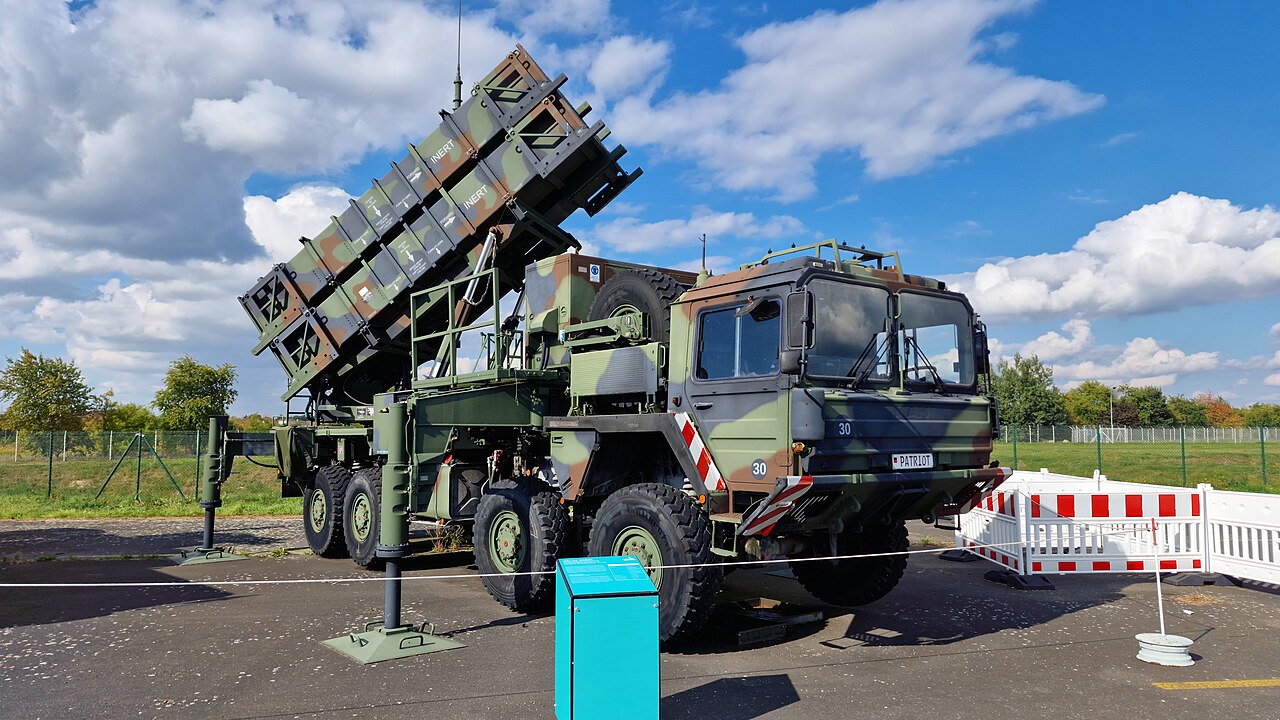
Patriot air defence launcher of the kind used against the Riyadh missile attack
Saudi Arabia says ground-based air defences brought the missile down before it reached the capital.

What the Houthis said they targeted

The Houthis said on Saturday that they had launched strikes on what they described as sensitive sites in
Riyadh, plus oil facilities in the Red Sea port city of Yanbu. That claim comes from the group itself. It
goes further than the Saudi account, which describes a single missile aimed at Riyadh and separate
attempts elsewhere.

Saudi authorities said their defences also stopped attacks aimed at Bisha, Taif, Farasan and Yanbu. Both
sides have an interest in how this story travels. The Houthis gain from claiming reach into the Saudi
heartland. Riyadh gains from showing that its defences worked. Treat both framings with care until neutral
reporting catches up.

Yanbu matters more than its size suggests. It anchors Saudi Arabia’s Red Sea oil export and refining
capacity. Any credible threat there touches shipping insurance and crude flows well beyond the Gulf.

Why the Riyadh missile attack matters beyond Yemen

Riyadh is a very different target from the border provinces. It is the seat of government, the financial
centre and the hub for most long-haul traffic into the kingdom. A strike attempt there raises the
insurance, aviation and energy stakes in a way that shelling in Jazan does not.

It also lands in a region already absorbing shocks. The United Nations has been publishing findings on
strikes in the wider Iran conflict, and Washington has been talking up an end to that fighting. Our earlier
coverage set out
what UN investigators concluded about one contested strike
and
how far apart Washington and Tehran remain on ending the war.

What the missile attack means for flights and travellers

Air traffic around Riyadh slowed sharply that day. Gulf carriers including Emirates, Etihad Airways,
flydubai and Air Arabia have already shifted parts of their schedules as regional airspace risk moves.
Those changes concentrate on routes to Saudi Arabia, Kuwait and Bahrain.

The practical effect is uneven. A Filipino nurse on a two-year contract in Riyadh feels this as a
delayed rotation flight home. Her residency does not change. A transit passenger routing through the Gulf
may simply take a later departure. The United States had already reissued its Saudi Arabia advice at Level
3 before this attack — we covered
what that Level 3 reissue actually changes.

Insurance is the quieter variable. War-risk premiums on aviation and shipping move faster than
government advisories do, and they feed straight into fares and freight rates.

The next test for Riyadh

Three things will show whether this was a one-off or an opening move. First, whether the Houthis attempt
a second long-range launch within days. Second, whether Saudi Arabia strikes back inside Yemen at scale.
Third, whether insurers reprice Saudi aviation and energy risk, which would raise costs across the Gulf
even if nothing else happens.

The kingdom has not published casualty figures or a damage assessment. Until it does, the honest
position is narrow. The Houthis launched one missile at Riyadh. Saudi Arabia says its defences stopped it.
A fuel tank near the capital’s main airport caught fire.

Riyadh missile attack: your questions answered

Did the missile hit Riyadh?

Saudi Arabia says its air force intercepted and destroyed the missile before it reached the city. Firefighters did put out a blaze on a fuel tank near King Khalid International Airport. The kingdom has not released a full damage assessment.

Who launched it?

Saudi Arabia attributes the launch to Yemen’s Houthi movement. The Houthis separately said they struck what they called sensitive sites in Riyadh and oil facilities at Yanbu.

Have the Houthis reached Riyadh before?

This is the first strike attempt on the Saudi capital since fighting with the Houthis resumed this year. Earlier phases of the Yemen war did see launches toward Riyadh.

Did other Saudi cities come under attack?

Saudi authorities say their air defences also stopped attempts on Bisha, Taif, Farasan and Yanbu. Those claims come from the Saudi side alone and lack independent confirmation.

Should travellers to Saudi Arabia change plans?

Flights around Riyadh ran late all morning. Several Gulf carriers have already shifted routings because of regional airspace risk. Check your airline’s advisory page and your government’s travel advice before flying.

Does this change residency or work permits in Saudi Arabia?

No. Nothing in this incident alters iqama rules, work permits or entry requirements. The practical effect so far runs through aviation schedules, not immigration policy.

Sources

Featured image: "Riyadh" by MattSims, CC BY 2.0. In-article image by Anagoria, CC BY-SA 4.0, via Wikimedia Commons.