• Mon - Fri 9.00 - 19.00

Yearly Archives: 2026

Your Next Phone Costs More Because AI Bought the Memory First

The global memory shortage stopped being an industry story and became a consumer one on
18 September 2026, when Apple’s iPhone 18 Pro and 18 Pro Max went on sale 100 dollars more expensive than
last year’s Pro models. The base Pro now starts at 1,199 dollars and the Pro Max at 1,299. Reporting ties
the increase to memory costs, not to a new camera or a bigger screen.

What the global memory shortage did to one phone launch

These were the first iPhones to reach shelves under chief executive John Ternus, and the first to launch
into the AI-driven memory crunch. Launch-day orders faced roughly three-week waits for delivery, according
to
Yahoo Finance’s launch-day coverage.

Apple has not published a component cost breakdown, so the attribution of the price rise to memory rests
on supply-chain reporting rather than on the company’s own accounting.
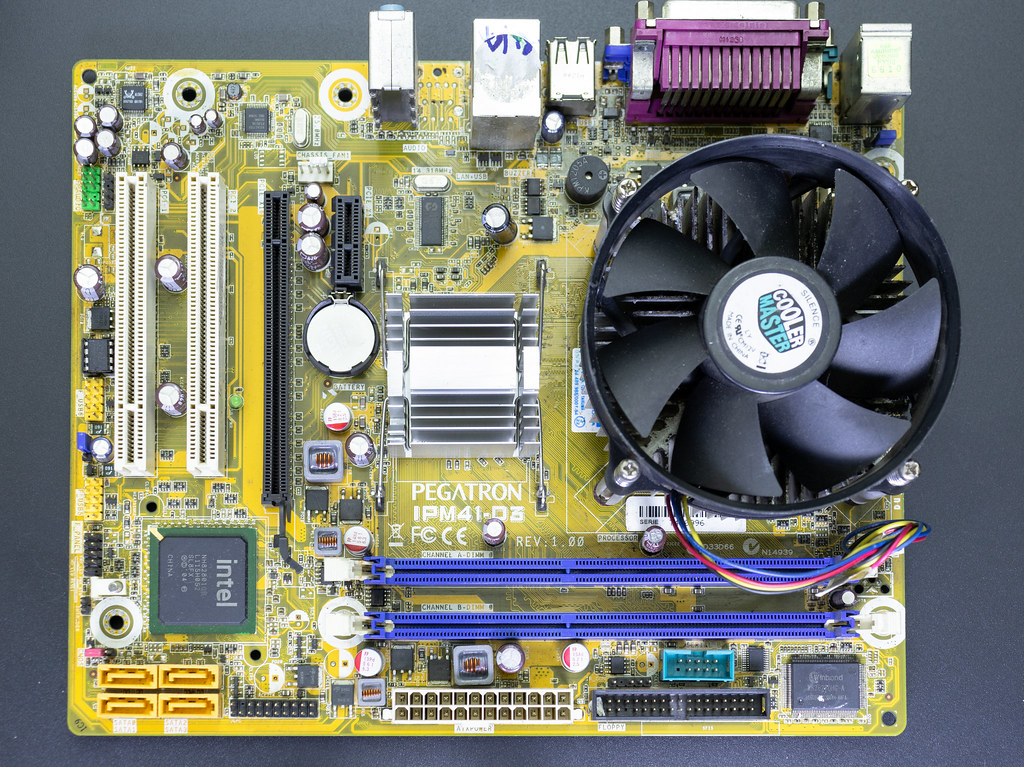
DRAM chips on a circuit board illustrating the global memory shortage
DRAM and NAND sit in nearly every connected device, which is why one shortage moves many prices.

Why the global memory shortage happened

The cause is reallocation, not a factory fire. Hyperscale buyers want high-bandwidth memory for AI
servers, and HBM earns far more per wafer than commodity DRAM. Samsung Electronics, SK Hynix and Micron
Technology have pointed cleanroom space and capital spending at the higher-margin product.

IDC projects that data centres will consume as much as 70 percent of all high-end memory in 2026. That
is an analyst projection, not a reported figure, but it captures the direction. Everything downstream
competes for what is left.

How far prices have actually moved

Everstream Analytics reports DRAM prices up roughly 171 percent year on year, with DDR5 spot prices
about four times their September 2025 level. NAND contract prices rose steeply through the first two
quarters of 2026. These are supply-chain analyst figures and different houses publish different numbers, so
read them as a range rather than a reading.

The consumer effect already shows up in device pricing. IDC expects the global smartphone market to
shrink 12.9 percent in 2026, which would be the sharpest annual drop the category has recorded. Higher
prices suppress upgrades, and fewer upgrades shrink the market.

Memory is unusual in how widely it spreads. It sits in phones, laptops, cars, televisions, routers and
washing machines. A single input cost therefore lifts a very long list of unrelated products at roughly
the same time, which is why this shortage behaves more like an energy shock than a normal component
squeeze.

Who absorbs the cost

Large manufacturers can hedge with long-term contracts. Smaller buyers cannot. A Brazilian design studio
replacing eight workstations this quarter pays the spot market and has no leverage over it. The same
applies to school districts, clinics and anyone buying hardware in tens rather than millions.

The squeeze also runs sideways into the chip trade more broadly. We covered
South Korea’s record chip export run
and
the export-control bills drawing industry pushback,
both of which shape how much capacity ends up where. The demand side is visible in deals like
Nvidia’s Hugging Face acquisition.

When memory prices might ease

New fabrication capacity takes years, and the current guidance is not encouraging. Micron has said it
has no line of sight on when supply catches demand. Intel has pointed to 2028 before meaningful relief.
Bloomberg’s
explainer on the AI-driven memory crunch
walks through why the bottleneck is structural.

For buyers the practical read is unglamorous. If you need the hardware this year, the cheapest version
of it is probably the one on sale now. If you can defer a full cycle, you are betting on capacity that has
not been built yet.

Global memory shortage: what readers ask

What is causing the global memory shortage?

AI data centre demand. Samsung, SK Hynix and Micron have shifted capacity toward high-bandwidth memory for AI servers, which leaves less output for the DRAM and NAND that go into phones, laptops and appliances.

How much have memory prices risen?

Everstream Analytics reports DRAM prices up about 171 percent year on year, with DDR5 spot prices roughly quadrupling since September 2025 and NAND contract prices rising sharply through the first half of 2026.

Why did the iPhone 18 Pro get more expensive?

Apple raised Pro pricing by 100 dollars versus the iPhone 17 Pro line. Reporting attributes the rise to memory costs rather than to other components.

Will laptops and TVs go up too?

Analysts expect broad consumer electronics pricing to move, because memory is in almost everything. Estimates of the size of the increase vary widely, so treat any single figure with caution.

Is the shortage going to end soon?

Not on current guidance. Micron has said it has no line of sight on when supply catches demand, and Intel has pointed to 2028.

Should I buy now or wait?

If you need a device this year, waiting is unlikely to save money on current forecasts. If you can defer to a later cycle, you are betting on new capacity arriving, which takes years to build.

Sources

Africa’s Biggest-Ever IPO Just Opened, and It Drew Big Money in Its First Hour

Africa’s largest-ever share sale opened on September 14, and demand arrived almost immediately. The Dangote refinery IPO is offering 4.1 billion shares in Dangote Petroleum Refinery and Petrochemicals FZE at 525 naira, roughly $0.40, each. Within the first hour of trading, subscription value reportedly reached around 1.5 trillion naira.

The offering runs from September 14 to October 13 on Nigeria’s main stock exchange. If fully subscribed, it would raise 2.15 trillion naira, about $1.6 billion, and that figure could climb toward $2.1 billion if the offer is oversubscribed and Dangote exercises a greenshoe option to issue additional shares.

The short version: The IPO opened September 14. It closes October 13. 4.1 billion shares are on offer. The target raise is $1.6 billion. Demand hit ₦1.5 trillion in hour one. Proceeds fund a capacity expansion.

What the Dangote Refinery IPO Is Actually Selling

The shares being offered sit in the entity that operates Africa’s largest oil refinery, built by billionaire Aliko Dangote. Nigeria’s Securities and Exchange Commission approved the sale on September 4, clearing the way for what is being described locally as a “people’s IPO” aimed at broadening domestic share ownership in one of the country’s most significant industrial assets.

The regulator’s approval cleared the way for trading to open ten days later. That is a tight turnaround for a deal this size. It signals the government wants this listing to succeed. A stumble here would sting Nigeria’s broader market ambitions.

Why This Is Nigeria’s Biggest IPO

At a targeted raise of $1.6 billion, this is the largest initial public offering ever attempted on the Nigerian Exchange. The scale reflects both the size of the refinery itself and the ambition behind it. The facility already ranks among the largest single-train refineries in the world, and its influence on Nigeria’s fuel imports and pricing has been significant since it began full operations.

What the IPO Money Will Fund

Proceeds are earmarked for a planned expansion that would double the refinery’s processing capacity to 1.4 million barrels per day. That expansion would extend Dangote’s reach into export markets and further reduce Nigeria’s reliance on imported refined fuel, a dependency that has weighed on the country’s currency and trade balance for years. Nigeria has spent billions importing fuel for decades. That spending drained foreign reserves every year. A larger refinery flips that equation, at least in part, by keeping more of that money at home.

The refinery already ranks among the largest single-train facilities anywhere in the world, and doubling its capacity would push it further up that list. Industry analysts say the expansion could reshape fuel trade flows across West Africa, where several neighboring countries currently rely on imported refined products rather than domestic refining capacity of their own.

Why This IPO Carries Weight Beyond Nigeria

Africa’s capital markets have historically struggled to attract IPOs of this scale, with many large African companies choosing to list on exchanges in London or New York instead. A successful, oversubscribed listing on the Nigerian Exchange would be read as a signal that African markets can absorb billion-dollar offerings without routing them abroad. That signal matters for other large private companies across the continent weighing where to eventually go public. A strong close in October, when the offer window ends, would be the clearest test yet of whether that shift is actually underway.

What Investors Are Watching

The strong first-hour demand suggests appetite among both domestic and international investors, though the six-week subscription window means the final outcome will not be clear until mid-October. Analysts are watching whether retail investor participation, a stated goal of the “people’s IPO” framing, materializes at scale or whether institutional investors end up dominating the book. Retail-heavy ownership tends to keep a stock more stable over time. Institution-heavy ownership can swing faster on sentiment. Either outcome will shape how the shares trade once they list.

The greenshoe option is another detail worth tracking. If demand significantly outstrips the base offering, Dangote can issue additional shares to capture that extra appetite, pushing the total raised closer to $2.1 billion rather than the base $1.6 billion target. Whether that extra demand materializes should become clear well before the window closes in mid-October.

The numbers at a glance: Offer opened: September 14. Offer closes: October 13. Shares on offer: 4.1 billion. Share price: 525 naira. Base target: $1.6 billion. Upside with greenshoe: about $2.1 billion.

Investor Questions About the Dangote IPO

How many shares are being offered?
4.1 billion shares at 525 naira (about $0.40) each.

How much could the IPO raise?
Up to 2.15 trillion naira (about $1.6 billion), or roughly $2.1 billion with the greenshoe option.

When does the offer close?
October 13, 2026.

What will the money be used for?
Doubling the refinery’s processing capacity to 1.4 million barrels per day.

Who approved the IPO?
Nigeria’s Securities and Exchange Commission, which cleared the sale on September 4.

Other Stories Worth Your Time

Sources

  • Bloomberg — Dangote Seeks to Raise $1.6 Billion in Nigeria’s Biggest IPO. bloomberg.com
  • CNBC Africa — Billionaire Dangote Launches Oil Refinery ‘People’s IPO’, Africa’s Biggest. cnbcafrica.com
  • UrbanGeekz — Dangote Refinery Launches Africa’s Largest-Ever IPO. urbangeekz.com

You Have Until 6 October to Win a Fully Funded UK Master’s

The Chevening scholarship deadline for the 2027-28 cycle is 6 October 2026 at 11:00
UTC. That is a little over two weeks away, and it is a hard cut-off: the online system closes and does not
reopen for late submissions. If you have been meaning to start an application for a fully funded UK
master’s, this is the point at which meaning to start stops being enough.

The Chevening scholarship deadline, precisely

The closing time is 11:00 UTC on 6 October 2026, not midnight. That trips people up every year. Convert
it to your own time zone now and write it down. In Delhi that is 16:30. In Lagos it is 12:00. In Manila it
is 19:00. In Bogota it is 06:00 the same morning.

Chevening states plainly that you will not be able to access the online application system after the
deadline passes. There is no grace window and no appeal on the basis of a slow connection.

University library reading room ahead of the Chevening scholarship deadline
Chevening funds a one-year taught master’s at a UK university.

What the award actually covers

Chevening is the UK government’s international scholarship programme, funded by the Foreign,
Commonwealth and Development Office together with partner organisations. It supports a one-year taught
master’s degree at a UK university. Chevening’s own materials describe the award as covering tuition, a
living stipend and travel costs. Check the figures on the official site rather than on aggregator blogs,
because they are reviewed each cycle.

Eligibility is country-specific. The programme runs separate country pages with their own criteria and
work-experience requirements. Confirm yours before you invest a weekend in essays.

Two conditions catch people out every cycle. Chevening expects a set amount of qualifying work
experience, and it counts that experience in hours rather than in job titles. It also requires scholars to
return to their home country for a period after the degree. Neither condition is hidden, but both are
easier to check now than to discover at interview.

What to do before the Chevening scholarship deadline

You select three eligible UK master’s courses in the application. You do not need offers from them yet.
What you do need is four essays that answer the questions asked, rather than the questions you wish had
been asked.

Work the order that follows the assessment, not the form. Take a Vietnamese civil servant applying for a
public policy master’s. Her strongest material is a specific reform she worked on, what stalled, and what
she would do with UK training. That belongs in the leadership and career plan essays. Her networking essay
should not list conferences. It should show that she builds working relationships which outlast a
project.

The common failure is abstraction. Reading committees see thousands of essays about passion for
development. They see far fewer that name a problem, a decision and a result. Specific beats impressive
almost every time.

What happens after you submit

Applications are screened for eligibility and then read by independent reading committees from roughly
mid-October 2026 into January 2027. Interviews follow for shortlisted candidates. References sit on their
own later deadline, so a referee who has not replied by 6 October has not sunk your application. Confirm
the current reference date on
Chevening’s application timeline page,
which is the authoritative version.

Working back from 6 October

Two weeks is enough if you sequence it. Spend the first few days confirming eligibility on your country
page and picking your three courses. Draft all four essays in one sitting, badly, then cut. Give your
referees notice this week even though their deadline falls later. Submit at least 48 hours early, because
traffic peaks in the final hours.

Keep your own copy of everything you submit. If you apply again in a future cycle, last year’s essays
give you a starting point and a record of what you claimed. Reapplying is allowed, and many successful
scholars get in on a second attempt.

If the UK is one of several options you are weighing, our coverage of
the UK immigration rule changes landing between now and December
is worth ten minutes, and
the most recent Canadian Express Entry draw
gives you a comparison point. Students eyeing the United States should also read
what changed in the public charge test this month.

Chevening scholarship deadline FAQs

When exactly does the Chevening scholarship deadline fall?

6 October 2026 at 11:00 UTC. The online application system closes at that moment and does not reopen.

Can I still start an application now?

Yes. Applications for the 2027-28 cycle are open and you can begin one today, but you should work backwards from the closing time rather than the closing date.

Do my referees have to submit before the deadline?

No. References sit on a later, separate deadline. Check the current dates on Chevening’s own application timeline page before you rely on that.

How many universities do I choose?

Chevening asks applicants to select three eligible UK master’s courses. You do not need offers from them at the application stage.

When will I hear back?

Applications are screened for eligibility and reviewed by independent reading committees from around mid-October 2026 into January 2027, with interviews after that.

Who funds Chevening?

It is the UK government’s international scholarship programme, funded by the Foreign, Commonwealth and Development Office and partner organisations.

Sources

USCIS Will Now Reject Your Visa Paperwork Over One Missed Date

USCIS began rejecting an old, familiar form this week. Starting September 15, the agency requires the USCIS new form editions of Form I-539 and Form I-765, and it is giving applicants no grace period. File with the previous version, even by mistake, and the filing is bounced back.

The change affects two of the most commonly filed forms in the US immigration system. Form I-539 covers applications to extend or change nonimmigrant status. Form I-765 covers applications for employment authorization. Together they are used by students, exchange visitors and many other visa holders every month.

The short version: USCIS updated I-539 and I-765 on September 15. There is no grace period this time. Old editions are rejected on sight. The new edition date reads 09/15/26. F-1 and J-1 filers are affected most. Always download a fresh copy before filing.

What Changed on September 15

USCIS published revised editions of both forms dated 09/15/26. The new I-539 edition replaces the 08/28/24 version. The new I-765 edition replaces the 08/21/25 version. Anyone filing on or after September 15 must use the current edition or risk rejection.

Unlike many past USCIS form updates, there is no transition window here. Previous revisions often came with a grace period of 30 to 90 days that let applicants use either edition. This time, the cutoff arrived immediately, with no warning window at all.

Why USCIS Moved Without a Grace Period

The revised forms align with a final rule establishing a fixed time period of admission and a new extension of stay procedure for F and J nonimmigrant students, exchange visitors and representatives of foreign information media. Because the forms needed to match the substance of that rule, USCIS treated the update as a hard cutover rather than a phased rollout.

Who Is Most at Risk of a Rejected Filing

Anyone who downloaded a form months ago and kept it saved locally is the most exposed group. Immigration attorneys are warning clients not to reuse a previously downloaded PDF, since the outdated version will not be visually obvious to someone who has not checked the edition date printed on the form itself. A rejected filing can also mean losing a filing date that mattered for maintaining status.

Students on F-1 visas applying for Optional Practical Training and exchange visitors on J-1 status extending their programs are among the largest groups affected, simply because of how often they file these two forms relative to other visa categories.

How the USCIS New Form Editions Fit Into a Bigger Rule Change

The form update is not happening in isolation. It follows a final rule that reshapes how the US admits F and J nonimmigrant students, exchange visitors and foreign media representatives, moving away from the old open-ended “duration of status” model toward a fixed admission period. Because that rule changed what information USCIS needs to process an extension or status change, the agency updated the underlying forms to match, rather than layering a fix on top of forms that no longer captured the right data.

Where This Leaves Applicants

Anyone filing I-539 or I-765 from this point forward should download a fresh copy directly from the USCIS website rather than relying on a saved file, a printed copy, or a version linked from a third-party site that may not have been updated. Checking the edition date in the bottom corner of the form takes a few seconds and avoids a rejection that could otherwise cost weeks. Immigration attorneys recommend building this check into any filing checklist going forward, since USCIS has shown it is willing to enforce a hard cutover without warning applicants individually.

Attorneys also suggest printing a fresh copy right before mailing, not weeks in advance. Forms saved to a computer can quietly go stale. A downloaded PDF does not update itself. Treat the USCIS website as the only trusted source on filing day.

The numbers at a glance: Effective date: September 15. Grace period: none. New I-539 edition: 09/15/26. New I-765 edition: 09/15/26. Old I-539 replaced: 08/28/24. Old I-765 replaced: 08/21/25.

Frequently Asked Questions on the Form Change

Which forms changed?
Form I-539 (Application to Extend/Change Nonimmigrant Status) and Form I-765 (Application for Employment Authorization).

Is there a grace period for the old versions?
No. USCIS is rejecting filings on or after September 15 that use an earlier edition.

What edition date should I look for?
The 09/15/26 edition on both forms.

Why did USCIS make this change?
To align the forms with a new rule on fixed admission periods and extension of stay procedures for F and J nonimmigrants and foreign media representatives.

What happens if I file the old version by accident?
USCIS will reject the filing, which can delay your case and, in some situations, affect your maintained status.

Also on Tamara News

Sources

  • USCIS — USCIS to Publish New Editions of Form I-539 and Form I-765; Older Editions Will Be Rejected Starting Sept. 15. uscis.gov
  • RJ Immigration Law — USCIS Updates Forms I-539 and I-765: New Editions Required Starting September 15, 2026. rjimmigrationlaw.com
  • Ellis — New Form I-765 and I-539 Editions Take Effect Sept. 15, 2026: No Grace Period. ellis.com

A Judge Paused the Rule That Would Cap Student Visas at Four Years

The duration of status rule that would have capped student and exchange visitor stays
at four years is on hold. On 14 September 2026, the US District Court for the District of Massachusetts
issued a nationwide preliminary injunction postponing the effective date of the Department of Homeland
Security’s final rule, one day before it was due to take effect. The long-standing duration of status
framework stays in place while the case continues.

What the duration of status rule would have changed

DHS published the final rule on 17 July 2026. It would have ended open-ended admission for F-1 students,
J-1 exchange visitors and I media representatives, and replaced it with fixed admission periods.

Under the rule, F-1 and J-1 holders would generally have been admitted to the end of their programme or
for four years, whichever came first. The grace period after completion would have dropped from 60 days to
30. Anyone needing longer would have had to file for an extension of stay rather than simply remaining in
valid status.

International students at a university fair affected by the duration of status rule
Doctoral programmes routinely run past four years, which is where the rule bit hardest.

Why the court paused the duration of status rule

District Judge F. Dennis Saylor IV took the case. The court cited administrative complexity and the
impracticality of running parallel regulatory frameworks across institutions and students nationwide. In
plain terms, the changeover itself looked likely to cause more disruption than the rule could justify
while its legality remained unresolved.

A preliminary injunction is not a ruling on the merits. It suspends the rule so that the litigation can
proceed without the disputed policy taking effect in the meantime. Courts grant one when the challengers
look likely to win and the harm from letting the policy start would be hard to undo.

Who this affects most

Doctoral candidates carried the sharpest risk. Consider an Indian engineering PhD student in her third
year of a programme that typically runs five to six years. Under the rule she would have hit the four-year
ceiling mid-research and needed an extension of stay filing to continue, with the processing delay that
implies. Under the current framework she simply remains in status while enrolled.

Language programmes, medical residents on J-1 status and foreign correspondents on I visas also fell in
scope. Undergraduates on four-year degrees faced the least exposure, though even they would have lost half
the grace period.

University administrators had their own problem. Running two admission frameworks side by side means
two sets of advising rules, two compliance workflows and two ways to make an honest mistake that costs a
student their status. That practical burden shaped the court’s reasoning.

How this fits the wider immigration picture

This is the second recent instance of a court stopping a DHS rule before it started. It also sits
alongside changes that did take effect, including the stricter public charge test now applied to green
card filings. Our coverage of
what the public charge change does and does not apply to
and
the separate birth tourism rule a court blocked
sets out the pattern. Students weighing alternatives may also want
the latest Canadian Express Entry draw figures.

Where the litigation goes from here

DHS can appeal the injunction to the First Circuit. It can also go back and issue a revised rule that
tries to answer the court’s practical objections. Either route takes months. In the meantime the operative
question for anyone on an F, J or I visa is simple: nothing about your current admission has changed.

Track the case through
NAFSA’s litigation page
and
the Presidents’ Alliance case tracker,
both of which post filings as they land. Your own school’s international office is the source that applies
to your specific record.

Duration of status rule: common questions

Is the duration of status rule in effect right now?

No. A federal court postponed its effective date on 14 September 2026. The existing duration of status framework still applies to F-1, J-1 and I visa holders.

What would the rule have changed?

It would have replaced open-ended admission with a fixed period: the end of the programme or four years, whichever is shorter, plus a 30-day grace period instead of 60 days.

Does the injunction cover everyone or only the plaintiffs?

The court issued a nationwide preliminary injunction postponing the rule’s effective date, not a party-specific order.

Is this a final decision?

No. A preliminary injunction suspends a rule while litigation continues. DHS can appeal, and the case can still be decided either way.

Do I need to file anything differently?

Not because of this order. Your I-20 or DS-2019 and your existing admission terms are unchanged. Check with your designated school official or responsible officer before acting on anything you read online.

Could the rule come back?

Yes. DHS could win on appeal, or issue a revised rule addressing the court’s concerns. Treat the current position as a pause, not a cancellation.

Sources