• Mon - Fri 9.00 - 19.00

Yearly Archives: 2026

One Month Into the EU’s New AI Rules, Here’s Who’s Actually Complying

The European Union’s AI rulebook has had a month to bite. EU AI Act transparency obligations took effect August 2. The European Commission’s AI Office and national regulators began enforcing rules that require AI systems to disclose their own involvement. Four areas are covered: direct interaction with people, AI-generated content, emotion recognition and biometric categorization, and deepfakes or AI-generated text on public-interest matters.

In practice, that means chatbots must tell users they are talking to a machine. Deepfakes need visible labels. AI-generated or altered content must carry machine-readable marks so platforms and researchers can detect it. Companies that don’t comply face fines up to €15 million or 3% of global annual turnover, whichever is larger. National market surveillance authorities, the European AI Office and the European Data Protection Supervisor enforce the penalty structure in parallel.

EU AI Act transparency

What EU AI Act transparency actually requires day to day

The rule’s four categories cover most consumer-facing AI use cases already in wide circulation. A customer-service chatbot on a European retail site now needs a clear disclosure at first contact. A marketing image generated or substantially altered by AI needs a machine-readable mark, not just a small watermark a user might miss. Emotion-recognition and biometric categorization systems, used in some retail and workplace settings, now require explicit disclosure to the people being monitored.

The AI Office has also published a voluntary Code of Practice on Transparency of AI-Generated Content. Several major AI providers have already signed on. That gives companies a template for compliance, rather than requiring each to interpret the regulation from scratch.

How this compares to the US approach to AI regulation

The EU’s transparency-first approach contrasts with Washington’s posture. The Commerce Department has signaled new rules are coming for AI chips and semiconductors, not for AI-generated content disclosure. That US regulatory track targets hardware supply chains. Brussels is regulating the output layer instead — what users see and interact with, rather than what powers it underneath.

China has taken a third approach. It recently fined AI companion apps for what regulators called inappropriately close engagement with users, a move covered in our reporting on Beijing’s AI companion crackdown. Three major regulatory blocs are now pursuing three distinct enforcement philosophies for the same underlying technology.

What happens next for companies still catching up

National regulators have signaled a phased enforcement approach. They are prioritizing the largest platforms and most visible violations first, rather than pursuing every noncompliant chatbot at once. Legal advisers tracking the rollout expect the first public fines to land in the coming months. Those are likely to target companies that ignored disclosure requirements entirely, rather than those that made good-faith but imperfect attempts at compliance.

Smaller companies building on top of major AI providers face a practical question. Does their chosen model provider’s compliance cover their own product, or do they need separate disclosure measures? Legal guidance from law firms including Cooley and Stibbe generally advises deployers not to assume upstream compliance protects them. The obligation applies at the point of user interaction, not just at the model level.

What compliance looks like for a small business

A small e-commerce site running an AI chatbot for customer support does not need a legal department to comply. It does need a few concrete changes. Those include a visible statement at the start of a chat session that the user is talking to an AI system, a process for labeling AI-generated product images or marketing copy, and a documented record of which disclosure measures are in place in case a regulator asks. Firms building on top of major providers’ APIs generally still carry this obligation themselves. The rule targets the point of interaction with the end user, not the underlying model.

Industry advisers say the most common compliance gap so far is not malicious evasion but simple oversight. Companies adopted AI tools for internal efficiency and only later realized customer-facing outputs also fall under the transparency rule. The Code of Practice published by the AI Office is designed to close that gap. It gives smaller companies language and formatting they can adopt directly, rather than drafting disclosure text from scratch.

Companies operating only outside the EU are not automatically exempt either. The rule applies based on where users are located, not where the company is headquartered. A US or Asia-based platform with European customers still needs to meet the same disclosure standard for the portion of its user base interacting from within the bloc. Legal teams at global platforms are treating that geographic split as a genuine engineering requirement, not just a policy footnote.

FAQ

When did the EU AI Act transparency rules take effect?

August 2, 2026.

What four areas do the rules cover?

Direct interaction with individuals, AI-generated content, emotion recognition and biometric categorization, and deepfakes or AI-generated public-interest content.

What are the penalties for noncompliance?

Fines up to €15 million or 3% of global annual turnover, whichever is greater.

Who enforces the transparency rules?

National market surveillance authorities, the European AI Office, and the European Data Protection Supervisor.

Is there a compliance template companies can follow?

Yes, the AI Office published a voluntary Code of Practice on Transparency of AI-Generated Content that several major providers have signed.

Does using a compliant AI model automatically make my product compliant?

Not necessarily. Legal advisers say the disclosure obligation applies at the point of user interaction, so deployers generally need their own compliance measures.

Canada’s Hong Kong ‘Lifeboat’ Just Closed Its Doors

Canada’s Hong Kong PR pathway stopped accepting new applications on August 31, 2026. The temporary program, known informally as the “lifeboat” scheme, gave eligible Hong Kong residents in Canada a faster route to permanent residence. It closed exactly as scheduled, with no extension announced.

What the Canada Hong Kong PR Pathway Covered

Ottawa introduced the pathway in 2021 through two streams. Stream A covered graduates of Canadian post-secondary institutions. Stream B covered people with recent Canadian work experience. Both required applicants to hold Hong Kong status and meet specific education or work criteria tied to their time in Canada.

Canada Hong Kong PR pathway

The policy responded to Hong Kong’s 2020 national security law, which Canada and several other governments said had eroded the territory’s autonomy and civil freedoms. It offered a dedicated, faster track separate from Express Entry and other economic immigration streams.

The Numbers Behind the Program

As of June 30, 2026, Immigration, Refugees and Citizenship Canada had received roughly 30,315 applications under the policy. Counting family members, that figure covers about 48,560 people. IRCC had already approved more than 8,600 of those applications, covering about 13,485 people.

Those figures show a program that processed a meaningful but modest share of Hong Kong’s diaspora in Canada relative to the number of people who left the territory since 2020.

Application volume climbed steadily through 2024 and 2025 as word spread among Hong Kong communities in Toronto and Vancouver, the two cities where most applicants under both streams had settled before filing.

What Happens to Applications Already Filed

IRCC will continue processing every application submitted on or before August 31, 2026. Applicants who filed before the deadline do not need to take any new action because of the closure; their cases proceed under the rules that applied when they applied.

Anyone who missed the deadline no longer has access to Stream A or Stream B specifically. Other permanent residence routes, including Express Entry and provincial nominee programs, remain open to Hong Kong applicants who qualify under their general criteria.

Why Ottawa Let the Program Expire

Canada framed the pathway as temporary from the start, tied to conditions in Hong Kong after 2020 rather than a permanent immigration category. Officials gave applicants years of advance notice about the August 31 end date, unlike some policy changes that land with little warning.

The closure also fits a broader pattern this year. Canada has trimmed several temporary and special-status immigration streams as it works toward lower overall admission targets, a shift that has touched programs well beyond the Hong Kong pathway.

Advocacy groups representing Hong Kong Canadians had pushed for an extension in the months before the deadline, citing ongoing political conditions in the territory. IRCC did not change course, and the program closed on schedule.

What Happens If You Missed the Deadline

Former Hong Kong pathway hopefuls now compete through Canada’s general economic immigration system rather than a dedicated track. That means meeting Express Entry’s points thresholds or qualifying under a provincial nominee stream, both of which carry different requirements than the closed Hong Kong-specific program.

Immigration consultants recommend reviewing eligibility for Express Entry’s existing categories. Work experience and education gained in Canada under the former Hong Kong pathway criteria can often still count toward points in the general system.

British Columbia and Ontario, the two provinces where most Hong Kong applicants settled, also run provincial nominee streams that sometimes favor candidates with existing local work history, a detail worth checking against each province’s current criteria.

Applicants weighing their remaining options should confirm current eligibility directly with IRCC or a licensed immigration consultant, since program criteria can shift between the levels-plan updates that Ottawa issues each year.

The closure leaves a gap in Canada’s immigration offerings for a community that leaned on this pathway heavily since 2021, and no government official has signaled a replacement program is under consideration.

Community organizations that supported applicants through Stream A and Stream B say they will keep offering guidance on general immigration routes, even without a dedicated Hong Kong-specific program to point clients toward going forward.

Anyone unsure whether their application counts as filed before the August 31 cutoff should contact IRCC directly. A confirmation receipt showing the submission timestamp is the clearest evidence a case still qualifies under the old rules.

Keep that receipt on file for the full length of processing. IRCC may request proof of the original filing date if a case takes an unusually long time to resolve.

Frequently Asked Questions

Can I still apply for Canada’s Hong Kong PR pathway?

No. Both Stream A and Stream B stopped accepting new applications on August 31, 2026, and there is no announced extension.

What happens to my application if I applied before August 31, 2026?

IRCC continues processing applications submitted on or before the deadline under the rules in place when they were filed.

How many people used the Hong Kong pathway before it closed?

IRCC had received about 30,315 applications, covering roughly 48,560 people, as of June 30, 2026, with more than 8,600 applications already approved.

What immigration options remain for Hong Kong residents in Canada?

General routes including Express Entry and provincial nominee programs remain open to applicants who meet their standard eligibility criteria.

Related Coverage on Tamara News

Sources

Wall Street Just Repriced the Fed’s Next Move — Here’s What Changed

Markets adjusted their bets on the Federal Reserve within a single trading session. The Federal Reserve rate outlook turned more hawkish late last week. Fed Chair Kevin Warsh said inflation “remains uncomfortably high” for policymakers. Traders read the remarks as a signal the central bank is in no hurry to cut rates. US equities closed lower Friday after opening with modest gains, reversing course as the comments spread through trading desks, per CNBC’s market coverage that day.

The bond market moved faster than stocks. The 2-year Treasury yield rose 0.12 percentage points to 4.35%. The 10-year climbed to 4.72%. Both moves are consistent with traders pricing in a longer stretch of elevated rates than they expected earlier in August.

Federal Reserve rate outlook

Why the Federal Reserve rate outlook shifted so quickly

The Fed left its policy rate unchanged at 3.50%-3.75% for a fifth consecutive meeting in July. That was broadly in line with expectations, even though three FOMC members dissented in favor of a 25-basis-point hike. That dissent already signaled internal disagreement about how much further tightening might be needed. Warsh’s comments added weight to the hawkish camp’s argument, days before markets head into the Fed’s next scheduled decision.

Energy prices are complicating the picture further. Oil price pressure tied to the ongoing Iran situation has strained the Trump administration’s inflation-fighting efforts. San Francisco Fed research published this week found that rising gas-price expectations pull broader inflation expectations up with them. The effect is strongest among lower-income households already squeezed by higher costs, a pattern also visible in recent retail earnings showing consumer strain.

How this compares to the ECB’s own rate dilemma

The Fed is not alone in facing an inflation-versus-growth tradeoff shaped by Middle East energy risk. The European Central Bank faces a similar bind. Traders anticipate a possible September hike after President Christine Lagarde warned, per CNBC’s reporting on her remarks, that renewed Middle East hostilities and rebounding oil prices pose upside risk to eurozone inflation, a dynamic detailed in our coverage of the ECB’s own September decision. Central banks on both sides of the Atlantic are effectively responding to the same geopolitical shock.

The Bank of England holds its own Monetary Policy Committee meeting September 17. Its last vote split six-to-three in favor of no change. That is a similar pattern of growing dissent toward tighter policy showing up across major central banks at once.

What happens next for rate-sensitive markets

Investors will parse every subsequent Fed official’s remarks for confirmation or pushback on Warsh’s hawkish framing before the next policy meeting. Equity strategists have flagged potential for near-term consolidation after a strong 2026 run. Higher short-term Treasury yields typically pressure growth stocks and rate-sensitive sectors like housing and small-cap equities first. Traders are also watching wage and employment data due before the meeting, which could reinforce or undercut the case for holding rates steady.

How traders are positioning ahead of the next meeting

Options markets showed a notable shift in positioning right after Warsh’s comments. Traders pared back bets on a near-term rate cut. They added exposure to scenarios where the Fed holds steady well into 2027. That repricing matters beyond bond desks. Mortgage rates, corporate borrowing costs and the dollar’s exchange rate all take cues from where the market expects the Fed’s rate to sit over the coming year, not just where it sits today.

Equity strategists draw a distinction between sectors likely to weather a higher-for-longer rate environment and those more exposed to it. Financials tend to benefit from a steeper yield curve and have held up better than growth-oriented technology names since Warsh’s remarks. That rotation is consistent with prior periods when markets recalibrated toward a more hawkish Fed stance mid-cycle.

The dollar has also firmed modestly against a basket of major currencies since the remarks. That fits a market that now expects US rates to stay elevated for longer than other major central banks’ rates. A stronger dollar cuts both ways for the US economy. It helps tame imported inflation at a moment when energy prices are already a concern. But it also makes American exports more expensive, at a time when trade tensions with Canada are already weighing on manufacturers. Currency strategists say the dollar’s path from here will hinge less on any single official’s remarks. It will hinge more on whether upcoming inflation and employment reports confirm or challenge the hawkish read markets have adopted since Warsh spoke. Those reports are due before the Fed’s next scheduled meeting. Any surprise in either direction could move Treasury yields again before policymakers even vote.

FAQ

What did the Fed Chair say that moved markets?

Kevin Warsh said inflation “remains uncomfortably high” for policymakers, which markets interpreted as a hawkish signal.

Where does the Fed’s policy rate currently stand?

3.50%-3.75%, unchanged for a fifth consecutive meeting as of July 2026.

How did Treasury yields react?

The 2-year yield rose to 4.35% and the 10-year rose to 4.72%.

Why did three FOMC members dissent in July?

They preferred a 25-basis-point rate hike rather than holding steady.

How are energy prices affecting the inflation outlook?

Oil price pressure linked to the Iran situation is pushing gas-price expectations higher, which research shows lifts broader inflation expectations, especially for lower-income households.

Are other central banks facing the same dilemma?

Yes. The ECB and Bank of England are both weighing similar inflation risks tied to Middle East energy prices ahead of their own September meetings.

8 Schengen Countries Are Still Checking IDs at the Border

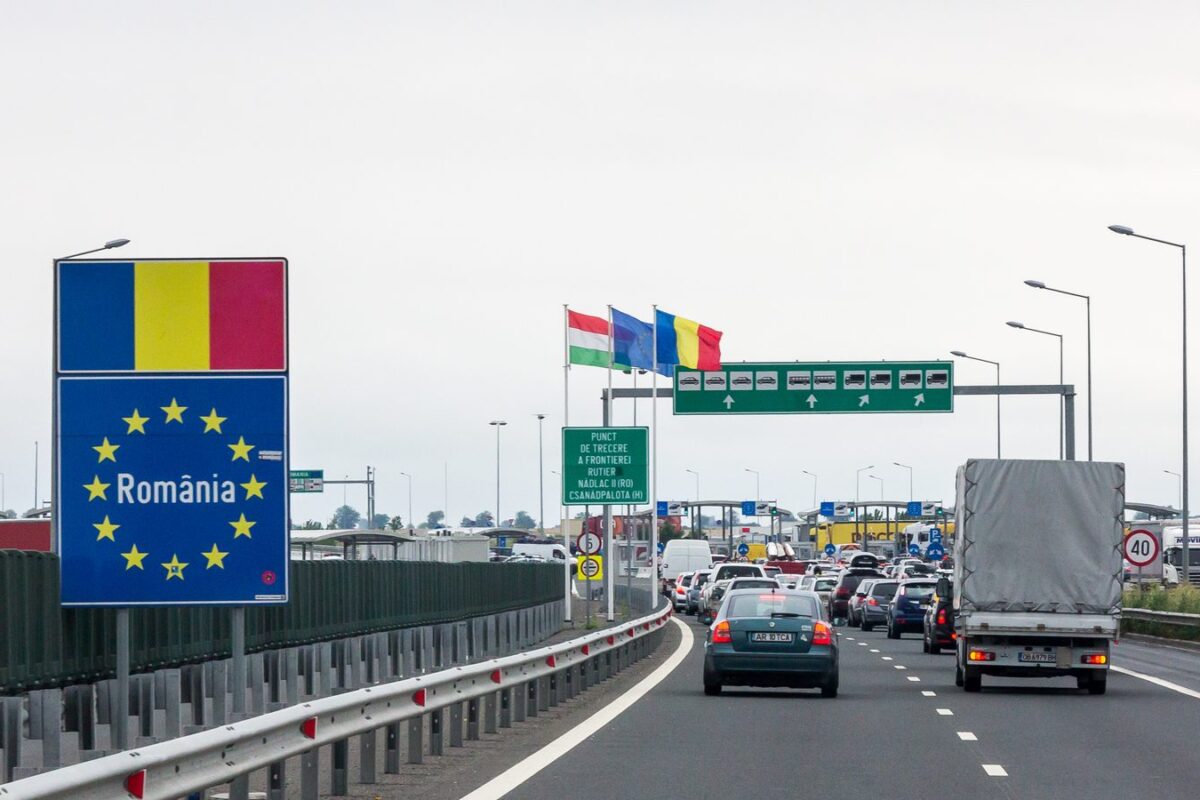
Eight Schengen countries are still checking IDs at borders that are supposed to be open. Schengen border checks extended through September, and in some cases through December 2026, cover Austria, France, Germany, Italy, the Netherlands, Norway, Poland, and Sweden, according to notifications filed with the European Commission.

Which Countries Have Schengen Border Checks Extended

Germany has prolonged checks at all nine of its land borders until September 15, 2026. The Netherlands extended its controls until September 30, with officials signaling this round is not expected to continue further in its current form.

Schengen border checks extended

France, Austria, Italy, Norway, Poland, and Sweden have each filed separate extensions running into the final months of 2026, citing a mix of security concerns and migration pressure at their respective frontiers.

Why Countries Keep Renewing These Checks

The Schengen Borders Code allows a member state to temporarily reinstate internal checks when it identifies a serious threat to public policy or internal security. Extensions require formal notification to Brussels and are meant to be short-term and proportionate.

In practice, several countries have renewed their checks repeatedly since 2023, citing ongoing irregular migration flows and, in some cases, upcoming major international events that raise security concerns. Critics argue the “temporary” checks have become close to permanent at some borders.

What This Means If You’re Crossing These Borders

A border check does not mean a closed border. Officials conduct spot checks on documents rather than systematic searches of every vehicle or traveler. Most crossings remain quick, though delays can build during peak travel periods or at high-volume road crossings.

Travelers with valid Schengen visas, passports, or residence permits should not expect to be refused entry. Carrying physical identity documents, rather than relying only on digital copies, remains the safest approach at any border currently under a reinstated check.

The Rules Behind a Temporary Border Check

Under Schengen rules, a member state notifies the European Commission before reinstating checks and must justify the threat driving the decision. Extensions typically run in six-month blocks, and the state must renew its notification each time it wants to keep the checks running.

The Commission reviews each notification but has limited power to force a country to end checks early. That gap in enforcement is part of why some countries have kept renewing checks for years rather than months, even though the rules describe the measure as exceptional and short-term.

How This Debate Keeps Resurfacing

Migration pressure and security concerns tied to major events remain the most common justifications countries cite. Germany’s land-border checks, for example, trace back to concerns about irregular crossings and have been renewed repeatedly rather than allowed to lapse.

Free-movement advocates argue the pattern undermines one of the EU’s core achievements, an open internal border. Governments defending the checks counter that spot verification is a proportionate tool while migration and security pressures remain elevated, not a rollback of Schengen itself.

The European Parliament has debated tightening the rules that govern how long a country can keep checks in place. So far, member states retain wide discretion to renew their own notifications, and no binding time limit has passed into EU law.

What Travelers Should Expect at the Border

Expect occasional document checks at land crossings in the eight countries listed above through at least September, longer in several cases. Air travelers face fewer disruptions, since these checks concentrate on land and, in some cases, key rail and sea routes.

The European Commission continues to press for a return to fully open internal borders, but has not blocked any of the current extensions. Anyone planning overland travel across these borders this autumn should build in extra time at major crossing points.

Keep a passport or national ID card accessible rather than packed away, even on routes that rarely see enforcement. Officers can request documents at any point during an active check, and delays are shorter for travelers who can produce them immediately.

Business travelers with recurring cross-border trips should factor in a buffer of 20 to 30 minutes at land crossings during peak hours, according to guidance several national border agencies have published alongside their extension notices.

Cross-border commuters and cargo drivers, who rely on predictable crossing times, have raised the loudest complaints, since repeated extensions make it harder to plan routes months in advance around any specific end date.

Frequently Asked Questions

Which Schengen countries currently have border checks in place?

Austria, France, Germany, Italy, the Netherlands, Norway, Poland, and Sweden have all filed extensions of internal border checks running through September or later in 2026.

Do I need a visa to cross a Schengen internal border with checks?

No new visa requirement applies. Existing Schengen visa, passport, or residence permit rules still govern entry; the checks are spot document verifications, not a new border regime.

Will these Schengen border checks become permanent?

They remain formally temporary under EU rules, though several countries have renewed them repeatedly since 2023, and the European Commission has not forced any country to end its checks early.

Do these checks affect flights within Europe?

Rarely. The reinstated checks concentrate on land borders and, in some countries, key rail and sea crossings, with limited impact on domestic and intra-Schengen flights.

Related Coverage on Tamara News

Sources

ChatGPT Just Landed on the EU’s Strictest Regulatory List

The European Commission has placed ChatGPT in the top tier of its online platform rulebook. The ChatGPT DSA designation, announced on 31 August 2026, classifies OpenAI’s chatbot search function as a Very Large Online Search Engine under the Digital Services Act. Reddit and Roblox were designated Very Large Online Platforms on the same day. All three now face the strictest obligations the law contains.

Twenty-eight services now carry that status in Europe. Until this week, the list read mostly as a roll call of social networks, marketplaces and app stores. A general-purpose chatbot and a children’s gaming platform did not sit on it.

Phone screen with apps affected by the ChatGPT DSA designation
ChatGPT, Reddit and Roblox now sit in the same DSA tier as Europe’s largest social platforms.

What the ChatGPT DSA designation actually means

The Digital Services Act sets a single numerical trigger. A service that averages at least 45 million monthly users inside the European Union crosses into the highest compliance tier. Platforms report those figures themselves, and the Commission then verifies and acts on them.

ChatGPT’s search function averaged roughly 159 million monthly active users in the bloc over the six months ending March 2026, according to the figures the Commission relied on. Reddit reported 57.2 million. Roblox reported around 48 million. Each number sits above the threshold, so each triggered a designation.

The split in labels matters. ChatGPT was designated as a search engine rather than a platform, because the Commission assessed its search feature. Reddit and Roblox were designated as platforms. The obligations overlap heavily, but the framing tells you which part of each product Brussels is looking at.

Why Reddit and Roblox met the DSA threshold too

Reddit’s European audience has grown steadily as its content surfaced more often in general web search. Roblox has a different profile: a very young user base, user-generated worlds, and an in-game economy. Regulators have paid close attention to both characteristics.

Roblox’s designation is the one to watch. The DSA’s minor-protection provisions were written with exactly this kind of service in mind, and the company must now assess and document how its design choices affect children in Europe. That is a heavier lift than a policy update.

The obligations that follow a top-tier designation

Designated services have four months to comply. That clock runs to the end of November 2026. In that window each company must build out a compliance programme covering several areas.

  • Annual systemic risk assessments covering illegal content, the protection of minors, effects on users’ mental and physical wellbeing, fundamental rights, electoral processes and public security.
  • Risk mitigation measures that respond to whatever those assessments find.
  • Independent audits of compliance, paid for by the company and conducted by an outside firm.
  • Data access for regulators and vetted researchers, so outside parties can study how the service behaves.

The Commission supervises this tier directly rather than leaving it to national regulators. That is a deliberate design choice in the law, and it removes the forum-shopping that shaped earlier EU tech enforcement.

How the DSA designation sits alongside the EU AI Act

Two separate European laws now touch the same product. The DSA governs how a service handles content, risk and users. The AI Act governs how an AI system is built, documented and disclosed. OpenAI has to satisfy both, and the requirements do not map onto each other neatly.

We covered the transparency provisions that took effect this summer in our report on the EU AI Act transparency rules. Read alongside this designation, the direction is consistent: Europe is regulating AI products through general platform law as well as through AI-specific law.

The commercial context matters too. AI companies are raising and spending at a scale that makes European compliance costs a rounding error, as the DeepSeek funding round illustrated this week. Compliance is a schedule problem for these firms, not a budget problem.

Where the DSA compliance clock goes from here

Expect three things before December. First, published risk assessments, which tend to arrive close to the deadline. Second, product changes in Europe that arrive quietly, particularly around age assurance on Roblox. Third, a period in which the Commission decides whether what it received is adequate.

Enforcement, if it comes, follows later. The DSA allows fines of up to 6% of global annual turnover for serious breaches, and the Commission has shown it will open proceedings against designated services. Nothing suggests that is imminent here. The immediate story is a deadline, not a penalty.

For anyone building on these platforms, the practical effect is narrower than the headlines suggest. Users in Europe should see more reporting options, clearer explanations of recommendation systems, and stronger defaults for younger accounts. Users elsewhere may see some of the same changes, because splitting a product by region is expensive.

Questions readers are asking about the DSA designation

Does the ChatGPT DSA designation apply outside the EU?

No. The Digital Services Act applies to services offered in the European Union. Companies often roll changes out globally for simplicity, but the legal obligation stops at the EU border.

Why was ChatGPT designated a search engine rather than a platform?

The Commission assessed ChatGPT’s search function, which retrieves and presents information from the web. That fits the DSA’s definition of an online search engine, so the Very Large Online Search Engine label applied.

When exactly does compliance start?

Designated services get four months from designation. For these three, that runs to the end of November 2026.

What happens if a company misses the deadline?

The Commission can open formal proceedings, request information, and ultimately fine a service up to 6% of global annual turnover for serious infringements. In practice, enforcement usually begins with information requests.

How many services are now designated?

Twenty-eight services are designated as very large online platforms or search engines following this announcement.

Sources

More of our technology and regulation coverage: the Pentagon’s new generative AI platform.