
• Mon - Fri 9.00 - 19.00

Yearly Archives: 2026

DHS Wants $103,265 From Every New H-1B Petition

The Department of Homeland Security wants employers to pay $103,265 for every new H-1B visa fee proposal petition filed under the annual cap. DHS published the proposed rule in the Federal Register on August 25, 2026. It would apply on top of every other filing fee already in place.

What the H-1B Visa Fee Proposal Actually Says

The rule targets cap-subject H-1B petitions only. That includes petitions filed under the regular 65,000 cap and the 20,000-slot advanced-degree exemption. Employers would pay the fee at the time of filing, not after approval.
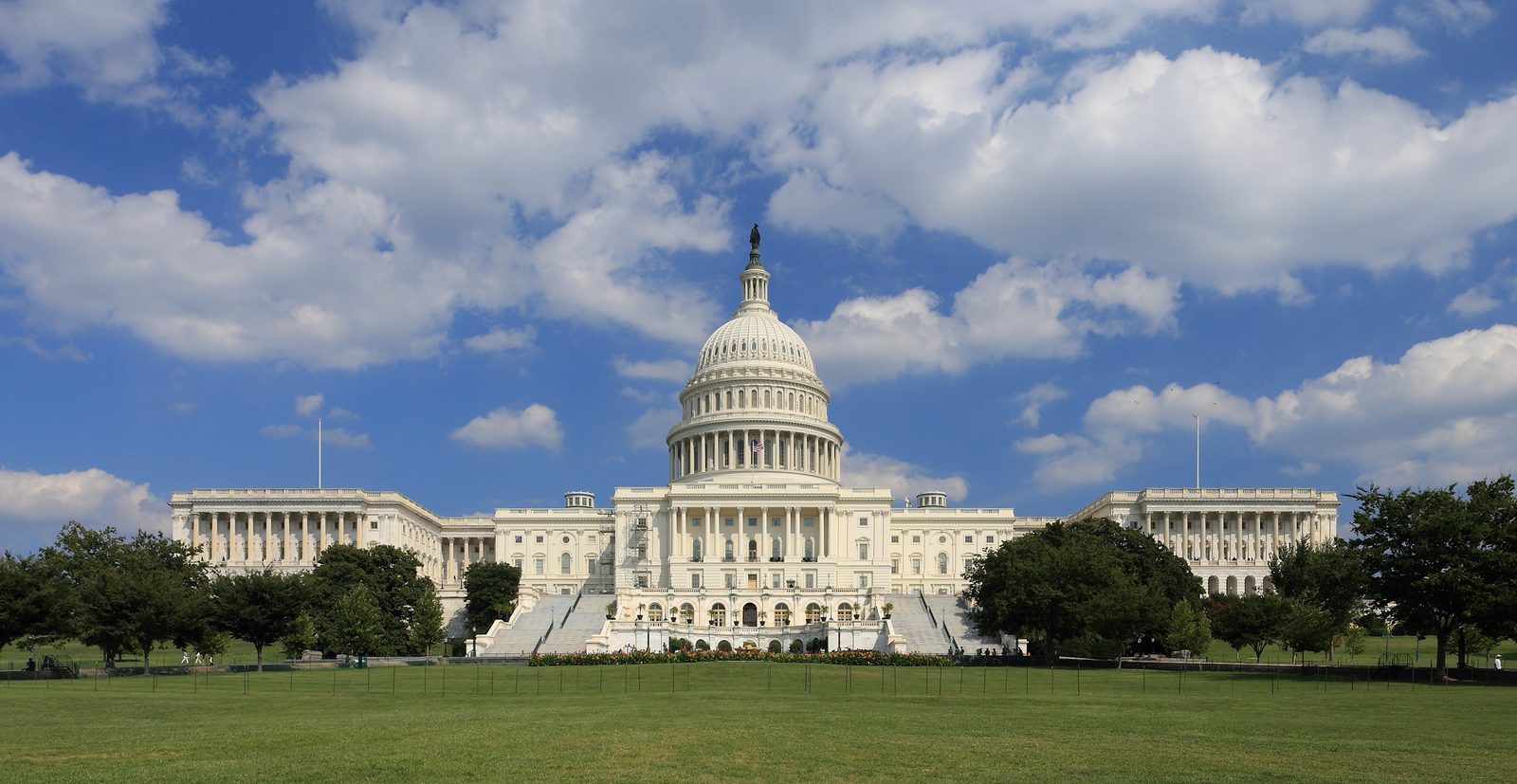
H-1B visa fee proposal

Cap-exempt filers are spared. Universities, nonprofit research organizations, and government research bodies would not owe the new charge. Extensions, amendments, and transfers to a new employer for someone already in H-1B status are also excluded.

Why DHS Picked This Number

DHS says the fee funds part of the government’s cost of running the legal immigration system. That includes work done by USCIS, the Department of Justice, the State Department, and the Department of Labor. The agency frames it as a cost-recovery measure, not a cap on H-1B numbers.

The figure also has a legal backstory. A separate $100,000 H-1B fee, imposed by presidential proclamation, is currently the subject of active litigation. A federal court called that fee unlawful in July but left it in place while the government appeals. This proposed rule would achieve a similar result through formal notice-and-comment rulemaking instead of a proclamation, which gives it a different legal footing than the proclamation being challenged in court.

The Comment Deadline Employers Need

Written comments are due by September 24, 2026. Submissions go through Regulations.gov under docket number USCIS-2026-0298. The rule is not in effect yet, and current or pending H-1B petitions do not owe the fee.

Employers and immigration attorneys are already filing comments. Trade groups representing tech, healthcare, and university-adjacent employers have flagged the fee as a barrier for mid-size companies that rely on H-1B hiring but lack the budget of larger firms.

A short comment period like this one leaves little time for a full policy debate. Employers who want the final rule to look different from the proposal need to submit specific, documented objections before the September 24 cutoff, rather than general opposition.

Who Actually Absorbs a $103,265 Fee

Large tech employers can likely spread the cost across a big hiring budget. Smaller companies face a harder choice. A single H-1B hire at $103,265 in government fees alone can rival the salary of the role being filled, before legal costs, relocation, or the base filing fees USCIS already charges.

Universities and hospitals watched this proposal closely too, even though most of their petitions are cap-exempt. Teaching hospitals that also sponsor cap-subject roles for certain positions could still face the new charge, and industry groups asked DHS to clarify the exemption’s exact boundaries in their comments.

Staffing and consulting firms that place H-1B workers with client companies raised a separate concern. Several told DHS the fee could push some clients to shift roles offshore entirely rather than sponsor a visa at this cost.

How This Fits the Bigger H-1B Picture in 2026

This year already reshaped who wins an H-1B slot. USCIS moved the annual lottery to a weighted selection system that favors higher-paid roles, replacing the old random draw. A new filing fee layered on top pushes the program further toward employers who can afford both a high salary and a six-figure government charge.

Immigration lawyers describe the combined effect as a shift from “who wins the lottery” to “who can afford to enter it.” Startups and mid-size firms that once relied on H-1B talent for early hires may need to rethink their hiring plans for the FY2028 cap season if this rule is finalized as proposed.

What Comes Next for H-1B Employers

DHS must review public comments before issuing a final rule. That process typically takes weeks to months, and the agency can revise the fee amount or scope before finalizing it. Employers planning for the FY2028 H-1B cap season should watch for a final rule before budgeting hiring costs.

Companies already navigating the H-1B lottery’s weighted selection system now face a second cost variable layered on top of selection odds. Both changes push toward the same outcome: higher-wage, higher-budget roles have an easier path through the H-1B system than they did two years ago.

Frequently Asked Questions

Does the $103,265 fee apply to my current H-1B visa?

No. The proposed fee only applies to new cap-subject petitions filed after the rule takes effect, not to extensions, amendments, or transfers of existing status.

Is the fee final yet?

No. It is a proposed rule with a public comment period running through September 24, 2026. DHS can revise or finalize it after reviewing comments.

Who is exempt from the fee?

Cap-exempt petitions filed by universities, nonprofit research organizations, and government research organizations are not covered by the proposal.

How does this relate to the earlier $100,000 H-1B fee?

That fee came from a presidential proclamation now facing a legal challenge. This new $103,265 figure comes through separate rulemaking, giving DHS a second route to a similar outcome.

Related Coverage on Tamara News

Sources

Latvia Just Banned These Russian and Belarusian Goods

Latvia has stopped a wide range of Russian and Belarusian goods at its border. The Latvia Russia Belarus ban took effect on September 1, 2026. The country’s Cabinet of Ministers approved the regulation on August 25. The rule blocks printed books, newspapers, clothing, footwear, headwear, toys, games and sports equipment sourced from either country. It applies even when those goods arrive through a third country first.

Latvian officials frame the move as security policy, not just trade policy. The government wants to cut revenue that Russian and Belarusian exporters earn from Baltic consumers. It also wants to reduce the flow of printed material carrying Kremlin-aligned messaging into Latvian bookshops and schools. Food and drink are not on the banned list. The measure targets consumer and cultural goods rather than staples.

Latvia Russia Belarus ban

What the Latvia Russia Belarus ban actually covers

The regulation lists specific tariff codes for printed matter, apparel, footwear, headwear, toys, games and sporting goods. Officials at Latvia’s Ministry of Foreign Affairs describe the goal as closing off “reputational and financial channels.” Russian and Belarusian producers have used those channels to reach EU consumers despite existing sanctions. The ban applies regardless of the goods’ shipment route. A Russian-made jacket routed through a non-EU intermediary is still barred.

Latvian trade data shows why the political impact may outweigh the economic one. Imports from Russia and Belarus have already fallen 91% since 2022, according to reporting from Latvian public broadcaster LSM. They dropped from €2,129 million to €193 million in 2025 as EU sanctions narrowed legal trade routes. The new list finishes off what remains in a handful of consumer categories.

Why Latvia is going further than EU sanctions require

Latvia sits on NATO’s eastern flank. It has consistently pushed for tougher measures than the EU’s baseline sanctions package. Riga frames successive rounds of restrictions as both economic pressure and a domestic security measure. Officials argue that Russian-language books and media distributed commercially can carry propaganda. That propaganda, they say, undermines ties between Latvia’s large Russian-speaking minority and independent information sources.

The move lands as NATO members watch airspace violations near their borders with renewed concern. Romania intercepted a Russian drone that crossed into its territory just days earlier. Romania’s drone interception and Latvia’s import ban reflect the same posture. Both states treat low-level friction with Moscow as cumulative risk, not isolated incidents.

What happens next for traders and travelers

Latvian customs officers began enforcing the new codes at the border on September 1. Businesses that previously imported Russian or Belarusian books, clothing or toys need alternative suppliers immediately. The regulation carries no grace period. Individual travelers carrying personal items are not the rule’s main target, since it is aimed at commercial import volumes. Customs officials have flagged that personal parcels above certain thresholds could still face scrutiny.

Riga has not signaled plans to extend the list to food or energy products soon. Latvian officials say further measures remain under review depending on how the security situation in Ukraine develops. Escalating strikes inside Ukraine continue to shape how aggressively Baltic states calibrate their own sanctions posture.

How this fits the broader Baltic sanctions picture

Latvia is not acting alone. Estonia and Lithuania have pursued similar unilateral tightening in past sanctions rounds. All three Baltic states coordinate informally on enforcement gaps that let goods re-enter the bloc through non-EU transit points. The Latvia Russia Belarus ban closes one such gap for consumer goods. Customs lawyers say enforcement against relabeled or transshipped goods will be the real test of how well the rule works.

The economic footprint importers should expect

Latvian retailers who stocked Russian-language books and Belarusian-made clothing now need new suppliers fast. The regulation carries no transition period. Small booksellers near Riga and Daugavpils, home to large Russian-speaking populations, are likely to feel the tightest squeeze. They relied on direct shipments of Russian-language print material that is now barred outright, not merely taxed. Wholesalers who used Belarus as a low-cost sourcing hub for footwear and toys face a similar scramble. Latvian trade groups say members are already asking which suppliers in Poland, Lithuania and Western Europe can fill the gap before the autumn retail season.

Latvia’s customs authority says it will scrutinize relabeled goods as closely as direct shipments. That enforcement choice will likely decide whether the ban meaningfully cuts Russian and Belarusian revenue. Otherwise, the same goods may simply take a longer, costlier route into the country. Baltic customs officials coordinate informally with Estonian and Lithuanian counterparts on this exact transshipment risk. A gap enforced in one Baltic port but not another would undercut the policy region-wide.

FAQ

When did the Latvia Russia Belarus ban take effect?

The ban took effect on September 1, 2026, after Latvia’s Cabinet of Ministers approved the regulation on August 25.

What goods does the ban cover?

Printed books and newspapers, clothing, footwear, headwear, toys, games and sports equipment originating in Russia or Belarus, including goods routed through third countries.

Does the ban include food or energy products?

No. Foodstuffs and drinks are explicitly excluded from the current list.

Why did Latvia introduce this ban now?

Officials cite both economic pressure on Russia and Belarus and a domestic security goal of limiting Kremlin-aligned printed material reaching Latvian consumers.

Has trade with Russia and Belarus already declined?

Yes. Latvian import data shows a 91% drop since 2022, from €2,129 million to €193 million in 2025.

Could Latvia expand the ban further?

Officials have not announced plans to add food or energy but say further steps depend on how the security situation with Russia develops.

A Government Shutdown Could Wreck Air Travel Just as Fall Season Peaks

government shutdown air travel disruption is becoming a real possibility. The funding measure covering most of the Department of Homeland Security, including the Transportation Security Administration, expires on 30 September 2026. Major US travel industry groups have issued a joint warning urging Congress to pass a continuing resolution before the deadline. They cite the toll a previous shutdown took on travelers.

How a government shutdown air travel disruption would actually unfold

TSA officers and air traffic controllers are classified as essential employees. That means they would keep working, but without pay, until Congress restores funding. That arrangement sounds like it should keep airports running normally. The 2025 shutdown showed otherwise. Roughly 10% of TSA employees called in sick during that 35-day closure as unpaid work stretched on. Staffing pressure at checkpoints led to security lines stretching past three hours at some airports.

government shutdown air travel

What the last shutdown cost travelers

The 2025 shutdown carried an estimated $6.1 billion toll on travelers, according to figures cited by travel-industry analysts. The Federal Aviation Administration reduced operations at 40 airports during that closure. National parks lost ranger services. Passport-processing offices faced delays that rippled into travel plans booked months in advance. Industry groups are pointing to that episode directly as they lobby Congress ahead of the 30 September deadline. They argue a repeat would land during the already-busy fall travel season.

Why this deadline is harder to avoid than it sounds

The funding measure covering DHS is one of several appropriations bills Congress must pass or extend by 30 September. Previous years have shown that a single unresolved bill can trigger a broader shutdown, even when most other agencies have secure funding. TSA leadership testified earlier this year about the operational strain a shutdown places on the agency. They warned lawmakers directly that staffing gaps compound the longer a funding lapse continues. That testimony has become a reference point in the current lobbying push from airlines, airports, and hospitality groups.

Travel trade associations estimate that a shutdown lasting more than two weeks would cause measurably worse disruption than 2025’s closure, since the fall travel season concentrates more trips into a shorter window than the shutdown’s original timing did.

How airlines and airports are preparing regardless

Major carriers have started reviewing contingency staffing plans in case checkpoint lines grow. Industry sources tracking the lobbying push confirm those preparations. Airports with only one or two security lanes are seen as the most exposed. They have little room to absorb slower processing without long queues forming. Larger hub airports have more flexibility to shift staff between checkpoints. They also handle far higher passenger volumes during the fall travel season, though, which cuts against that flexibility.

Hospitality and hotel groups have joined the lobbying effort too. They warn that visible airport delays tend to depress last-minute bookings, even for travelers not flying through the worst-affected airports. That ripple effect is part of why the joint warning to Congress includes signatures from groups well outside the airline industry itself.

Some airlines have already begun quietly padding connection times on itineraries that route through smaller airports, a precaution similar to what several carriers did in the weeks before the 2025 shutdown began. Travel advisors are telling clients booking September trips to build in extra buffer time at connections, particularly for international itineraries with tight layover windows. Several advisors said they are now flagging the shutdown risk to every client. They no longer wait for someone to ask about it directly.

Airport authorities in several major cities have also started drafting communication plans for passengers. The goal is to give travelers earlier warning than they received during the 2025 closure. Many travelers that year learned about checkpoint delays only after arriving at the airport. City aviation departments say text alerts and app notifications are part of the new plans under discussion, alongside updated signage at checkpoints themselves.

What happens next

Congress has until 30 September to pass a continuing resolution or full-year appropriations covering DHS. Travel groups are pressing for an agreement well before the deadline, rather than a last-minute deal that leaves airlines and airports little time to prepare. Travelers with flights booked around the end of September should expect airlines to issue guidance if a shutdown looks imminent. That is based on how carriers communicated during the 2025 closure.

Frequently Asked Questions

When does the funding deadline that could disrupt air travel expire?

The appropriations measure covering most of DHS, including TSA, expires 30 September 2026 unless Congress passes new funding.

Would TSA officers stop working during a shutdown?

No. TSA officers and air traffic controllers are classified as essential and would keep working, but without pay until funding is restored.

What happened during the 2025 shutdown?

TSA staffing pressure led to security lines exceeding three hours at some airports, the FAA reduced operations at 40 airports, and the shutdown carried an estimated $6.1 billion cost to travelers.

What are travel industry groups asking Congress to do?

Major US travel organizations have jointly urged Congress to pass a continuing resolution before the 30 September deadline to avoid disrupting the fall travel season.

Related Coverage

Sources

What the Duration of Status Elimination Means for Your I-94

Duration of Status elimination for F, J, and I nonimmigrants takes effect on 15 September 2026. The change ends decades of open-ended “Duration of Status” admission for foreign students, exchange visitors, and foreign media representatives. The Department of Homeland Security published the final rule on 17 July 2026. It creates a fixed admission period with a specific expiration date on each affected traveler’s Form I-94. That replaces the flexible D/S framework, which let students remain as long as they kept full-time enrollment.

What Duration of Status elimination changes for students

Under the new rule, most F-1 students and J-1 exchange visitors will receive a specific Admit Until Date rather than an open-ended D/S notation. Admission periods are capped at up to four years for F-1 and J-1 holders, and up to 240 days for I nonimmigrants. That cap includes people already inside the United States under the old D/S framework when the rule takes effect. The change also limits how freely both graduate and undergraduate students can switch programs. It blocks foreign students who already completed a US degree from starting a second degree at the same academic level.

Duration of Status elimination

Who has to file for an extension, and when

Anyone who needs to stay in the country past their new Admit Until Date must file an extension-of-stay application with USCIS. They must also submit biometrics and demonstrate continued eligibility, well before the current authorization expires. Immigration attorneys are advising schools and exchange programs to start tracking individual expiration dates immediately. A missed extension filing under the new fixed-period system carries a harder deadline than the old D/S framework did. That older framework rarely forced a hard stop as long as a student stayed enrolled.

Why this rule is still not fully locked in

DHS has classified the rule as a “major rule” subject to congressional review under the Congressional Review Act. Congress retains a window to alter or block it, even after the 15 September effective date. DHS has said it will publish an additional Federal Register notice if that review process changes the effective date or terminates the rule outright. Universities and exchange-visitor sponsors are proceeding on the assumption the rule takes effect as scheduled. They are still watching for any congressional action that could shift the timeline again.

How many people the change actually touches

More than a million F-1 students and several hundred thousand J-1 exchange visitors were present in the United States as of the most recent government counts. Schools cite those figures in their own advising guidance. Not everyone will feel the change immediately. Students with admission periods that already carry years of runway will not need to file an extension right away. Every affected traveler now has a specific date to track, though, where before none existed.

Universities with large international enrollments say the administrative burden falls heaviest on them. That group includes many research institutions with multi-year PhD programs. Doctoral students often take five years or more to finish. That timeline runs well beyond the new four-year cap. Many of those students will need at least one extension filing before they graduate.

Designated school officials, the staff responsible for maintaining each student’s immigration record, now face a heavier compliance workload too. They must track individual Admit Until Dates across their entire enrolled population rather than a single shared D/S status. Several university systems have said they are hiring additional compliance staff specifically to manage the transition.

What happens next

International student offices across the country are updating their advising materials ahead of the 15 September effective date. They expect a wave of extension-of-stay filings in the following months, as fixed admission periods start expiring for students already well into multi-year programs. The rule adds to a string of changes affecting F and J visa holders this year. It follows a separate reduction to the F-1 grace period announced in August. Immigration attorneys expect further procedural guidance from USCIS as the first fixed-period expirations approach.

Frequently Asked Questions

When does Duration of Status elimination take effect?

The rule takes effect 15 September 2026, though it remains subject to congressional review under the Congressional Review Act.

Who is affected by the change?

F-1 students, J-1 exchange visitors, and I nonimmigrant foreign media representatives, including people already admitted under the old Duration of Status framework.

What replaces Duration of Status?

A fixed admission period with a specific Admit Until Date on the traveler’s Form I-94, capped at up to four years for F-1 and J-1 holders and up to 240 days for I nonimmigrants.

What happens if someone needs to stay longer than their new admission period?

They must file an extension-of-stay application with USCIS, submit biometrics, and demonstrate continued eligibility before their current authorization expires.

Can this rule still change before or after it takes effect?

Yes. DHS classified it as a major rule subject to congressional review, and the agency has said it will publish a further notice if that review changes the effective date or ends the rule.

Related Coverage

Sources

The Real AI Chip Bottleneck Isn’t the Chip — It’s the Wires

The AI chip interconnect bottleneck took center stage as SEMICON Taiwan 2026 opened in Taipei on 31 August. The event drew more than 100,000 semiconductor professionals from 65 countries to International Semiconductor Week. SEMI’s Terry Tsao delivered the conference’s central message, and it was blunt. Moving data between AI chips can now consume more energy than the computation itself. That shifts the industry’s hardest problem from individual chip performance to system-level architecture.

Why the AI chip interconnect bottleneck changes the conversation

For years, chipmakers competed primarily on transistor density and raw compute throughput. SEMICON Taiwan’s 2026 agenda reflects a shift toward a different metric entirely. The new focus is how efficiently data moves between thousands of chips working together inside a single AI training cluster. AI models have grown, and so has the number of chips that must communicate constantly during training. The wiring and interconnect standards linking them have not kept pace with compute gains. That gap creates exactly the kind of bottleneck Tsao described.

AI chip interconnect bottleneck

Who is racing to solve the wiring problem

Nvidia has staked much of its roadmap on faster interconnect standards to keep pace with the chips it sells. Its GPU Technology Conference earlier this year saw Jensen Huang announce roughly $1 trillion in expected orders for its Blackwell and Vera Rubin chip generations through 2027. Those orders depend partly on solving the same data-movement problem SEMICON Taiwan highlighted. Component suppliers focused on optical and copper interconnect technology have seen renewed investor interest as a result. Faster, more energy-efficient connections between chips could unlock compute gains that raw chip design alone cannot deliver.

The regulatory backdrop shaping who can compete

The interconnect race is unfolding alongside tightening US export controls on advanced AI chips and the semiconductors that power them. The Commerce Department has signaled further regulatory action on chips and AI is coming. The Department has separately signed letters of intent worth $874 million with seven companies to strengthen the domestic compute supply chain. Those two threads are tighter export rules abroad and new incentives at home. Together they are pushing US-based chip and interconnect makers to treat domestic manufacturing capacity as a competitive necessity, not a cost center.

Taiwan’s own chipmakers face a delicate balance in this environment. They supply both US and Chinese customers. Interconnect standards adopted at events like SEMICON Taiwan increasingly carry geopolitical weight alongside their technical merits. TSMC and other Taiwanese suppliers have avoided taking public positions on which standard should win out. They prefer to support multiple approaches until the market settles on a default, a stance that lets them keep selling into both American and Chinese supply chains without picking a side.

How this affects AI training timelines industry-wide

Data-center operators say interconnect limits already stretch some training runs longer than the chips themselves would require. A cluster with thousands of top-tier chips gains little if those chips spend significant time waiting on data transfers rather than computing. That waiting time translates directly into higher costs. Labs still pay for chip time regardless of utilization. Several cloud providers have begun advertising interconnect specifications alongside raw chip counts for the first time this year. Industry analysts say the shift reflects customer demand for clearer efficiency metrics. Buyers increasingly ask about bandwidth between chips before they ask about raw chip counts, according to several vendors present at the conference.

Smaller AI labs without the scale to negotiate custom interconnect solutions face a particular disadvantage. They typically rely on off-the-shelf networking gear that larger labs have already moved past. That gap can leave them paying similar chip costs for meaningfully worse effective performance. Several smaller labs have started pooling compute purchases specifically to negotiate better interconnect terms, mimicking a strategy large cloud providers pioneered years earlier. Industry groups say more such consortiums are likely to form if interconnect costs keep rising faster than raw chip prices.

What happens next

International Semiconductor Week runs through the rest of the week in Taipei. More technical sessions are expected to detail specific interconnect standards vying to become the industry default. Whichever approach gains traction will shape how quickly AI labs can actually deploy the chips they are paying for. That includes labs racing to fund new compute capacity, like DeepSeek.

Frequently Asked Questions

What is the AI chip interconnect bottleneck?

It refers to the energy and speed limits of moving data between AI chips working together in a cluster, which industry leaders now say can consume more energy than the chips’ own computation.

What is SEMICON Taiwan 2026?

It is International Semiconductor Week’s flagship event, held in Taipei starting 31 August 2026 and drawing more than 100,000 semiconductor professionals from 65 countries.

Why does this matter for Nvidia and its rivals?

Nvidia’s roadmap depends on faster interconnect standards to support roughly $1 trillion in expected orders for its Blackwell and Vera Rubin chips through 2027.

How do US export controls factor in?

Tightening restrictions on advanced AI chips are pushing chipmakers to treat domestic manufacturing and interconnect capacity as strategically necessary, alongside new federal incentives for the compute supply chain.

Related Coverage

Sources