• Mon - Fri 9.00 - 19.00

Yearly Archives: 2026

Inside the DeepSeek Funding Round That Could Precede a 2027 IPO

A DeepSeek funding round worth roughly 50 billion yuan, about $7.4 billion, is nearing a close. Sources cited by China Money Network put the pre-money valuation near $74 billion. DeepSeek is the Chinese AI lab that rattled US markets in January 2026. Its model matched Western systems at a fraction of the training cost. DeepSeek is using this raise to fund about 1 gigawatt of new compute capacity, ahead of a planned initial public offering.

What the DeepSeek funding round is actually paying for

The bulk of the new capital is earmarked for compute infrastructure, not research headcount. That reflects how much of the competitive pressure in frontier AI now comes from access to chips and data-center capacity, rather than algorithmic breakthroughs alone. DeepSeek is racing rivals including Alibaba’s Qwen, Tencent’s Hy4, and Zhipu’s GLM for both compute and engineering talent. Sources familiar with the round say the financing is intended to close by the end of August. That would position DeepSeek to file for an IPO before the end of 2026, with a public debut targeted for 2027 on Shanghai’s Star Market.

DeepSeek funding round

Image credit: Feliciagrace-bytesrack / Wikimedia Commons (CC BY 4.0)

Why this funding round matters beyond DeepSeek

DeepSeek’s January 2026 model release briefly wiped more than $500 billion from AI-linked US equities. It demonstrated that competitive AI systems no longer required the enormous training budgets US labs had assumed were necessary. This new funding round suggests the opposite lesson is now taking hold inside DeepSeek itself. Staying competitive at the frontier still requires massive, sustained capital, even for a lab that built its reputation on efficiency. That shift has implications for every AI lab claiming a cost advantage. It implies efficiency gains buy time rather than permanently lower capital requirements.

The chip-supply backdrop shaping the round

DeepSeek’s fundraising lands against a backdrop of tightening US export controls on advanced AI chips. The Commerce Department has signaled further regulatory action on chips and AI is coming. Chinese AI labs have had to route around restrictions on the most advanced Nvidia and AMD chips. A war chest of this size gives DeepSeek more room to secure whatever compute capacity remains available to it. That capacity could come through domestic chipmakers or through channels that comply with existing export rules.

Analysts tracking China’s AI sector say the round also signals confidence from domestic investors that Beijing will keep backing frontier AI development despite the external pressure. That confidence matters as much as the capital itself, since it shapes whether other Chinese labs can raise on similar terms.

How investors are pricing DeepSeek against its global rivals

A $74 billion valuation puts DeepSeek well below OpenAI and Anthropic on paper. It still ranks among the most valuable AI labs outside the United States. Private investors backing the round are betting that DeepSeek can keep its cost advantage even as it spends more on infrastructure. That bet carries real risk. Training costs across the industry have climbed as models grow larger. DeepSeek’s efficiency edge could narrow if rivals adopt similar techniques.

Domestic Chinese funds make up a large share of the round, according to people familiar with the terms. That matters for a specific reason. It reduces DeepSeek’s exposure to foreign capital controls and export-linked investment restrictions. Those restrictions have complicated fundraising for other Chinese tech companies this year.

Some investors involved in the round declined to comment publicly, citing the sensitivity of ongoing negotiations. That reticence is typical for pre-IPO rounds of this size, where terms often shift until the final signing. Bankers advising on the deal have also stayed quiet about the exact investor list. That silence is standard practice ahead of a Shanghai listing, where regulators scrutinize pre-IPO ownership disclosures closely and expect confidentiality until filings become public.

What happens next

Investors will be watching whether the round closes at the reported terms by DeepSeek’s end-of-August target. They will also watch whether an IPO filing follows on the timeline sources have described. A successful Shanghai listing would give Chinese investors direct exposure to one of the country’s most closely watched AI companies. It would also test whether public markets value DeepSeek’s efficiency reputation as highly as private investors currently do.

Frequently Asked Questions

How much is DeepSeek raising in this funding round?

Reports put the round at roughly 50 billion yuan, about $7.4 billion, at a pre-money valuation near $74 billion.

What will DeepSeek use the money for?

The company plans to use most of the capital to build roughly 1 gigawatt of new compute capacity, according to sources familiar with the round.

Is DeepSeek planning an IPO?

Yes. Sources say DeepSeek could file for an IPO by the end of 2026, with a public debut targeted for 2027 on Shanghai’s Star Market.

How does this relate to DeepSeek's January 2026 model release?

That release showed DeepSeek could match Western AI systems at a fraction of the training cost, briefly erasing over $500 billion from AI-linked US stocks. This funding round suggests staying competitive still requires large, sustained capital investment.

Related Coverage

Sources

How a Salesforce Anthropic Stake Gain Drove Its Best Day in Years

A Salesforce Anthropic stake gain of $2.6 billion helped push Salesforce stock up roughly 22% in a single trading session. That marks the software company’s second-best day ever, behind only August 2020. Salesforce reported second-quarter adjusted earnings of $5.90 per share against a $3.27 estimate. Revenue of $11.35 billion narrowly topped forecasts of $11.32 billion. Net income jumped 87% year over year to $3.53 billion.

Why the Salesforce Anthropic stake gain moved the stock so much

Roughly $2.53 of Salesforce’s $5.90 per-share profit came directly from investment gains, not core software sales, according to The Motley Fool. The single biggest driver was Salesforce’s stake in Anthropic, the AI company behind the Claude models. Salesforce’s strategic investment portfolio now values that stake at about $5.1 billion. Anthropic represented roughly 22% of the portfolio at the end of January. It had grown to about 45% by the end of July. Anthropic’s own funding round in May valued the AI company at $965 billion, which explains most of that jump.

Salesforce Anthropic stake gain

Image credit: BalticServers.com / Wikimedia Commons (CC BY-SA 3.0)

The Claudeforce partnership behind the numbers

Salesforce and Anthropic also announced Claudeforce alongside the earnings release. The plugin embeds Salesforce customer data, workflows, and business logic directly into Claude for sales teams. The product ties Salesforce’s core customer-relationship-management business to Anthropic’s AI models, going beyond the investment stake alone. That gives Salesforce a commercial reason to keep deepening the partnership, rather than simply holding the position for its paper value.

What this means for Salesforce chief executive Marc Benioff

The earnings beat and stock jump mark a turnaround moment for Benioff. He had faced skeptics questioning whether Salesforce’s AI strategy could translate into revenue, not just investment gains. CNBC’s coverage described Benioff as “getting his mojo back” as Salesforce lifted its AI-driven growth outlook alongside the results. Investors had grown impatient with software companies that talked about AI without showing it in product revenue. Here, the AI story showed up in investment returns tied to genuine AI-sector growth instead.

How rivals are reacting to the Salesforce Anthropic stake gain

Competing enterprise software vendors have spent much of the past year building their own AI partnerships. Few can point to an investment stake that has appreciated as sharply as Salesforce’s Anthropic position. Rivals with in-house AI models, rather than external stakes, do not get the same investment-gain boost on their income statements. That holds true even when their AI products perform well commercially. The distinction matters to investors trying to separate genuine AI product revenue from balance-sheet gains tied to a single portfolio holding. Several analysts flagged the mix on Salesforce’s earnings call. They see it as a reason to watch subscription growth closely next quarter, rather than count on investment gains repeating.

The tech sector’s broader earnings season has been uneven. Some companies have reported layoffs alongside AI investment, even as others post gains tied to AI partnerships. That contrast has made Salesforce’s results a reference point for whether AI spending is starting to show up as revenue across the wider software industry, rather than remaining a cost center.

What the earnings beat means for enterprise software pricing

Salesforce has been raising prices on parts of its core platform. It is bundling in AI features as it does so, a strategy several rivals are watching closely. Claudeforce could drive measurable productivity gains for sales teams. If it does, other software vendors may feel pressure to strike similar external AI partnerships rather than build everything in-house. That would mark a shift from the past two years. Most large software companies insisted on owning their AI stack end to end during that stretch. Analysts pressed Salesforce executives on pricing specifically during the earnings call. They asked whether Claudeforce would be bundled into existing subscriptions or sold as a premium add-on.

Salesforce has not yet detailed final pricing for the new integration. Executives said only that broader availability would follow a limited rollout to existing enterprise customers in the coming months.

What happens next

Salesforce’s next test will be whether Claudeforce adoption translates into subscription revenue, rather than remaining a headline-grabbing integration. Investors will also watch whether Anthropic’s valuation, and by extension Salesforce’s stake, holds up if the broader AI funding environment cools. For now, the earnings beat has bought Salesforce’s leadership team more room to keep investing in the partnership. It also buys them room to avoid answering questions about the AI strategy falling behind competitors.

Frequently Asked Questions

How much did Salesforce gain from its Anthropic stake?

Salesforce reported a $2.6 billion gain on strategic investments in its second quarter, with Anthropic as the largest single contributor to that portfolio value.

What was Salesforce's overall Q2 earnings performance?

Salesforce posted adjusted earnings of $5.90 per share against a $3.27 estimate, with revenue of $11.35 billion and net income up 87% year over year to $3.53 billion.

What is Claudeforce?

Claudeforce is a plugin announced alongside the earnings that embeds Salesforce customer data, workflows, and business logic into Anthropic’s Claude for sales teams.

How much of Salesforce's investment portfolio is Anthropic now?

Anthropic grew from about 22% of Salesforce’s strategic investment portfolio in January to about 45% by the end of July, following Anthropic’s own funding round in May.

Related Coverage

Sources

Traders Are Betting Big on the ECB September Rate Decision

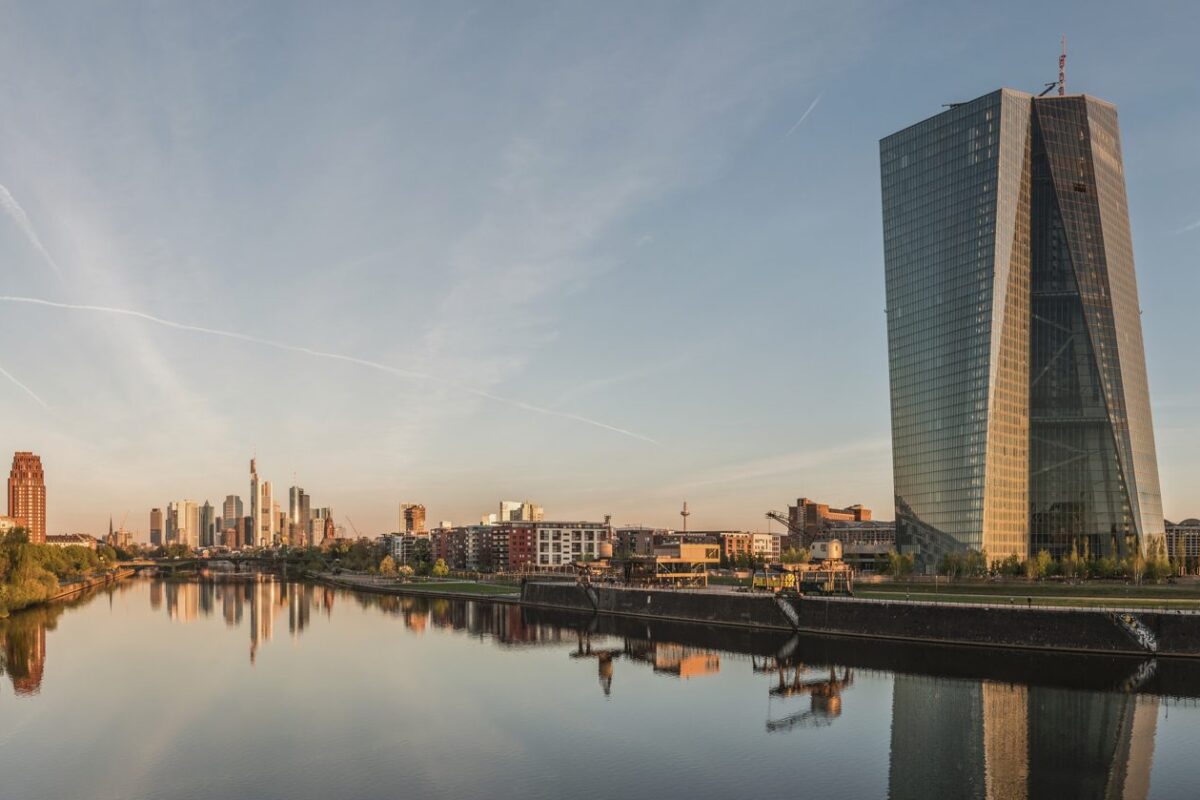
The ECB September rate decision is scheduled for 10 September 2026. Traders are pricing in a real chance of another hike. Renewed Middle East hostilities keep pushing energy costs higher across the eurozone. The European Central Bank’s Governing Council meets over two days at the Deutsche Bundesbank. The rate announcement and President’s press conference are both set for the afternoon of 10 September.

Why the ECB September rate decision is a closer call than usual

The ECB raised its deposit rate from 2% to 2.25% in June, its first increase in nearly three years. The Iran war had pushed oil prices sharply higher. Eurozone inflation has since eased slightly, dropping to 2.8% from 3.2% the previous month. But the renewed exchange of strikes between the US and Iran on 31 August has reintroduced the same energy-price pressure that forced the June hike. Eurosystem staff projections put average 2026 inflation at 3.0%, still well above the ECB’s 2% target.

ECB September rate decision

What a hike would mean beyond the eurozone

A further ECB move would land just as the Federal Reserve and the Bank of England weigh their own next steps. The Fed left rates unchanged at 3.50%-3.75% for a fifth straight meeting in July. Three policymakers dissented in favor of a hike. The Bank of England’s own decision follows a week later, on 17 September. Coordinated tightening across major central banks tends to strengthen currencies against emerging-market peers. It also raises borrowing costs for companies financing in euros or sterling. Those effects show up in corporate earnings well before they show up in headline inflation data. Currency traders are already positioning for a stronger euro if the ECB moves first. That would be an unusual sequence, since the Fed has led most rate cycles in the past.

The Middle East link driving the ECB September rate decision

Energy markets have effectively become a proxy for Middle East risk this year. Every escalation between the US and Iran has fed directly into oil futures. That includes the strikes on Jordan and the UAE on 31 August. The ECB has explicitly cited an “Iran war energy shock” in its policy communications since June. That direct link between a regional military conflict and a European interest-rate decision is unusual, even by the standards of past oil shocks. It means the 10 September outcome may hinge as much on developments in the Strait of Hormuz as on eurozone data released in the coming days. Bond markets have already started to reflect that link. Eurozone yields tick up each time the Iran-US conflict escalates.

What eurozone businesses are watching most closely

Manufacturers that import energy-intensive inputs have flagged the September decision as the one most likely to affect their cost base for the rest of the year. A rate hike would raise borrowing costs. Energy prices are already climbing at the same time. Export-heavy firms face a different risk. A stronger euro following a hike could make eurozone goods less competitive. Global demand growth is already slowing, which compounds that risk. Banks, by contrast, tend to benefit from higher rates through wider lending margins. That is part of why eurozone bank shares have outperformed the broader market since the June hike.

Mortgage borrowers on variable-rate loans are the group most directly exposed to whatever the Governing Council decides on 10 September. That exposure is concentrated more heavily in some eurozone countries than others. Spain and the Netherlands still favor variable-rate mortgages more than France or Germany does. Consumer groups there have already begun warning households to prepare for higher monthly payments if the ECB moves again.

What happens next

Markets will get a clearer read within the next week. Pre-meeting commentary from Governing Council members typically picks up in the days before a decision. A hike would mark the ECB’s second increase of the year. A hold would suggest policymakers are betting the recent easing in headline inflation outweighs the risk from renewed Middle East hostilities. Either way, the Bank of England’s 17 September decision will offer an immediate second data point on how seriously other major central banks are treating the same energy shock. Traders will also be watching whether the Federal Reserve signals anything new at its own next meeting, since a three-bank tightening cycle would be a bigger story than any single decision on its own.

Frequently Asked Questions

When is the ECB September rate decision?

The Governing Council meets 9-10 September 2026, with the rate announcement and press conference on the afternoon of 10 September.

What is the ECB's current deposit rate?

The ECB raised its deposit rate to 2.25% in June 2026, its first hike in nearly three years, and has held policy discussions open to a further increase since.

Why are Middle East tensions relevant to a European rate decision?

The ECB has explicitly linked recent inflation pressure to an energy shock from the Iran war, since oil price spikes tied to Middle East hostilities feed directly into eurozone inflation.

How does this compare to the Fed and Bank of England?

The Fed held rates steady in July with three dissenting votes favoring a hike, and the Bank of England’s next decision follows on 17 September, a week after the ECB’s.

Related Coverage

Sources

Why This UN General Assembly Opening Carries More Weight Than Usual

The UN General Assembly opening is set for 8 September 2026. The 81st session formally convenes at UN headquarters in New York under the presidency of Khalilur Rahman of Bangladesh. The opening itself is a procedural formality. This year’s session still arrives with an unusually heavy agenda. Renewed fighting between the United States and Iran, an intensifying Russia-Ukraine war, and elected seats on the Security Council are all converging within weeks of each other.

What actually happens at the UN General Assembly opening

The 8 September date marks the first plenary meeting of the session. The incoming president is formally installed, and the chamber sets its calendar for the months ahead. The substantive part of that calendar is High-Level Week, when heads of state and government take the podium. That general debate does not begin until 22 September and runs through 28 September. Diplomats describe the gap between the two dates as a working period. Committees quietly negotiate the resolutions and side events that will define the session’s output.

UN General Assembly opening

Image credit: Basil D Soufi / Wikimedia Commons (CC BY-SA 3.0)

The disputes hanging over this year’s session

Iran and the United States traded strikes as recently as 31 August. Both governments are expected to use their General Assembly floor time to stake out positions publicly. Neither side is expected to rely much on back-channel diplomacy this time. Ukraine is separately pushing allies for a General Assembly resolution. That resolution would address attacks on civilian and logistics infrastructure. The push follows a strike on an ammunition depot near Kyiv. That strike killed 38 people just over a week before the session opens. Neither dispute is expected to be resolved at the UN. Still, General Assembly floor time has historically shaped the diplomatic narrative around ongoing conflicts, even when it cannot end them.

Why the Security Council election matters this year

Member states are also finalizing results from this year’s UN Security Council election alongside the opening. That election determines which non-permanent members join the 15-seat body for the next two-year term. Newly elected members typically do not take their seats until January. The outcome still shapes which countries hold influence over Council votes on Iran, Ukraine, and other crises well before then. Incoming members begin coordinating with allies and blocs immediately after election.

What delegates will be negotiating behind closed doors

Committee staff typically draft the resolutions that member states will later vote on or reference in speeches, in the gap between the 8 September opening and the 22 September General Debate. This year, diplomats expect early committee work to focus on humanitarian access language tied to both the Iran-US confrontation and the Ukraine war. Routine budget and staffing resolutions rarely make headlines, but they determine how UN agencies operate for the following year. Several smaller member states have also signaled they will use committee sessions to push climate-finance commitments that stalled at last year’s session.

Credentialing disputes sometimes surface during this window too, when member states challenge which government delegation the Assembly recognizes as legitimate. No state has formally raised one for this session as of the opening date. Diplomats tracking the Assembly say that could still change once floor debate begins in earnest.

How the session’s outcome could ripple beyond New York

General Assembly resolutions carry no binding force the way Security Council resolutions do. They still shape how governments justify positions to their own domestic audiences. A resolution addressing strikes on civilian or logistics infrastructure would give Ukraine’s allies language to cite when announcing new aid packages, even without changing the legal situation on the ground. Any floor statement from Iranian or American officials will get parsed closely too. Diplomats will be looking for signals about whether either side is open to a renewed ceasefire after the 31 August strikes.

Smaller member states also use the crowded diplomatic calendar around the General Assembly to hold bilateral meetings that would otherwise take months to schedule. Foreign ministries typically report a spike in requested meeting slots in the two weeks surrounding the General Debate, since so many counterparts are already in New York for the session.

What happens next

Expect the opening itself to pass with little public drama. Two weeks of closed-door committee work follow before the real spectacle begins on 22 September. Heads of state confirmed to address the General Debate typically release their speaking order roughly a week in advance. That release will be the next concrete marker to watch for anyone tracking how this session addresses the Iran and Ukraine crises.

Frequently Asked Questions

When does the UN General Assembly opening take place?

The 81st session opens on 8 September 2026 with its first plenary meeting. The General Debate, where world leaders speak, runs from 22 to 28 September.

Who is presiding over this session?

Khalilur Rahman of Bangladesh is presiding over the 81st session of the UN General Assembly.

Will Iran and Ukraine be discussed at the opening itself?

The 8 September opening is procedural. Substantive debate on crises including the Iran-US strikes and the war in Ukraine is expected during the General Debate later in the month.

How does the Security Council election affect this session?

Newly elected non-permanent Security Council members do not take their seats until January, but they typically begin coordinating with allies immediately, shaping influence over Council votes well before the formal term starts.

Related Coverage

Sources

Qatar’s 7 Ride-Hailing Apps Are Hiring — But Not Directly

Seven ride-hailing companies now hold Ministry of Transport approval in Qatar, and each of them needs drivers. Yet most people who ask how to join start in the wrong place. Becoming a ride-hailing driver in Qatar does not begin with an app sign-up form. It begins with a licence category many residents have never heard of. It also needs a sponsoring company, which must exist before any platform opens your file. Here is the route, in the order the authorities actually check it.

What a ride-hailing driver in Qatar needs before applying

Five things gate the job. Your residence permit must list “Driver” as your profession. You need a public driving licence, not the ordinary private one. A licensed taxi, limousine or bus company must sponsor you. That company must already hold a registration with the platform you want to drive for. And the company, not you, holds the car’s registration.

Miss any one of them and the application stops. Platforms do not have discretion here, because the rules sit in Qatari traffic law rather than in company policy.

The public driving licence sits at the centre of everything

The Ministry of Interior issued a public reminder on 27 August 2026. Taxi, limousine and public bus drivers must hold a valid public driving licence for that vehicle category. The Ministry pointed to Articles 30, 31 and 32 of Traffic Law No. 19 of 2007.

Article 30 creates the public vehicle licence. It covers taxis, limousines, passenger transport vehicles and public transport buses. Article 31 sets the general conditions. Applicants must be at least 21 years old and medically fit. They must already hold a mechanical vehicle driving licence for two years. They must obtain a certificate of good conduct. They must show adequate knowledge of Qatar’s key facilities and geographical areas.

Article 31 also asks for two things that catch people out. The applicant must work in the profession full time. Where a limousine, taxi or bus operator applies, that company must sponsor the applicant. The profession printed on the residence permit must read “Driver”.

Article 32 adds further conditions for public licences. Applicants need a clean record on offences involving dishonesty and on driving under the influence. They must have held a valid driving licence for at least two years. Familiarity with important facilities and locations across Qatar comes up again here.

Why a sponsor company sits between the driver and the app

Platforms do not employ drivers directly in Qatar. A licensed limousine company does, and the platform contracts with that company. Uber’s own Qatar requirements page spells the arrangement out plainly.

Uber asks new applicants for a valid Qatari ID showing sponsorship under a limousine company. That company must already hold an Uber registration. It asks for a valid Qatari light vehicle driving licence. It asks for a valid vehicle registration held in the limousine company’s name. It also asks for a forward-facing driver profile photo. A scan of a licence or another printed picture will not do. Applicants then sign up online, upload the documents, sort out a vehicle and activate the account.

The practical consequence matters more than the paperwork. Your route into the job runs through a company. Finding a limousine operator that recruits, and that holds a registration with your platform, becomes the real first task.

The five checkpoints, in order

Chart of the five licensing checkpoints for becoming a ride-hailing driver in Qatar
The five checkpoints between an applicant and a first fare. Sources: Ministry of Interior and Ministry of Transport.

Which licensed operators are recruiting

The Ministry of Transport published its list of approved ride-hailing companies on 7 June 2026. It names Uber, badrgo, Aabir, Karwa, Ryde, EzGo and wer2 GO. The Ministry also stated that legal action follows for any ride-hailing company or vehicle operating outside the licensing rules.

Mowasalat, the state transport company, operates Karwa. Karwa runs metered taxis alongside its own app. Uber publishes a documented driver requirements page for Qatar. The remaining operators direct applicants through their own websites and apps rather than through a single public standard. Requirements differ by operator, so check the platform’s current published list before gathering documents.

One point applies to all seven equally. The public driving licence and the sponsorship rule come from the state, not the platform. No operator can waive either one.

What the law says about driving without the right licence

Article 29(1) of the traffic law is short. A person may not drive a motor vehicle unless they hold the licence category authorising that vehicle. Article 94 sets the penalty.

SituationPenalty under Article 94
First offenceImprisonment of one month to three years, or a fine of QR10,000 to QR50,000
Second or later offenceImprisonment of one week to three years, and a fine of QR20,000 to QR50,000
Either case, at the court’s discretionSuspension of the driving licence, or the vehicle licence and plates, for one to six months

Enforcement is active rather than theoretical. In April 2026 the Ministry of Transport said it had intensified inspection campaigns with the Ministry of Interior. Inspectors check operating licences across commercial and service areas. It recorded 32 violations in the first quarter of 2026.

Where an applicant realistically starts

Work backwards from the sponsor. Identify limousine companies that recruit and that already hold a registration with the platform you want. Ask whether your residence permit can list “Driver” as the profession. That change runs through your sponsor. Then move on to the public licence application, the good-conduct certificate and the medical check.

Budget time rather than money for the early stages. Two conditions are simply waiting periods. You need two years of holding a mechanical vehicle licence, and a clean record across that span.

Our roundup of the licensed ride-hailing apps in Qatar covers the passenger side of the same market. Our guide to Karwa taxi fares in Qatar sets out the published metered structure. And our comparison of routes from Hamad Airport to Doha shows where airport work sits on cost and time.

Ride-hailing driver in Qatar: common questions answered

Can I drive for Uber in Qatar using my own car?
No. Uber’s Qatar requirements state that the vehicle registration must be held in the name of the limousine company sponsoring you.

Does a tourist or visitor licence qualify?
No. Article 30 of Traffic Law No. 19 of 2007 requires a public driving licence for taxis, limousines and passenger transport vehicles.

How old do I have to be?
Article 31 sets a minimum age of 21. It also requires medical fitness and two years of licence-holding.

Which companies can I apply to?
The Ministry of Transport’s approved list, published in June 2026, covers Uber, badrgo, Aabir, Karwa, Ryde, EzGo and wer2 GO.

What does my residence permit have to say?
The licensing conditions require the profession on the residence permit to read “Driver”.

What happens if I drive without the public licence?
Article 94 allows one month to three years in prison, or a QR10,000 to QR50,000 fine, for a first offence. A court may also suspend the licence or the plates.

Sources

  • The Peninsula Qatar — Taxi, limousine and bus drivers must hold public driving license in Qatar, MoI says (27 August 2026). thepeninsulaqatar.com
  • The Peninsula Qatar — Ministry lists licensed ride-hailing companies in Qatar (7 June 2026). thepeninsulaqatar.com
  • Uber — Requirements for drivers in Qatar. uber.com
  • Gulf Times — Ministry of Transport reaffirms safety compliance for ride-hailing and limousine services (15 April 2026). gulf-times.com

Featured photograph: Diverging traffic on Onaiza St, Doha, by Michael Coghlan via Wikimedia Commons, licensed CC BY-SA 2.0.

Related Guides