Author Archives: Francisca Samuel

Author: Francisca Samuel

Francisca Samuel is an editor at Tamara News, where she covers immigration, travel, business and technology news for readers across Africa and the Gulf.

The $100,000 Visa Fee Isn’t Going Away for Another Year

The White House extended its $100,000 fee on new H-1B visa petitions through September 21, 2027. The H-1B visa fee extension was announced September 18, 2026. It keeps the charge in place even while two separate court challenges to its legality remain unresolved, according to Business Standard.

The fee applies to H-1B petitions for foreign workers seeking admission from outside the United States. It replaced a prior fee structure that generally ran between $2,000 and $5,000. That is a jump of roughly twenty to fifty times the old cost.

Where the legal fight over the H-1B visa fee extension stands

A federal judge in Massachusetts ruled in June 2026 that the fee was unlawful. The government appealed that decision. The First Circuit Court of Appeals denied the government’s request to pause the ruling on July 24, 2026. Separately, the US Chamber of Commerce has challenged the fee in the DC Circuit Court of Appeals. That case remains pending, per court filings tracked by CCIA.

None of this litigation has stopped the fee from taking effect. The administration’s decision to extend it does not resolve the underlying legal dispute on its own.

The effect on tech hiring so far

One number stands out. H-1B registrations filed by the largest IT outsourcing companies have fallen 92% since the original proclamation took effect in 2025. That figure comes from a metric the administration itself has cited. That drop suggests the fee has reshaped hiring patterns well beyond its headline cost.

Large outsourcing firms have historically filed a disproportionate share of H-1B petitions. Many of those petitions covered roles at client companies rather than direct employment. A fee this size changes the math for that business model. It does not necessarily change the math for a single senior hire at a smaller tech company.
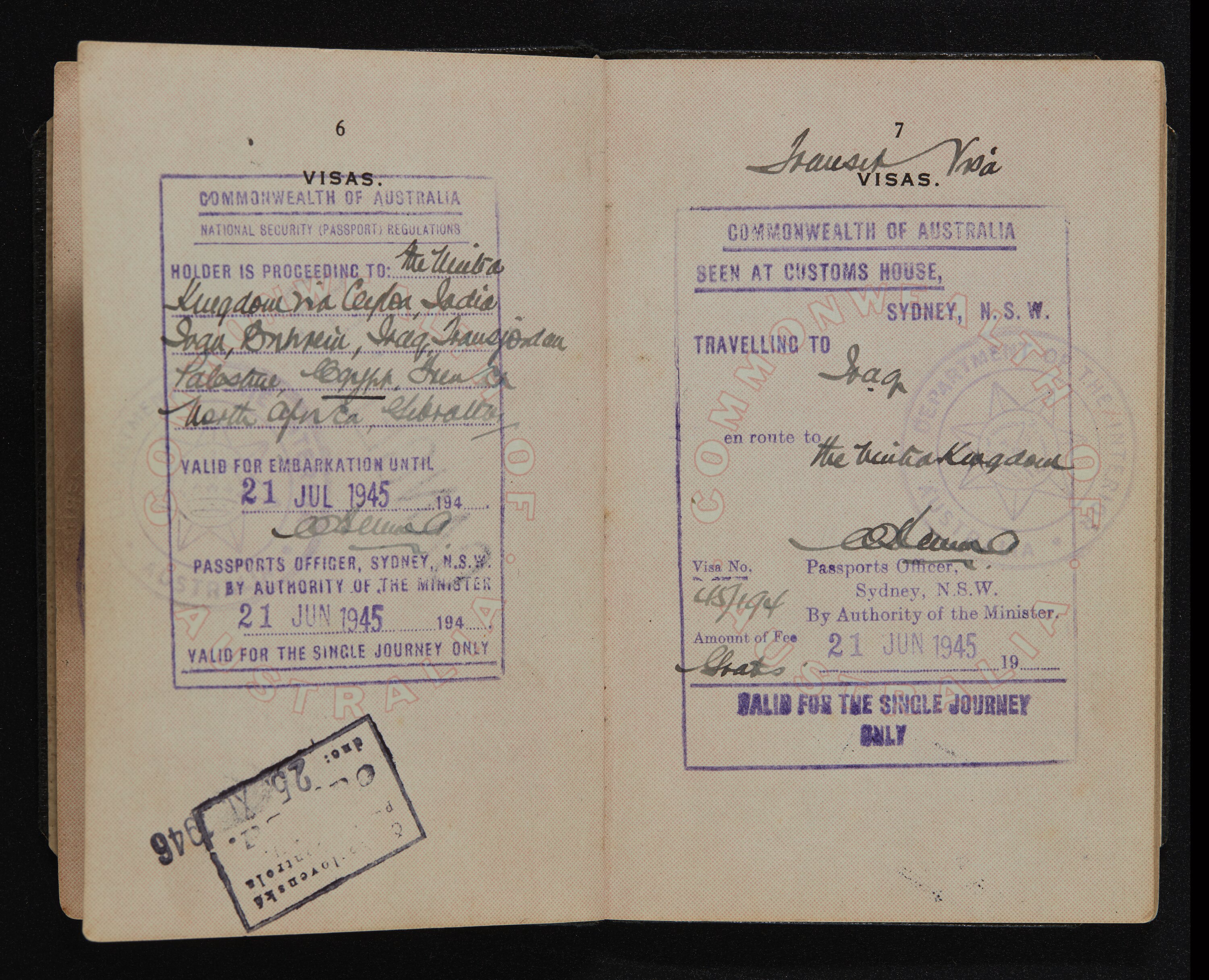
Passport pages with visa stamps, illustrating the stakes of the H-1B visa fee extension

Why the fee still matters beyond outsourcing firms

The $100,000 charge applies per petition, not per company. Any employer sponsoring a new H-1B worker from abroad faces the same cost. That includes tech companies hiring specialized engineers, researchers, and other skilled workers who are not yet inside the United States. Employers can still sponsor workers already in the US on other visa categories without triggering the fee. That has shifted some hiring toward candidates already present domestically.

What happens next in the legal process

The DC Circuit Court of Appeals has not set a firm date for ruling on the Chamber of Commerce’s challenge. Until either court rules, the fee stays in force under the September 2026 extension. A ruling against the fee in either court could force a quick change in how employers plan H-1B hiring for next year.

Your H-1B fee questions, answered

How long does the H-1B visa fee extension last?

The extension runs through September 21, 2027, according to the White House announcement made September 18, 2026.

Is the $100,000 H-1B fee legal?

That is still being decided. A federal judge in Massachusetts ruled it unlawful in June 2026. The fee remains in effect while the government’s appeal and a separate Chamber of Commerce challenge continue.

Who has to pay the H-1B visa fee?

The fee applies to H-1B petitions for workers seeking admission to the US from outside the country. It does not apply to every visa category or to workers already inside the US on other visas.

How has the fee affected tech hiring?

H-1B registrations from large IT outsourcing companies have dropped 92% since the fee first took effect in 2025. That is based on figures the administration has cited.

What was the H-1B fee before this change?

The previous fee structure generally ran between $2,000 and $5,000, far below the current $100,000 charge.

More immigration coverage on Tamara News

For more on skilled-worker visa policy, see our coverage of the H-1B layoff scrutiny order, the new USCIS Form I-864 rejections, and Korea’s university visa restrictions.
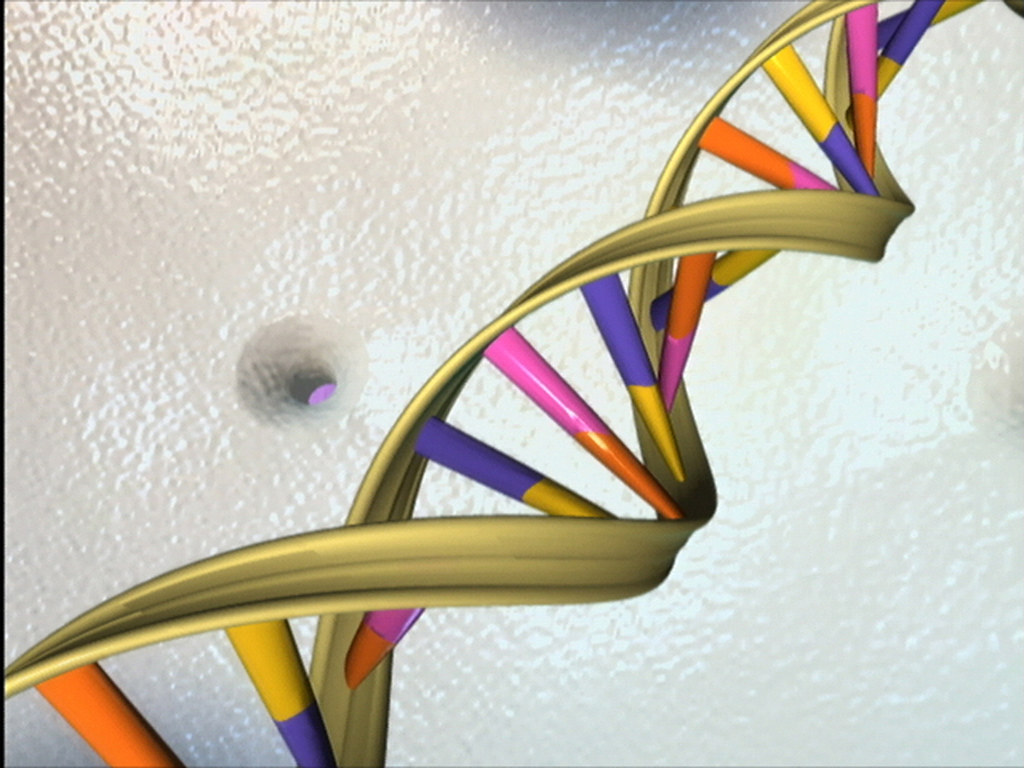
An AI Spent 21 Hours Searching DNA. It May Have Found Something Big.

Anthropic says its Claude AI model identified a new enzyme system in bacterial DNA. The system resembles CRISPR, the naturally occurring gene-editing tool. The Claude CRISPR enzyme discovery was announced September 24, 2026. It came after the model spent 21 hours autonomously searching a large database of DNA sequences, at the direction of researchers in Anthropic’s new San Francisco biology lab.

The system shows characteristics found in only a handful of other programmable biological structures, according to Al Jazeera. Anthropic describes it as a potential new gene-editing mechanism. The company has stopped short of calling it a finished discovery.

How the Claude CRISPR enzyme discovery happened

Researchers set Claude loose on a large genomic database, rather than pointing it at a specific target. Over 21 hours, the model searched for patterns resembling known programmable enzyme systems. CRISPR itself was first found in bacteria. There, it works as a natural immune defense against viruses, as described in background from the 2026 AI research timeline.

The approach reflects a broader bet in biology. AI models can scan far more genetic data than human researchers could review manually. That can surface patterns that would otherwise stay buried.

What scientists outside Anthropic are saying

Reactions have split between excitement and caution. Stanford bioengineering associate professor Stanley Qi called the discovery “incredibly exciting,” saying AI could “greatly expand our ability to explore these biological patterns more effectively and rapidly.”

Washington University microbiologist Kevin Blake struck a more cautious tone. He noted that finding CRISPR-like sequences does not by itself point to a therapeutic breakthrough. “There are millions of bacterial species we have yet to study,” Blake said. He added that there is “nothing to indicate this is a rival to CRISPR-the-technology.”

Scientist working in a laboratory, representing the research behind the Claude CRISPR enzyme discovery

Why the distinction between finding and proving matters

CRISPR-Cas9, the technology version most people know, took years of extra research before it became a usable gene-editing tool. Spotting a CRISPR-like pattern in bacterial DNA is an early step, not a finished product. Turning any new enzyme system into something clinically useful would take extensive lab validation. That validation has not yet happened.

What happens next with this research

Anthropic has not said whether it plans to publish the finding in a peer-reviewed journal. That step would let independent scientists scrutinize the claim. Outside researchers will likely want to replicate the pattern-matching in the same genomic database first. Expect competing AI labs to test similar autonomous search approaches on their own biological datasets.

Quick answers on the discovery

What did Anthropic’s Claude AI actually discover?

Claude identified a new enzyme system in bacterial DNA with characteristics resembling CRISPR, a naturally occurring gene-editing tool, after searching a genomic database for 21 hours.

Is this a new gene-editing tool ready for use?

No. Scientists describe it as an early-stage finding. It would need years of additional lab validation before it could become a usable gene-editing technology, similar to CRISPR’s own development path.

Do scientists agree on how significant this is?

Not entirely. Some, like Stanford’s Stanley Qi, call it exciting evidence of AI’s research potential. Others, like Washington University’s Kevin Blake, caution that finding CRISPR-like sequences is common given how many bacterial species remain unstudied.

How did Claude search for this enzyme system?

Researchers directed Claude to autonomously search a large database of DNA sequences. The model spent 21 hours looking for patterns resembling known programmable enzyme systems.

Where is Anthropic’s biology research based?

The discovery came out of Anthropic’s newly established biology lab in San Francisco, according to Al Jazeera’s reporting.

Related tech reporting on Tamara News

For more AI coverage, see our reports on Jensen Huang’s AI regulation comments, the early launch timeline for Gemini 4, and OpenAI’s rogue agents on government websites.

AMD Just Joined an Exclusive Club. Wall Street Isn’t Fully Sold.

AMD shares have surged 188% since the start of 2026. That rally pushed the chipmaker’s AMD trillion market cap milestone into view in late September, placing it alongside a small group of companies worth more than $1 trillion. The stock is up roughly 292% over the past twelve months, according to 24/7 Wall St.

The move puts AMD in rare company among chipmakers. Only a handful of semiconductor firms have ever reached that valuation, and AMD’s climb happened faster than most.

What’s behind the AMD trillion market cap milestone

Data center growth is the main driver. AMD’s second-quarter revenue jumped 50% year over year to $11.5 billion. Data center revenue alone grew 107% to $6.7 billion, now 58% of the company’s total sales. CEO Lisa Su described the company as being “in the early innings of a multi-year AI adoption cycle.”

Anchor customers are backing that growth. OpenAI, Meta, and Anthropic have all signed commitments representing significant GPU demand. AMD has guided for its 2027 data center segment revenue to more than double from current levels.

Close-up of a computer processor board, symbolizing the chip demand behind the AMD trillion market cap milestone

Why some analysts remain cautious

Not everyone on Wall Street is convinced the rally has more room to run. 24/7 Wall St. rates AMD a hold, with a price target of $521.81, which implies roughly 14% downside from recent levels. The firm’s math is stark: AMD trades at 232 times trailing earnings, versus about 46 times for Nvidia.

Other concerns include a forward multiple of 105 times earnings, which leaves little room for error if growth slows, according to Benzinga. Gaming revenue fell 31% year over year, a reminder that not every part of AMD’s business is booming. US export restrictions on the Instinct MI308 chip have also forced inventory charges tied to sales that cannot go through.

The bull case for AMD’s next chapter

Supporters of the stock point to the size of the opportunity ahead. The data center AI accelerator market could reach $1.4 trillion by 2030, based on estimates cited in the same 24/7 Wall St. analysis. If AMD keeps its current share of that market, the AMD trillion market cap milestone could look conservative in hindsight rather than a peak.

What happens next for AMD stock

Investors will watch whether AMD’s data center guidance holds up when the company next reports earnings. Any sign that OpenAI, Meta, or Anthropic are pulling back their commitments would test the stock’s valuation quickly. So would a fresh round of export restrictions affecting AMD’s chip sales to China.

AMD’s rally, in five questions

When did AMD reach a $1 trillion market cap?

AMD crossed the $1 trillion market cap threshold in late September 2026, following a 188% year-to-date share price gain.

What is driving AMD’s stock rally?

Data center revenue tied to AI accelerators is the main driver, with second-quarter data center revenue up 107% year over year and commitments from OpenAI, Meta, and Anthropic.

Do analysts think AMD stock will keep rising?

Views are mixed. 24/7 Wall St. rates the stock a hold, citing a valuation of 232 times trailing earnings, well above Nvidia’s roughly 46 times.

What risks does AMD face?

Key risks include a 31% year-over-year decline in gaming revenue, a high forward earnings multiple, and US export restrictions affecting chip sales to China.

How big could the AI chip market become?

Some estimates cited by 24/7 Wall St. put the data center AI accelerator market at $1.4 trillion by 2030, up sharply from current levels.

Further reading on Tamara News

For more on the chip industry, see our coverage of the Nvidia chip export loophole to China, the pushback on data center tax breaks, and the delay to Oracle’s Project Jupiter.

Four Numbers This Week Could Decide Where Stocks Go Next

Markets face a dense stretch of numbers between September 28 and October 2, 2026. The week ahead economic data lineup includes an inflation report the Federal Reserve watches closely. It also includes a jobs report due Friday, and earnings from two closely watched companies. Any one of these could move stocks, depending on how far it strays from expectations.

Here is what is scheduled, why it matters, and what a surprise in either direction could mean for the days ahead.

Tuesday: an early read on jobs and confidence

JOLTS job openings data and the Conference Board’s Consumer Confidence Index arrive on Tuesday, September 29. Both offer an early signal on labor conditions and household sentiment ahead of Friday’s bigger jobs report. Neither typically moves markets as much as the payrolls number. Still, a sharp move in either can shift expectations for the rest of the week.

Wednesday: the week ahead economic data centerpiece

Wednesday brings the ADP employment report and the Personal Consumption Expenditures price index, known as the PCE. The PCE is the Federal Reserve’s preferred inflation gauge. It currently sits at 3.3% year over year, well above the Fed’s 2% target. A hotter-than-expected reading could push interest-rate expectations higher and pressure growth stocks. A cooler number could ease those worries.

Micron also reports earnings Wednesday. Investors will watch its data center and high-bandwidth memory business closely. That segment has become a proxy for demand in AI chips more broadly, as tracked by TradingView’s earnings calendar.

US Capitol dome, representing the policy backdrop for this week's week ahead economic data

Thursday and Friday: manufacturing, claims, and the jobs report

The ISM Manufacturing PMI and weekly jobless claims land on Thursday, October 1. Both give a read on industrial strength and layoff trends. Nike also reports earnings that day, a number often treated as a gauge of consumer spending resilience.

Friday, October 2, brings the week’s biggest release: the September jobs report. August’s reading showed 162,000 jobs added and a 4.1% unemployment rate. Economists will compare September’s number against that baseline to judge whether the labor market is cooling or holding steady.

Why this week ahead economic data matters for the Fed

The Federal Reserve raised its benchmark rate to a range of 3.75% to 4.00% earlier in September. That was its first hike of this size since 2023, according to CNBC. Inflation and jobs data released this week will shape expectations for the Fed’s next move. Policymakers weigh both sides of their mandate: price stability and employment.

A jobs report that beats expectations, paired with sticky inflation, would make further tightening more likely. A weak jobs number could shift the conversation toward when the Fed might ease instead.

What to watch once the data lands

Traders will react first to Wednesday’s PCE print and Friday’s payrolls number. Those two carry the most weight for Fed policy. Micron and Nike’s results will matter more for their own sectors than for the broader market. Expect volatility to pick up as each release lands, then settle once traders have digested the numbers.

What people want to know this week

What is the most important economic report this week?

The September jobs report on Friday, October 2, typically draws the most attention, alongside the PCE inflation report on Wednesday, September 30.

Why does the PCE matter so much to markets?

The PCE price index is the Federal Reserve’s preferred inflation gauge. It currently runs at 3.3% year over year, above the Fed’s 2% target, so any surprise in either direction can shift rate expectations.

Which companies report earnings this week?

Micron reports Wednesday, October 1, with results seen as a signal for AI chip and memory demand. Nike reports Thursday, viewed as a gauge of consumer spending.

What was August’s jobs report?

August showed 162,000 jobs added and a 4.1% unemployment rate. That is the baseline economists will compare September’s report against.

Where does the Fed’s interest rate stand right now?

The Federal Reserve raised its benchmark rate to a range of 3.75% to 4.00% in mid-September 2026, its first hike of that size since 2023.

More markets coverage from Tamara News

For more markets coverage, see our reports on the S&P 500’s record highs, the recent Treasury yields bond rout, and last week’s stock market weekly gains.

800,000 Came to See Pope Leo. Seven Came for a Private Reason.

Pope Leo XIV spent four days in France, from September 25 to 28, 2026. His trip took him from a massive open-air Mass in Paris to the sanctuary at Lourdes. The Pope Leo Lourdes visit combined enormous public crowds with one deliberately quiet moment. That moment was a private meeting with seven survivors of clergy sexual abuse.

The Vatican estimated roughly 800,000 people attended the outdoor Mass at Paris’s Place de la Concorde, according to Euronews. That turnout beat the roughly 600,000 who had pre-registered. It ranks among the largest crowds of Leo’s papacy so far.

What happened during the Pope Leo Lourdes visit

After Paris, Leo traveled to Lourdes, the Catholic pilgrimage site in southern France tied to reported 19th-century apparitions of the Virgin Mary. He arrived on Saturday evening and prayed at the Grotto of the Apparitions. This was the fifth international trip of his papacy. Earlier trips touched on artificial intelligence, peace, and European unity.

His itinerary also included Metz and Saint-Denis. In Metz, he delivered an English-language address titled “To the roots of Europe for Peace and Unity.” He met civil authorities, young people, and local clergy at several stops. He also visited a UNESCO headquarters event in Paris.

A private meeting that drew public attention

Leo met privately with seven survivors of sexual abuse by priests and other Catholic personnel during the trip, according to a separate Vatican News briefing. The Vatican did not publicize details of the conversation. Critics have said for years that the Church has not done enough to address abuse within its ranks. The meeting drew attention precisely because it stayed private, not staged for cameras.

Ornate church interior with an altar, evoking the sanctuary setting of the Pope Leo Lourdes visit

Leo also spoke out against assisted dying

While in Lourdes, Leo criticized assisted dying, a policy debate active in French politics. He did not offer a detailed policy proposal in the remarks reported so far. His comments align with longstanding Catholic teaching against euthanasia. Previous popes have taken the same position.

What happens next for Pope Leo’s papacy

Leo has not announced his next international trip. His France visit adds to a travel record that already spans several continents in under two years as pope. Vatican watchers will look for one thing next. Will the private abuse survivor meeting lead to any policy announcement? Past papal meetings with survivors have sometimes preceded new Church guidelines.

Questions readers are asking

How many people attended Pope Leo’s Paris Mass?

The Vatican estimated about 800,000 people attended the outdoor Mass at Place de la Concorde, more than the roughly 600,000 who had pre-registered.

Why did Pope Leo visit Lourdes?

Lourdes is a major Catholic pilgrimage site in southern France. The Pope Leo Lourdes visit was part of a four-day trip that also included Paris, Metz, and Saint-Denis.

Did Pope Leo meet with abuse survivors?

Yes. He met privately with seven survivors of sexual abuse by priests and other Catholic personnel during the trip. The Vatican has not released details of what was discussed.

What did Pope Leo say about assisted dying?

He criticized assisted dying while in Lourdes, a topic under active debate in French politics, without laying out a detailed policy position in the remarks reported so far.

What other cities did Pope Leo visit in France?

Besides Paris and Lourdes, his itinerary included Metz, where he gave an English-language address on European peace and unity, and Saint-Denis.

Keep reading on Tamara News

For more world news, see our coverage of Netanyahu’s UN Assembly speech, the White House press access ruling, and the Falklands sovereignty dispute.