• Mon - Fri 9.00 - 19.00

Author Archives: Francisca Samuel

Author: Francisca Samuel

Francisca Samuel is an editor at Tamara News, where she covers immigration, travel, business and technology news for readers across Africa and the Gulf.

This Chinese AI Startup’s Revenue Just Doubled — Now It Wants $7.5 Billion at a $74 Billion Price Tag

A DeepSeek funding valuation surge is underway. The Chinese AI startup’s annualized revenue run rate reached $1 billion, more than double its sub-$500 million pace earlier in 2026. At the same time, it is pursuing roughly 50 billion yuan, about $7.5 billion, in fresh funding. The reported valuation is 500 billion yuan, or roughly $74 billion. The numbers were confirmed in reporting published September 24, 2026. They show how quickly DeepSeek has moved from a low-cost open-weight model maker to a company charging premium API prices and preparing for a Shanghai stock listing.

How DeepSeek’s revenue actually grew

Run-rate figures are common in fast-growing tech companies, but they can flatter a business more than its actual bank balance supports. The headline $1 billion run rate comes with a caveat. DeepSeek generated approximately $70.7 million in actual booked revenue during the first seven months of 2026. That gap shows how far a run-rate projection can diverge from cash actually collected. Much of the jump traces to API price increases DeepSeek made in August, raising fees by 2.3 to 4.5 times depending on the model. CEO Liang Wenfeng told investors the price increases “had not reduced the customer base.” It remains unclear how much of the run-rate growth came from those higher prices. Genuine growth in usage or new customers may account for less of it than the headline number suggests.

Why the DeepSeek funding valuation surge matters for the AI industry

Shanghai skyline reflecting the DeepSeek funding valuation surge ahead of a planned stock listing

Investors outside China have limited direct ways to bet on the country’s AI sector. That scarcity makes a round of this size unusually closely watched. A $74 billion valuation on roughly $1 billion in annualized revenue works out to about 74 times run rate. That is a steep multiple even by the standards of the current AI boom. The gap between valuation and booked revenue is drawing scrutiny from analysts. They note the pricing-driven nature of the recent revenue jump raises questions about customer retention once the market absorbs the higher API costs. Still, the milestone signals that Chinese AI labs can generate real, API-based commercial revenue, not just rely on venture funding and government support.

How DeepSeek fits into China’s AI race

DeepSeek rattled Western AI markets in early 2025 by showing a low-cost model could compete with far more expensive US alternatives. This funding round is a different kind of milestone. It is less about proving technical capability and more about proving DeepSeek can build a durable, revenue-generating business on top of that technology. A successful raise at $74 billion would make DeepSeek one of the most valuable privately held AI companies outside the United States. It would also send a signal to other Chinese labs. Many are weighing whether to pursue premium pricing over the free or low-cost access that first built their user bases.

The funding round and IPO context

Investors weighing the round will be watching customer retention data closely. The real test comes once the higher API prices have been in place for a full quarter. DeepSeek is targeting an end-of-October close on the roughly $7.5 billion round. That follows an earlier attempt at an $8 billion raise that had stalled before resuming in August. The company is also preparing groundwork for an eventual listing on the Shanghai Stock Exchange. That step would make it one of the most closely watched domestic AI listings in China. It would give outside investors a rare direct stake in a leading Chinese foundation-model company.

What DeepSeek’s next moves signal

Whether the DeepSeek funding valuation surge holds up depends on two things. The October funding close needs to land at the reported $74 billion figure. Revenue needs to keep growing once the initial boost from August’s price increases works through the numbers. AI companies are being valued and challenged in equal measure this month. See our reporting on the Nvidia-Hugging Face acquisition and the ongoing AI antitrust lawsuit against several major platforms for more.

DeepSeek Funding: Reader Questions

How big is DeepSeek’s revenue now?

Its annualized revenue run rate reached $1 billion, more than double its earlier sub-$500 million pace in 2026, though actual booked revenue for the first seven months of 2026 was about $70.7 million.

How much is DeepSeek trying to raise?

Roughly 50 billion yuan, or about $7.5 billion, targeting a close by the end of October 2026.

What valuation is DeepSeek seeking?

Around 500 billion yuan, or roughly $74 billion.

Why did DeepSeek’s revenue jump so quickly?

The company raised API prices by 2.3 to 4.5 times in August 2026, which drove much of the run-rate increase; the company says the higher prices have not reduced its customer base.

Is DeepSeek planning to go public?

Reports indicate the company is preparing for an eventual listing on the Shanghai Stock Exchange.

Why are some analysts cautious about the DeepSeek funding valuation surge?

The $74 billion valuation implies roughly 74 times the current $1 billion run rate, a steep multiple, and much of the recent revenue growth is tied to price increases rather than confirmed usage growth.

Sources

A New Executive Order Means Your Employer’s Layoffs Could Now Sink Your H-1B

A new H-1B layoff scrutiny order takes aim at a full year of a sponsor’s workforce history. President Trump signed it on September 18, 2026. It directs the Departments of State, Labor and Homeland Security to weigh whether an H-1B sponsor has conducted layoffs, past or planned, at every stage of the visa process. That covers the initial Labor Condition Application through consular interviews and border admission. It is titled “Enhancing Program Integrity and Interagency Coordination in the Administration of the H-1B Nonimmigrant Visa Program.” The order marks a sharp expansion of how closely regulators examine an employer’s workforce history before approving a petition.

What the H-1B layoff scrutiny order actually requires

The order instructs the Secretary of State, the Secretary of Labor and the Secretary of Homeland Security to consider whether an employer “directly or indirectly engaged in layoffs within the previous year or plans future layoffs that negatively affect the employment of similarly situated United States workers.” That is a significant widening of existing practice. Previous rules examined layoffs only within a narrow 90-day window around the petition filing date. Under the new order, a full year of layoff history becomes fair game for reviewers, and so do publicly stated future plans.

Employers this covers

Work visa documents tied to the new H-1B layoff scrutiny order

The scrutiny applies to “all H-1B employers, not only H-1B-dependent employers,” according to legal analysis of the order. Companies that assumed they were too small or too diversified to draw this kind of review are now covered too. Reviewers can raise questions at four separate checkpoints. These are Labor Condition Application certification, USCIS petition adjudication, consular visa processing, and admission at the US border. That gives agencies multiple chances to flag a mismatch between an employer’s layoff history and its sponsorship requests.

What happens in the next 30 days

That 30-day window is short by federal rulemaking standards, another sign of how quickly the administration wants agencies to act. The order gives the Department of Labor’s Wage and Hour Division 30 days to start reviewing data from previously submitted Labor Condition Applications. It must decide whether the case for further enforcement against sponsoring employers holds up. Legal commentators note the order leaves significant implementation details to forthcoming agency guidance. Exactly how aggressively this data review translates into denials, Requests for Evidence or audits is not yet clear. Attorneys are already telling clients to expect more Requests for Evidence, echoing earlier periods of tighter H-1B enforcement.

Why this matters beyond the tech sector

Coverage of H-1B policy tends to focus on Silicon Valley. That framing misses how wide the program actually reaches. H-1B sponsorship is often associated with technology companies, but the visa category spans healthcare, finance, manufacturing and education too. Any employer that has trimmed staff in the past year, for any reason, could now face extra questions when sponsoring a new hire. That includes layoffs the company made in an unrelated part of the business. Immigration attorneys say the broad wording of the order gives agencies wide discretion in how closely they scrutinize a given petition, which makes early legal review more valuable than it was before September 18.

What H-1B employers should do next

Larger companies with dedicated immigration counsel are likely to adapt fastest. Smaller sponsors without in-house legal support may be the ones most exposed to an unexpected denial. A single missed detail in a filing could now carry more weight than it did a month ago. Employers with any recent or planned layoffs should expect closer documentation requirements when filing new H-1B petitions or renewals. They should be ready to explain the relationship between workforce reductions and the specific positions they are sponsoring. This order is separate from the $100,000 H-1B fee policy covered in our earlier report on the H-1B fee extension. It adds a second, independent layer of scrutiny on top of that fee. For related visa-cap developments, see our coverage of the H-2B visa cap for FY2027.

H-1B Layoff Order: Common Questions

What does the H-1B layoff scrutiny order require?

It directs the State, Labor and Homeland Security departments to consider an employer’s past-year layoffs or planned future layoffs when reviewing H-1B filings at every stage of the process.

When did the H-1B layoff scrutiny order take effect?

President Trump signed it on September 18, 2026.

Which employers does the order apply to?

All H-1B employers, not just companies classified as H-1B-dependent.

How far back can layoffs be considered under the new order?

Up to one year, a significant expansion from the previous 90-day window around the petition filing date.

What happens within 30 days of the order?

The Department of Labor’s Wage and Hour Division must begin reviewing data from previously submitted Labor Condition Applications to assess whether further enforcement action is warranted.

Is this the same as the $100,000 H-1B fee policy?

No, it is a separate order focused on layoff scrutiny, distinct from the H-1B fee policy covered separately.

Sources

Meta’s New Smart Glasses Start at $449 — Here’s Everything That Changed From Last Year

The third generation of Ray-Ban Meta smart glasses launched today, September 24, 2026. Pricing starts at $449. Meta used its annual Connect event to widen its wearables lineup beyond a single camera-equipped model. The Gen 3 glasses add a longer battery, a sharper camera and new frame styles. A separate camera-free “Audio” model arrives in October, aimed at buyers who want the assistant and speakers without the recording function.

What’s new in the Ray-Ban Meta smart glasses Gen 3

The headline upgrades are practical rather than flashy. Battery life rose to nine hours, up one hour from the second generation. The camera now supports 3K video capture through a 12-megapixel sensor. Meta also added a six-microphone array. The company says it “cuts out over 90 percent of background noise,” a meaningful jump for recording video in noisy public settings. The frames themselves got slimmer. For the first time, buyers can choose a classic Aviator style alongside the existing Wayfarer and a new cat-eye Zena frame, across 27 total color and lens combinations.

Pricing across the new lineup

Person wearing Ray-Ban Meta smart glasses outdoors

The $449 starting price covers the standard Gen 3 lineup. Limited-edition Aviator models with Transitions photochromic lenses cost $579. Celebrity-designed versions with Kylie Jenner and Blackpink’s Lisa start at $399. Meta also introduced the Ray-Ban Meta Audio, a camera-free model priced from $349. It offers 12 hours of battery life on its own, and up to 48 hours using the charging case. It launches October 13. A third, budget-focused option, the Meta Adventurer, arrives October 23 at $249.

Why Meta is spreading across price points

Splitting the lineup into camera, camera-free and budget tiers lets Meta address the two biggest objections to smart glasses so far: privacy concerns around always-available cameras, and price. The Audio model’s camera-free design directly answers the first concern. The $249 Adventurer targets buyers who were priced out of earlier models entirely. Meta paired the hardware announcements with its Muse AI assistant system. It is positioning the glasses against Apple’s Vision Pro and other AR devices on weight and cost, not raw display specifications. Meta also previewed a separate $1,300 VR headset for spring 2027, aimed at that higher end of the market.

How this fits the wider smart glasses market

Meta is not the only company chasing this category. Rivals including Google and several Chinese hardware makers have signaled their own smart glasses plans for the coming year. Meta’s advantage right now is distribution. It already sells through Ray-Ban’s retail network and its own online store, giving it reach a newer entrant would need years to build. Whether that distribution edge holds depends on whether buyers see real daily value in the camera, the assistant, or both.

Why the battery number matters most

Hardware reviewers tend to focus on cameras and displays first. For everyday wearers, battery life often decides whether a gadget survives past the first month. Of all the upgrades, the one-hour battery gain may matter most to daily buyers. Short battery life was the top complaint about the first two generations. A device people forget to charge is a device people stop wearing.

What to watch as the glasses ship

Supply availability will be another early signal worth watching, given how quickly past Ray-Ban Meta launches sold through initial stock. Early reviewers will also be testing whether the improved microphone array holds up in genuinely loud, crowded settings, not just controlled demos. The Gen 3 glasses are available today. That gives an early read on real-world battery life and audio quality once reviewers and early buyers get hands-on time. The bigger test comes in October. That is when the camera-free Audio model and the budget Adventurer ship, and Meta can see whether removing the camera, or the price tag, does more to expand its customer base. For more on how consumer AI hardware is evolving this year, see our coverage of StepFun’s Step 5 preview launch and the recent outage that hit several major AI platforms at once.

Ray-Ban Meta Gen 3: Frequently Asked Questions

How much do the new Ray-Ban Meta smart glasses cost?

The third-generation Gen 3 glasses start at $449, with limited Aviator editions at $579 and celebrity-designed versions from $399.

What’s different about the Gen 3 model compared to Gen 2?

Battery life increased to nine hours (up one hour), the camera now supports 3K video via a 12-megapixel sensor, and a six-microphone array cuts background noise by more than 90 percent.

Is there a camera-free version of the Ray-Ban Meta smart glasses?

Yes. The Ray-Ban Meta Audio, launching October 13 at $349, drops the camera entirely and focuses on audio and the AI assistant.

Are there cheaper smart glasses from Meta?

The Meta Adventurer launches October 23 at $249 as a budget-focused entry point.

What frame styles are available?

Gen 3 comes in Aviator, Wayfarer and a new cat-eye Zena style, across 27 color and lens combinations.

Did Meta announce anything beyond smart glasses at Connect 2026?

Yes, including a $1,300 VR headset planned for spring 2027 and new entertainment integrations such as Disney+ 3D streaming.

Sources

France’s President Just Shot Down a Drone-Attack Warning — Italy Backed Him Up

A reported Russia drone warning Europe alert set off a diplomatic denial on September 24, 2026. Spanish newspaper El Mundo claimed the CIA had told several southern European governments to prepare for a possible Russian drone operation. The target: Spain, France and Italy. French President Emmanuel Macron and Italy’s defence minister both rejected the report the same day. European officials still acknowledge that drone incidents linked to Russia are a real and growing pattern.

What El Mundo reported

El Mundo did not name its intelligence sources in the report. That omission is part of why both governments were able to dispute it so quickly. The Spanish paper reported that US intelligence had passed on information suggesting Moscow could launch drones from ships in the Mediterranean toward France, Spain or Italy. If true, the claim would have marked one of the more specific warnings yet about a Russian drone operation against a NATO member’s mainland. Most recent incidents have instead involved border incursions and airspace violations.

Why officials pushed back on the Russia drone warning Europe report

European Union flags representing the diplomatic response to the Russia drone warning Europe report

Neither leader offered an alternative explanation for where the report originated. Speaking in a joint interview on France 2 and TF1, Macron was direct. “We can deny this piece of information, the CIA did not inform France of this information and the Italian defence minister said the same thing,” he said. Italy’s Defence Minister Guido Crosetto denied the allegations on social media. He called the report unhelpful during a tense period. He said it was “not confirmed.” Both denials were specific to the CIA-warning claim. Neither addressed the broader possibility of a Russian drone threat.

The broader pattern Macron did not deny

European officials have grown more willing this year to name Russia directly after an incident, rather than describing attacks only as “unidentified.” That shift in tone is itself notable. Macron pointed to the drone attack on Leipzig/Halle Airport on August 4-5, 2026. German authorities attributed that attack to Russia. He called it evidence the underlying threat is real, even if this specific warning wasn’t confirmed. France has not experienced a comparable attack yet, he said. But “there have been several signs indicating that Russia is preparing to do this,” he added. Moscow, he said, views pressure on Europe as strategically tied to the war in Ukraine. That framing, real underlying risk but this particular report unconfirmed, echoes recent coverage of drone strikes tied to the Ukraine war elsewhere in Europe.

Why the denial itself is notable

A single unconfirmed newspaper report would normally pass with little comment from senior officials. This one did not. Governments do not typically comment on intelligence-sharing claims at all, whether true or false. Macron’s decision to address the report directly, on national television, signals how seriously European leaders are treating public perception of drone threats right now. Denying a false alarm carries its own risk: it can look reassuring in the moment, but it also invites scrutiny the next time a real warning is issued quietly through normal channels. Italy’s quick, matching denial suggests the two governments coordinated their response rather than reacting independently.

Where this goes from here

Spain and Italy have not issued their own detailed statements beyond Crosetto’s remarks, leaving open exactly how the three governments are coordinating behind the scenes. France has increased patrols near sensitive infrastructure this year as a precaution, officials have said separately, even without a confirmed incident on French soil. The denial closes this specific story. It does not close the underlying question it raised. European governments are now openly discussing drone incursions as a near-term possibility, not a hypothetical one. Expect continued statements from NATO members about air defense readiness. More reporting on Russian drone activity near European borders, confirmed or not, is likely to follow. For related developments, see our coverage of new US sanctions legislation targeting Russia and Iran.

Common Questions About the Drone Warning

What did the El Mundo report claim about a Russia drone warning to Europe?

It claimed the CIA had told Spain, France and Italy that Russia could launch drones from ships in the Mediterranean toward their territory.

Did Macron confirm or deny receiving a CIA warning?

Macron denied it directly, saying the CIA did not inform France of any such information.

Did any other government back up Macron’s denial?

Yes. Italy’s Defence Minister Guido Crosetto also denied the report and called it unconfirmed and unhelpful.

Does this mean the drone threat to Europe isn’t real?

No. Macron specifically pointed to the August 2026 Leipzig/Halle Airport drone attack, attributed to Russia by German authorities, as evidence the broader threat is genuine.

What is the Leipzig/Halle Airport incident Macron referenced?

A drone attack on the airport on August 4-5, 2026, which German authorities attributed to Russia.

Has France experienced a similar drone attack?

Macron said France had not experienced a comparable attack but that signs suggest Russia may be preparing one.

Sources

Oracle Just Invoked an Escape Clause on Its $165 Billion AI Data Center — Here’s What It Signals

The Oracle Project Jupiter delay became public on September 24, 2026. Oracle invoked a force majeure clause to defer scheduled payments on its 2.45-gigawatt AI data center under construction in New Mexico. The move is tied to a gas pipeline that has slipped from a summer 2026 launch to February 2027. Oracle shares fell more than 3% on the news. It renewed investor scrutiny of the company’s roughly $165 billion buildout of AI infrastructure.

Why Oracle declared force majeure

Project Jupiter’s power is meant to come from Bloom Energy gas-powered fuel cells. The pipeline feeding that system missed its planned summer 2026 start. Developers failed to secure the necessary regulatory permits in time. Oracle is the facility’s primary tenant, with construction handled by Blue Owl Capital. Rather than walk away from its lease commitments, Oracle used force majeure to pause payment obligations tied to the delay. It kept the project itself intact. “Project Jupiter remains on our planned schedule,” the company said. “We are fully committed to New Mexico and confident in our path forward.”

What is still unresolved

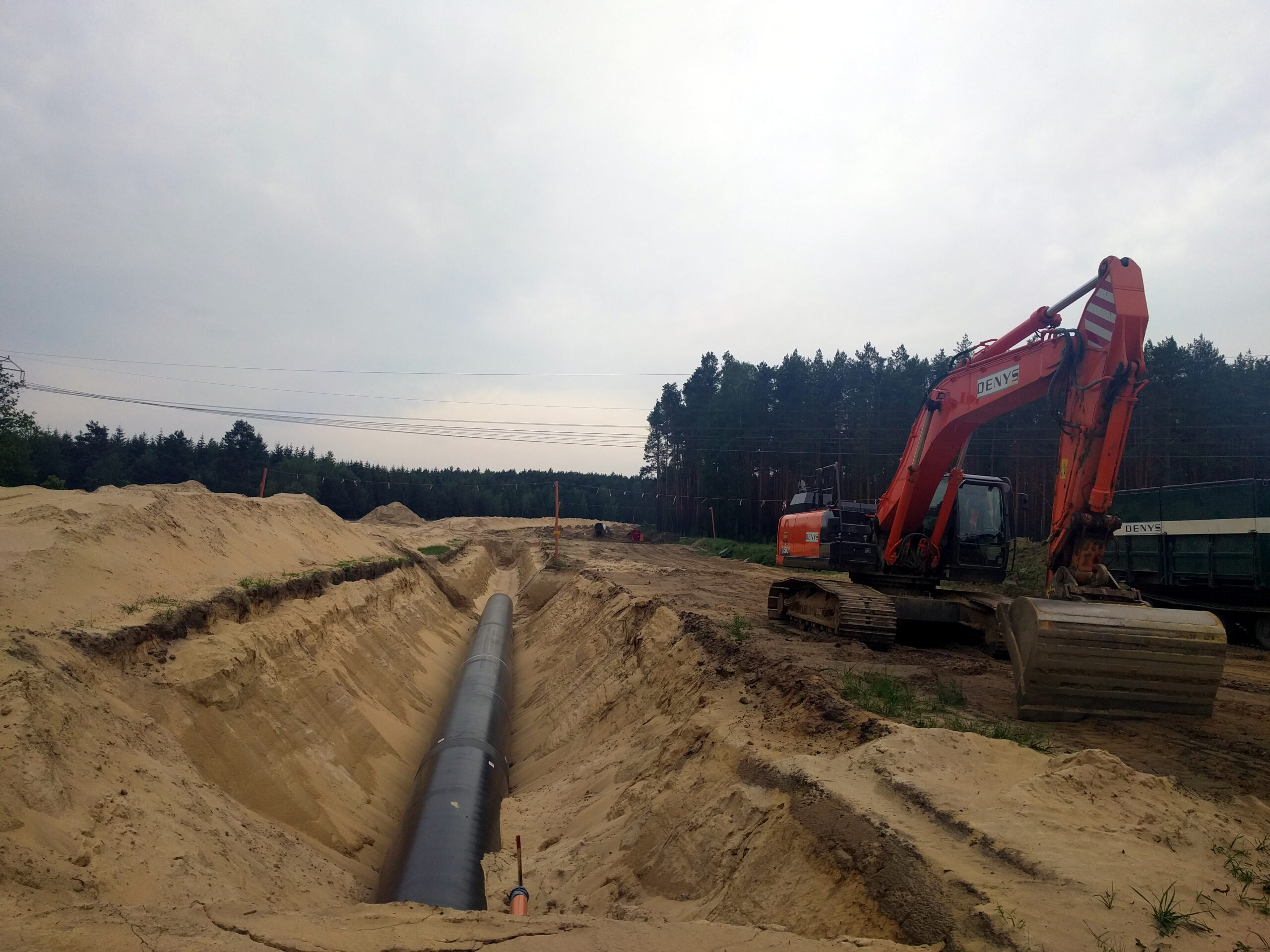
Pipeline construction site tied to the Oracle Project Jupiter delay in New Mexico

The facility still needs an air-quality permit for its fuel-cell power system. New Mexico’s environmental department is not expected to decide on that permit until November 23, 2026, nearly two months away. Until that permit clears and the pipeline’s new February 2027 timeline holds, the project’s 2028 completion target stays dependent on two separate approvals. Oracle controls neither directly.

Why the Oracle Project Jupiter delay worries investors

The force majeure notice landed the same week Oracle reported fiscal first-quarter capital expenditures of $28.5 billion. That is more than triple the $8.5 billion it spent a year earlier. Free cash flow was negative $5 billion for the quarter. That spending pace was already drawing questions about how quickly Oracle’s AI infrastructure bets would pay off. A delay on one flagship project, even one tied to permitting rather than demand, gives skeptics a concrete data point. The stock’s drop reflects that broader unease about timeline risk across the industry’s AI buildout, not just this single site.

How this compares to the rest of the industry

Oracle is not alone in racing to build AI data center capacity faster than power grids can keep up. Utilities across the US have flagged similar bottlenecks tied to other hyperscale projects this year. Force majeure clauses exist precisely for situations like this one, where a developer’s construction timeline outruns a third party’s regulatory approval process. What makes Project Jupiter notable is its scale: 2.45 gigawatts is enough to power a small city, and Oracle’s roughly $165 billion commitment to AI infrastructure makes any delay, however temporary, a headline event for investors watching the broader AI spending cycle.

Why power, not chips, is the real bottleneck

AI data centers are increasingly limited by electricity supply, not computing hardware. Permitting and pipeline construction move on government timelines, not corporate ones. That mismatch is now showing up in project after project across the industry, and Project Jupiter is simply the most visible recent example.

What Oracle’s timeline looks like now

Oracle has not said whether it would seek an alternative power source if the pipeline slips again. Two dates now matter most. New Mexico regulators are due to rule on the air-quality permit by November 23, 2026. The pipeline’s revised target is February 2027. If both hold, Oracle’s 2028 completion goal for Project Jupiter stays intact. If either slips again, the force majeure clause buys Oracle time on payments. It does not solve the underlying power-supply problem. For related coverage of AI infrastructure spending reshaping company valuations, see our reporting on AMD’s trillion-dollar valuation and the global memory shortage driving up device prices.

Questions About Project Jupiter

What caused the Oracle Project Jupiter delay?

A gas pipeline meant to power the facility’s Bloom Energy fuel cells was pushed from a summer 2026 launch to February 2027 after developers failed to secure regulatory permits on time.

Did Oracle abandon Project Jupiter?

No. Oracle said the project remains on its planned schedule and that it is fully committed to the New Mexico site; force majeure was used to defer payments, not to exit the project.

How big is Project Jupiter?

It is a 2.45-gigawatt data center in New Mexico, with Oracle as the primary tenant and Blue Owl Capital handling construction.

How did markets react to the delay?

Oracle’s stock fell more than 3% following the force majeure disclosure.

What still needs to happen before the project is complete?

New Mexico’s environmental department must approve an air-quality permit for the fuel-cell power system, with a decision expected by November 23, 2026, and the pipeline must hit its revised February 2027 target.

How does this fit into Oracle’s broader spending?

Oracle reported $28.5 billion in capital expenditures in fiscal Q1 2026, up from $8.5 billion a year earlier, alongside negative free cash flow of $5 billion for the quarter.

Sources