• Mon - Fri 9.00 - 19.00

Author Archives: Francisca Samuel

Author: Francisca Samuel

Francisca Samuel is an editor at Tamara News, where she covers immigration, travel, business and technology news for readers across Africa and the Gulf.

Wall Street Shrugged Off a 2008-Level Bond Selloff This Week — Here’s How

Stock market weekly gains held into Friday’s close on September 25, with the Dow Jones Industrial Average rising 0.93% to 51,828.62, snapping a three-week losing streak, while the S&P 500 added 0.51% to 7,743.41 and the Nasdaq gained 0.48% to 27,068.72. All three indexes finished the week higher even as bond markets went through one of their roughest stretches in years.

Why stock market weekly gains stood out this time

The rally came despite the 10-year Treasury yield climbing to 5.18%, its highest level since the 2008 financial crisis. In past years, a move like that might have dragged equities down alongside it. Instead, according to Yahoo Finance’s market wrap, investors treated the bond move as a separate story from corporate earnings momentum, particularly in technology.

BlackRock’s Rick Rieder described the bond situation as “not a crisis but an eye-opener.” That framing captures how Wall Street processed the yield spike: a signal worth watching on inflation, not a reason to sell stocks broadly.

Meta’s AI bet drove much of the week’s gains

stock market weekly gains Wall Street board

Meta shares surged roughly 13% during the week on investor enthusiasm for its Muse AI agent, a standout move that helped offset weakness elsewhere. Costco also beat expectations, reporting revenue of $95.72 billion against a $94.88 billion estimate. Not every stock benefited: Bank of America downgraded Nike to Underperform and cut its price target to $30, citing concerns that predate this week’s macro turbulence.

The divergence between Meta’s rally and Nike’s downgrade illustrates a market that has grown increasingly selective. It rewards companies seen as AI beneficiaries while continuing to punish consumer-facing names facing their own separate demand pressures.

Oil eased while gas prices stayed high

On the commodities side, WTI crude fell to $92 a barrel and Brent traded below $98, an easing that gave some relief to markets rattled by Middle East tensions. That relief has not reached drivers yet. Average US gas prices remained near $4.50, and consumer sentiment fell to a four-month low of 48.1 as households weighed high pump prices against ongoing tariff concerns.

Trading volume across the major exchanges stayed elevated through the week as investors rotated between rate-sensitive sectors and the AI-linked names that have driven most of 2026’s gains. That pattern has repeated through several volatile stretches this year without producing a sustained broad-market pullback.

What the bond move actually means

A 10-year yield at 5.18% raises borrowing costs across the economy, from mortgages to corporate debt, and typically reflects investor expectations of persistent inflation or heavier government borrowing. The fact that equities absorbed the move without a broad selloff suggests investors are betting that corporate earnings, especially in AI-linked technology names, can outrun higher financing costs for now. Housing-sensitive and small-cap stocks, which tend to be more exposed to borrowing costs, lagged the broader indexes over the same stretch.

Strategists at several major banks have flagged the gap between mega-cap technology performance and the rest of the market as one of the more unusual features of this year’s rally. A narrower group of AI-linked names has accounted for a disproportionate share of the S&P 500’s total gains since January.

What investors are watching next week

The key question heading into next week is whether Treasury yields keep climbing or stabilize near current levels. A further move higher would test whether equity investors can keep treating the bond market as background noise. That is particularly true for rate-sensitive sectors like housing and small-cap stocks, which have not enjoyed the same AI-driven tailwind as Meta and its peers.

More business coverage

Related reading: our coverage of the Federal Reserve’s latest rate decision, the Treasury yields bond rout, and AMD’s trillion-dollar valuation milestone.

Markets FAQ: what investors want to know

Did all three major indexes close higher for the week?

Yes. The Dow, S&P 500 and Nasdaq all posted weekly gains, with the Dow’s 0.93% Friday rise snapping a three-week losing streak.

Why didn’t rising bond yields hurt stocks more?

Investors appear to be treating the yield spike as a separate inflation signal rather than an immediate threat to corporate earnings, particularly in AI-linked technology stocks.

What drove Meta’s stock higher this week?

Investor enthusiasm for Meta’s Muse AI agent pushed shares up roughly 13% during the week.

How high did the 10-year Treasury yield get?

It climbed to 5.18%, its highest level since the 2008 financial crisis.

What happened to oil and gas prices?

WTI crude eased to $92 a barrel and Brent fell below $98, though average US gas prices stayed near $4.50 despite the easing in crude.

Market data sources

Dozens of Countries Walked Out on Netanyahu’s UN Speech — Here’s Why

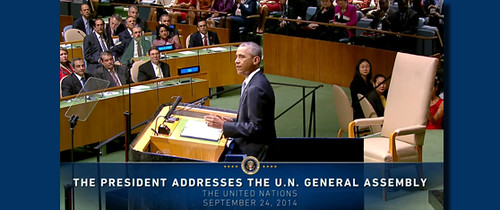
The Netanyahu UN Assembly speech on September 24 emptied large sections of the chamber before he even reached the podium. Delegates from dozens of countries walked out in a coordinated show of protest over Israel’s Gaza campaign. The Israeli prime minister used the platform to defend the war, reject accusations of genocide, and take direct aim at foreign leaders who have grown more critical of Israel over the past year.

What happened during the Netanyahu UN Assembly speech

According to Al Jazeera’s account of the address, Netanyahu told the assembly Israel had carried out the “opposite of genocide” in Gaza, a claim that came despite a Palestinian death toll that has climbed past 73,000 over the course of the war. He also claimed that some of the leaders who walked out had privately thanked Israel for “taking out Iran’s nukes,” a reference to the May strikes on Iranian nuclear-linked sites.

Reaction split sharply along familiar lines

Netanyahu UN Assembly speech flags outside UN headquarters

At home, the speech played well with Netanyahu’s base. Israeli pollster Mitchell Barak called it “a great performance,” and right-wing outlets highlighted his defiant framing of Israel fighting on seven fronts against enemies seeking its destruction. Outside Israel, the response was far less favorable. Security analyst Ahron Bregman said the speech “was littered with lies,” calling Netanyahu a “serial liar.” He pointed to more than 80 Palestinians killed in the West Bank by Israeli forces and settlers so far this year, a toll separate from the Gaza casualty figures.

Coverage of the speech, including a report from NPR, noted Netanyahu also directed criticism at New York political figures who have been outspoken on Gaza, folding domestic American politics into a speech nominally addressed to the UN membership.

The timing is not accidental

The speech landed roughly a month before Israeli parliamentary elections that could end his time in office. Much of its content was aimed as squarely at domestic voters as at the international audience in the chamber. Framing Israel as isolated but unbowed has been a consistent Netanyahu theme through 2026. The UN stage gave him a global platform to repeat it days before a campaign that will test whether that message still holds with Israeli voters.

Israeli commentators have noted that UN speeches have functioned this way for Netanyahu before, providing a moment of unfiltered, camera-ready defiance that plays differently to a domestic audience than to the diplomats in the room.

What the walkout signals about Israel’s isolation

The scale of the walkout, drawing delegates from dozens of countries before Netanyahu had spoken a word, is itself being read as a marker. It shows how far Israel’s diplomatic standing has slipped over the course of the Gaza war. It followed a broader pattern at this year’s General Assembly session, where the war has dominated speeches from leaders across the Arab world, Europe and parts of Latin America. Several used their own remarks to call for an arms embargo or expanded sanctions.

What Netanyahu’s speech means going forward

With Israeli elections roughly a month away, the speech is likely to be replayed heavily in domestic campaign coverage rather than shift international opinion, which had already hardened well before Netanyahu took the podium. Diplomats expect little practical change in how governments engage with Israel in the near term, though the size of the walkout may embolden further coordinated diplomatic gestures at future UN sessions.

Further reading on the Gaza war and the UN

See our related coverage of the UN Secretary-General’s General Assembly remarks, the Gaza reconstruction plan, and the UN Security Council’s AI briefing.

Frequently asked questions on the walkout

How many countries walked out?

Reports describe delegates from dozens of countries leaving before Netanyahu spoke, though no single official tally of walkout participants has been published.

What did Netanyahu say about Gaza casualties?

He described Israel’s conduct as the “opposite of genocide,” a claim made despite a Palestinian death toll that has passed 73,000 during the war.

Did Netanyahu address Iran in the speech?

Yes. He claimed leaders who walked out had privately thanked Israel for strikes on Iran’s nuclear program, without naming which leaders made such comments.

Why is the timing significant?

The speech came about a month before Israeli parliamentary elections that could remove Netanyahu from office, and much of it was aimed at domestic voters.

How was the speech received in Israel versus abroad?

Domestically it was praised by supporters as a strong performance; internationally, critics including security analyst Ahron Bregman characterized its claims as false.

Sourcing and further reading

Trump Just Turned Down Iran’s Ceasefire Offer — Here’s What He’s Planning Instead

The Trump Iran ceasefire rejection reported by the Wall Street Journal on September 25 means Tehran’s offer of a seven-day pause in hostilities has gone nowhere. US officials now expect American strikes on Iran to resume once November’s midterm elections are behind the White House. The report, based on unnamed US officials, describes a president more focused on the political calendar than on closing out the conflict diplomatically.

Why the Trump Iran ceasefire rejection happened

Iran’s seven-day ceasefire plan was put forward as a way to pause the fighting. That fighting has continued intermittently since the Twelve-Day War earlier in 2026 and the May 7 US strikes on Iranian targets. According to Deccan Herald’s report on the Journal’s story, Trump rejected the proposal outright rather than countering with terms of his own. That is a sign the administration sees more value in leaving military options open than in banking a short pause.

The Strait of Hormuz becomes a talking point

Trump Iran ceasefire rejection Strait of Hormuz oil tanker traffic

Alongside the rejection, Trump posted an image on Truth Social showing the Strait of Hormuz relabeled as the “Trump Strait.” It is a symbolic gesture that underlines how central the waterway has become to the standoff. Roughly a fifth of global oil shipments pass through the strait, and any disruption there ripples quickly through energy markets, a dynamic that has already shown up in oil-price coverage this month.

Why the midterms are the real deadline here

The rejection is notable less for what it refuses than for the timeline it implies. Officials cited by the Journal describe an expectation that renewed strikes would follow the midterm elections rather than precede them. That suggests the administration wants to avoid a fresh military escalation clouding the campaign period. That leaves a window of several weeks in which Iran, regional governments and oil markets are left guessing about exactly when, not whether, hostilities might resume.

Regional aviation and shipping have already adjusted to the uncertainty. More than 20 carriers have suspended or rerouted flights connected to Iranian airspace in recent weeks, and insurers have raised premiums for vessels transiting the Gulf.

How Tehran is likely to respond

Iranian officials have not issued a public reply to the rejection at the time of writing. Previous ceasefire attempts this year broke down over verification terms and disagreements about which side would be required to stand down first. Tehran’s seven-day proposal was seen by some regional analysts as an attempt to buy time to rebuild air defenses damaged in the May strikes, an interpretation Washington has cited as one reason for its skepticism.

Congressional reaction has split along familiar partisan lines. Some lawmakers are pressing the administration to formally present its post-midterm plans to Congress rather than leaving the timeline to unnamed-official leaks, while others have defended the president’s discretion over military timing in an active conflict.

Gulf Arab states, several of which have hosted earlier rounds of indirect US-Iran contact, have publicly urged restraint from both sides without endorsing either government’s position. They remain wary of a wider regional escalation that could draw them in economically or militarily.

What comes after the rejection

With no counter-offer on the table, the most likely near-term outcome is a continuation of the current uneasy pause rather than an immediate resumption of strikes. Analysts tracking the conflict expect the real test to come after the midterms, when the political constraint the administration is reportedly weighing falls away. Until then, expect continued disruption to regional flights, elevated shipping insurance costs, and periodic oil-price moves tied to Hormuz headlines.

More on the Iran standoff

Catch up on related coverage: earlier ceasefire diplomacy, airlines cutting Iran-linked routes, and how oil prices have moved on war fears.

Questions readers are asking about the rejection

What did Iran actually propose?

A seven-day ceasefire intended to pause hostilities that have continued since the Twelve-Day War and the May 7 US strikes on Iranian sites.

Did Trump make a counteroffer?

No counteroffer has been reported. US officials cited by the Wall Street Journal say the proposal was rejected outright.

When might strikes resume?

Officials indicated bombing is expected to resume after November’s midterm elections, though no specific date has been confirmed.

Why does the Strait of Hormuz matter here?

About a fifth of global oil shipments pass through the strait, so any disruption tied to the conflict has an outsized effect on energy markets and shipping insurance.

Has this affected air travel?

Yes. More than 20 carriers have suspended or rerouted flights connected to Iranian airspace in recent weeks as the standoff continues.

Where these details come from

A Deadly Kyiv Strike Just Restarted Stalled Russia-Ukraine Ceasefire Talks

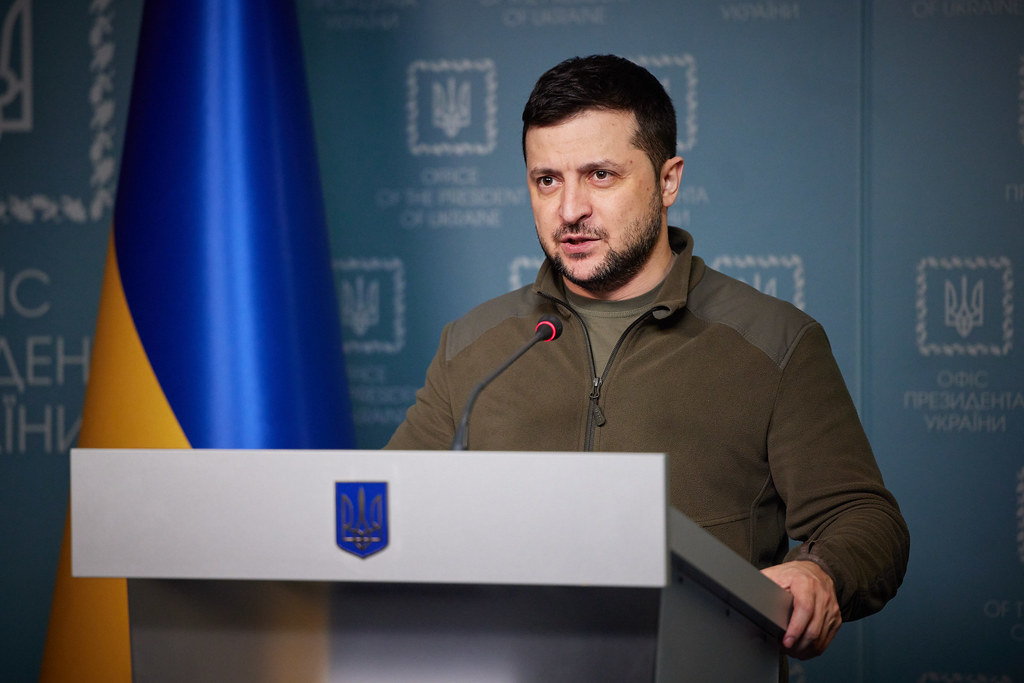
Russia Ukraine ceasefire talks are set to resume at a technical level. The push follows an overnight Russian strike that hit a 16-story residential building in Kyiv’s Pechersk district, killing a 14-year-old boy and injuring at least seven other people. President Volodymyr Zelenskyy said eight Ukrainian regions came under attack the same day. The strike has become the immediate backdrop for a renewed American push to get Moscow and Kyiv back to the table.

Why Russia Ukraine ceasefire talks are restarting now

Trump administration envoys Steve Witkoff and Jared Kushner traveled to Russia and Ukraine earlier this month to try to restart negotiations. Talks had stalled for much of 2026 while Washington’s attention was pulled toward the Middle East. On September 24, the two men met Russia’s presidential envoy Kirill Dmitriev to discuss what officials described as “potential economic cooperation” alongside the security track, according to Al Jazeera’s reporting.

Zelenskyy confirmed the next step publicly: “The American side has proposed meeting at a technical level in a three-way format.” Officials are considering the United Arab Emirates as a neutral host. It is a location Washington has used before for lower-profile Ukraine diplomacy.

What the deadly strike changes on the ground

Russia Ukraine ceasefire talks negotiation table

The Kremlin has not disputed the Kyiv strike, and a Kremlin spokesman confirmed only that trilateral talks “could occur soon,” offering no further detail. The attack fits a pattern that has run through 2026. Russian strikes on residential and energy targets continue even as diplomatic channels stay technically open. That is one reason Ukrainian officials have been cautious about calling this moment a breakthrough rather than another attempt to restart a stalled process.

Kyiv’s civilian toll has also shaped how far Ukraine’s government is willing to bend on any ceasefire terms. Officials have repeatedly said a pause in fighting cannot be conditioned on Ukraine accepting territorial losses it has not agreed to.

The diplomatic track record so far this year

This is not the first attempt at Russia Ukraine ceasefire talks in 2026. Previous rounds broke down as Washington’s diplomatic bandwidth shifted toward the Iran conflict and, more recently, the Trump-Xi summit in Washington. Each restart has followed a similar shape: an envoy visit, then a period of quiet contact. A fresh proposal for a technical-level meeting typically follows a dramatic event, often a strike with civilian casualties, which puts renewed pressure on both governments to be seen engaging.

European governments have watched each restart closely, since a durable ceasefire would reopen questions about sanctions relief, reconstruction financing and the status of Ukrainian territory currently under Russian control. None of those questions are expected to be resolved at a technical-level meeting. Diplomats describe it as a first step meant to test whether both delegations can agree on a shared agenda before any leader-level talks follow.

Where the talks go from here

No date has been set for the proposed three-way technical meeting, and neither side has confirmed the UAE as host. If the meeting happens, it is expected to focus on technical and economic questions rather than a full political settlement, which officials on both sides say would require higher-level talks later. Ukraine’s negotiating position going in will likely include a demand for verifiable security guarantees, not just a pause in shelling.

Diplomats involved in earlier 2026 rounds caution that a technical meeting is a long way from a signed ceasefire, and that Moscow has previously used talks to buy time between offensives. That history is part of why Kyiv has continued to press allies for continued military and financial support even as it engages with the latest diplomatic opening.

Related coverage on tamaranews.com

For more on Russia’s posture toward its neighbors this year, see our coverage of Russia’s drone warnings across Europe, the 2026 Duma election results, and the Russia-Iran sanctions act.

Common questions about the ceasefire push

What triggered this round of talks?

A Russian strike on a Kyiv apartment building that killed a 14-year-old boy and injured at least seven people, combined with weeks of quiet US envoy diplomacy that culminated in a September 24 meeting with Russia’s Kirill Dmitriev.

Who is representing the US in these talks?

Steve Witkoff and Jared Kushner have led the envoy effort, meeting officials in both Moscow and Kyiv earlier in September before proposing the technical-level format.

Where might the talks be held?

The United Arab Emirates is being discussed as a possible neutral venue, though this has not been formally confirmed by either government.

Has Russia agreed to a ceasefire?

No formal ceasefire has been agreed. The Kremlin has confirmed only that trilateral talks “could occur soon” without committing to specific terms.

Does this affect Ukraine’s territorial position?

Ukrainian officials have said repeatedly that any pause in fighting should not be conditioned on accepting territorial concessions, a position expected to carry into the technical talks.

Sources for this report

The US Just Sanctioned 36 Aviation Firms — Now Entire Countries Are Cutting Off Iran’s Airspace

Iran aviation sanctions flights disruption is spreading across the Middle East and beyond. The US Treasury designated 36 entities on September 8, 2026, under an action called Operation Economic Outcast. That included 27 Iranian airlines. In the weeks since, more than 20 carriers based in the UAE, Iraq and Turkey have suspended flights to Iran. Iranian officials are warning neighboring countries that supporting the restrictions could bring “wider regional consequences.”

What the US actually sanctioned

The Treasury’s September 8 action named 27 Iranian airlines. They include Iran Air Tour, Iran Aseman Airlines, Kish Airlines, Saha Airlines, Qeshm Air and two dozen others. Nine additional supporting entities and individuals were also named, for a total of 36 designations. Treasury also suspended three Iran-related aviation authorizations. Those had permitted overflights and allowed non-US carriers to operate US-origin or US-controlled aircraft into Iran. Officials described the targeted airlines as entities “the regime uses to move weapons, personnel, and illicit cargo.” The action targeted “covert front companies, foreign intermediaries, and deceptive transshipment routes” Iran has relied on to obtain US-origin aircraft and sensitive technology, officials said.

How the Iran aviation sanctions flights disruption is spreading

Commercial airliner on a runway affected by the Iran aviation sanctions flights disruption

The fallout has moved well beyond the 27 named carriers. More than 20 airlines based in the UAE, Iraq and Turkey have halted their own Iran operations, rather than risk falling foul of the sanctions regime. International carriers including Lufthansa and Austrian Airlines have reduced Tehran services. Emirates has cut back as well. Iraq’s Baghdad, Najaf, Erbil and Sulaymaniyah airports have suspended flights to and from Iran. The UAE has restricted Iranian carriers from Dubai and Abu Dhabi. Georgia, Azerbaijan and Turkmenistan have each pulled back access in various ways since September 21. A handful of routes to Shanghai, Bangkok, Phuket and Kabul remain among the few international connections still operating.

Why airlines are cutting routes voluntarily

Most of the more than 20 carriers that suspended service were not named in the Treasury action directly. They acted anyway. Airlines and financial institutions that do business with sanctioned entities, even indirectly, risk being cut off from the US financial system themselves. That risk is usually enough to make carriers err on the side of caution rather than test where the sanctions line actually falls. The result is a disruption considerably larger than the 27 named airlines alone would suggest.

Who is affected on the ground

The disruption has real consequences beyond airline balance sheets. Religious pilgrimage travel to the Shia holy cities of Najaf and Karbala in Iraq has been disrupted for Iranian travelers who previously flew direct. Cargo transport of goods including pharmaceuticals and medical equipment has been severely constrained on routes that used to move by air. Travelers who once flew are increasingly shifting to overland routes. That means extended waits at land border crossings. This adds to a difficult month for travel connected to Iran, following the renewed US travel warning covered in our report on Iran’s renewed travel advisory.

How this compares to past Iran sanctions rounds

The US has sanctioned Iranian aviation before, but rarely at this scale in one action. Thirty-six designations in a single announcement is a large number even by the standard of past enforcement waves against Tehran. That scale is part of why the regional response has been so fast.

What travelers should expect next

Airlines that have not yet suspended Iran-linked routes are reassessing their exposure on a case-by-case basis, according to industry reporting, rather than waiting for further Treasury guidance. Iranian officials have publicly warned neighboring governments against cooperating further with the restrictions. That raises the risk that more countries could either tighten or, under pressure, loosen their own airspace rules in the coming weeks. Anyone with travel plans routing through Iran, or connecting via an affected regional hub, should expect continued volatility. Check directly with your carrier before departure. For related disruption elsewhere in the region, see our coverage of flights suspended over Tigray and the broader pattern of flight delays affecting US travelers this fall.

Iran Flight Sanctions: Frequently Asked Questions

What triggered the Iran aviation sanctions flights disruption?

The US Treasury designated 36 entities on September 8, 2026, including 27 Iranian airlines, under an action called Operation Economic Outcast, and suspended three aviation authorizations tied to Iran.

Which Iranian airlines were sanctioned?

Twenty-seven carriers were named, including Iran Air Tour, Iran Aseman Airlines, Kish Airlines, Saha Airlines and Qeshm Air, among others.

How many airlines have suspended Iran flights as a result?

More than 20 carriers based in the UAE, Iraq and Turkey have halted Iran operations, alongside reduced service from Lufthansa, Austrian Airlines and Emirates.

Which airports have suspended Iran-linked flights?

Baghdad, Najaf, Erbil and Sulaymaniyah in Iraq, plus restrictions at Dubai and Abu Dhabi in the UAE, and reduced access via Georgia, Azerbaijan and Turkmenistan.

Are any international routes to Iran still operating?

A limited number of connections to Shanghai, Bangkok, Phuket and Kabul remain among the few still operating.

How has Iran responded to the sanctions?

Iranian officials have warned neighboring countries against supporting the restrictions, suggesting there could be wider regional consequences.

Sources