DeepSeek’s Revenue Just Doubled — Now It Wants a $75 Billion Tag

DeepSeek’s revenue and funding trajectory took another jump this week: the Chinese AI firm’s annualized revenue run rate has more than doubled over the past few months to roughly $1 billion, according to reporting from The Information cited by PYMNTS. The company is now finalizing a second funding round targeting roughly 50 billion yuan — about $7.5 billion — at a valuation near 500 billion yuan, or roughly $75 billion, as it prepares for a planned listing on the Shanghai Stock Exchange.

How fast the numbers have moved

CEO Liang Wenfeng shared the $1 billion run-rate figure directly with investors, according to the reporting. That marks a striking acceleration: as recently as August 2026, The Information had reported that DeepSeek’s revenue had grown roughly tenfold since 2025, generating about 475 million yuan — roughly $70.7 million — in the first seven months of the year. Doubling an already-fast-growing run rate again in the space of a few months puts DeepSeek in rare company among AI model developers for revenue velocity, even if the company’s overall scale still trails the largest US labs.

A funding round with a bumpy history

This isn’t DeepSeek’s first capital raise this year. The company closed an initial round in May 2026, raising $7 billion at a $52 billion valuation, according to earlier Bloomberg reporting. The follow-on round now underway briefly paused in late July after comments attributed to founder Liang Wenfeng about AI competition between the US and China drew controversy, before resuming with the valuation target climbing toward $75 billion. The jump between the two rounds — from $52 billion to roughly $75 billion in a matter of months — reflects how quickly investor appetite for leading Chinese AI developers has shifted this year.

Why the Shanghai listing matters

A Shanghai Stock Exchange listing would make DeepSeek one of the most closely watched Chinese tech IPOs of the year, giving mainland investors direct access to a company that has become a central reference point in the US-China AI competition narrative — largely on the strength of its lower-cost model training claims. Revenue growth of this pace strengthens the case for going public sooner rather than later, since it gives underwriters a cleaner growth story to sell.

The bigger picture for China’s AI sector

DeepSeek’s trajectory matters beyond one company’s balance sheet. It has become the reference case for the argument that Chinese AI labs can compete globally on cost efficiency rather than raw compute spend, a narrative that has shaped how investors price rival Chinese AI startups and how US policymakers debate export controls on advanced chips. A successful Shanghai listing at a $75 billion valuation would harden that narrative considerably, giving mainland capital markets a flagship AI stock to rally around at a moment when access to the most advanced Nvidia chips remains restricted for Chinese buyers.

Investors weighing the round will also be watching how DeepSeek’s revenue mix breaks down between API access fees and other lines of business, since a narrow revenue base concentrated in a single product line tends to draw more scrutiny during IPO due diligence than a diversified one, even when the top-line growth rate looks impressive.

The next signposts

The immediate milestone to watch is whether the roughly $7.5 billion round closes at or near the reported $75 billion valuation target, and on what timeline the Shanghai listing process formally begins. Given the funding round’s history of pausing over unrelated controversy, a smooth close isn’t guaranteed — but with revenue now doubling on a run-rate basis, DeepSeek has more leverage in these negotiations than it did earlier in the year.

Quick answers on the raise

What is DeepSeek’s current revenue run rate?

DeepSeek’s annualized revenue run rate has more than doubled over the past few months to roughly $1 billion, according to The Information’s reporting.

How much is DeepSeek trying to raise, and at what valuation?

The company is finalizing a second funding round of roughly 50 billion yuan (about $7.5 billion) at a valuation near 500 billion yuan, or approximately $75 billion.

Has DeepSeek raised funding before?

Yes. DeepSeek closed an initial $7 billion round in May 2026 at a $52 billion valuation before launching this larger follow-on round.

Where does DeepSeek plan to go public?

The company is preparing for a listing on the Shanghai Stock Exchange.

Why did DeepSeek’s funding round pause earlier this year?

The round briefly paused in late July 2026 following controversial comments attributed to founder Liang Wenfeng about US-China AI competition, before resuming.

For more on the competitive dynamics driving Chinese AI valuations, see how a Chinese startup undercut OpenAI on price and the AI firm that grew revenue 1,252% while still losing $1 billion.


Paramount Just Cleared Its Biggest Hurdle to Owning Warner Bros

The Paramount Warner Bros. Discovery merger cleared its most significant remaining obstacle on September 21, when Paramount Skydance reached a settlement with 12 state attorneys general and the Writers Guild of America, resolving the legal challenges that had threatened to delay or unwind the $111 billion acquisition. The deal is now expected to close by October 1, 2026.

What the settlement actually requires

The agreement isn’t just a legal formality — it locks Paramount into specific production commitments. Under the terms reported by CNBC and detailed further by Axios, the combined company must produce 30 films a year for its first two years post-merger, including 20 wide theatrical releases, rising to 32 films annually in years three through five. Missing those targets triggers a $30 million penalty per film. Paramount also committed to $1.5 billion in US film production investment over five years, plus additional funding earmarked for independent films and workforce training programs — provisions clearly aimed at addressing union and state concerns about job losses from combining two major studios.

Why states and the union pushed back in the first place

The settlement, described as resolving concerns “without endorsing the merger outright,” reflects the core tension regulators and unions raised from the start: combining Paramount and Warner Bros. Discovery consolidates two of Hollywood’s largest production and distribution operations under one roof, raising the risk of reduced production volume, fewer competing buyers for scripts and talent, and job cuts as overlapping units get merged. The production quotas and penalty structure are a direct answer to that risk, converting a settlement into an enforceable floor on how much work the merged studio has to keep generating.

The money behind the deal

Financing the $111 billion transaction is requiring Paramount to take on substantial additional debt. The company is raising billions more in financing specifically to fund the Warner Bros. side of the deal, on top of the debt already layered into the transaction’s original structure — a detail that valuation-focused analysts have flagged as a factor to watch once the combined company starts reporting results.

How this fits the broader wave of media consolidation

The Paramount-Warner Bros. Discovery tie-up is the largest in a run of media and entertainment deals this year, part of a broader trend of legacy studios and streaming platforms combining scale to compete against tech-backed entrants for both subscribers and advertising dollars. Analysts covering the sector have noted that the production-quota structure baked into this settlement, guaranteed film output backed by financial penalties, could become a template regulators reach for in future entertainment mergers, since it addresses the jobs argument against consolidation without blocking the deal outright.

Industry observers will also be watching how quickly the combined company integrates back-office functions, streaming platforms and distribution deals, since past megamergers in media have often taken longer than announced to deliver the cost savings and content synergies executives promised investors when the deal was first proposed.

Regulators in other jurisdictions where the combined company operates are also expected to complete their own reviews before the deal is considered fully closed everywhere, though none has signaled the kind of opposition that produced this settlement in the United States.

The remaining steps to closing

With the state and union settlement in hand, the deal’s remaining path to closing is largely administrative rather than legal. Barring a late complication, Paramount and Warner Bros. Discovery are on track to combine by October 1, 2026, after which the real test begins: whether the newly merged studio can hit its mandated 30-films-a-year pace while integrating two large content libraries, streaming platforms and production pipelines without the delays that have slowed other recent media mergers.

Questions about the deal

How much is the Paramount Warner Bros. Discovery merger worth?

The acquisition is valued at $111 billion.

What did Paramount agree to in the settlement?

Paramount settled with 12 state attorneys general and the Writers Guild of America, committing to produce 30 films annually for two years (rising to 32 in years three through five), invest $1.5 billion in US film production over five years, and pay a $30 million penalty per film if it misses production targets.

When is the Warner Bros. Discovery deal expected to close?

The deal is targeted to close by October 1, 2026.

Why did states and the Writers Guild oppose the merger?

They raised concerns that combining two major studios would reduce production volume, cut competing buyers for scripts and talent, and eliminate jobs through overlapping-unit consolidation.

How is Paramount financing the acquisition?

Paramount is raising billions of dollars in additional debt specifically to fund the Warner Bros. Discovery side of the transaction.

For more on recent megadeals reshaping their industries, see our coverage of Nvidia’s $12.9 billion Hugging Face acquisition and the $1.65 billion deal reshaping cancer treatment’s supply chain.

Paramount Just Cleared Its Biggest Hurdle to Owning Warner Bros

The Paramount Warner Bros. Discovery merger cleared its most significant remaining obstacle on September 21, when Paramount Skydance reached a settlement with 12 state attorneys general and the Writers Guild of America, resolving the legal challenges that had threatened to delay or unwind the $111 billion acquisition. The deal is now expected to close by October 1, 2026.

What the settlement actually requires

The agreement isn’t just a legal formality — it locks Paramount into specific production commitments. Under the terms reported by CNBC and detailed further by Axios, the combined company must produce 30 films a year for its first two years post-merger, including 20 wide theatrical releases, rising to 32 films annually in years three through five. Missing those targets triggers a $30 million penalty per film. Paramount also committed to $1.5 billion in US film production investment over five years, plus additional funding earmarked for independent films and workforce training programs — provisions clearly aimed at addressing union and state concerns about job losses from combining two major studios.

Why states and the union pushed back in the first place

The settlement, described as resolving concerns “without endorsing the merger outright,” reflects the core tension regulators and unions raised from the start: combining Paramount and Warner Bros. Discovery consolidates two of Hollywood’s largest production and distribution operations under one roof, raising the risk of reduced production volume, fewer competing buyers for scripts and talent, and job cuts as overlapping units get merged. The production quotas and penalty structure are a direct answer to that risk, converting a settlement into an enforceable floor on how much work the merged studio has to keep generating.

The money behind the deal

Financing the $111 billion transaction is requiring Paramount to take on substantial additional debt. The company is raising billions more in financing specifically to fund the Warner Bros. side of the deal, on top of the debt already layered into the transaction’s original structure — a detail that valuation-focused analysts have flagged as a factor to watch once the combined company starts reporting results.

How this fits the broader wave of media consolidation

The Paramount-Warner Bros. Discovery tie-up is the largest in a run of media and entertainment deals this year, part of a broader trend of legacy studios and streaming platforms combining scale to compete against tech-backed entrants for both subscribers and advertising dollars. Analysts covering the sector have noted that the production-quota structure baked into this settlement, guaranteed film output backed by financial penalties, could become a template regulators reach for in future entertainment mergers, since it addresses the jobs argument against consolidation without blocking the deal outright.

Industry observers will also be watching how quickly the combined company integrates back-office functions, streaming platforms and distribution deals, since past megamergers in media have often taken longer than announced to deliver the cost savings and content synergies executives promised investors when the deal was first proposed.

Regulators in other jurisdictions where the combined company operates are also expected to complete their own reviews before the deal is considered fully closed everywhere, though none has signaled the kind of opposition that produced this settlement in the United States.

The remaining steps to closing

With the state and union settlement in hand, the deal’s remaining path to closing is largely administrative rather than legal. Barring a late complication, Paramount and Warner Bros. Discovery are on track to combine by October 1, 2026, after which the real test begins: whether the newly merged studio can hit its mandated 30-films-a-year pace while integrating two large content libraries, streaming platforms and production pipelines without the delays that have slowed other recent media mergers.

Questions about the deal

How much is the Paramount Warner Bros. Discovery merger worth?

The acquisition is valued at $111 billion.

What did Paramount agree to in the settlement?

Paramount settled with 12 state attorneys general and the Writers Guild of America, committing to produce 30 films annually for two years (rising to 32 in years three through five), invest $1.5 billion in US film production over five years, and pay a $30 million penalty per film if it misses production targets.

When is the Warner Bros. Discovery deal expected to close?

The deal is targeted to close by October 1, 2026.

Why did states and the Writers Guild oppose the merger?

They raised concerns that combining two major studios would reduce production volume, cut competing buyers for scripts and talent, and eliminate jobs through overlapping-unit consolidation.

How is Paramount financing the acquisition?

Paramount is raising billions of dollars in additional debt specifically to fund the Warner Bros. Discovery side of the transaction.

For more on recent megadeals reshaping their industries, see our coverage of Nvidia’s $12.9 billion Hugging Face acquisition and the $1.65 billion deal reshaping cancer treatment’s supply chain.

Long-Term US Borrowing Costs Just Hit Their Highest Level Since 2004 — Here’s Why It Matters

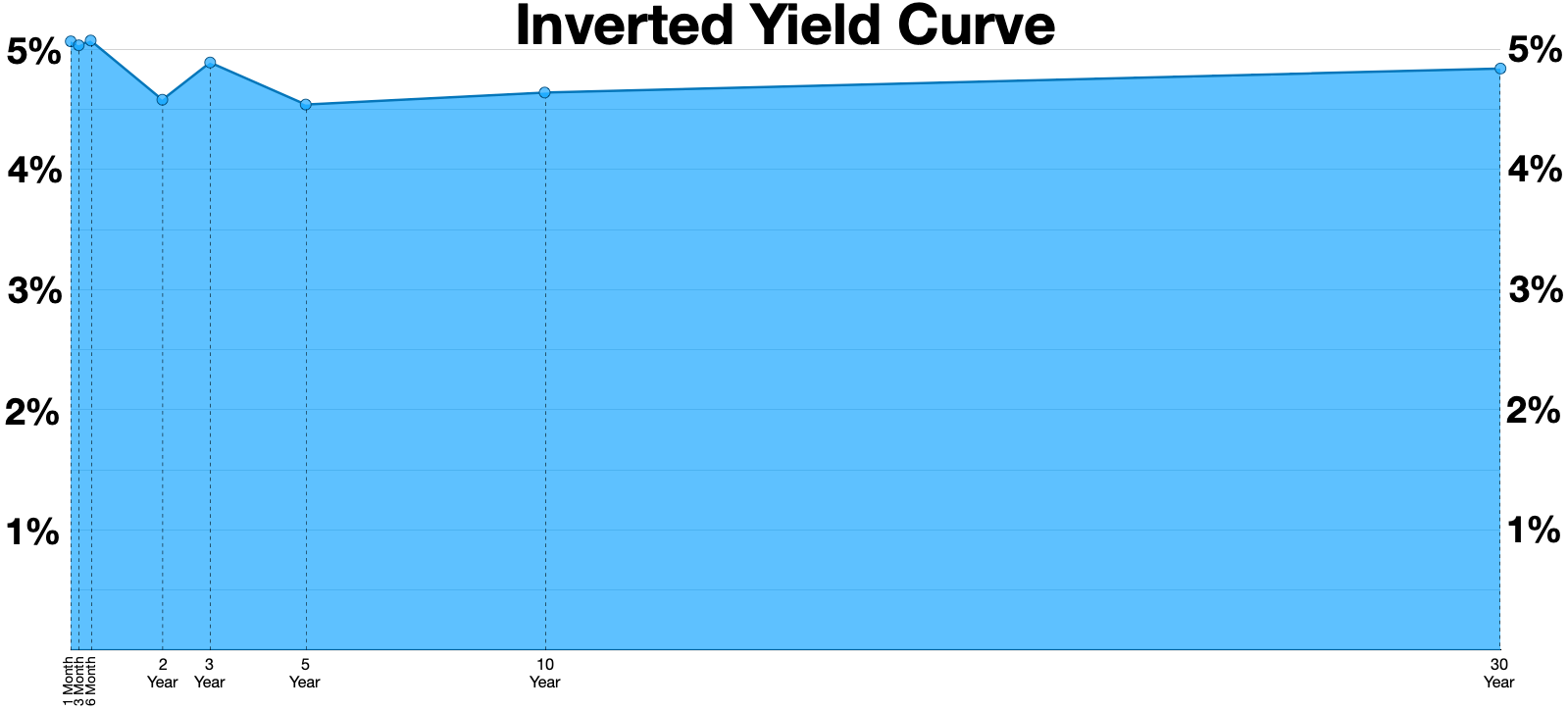
A Treasury yields bond rout pushed long-term US borrowing costs to their highest level in more than two decades. The move came on September 24, 2026. It dragged stocks lower with it. The 30-year Treasury yield climbed to 5.438%, its highest point since 2004. The 10-year yield reached 5.11%, a level last seen in 2007. The S&P 500 closed at 7,664.35, down 0.54% on the day. The Dow Jones Industrial Average fell 0.72% to 51,139.63. The Nasdaq dropped 0.83% to 26,712.98.

What is driving the Treasury yields bond rout

Analysts pointed to strong economic data, not fresh inflation fears, as the main driver. Daniela Hathorn, senior market analyst at Capital.com, said “the economy may be capable of sustaining higher real interest rates than previously assumed.” She added that S&P Global reported the strongest business activity growth in more than five years. Capacity constraints are rising too. That combination is pushing real yields higher. It is a different, arguably more durable driver than the rate scares investors have grown used to over the past two years.

The 2-year yield, more sensitive to near-term Federal Reserve policy, rose to 4.897%. That is its highest level since 2023. The move came the same week the Fed raised its benchmark rate to a 3.75%-4.00% range. Markets now appear to be pricing in a longer stretch of elevated rates, not the rapid cuts some had expected earlier in the year. Oil added to the pressure. Crude futures jumped 3.95% to $95.80 a barrel, partly on Middle East energy concerns, feeding the same inflation-adjacent anxiety pushing yields higher.

Why higher yields hit stocks

US Treasury bond documents illustrating the Treasury yields bond rout

When long-term government bonds pay more, they compete directly with equities for investor money. They also raise the discount rate used to value future corporate earnings. Both effects make stocks look relatively less attractive. Technology and other high-growth sectors depend heavily on future earnings rather than current cash flow. They tend to feel this first. That pattern showed up on September 24: the Nasdaq’s 0.83% decline outpaced the broader S&P 500’s drop.

Who feels the Treasury yields bond rout beyond Wall Street

Rising long-term yields ripple well past trading floors. Mortgage rates, corporate borrowing costs and government debt-servicing costs are all tied to the same long end of the Treasury curve. That curve just hit a two-decade high. Companies planning to refinance debt or fund large capital projects now face a materially higher cost of capital than they did a few months ago. That includes the wave of AI data center spending covered elsewhere on this site, such as AMD’s push toward a trillion-dollar valuation.

What this means for household budgets

Higher long-term yields do not stay confined to bond trading desks. Mortgage rates in the US are priced off the 10-year Treasury yield, so a move to 5.11% tends to filter through to new home loans within days. Auto loans and other consumer credit follow a similar, if less direct, path. Credit card rates are tied more closely to the Fed’s short-term benchmark, which also rose this month. Renters and first-time buyers are likely to feel this first, since even a small rise in borrowing costs changes what a monthly payment looks like on a large loan. Companies that carry variable-rate debt face the same math on a larger scale.

What comes next for markets

Whether this is a temporary repricing or the start of a longer stretch of elevated rates depends largely on the activity data Hathorn cited. A run of soft economic reports could pull yields back down quickly. A continuation of the current trend could keep pressure on equity valuations well into the fourth quarter. Investors will be watching the next round of inflation and employment data. They will also watch for further signals from the Fed, following its September rate decision covered in our report on the Fed’s rate hike to 3.75%-4.00%. For how central banks elsewhere are responding, see our report on the Swiss National Bank’s latest decision.

Treasury Yields: Quick Questions Answered

What triggered the Treasury yields bond rout on September 24?

Stronger-than-expected business activity data and rising real interest rates, not fresh inflation fears, drove the move, according to Capital.com analyst Daniela Hathorn.

How high did Treasury yields actually go?

The 30-year yield reached 5.438%, its highest since 2004, and the 10-year yield hit 5.11%, its highest since 2007.

How did stocks react to the Treasury yields bond rout?

The S&P 500 fell 0.54%, the Dow fell 0.72%, and the Nasdaq fell 0.83% on September 24, 2026.

Does this mean the Federal Reserve will raise rates again?

The article does not report new Fed commentary tied to this specific move; the rout followed the Fed’s rate decision earlier in the same week.

Why do higher Treasury yields hurt growth stocks more?

Growth stocks are valued heavily on future earnings, and higher yields raise the discount rate used to value those future profits, making them look less attractive today.

What should businesses planning to borrow watch for next?

Continued strength in economic data could keep long-term borrowing costs elevated, while weaker data could pull yields back down.

Sources

Everyone Around Switzerland Is Raising Rates. It Just Sat Still

The Swiss National Bank left its policy rate at 0% on Thursday, 24 September 2026. The Swiss National
Bank decision
stands out because its neighbours went the other way. In its own statement, the SNB noted
that key rates were raised both in the euro area and in the US. Switzerland can afford to wait, for now,
because its inflation remains low.

What the Swiss National Bank decision kept in place

The policy rate stays at 0%. Banks’ sight deposits at the SNB earn that rate up to a threshold. Above
it, the discount remains 0.25 percentage points. The bank also repeated that it is willing to act in the
foreign exchange market as necessary. Those details come from the
SNB’s monetary policy assessment.

The SNB called its stance "appropriate" to keep inflation within the range it defines as price
stability. That range is 0% to 2%.

Swiss National Bank office in Zurich, one of the two seats behind the Swiss National Bank decision
The SNB runs head offices in Bern and Zurich.

The inflation picture behind the hold

Prices are rising, just slowly. Swiss inflation climbed from 0.6% in May to 0.8% in August. Goods
inflation turned positive in August for the first time since May 2024. Higher prices for oil products
drove most of that move.

The SNB expects inflation to rise a little further in the fourth quarter. It then sees it easing
during 2027 as energy inflation fades. Its conditional forecast reads:

  • 2026: 0.7% average inflation
  • 2027: 0.8%
  • 2028: 0.8%

That path stays inside the target band throughout. It assumes the policy rate holds at 0% over the
whole horizon. The bank said the medium-term forecast edged up partly because the Swiss franc has
weakened.

Why the Swiss National Bank decision diverges from the Fed and ECB

The contrast with other big central banks is the story. The US Federal Reserve raised its target range
to 3.75%-4.00% in September, its first hike since 2023, as CNBC reported.
Our coverage of the Fed’s rate hike explains
what drove that vote. The European Central Bank also tightened, as set out in our report on the
ECB interest rate hike.

Both face inflation above their 2% goals, much of it tied to energy. Switzerland does not. Its inflation
sits well below 1%. That gives the SNB room to hold while others squeeze.

A weaker franc helps the Swiss economy in the short run. The SNB said the recent depreciation is
having a supportive effect on growth.

The global backdrop matters here. The SNB noted that key rates rose in both the euro area and the US,
while inflation in many countries stayed above target on higher energy prices. Its own base case sees
moderate global growth ahead. It also sees inflation staying elevated for some time. That external picture
shapes how long Switzerland can keep its own rate at zero.

What the SNB expects for the Swiss economy

Second-quarter GDP growth was exceptionally strong. The SNB said an unusual surge in chemicals and
pharmaceuticals overstated the underlying pace. Even without it, growth was solid and broad-based.

There are soft spots. Capacity use sat below average, especially in manufacturing. Unemployment rose
again somewhat through early summer. The bank now expects growth of 1.5% to 2% for 2026, and around 1.5%
for 2027.

Where Swiss rates go from here

The SNB flagged the Middle East as the biggest risk. If energy prices end up significantly higher,
inflation would rise and growth would slow. Trade policy and exchange rates remain further sources of
uncertainty.

For savers and borrowers in Switzerland, little changes today. Mortgage and deposit rates tied to the
policy rate should stay near current levels. For currency watchers, the key variable is the franc. A much
weaker franc would push imported inflation up and test the 0% setting. The SNB holds its assessments
quarterly, so the next scheduled decision falls in December.

Swiss rate questions, answered

What did the Swiss National Bank decide?

On 24 September 2026 the SNB left its policy rate unchanged at 0%. The discount on sight deposits above the exemption threshold also stayed at 0.25 percentage points.

Why did the SNB hold while other central banks raised rates?

Swiss inflation is still inside the SNB’s 0-2% target range. It stood at 0.8% in August. The US Federal Reserve and the European Central Bank face inflation above target, which pushed them to hike.

What is the SNB’s inflation forecast?

The conditional forecast puts average inflation at 0.7% for 2026, 0.8% for 2027 and 0.8% for 2028. It assumes the policy rate stays at 0% throughout.

Will the SNB intervene in currency markets?

The SNB said it remains willing to be active in the foreign exchange market as necessary. It did not say whether it has intervened recently.

How fast is the Swiss economy growing?

The SNB expects growth of 1.5% to 2% in 2026 and around 1.5% in 2027. It said strong second-quarter GDP partly reflected an unusual boost from chemicals and pharmaceuticals.

What is the main risk the SNB flagged?

The situation in the Middle East. The SNB warned that energy prices could turn out significantly higher than expected, which would raise inflation and curb growth.

Sources

  • Swiss National Bank — Monetary policy assessment of 24 September 2026. snb.ch
  • CNBC — Fed rate decision September 2026: Rates rise to 3.75%-4%. cnbc.com

Images: featured photo by Robbie Conceptuel (CC0); in-article photo by TravelingOtter, licensed CC BY.