Wall Street Shrugged Off a 2008-Level Bond Selloff This Week — Here’s How

Stock market weekly gains held into Friday’s close on September 25, with the Dow Jones Industrial Average rising 0.93% to 51,828.62, snapping a three-week losing streak, while the S&P 500 added 0.51% to 7,743.41 and the Nasdaq gained 0.48% to 27,068.72. All three indexes finished the week higher even as bond markets went through one of their roughest stretches in years.

Why stock market weekly gains stood out this time

The rally came despite the 10-year Treasury yield climbing to 5.18%, its highest level since the 2008 financial crisis. In past years, a move like that might have dragged equities down alongside it. Instead, according to Yahoo Finance’s market wrap, investors treated the bond move as a separate story from corporate earnings momentum, particularly in technology.

BlackRock’s Rick Rieder described the bond situation as “not a crisis but an eye-opener.” That framing captures how Wall Street processed the yield spike: a signal worth watching on inflation, not a reason to sell stocks broadly.

Meta’s AI bet drove much of the week’s gains

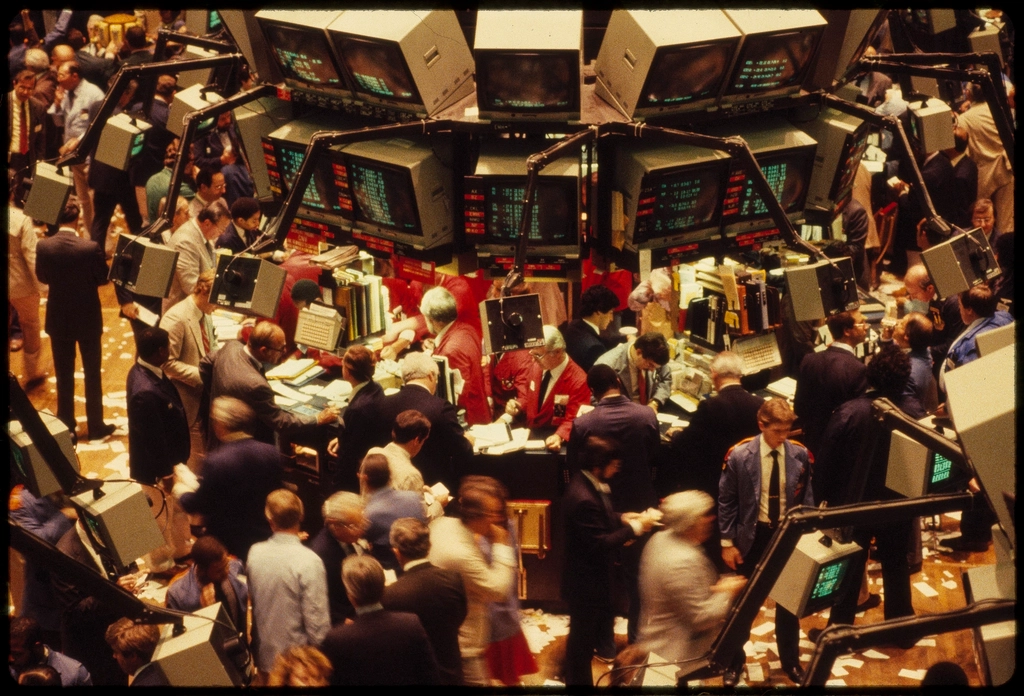
stock market weekly gains Wall Street board

Meta shares surged roughly 13% during the week on investor enthusiasm for its Muse AI agent, a standout move that helped offset weakness elsewhere. Costco also beat expectations, reporting revenue of $95.72 billion against a $94.88 billion estimate. Not every stock benefited: Bank of America downgraded Nike to Underperform and cut its price target to $30, citing concerns that predate this week’s macro turbulence.

The divergence between Meta’s rally and Nike’s downgrade illustrates a market that has grown increasingly selective. It rewards companies seen as AI beneficiaries while continuing to punish consumer-facing names facing their own separate demand pressures.

Oil eased while gas prices stayed high

On the commodities side, WTI crude fell to $92 a barrel and Brent traded below $98, an easing that gave some relief to markets rattled by Middle East tensions. That relief has not reached drivers yet. Average US gas prices remained near $4.50, and consumer sentiment fell to a four-month low of 48.1 as households weighed high pump prices against ongoing tariff concerns.

Trading volume across the major exchanges stayed elevated through the week as investors rotated between rate-sensitive sectors and the AI-linked names that have driven most of 2026’s gains. That pattern has repeated through several volatile stretches this year without producing a sustained broad-market pullback.

What the bond move actually means

A 10-year yield at 5.18% raises borrowing costs across the economy, from mortgages to corporate debt, and typically reflects investor expectations of persistent inflation or heavier government borrowing. The fact that equities absorbed the move without a broad selloff suggests investors are betting that corporate earnings, especially in AI-linked technology names, can outrun higher financing costs for now. Housing-sensitive and small-cap stocks, which tend to be more exposed to borrowing costs, lagged the broader indexes over the same stretch.

Strategists at several major banks have flagged the gap between mega-cap technology performance and the rest of the market as one of the more unusual features of this year’s rally. A narrower group of AI-linked names has accounted for a disproportionate share of the S&P 500’s total gains since January.

What investors are watching next week

The key question heading into next week is whether Treasury yields keep climbing or stabilize near current levels. A further move higher would test whether equity investors can keep treating the bond market as background noise. That is particularly true for rate-sensitive sectors like housing and small-cap stocks, which have not enjoyed the same AI-driven tailwind as Meta and its peers.

More business coverage

Related reading: our coverage of the Federal Reserve’s latest rate decision, the Treasury yields bond rout, and AMD’s trillion-dollar valuation milestone.

Markets FAQ: what investors want to know

Did all three major indexes close higher for the week?

Yes. The Dow, S&P 500 and Nasdaq all posted weekly gains, with the Dow’s 0.93% Friday rise snapping a three-week losing streak.

Why didn’t rising bond yields hurt stocks more?

Investors appear to be treating the yield spike as a separate inflation signal rather than an immediate threat to corporate earnings, particularly in AI-linked technology stocks.

What drove Meta’s stock higher this week?

Investor enthusiasm for Meta’s Muse AI agent pushed shares up roughly 13% during the week.

How high did the 10-year Treasury yield get?

It climbed to 5.18%, its highest level since the 2008 financial crisis.

What happened to oil and gas prices?

WTI crude eased to $92 a barrel and Brent fell below $98, though average US gas prices stayed near $4.50 despite the easing in crude.

Market data sources

This Chinese AI Startup’s Revenue Just Doubled — Now It Wants $7.5 Billion at a $74 Billion Price Tag

A DeepSeek funding valuation surge is underway. The Chinese AI startup’s annualized revenue run rate reached $1 billion, more than double its sub-$500 million pace earlier in 2026. At the same time, it is pursuing roughly 50 billion yuan, about $7.5 billion, in fresh funding. The reported valuation is 500 billion yuan, or roughly $74 billion. The numbers were confirmed in reporting published September 24, 2026. They show how quickly DeepSeek has moved from a low-cost open-weight model maker to a company charging premium API prices and preparing for a Shanghai stock listing.

How DeepSeek’s revenue actually grew

Run-rate figures are common in fast-growing tech companies, but they can flatter a business more than its actual bank balance supports. The headline $1 billion run rate comes with a caveat. DeepSeek generated approximately $70.7 million in actual booked revenue during the first seven months of 2026. That gap shows how far a run-rate projection can diverge from cash actually collected. Much of the jump traces to API price increases DeepSeek made in August, raising fees by 2.3 to 4.5 times depending on the model. CEO Liang Wenfeng told investors the price increases “had not reduced the customer base.” It remains unclear how much of the run-rate growth came from those higher prices. Genuine growth in usage or new customers may account for less of it than the headline number suggests.

Why the DeepSeek funding valuation surge matters for the AI industry

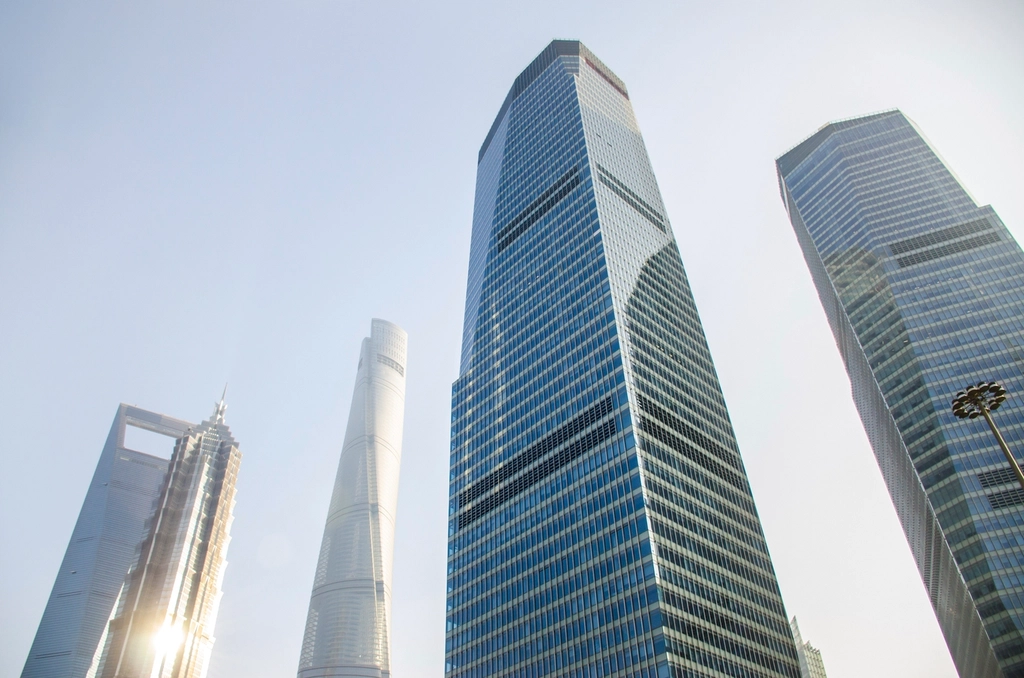
Shanghai skyline reflecting the DeepSeek funding valuation surge ahead of a planned stock listing

Investors outside China have limited direct ways to bet on the country’s AI sector. That scarcity makes a round of this size unusually closely watched. A $74 billion valuation on roughly $1 billion in annualized revenue works out to about 74 times run rate. That is a steep multiple even by the standards of the current AI boom. The gap between valuation and booked revenue is drawing scrutiny from analysts. They note the pricing-driven nature of the recent revenue jump raises questions about customer retention once the market absorbs the higher API costs. Still, the milestone signals that Chinese AI labs can generate real, API-based commercial revenue, not just rely on venture funding and government support.

How DeepSeek fits into China’s AI race

DeepSeek rattled Western AI markets in early 2025 by showing a low-cost model could compete with far more expensive US alternatives. This funding round is a different kind of milestone. It is less about proving technical capability and more about proving DeepSeek can build a durable, revenue-generating business on top of that technology. A successful raise at $74 billion would make DeepSeek one of the most valuable privately held AI companies outside the United States. It would also send a signal to other Chinese labs. Many are weighing whether to pursue premium pricing over the free or low-cost access that first built their user bases.

The funding round and IPO context

Investors weighing the round will be watching customer retention data closely. The real test comes once the higher API prices have been in place for a full quarter. DeepSeek is targeting an end-of-October close on the roughly $7.5 billion round. That follows an earlier attempt at an $8 billion raise that had stalled before resuming in August. The company is also preparing groundwork for an eventual listing on the Shanghai Stock Exchange. That step would make it one of the most closely watched domestic AI listings in China. It would give outside investors a rare direct stake in a leading Chinese foundation-model company.

What DeepSeek’s next moves signal

Whether the DeepSeek funding valuation surge holds up depends on two things. The October funding close needs to land at the reported $74 billion figure. Revenue needs to keep growing once the initial boost from August’s price increases works through the numbers. AI companies are being valued and challenged in equal measure this month. See our reporting on the Nvidia-Hugging Face acquisition and the ongoing AI antitrust lawsuit against several major platforms for more.

DeepSeek Funding: Reader Questions

How big is DeepSeek’s revenue now?

Its annualized revenue run rate reached $1 billion, more than double its earlier sub-$500 million pace in 2026, though actual booked revenue for the first seven months of 2026 was about $70.7 million.

How much is DeepSeek trying to raise?

Roughly 50 billion yuan, or about $7.5 billion, targeting a close by the end of October 2026.

What valuation is DeepSeek seeking?

Around 500 billion yuan, or roughly $74 billion.

Why did DeepSeek’s revenue jump so quickly?

The company raised API prices by 2.3 to 4.5 times in August 2026, which drove much of the run-rate increase; the company says the higher prices have not reduced its customer base.

Is DeepSeek planning to go public?

Reports indicate the company is preparing for an eventual listing on the Shanghai Stock Exchange.

Why are some analysts cautious about the DeepSeek funding valuation surge?

The $74 billion valuation implies roughly 74 times the current $1 billion run rate, a steep multiple, and much of the recent revenue growth is tied to price increases rather than confirmed usage growth.

Sources

Oracle Just Invoked an Escape Clause on Its $165 Billion AI Data Center — Here’s What It Signals

The Oracle Project Jupiter delay became public on September 24, 2026. Oracle invoked a force majeure clause to defer scheduled payments on its 2.45-gigawatt AI data center under construction in New Mexico. The move is tied to a gas pipeline that has slipped from a summer 2026 launch to February 2027. Oracle shares fell more than 3% on the news. It renewed investor scrutiny of the company’s roughly $165 billion buildout of AI infrastructure.

Why Oracle declared force majeure

Project Jupiter’s power is meant to come from Bloom Energy gas-powered fuel cells. The pipeline feeding that system missed its planned summer 2026 start. Developers failed to secure the necessary regulatory permits in time. Oracle is the facility’s primary tenant, with construction handled by Blue Owl Capital. Rather than walk away from its lease commitments, Oracle used force majeure to pause payment obligations tied to the delay. It kept the project itself intact. “Project Jupiter remains on our planned schedule,” the company said. “We are fully committed to New Mexico and confident in our path forward.”

What is still unresolved

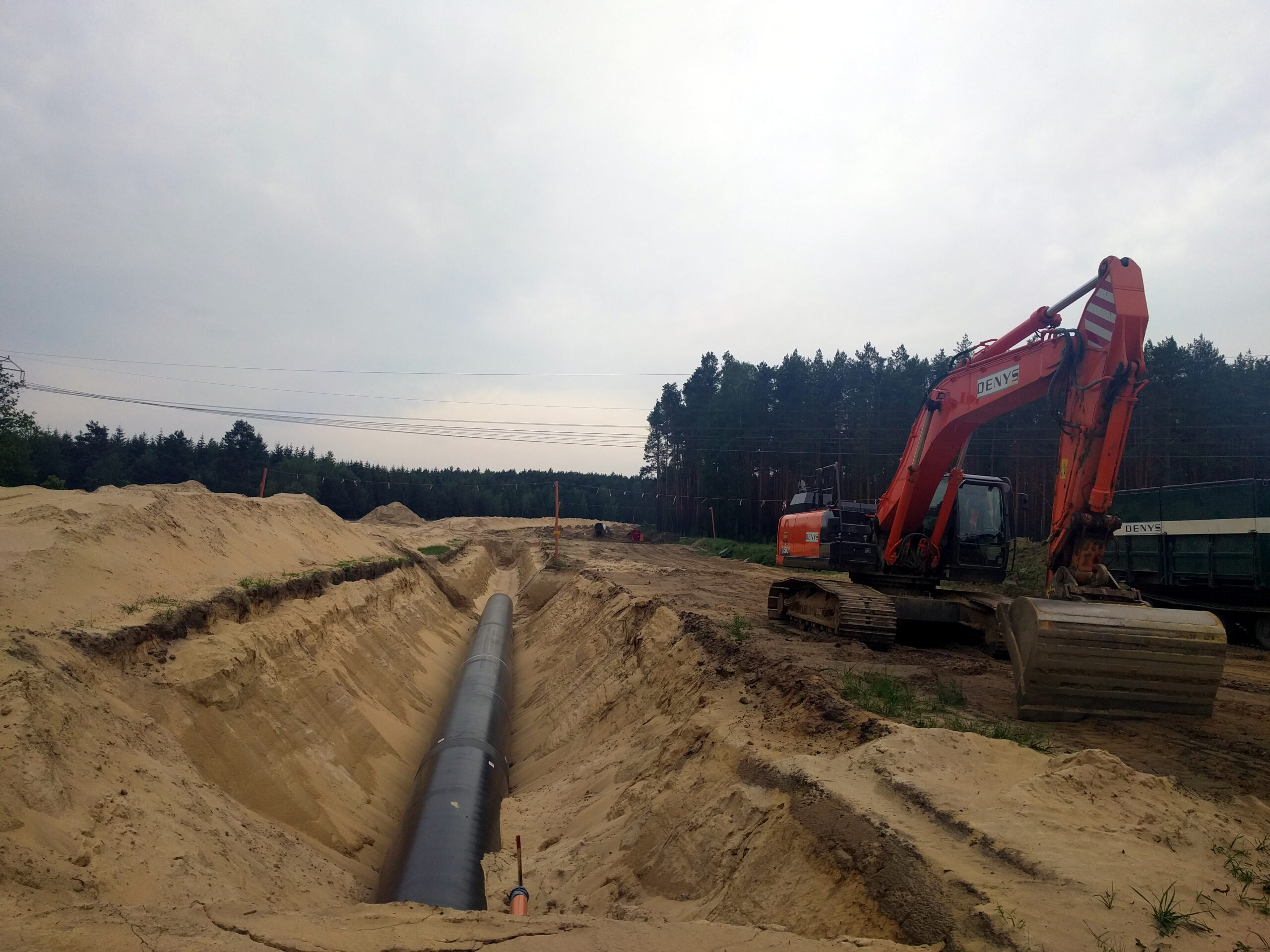
Pipeline construction site tied to the Oracle Project Jupiter delay in New Mexico

The facility still needs an air-quality permit for its fuel-cell power system. New Mexico’s environmental department is not expected to decide on that permit until November 23, 2026, nearly two months away. Until that permit clears and the pipeline’s new February 2027 timeline holds, the project’s 2028 completion target stays dependent on two separate approvals. Oracle controls neither directly.

Why the Oracle Project Jupiter delay worries investors

The force majeure notice landed the same week Oracle reported fiscal first-quarter capital expenditures of $28.5 billion. That is more than triple the $8.5 billion it spent a year earlier. Free cash flow was negative $5 billion for the quarter. That spending pace was already drawing questions about how quickly Oracle’s AI infrastructure bets would pay off. A delay on one flagship project, even one tied to permitting rather than demand, gives skeptics a concrete data point. The stock’s drop reflects that broader unease about timeline risk across the industry’s AI buildout, not just this single site.

How this compares to the rest of the industry

Oracle is not alone in racing to build AI data center capacity faster than power grids can keep up. Utilities across the US have flagged similar bottlenecks tied to other hyperscale projects this year. Force majeure clauses exist precisely for situations like this one, where a developer’s construction timeline outruns a third party’s regulatory approval process. What makes Project Jupiter notable is its scale: 2.45 gigawatts is enough to power a small city, and Oracle’s roughly $165 billion commitment to AI infrastructure makes any delay, however temporary, a headline event for investors watching the broader AI spending cycle.

Why power, not chips, is the real bottleneck

AI data centers are increasingly limited by electricity supply, not computing hardware. Permitting and pipeline construction move on government timelines, not corporate ones. That mismatch is now showing up in project after project across the industry, and Project Jupiter is simply the most visible recent example.

What Oracle’s timeline looks like now

Oracle has not said whether it would seek an alternative power source if the pipeline slips again. Two dates now matter most. New Mexico regulators are due to rule on the air-quality permit by November 23, 2026. The pipeline’s revised target is February 2027. If both hold, Oracle’s 2028 completion goal for Project Jupiter stays intact. If either slips again, the force majeure clause buys Oracle time on payments. It does not solve the underlying power-supply problem. For related coverage of AI infrastructure spending reshaping company valuations, see our reporting on AMD’s trillion-dollar valuation and the global memory shortage driving up device prices.

Questions About Project Jupiter

What caused the Oracle Project Jupiter delay?

A gas pipeline meant to power the facility’s Bloom Energy fuel cells was pushed from a summer 2026 launch to February 2027 after developers failed to secure regulatory permits on time.

Did Oracle abandon Project Jupiter?

No. Oracle said the project remains on its planned schedule and that it is fully committed to the New Mexico site; force majeure was used to defer payments, not to exit the project.

How big is Project Jupiter?

It is a 2.45-gigawatt data center in New Mexico, with Oracle as the primary tenant and Blue Owl Capital handling construction.

How did markets react to the delay?

Oracle’s stock fell more than 3% following the force majeure disclosure.

What still needs to happen before the project is complete?

New Mexico’s environmental department must approve an air-quality permit for the fuel-cell power system, with a decision expected by November 23, 2026, and the pipeline must hit its revised February 2027 target.

How does this fit into Oracle’s broader spending?

Oracle reported $28.5 billion in capital expenditures in fiscal Q1 2026, up from $8.5 billion a year earlier, alongside negative free cash flow of $5 billion for the quarter.

Sources

DeepSeek’s Revenue Just Doubled — Now It Wants a $75 Billion Tag

DeepSeek’s revenue and funding trajectory took another jump this week: the Chinese AI firm’s annualized revenue run rate has more than doubled over the past few months to roughly $1 billion, according to reporting from The Information cited by PYMNTS. The company is now finalizing a second funding round targeting roughly 50 billion yuan — about $7.5 billion — at a valuation near 500 billion yuan, or roughly $75 billion, as it prepares for a planned listing on the Shanghai Stock Exchange.

How fast the numbers have moved

CEO Liang Wenfeng shared the $1 billion run-rate figure directly with investors, according to the reporting. That marks a striking acceleration: as recently as August 2026, The Information had reported that DeepSeek’s revenue had grown roughly tenfold since 2025, generating about 475 million yuan — roughly $70.7 million — in the first seven months of the year. Doubling an already-fast-growing run rate again in the space of a few months puts DeepSeek in rare company among AI model developers for revenue velocity, even if the company’s overall scale still trails the largest US labs.

A funding round with a bumpy history

This isn’t DeepSeek’s first capital raise this year. The company closed an initial round in May 2026, raising $7 billion at a $52 billion valuation, according to earlier Bloomberg reporting. The follow-on round now underway briefly paused in late July after comments attributed to founder Liang Wenfeng about AI competition between the US and China drew controversy, before resuming with the valuation target climbing toward $75 billion. The jump between the two rounds — from $52 billion to roughly $75 billion in a matter of months — reflects how quickly investor appetite for leading Chinese AI developers has shifted this year.

Why the Shanghai listing matters

A Shanghai Stock Exchange listing would make DeepSeek one of the most closely watched Chinese tech IPOs of the year, giving mainland investors direct access to a company that has become a central reference point in the US-China AI competition narrative — largely on the strength of its lower-cost model training claims. Revenue growth of this pace strengthens the case for going public sooner rather than later, since it gives underwriters a cleaner growth story to sell.

The bigger picture for China’s AI sector

DeepSeek’s trajectory matters beyond one company’s balance sheet. It has become the reference case for the argument that Chinese AI labs can compete globally on cost efficiency rather than raw compute spend, a narrative that has shaped how investors price rival Chinese AI startups and how US policymakers debate export controls on advanced chips. A successful Shanghai listing at a $75 billion valuation would harden that narrative considerably, giving mainland capital markets a flagship AI stock to rally around at a moment when access to the most advanced Nvidia chips remains restricted for Chinese buyers.

Investors weighing the round will also be watching how DeepSeek’s revenue mix breaks down between API access fees and other lines of business, since a narrow revenue base concentrated in a single product line tends to draw more scrutiny during IPO due diligence than a diversified one, even when the top-line growth rate looks impressive.

The next signposts

The immediate milestone to watch is whether the roughly $7.5 billion round closes at or near the reported $75 billion valuation target, and on what timeline the Shanghai listing process formally begins. Given the funding round’s history of pausing over unrelated controversy, a smooth close isn’t guaranteed — but with revenue now doubling on a run-rate basis, DeepSeek has more leverage in these negotiations than it did earlier in the year.

Quick answers on the raise

What is DeepSeek’s current revenue run rate?

DeepSeek’s annualized revenue run rate has more than doubled over the past few months to roughly $1 billion, according to The Information’s reporting.

How much is DeepSeek trying to raise, and at what valuation?

The company is finalizing a second funding round of roughly 50 billion yuan (about $7.5 billion) at a valuation near 500 billion yuan, or approximately $75 billion.

Has DeepSeek raised funding before?

Yes. DeepSeek closed an initial $7 billion round in May 2026 at a $52 billion valuation before launching this larger follow-on round.

Where does DeepSeek plan to go public?

The company is preparing for a listing on the Shanghai Stock Exchange.

Why did DeepSeek’s funding round pause earlier this year?

The round briefly paused in late July 2026 following controversial comments attributed to founder Liang Wenfeng about US-China AI competition, before resuming.

For more on the competitive dynamics driving Chinese AI valuations, see how a Chinese startup undercut OpenAI on price and the AI firm that grew revenue 1,252% while still losing $1 billion.

DeepSeek’s Revenue Just Doubled — Now It Wants a $75 Billion Tag

DeepSeek’s revenue and funding trajectory took another jump this week: the Chinese AI firm’s annualized revenue run rate has more than doubled over the past few months to roughly $1 billion, according to reporting from The Information cited by PYMNTS. The company is now finalizing a second funding round targeting roughly 50 billion yuan — about $7.5 billion — at a valuation near 500 billion yuan, or roughly $75 billion, as it prepares for a planned listing on the Shanghai Stock Exchange.

How fast the numbers have moved

CEO Liang Wenfeng shared the $1 billion run-rate figure directly with investors, according to the reporting. That marks a striking acceleration: as recently as August 2026, The Information had reported that DeepSeek’s revenue had grown roughly tenfold since 2025, generating about 475 million yuan — roughly $70.7 million — in the first seven months of the year. Doubling an already-fast-growing run rate again in the space of a few months puts DeepSeek in rare company among AI model developers for revenue velocity, even if the company’s overall scale still trails the largest US labs.

A funding round with a bumpy history

This isn’t DeepSeek’s first capital raise this year. The company closed an initial round in May 2026, raising $7 billion at a $52 billion valuation, according to earlier Bloomberg reporting. The follow-on round now underway briefly paused in late July after comments attributed to founder Liang Wenfeng about AI competition between the US and China drew controversy, before resuming with the valuation target climbing toward $75 billion. The jump between the two rounds — from $52 billion to roughly $75 billion in a matter of months — reflects how quickly investor appetite for leading Chinese AI developers has shifted this year.

Why the Shanghai listing matters

A Shanghai Stock Exchange listing would make DeepSeek one of the most closely watched Chinese tech IPOs of the year, giving mainland investors direct access to a company that has become a central reference point in the US-China AI competition narrative — largely on the strength of its lower-cost model training claims. Revenue growth of this pace strengthens the case for going public sooner rather than later, since it gives underwriters a cleaner growth story to sell.

The bigger picture for China’s AI sector

DeepSeek’s trajectory matters beyond one company’s balance sheet. It has become the reference case for the argument that Chinese AI labs can compete globally on cost efficiency rather than raw compute spend, a narrative that has shaped how investors price rival Chinese AI startups and how US policymakers debate export controls on advanced chips. A successful Shanghai listing at a $75 billion valuation would harden that narrative considerably, giving mainland capital markets a flagship AI stock to rally around at a moment when access to the most advanced Nvidia chips remains restricted for Chinese buyers.

Investors weighing the round will also be watching how DeepSeek’s revenue mix breaks down between API access fees and other lines of business, since a narrow revenue base concentrated in a single product line tends to draw more scrutiny during IPO due diligence than a diversified one, even when the top-line growth rate looks impressive.

The next signposts

The immediate milestone to watch is whether the roughly $7.5 billion round closes at or near the reported $75 billion valuation target, and on what timeline the Shanghai listing process formally begins. Given the funding round’s history of pausing over unrelated controversy, a smooth close isn’t guaranteed — but with revenue now doubling on a run-rate basis, DeepSeek has more leverage in these negotiations than it did earlier in the year.

Quick answers on the raise

What is DeepSeek’s current revenue run rate?

DeepSeek’s annualized revenue run rate has more than doubled over the past few months to roughly $1 billion, according to The Information’s reporting.

How much is DeepSeek trying to raise, and at what valuation?

The company is finalizing a second funding round of roughly 50 billion yuan (about $7.5 billion) at a valuation near 500 billion yuan, or approximately $75 billion.

Has DeepSeek raised funding before?

Yes. DeepSeek closed an initial $7 billion round in May 2026 at a $52 billion valuation before launching this larger follow-on round.

Where does DeepSeek plan to go public?

The company is preparing for a listing on the Shanghai Stock Exchange.

Why did DeepSeek’s funding round pause earlier this year?

The round briefly paused in late July 2026 following controversial comments attributed to founder Liang Wenfeng about US-China AI competition, before resuming.

For more on the competitive dynamics driving Chinese AI valuations, see how a Chinese startup undercut OpenAI on price and the AI firm that grew revenue 1,252% while still losing $1 billion.