Category Archives: Study Abroad

What It Really Costs to Move Abroad in 2026

Moving abroad used to be priced in your head as a plane ticket plus a visa fee. That mental model is broken. The real cost to move abroad 2026 stacks up across application charges, proof-of-funds you must show, deposits, health surcharges and a few fees nobody warns you about. As of 2026, the visa sticker price is often the smallest line. Here is the full picture, so your savings match reality, not a rough guess.

By the Travel Explore editorial desk. Last updated 29 June 2026.

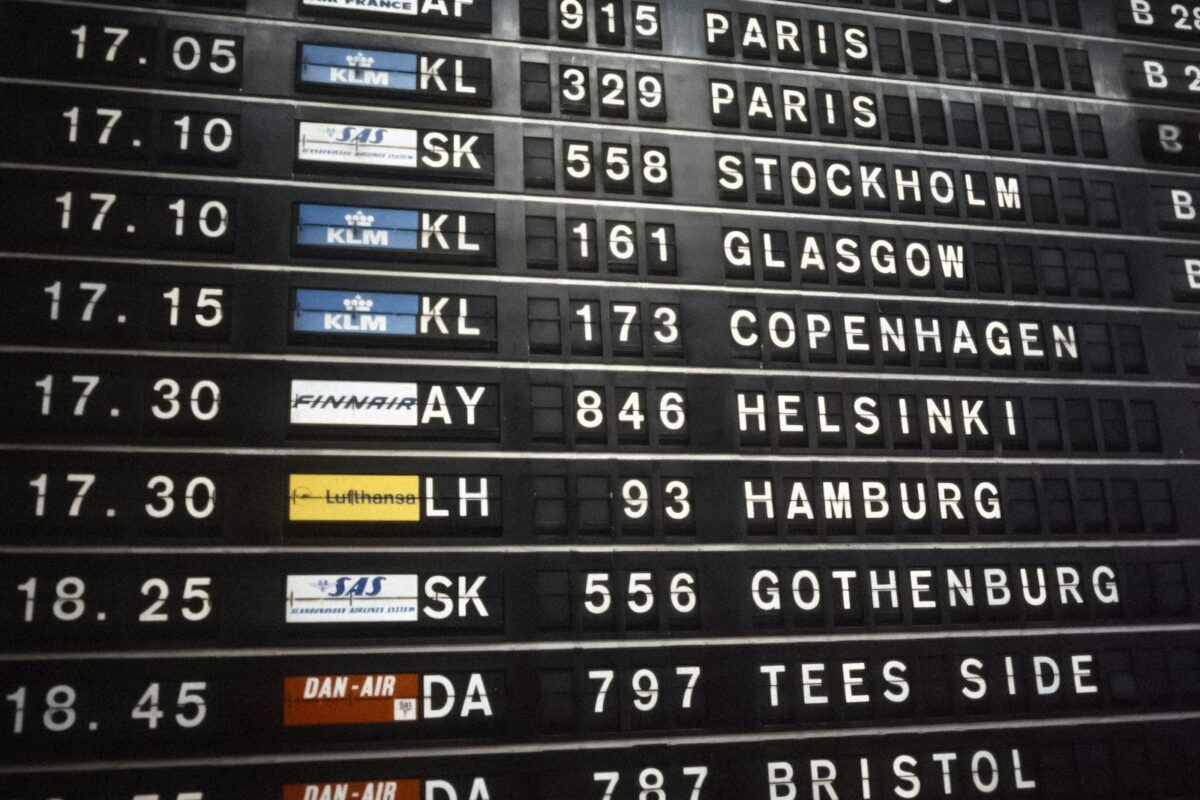
Cost to move abroad 2026 shown on an airport departures board

What the move really includes

The upfront fees you can see

Start with the obvious. Visa application fees range from modest to steep, and several countries add a health surcharge on top. The UK charges an Immigration Health Surcharge per year of your visa. The US now adds a $250 visa integrity fee at issuance. Australia and New Zealand levy application charges per applicant, so a family multiplies fast. Credential evaluations, police certificates and biometrics each carry their own small bills.

None of these is huge alone. Added together, across a couple of people, they often clear several thousand dollars before you have booked a flight.

Proof-of-funds and the cost to move abroad 2026

This is the line that surprises people most. Many visas require you to show settlement or maintenance money you are not spending, only proving. Canada sets fixed proof-of-funds amounts for Express Entry by family size. The UK asks students and many workers to hold maintenance funds for a set period. Germany expects a blocked account for job-seekers and students. You are not paying this money away, but it must sit in your account, which changes how much you actually need saved.

Treat proof-of-funds as locked capital. It shapes your timeline as much as your budget.

The hidden charges that catch people

Take Bilal, an IT specialist from Lahore moving on a skilled-worker route. He budgeted the visa fee and a flight, then met the rest: a first-month rent deposit plus agent fee, baggage and shipping, currency conversion losses, private health cover before his public coverage started, and the cost of certifying documents. His real outlay ran far past the visa line.

Build a buffer for these. A simple rule: whatever the official fees total, add a settling-in fund for one to three months of rent, transport and food in your destination city. Two short words help here. Plan generously.

Want a personalised move-cost estimate for your destination and family size? Build one with us at https://wa.link/i9l1ec.

Money checklist

  • Count visa fees, surcharges and biometrics for every applicant.
  • Set aside proof-of-funds as locked, not spendable, money.
  • Add deposits, shipping and currency losses to your budget.
  • Keep a one-to-three-month settling-in fund on top.

For destination-specific figures, see our guide to proof-of-funds across major work and study visas.

Budget questions, answered

Is proof-of-funds money I have to spend?

No. You must show you hold it, usually for a set period, but it stays yours to use after you arrive.

What is the most overlooked cost?

Settling-in money, the rent deposits, shipping and early living costs before your first local pay arrives.

Do fees rise each year?

Often, yes. Several countries index visa and health charges annually, so always check current figures before you apply.

Can I reduce the upfront burden?

Sometimes, by timing applications, choosing routes with lower surcharges, or applying as the right family configuration.

Keep reading

Share this story

  • LinkedIn: The visa fee is the smallest part of moving abroad. Here is the full 2026 cost picture.
  • Twitter: Cost to move abroad 2026: visa fees are the small line. Proof-of-funds and hidden charges are the big ones.
  • Facebook: Thinking of moving abroad? Budget for these costs before you book anything.

Count the full cost before you commit

A move planned on the visa fee alone runs out of money fast. Map every charge for your destination and family size, and build a realistic relocation budget with help at https://wa.link/i9l1ec.

Sources

Tapay copy tradingGrow your money while you plan your moveTapay auto-copies a live trading strategy to your own account — spot & futures. Start free on demo, go live when you’re ready.Start free →

Trading involves risk. Only trade what you can afford to lose.

The 2027 Chevening Window Opens Soon — Get Ahead Now

If a fully funded master’s in the United Kingdom is the dream, the clock to prepare is already ticking. The Chevening scholarship application for the 2027/28 cohort opens on 6 August 2026 and closes at 12:00 GMT on 4 November 2026 — and the people who win are almost never the ones who start writing in late October. The portal opening is not the starting line; it is the finishing straight for work you should begin now.

What to tackle first

Why early starters win the Chevening scholarship application

Chevening is fully funded — tuition, a living stipend, flights and more — for one-year master’s programmes, and it is fiercely competitive precisely because it asks for leadership and a clear plan, not just good grades. The selection rewards a coherent story: who you are, where you are going, and why the UK is the bridge between the two. That story cannot be invented in a weekend. Candidates who map their leadership examples, networking history and career vision over weeks produce essays that feel lived rather than assembled — and that difference is visible to readers screening thousands of entries.

Cracking the four essays

The application centres on four essays: leadership, networking, studying in the UK, and career plan. Each wants concrete evidence, not adjectives. Take Andrés, a Colombian public-policy professional: instead of claiming he is a leader, he described convincing three rival municipalities to share a single data system, with the messy details and the result. That specificity is what scores. Draft each essay now, leave it for a week, then cut every sentence that could belong to any other applicant. Choose UK courses that visibly serve your stated goal, because mismatched programme picks quietly undermine an otherwise strong case.

Want a second pair of eyes on your Chevening story before the portal opens? Connect with our team via https://wa.link/i9l1ec.

Your pre-portal checklist

Confirm you meet the eligibility basics: citizenship of an eligible country, the required work experience, an undergraduate degree, and a plan to return home after study. Identify three eligible UK master’s courses aligned to your career goal. Gather two referees and brief them early. Draft and redraft all four essays. Refresh your CV and start collecting the documents you will upload. Walking into 6 August with this done means you spend the open window polishing, not panicking — and you submit well before the 4 November cut-off rather than in the final-hour scramble.

Good to know

Chevening is winnable for applicants who treat the summer as preparation time rather than waiting time.

  • The cycle opens 6 August 2026 and closes 4 November 2026.
  • Four essays carry the application — leadership, networking, study, career.
  • Evidence beats adjectives in every answer.
  • Three aligned UK courses are required, so research them now.

Good to know

When exactly can I apply? The 2027/28 Chevening cycle opens on 6 August 2026 and closes at 12:00 GMT on 4 November 2026.

How many UK courses must I choose? You select three eligible one-year master’s courses, and aligning them with your career plan strengthens your case.

Do I need work experience? Yes. Chevening requires a set amount of work experience, which varies by stream, so check the current figure for your category.

Must I return home after the scholarship? Yes. A commitment to return to your home country for at least two years after the award is part of the requirements.

Related reads

Share this story

  • LinkedIn: Chevening’s 2027/28 cycle opens 6 August. Winners start now. Here is how to prepare your fully funded UK master’s application.
  • X: The Chevening portal opens 6 August. The work that wins it starts today. Your prep checklist is here.
  • Facebook: Dreaming of a fully funded master’s in the UK? Start your Chevening prep before the window opens.

Start your Chevening prep today

A fully funded year in the UK is within reach, but it rewards months of quiet preparation over a last-minute dash. Map your story, draft the four essays, and choose courses that serve your goal — then 6 August becomes a formality, not a frenzy. Begin with the resources at https://wa.link/i9l1ec.

Sources

Want Europe to Pay for Your Master’s? Start Now

A fully funded master’s in Europe is not a fantasy — it is a programme with a calendar, and the next one is coming. The Erasmus Mundus scholarship covers tuition, a monthly stipend and travel for students who study across two or more European universities. The 2027 intake is expected to open its call from around October 2026, which means the smart preparation starts now. If you want Europe to fund your degree, here is what the award covers, how to build a winning application, and how to time the cycle.

Inside this article

Graduating students celebrating fully funded European masters places won through the Erasmus Mundus scholarship

What the Erasmus Mundus scholarship actually covers

Erasmus Mundus Joint Masters are degrees delivered by a consortium of universities in different countries, so you typically study in at least two European nations over one to two years. The scholarship is generous: it generally covers tuition, a monthly living allowance, and travel and installation costs. Because the funding is tied to the joint programme rather than a single university, you apply to the master’s itself and the scholarship is awarded competitively to the strongest admitted candidates. That structure rewards applicants who fit the programme’s theme tightly, not just strong generalists.

Building an application that wins funding

Selection is competitive, so specificity wins. Your motivation letter should connect your background to the exact focus of the joint master, name the partner universities and explain why that mobility matters for your goals. Strong, relevant references and a clear academic or professional thread through your CV matter more than a long list of unrelated achievements. Take a Colombian student moving from an engineering degree toward a climate-policy master’s: the application that lands funding shows a clean line from past coursework to the programme’s mobility track and a concrete plan for what comes after. Generic letters that could apply to any course are what selection panels quietly set aside.

Dreaming of a funded master’s in Europe? Begin your shortlist at https://wa.link/i9l1ec

Timing the 2027 intake right

Most Erasmus Mundus calls open between roughly October and January for the following academic year, with the next round for an August 2027 start expected to open from around October 2026. That gives you a runway: shortlist three to four joint masters in your field now, line up transcripts and references over the summer, and draft your motivation letter early so you can tailor it per programme. Deadlines vary by consortium, so track each one individually. While you wait, it is worth comparing other funded routes — see our breakdown of studying and working in the Netherlands and post-study options via the UK Graduate Route.

Before you apply

  • Erasmus Mundus funds tuition, a monthly stipend and travel for joint masters.
  • You study across two or more European universities.
  • The 2027 cycle is expected to open from around October 2026.
  • Tightly matched, specific applications beat strong but generic ones.

Frequently asked questions

What does the Erasmus Mundus scholarship pay for? It generally covers tuition, a monthly living allowance, and travel and installation costs for the joint master.

Do I apply to the scholarship or the course? You apply to the joint master itself; the scholarship is awarded competitively to the strongest admitted candidates.

When does the 2027 intake open? Most calls open from around October 2026 for an August 2027 start, though deadlines vary by programme.

Can students from any country apply? Yes. Erasmus Mundus is open worldwide, with scholarship slots for both European and non-European candidates.

Related reads

Share this story

  • LinkedIn: Europe will fund your master’s across two countries. The Erasmus Mundus 2027 cycle opens soon — start preparing now.
  • Twitter/X: Fully funded master’s in Europe: the Erasmus Mundus 2027 intake is expected to open from October 2026.
  • Facebook: Want Europe to pay for your master’s degree? Here is how the Erasmus Mundus scholarship works and when to apply.

Turn the Erasmus dream into a plan

A funded master’s rewards early, focused preparation. Shortlist your programmes, sharpen your motivation letter, and get your application reviewed before the 2027 calls open at https://wa.link/i9l1ec

Sources

5 Money Mistakes That Sink an Australia Student Visa

Australia still wants international students — but in 2026 it wants to see more money and tighter paperwork before it says yes. The cost of proving you can support yourself has jumped, the visa fee is up, and case officers are reading files harder for genuine study intent. If you are applying for the Australia student visa subclass 500, the gap between an approval and a refusal often comes down to a few avoidable mistakes. Here is what changed and how to keep your file clean.

Skip ahead

The new money you must show for 2026

The financial bar has risen. Applicants now need to show at least 29,710 Australian dollars for annual living costs, up from 24,505, with extra amounts for dependants — roughly 10,394 dollars for a partner and 4,449 for each child. This is not just a number on a form: officers want to see that the funds are real, available and reasonably sourced. Thin, last-minute bank balances or unexplained large deposits are exactly the pattern that triggers a closer look. Build your evidence early and make sure it tells a consistent story.

Fee hikes and place caps that change the odds

The student visa application charge has risen to 2,000 Australian dollars, and the national planning level for 2026 sits at 295,000 student places — up from 270,000, but still a managed cap. More places does not mean a softer assessment; the structure of the subclass 500 is unchanged, but the emphasis on clarity, genuine intent and financial capacity is sharper. Consider an Indian student applying for a master’s: a strong file shows how the chosen course builds on previous study and career plans, with finances that match the stated budget. A course that looks unrelated to past study, with shaky funds, is where refusals cluster.

Worried your Australian student file is short on funds? Start here: https://wa.link/i9l1ec

Common slip-ups that sink a student file

Most refusals are not bad luck — they are predictable. The big ones: under-showing living costs after the increase, vague answers about why this course and this country, missing dependant funds, and a study plan that does not connect to your background. Fix them before you lodge. Confirm your funds clear the new thresholds with a buffer, write a course-choice statement that links study to your goals, and keep documents consistent across the application. If Australia is one of several options, weigh the post-study and work angles too — our reads on the UK Graduate Route and study-then-work routes in South Korea are useful comparisons.

Fast recap

  • Living-cost evidence rises to 29,710 Australian dollars, plus dependant amounts.
  • The visa application charge is now 2,000 Australian dollars.
  • The 2026 planning level is 295,000 student places — still a managed cap.
  • Genuine study intent and consistent finances decide borderline files.

Frequently asked questions

How much money do I need to show now? At least 29,710 Australian dollars for living costs, plus around 10,394 for a partner and 4,449 per child.

How much is the subclass 500 application fee? The charge has risen to 2,000 Australian dollars for 2026.

Did the visa rules themselves change? The core structure is the same, but financial thresholds, fees and the scrutiny of genuine intent have all increased.

What most often causes a refusal? Insufficient or unexplained funds and a weak link between your course choice and your study or career history.

Related reads

Share this story

  • LinkedIn: Australia just raised the money bar for student visas. If you are applying in 2026, check your funds before you lodge.
  • Twitter/X: New 2026 numbers for the Australia student visa subclass 500: higher funds, higher fee, sharper checks.
  • Facebook: Studying in Australia in 2026? The financial requirements have gone up. Here is what to prepare.

Get your Australian study plan right

A student refusal is expensive and slow to fix. Get your funds, course statement and documents reviewed before you lodge, and apply with confidence — start at https://wa.link/i9l1ec

Sources