
• Mon - Fri 9.00 - 19.00

Category Archives: Work Permits

The Netherlands Just Rewrote Its Work Permit Rules

The Netherlands has rewritten a chunk of its work permit rulebook, and the changes — in force since May 22, 2026 — cut both ways for foreign workers: longer processing windows in some cases, but real new protections in others, most notably a doubling of how long unemployed permit holders can search for a new job before losing their status.

What changed and why

The Dutch Immigration and Naturalisation Service, the IND, updated its procedures to align with revised EU Directive 2024/1233, the bloc’s updated single permit rules for non-EU workers, according to Newland Chase’s summary of the changes. The update touches several of the most common Dutch work-permit categories: paid employment, highly skilled migrants, EU Blue Card holders, researchers and work-experience permits.

Longer waits, but firmer deadlines

First-time applications for paid-employment and highly-skilled-migrant permits can now take up to 30 additional days if the IND documents its reasons for the extension, according to Erickson Immigration Group’s analysis of the directive’s implementation. Where a permit holder is changing employers, the IND now must decide within 45 days for most categories — 30 days for EU Blue Card holders — extendable by 15 days only in exceptional circumstances. Permit extensions bundled with an employer change follow a 90-day timeline. The trade-off is transparency: applicants get a defined deadline where none existed cleanly before, even if that deadline is sometimes longer than they’d like.

A safety net if the IND misses its own deadline

The most employer-friendly change may be procedural: if the IND fails to decide an employer-change application within its required window, the applicant is legally permitted to keep working for the new employer under their existing permit until it expires. That closes a gap where administrative delay could otherwise have forced a worker to stop working through no fault of their own while a decision was pending.

Six months, not three, to find new work

The change most likely to matter to workers directly is the extension of the job-search period after unemployment. Permit holders who have held a valid Dutch residence permit for at least two years now get up to six months to find new employment if they lose their job — double the previous three-month window. That same extended window also applies to victims of labor exploitation, a protection aimed at workers who may otherwise feel pressured to stay in an abusive employment situation rather than risk losing status during a short search period.

What it means for employers

Companies sponsoring Dutch work permits now have clearer planning horizons but less flexibility to push decisions through informally. An EU Blue Card transfer, for instance, has a firm 30-day clock the IND cannot exceed without documenting exceptional circumstances, which HR and immigration teams will need to build into onboarding timelines for transferring staff between roles or employers.

Part of a wider EU rollout

The Netherlands is not implementing these changes in isolation. Directive 2024/1233 updates the EU’s single permit framework across all member states, meaning other EU countries are working through similar transpositions of decision-timeline rules and job-search protections on their own schedules. Workers considering a move within the EU under a single-permit route should check the specific implementation date and terms in their destination country rather than assume the Dutch timeline applies uniformly across the bloc.

What happens next

Employers sponsoring Dutch work permits should expect to build the new 45- and 90-day timelines into hiring and transfer planning, particularly for EU Blue Card transfers where the shorter 30-day clock applies. For workers, the extended six-month job-search window is now active for anyone who already holds — or is approaching — two years of valid residence, and is worth confirming directly with the IND or an immigration adviser given how recently the rule took effect.

Who should pay closest attention

The practical impact of these changes falls hardest on two groups: highly skilled migrants and EU Blue Card holders who change employers mid-permit, who now operate under firm IND decision deadlines for the first time, and workers nearing the two-year residence mark, for whom the extended six-month job-search window can be the difference between having to leave the country and having a realistic runway to find new sponsorship. Employers should flag both groups internally so HR teams are not caught off guard by the new timelines.

More immigration coverage

Related reading: the UK’s HC 584 immigration rule changes, South Korea’s new university visa sponsorship restrictions, and Australia’s cut to working holiday visa renewals.

Netherlands work permit questions answered

When did the new Dutch work permit rules take effect?

May 22, 2026, implementing revised EU Directive 2024/1233 on single permits for non-EU workers.

How long can the IND now take to decide employer-change applications?

Up to 45 days for most categories, 30 days for EU Blue Card holders, extendable by 15 days in exceptional circumstances.

What happens if the IND misses its deadline?

The applicant is legally permitted to keep working for the new employer under their existing permit until it expires.

How long do unemployed permit holders now have to find new work?

Up to six months, if they have held a valid residence permit for at least two years — double the previous three-month allowance.

Does the extended job-search window apply to anyone else?

Yes. It also applies to victims of labor exploitation.

Sources

The $100,000 Visa Fee Isn’t Going Away for Another Year

The White House extended its $100,000 fee on new H-1B visa petitions through September 21, 2027. The H-1B visa fee extension was announced September 18, 2026. It keeps the charge in place even while two separate court challenges to its legality remain unresolved, according to Business Standard.

The fee applies to H-1B petitions for foreign workers seeking admission from outside the United States. It replaced a prior fee structure that generally ran between $2,000 and $5,000. That is a jump of roughly twenty to fifty times the old cost.

Where the legal fight over the H-1B visa fee extension stands

A federal judge in Massachusetts ruled in June 2026 that the fee was unlawful. The government appealed that decision. The First Circuit Court of Appeals denied the government’s request to pause the ruling on July 24, 2026. Separately, the US Chamber of Commerce has challenged the fee in the DC Circuit Court of Appeals. That case remains pending, per court filings tracked by CCIA.

None of this litigation has stopped the fee from taking effect. The administration’s decision to extend it does not resolve the underlying legal dispute on its own.

The effect on tech hiring so far

One number stands out. H-1B registrations filed by the largest IT outsourcing companies have fallen 92% since the original proclamation took effect in 2025. That figure comes from a metric the administration itself has cited. That drop suggests the fee has reshaped hiring patterns well beyond its headline cost.

Large outsourcing firms have historically filed a disproportionate share of H-1B petitions. Many of those petitions covered roles at client companies rather than direct employment. A fee this size changes the math for that business model. It does not necessarily change the math for a single senior hire at a smaller tech company.

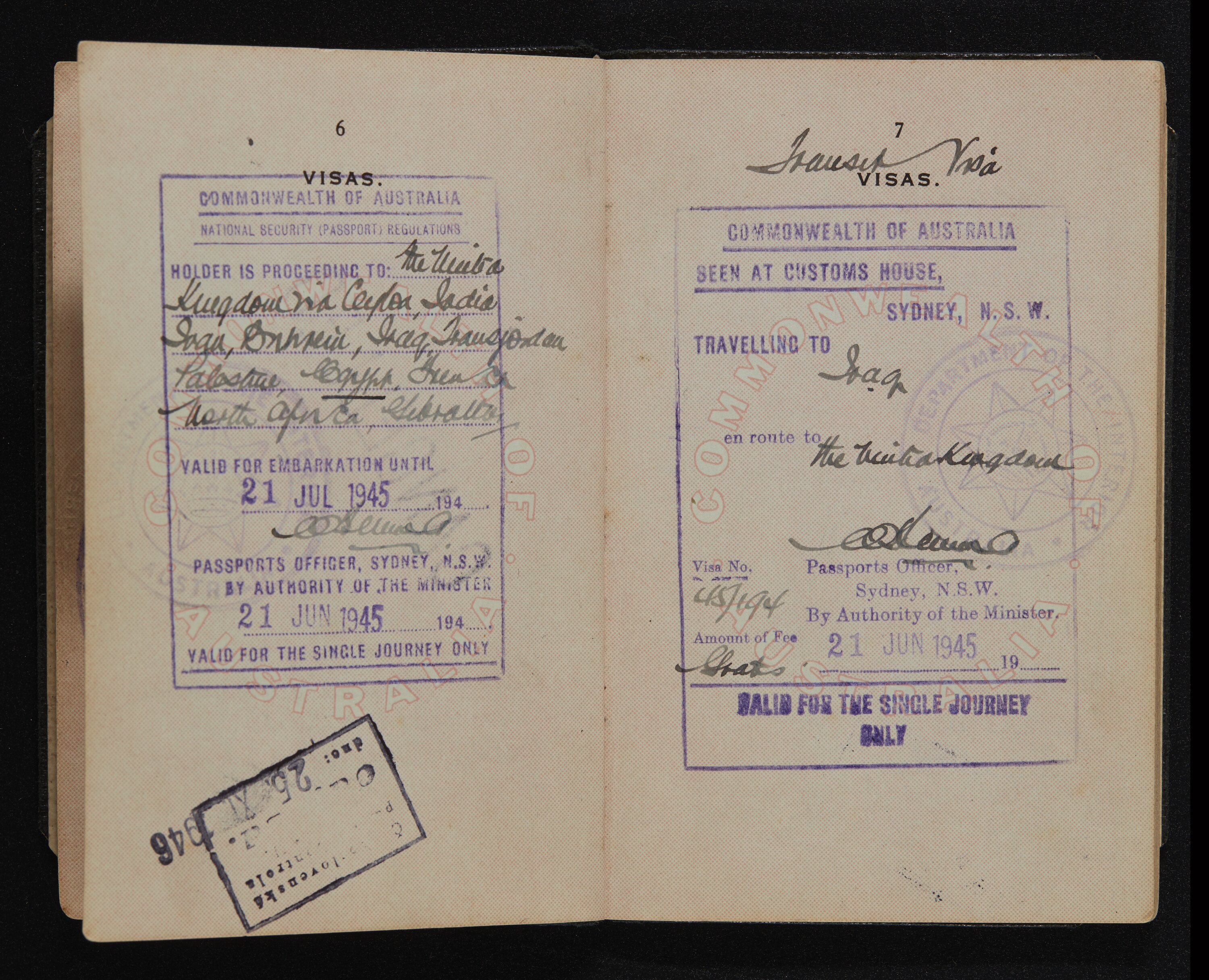
Passport pages with visa stamps, illustrating the stakes of the H-1B visa fee extension

Why the fee still matters beyond outsourcing firms

The $100,000 charge applies per petition, not per company. Any employer sponsoring a new H-1B worker from abroad faces the same cost. That includes tech companies hiring specialized engineers, researchers, and other skilled workers who are not yet inside the United States. Employers can still sponsor workers already in the US on other visa categories without triggering the fee. That has shifted some hiring toward candidates already present domestically.

What happens next in the legal process

The DC Circuit Court of Appeals has not set a firm date for ruling on the Chamber of Commerce’s challenge. Until either court rules, the fee stays in force under the September 2026 extension. A ruling against the fee in either court could force a quick change in how employers plan H-1B hiring for next year.

Your H-1B fee questions, answered

How long does the H-1B visa fee extension last?

The extension runs through September 21, 2027, according to the White House announcement made September 18, 2026.

Is the $100,000 H-1B fee legal?

That is still being decided. A federal judge in Massachusetts ruled it unlawful in June 2026. The fee remains in effect while the government’s appeal and a separate Chamber of Commerce challenge continue.

Who has to pay the H-1B visa fee?

The fee applies to H-1B petitions for workers seeking admission to the US from outside the country. It does not apply to every visa category or to workers already inside the US on other visas.

How has the fee affected tech hiring?

H-1B registrations from large IT outsourcing companies have dropped 92% since the fee first took effect in 2025. That is based on figures the administration has cited.

What was the H-1B fee before this change?

The previous fee structure generally ran between $2,000 and $5,000, far below the current $100,000 charge.

More immigration coverage on Tamara News

For more on skilled-worker visa policy, see our coverage of the H-1B layoff scrutiny order, the new USCIS Form I-864 rejections, and Korea’s university visa restrictions.

Seasonal Employers Just Ran Out of H-2B Workers for Winter

Seasonal employers hoping to bring on H-2B workers for winter are out of luck. USCIS confirmed the H-2B visa cap 2027 for the first half of the fiscal year is full. New petitions requesting start dates before April 1, 2027, will now be rejected outright.

The agency announced on September 11 that it had received enough cap-subject petitions to reach the congressionally set limit. That closed the door earlier than many seasonal employers had hoped.

Work visa paperwork tied to the H-2B visa cap 2027

What the H-2B Visa Cap 2027 Means for Employers Right Now

September 4, 2026, was the final receipt date. That covered cap-subject H-2B petitions requesting start dates before April 1, 2027. USCIS will now reject any new cap-subject petitions filed after that date for the same window. Employers who missed the cutoff have no legal path to bring on seasonal workers this winter through the standard program.

How Fast the Cap Filled This Year

The first-half allocation is capped at 33,000 workers. That is the statutory limit Congress sets each year. USCIS did not disclose exactly how far demand outstripped that number. But the early closure suggests employer demand for winter-season labor stayed strong heading into the filing period.

Who Gets Left Without Workers

The H-2B program covers non-agricultural seasonal work. Think landscaping, hospitality, seafood processing and other industries that lean on temporary foreign labor during peak seasons. Employers in winter-heavy sectors, like ski resorts and holiday hospitality operations, are typically hit hardest when the first-half cap closes early.

Small and mid-sized employers feel the squeeze hardest. Larger companies often have more flexibility. They can shift staffing plans, recruit domestically at higher wages, or absorb the cost of alternative visas. A family-run ski resort or seafood processor has far less room to adapt once its usual worker pipeline is cut off.

Not Every H-2B Worker Counts Against the Cap

Some categories of H-2B workers are exempt from the annual numerical limit altogether. Returning workers under certain past exemptions, current H-2B holders already in the US extending or changing employers, and workers in a handful of specific US territories can all fall outside the capped count, depending on the rules in effect for a given fiscal year. That distinction matters for employers trying to plan around a closed cap.

USCIS publishes updated guidance each fiscal year on which categories qualify for an exemption. Employers uncertain whether a specific hire counts against the cap are generally advised to confirm the current rules with an experienced immigration attorney before assuming a petition is automatically blocked by the closed allocation.

The Second-Half Allocation Is the Next Fight

A separate 33,000-worker allocation exists for the second half of fiscal year 2027. It can draw on any first-half numbers that go unused. Employers with second-half start dates still have a filing window ahead. This cycle’s demand suggests that allocation could fill quickly too.

Why the Program Keeps Filling Faster Each Year

The H-2B cap has closed earlier in recent cycles. Demand for seasonal labor has outpaced the fixed 66,000-worker annual limit. Congress set that limit years ago and has not raised it substantially since. Employer groups in hospitality, landscaping and seafood processing have lobbied repeatedly for a bigger cap. Those arguments have gained little traction, even as the program fills faster nearly every cycle.

Some relief has come in past years through supplemental visa allocations, announced separately from the standard cap. Nothing of that kind has been confirmed for the current fiscal year as of publication.

What Employers Can Do Before the Next Window

Employers who missed this cycle have few options. They can wait for the second-half filing period or explore other visa categories that fit their needs. Immigration attorneys recommend filing as early as the window allows in future cycles, given how consistently the H-2B cap has closed ahead of expectations.

Employers with H-2B workers from a prior season should also check whether those workers qualify for returning-worker provisions. In some years, that pathway has offered more predictability than competing for new cap numbers from scratch.

Some employers are also looking at whether their business genuinely needs a cap-subject filing at all. A handful of roles and locations qualify for cap exemptions each year. Reviewing eligibility before the next filing window opens can save a business from missing out entirely over a technicality.

Answers for Workers and Employers

What is the H-2B visa cap 2027 news, in short?

USCIS announced on September 11, 2026, that it received enough petitions to reach the congressionally set H-2B cap for the first half of fiscal year 2027.

What was the final receipt date?

September 4, 2026, for cap-subject petitions requesting employment start dates before April 1, 2027.

How many workers does the first-half allocation cover?

33,000 H-2B workers, matching the separate 33,000 allocation set for the second half of the fiscal year.

What happens to petitions filed after the cutoff?

USCIS will reject new cap-subject H-2B petitions received after September 4, 2026, that request a start date before April 1, 2027.

Can unused first-half numbers roll over?

Yes. The second-half allocation can draw on any unused first-half numbers, subject to availability.

Sources

More immigration coverage on Tamara News: USCIS will now reject your paperwork over one missed date and your green card priority date could freeze in the next 10 days.

Renewing an H-1B Just Got $4,000 Costlier, For Some Employers

A new US rule took effect on 9 September 2026 that adds thousands of dollars to certain work visa renewals. The H-1B extension fee now reaches $4,000 for covered employers, and the equivalent L-1 charge reaches $4,500. The change applies to extension petitions that previously escaped it.

The Department of Homeland Security published the final rule on 10 August 2026. It amends the regulations governing the 9-11 Response and Biometric Entry-Exit Fee.

Form I-129 petitions postmarked or filed electronically on or after 9 September must include the fee where it applies.

Who the H-1B extension fee actually hits

The charge is limited to “covered employers”. The definition has two parts and both must be true.

The employer must have 50 or more US employees. More than 50% of that workforce must hold H-1B or L-1 status.

Hand typing on a keyboard representing employers affected by the H-1B extension fee

That test excludes most companies outright. A large firm with a handful of visa holders does not meet it. A mid-sized firm built mainly on sponsored staff does.

The rule therefore concentrates on staffing and outsourcing businesses rather than on employers generally. Most H-1B and L-1 workers will not see their employer charged.

What changed on 9 September

The fee itself is not new. It already applied to petitions seeking an initial grant of status, and it still does, unchanged.

What changed is the scope. Covered employers must now pay it on all extension of status petitions.

Previously the charge was tied to whether the related fraud prevention and detection fee applied. The new rule removes that link. Extensions that keep an employee with the same employer are now captured.

That last point matters most in practice. Routine renewals for existing staff were the common case that fell outside the old wording.

What this means for workers on these visas

The fee is an employer cost. Workers do not pay it directly.

Indirect effects are the real question. Employers facing a higher renewal cost may weigh sponsorship differently at the point of extension, particularly where margins are thin.

Consider a software engineer on an H-1B at a mid-sized consultancy where most staff hold sponsored status. That employer now faces $4,000 at each extension on top of existing filing costs. The engineer’s status is unaffected, but the renewal decision carries a new number.

Nothing in the rule changes eligibility, processing times or the cap. It changes price, and only for a defined set of employers.

This sits alongside other cost changes we have covered, including the proposed six-figure H-1B fee and the weighted selection and prevailing wage proposal.

How the 50-50 test works in practice

The threshold has a specific history. Congress created the surcharge for employers whose US workforce depends heavily on H-1B and L-1 staff, and the 50-50 label comes from its two limbs.

Counting the workforce is the first step. Employers count US employees, including full-time and, depending on their policy, other categories their counsel treats as employees.

Counting visa holders is the second. More than half of that total must hold H-1B or L-1 status for the surcharge to apply.

Employers near the line need care. A company at 48% one quarter and 52% the next changes category, and the test applies at the time of filing.

Getting this wrong cuts both ways. Underpaying risks rejection of the petition. Overpaying hands money to an agency that will not volunteer it back.

Dates and filings to keep in view

The 9 September trigger is based on the postmark or electronic submission date, not on the decision date. Petitions sent before then follow the old rules.

Employers close to the 50-employee or 50% thresholds should confirm their position before filing. The test is applied to the employer, not the individual petition.

Separately, a revised public charge guidance applies to Form I-485 filings postmarked on or after 18 September 2026. Applications filed before that date fall under the 2022 policy. That is a different rule affecting a different filing.

September is also the final month of the US fiscal year, which is when employment-based categories can hit annual limits. Our summary of the October 2026 Visa Bulletin covers where those categories stand.

Keep the two filings separate in your planning. An I-129 extension and an I-485 adjustment follow different rules, different fees and different cut-off dates.

Employers running both for the same worker should date each one deliberately. A single week can move a filing from one rule set to another.

Frequently raised points on the new charge

  • How much is the fee? $4,000 for H-1B and $4,500 for L-1, payable by covered employers.
  • When did it start? The final rule took effect 9 September 2026 and applies to Form I-129 petitions filed on or after that date.
  • Who counts as a covered employer? An employer with 50 or more US employees where more than 50% hold H-1B or L-1 status.
  • Does it apply to new petitions? The fee already applied to initial grants of status and continues to apply there unchanged.
  • What exactly changed? Covered employers must now pay it on all extension petitions, including extensions with the same employer.
  • Do employees pay it? No. It is charged to the petitioning employer.

Related immigration coverage

Read our reports on the $100,265 H-1B fee proposal, the weighted H-1B selection plan and the October 2026 Visa Bulletin.

Sources

  • Federal Register — 9-11 Response and Biometric Entry-Exit Fee for H-1B and L-1 Visas. federalregister.gov
  • American Immigration Lawyers Association — DHS Final Rule Expanding 9-11 Response and Biometric Entry-Exit Fee. aila.org
  • USCIS — H-1B Specialty Occupations. uscis.gov

Singapore Opens Eight More Jobs to a Wider Hiring Pool

Singapore widened one of its main hiring routes today. From 1 September 2026 the Singapore NTS Occupation List covers eight additional occupations, drawn from the food services, social services and air transportation sectors. Two of those sectors had no place on the list before.

The Ministry of Manpower runs the Non-Traditional Sources scheme so employers in manufacturing and services can hire Work Permit holders from a wider set of countries for specific roles. Every occupation on the list is a role the ministry has decided can be filled this way, rather than through an S Pass.

Kitchen staff at work in a role added to the Singapore NTS Occupation List
Kitchen assistants and waiters join the scheme from 1 September 2026.

The eight roles joining the Singapore NTS Occupation List

The additions cluster in three areas. Food services accounts for four of them, social services for three, and air transportation for one.

  • Butchers, fishmongers and related food preparers
  • Food and drink stall assistants
  • Kitchen assistants
  • Waiters
  • Cabin attendants
  • Babysitters and infant caregivers
  • Educarers
  • Teacher aides

Social services and air transportation are new entries in their own right. Before today, a worker from a non-traditional source country had no Work Permit route into caregiving or cabin crew roles at all. That gap closes now.

Which countries the NTS route covers

The non-traditional sources are Bangladesh, Bhutan, Cambodia, India, Laos, Myanmar, the Philippines, Sri Lanka and Thailand. Bhutan, Cambodia and Laos joined the group in June 2025, which broadened the pool during a period of tight labour supply.

Consider a Filipino kitchen assistant who has spent four years in restaurant work at home. Before this change, that experience mapped onto no straightforward Singapore permit. From today it maps onto a listed occupation, provided an employer sponsors the application and meets the conditions below.

The NTS salary floor and quota employers must respect

Two conditions govern hiring on this list. Employers must pay a fixed monthly salary of at least S$2,000. They must also keep such hires within a sub-quota of 8% of their total workforce.

Neither condition is new. Both have applied to the list since it began, and the ministry has kept them steady through two rounds of expansion. What changes today is the range of jobs they cover.

The quota is the binding constraint for most small operators. A restaurant with twelve staff can hire one worker this way, not four. Larger groups have more room, which is part of why the scheme has been used most heavily by chains rather than single outlets.

One further rule catches employers out. A Work Permit holder may only perform the occupation written on the permit. Rotating a kitchen assistant onto the service floor is not a small administrative liberty; it is a compliance breach.

What the NTS Occupation List change means for workers

The honest framing is that this opens a door rather than lays out a carpet. A listed occupation is a precondition, not an offer. The application still runs through an employer, and the employer still has to have quota headroom.

Anyone considering the route should be clear-eyed about the pay floor. S$2,000 a month is a minimum, not a market rate, and Singapore is an expensive city. Work out accommodation and remittance plans against the actual offer, not the floor.

If you are comparing Singapore against other routes, our guide to the Employment Pass and the salary benchmarks that govern it covers the professional tier. Employers assessing whether a local entity makes sense should read our note on company formation for foreign founders in Singapore. If you are unsure which route fits your profile at all, start with our visa eligibility checker.

Details still to come on the NTS Occupation List

The Ministry of Manpower has said further requirements for hiring into the newly added roles will follow. Sector-specific conditions are likely, particularly for the social services occupations, where child-facing work usually attracts extra screening.

Employers should not assume the general 8% sub-quota and S$2,000 floor are the whole picture for educarers or teacher aides. Watch the ministry’s own guidance pages before committing to a hiring plan for those roles.

The broader pattern is worth noting. This is the second consecutive year the list has grown, after an expansion on 1 September 2025 that added heavy vehicle drivers, a range of manufacturing operator roles, and cooks in any restaurant. Singapore is steadily widening the base of its work permit system while keeping the professional tier tight.

Common questions about the NTS Occupation List

When does the expanded list take effect?

1 September 2026. The eight new occupations are live from that date.

Do I need an employer before I can use this route?

Yes. Work Permits in Singapore are employer-sponsored. There is no self-application pathway on this list.

What is the minimum salary?

A fixed monthly salary of at least S$2,000 for hires made under the list.

Can my employer move me to a different job once I arrive?

No. A Work Permit holder may only perform the occupation stated on the permit.

Which countries count as non-traditional sources?

Bangladesh, Bhutan, Cambodia, India, Laos, Myanmar, the Philippines, Sri Lanka and Thailand.

Is this the same as an S Pass?

No. The list creates Work Permit options for roles that are not professional, managerial, executive or technical. The S Pass sits above it and carries different criteria.

Sources

Featured image: ArtScience Museum, Marina Bay Sands, Singapore.jpg by Basile Morin, CC BY-SA 4.0.