Five Envoys Went to Khartoum. Sudan’s Generals Skipped the Room

Sudan peace talks moved to Khartoum this month for the first time since the civil war began, as a five-body coalition of international envoys — the African Union, the East African bloc IGAD, the League of Arab States, the European Union and the United Nations — held three days of meetings aimed at reviving a negotiated end to the conflict. The generals directing the fighting weren’t in the room.

Who showed up, and who didn’t

The Quintet’s mission ran from Tuesday through Thursday and marked, according to reporting from the Rio Times, the first visit to Sudan by international mediators since the war started. UN Personal Envoy Pekka Haavisto met separately with army chief General Abdel Fattah al-Burhan, Prime Minister Kamil Idris, and leaders of armed movements aligned with the military. Notably, the envoys structured the talks to exclude the warring generals from formal joint sessions, instead convening a civilian-only preparatory panel — a deliberate choice meant to build a political track that doesn’t depend on the two sides sitting across from each other just yet.

Why the talks are stuck before they start

Several Sudanese political coalitions have already rejected the Quintet’s framework outright, questioning whether negotiations can produce anything while fighting continues on the ground. The deeper obstacle, per the reporting, is that the military leadership believes it is currently winning the war — a position that gives commanders little incentive to negotiate a ceasefire that would lock in the status quo rather than a battlefield victory.

The three things envoys are actually chasing

Rather than a single grand ceasefire, mediators are working three narrower tracks: establishing a prisoner-exchange framework with the International Committee of the Red Cross, bringing the rejecting opposition coalitions back into the process, and securing sustained pressure from the so-called Quad — the United States, Saudi Arabia, Egypt and the United Arab Emirates — whose backing (or lack of it) for either side has shaped the war’s trajectory since it began.

The humanitarian backdrop

The stakes behind the diplomacy are stark. Sudan’s war has produced one of the largest displacement crises anywhere in the world, with millions forced from their homes since fighting broke out, and famine conditions have been documented in parts of the country cut off from aid access. That humanitarian toll is precisely why the Quintet chose to lead with a prisoner-exchange and Red Cross framework rather than a ceasefire demand: it is a narrower ask that both sides can plausibly agree to without appearing to concede ground militarily, and it could open a channel for expanded aid delivery even if the broader war continues.

That dynamic has played out in other prolonged civil wars, where the side holding battlefield momentum has little reason to accept a truce that locks in the status quo rather than extends its gains. Mediators are, in effect, trying to change the underlying incentives facing Sudan’s military leadership rather than simply asking both sides to stop fighting, which is a slower and far less certain path than a straightforward ceasefire negotiation.

Where the process goes from here

None of the three tracks has a firm timeline. The prisoner-exchange framework is the most achievable in the near term since it doesn’t require either side to concede territory or political standing. The opposition outreach and Quad pressure campaigns are longer plays, and both depend on developments outside Sudan’s control — including how much bandwidth Washington, Riyadh, Cairo and Abu Dhabi are willing to spend on a conflict that has already produced one of the world’s largest displacement crises. Diplomats involved in the process have not set a date for a follow-up round.

Questions readers are asking

Who are the Quintet envoys in the Sudan peace talks?

The Quintet comprises representatives from the African Union, the East African bloc IGAD, the League of Arab States, the European Union and the United Nations.

Did Sudan’s warring generals attend the Khartoum talks?

No. Envoys deliberately excluded General Abdel Fattah al-Burhan and rival military leaders from formal sessions, meeting them separately instead and convening a civilian-only preparatory panel.

Why are the Sudan peace talks struggling to gain traction?

Multiple Sudanese political coalitions have rejected the framework, and the army leadership reportedly believes it is winning militarily, reducing its incentive to negotiate.

What is the Quad’s role in the Sudan conflict?

The Quad — the US, Saudi Arabia, Egypt and the UAE — is one of three pressure points envoys are working, alongside a prisoner-exchange framework with the Red Cross and outreach to rejecting opposition groups.

When did the Khartoum peace mission take place?

The Quintet’s visit ran over three days, Tuesday through Thursday, marking the first international peace mission to Sudan since the war began.

For related coverage of UN-led diplomacy this month, see Secretary-General Guterres’ final General Assembly address and the $2.45 billion Gaza reconstruction plan that still has no start date.

Putin’s Party Just Won a Record Duma Majority — Here’s the Catch

Russia’s 2026 election results are in: Vladimir Putin’s United Russia party won a decisive victory in the September 19-21 parliamentary vote, taking 57.86% of the party-list ballot and, with it, effective control of the 450-seat State Duma for another term. What makes this result different from the last vote is where some of those ballots were cast.

How the vote broke down

United Russia’s 57.86% share translates into 225 seats from the proportional party list, according to results reported by Al Jazeera. The party is also projected to win most of the other 225 single-mandate constituency races, giving it a commanding majority in the 450-seat chamber. Behind United Russia, the Communist Party (CPRF) took 13.84%, the Liberal Democratic Party (LDPR) 8.9%, the newer New People party 7.94%, and A Just Russia 4.95% — all four comfortably clearing the 5% threshold needed for Duma seats.

Turnout came in just below 57%, a figure election analysts will be watching for signs of shifting public engagement heading into the next presidential cycle.

The annexed-territory question

The most contested element of this election wasn’t the national tally — it was where voting happened. Russia held balloting in Donetsk, Luhansk, Kherson and Zaporizhzhia, along with Crimea, treating all five as integral Russian territory. Ukraine’s government condemned the vote in those regions as illegal, and the United Nations, along with most UN member states, does not recognize Russian sovereignty over any of the five. That gap between what Moscow counted and what the rest of the world accepts as a legitimate electorate is the core reason this result draws international pushback even as it’s uncontested domestically.

A ballot with limited options

Most candidates seen as genuinely anti-war were barred from standing, which narrowed the field before voters ever reached the polls. The Berlin-based NEST think tank, cited in the Al Jazeera report, argued that ballots for the nominally opposition CPRF, LDPR and other systemic parties may function as a form of quiet protest against the Kremlin even though none of those parties meaningfully oppose Putin’s core policies. That reading suggests the real story in this election isn’t the 57.86% headline number but the roughly 35% of the vote that went to parties positioned, on paper, as alternatives.

The fallout to watch

With its Duma majority secured, United Russia faces no near-term legislative obstacles to the Kremlin’s agenda, including continued wartime spending and sanctions-related economic policy. The bigger question is external: whether Western governments respond to the annexed-territory voting with new diplomatic or sanctions measures, and whether Ukraine’s objections gain traction at the UN. Neither is likely to change the composition of the Duma, but both will shape how isolated Moscow becomes over the coming months as related sanctions legislation, including new US measures on Russian oil buyers, continues to move through other capitals.

Common questions about the vote

What percentage of the vote did United Russia win in 2026?

United Russia won 57.86% of the party-list vote in the September 19-21, 2026 State Duma election, translating into 225 of the 450 seats from the proportional list alone.

Why is the Russia 2026 election controversial internationally?

Russia held voting in the annexed Ukrainian regions of Donetsk, Luhansk, Kherson and Zaporizhzhia, plus Crimea. Ukraine calls this illegal, and the UN and most countries don’t recognize Russian control over these territories.

What was voter turnout in the 2026 Russian election?

Turnout was just below 57%, according to official results reported by Al Jazeera.

Which parties besides United Russia won Duma seats?

The Communist Party (13.84%), the Liberal Democratic Party (8.9%), New People (7.94%) and A Just Russia (4.95%) all cleared the 5% threshold for representation.

Were opposition candidates allowed to run?

Most candidates viewed as genuinely anti-war were barred from the ballot, leaving voters to choose among United Russia and several parties that are nominally independent but do not substantively oppose Kremlin policy.

Does this election change Russia’s international standing?

Not directly — but it adds to friction with Ukraine and Western governments, who reject the legitimacy of voting held in annexed territory, layering onto existing sanctions disputes such as the new US sanctions law targeting Russian oil buyers.

For more on the diplomatic fallout, see our coverage of Ukraine’s largest drone strike on a Moscow-area refinery and Secretary-General Guterres’ final UN General Assembly address, which touched on the war’s toll heading into this vote.

One Airport Fell and Tigray Lost Its Only Way In by Air

Air travel to Ethiopia’s northern Tigray region stopped on Wednesday. Ethiopian Airlines suspended
service to three cities after regional fighters seized the main airport in the regional capital. With
Tigray flights suspended, the only scheduled link to the region is gone, and travellers
are left with charter flights or nothing.

What Tigray flights suspended means for the region

Regional forces took control of Mekelle airport on the morning of 23 September 2026. The state-owned
carrier responded by cancelling flights to Mekelle, Axum and Shire "due to the current situation",
without giving detail, the Associated Press reported.

A taxi driver told the AP that fighters from the Tigray People’s Liberation Front, carrying light arms,
occupied the airport, which federal forces normally hold. A commander ordered him to leave, saying no
flights would land. The takeover appeared peaceful, with no gunfire heard.

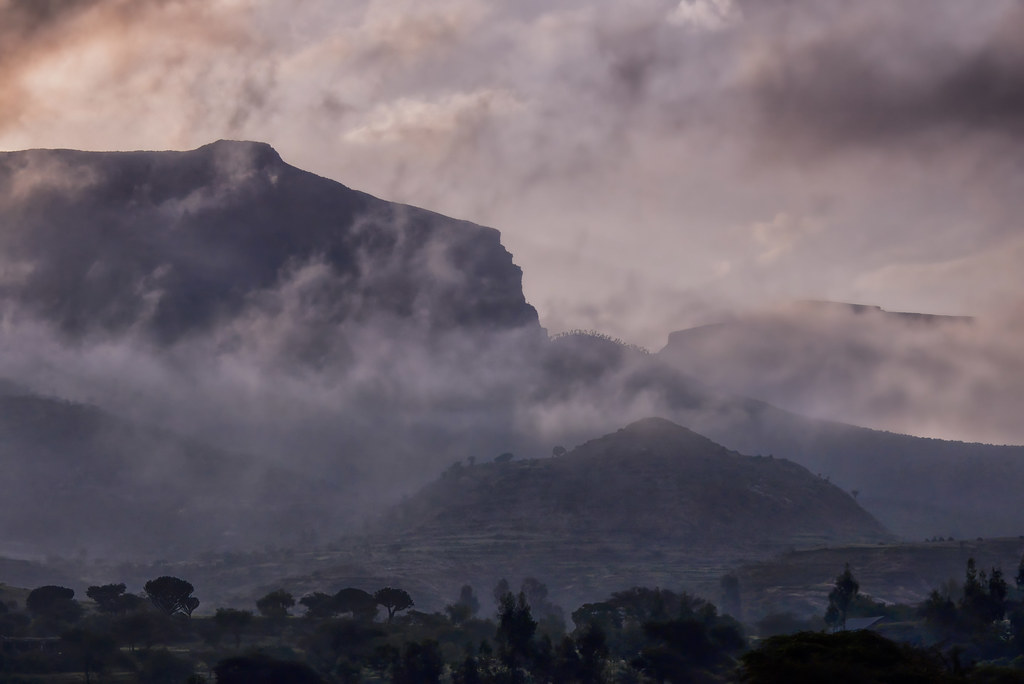
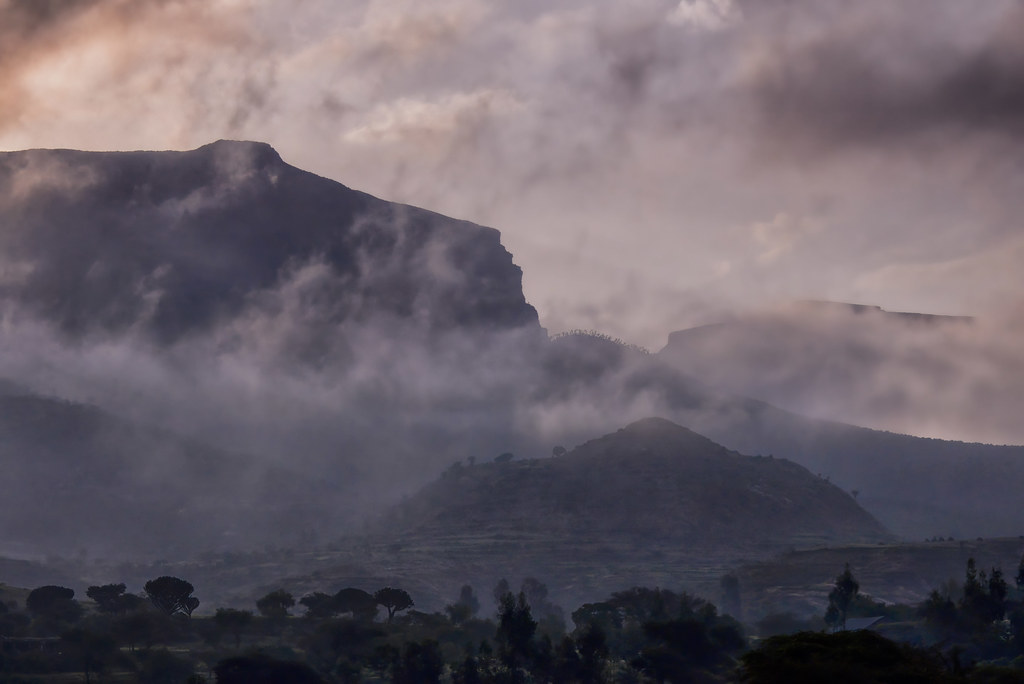
Mist over the Tigray highlands, a region cut off by air now that Tigray flights are suspended
With Ethiopian Airlines the only scheduled carrier, the suspension effectively closes Tigray by air.

The fighting behind the suspension

The airport takeover is one thread of a wider escalation. The regional government said it had ordered
its fighters into a "defensive war" after federal forces attacked Tigray on 22 September using
drones and heavy artillery. That account comes from the regional administration.

The African Union Commission chairperson, Mahmoud Ali Youssouf, called for restraint, warning the
fighting risks reversing gains from the 2022 peace agreement. The US ambassador to Ethiopia, Ervin
Massinga, called the fighting a "poor decision" and raised the prospect of sanctions. The TPLF’s
deputy called the AU and US positions "unfair", accusing them of ignoring federal airstrikes.

How Tigray reached this point

The region fought a devastating war with federal forces that ended with a November 2022 peace deal.
Since July, the regional government has reported renewed drone attacks. Three days before the airport
takeover, seven opposition groups, including the TPLF, formed an alliance aimed at removing Prime Minister
Abiy Ahmed, whose party retained power in a June election boycotted by the main opposition.

An adviser to the prime minister is Getachew Reda, a former Tigray peace negotiator. He accused the TPLF
of attacks in neighbouring Afar and Amhara. He said the airport takeovers had taken irresponsibility
"to new heights". The TPLF, in turn, says federal drones struck first. Each side blames the
other. Neutral verification on the ground is thin. One result is not disputed: no scheduled flights, and a
three-year-old peace deal under real strain.

The instability sits within a tense Horn of Africa. Our report on
the Blue Nile escalation in neighbouring Sudan
tracks a related regional strain, and our coverage of the
US immigration office in Addis Ababa
looks at how consular services in Ethiopia can be affected by unrest.

What travellers to Ethiopia should do now

If Tigray was on your itinerary, plan around the suspension.

  • Do not rely on scheduled flights to Mekelle, Axum or Shire. They are cancelled until further notice.
  • Charter is the only air option. The region remains reachable by chartered flight, at cost.
  • Check your government’s travel advisory. Active conflict zones carry insurance and safety implications.
  • Confirm rebooking rights. Passengers holding tickets on the suspended routes should contact Ethiopian Airlines about refunds or rerouting.

Disruption from conflict and weather has hit several regions this month; our report on
a renewed Iran travel warning
shows how fast advisories can change.

What to watch next

Two things will decide when flights resume: control of Mekelle airport, and whether the AU-backed
dialogue the US ambassador urged actually starts. Until federal authorities hold the airport again, a
scheduled return is unlikely. The wider risk is that the fighting spreads to neighbouring Afar and Amhara,
which the prime minister’s adviser has already accused the TPLF of entering. For now, Tigray is closed to
commercial air travel with no restart date.

Tigray travel questions, answered

Are flights to Tigray still running?

No. Ethiopian Airlines suspended flights to Mekelle, Axum and Shire on 23 September 2026 after regional forces took control of Mekelle airport. The carrier cited ‘the current situation’.

Which cities are affected?

The three suspended routes serve Mekelle, the Tigray capital, plus Axum and Shire in the same region.

Can travellers reach Tigray another way?

Only by chartered flight. Ethiopian Airlines is the sole scheduled carrier to the region, so its suspension effectively closes commercial air access.

Why did the airport close to flights?

Fighters affiliated with the Tigray People’s Liberation Front took over Mekelle airport, which is usually held by federal forces. The takeover was reported as peaceful, with no gunfire.

Is the rest of Ethiopia affected?

The suspension applies to the three Tigray routes. Ethiopian Airlines’ wider domestic and international network was not reported as affected. Travellers should still check advisories before flying.

What triggered the renewed fighting?

The regional government said it ordered a ‘defensive war’ after federal forces attacked Tigray on 22 September using drones and heavy artillery. Tensions have risen since the TPLF retook the regional administration.

Sources

  • Associated Press via Click2Houston — Ethiopian Airlines cancels flights to Tigray capital as fighters take over airport. click2houston.com
  • Bloomberg — Ethiopian Airlines Cancels Tigray Flights as Rebels Take Airport. bloomberg.com

Featured image: Tigray highlands, photo by Rod Waddington, licensed CC BY-SA.

Gaza Just Got a $2.45 Billion Rebuild Plan — and No Start Date

The US-backed Board of Peace has put a price on the first step of rebuilding Gaza. On Wednesday,
23 September 2026, its governors unveiled a six-month, $2.45 billion Gaza reconstruction plan
covering 66 projects. The blueprint arrived at a meeting in New York on the sidelines of the UN General
Assembly. It came with no start date. Almost everything in it depends on steps that have not happened yet.

What the Gaza reconstruction plan contains

The first phase targets the most urgent gaps. Its 66 projects span infrastructure, education and health,
according to the Associated Press.
They are designed to support President Donald Trump’s 20-point plan to end the Israel-Hamas war.

The board framed the first phase as a down payment, not the whole bill. "The need is immense,"
it said. It estimates that repairing Gaza’s physical damage will cost about $35.2 billion over the medium
term. It adds another $71.4 billion over the next ten years.

Those figures come from the board itself. No independent audit of Gaza’s damage accompanied them.

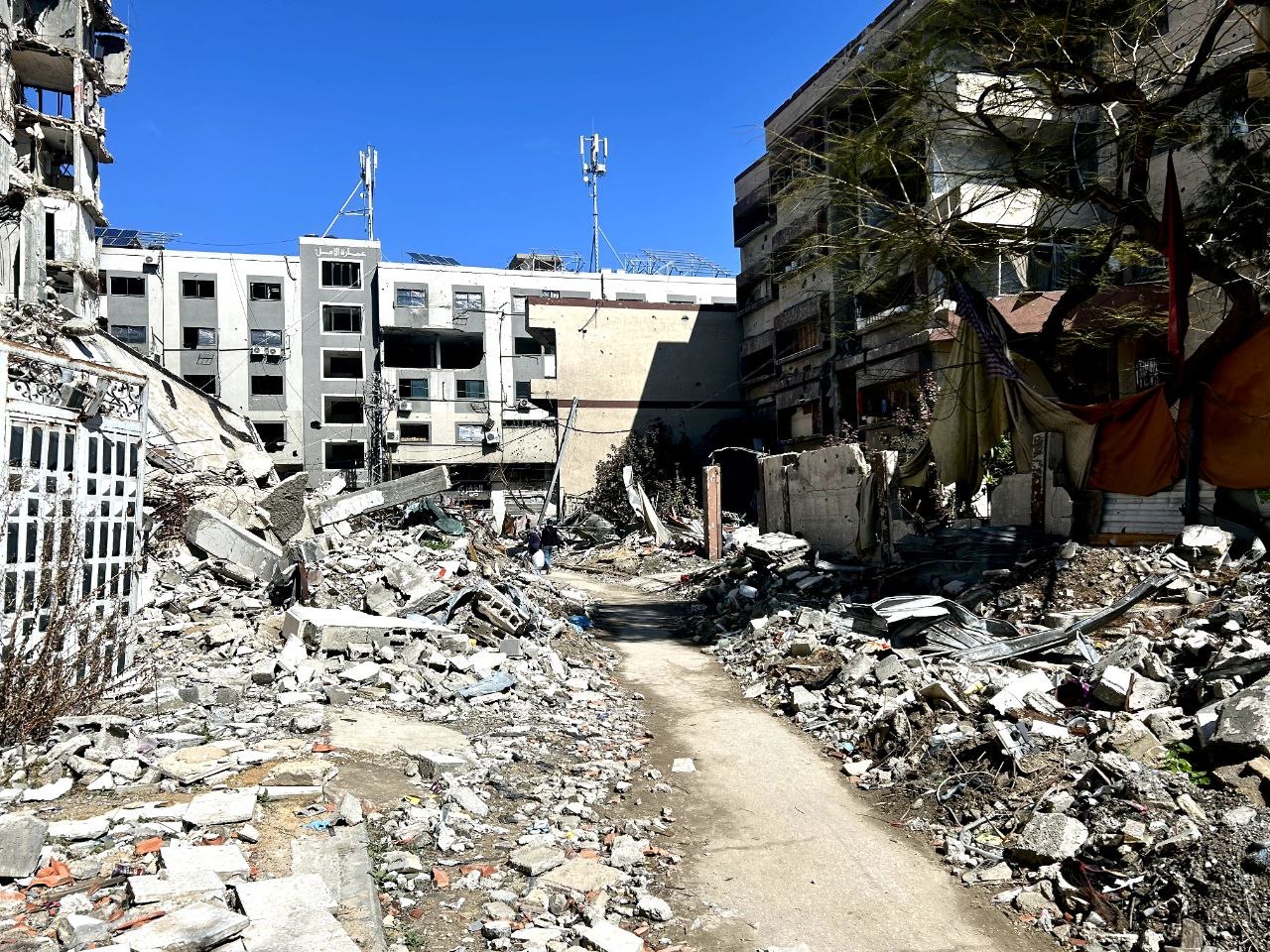
Collapsed buildings on Wehda Street, one of the sites the Gaza reconstruction plan must eventually address
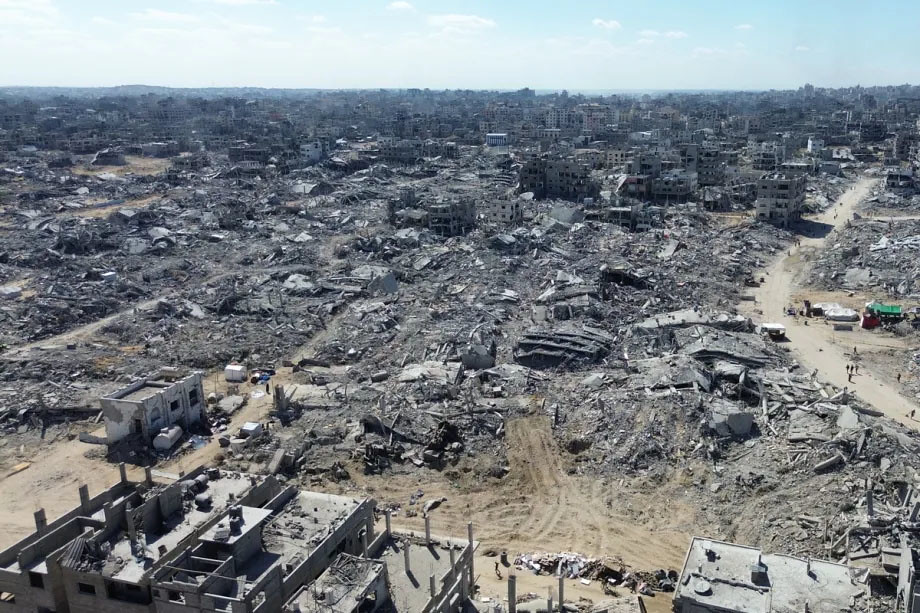
Whole streets in Gaza City remain rubble almost a year after the ceasefire began.

Why no start date came with the money

The plan hinges on disarmament. Nikolay Mladenov, the board’s high representative, has said progress
depends largely on Hamas giving up its weapons. The group has so far refused.

In July, Hamas and other Palestinian factions agreed a document setting out a disarmament process,
Al Jazeera reported.
Implementation has not followed. Mladenov was blunt about timing. "We are not bound by a calendar,"
he said. "We want to make sure that this works."

Mladenov has also pressed Israel to scale back its military operation. That pressure matters, because the
ceasefire framework rests on both sides moving at once.

How far Gaza is from reconstruction today

The ceasefire took effect on 10 October. It was meant to open the way for Israeli withdrawals, an
international peacekeeping force and a new apolitical Palestinian administration. Most of that is still
waiting.

  • The Israeli military has expanded its control and now occupies about 60% of the territory, the AP reports.
  • The international force and the new government have not entered Gaza.
  • Reconstruction has not begun.
  • Most Palestinians still live in tent camps or in the ruins of former homes.

Violence continues too. On the day the plan was unveiled, Israeli strikes killed seven Palestinians
across the enclave, according to Al Jazeera, citing local medics. Israel said one strike killed a senior
Hamas finance official. That claim comes from the Israeli prime minister’s office alone.

The scale of what the money must cover is hard to overstate. The board itself calls the need immense.
Its own estimate runs to $35.2 billion for medium-term repairs and $71.4 billion over a decade. Against
those figures, the $2.45 billion first phase is a start, not a solution. And even the first phase waits
on a political breakthrough that has not come.

The diplomatic pressure around the Gaza reconstruction plan

The plan landed in a week of sharp criticism of Israel at the General Assembly. Leaders of the United
Kingdom, France and Canada said Israeli settlement policy in the West Bank blocks a two-state solution.
UN Secretary-General António Guterres said the UN must be allowed to perform its mandates in Gaza. Our
report on Guterres’s warnings at this year’s Assembly
covers that speech in more detail.

Turkish President Recep Tayyip Erdogan, whose country signed the ceasefire, said rebuilding must start
"as soon as possible". Earlier doubts about the whole framework are set out in our analysis of
criticism of the Gaza ceasefire plan.

Three tests before any rebuilding starts

The board now has to answer harder questions than cost. Watch for three signals.

  1. A disarmament timetable. Without one, donors have little reason to release funds.
  2. Deployment of the stabilisation force. Uganda has approved sending troops. No force has yet crossed into Gaza.
  3. Building materials at the crossings. Cement, steel and machinery must enter at scale before any of the 66 projects can begin.

Regional security adds another layer of risk. Recent missile fire toward Saudi Arabia, covered in our report on the
Riyadh missile attack, shows how quickly
the wider Middle East picture can shift. For now, the $2.45 billion sits on paper.

Questions readers are asking

How much does the Gaza reconstruction plan cost?

The first phase costs about $2.45 billion and runs for six months. It covers 66 projects in infrastructure, education and health. The Board of Peace puts full physical reconstruction far higher: roughly $35.2 billion over the medium term and another $71.4 billion over ten years.

When will reconstruction start?

No start date has been set. The board’s high representative, Nikolay Mladenov, said the plan depends on Hamas disarming, and that the board is not bound by a calendar.

Who runs the Board of Peace?

The Board of Peace is the US-backed body created under President Donald Trump’s 20-point plan to end the Israel-Hamas war. Nikolay Mladenov serves as its high representative.

Has the ceasefire held?

The ceasefire that took effect on 10 October halted the heaviest fighting. Violence has not stopped. Al Jazeera reported that Israeli attacks killed seven Palestinians on the day the plan was unveiled.

Who controls Gaza on the ground?

According to the Associated Press, the Israeli military now occupies about 60% of the territory. The planned international force and the new Palestinian technocratic government have not entered Gaza.

What would unlock the money?

Three things sit on the critical path: Hamas disarmament, deployment of the international stabilisation force, and steady entry of building materials. None is in place yet.

Sources

  • Associated Press via PBS News — Trump’s Board of Peace proposes $2.45 billion blueprint to begin Gaza reconstruction. pbs.org
  • Al Jazeera — Board of Peace plans $2.4bn Gaza reconstruction as Israel kills seven. aljazeera.com

Images: featured photo by Felton Davis (public domain); in-article photo by Hla.bashbash, licensed CC BY.

Washington Just Renewed Its ‘Leave Now’ Warning for Iran — Here’s Why

The US State Department has renewed its starkest possible warning on Iran, telling Americans not to travel there “for any reason” and urging anyone already in the country to leave immediately. The Iran travel warning renewed keeps Iran at Level 4, the department’s highest advisory category, and arrives as Houthi attacks on Saudi Arabia add a fresh flashpoint to an already tense regional security picture.

What the Iran travel warning renewed covers

The advisory language is unambiguous: “Do not travel to Iran for any reason. U.S. citizens should leave Iran now.” That warning sits alongside a wider set of regional alerts issued around September 19, 2026, when at least eleven US diplomatic posts, including those in Bahrain, Iraq, Israel, Jordan, Kuwait, Lebanon, Oman, Qatar, Saudi Arabia and the United Arab Emirates, issued near-identical language about possible disruptions tied to the same underlying tensions. The coordinated timing of so many posts issuing nearly identical wording within hours of each other is itself unusual and underscores how closely Washington is now tracking the regional security picture.

The Houthi-Saudi flashpoint behind the timing

Iranian-backed Houthi forces have escalated hostilities against Saudi Arabia, including strikes and attempted strikes that have unsettled a region already on edge. That escalation is the immediate trigger for the renewed warning, layered on top of longer-running tension between Washington and Tehran that has kept Iran at the highest advisory level for years. Officials describe the current environment as one where the military conflict “has the potential to escalate rapidly,” language that shapes how seriously the accompanying regional alerts should be read.

What travelers across the region should expect

Beyond Iran itself, the State Department is warning Americans to prepare for sudden changes to travel across the wider Middle East, including flight cancellations, airspace closures and other disruptions that could arrive with little notice. Americans outside the region have also been told to seriously reconsider travel to and through the Middle East while the situation remains unsettled, a broader caution than the country-specific advisories typically carry.

Iran travel warning renewed

What to watch in the days ahead

Airlines operating routes through Gulf airspace are the most immediate indicator to watch, since a further escalation in Houthi-Saudi hostilities could force rerouting or grounded flights with little warning. The State Department has not set a timeline for when the elevated regional alerts might ease, and officials have signaled the advisories will remain in place as long as the underlying security picture stays volatile.

How the region’s aviation map is already shifting

Several carriers have already begun adjusting flight paths to avoid airspace closest to the Houthi-Saudi flashpoint, adding flight time and fuel costs on routes that previously crossed the region directly. Airlines have historically responded to this kind of advisory by building in contingency routing rather than canceling service outright, a pattern seen during earlier phases of regional tension, though officials caution that a sharp escalation could force more drastic schedule changes with little advance notice.

How this warning compares with earlier Iran advisories

Iran has sat at Level 4 for years, so the renewed language itself is not a new designation, but the near-simultaneous alerts across eleven other diplomatic posts mark a broader regional escalation than typical routine advisory updates. Previous Iran-specific warnings have not usually been accompanied by matching alerts from posts as far apart as Lebanon and the UAE within the same 48-hour window, which is part of why regional security analysts are treating this round of advisories as more significant than a routine renewal.

What travelers with existing Middle East plans should do

Travelers with upcoming trips to any of the eleven named countries are advised to register with the State Department’s travel program, monitor airline notifications directly rather than relying solely on news coverage, and build flexibility into itineraries given the explicit warning about sudden flight cancellations and airspace closures. Travel insurance policies purchased before an advisory is issued may offer different coverage than policies bought afterward, a distinction travel agents have been fielding more questions about since the alerts went out.

Frequently Asked Questions

What did the renewed Iran travel warning say?

The US State Department’s alert stated Americans should not travel to Iran for any reason and that citizens already in the country should leave immediately, keeping Iran at Level 4, its highest advisory category.

Why was the warning renewed now?

Houthi attacks on Saudi Arabia have added a new flashpoint to an already volatile regional security environment, raising the risk of rapid escalation across the wider Middle East.

Which other countries were included in related warnings?

Around September 19, 2026, at least eleven US diplomatic posts, including those in Bahrain, Iraq, Israel, Jordan, Kuwait, Lebanon, Oman, Qatar, Saudi Arabia and the UAE, issued near-identical warnings about possible travel disruptions.

What kind of disruptions is the State Department warning about?

The advisories flag the risk of sudden flight cancellations, airspace closures and limited consular support if the security situation deteriorates further.

Does the warning apply to Americans outside the Middle East?

The State Department has also urged Americans outside the region to seriously reconsider travel to and through the Middle East while tensions remain elevated.

Related coverage on Tamara News

For more context, see our reporting on Iran ceasefire diplomatic progress, Oil prices iran war fears and Cambodia thailand border advisory.

Sources