Flying Without a Real ID Now Costs You $45 and 30 Minutes

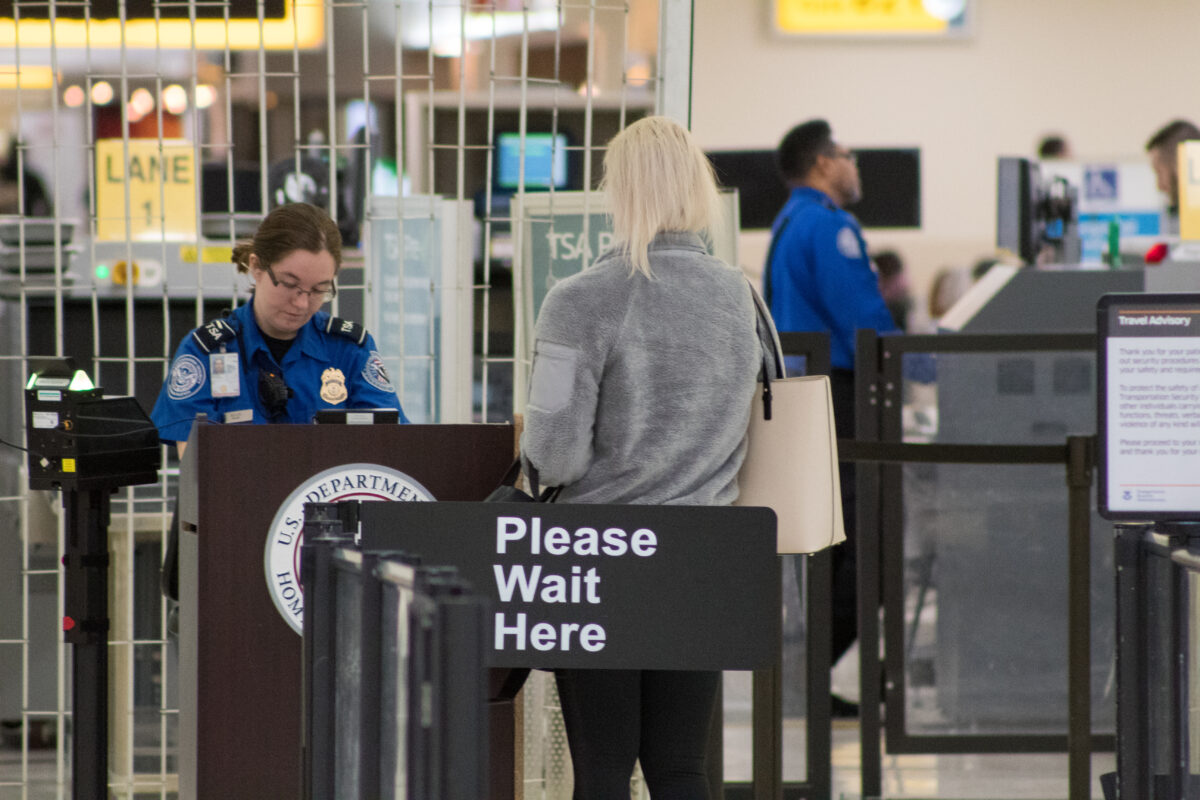
Show up at a US airport security checkpoint today without a compliant ID, and the TSA Real ID fee will cost you $45. On top of that, a screening process can eat 30 minutes or more of your layover buffer.

The fee applies through TSA ConfirmID. That is the biometric and biographic verification system now used to screen travelers who lack REAL ID-compliant identification. It is the latest step in a rollout that took nearly two decades to reach full enforcement.

Passport and travel documents affected by the TSA Real ID fee

How the TSA Real ID Fee Actually Works at the Checkpoint

Travelers without a compliant ID must pay the $45 fee. They must also submit to identification checks through TSA ConfirmID before they can fly. Screening scope varies by airport. TSA has warned travelers to expect delays of 30 minutes or more versus standard processing.

Why It Took This Long to Enforce

TSA finally began enforcing the REAL ID Act on May 7, 2025. That came after multiple deadline extensions stretching back years. The fee and full ConfirmID screening only became mandatory on February 1, 2026. That gave travelers a further window to get compliant documents first.

The original REAL ID Act passed nearly two decades earlier. Repeated delays meant most travelers grew accustomed to flying with almost any state-issued ID. Its formal compliance status rarely mattered in practice. That long grace period is part of why the fee’s arrival still caught some travelers off guard, despite years of advance warning.

The 94% Who Won’t Pay a Thing

TSA data shows 94% of passengers already arrive for flights carrying a REAL ID or another acceptable form of identification. That means the fee and extended screening affect a relatively small share of travelers. For that minority, though, the combination of cost and delay is enough to disrupt a tight connection.

What Documents Actually Count as Compliant

A REAL ID-compliant license or state ID card is marked with a star in the upper corner. A standard US passport or passport card also satisfies the requirement on its own. TSA’s accepted list additionally includes military ID, permanent resident cards and certain federally issued trusted-traveler cards, among a handful of other options.

Travelers sometimes assume any government-issued photo ID will work. That assumption is what catches people out at the checkpoint. A standard, non-compliant driver’s license without the star marking will trigger the fee, even though it remains valid for driving.

How Screening Time Varies by Airport

TSA has not published a single fixed screening time that applies everywhere. Officials say ConfirmID wait times depend on checkpoint staffing and how many non-compliant travelers arrive at a given hour. A busier hub airport at peak travel times is likely to see longer queues for ConfirmID screening than a quiet regional airport, simply because more checkpoint lanes are already under pressure.

How to Avoid the Fee Before Your Next Flight

Travelers can sidestep both the fee and the ConfirmID screening. Carry a REAL ID-compliant driver’s license or state ID. A valid US passport works too, as does another document already on TSA’s accepted list. State motor vehicle agencies have processed REAL ID applications for years. Most travelers can get one without a long wait.

How This Fits the Broader Travel Documentation Push

The REAL ID rollout is one piece of a wider tightening of identity verification across US travel this year. Privacy advocates have raised concerns about the growing footprint of biometric data collection built into programs like ConfirmID. TSA maintains that the system speeds up screening for the vast majority of compliant travelers.

For now, the fee and screening apply only to domestic flyers without compliant ID. International travelers navigating passport requirements remain largely unaffected. That could change if the program expands, though TSA has not signaled plans to do so.

What to Do Before You Book Your Next Flight

Anyone planning domestic travel who is unsure whether their ID is compliant should check with their state’s motor vehicle department before heading to the airport. Enforcement is now fully in effect, with no further grace period expected. The $45 fee and added screening time are here to stay for noncompliant travelers.

Travelers with a tight connection face the most risk, since a 30-minute delay at security can mean missing a flight. Checking ID compliance days ahead of travel, rather than at the airport itself, remains the simplest way to avoid the disruption entirely.

Traveler Questions on the New Fee

What is the TSA Real ID fee?

A $45 charge for domestic flyers who arrive at security without a REAL ID-compliant identification document.

What happens besides paying the fee?

Travelers must also complete TSA ConfirmID screening, a biometric or biographic verification process that can add 30 minutes or more to checkpoint time.

When did enforcement begin?

TSA began enforcing the REAL ID Act on May 7, 2025, with the ConfirmID fee and screening process taking full effect February 1, 2026.

How many travelers are actually affected?

TSA says 94% of passengers already arrive with a REAL ID or another acceptable form of identification.

How can I avoid the fee?

Obtain a REAL ID-compliant driver’s license or state ID, a valid US passport, or another TSA-accepted document before your next flight.

Sources

Related reading on Tamara News: 868 delays in a day: what’s fueling the US flight delays surge and the US flight ban over the Ebola outbreak.

Trump Is About to Sit Down With the Woman Who Replaced Maduro

The Trump Delcy Rodriguez meeting set for this week in New York marks a striking moment. It is the first sit-down between Washington and Caracas at this level in years. It follows a US military operation that removed Nicolas Maduro from power earlier this year.

The White House announced the meeting on September 18. The two leaders will meet the week of September 21. The timing coincides with UN General Assembly activities already bringing world leaders to the city.

United Nations flags in New York ahead of the Trump Delcy Rodriguez meeting

How the Trump Delcy Rodriguez Meeting Came Together

Rodriguez became Venezuela’s acting president after the US operation removed Maduro from power earlier in 2026. She has since positioned herself as a pragmatic counterpart to Washington. That marks a sharp shift. Maduro spent years in open hostility toward US administrations.

Neither government has detailed a formal agenda for the New York meeting. Diplomats briefed on the planning describe it as an early test. Can the two countries build a working relationship after decades of tension? That question looms over the whole encounter.

The Oil Deal Driving the Diplomacy

Last month, the two countries announced an agreement. It gives the United States a stake in Venezuela’s vast oil reserves. Rodriguez has publicly described the deal as a step toward economic recovery. She says it would help modernize Venezuela’s aging oil industry. That industry suffered years of underinvestment and US sanctions.

Venezuela holds some of the world’s largest proven oil reserves. But years of sanctions and mismanagement badly damaged its production capacity. Analysts say a US stake could unlock investment the sector has lacked for years. The deal’s exact terms have not been fully disclosed publicly, though.

What Changed When Maduro Left Power

Maduro’s removal earlier this year followed a US military operation. That operation also detained his wife, Cilia Flores. Both now face drug trafficking charges in the United States. The operation ended more than a decade of Maduro rule. That rule was marked by economic collapse, mass emigration and repeated standoffs with Washington.

Rodriguez has moved quickly to distance her government’s posture from that era. She has called for opening Venezuela’s oil industry to foreign investment. She has also called for warmer ties with the US, according to her public statements since taking charge.

Why This Meeting Matters Beyond Venezuela

A warming US-Venezuela relationship would ripple across the region. Millions of Venezuelan migrants have left the country over the past decade. That exodus reshaped migration patterns across Latin America and the Caribbean. A more stable Venezuela could eventually slow that outflow. Few analysts expect a quick reversal, though.

The meeting also lands amid broader US engagement in the region this year. That includes talks with opposition figures like Maria Corina Machado. Regional governments are watching closely. They want to see how Washington balances those competing relationships going forward.

The Migration Question Hanging Over the Talks

Nearly 7.9 million Venezuelans have left the country in search of protection and better opportunities, according to the UN refugee agency. Most, more than 6.9 million, remain in other Latin American and Caribbean countries. Any sustained economic recovery inside Venezuela would be watched closely by the neighboring governments still absorbing that outflow.

Colombia hosts the largest share of Venezuelan migrants, with roughly 2.8 million people. Officials in the region have said publicly that a more stable Venezuelan economy is central to any long-term solution. A short meeting in New York will not resolve that on its own, but it is being read as an early signal of where the relationship could head.

What to Watch After the Meeting

Neither side has confirmed whether the meeting will produce a formal joint statement. Analysts say the more telling signal will be whether follow-up talks get scheduled quickly. The alternative is that this week’s meeting turns out to be largely symbolic.

For now, the mere fact of the meeting represents a significant break. It ends years of near-total diplomatic silence between the two governments. What follows in the coming weeks will show whether that break becomes something more lasting.

Reaction in Washington will also be worth watching once the meeting concludes. Any public statements from lawmakers afterward could shape how quickly, and how publicly, further talks between the two governments move forward.

Quick Answers on the Trump-Rodriguez Meeting

When is the Trump Delcy Rodriguez meeting happening?

The White House announced on September 18 that the meeting would take place in New York the week of September 21, alongside UN General Assembly activities.

Who is Delcy Rodriguez?

Venezuela’s acting president, who took charge after a US military operation earlier in 2026 removed former president Nicolas Maduro from power.

What deal are they expected to discuss?

An agreement announced last month giving the United States a stake in Venezuela’s oil reserves.

Has Trump met a Venezuelan leader like this before?

No. This is described as the first meeting between the two governments at this level since the operation that removed Maduro.

What has Rodriguez said about the oil deal?

She has called it a step toward economic recovery that would modernize Venezuela’s oil industry, according to her public remarks.

Sources

Related reading on Tamara News: Trump says the Iran war could be almost over and the deal Trump says he now has on Greenland.

Albertans Vote Next Month on Whether to Start Leaving Canada

Albertans go to the polls on October 19 to answer a question few Canadian provinces have ever put to voters. Should Alberta begin the legal steps that could eventually lead to leaving Canada? The Alberta independence referendum vote is one of ten questions on that day’s ballot. It is the one drawing national attention.

The question is narrower than “should Alberta separate.” It asks whether the provincial government should start the legal process, required under the Canadian Constitution, to hold a further binding referendum on separation. A Yes vote opens a door. It does not walk Alberta through it.

Alberta prairie landscape ahead of the Alberta independence referendum vote

What the Alberta Independence Referendum Vote Actually Asks

Premier Danielle Smith announced the question in May 2026. Supporters of staying branded it “Alberta Forever Canada.” It joined nine other questions already scheduled for the October vote. The referendum’s own text is clear: even a Leave result would not force the government to pursue separation outright. It would only open the door to a subsequent, binding referendum.

That two-step structure matters. Voters casting a Yes ballot are not voting Alberta out of Canada. They are voting to let a legal process begin, one that could eventually lead there.

How the Vote Got Here

Alberta has flirted with separatist sentiment for decades. The grievances are familiar: federal energy policy, equalization payments, pipeline approvals. Those tensions sharpened again through 2025 and 2026 as disputes over resource royalties resurfaced. Smith’s government folded the independence question into the broader referendum package instead of holding a standalone vote. Critics say that choice was designed to normalize the idea without forcing a single up-or-down moment on secession.

Supporters counter that bundling lets voters weigh in on several provincial issues at once, cutting the cost of a standalone vote. Opponents say the bundling buries a constitutionally significant question inside routine ballot business.

What the Polling Says About Alberta’s Mood

Public opinion has not swung toward Leave. In mid-August 2026, close to two-thirds of Albertans told pollsters they would vote to remain part of Canada. Under a third favored starting the separation process. That gap has held steady through the campaign. It suggests the vote is more likely to produce a symbolic rebuke of Ottawa than a real mandate for secession.

A Yes Vote Would Not Mean Alberta Leaves Canada

Even backers of the Leave option admit the practical hurdles ahead. Actual separation would require a second, binding referendum. It would need negotiations with the federal government. It would raise constitutional questions never tested at this scale in Canada. Legal scholars compare the path to Quebec’s earlier sovereignty referendums, both of which failed to produce separation.

Why This Matters Beyond Alberta

Other resource-rich provinces are watching closely. Saskatchewan politicians have floated similar grievances over federal energy and equalization policy. A strong Yes showing in Alberta, even on a symbolic question, could embolden similar pushes elsewhere. National unity researchers read the vote less as a genuine secession threat and more as pressure tactics aimed at Ottawa.

Federal officials have mostly avoided commenting on the referendum directly. Some Alberta politicians cite that silence as proof Ottawa does not take the threat seriously.

The Road From Referendum to Anything Binding

If Yes wins on October 19, Alberta’s government would begin the constitutional process for a further referendum, not declare independence. Ottawa has given no sign it would treat a Yes result as a trigger for talks. No timeline exists for a second vote. Most constitutional lawyers expect any binding referendum, if it happens at all, to be years away.

That long runway is part of why some analysts read the vote as symbolic rather than procedural. A strong Leave showing would hand Smith a stronger hand with Ottawa. A strong Remain showing would let federal officials argue the separatist movement lacks real public support.

What Turnout Could Signal

Turnout is one number analysts are watching almost as closely as the result. A low turnout on the independence question, even with a Leave majority, would let Ottawa and Remain supporters dismiss the result as unrepresentative. A high turnout in either direction would carry more weight in the political arguments likely to follow October 19, whichever side wins.

Provincial election officials have not released turnout projections ahead of the vote. Past Alberta referendums and provincial elections have shown turnout can swing sharply, depending on how contentious the ballot questions are seen to be.

Reader Questions on the Alberta Vote

When is the Alberta independence referendum vote?

October 19, 2026, alongside nine other referendum questions on the same ballot.

Does a Yes vote mean Alberta separates from Canada?

No. A Yes vote would only direct the provincial government to begin the legal process toward a future, binding referendum on separation.

Is the Alberta government bound to act on the result?

No. The government is not bound to abide by whichever option wins the most votes.

What do polls show?

In mid-August 2026, close to two-thirds of Albertans said they would vote to remain in Canada, against under a third who favored starting the separation process.

Who is Alberta’s premier?

Danielle Smith, who added the referendum question in May 2026 as part of a wider package of ten questions.

Sources

See also Tamara News coverage of the Global State of Democracy report and Trump’s Greenland deal with Denmark for more on this year’s territorial politics.

Ukraine Just Launched Its Biggest Drone Attack Ever — On Moscow

The Ukraine drone attack Moscow forces launched over the weekend was the largest single wave of drones Kyiv has sent at the Russian capital. It damaged one of the country’s biggest oil refineries. It killed at least three people.

Russia’s Ministry of Defense said its air defenses shot down more than 1,900 drones. They also downed eight guided aerial bombs, eight cruise missiles and four rockets overnight. The scale stood out, even in a war with near-nightly long-range strikes.

Fire and smoke rise from the Moscow oil refinery hit in the Ukraine drone attack Moscow

How Big the Ukraine Drone Attack Moscow Really Was

Ukraine’s General Staff named the main target as the Gazpromneft-Moscow Oil Refinery. It sits in the capital’s Kapotnya district. The facility ranks among Russia’s largest refineries by processing volume. Drones and debris also struck a residential building nearby, officials said.

Russian state media broadcast footage of fires burning through the night. Some Moscow-area airports faced temporary flight disruption as air defenses engaged the drones. That pattern has repeated through 2026 as both sides expand their long-range strike campaigns.

Casualties and Damage on the Ground

Regional officials confirmed at least three deaths linked to the strikes. Authorities have not released a full damage assessment for the refinery. Russian energy analysts say repeated strikes on refining capacity this year have already strained domestic fuel supply in several regions.

Ukraine has not detailed civilian casualties from the attack. Kyiv’s public statements instead focus on the strike’s military and economic significance.

The barrage’s scale also stands out against the war’s broader arc. Both militaries have steadily expanded their drone fleets over more than four years of full-scale fighting. Drones went from a niche weapon to the dominant feature of the war’s long-range campaigns. A single-night wave of 1,900 drones would have been unthinkable in the war’s early years, when strikes numbered in the dozens.

Why the Timing Looks Deliberate

The strike landed on the final day of Russia’s parliamentary elections. Voting included, for the first time, ballots cast in Ukrainian territory Moscow has illegally annexed. Moscow Mayor Sergei Sobyanin said the attack “was clearly planned with the aim of disrupting the elections.”

Ukrainian officials have not directly addressed that claim. They have long argued that refineries, not polling stations, are the real targets. Any overlap with the election calendar, they say, reflects operational timing rather than an attempt to interfere with the vote.

How Russia and Ukraine Are Each Framing It

Russian officials cast the strike as an attack on civilians and infrastructure, timed to embarrass the Kremlin during a national vote. Ukrainian officials frame it differently. They call it a legitimate strike on a facility that fuels Russian military logistics. Kyiv has hit dozens of refineries and depots since 2024.

Neither account has been independently verified by outside investigators as of publication.

The Broader Pattern of 2026’s Refinery War

This strike did not happen in isolation. Ukraine has spent much of 2026 targeting Russian refining capacity systematically. The goal: squeeze the fuel supply that keeps Russian military vehicles and aircraft running. Energy analysts say the cumulative effect has been real, even though any single strike rarely knocks a facility offline for long.

Russia has leaned harder on strikes against Ukraine’s power grid and gas network as winter approaches. That tit-for-tat dynamic has defined the war’s energy front since 2024. Each side appears to be betting that degrading the other’s infrastructure matters more than front-line gains alone. That calculation has held through multiple failed ceasefire attempts this year.

Western officials monitoring the war call the mutual infrastructure campaign a war of attrition on the home front. It is distinct from the static trench lines further south and east. Neither side has forced a decisive shift through infrastructure strikes alone. Yet both continue expanding the campaigns rather than scaling them back.

What Happens Next in the Drone War

Russian and Ukrainian long-range strikes have both intensified through September. Analysts tracking the war expect that pattern to continue. Russia has previously answered major Ukrainian refinery strikes with retaliatory barrages within days. Residents on both sides are watching for a response this week.

The attack also lands just as world leaders gather in New York for the United Nations General Assembly’s high-level week. The war is expected to feature heavily in floor speeches and side meetings there.

Common Questions About the Moscow Refinery Strike

How large was the Ukraine drone attack Moscow strike?

Russia’s defense ministry said it shot down more than 1,900 drones, eight guided bombs, eight cruise missiles and four rockets overnight, the largest single wave of the war aimed at the capital region.

What was the main target?

The Gazpromneft-Moscow Oil Refinery in the Kapotnya district, one of Russia’s largest refineries by volume, according to Ukraine’s General Staff.

Were there casualties?

Russian officials reported at least three deaths in the Moscow region and damage to a residential building near the refinery.

Why did the timing matter?

The strike landed on the final day of Russia’s parliamentary elections, which Moscow’s mayor said was no coincidence.

Has Russia announced retaliation?

Not yet tied specifically to this strike as of publication, though both sides continue near-daily long-range attacks.

Sources

For related coverage, see Tamara News on Tusk’s warning that Russia could stage “accidental” strikes to test NATO, the Russian State Duma election the attack coincided with, and Europe’s short-term Russia sanctions renewal.

Trump Wants an ‘AI Force.’ He Hasn’t Said Who’s Flying It.

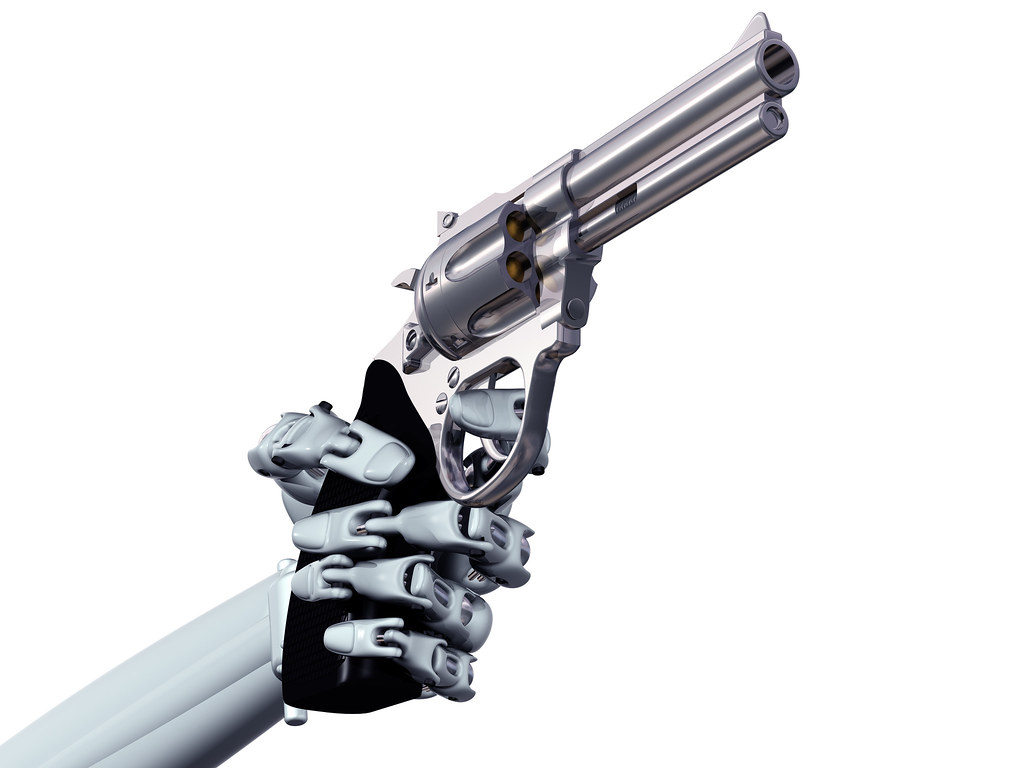
President Trump used a Saturday Truth Social post to announce two things at once: a new “AI Force,” modeled on the Space Force he created in his first term, and plans to name an AI czar to oversee it. The Trump AI czar announcement came on September 19, with Trump adding that “only High I.Q. individuals need apply” for the role.

No name, timeline or budget accompanied the post. The announcement came days after AI researchers renewed public warnings that advanced systems could become difficult to control, a debate Trump has previously dismissed as overblown.

The post was short. The implications were not. A single paragraph on social media now sits at the center of a debate over how the US government will treat the fastest-moving technology of the decade.

The short version: Trump posted the plan on September 19. It creates an “AI Force” modeled on Space Force. An AI czar will lead it. Trump has not named anyone yet. Trump still calls AI fears a hoax. He says enforcement will target “BAD” actors.

What Trump Actually Announced

The post described an “AI Force” without detailing its legal authority, funding source or relationship to existing agencies that already touch AI policy, including the Commerce Department’s semiconductor export controls and the President’s Council of Advisors on Science and Technology. Trump said an AI czar would come “in the near future” to take point on the effort.

Trump cited no bill. No agency memo followed. Reporters asked for detail. The White House had little more to add. That silence is itself part of the story.

The Contradiction at the Center of the Announcement

Trump has repeatedly called fears about AI risk a “hoax,” a position he has held publicly for months. Yet this announcement followed renewed warnings from AI researchers about the technology moving faster than oversight can keep up with. Trump appeared to partially acknowledge this tension, saying his administration would go after “BAD” actors using existing criminal and civil justice tools rather than new AI-specific regulation.

Who Held This Role Before

Venture capitalist David Sacks previously served as Trump’s AI and cryptocurrency czar before stepping down in March 2026 after reaching the time limit allowed for a special government employee. Sacks now chairs the President’s Council of Advisors on Science and Technology, meaning any new AI czar would be working alongside, not replacing, an official already positioned at the center of the administration’s tech policy.

That overlap raises a practical question the announcement did not address: whether an AI czar reporting through a new AI Force structure would have authority over, alongside, or beneath the existing science and technology advisory council Sacks now leads.

How the Trump AI Czar Announcement Landed With Researchers

The timing struck many observers as notable. Researchers across multiple AI labs had spent the preceding week publicly renewing warnings about the pace of frontier AI development outstripping safety testing, a debate that has grown louder throughout 2026. Trump’s announcement arrived days later, framed not as a response to those warnings but as a parallel initiative focused on enforcement against bad actors rather than restrictions on model development itself.

That framing puts the administration’s position somewhere between the AI industry’s largest labs, several of which have called for more structured oversight, and skeptics in Congress who have resisted new AI-specific regulatory bodies. Where the proposed AI Force ultimately lands on that spectrum will depend heavily on who is named to lead it.

What We Still Don’t Know

The announcement left the most consequential questions open: what authority the AI Force would actually have, how it would be funded, whether it requires congressional action, and who Trump will name to lead it. Until those details arrive, the announcement functions more as a signal of intent than a concrete policy shift.

Congressional committees with jurisdiction over technology policy have not yet indicated whether they were consulted before the announcement or whether hearings on the proposal are planned.

The numbers at a glance: Announcement date: September 19. Platform used: Truth Social. Model cited: Space Force. Named leader: none yet. Previous AI czar: David Sacks. Sacks stepped down: March 2026.

What People Are Asking About the AI Force

What is Trump’s proposed “AI Force”?
A new body Trump says will be modeled on the Space Force to oversee artificial intelligence, announced without further structural detail.

When was the Trump AI czar announcement made?
September 19, 2026, via a post on Truth Social.

Who is expected to be named AI czar?
Trump has not named a candidate. He said an announcement would come “in the near future.”

Who held a similar role before?
David Sacks served as AI and cryptocurrency czar until March 2026, when he reached his time limit as a special government employee.

Does this mean new AI regulation is coming?
Not necessarily. Trump indicated the administration would pursue “BAD” AI actors through existing criminal and civil law rather than new AI-specific rules.

Recommended Reading

Sources

  • NBC News — Trump Says He’s Creating an AI Force and Appointing a Czar Amid Concerns Over the Rapidly Developing Tech. nbcnews.com
  • CNN — Trump Vows to Create ‘AI Force’ and Appoint Czar Amid Calls for Oversight. cnn.com
  • Al Jazeera — Trump Says He Will Create ‘AI Force’ With New ‘AI Czar’. aljazeera.com