Trump Vowed to Take Greenland by Force. Now He Says He Has a Deal.

President Donald Trump says the United States and Denmark have reached a deal over Greenland. It follows months of Trump threatening to take the island by force from a NATO ally. Trump announced the Trump Denmark Greenland deal on 18 September 2026. He said it gives Washington “permanent control over security” on the island, while Greenland stays under Danish sovereignty. Denmark and Greenland have both welcomed the agreement. It still needs approval from both parliaments before it takes effect. All three governments plan to sign it next week at the United Nations General Assembly in New York.

What the Trump Denmark Greenland Deal Actually Says

Trump described the pact in a post on his Truth Social platform. He said it gives the United States “permanent control over security, and all other needs, in Greenland.” He said his administration would start building a larger US military presence right away. Trump also said the arrangement carries “no cost to the United States.” Neither Denmark nor Greenland has confirmed how any expanded US presence will be funded.
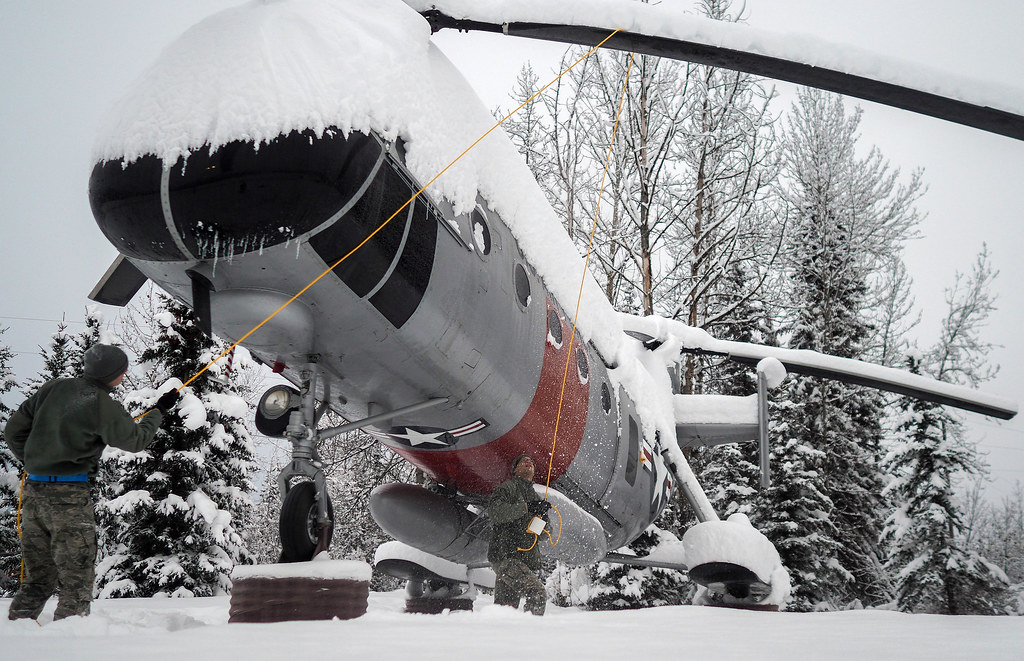
Trump Denmark Greenland deal: Arctic radar and military infrastructure

A State Department official gave reporters more detail on condition of anonymity. The deal bars any non-NATO country from building a base on Greenland. It limits how rival states can invest on the island. The official said the agreement guarantees China and Russia cannot set up a military presence there. Secretary of State Marco Rubio called the pact a “historic deal” and a “huge win.” He said Greenland “will forever be part of the strategic defense area of North America.”

Denmark’s government statement does not use Trump’s phrase “permanent control.” It says instead that the deal “recognizes the sovereignty and territorial integrity” of Greenland and Denmark, and protects both peoples’ right to self-determination. That gap in wording matters. Trump describes a security arrangement in sweeping terms. Copenhagen and Nuuk describe a partnership that leaves their sovereignty intact.

The US already has a foothold in Greenland. It runs the Pituffik Space Base in the island’s northwest under a 1951 defense treaty with Denmark. The base handles missile warning, missile defense and space surveillance for the US and NATO. This new deal builds on that arrangement. It expands what Washington can do there, rather than starting from nothing.

Denmark and Greenland React to the Greenland Deal

Danish Prime Minister Mette Frederiksen’s office confirmed the outline of the deal on 18 September 2026. Her office said the three governments plan to sign the pact next week, during the United Nations General Assembly’s high-level week in New York. Frederiksen said she is “pleased that there is a prospect of a good agreement for Greenland, the Kingdom of Denmark and the United States.”

Greenland’s Prime Minister, Jens-Frederik Nielsen, also welcomed the news. He called the emerging deal “gratifying” and said it “recognizes Greenland’s interests and our place in international cooperation.” He added, “It is to the benefit of us all.”

That tone marks a shift. Nielsen condemned Trump’s threats to acquire Greenland back in 2025. He said then that he wanted the island to move toward independence, not a change of owner. Denmark and Greenland spent months insisting the island was “not for sale.” Copenhagen also condemned reports that US intelligence agencies were gathering information on the island. Both governments still need their own parliaments to approve the deal before it can take legal effect. Friday’s announcement is a milestone, not a finished contract.

NATO, Russia and the Stakes Behind the Greenland Deal

Trump’s Greenland push unsettled NATO long before this announcement. He refused to rule out taking the island by military force, even though Denmark is a NATO member. Other alliance governments sided with Denmark and opposed any US annexation. Imran Bayoumi, an associate director at the Atlantic Council’s Scowcroft Center for Strategy and Security, said the episode damaged how Europe views Washington. “I think Greenlanders, Danes, Europeans saw this as a real attack on their sovereignty, and it’s going to take a lot of work to repair,” he said.

Russia has also opposed the US campaign for Greenland, and Arctic tensions with Moscow have built on several fronts, including a recent Russian frigate’s encounter with a Danish military helicopter in the Baltic Sea and the EU’s ongoing renewal of sanctions against Russia. The new Greenland agreement shuts Russian and Chinese forces out of the island. That addresses one of the security concerns Trump has raised repeatedly, though he has also made unverified claims about Russian and Chinese military activity near Greenland’s coast.

Greenland sits off northeastern Canada. More than two-thirds of its territory lies inside the Arctic Circle. That location made it strategically important during World War Two, when US forces occupied the island to keep it out of Nazi Germany’s hands and to protect North Atlantic shipping routes. The same geography now puts Greenland at the center of Arctic competition among the US, Russia and China.

What Comes Next for the Greenland Security Pact

The deal is not finished business. Denmark’s parliament and Greenland’s own government both need to approve it before the terms take legal effect. Next week’s signing at the UN General Assembly marks a political milestone, not the final legal step.

The announcement also lands at a useful moment for Trump at home. It gives him a foreign policy win ahead of the US midterm elections. A six-month conflict with Iran and a military operation against Venezuela have already reshaped his foreign policy record this year. The Greenland pact’s durability will become clear only after both parliaments vote and the full text becomes public.

Common Questions About the Greenland Security Deal

Does the Trump Denmark Greenland deal give the US ownership of Greenland?

No. The deal keeps Greenland under Danish sovereignty. It expands US military access and security control on the island, but Denmark’s government says it protects Greenland’s and Denmark’s territorial integrity and self-determination.

Has the Greenland deal actually been signed?

Not yet. The US, Denmark and Greenland plan to sign it next week during the United Nations General Assembly’s high-level week. Denmark’s parliament and Greenland’s government still need to approve it afterward.

What US military facilities does the deal cover?

The US already runs the Pituffik Space Base in northwestern Greenland under a 1951 treaty. Trump says the new deal lets Washington build a larger presence, though officials have not named specific new sites.

Does the deal stop China and Russia from operating in Greenland?

A State Department official said the agreement guarantees that China and Russia cannot establish a military presence in Greenland and bars any non-NATO country from building a base there.

Why did Trump threaten to take Greenland by force?

Trump cited security concerns and Greenland’s mineral wealth, and he repeatedly made unverified claims about Russian and Chinese military activity near the island. Denmark and Greenland rejected any sale of the territory throughout the standoff.

Is the deal permanent, with no end date?

Trump said in his announcement that the agreement has no expiry date. Denmark’s and Greenland’s public statements have not independently confirmed that specific detail.

Sources

Why UN Investigators Say the Iran School Strike Was No Accident

UN Iran war crimes findings released this week say investigators found “reasonable grounds” to believe the United States committed war crimes in Iran. The findings cover two strikes from February 2026. One hit the Shajareh Tayyebeh Primary School in the southern city of Minab. The other hit a sports complex in Lamerd. Together, the strikes killed at least 178 civilians, the mission’s report says.

What the UN Iran War Crimes Findings Say

The findings come from the Independent International Fact-Finding Mission on the Islamic Republic of Iran. The UN Human Rights Council created this body in 2022. Bangladeshi jurist Sara Hossain chairs the mission. The council extended its mandate for two more years in January 2026.

UN Iran war crimes findings: investigators reviewing evidence documents

The mission submitted its report to the Human Rights Council in Geneva. It planned to present the findings to the 47-member council. The mission said it found “reasonable grounds to believe the United States committed the war crime of launching indiscriminate attacks,” resulting in civilian deaths, injuries and damage, according to a statement from the UN’s human rights office, OHCHR.

Investigators wrote that the school building in Minab “was the intended point of impact.” They ruled out an errant strike. They also ruled out collateral damage from a nearby military compound. The report is not legally binding. It could still feed into cases at international courts, since it documents witness accounts, satellite imagery and weapons analysis.

Inside the Minab School and Lamerd Strikes

The Minab strike happened around 10:30am local time on February 28. It hit Hormozgan province in southern Iran. Missiles struck the Shajareh Tayyebeh Primary School twice. The first hit the lower floor. Staff then moved children to a prayer room upstairs. A second strike hit the upper floor and killed many of them, the mission said.

The school sat roughly 72 metres from a naval facility linked to Iran’s Revolutionary Guard. A wall separated the two sites, and the school had its own entrance. Satellite imagery showed a functioning school with a playground and children’s murals. Local Iranian officials put the death toll at 156, including 120 schoolchildren and 26 teachers. Iranian state media reported 168 dead, most of them children. Weapons analysts identified fragments at the site as parts of a US Tomahawk missile, a weapon Iran does not possess.

Hours later, a separate strike hit the Shahid Haj Khalil Naimi Cultural and Sports Complex in Lamerd, Fars province. The mission said Precision Strike Missiles dispersed tungsten pellets over the complex and a nearby residential area. Local officials reported 22 deaths, including four children, and more than 100 injuries. The US has confirmed using Precision Strike Missiles in Iran for the first time in this conflict.

Why Investigators Call the Strikes ‘Reckless,’ Not Intentional

The mission did not accuse the US of deliberately targeting the school. Instead, it applied a legal standard known as recklessness. International law sometimes calls this “dolus eventualis.” This standard applies when a party knows of a serious risk of an unlawful outcome and proceeds anyway. Legal experts say this threshold, not intent, can establish the war crime of launching an indiscriminate attack.

The mission pointed to outdated targeting data as one factor behind the Minab strike. It also said the school was “readily identifiable” from the air and on satellite imagery. Other news organizations separately reported on a preliminary Pentagon investigation, which the mission cited. That investigation blamed outdated intelligence. The intelligence had wrongly linked the school to the adjacent military site.

Reed Brody, a human rights lawyer with the International Commission of Jurists, said not every violation of the laws of war rises to a war crime. But he said the mission’s recklessness finding rested on three points: stale targeting data, a building that was plainly civilian, and a wider pattern of the US scaling back safeguards meant to limit civilian harm.

How Washington and Tehran Have Responded

The US has not disputed that its forces struck the Minab school. In May, US Central Command’s Admiral Brad Cooper said preliminary Pentagon findings linked the strike to American forces. In June, President Donald Trump said “nobody” had purposefully attacked the school. The Trump administration has not released the full findings of its internal investigation into the Minab strike.

Washington does dispute responsibility for the Lamerd strike. US Central Command says the damage there matches an Iranian Hoveyzeh cruise missile. The mission rejected that. It cited weapons experts who found design differences ruling out a Hoveyzeh. Those experts instead pointed to a US-made Precision Strike Missile.

White House Deputy Press Secretary Anna Kelly rejected the report outright. She said the Human Rights Council “has accomplished nothing for human rights” for decades. She said Iran’s government is “the only party in this conflict that has committed war crimes,” citing its own crackdown on protesters and attacks in the Strait of Hormuz. The Trump administration withdrew the US from the Human Rights Council in February 2025. The State Department did not immediately respond to a request for comment from the Associated Press.

Iran has rejected the US denial over Lamerd. It points to both strikes as evidence of indiscriminate American attacks on civilians. Iranian officials have published their own casualty counts, which match the mission’s figures for both sites. Iran has separately called for international accountability over the strikes. The same UN mission, though, accused Tehran’s own security forces of crimes against humanity against protesters since 2025. It cited mass arrests, torture allegations and dozens of executions.

Neither Washington nor Israel gave the mission access to military personnel. Neither government answered the mission’s requests for information. Investigators relied instead on satellite imagery, verified video, weapons analysis and witness accounts.

Where These War Crimes Findings Go From Here

Legal experts say the report carries no automatic consequences on its own. Brody said such UN findings can still “form the basis for other proceedings.” He pointed to how past fact-finding reports fed into The Gambia’s genocide case against Myanmar. The US has withdrawn from the International Court of Justice’s general jurisdiction. Iran is also unlikely to join the International Criminal Court, since that would expose its own record to scrutiny.

Accountability will likely depend on political pressure, Brody said, not legal mechanics alone. He noted that Congress has grown more willing to press the administration as midterm elections approach. That could push the Pentagon to release its Minab findings. The mission itself urged the US and Iran to halt further violations. It also called for full reparations to victims and a lasting diplomatic end to the conflict.

Tamara News has covered the wider diplomatic backdrop to this conflict, including reporting on signals that the Iran war may be nearing an end and on a separate Pentagon watchdog review of the Iran strikes. For comparison on how war-crimes accountability has played out elsewhere, see our coverage of the war crimes sentencing of former Kosovo leader Hashim Thaci.

Frequently Asked Questions

What did the UN Iran war crimes findings actually conclude?
The mission found reasonable grounds to believe the US committed the war crime of launching indiscriminate attacks. This covers strikes on a school in Minab and a sports complex in Lamerd. Together they killed at least 178 civilians.

Did the UN accuse the US of intentionally bombing a school?
No. Investigators applied a recklessness standard. They said the US failed to verify the target properly, not that it deliberately chose to strike a school.

How has the US government responded?
The White House rejected the findings and accused the Human Rights Council of bias. The Pentagon has not released its internal investigation. The State Department did not immediately comment when the Associated Press asked.

Does the US dispute both strikes?
The US has not disputed hitting the Minab school. It denies responsibility for the Lamerd strike and blames an Iranian missile. The UN mission rejected that explanation based on weapons analysis.

Could this report lead to prosecutions?
Not directly. The report is not binding. Experts say the US and Iran’s positions outside key international courts make direct prosecution unlikely, though the findings could support other efforts.

Did the report also cover Iran’s own conduct?
Yes. The same mission said Iran’s government committed crimes against humanity against its own citizens during the 2025-2026 protest crackdown. It cited mass killings, torture, arbitrary detention and executions.

Sources

Tusk Warns Russia Could Stage ‘Accidental’ Strikes to Test NATO

Polish Prime Minister Donald Tusk delivered a stark message to parliament on September 17, 2026. He said intelligence assessments point to Russian plans for drone and missile strikes on countries that back Ukraine, including Poland. Moscow could then claim the strikes were accidents, Tusk said. The Tusk Russia accidental strikes warning rests on intelligence from NATO, Ukraine and the United States. Tusk called the coming late autumn and winter the most critical phase of the war so far.

Tusk was careful to frame this as a forward-looking assessment, not a confirmed attack. No strike matching this description has happened yet. The warning follows a run of drone incidents and suspected sabotage across Poland, Lithuania and Germany in recent weeks. It also comes as Poland marks the 87th anniversary of the Soviet invasion of 1939.

What Tusk Told Poland’s Parliament About Russian Strikes

Addressing lawmakers, Tusk said Russia intends to send drones or missiles into NATO territory and then call the incidents accidental, according to NPR. He said the goal is to “paralyze NATO” or at least weaken the alliance’s willingness to respond together. He argued the tactic could test whether NATO’s Article 5, the treaty’s collective-defense clause, “exists only in theory.”

Tusk Russia accidental strikes: NATO soldiers on exercise near the border

Tusk stressed that “there is nothing to suggest an invasion.” Still, he warned Poland is about to face a real test as one of Ukraine’s most committed allies. He said Poland carries a starker risk under Article 5 than Western European members such as Portugal or Ireland. That risk stems from its border with Belarus and Ukraine.

Tusk Russia accidental strikes: what the intelligence suggests

Tusk said he was relying on intelligence from NATO, Ukraine and US agencies, though he did not name specific services, NPR reported. He repeated that grim timeline for lawmakers and flagged the risk of escalating Russian attacks on Ukrainian energy infrastructure as the cold season sets in.

Euromaidan Press reported that Tusk highlighted Russia’s growing use of jet-powered drones. These drones fly faster and higher than older propeller-driven models, which makes them harder for air defenses to intercept. Tusk pointed to a September 13 strike near Yahodyn, close to the Polish border, as an example. Ukraine’s state railway operator said the drone had most likely targeted a diplomatic train. That train had carried former UK Prime Minister Boris Johnson and former Swedish Prime Minister Carl Bildt earlier that day. Nobody was hurt in the strike.

A Pattern of Incidents Across NATO’s Eastern Flank

Tusk’s warning follows several drone incidents near NATO’s eastern border. On September 15, Italian NATO jets shot down a drone that had entered Lithuanian airspace from Belarus. Lithuanian officials said the wreckage suggested it carried explosives.

Polish forces also recovered a Gerbera-type drone carrying a live warhead off the Baltic coast near Rusinowo earlier in September. Germany blamed Russia on September 1 for an attempted drone attack involving explosives at Leipzig/Halle Airport in early August. The airport serves as a major NATO logistics hub. Each incident stayed below the threshold of open war on its own. Together, European officials say, they form a coordinated hybrid campaign.

The Baltic Sea has produced other flashpoints this year too. A Russian frigate and a Danish helicopter had a tense standoff there, as our report on the Baltic incident covers. It shows how contested the region’s waters and skies have become.

Why Tusk Says Moscow Wants to Test Article 5

NATO’s Article 5 states that an armed attack on one member counts as an attack on all. Tusk argued Russia benefits either way if it stages an ambiguous strike. If NATO responds firmly, Moscow can accuse the alliance of overreacting to an accident. If NATO stays quiet, Moscow can claim the treaty’s promise is hollow.

Tusk also linked the threat to politics inside Europe. He pointed to Russia-friendly parties gaining ground, including Marine Le Pen’s National Rally in France and Germany’s Alternative for Germany. He said these parties invoke the language of peace while effectively calling for Ukraine’s capitulation.

The warning arrived alongside other developments. Polish Deputy Prime Minister Radosław Sikorski said Warsaw is preparing its largest military aid package yet for Ukraine. That package could include Patriot missile components. Ukrainian President Volodymyr Zelenskyy hosted European leaders at the first Carpathian Eight summit on September 18. There, officials discussed building an anti-ballistic coalition. Sanctions pressure on Moscow continues in parallel, detailed in our coverage of the EU’s renewed Russia sanctions. Belarus, Russia’s closest regional ally, also remains under scrutiny. Our report on the Belarus prisoner release and sanctions explains why.

What Happens Next After Tusk’s Russia Warning

Poland says it sees no sign of an imminent invasion. Officials still expect the risk of drone and missile incursions to rise as autumn turns to winter. NATO allies are weighing how to respond if an ambiguous strike actually happens. Neither side wants to hand Moscow a propaganda win.

Three signals are worth watching in the coming weeks. First, whether NATO issues a joint statement on how it would classify an ambiguous strike on a member state. Second, whether Poland receives the Patriot components Sikorski has floated. Third, watch the reported US plan for a permanent Army base in Poland. President Trump mentioned it the same day as Tusk’s speech, but no site is confirmed yet.

Frequently Asked Questions

What did Donald Tusk actually warn about?
Tusk told the Polish parliament on September 17, 2026 that intelligence assessments point to Russian plans for drone and missile strikes on countries supporting Ukraine, including Poland. He said Moscow could then present the strikes as accidents.

Is this a confirmed Russian attack on Poland?
No. Tusk described an intelligence assessment and a warning, not an event that has occurred. He said there is “nothing to suggest an invasion,” and no strike matching the warning has been reported.

Which sources gave Tusk this intelligence?
Tusk said the assessment draws on intelligence from NATO, Ukraine and United States agencies. He did not name specific agencies or release the underlying material.

Why does Article 5 matter in this warning?
Article 5 commits NATO members to treat an attack on one as an attack on all. Tusk said Russia may want to test whether that commitment holds if a strike can be framed as an accident.

What incidents came before Tusk’s warning?
Recent weeks brought several incidents. A drone struck near a Ukrainian train close to the Polish border. NATO jets shot down a drone over Lithuania. Poland recovered a warhead-carrying drone off its Baltic coast, and Germany blamed Russia for a drone attack near Leipzig.

How has Russia responded to the warning?
Russia’s Foreign Ministry rejected Tusk’s accusations, calling them “contrived” and “far-fetched.”

Sources

The US Just Told Travelers: If You’re Robbed in Cambodia, Don’t Fight Back

The latest Cambodia Thailand border advisory from the US State Department is dated 15 September 2026. It keeps Cambodia at an overall Level 2 “exercise increased caution” rating. At the same time, it maintains a Level 4 “Do Not Travel” designation for any area within 50 kilometers of the Cambodia-Thailand border. A separate advisory issued days later added an unusually blunt warning. If robbed in Cambodia, it says, do not physically resist.

The border-zone warning reflects continued tension between Cambodian and Thai military forces. That tension has persisted despite a ceasefire reached on 27 December 2025. Multiple Western governments have issued similar warnings. The UK, Canada, Australia and EU member states have all set Level 4 advisories for the same 50-kilometer strip.

What the Cambodia Thailand border advisory actually restricts

The advisory does not treat all of Cambodia as unsafe. Popular destinations like Phnom Penh and the Angkor temple complex near Siem Reap sit well outside the restricted zone. Both remain at the country’s general Level 2 rating. The Level 4 designation applies specifically to the border strip. Reports of fighting have continued there, including rocket and artillery fire, despite the ceasefire. Land border crossings between Cambodia and Thailand also remain closed.

Cambodia Thailand border advisory — illustrative image

Why the robbery warning stands out

Separate from the border-conflict advisory, the State Department’s crime and unrest guidance for Cambodia now includes something new. It explicitly tells travelers not to physically resist if robbed. That level of specificity goes beyond the general “avoid the border area” guidance travelers usually see. The warning reflects rising concern about crime targeting travelers. That risk exists in areas well away from the active conflict zone. It is a distinct problem from the military tension driving the Level 4 border designation.

Why the ceasefire hasn’t fully resolved the risk

Cambodian and Thai authorities agreed to a ceasefire in late December 2025. The security environment along the border has stayed unpredictable ever since, though. Continued reports of exchanged fire have kept governments cautious. Most have been slow to downgrade their border-zone advisories, even as the broader conflict has cooled compared to its peak intensity.

Why so many governments agree on the same zone

The UK, Canada, Australia and EU member states have all converged on the same narrow definition of the danger area: the 50-kilometer strip along the Cambodia-Thailand border, not the country as a whole. That kind of alignment across multiple independent governments is relatively unusual. It suggests the underlying intelligence about continued border skirmishes is consistent enough that different foreign ministries, working from their own sources, are reaching the same conclusion about where the real risk sits.

For a traveler trying to plan a trip, that convergence is useful information in itself. When advisories from several countries agree closely on both the geography and the severity of a risk, it is a stronger signal than any single government’s assessment on its own.

What this means for travel plans

Travelers heading to Cambodia’s main tourist circuit face a different risk profile than those near the border. Phnom Penh, Siem Reap and the coast fall into that safer category. The advisory reflects that distinction. It is not a blanket warning against travel to the country as a whole. Anyone planning travel near the Cambodia-Thailand frontier itself should treat the Level 4 rating as current guidance. It is not a historical footnote, given continued reports of intermittent fighting since the ceasefire took effect.

This advisory adds to a run of travel-safety guidance issued this month. That includes a Level 3 advisory for Saudi Arabia and continued CDC-issued entry restrictions tied to an Ebola outbreak. Both are part of a broader pattern: governments are updating travel guidance more frequently this year than in years past.

Frequently asked questions

Is all of Cambodia rated Do Not Travel?

No. Cambodia overall sits at Level 2, “exercise increased caution.” Only areas within 50 kilometers of the Cambodia-Thailand border carry the Level 4 “Do Not Travel” rating.

Are the Angkor temples affected by the advisory?

No. Siem Reap and the Angkor temple complex fall outside the restricted 50-kilometer border zone and remain at Cambodia’s general Level 2 rating.

Why does the advisory warn against resisting robbery?

The State Department’s crime and unrest guidance added the warning separately from the border-conflict advisory, reflecting rising concern about crime targeting travelers.

Is the Cambodia-Thailand border crossing open?

No. Land border crossings between Cambodia and Thailand remain closed as of the advisory’s September 15, 2026 update.

Did the December 2025 ceasefire end the border tension?

The ceasefire remains formally in effect, but the security environment near the border has stayed unpredictable, with continued reports of fighting since it took hold.

Sources

  • Fox News — State Department issues travel warning for Cambodia over crime, unrest. foxnews.com
  • US Embassy in Cambodia — Security Alert: Continued Armed Conflict Along the Cambodia-Thailand Border. kh.usembassy.gov

650 Qantas Workers Could Walk Out Right as School Holidays Begin

A QantasLink strike school holidays standoff is building in Australia. Up to 650 Qantas Ground Services staff could walk out for 24 hours. The action could begin as early as next week. It targets Qantas Freight and QantasLink regional flights out of Sydney. The timing lands right as school holidays begin in Queensland, Victoria and the Northern Territory.

The Transport Workers Union says 97% of its members employed by Qantas Ground Services backed a slate of 10 possible actions. Those range from one-hour stoppages to a full 24-hour walkout. Training and overtime bans are also on the table. The vote follows 11 months of stalled negotiations over a new enterprise agreement.

Why the QantasLink strike school holidays timing matters

The dispute involves about 650 ground service workers. Qantas Freight employs most of them. A smaller share supports QantasLink specifically. Qantas says the dispute would not touch its main domestic and international services. The workers involved handle freight and regional ground support, not mainline operations. That distinction matters for travelers. Someone flying Qantas’s main network between capital cities is unlikely to see direct disruption. Passengers on smaller regional QantasLink routes face more direct exposure. So do businesses relying on Qantas Freight for time-sensitive shipments.

QantasLink strike school holidays — illustrative image

What the union and airline are fighting over

The Transport Workers Union says the dispute centers on pay, job security and safety. Nearly a year of negotiations has not produced a new enterprise agreement. Union and Qantas representatives have been in talks at the Fair Work Commission. That body is Australia’s industrial relations tribunal. Both sides are trying to resolve the standoff before any action actually begins. Qantas has publicly stated it has contingency plans in place. The airline says those plans aim “to minimise any impact on customers and our operations” if the union does notify a strike.

Who gets caught in the middle

School holidays are peak travel season for Australian families. QantasLink serves many regional routes families use to reach smaller towns and coastal destinations. Mainline Qantas doesn’t fly those routes directly. Freight customers face exposure too, including businesses that rely on time-sensitive air cargo. The risk grows larger if the union proceeds with a full 24-hour stoppage, rather than a shorter, targeted action instead.

How this compares to past Qantas disputes

Qantas has faced repeated industrial action over the past two years, including engineering strikes that disrupted capital-city flights in 2024. Those disputes centered on aircraft maintenance staff rather than ground and freight crews, and they tended to produce rolling, partial-day stoppages rather than one clean 24-hour walkout. This dispute follows a different shape so far: a single large vote covering ten possible actions, rather than a drawn-out campaign of smaller strikes spread across months.

The airline’s approach also looks different this time. Qantas has publicly committed to contingency planning well before any strike notice arrives, a response that reflects lessons learned from earlier disputes where late planning left travelers with little warning.

What travelers should watch for

The Fair Work Commission talks are the venue to watch right now. A resolution there could avert the strike entirely. If talks fail, the union has signaled it could notify a stoppage with fairly short notice. Travelers booked on affected QantasLink or freight-linked routes during the holiday period should watch for direct updates from Qantas. They should not simply assume normal operations will continue.

The dispute adds to a rough stretch for aviation reliability worldwide. It follows a wave of disruption at UK airports and a report into a UK air traffic control failure. Rising airline fuel costs and fares are squeezing carrier margins at the same time labor disputes like this one are surfacing across the industry.

Frequently asked questions

Will the QantasLink strike affect all Qantas flights?

No. Qantas says its main domestic and international network would not be affected; the threatened action involves ground crew supporting Qantas Freight and QantasLink regional flights.

How many workers are involved in the dispute?

Around 650 Qantas Ground Services staff, most working on Qantas Freight with a smaller number supporting QantasLink.

When could the strike happen?

The union has flagged a possible 24-hour strike as early as next week, timed with the start of school holidays in Queensland, Victoria and the Northern Territory.

What is the dispute about?

The Transport Workers Union cites pay, job security and safety concerns after 11 months of stalled enterprise agreement negotiations.

Is there a chance the strike is called off?

Yes. Qantas and the union have been negotiating at the Fair Work Commission, and a resolution there could prevent the action from going ahead.

Sources

  • ABC News Australia — School holidays flight disruption fear as QantasLink staff say strike likely. abc.net.au
  • Travel Weekly Australia — Qantas ground crew vote for industrial action ahead of school holidays. travelweekly.com.au