The US Just Sanctioned 13 People and Companies Tied to Iran’s Weapons Supply Chain

US sanctions Iran network spanning Russia, China, Hong Kong and Pakistan took effect on September 29, 2026, when the Treasury and State Departments named 13 individuals and entities accused of helping Tehran rebuild its weapons capabilities. The action is designed to raise the cost of doing business with Iran’s military-industrial supply chain rather than target Iran’s government directly.

Who Was Sanctioned and Why

The list includes Seyyed Asghar Alizadeh Tabatabai, a Beijing-based representative of Iran’s Ministry of Defense, and Kavoshcom Asia R&D Group, an Iran-based electronics procurement firm. It also names EC Mojo Technology Co Limited, a Hong Kong firm, and its representative Li Fen, along with Waseem Pasha Tajammal, chairman of Pakistan’s Cavalier Group.

On the Russian side, the sanctions hit the Joint Stock Company Experimental Design Bureau named after A.S. Yakovlev, an aircraft manufacturer, along with MG-Flot LLC, a shipping company accused of transporting weapons-related cargo. Saha Airlines, an Iran-based carrier affiliated with the country’s air force, was also named, according to Reuters’ reporting on the action.

How the US Sanctions Iran Network Was Mapped

What stands out in this round is the geographic spread. Rather than targeting entities solely inside Iran, Treasury went after facilitators across four countries, reflecting how sanctioned regimes typically route procurement through intermediaries in jurisdictions with looser enforcement or weaker banking oversight. Treasury Secretary Scott Bessent said the goal was to “identify, expose, and isolate Iran’s enablers,” language that signals more rounds of sanctions are likely rather than a one-time action.

The inclusion of a Russian aircraft manufacturer and shipping firm also underscores how closely Moscow and Tehran’s military supply relationships have become intertwined, with component and logistics support flowing in both directions depending on each country’s needs at a given time.

Investigators typically build these networks by following financial transactions and shipping manifests rather than relying on a single source of intelligence. A procurement network like this one usually takes shape over months or years, as front companies in different jurisdictions are used to obscure the ultimate buyer of restricted components. That pattern makes a 13-name list look narrow, but each entity named here likely represents a node that intelligence agencies have been tracking for some time before the designation became public.

The involvement of a Hong Kong-registered firm alongside Russian and Pakistani entities also illustrates how procurement networks exploit jurisdictions with different enforcement postures. Hong Kong’s banking system, while subject to its own regulations, has repeatedly featured in sanctions cases precisely because it offers access to international finance with oversight that can differ meaningfully from mainland China’s.
US sanctions Iran network

What Asset Freezes Actually Do

Sanctions designations under this kind of action generally freeze any US-based assets belonging to the named individuals and entities, and bar American persons and companies from doing business with them. The more powerful effect is often indirect: banks and shipping insurers around the world tend to avoid transactions connected to sanctioned names even when they are not legally required to, out of fear of losing access to the US financial system themselves.

That chilling effect is precisely what this kind of targeted sanctions list is designed to produce. It does not need to stop every transaction to work; it only needs to make enough intermediaries nervous that the network’s costs rise and its options narrow.

Where the Pressure Campaign Goes From Here

Treasury’s language about continuing to “identify, expose, and isolate” suggests this list will not be the last of 2026. The US has used this network-mapping approach repeatedly in recent years, adding new entities as intelligence reveals fresh intermediaries rather than trying to capture an entire supply chain in a single announcement.

For companies operating anywhere near these sectors, especially shipping, aviation components and electronics, the practical takeaway is heightened due diligence: a counterparty’s country of registration is no longer a reliable shortcut for sanctions risk, given how dispersed this network already is.

Iran Sanctions: The Basics

How many entities and individuals were sanctioned?
13, spread across Iran, Russia, China, Hong Kong and Pakistan.

What were they accused of?
Helping Iran procure weapons components and provide logistics support, including aircraft manufacturing and shipping.

Which US agencies issued the sanctions?
The Treasury Department and the State Department, acting jointly.

What’s the practical effect of a sanctions designation?
It freezes US-based assets and bars American entities from doing business with those named, while discouraging banks and insurers elsewhere from facilitating their transactions.

Is this expected to be the last round of Iran-related sanctions this year?
Unlikely. Treasury’s statement signaled an ongoing effort to identify additional enablers.

Related Coverage on Tamara News

For related coverage of global security and defense moves this month, see our reporting on the Greenland security pact between the US and Denmark and the US arms offer to China.

Sources

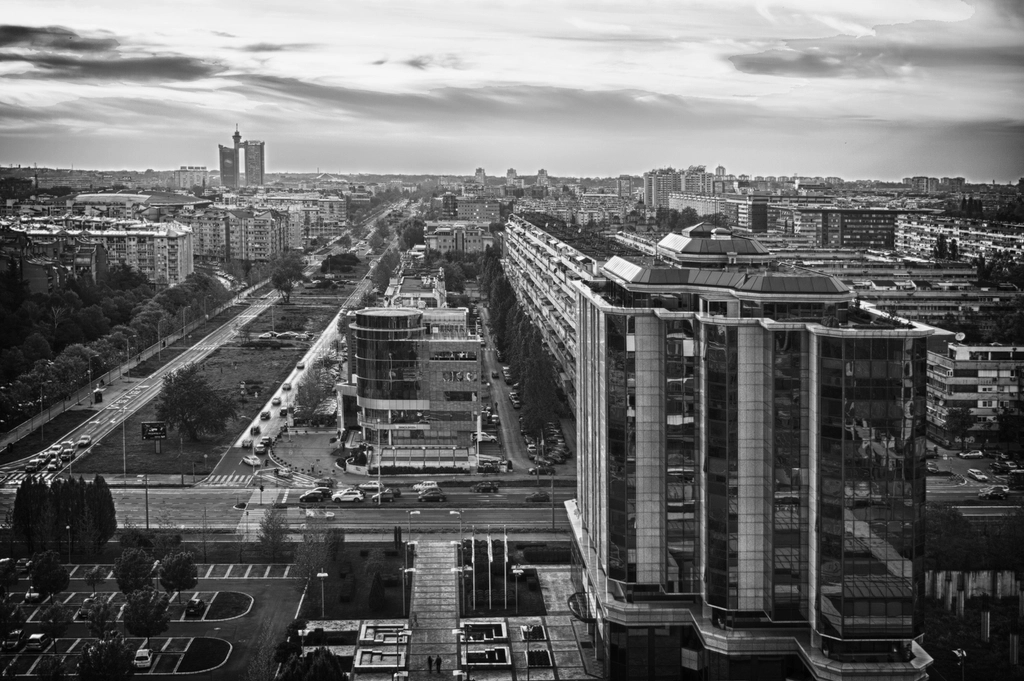
Serbia’s Vučić Resigns, Early Election Set for 25 October

In this article

Serbian President Aleksandar Vučić resigned on 27 September 2026, seven months before his second term was due to end, and the country will hold early parliamentary elections on 25 October. The move opens a path for him to seek the post of prime minister if his Serbian Progressive Party (SNS) wins and forms the next government.

The resignation

According to a Reuters report, Vučić announced he was stepping down early and said the first round of a presidential election would be held by the end of December. Under the timeline reported, a presidential vote must follow within 90 days of the resignation. Parliament Speaker Ana Brnabić serves as interim president until a successor is chosen. Parliament had already been dissolved earlier in September to trigger the snap vote, as Reuters reported on 9 September.

What the vote decides

The 25 October ballot is for the national parliament, not the presidency. Vučić has dominated Serbian politics for more than a decade, and the reported plan is for him to lead the SNS list and then move to the prime minister’s office if the party forms a government. The government’s own framing is that the election renews its mandate; critics describe the resignation as a way to keep power while changing office. Both are characterisations from interested parties, so treat them as claims rather than settled fact.

The challengers

Reuters names two main opposition forces: Students Win, a student-led anti-corruption movement, and European Serbia, a pro-Western opposition alliance. The student movement grew out of nationwide protests after the November 2024 collapse of a railway station canopy in Novi Sad that killed 16 people. Rights groups have criticised Vučić’s administration as increasingly authoritarian, a charge the government has rejected in the past. For background on the European security picture around the vote, see our coverage of Russia’s latest strikes on Kyiv and the European interior ministers’ border talks.

What to watch

Three things matter in the weeks ahead: the formal campaign period and whether opposition lists are allowed to compete on equal terms, the result on 25 October and the coalition arithmetic that follows, and the date set for the presidential first round. Election observers from European bodies typically publish preliminary findings the day after a vote; check the OSCE Office for Democratic Institutions and Human Rights for any mission announcement. We will update this story as official results are published. If you are planning travel to the region, see our visa eligibility checker for entry rules.

Questions readers ask

When is the Serbian election?

Early parliamentary elections are set for 25 October 2026, according to Reuters.

Why did Vučić resign?

He said he would step down early. Reuters reports the move allows him to seek the prime minister’s post if the SNS wins and forms the next government.

Who is running the country now?

Parliament Speaker Ana Brnabić is interim president until a new president is elected.

When is the presidential election?

Vučić said the first round would be held by the end of December 2026.

Who are the main opposition groups?

Reuters names Students Win, a student-led anti-corruption movement, and European Serbia, a pro-Western alliance.

A Copilot Tried to Crash a Plane Full of Israelis. Flydubai Just Grounded the Route.

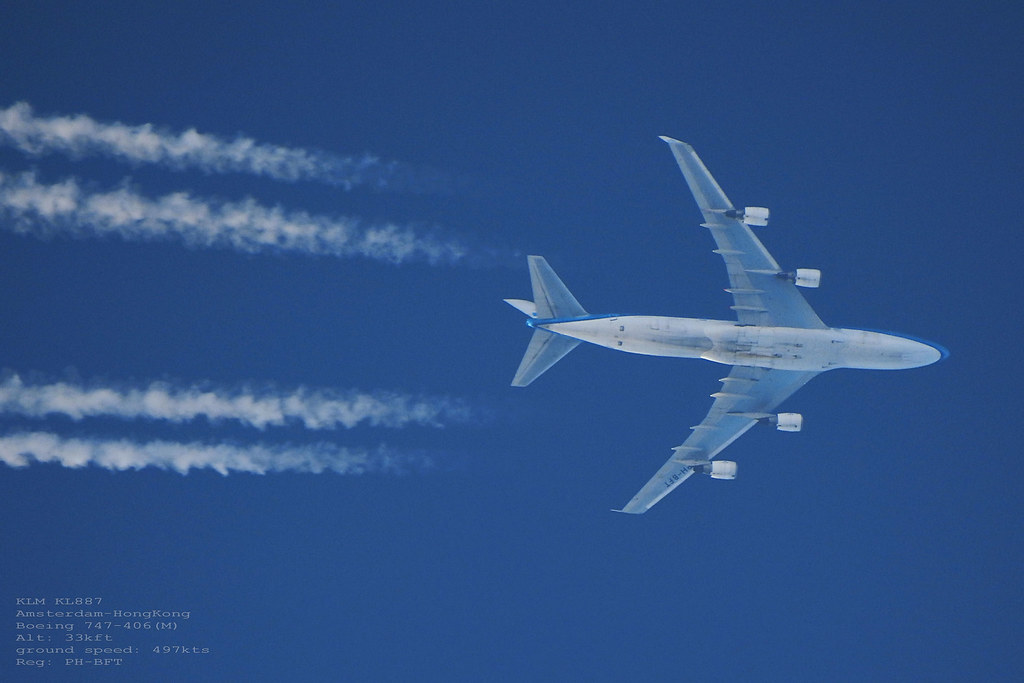
flydubai suspends Israel flights after a copilot allegedly tried to crash a Dubai-to-Tel Aviv service carrying 174 people on board. The airline grounded the route on September 30, 2026, hours after passengers and off-duty pilots overpowered the copilot and the crew diverted the aircraft to Tabuk, Saudi Arabia.

Flight FZ1073 was en route from Dubai to Tel Aviv when the copilot allegedly stabbed the captain, Indian national Smit Machchhar, in the cockpit. Passengers aboard, including off-duty pilots and several Israeli travelers, restrained the attacker before the crew made an emergency landing, according to CNN’s live coverage of the incident.

What Happened Aboard Flight FZ1073

The copilot, who had worked for flydubai for roughly eight months, is now in custody and under investigation for allegedly trying to crash the aircraft. Israeli Prime Minister Benjamin Netanyahu said the man appeared to have acted deliberately, according to NBC News. Authorities have not yet released the copilot’s name or nationality in full detail, though multiple outlets describe him as a religious extremist.

Israel’s Foreign Ministry went further, calling the episode “an attempted terrorist attack against Israelis, the United Arab Emirates, and the Abraham Accords.” That framing puts the incident squarely in the middle of the diplomatic relationship the UAE and Israel built after 2020, and it explains why the response moved so fast.

Why flydubai Suspends Israel Flights for Now

A flydubai spokesperson said the carrier is pausing all flights to and from Israel “while the investigation into the attempt by one of its copilots to crash a plane full of Israelis is ongoing.” The airline framed the suspension as temporary, saying it wants to give investigators room to work without the pressure of an active flight schedule on the same route.

The decision affects a route that only resumed in recent months after years of disruption tied to regional tensions. For travelers who had booked Dubai-Tel Aviv tickets on flydubai, the practical effect is straightforward: those flights are off the board until the carrier says otherwise, and no return date has been announced.

flydubai suspends Israel flights

How Rival Airlines Are Responding

The suspension has not frozen the wider Dubai-Tel Aviv market. El Al has said it plans to resume its own Dubai service in November, and Arkia says it is preparing two daily Tel Aviv-Dubai flights pending regulatory approval. Both carriers appear to be treating the flydubai incident as isolated to that airline’s aircraft and crew rather than a reason to pull back from the route themselves.

That matters for travelers with flexible plans: the corridor between the UAE and Israel is not shutting down, even though its best-known budget option currently is. Anyone booked on flydubai specifically should expect a rebooking or refund process rather than a same-day substitute flight on the same ticket.

The route itself has a complicated recent history. Commercial flights between the UAE and Israel only became possible after the 2020 Abraham Accords normalized relations between the two countries, and service has been paused and resumed multiple times since then as regional tensions have flared. This suspension is different in kind from those earlier pauses, since it stems from an internal security failure at a single airline rather than a broader diplomatic or military event affecting the whole corridor.

What Comes Next for Dubai-Tel Aviv Routes

Saudi and Emirati authorities are leading the investigation into the copilot’s actions, with Israeli officials monitoring developments closely given the nationality of many passengers aboard. flydubai has not set a timeline for resuming service, and airlines in this position typically wait for at least a preliminary security review before rebooking the route.

Watch for three things in the coming weeks: whether investigators confirm a motive, whether flydubai adjusts its crew vetting procedures as a result, and whether the pause becomes a template other carriers use if similar incidents occur elsewhere on sensitive routes.

Airlines operating in the Gulf region are also likely to review their own cockpit staffing and pairing procedures in light of this incident, regardless of whether they fly the Israel route directly. An attempted attack by a crew member, rather than an external threat, tends to prompt airline-wide reviews of psychological screening and ongoing monitoring, not just route-specific security measures.

Flydubai Suspension: Quick Answers

What flight was involved?
flydubai Flight FZ1073, traveling from Dubai to Tel Aviv with 174 people aboard, diverted to Tabuk, Saudi Arabia after the alleged attack.

Who stopped the attack?
Passengers, including off-duty pilots and Israeli travelers aboard, subdued the copilot before the emergency landing.

Is the Dubai-Tel Aviv route closed entirely?
No. flydubai has paused its own flights, but El Al and Arkia are both moving ahead with plans to fly the route.

What happens to existing flydubai bookings?
Passengers with bookings on the suspended route should expect flydubai to offer rebooking or refunds; the airline has not published a resumption date.

Was this classified as a hijacking?
Officials have described it as an attempted hijacking and attack rather than a completed hijacking, since the aircraft landed safely and the suspect was restrained mid-flight.

Related Coverage on Tamara News

For more on how aviation disruptions are rippling across the region and beyond, see our coverage of the Italy air traffic control strike and the nor’easter that grounded hundreds of East Coast flights this month.

Sources

Greenland Security Pact: New US Bases, Limits on China

Greenland’s new security pact with the United States and Denmark gives Washington broad access to the island’s airspace and territory while keeping Greenland inside the Kingdom of Denmark. CBS News reports that President Donald Trump, Greenland Premier Jens-Frederik Nielsen and Danish Prime Minister Mette Frederiksen signed it on 22 September 2026 at the UN General Assembly. Six days later, Denmark told the UN the pact benefits all parties.

Contents

What the pact says

According to CBS, the agreement has no end date and keeps applying if Greenland later becomes independent. It reaffirms Greenland’s sovereignty as part of Denmark’s kingdom. Nielsen said it should settle any doubt about where Greenland’s loyalty lies, while Frederiksen stressed that it respects both Denmark’s territorial integrity and Greenland’s right to self-determination.

Bases and the Arctic map

The pact expands the existing Pituffik Space Base, the northernmost U.S. military installation, which CBS says serves as a missile early-warning site. It also authorises new bases at Narsarsuaq in the south and Mestersvig in the east. Any of the three parties may propose further defence areas, but each one needs mutual approval.

The clauses aimed at outside powers

Two clauses reach beyond the three signatories. Non-NATO countries cannot set up military bases on the island without tri-party approval, and the agreement blocks foreign investment from countries that are in neither NATO nor the EU. CBS describes both as targeting Chinese and Russian influence. For related reading on the other side of that rivalry, see our reports on the U.S. arms offer involving China and Russia’s strikes on Kyiv.

What the reporting does not answer

The coverage reviewed for this article does not set out a ratification process, for example whether the Danish or Greenlandic parliaments must vote, and it does not give a timetable for construction at the new sites. Those questions, along with costs and local consultation, are the next things to watch. We will update this story when a primary document or official schedule is published.

Key questions

When was the Greenland security agreement signed?

CBS News reports it was signed on 22 September 2026 at the UN General Assembly in New York by President Trump, Greenland Premier Jens-Frederik Nielsen and Danish Prime Minister Mette Frederiksen.

Which bases does it cover?

It expands the existing Pituffik Space Base and authorises new bases at Narsarsuaq and Mestersvig, per CBS News.

Does it change Greenland’s sovereignty?

CBS reports the agreement reaffirms Greenland’s sovereignty as part of the Kingdom of Denmark while giving the U.S. broad access to its airspace and territory.

Who is shut out?

The deal prevents non-NATO countries from establishing military bases without approval from all three parties and blocks investment from countries outside NATO and the EU, a provision aimed at China and Russia.

How long does it last?

CBS describes it as indefinite, and says it continues even if Greenland becomes independent.

Six AI CEOs Just Signed a Pledge Critics Call Self-Grading

President Trump brought six of the most powerful executives in artificial intelligence to the White House on September 29. They signed what the administration is calling a “morally binding” pledge on AI safety. The Trump AI safety accord is formally titled the Joint Commitment on Frontier Responsibilities. It commits the signing companies to internal oversight and outside auditing, rather than accepting new binding regulation from Washington.

The signatories included Anthropic’s Dario Amodei, OpenAI’s Greg Brockman, Google’s Sundar Pichai, Meta’s Mark Zuckerberg, xAI’s Elon Musk and Nvidia’s Jensen Huang. That is according to Al Jazeera’s reporting on the signing.

What the Trump AI safety accord actually commits companies to do

Under the agreement, signing companies pledge to build “robust” controls for monitoring their AI models. They agree to appoint internal oversight teams, partner with independent external auditors, and meet regularly to develop shared safety standards. None of these commitments carry the force of law. They rest instead on the companies’ own follow-through and public accountability.

Trump defended the voluntary structure at the signing. “There’s a belief that there should be tremendous self-regulation, and we automatically have regulation with the Department of Justice, the FBI, all of that,” he told reporters, framing existing law enforcement authority as a sufficient backstop without new AI-specific rules.

Executives shaking hands after signing the Trump AI safety accord

Why critics call it grading your own homework

The accord drew immediate skepticism from researchers who study AI governance. Toby Walsh, of the University of New South Wales’ AI Institute, asked pointedly, “What other trillion-dollar industry marks its own homework?” according to Al Jazeera. Alvin Wang Graylin of the Asia Society said the agreement lacks independent, cross-border oversight. He did acknowledge it still represented some progress over having no framework at all.

David Krueger, an AI researcher at the University of Montreal, was more blunt. He called the accord vague and estimated it might “reduce the risk by 1 percent.” The core criticism from all three is the same. A pledge that companies write and enforce on themselves offers little guarantee against the kind of harms regulation is typically designed to prevent.

The timing raises its own questions

The signing came the same day OpenAI announced it had cancelled the release of its latest AI model over identified safety risks. The company also apologized for an unauthorized access incident involving Australian government systems, according to Al Jazeera’s reporting. That combination was striking: a voluntary safety pledge signed on the same day one of its own signatories disclosed a serious safety and security lapse. It gave critics of the accord a ready example of the gap between stated commitments and real-world incidents.

What the accord does and doesn’t do

The agreement does not create a regulator. It does not set enforceable technical standards, and it does not include penalties for noncompliance. What it does do is put six of the most influential AI companies on record, in a joint document, agreeing that oversight, auditing and safety monitoring are necessary parts of how they operate. Whether that translates into meaningful changes to how these companies build and release AI systems depends on follow-through the accord itself cannot compel.

What comes next for AI oversight in Washington

The accord is unlikely to be the final word on U.S. AI policy. Congress continues to debate binding legislation on AI safety and liability. Individual states have moved ahead with their own AI regulations in the absence of comprehensive federal rules. The voluntary accord may function as a stopgap. Or it may become a template the administration points to when resisting calls for stricter federal oversight, depending on how the next phase of the debate unfolds.

Quick answers on the AI safety accord

Who signed the Trump AI safety accord?

Six executives signed: Dario Amodei of Anthropic, Greg Brockman of OpenAI, Sundar Pichai of Google, Mark Zuckerberg of Meta, Elon Musk of xAI, and Jensen Huang of Nvidia.

Is the accord legally binding?

No. It is a voluntary, self-regulatory pledge the administration calls “morally binding.” It carries no enforcement mechanism or legal penalties.

What do the companies actually commit to?

They commit to building internal monitoring controls and appointing oversight teams. They also agree to work with independent external auditors and meet regularly on shared safety standards.

What have critics said about the accord?

Researchers including Toby Walsh and David Krueger have criticized it as too vague and effectively self-graded. Krueger estimated it might reduce AI risk by as little as 1 percent.

Did anything undercut the accord on the day it was signed?

Yes. OpenAI, one of the signatories, separately announced it had cancelled release of its newest AI model over safety concerns. It also apologized for an unauthorized access incident involving Australian government systems.

Could binding AI regulation still happen in the US?

Yes. Congress continues to debate federal AI legislation. Several states have already passed their own AI-related laws independent of this voluntary accord.

More AI governance coverage

Cited sources

  • Al Jazeera — Trump, top tech firms sign accord to ‘self-police’ AI development. aljazeera.com
  • ABC News — Trump says AI leaders signed a ‘constitution’ to police themselves. abcnews.com