The Brazil presidential election takes place on Sunday 4 October 2026, and polls show a race too close to call. President Luiz Inácio Lula da Silva faces Senator Flávio Bolsonaro, and if neither wins more than 50 percent of valid votes, the top two go to a runoff on 25 October, according to Devdiscourse.
The most detailed recent figures come from Datafolha, which surveyed 2,002 people on 22 and 23 September. ThePrint reported first-round support of 40 percent for Lula and 36 percent for Flávio Bolsonaro, followed by Augusto Cury on 5, Ronaldo Caiado on 4 and Renan Santos on 3.
In a simulated runoff Lula led 47 to 45 percent. With a margin of error of two points, the poll described that as a technical tie. Devdiscourse notes that other surveys disagree: a BTG Pactual/Nexus poll gives Lula a slight advantage, while Quaest showed Bolsonaro ahead for the first time. Treat any single poll as a snapshot.
Who is on the ballot
Lula, aged 80 according to the Everything Briefing newsletter summary of the day’s news, is seeking a fourth non-consecutive term. Flávio Bolsonaro is the eldest son of former president Jair Bolsonaro, who is serving a 27-year sentence for attempting to overturn his 2022 election loss to Lula, as ThePrint reports.
According to an overnight brief compiled by the Foundation for Defense of Democracies citing the Associated Press, Lula and Bolsonaro both skipped a planned debate, leaving about 158 million voters without a head-to-head. That detail is secondhand, so check the AP report directly.
Why investors are watching
Devdiscourse reports that Bolsonaro’s market-friendly economic approach has drawn investor enthusiasm and helped trigger rallies in Brazilian assets. That makes the first-round result relevant beyond Brazil for anyone with exposure to emerging-market bonds, currencies or commodity exporters. For wider market context this week, see our pieces on European stocks and bond yields and US Treasury yields at the end of September.
A Brazilian founder with dollar-denominated debt, for example, would care less about who wins than about how long the uncertainty lasts. A runoff keeps the question open until 25 October.
What to watch on Sunday and after
The first thing to watch is whether either candidate clears 50 percent of valid votes. Given the polls, a runoff looks plausible, though no poll can confirm it. Official results come from Brazil’s electoral authorities; wire services and broadcasters will report early counts. If a runoff is needed, expect two more weeks of campaigning on the economy, security and the legacy of the 2022 election dispute.
Questions about the Brazil election
When is the Brazil election?
The first round is on Sunday 4 October 2026. A runoff, if needed, is scheduled for 25 October 2026.
When is a runoff needed?
If no candidate wins more than 50 percent of valid votes in the first round, the top two advance.
Who is leading in the polls?
It depends on the survey. Datafolha showed Lula ahead 40 to 36 percent in the first round; Quaest has shown Bolsonaro ahead, per Devdiscourse.
Is Jair Bolsonaro running?
No. His son, Senator Flávio Bolsonaro, is the candidate. Jair Bolsonaro is serving a 27-year sentence, ThePrint reports.
Our world coverage will carry the result once official counts are in.
Reeves Budget tax pressure is building. The UK’s Autumn Budget is weeks away. A leading economic think tank has warned that Chancellor Rachel Reeves is at serious risk of missing her own fiscal rules. The National Institute of Economic and Social Research (NIESR) said Reeves is “set to miss her budget targets again.” It projects a shortfall of up to £57 billion by the 2029/30 fiscal year. The warning, reported by Zawya, blames weaker-than-expected economic growth. It raises fresh questions over whether Reeves will need to raise taxes again this autumn.
Reeves Budget tax pressure builds on NIESR warning
NIESR’s warning lands months before the Chancellor’s Budget. Its core finding is simple. Without further action, the government will miss its own fiscal rule by the end of the decade. That rule requires Reeves to balance the current budget through tax revenue, not borrowing, by 2029/30. The current budget covers day-to-day spending on things like public sector pay and services. It excludes investment spending on projects such as roads, hospitals and schools. NIESR estimates the gap between that target and where current policy is heading at £57 billion. Against that target, it says Reeves has only a “narrow leeway” of £10 billion left. That is a thin buffer against a much larger warning. The Chancellor already faces calls to spend more in other areas of policy. Each new spending commitment would narrow that buffer further. NIESR’s language is deliberately blunt. It says Reeves is “set to miss her budget targets again,” with the word “again” pointing to a pattern rather than a one-off miss.
What the NIESR Warning Says About the UK’s Finances
NIESR frames the shortfall as a result of weak growth, not new spending. The institute says growth has come in weaker than expected. That directly cuts the tax revenue the government was counting on. A smaller economy means less income tax, less corporation tax and less VAT. That holds even if spending plans stay the same. It is why the gap is now nearly six times larger than Reeves’s remaining leeway. For a Chancellor who has staked her credibility on meeting her fiscal rule, a shortfall of this size is hard to ignore. It also narrows the political choices available to her ahead of the Budget.
NIESR stopped short of naming specific taxes to raise. Instead, it said further tax rises may be needed later this year. That points directly at the Chancellor’s upcoming Budget as the moment such decisions would land. The think tank’s framing suggests this is not a one-off adjustment. Rather, it reflects a structural gap between what the economy is generating in revenue and what current spending plans assume. Closing that gap through growth alone looks unlikely on NIESR’s own forecasts, which leaves taxation and spending as the remaining levers.
UK Growth Forecast Cut as Economy Slows
NIESR has also cut its outlook for UK growth. It now expects growth of 1.2%, down from an earlier estimate of 1.5%. That is a meaningful downgrade for an economy already struggling to gain momentum. The institute expects that weakness to persist. It projects continued softness through to 2030, not a quick rebound. A lower growth path matters for Reeves’s fiscal arithmetic. Her rule is judged against forecasts, not just current numbers. So a weaker long-term outlook pushes her target further out of reach, even with no other changes. Slower growth also weighs on the labour market and business investment. Both feed into tax receipts in turn. If growth undershoots again next year, the £57 billion figure could move further from Reeves’s reach rather than closer to it. That is the dynamic NIESR is flagging: a weak economy compounds the fiscal problem rather than easing it.
Tax Rises and Wage Costs Already Set to Bite
Some of the pressure is not hypothetical. Employer National Insurance contributions are set to rise in November. That adds to the cost of employing staff before any new Budget measure takes effect. At the same time, the UK’s national minimum wage will rise by nearly 7%. That is a significant jump by recent standards. It will raise payroll costs in low-wage sectors such as retail, hospitality and social care, where staffing costs are a large share of overall spending. Employers in those sectors face both changes landing close together. NIESR says uncertainty over further tax changes is already shaping business behaviour. Nervousness about the Budget is weighing on hiring and investment decisions. Firms are holding back rather than committing to new costs while the picture stays unclear. That caution can show up well before any new tax is actually announced, simply because businesses are planning around the risk of one.
Businesses are also absorbing other compliance changes this year. Company directors, for instance, are working through the Companies House identity verification deadline. That is one more administrative burden landing alongside the tax and wage changes, even though it is not a tax measure itself. Taken together, the combination of higher staffing costs, new compliance obligations and the threat of further tax rises paints a demanding picture for UK employers heading into the Budget.
What to Watch Before Budget Day
Attention now turns to how Reeves responds. A Chancellor with only £10 billion of headroom against a £57 billion warning has limited choices. She can raise taxes further. She can cut spending. Or she can accept slippage against her own rule and face the political cost of that. None of those options is easy, and each carries its own risk heading into an already difficult political period. Watch for signals from the Treasury on which taxes might move in the run-up to the Budget. Watch too for how businesses react in the weeks ahead, given the hiring and investment caution NIESR has already flagged. Early signs of firms pulling back on recruitment or capital spending would suggest that caution is deepening rather than easing.
The wider economic debate is not happening in isolation. Commentators have linked the UK’s growth challenges to broader political arguments, including the revived UK rejoin EU debate, as some look for ways to lift the country’s longer-term trade and growth outlook. Other spending pressures add to the competition for room within Reeves’s fiscal rule, including the ongoing UK refugee resettlement scheme. Every one of these claims on the public purse now sits against the backdrop of NIESR’s warning, which leaves the Chancellor with less room to manoeuvre than she had going into the year.
UK Budget: What People Are Asking
What is the £57 billion figure about?
NIESR projects a potential £57 billion shortfall against Rachel Reeves’s fiscal rule by the 2029/30 fiscal year, driven largely by weaker-than-expected economic growth.
What is Rachel Reeves’s fiscal rule?
Her rule commits the government to balancing the current budget, meaning day-to-day spending excluding investment, through taxation rather than borrowing, by the end of the decade.
How much room does Reeves have left against her target?
NIESR estimates she has a “narrow leeway” of about £10 billion remaining against the 2029/30 target.
What tax and wage changes are already set to take effect?
Employer National Insurance contributions are set to rise in November, and the UK national minimum wage is set to increase by nearly 7%.
Has NIESR said taxes will definitely rise again in the Budget?
NIESR has suggested further tax increases may be needed later this year, pointing to the Chancellor’s upcoming Budget, but it has not named specific measures.
Is business investment already being affected by the uncertainty?
Yes. NIESR says nervousness about potential future tax rises is already weighing on hiring and investment decisions in the UK.
The ICC Axa contract has ended. The International Criminal Court terminated its agreement with French insurer Axa as the Trump administration weighs sweeping sanctions on the court, Al Jazeera reported on 1 October 2026, citing the Financial Times. Axa feared that sanctions would force it to stop serving the court, and both sides called off the deal by mutual agreement.
The Hague-based court switched to another provider, which it did not name. Axa had previously provided life and health insurance to the institution. An ICC spokesperson said Axa and the court “decided by mutual agreement to terminate the contractual relationship”.
Al Jazeera reports that the termination took effect immediately and followed months of negotiation. In the end, both sides judged the arrangement unworkable, even with European legal protections such as blocking statutes.
The sanctions threat behind the insurer exit
The report sets out a short timeline. In August 2026, the Trump administration sanctioned the ICC president and others. In late September, the Wall Street Journal reported that the White House was preparing wider sanctions. On 24 September, Trump called the court “evil” and a “rogue institution” in his address to the UN General Assembly.
The administration objects to the court’s claimed authority over countries that have not ratified its founding treaty, including the United States and Israel. Broad sanctions could bar dealings that involve US dollars, which is why a European company with global exposure would hesitate.
Why the ICC Axa contract collapsed
Sanctions law reaches far beyond the countries that impose it. A bank or insurer anywhere can be cut off from dollar payments if it deals with a sanctioned party. For a company like Axa, the risk is not the size of one contract. It is the exposure of its whole business.
EU blocking statutes are meant to shield European firms from foreign sanctions. Al Jazeera’s report suggests they did not give Axa enough comfort here. That tension is likely to matter to other suppliers of the court, from banks to software vendors.
The episode also fits a wider pattern of Washington using financial pressure. Our report on US sanctions on an Iran-linked network covers a different target but a similar tool.
What happens next for the court
The court now has to keep staff covered under a new provider and watch for further supplier exits. Only Nauru has followed Trump’s call for countries to withdraw from the ICC, according to the report, so the political isolation remains limited.
European governments are the next test. If they want the court to keep functioning, they may need to back it with stronger legal or financial protections. For how Washington and its European partners handle other security questions, see our report on the US-Denmark security pact.
Common questions on the ICC and Axa
Why did the ICC end its Axa contract?
Axa feared that looming US sanctions would force it to stop working with the court. After months of talks, both sides agreed to end the contract, according to Al Jazeera.
Which insurer is the ICC using now?
The court switched to a provider it has not named.
Has the US sanctioned the ICC?
The Trump administration sanctioned the court’s president and others in August 2026. The Wall Street Journal reported in late September that wider sanctions were being prepared.
Do EU blocking statutes protect companies?
They are designed to. In this case, the report says both parties still concluded the arrangement was not viable.
Have other countries left the ICC?
According to the report, only Nauru has followed Trump’s call to withdraw.
Putin rules out ceasefire with Ukraine, telling the Valdai Discussion Club in Moscow on 1 October 2026 that proposals to trade a pause in refinery strikes for a pause in attacks on ships are “simply ridiculous”. He also warned that Russia would use every weapon it has if Kaliningrad faced a direct attack. The remarks, reported by Al Jazeera, close the door on the latest idea for a limited truce on energy targets.
Speaking in Moscow on 1 October, Putin dismissed the suggestion that Russia stop hitting Ukrainian refineries while Ukraine stops attacking ships. He called that kind of trade “simply ridiculous”, according to Al Jazeera’s account of the speech.
He said Ukrainian strikes on Russian oil refineries cost Russia about 1 percent of its GDP. That figure is Putin’s own claim, and the report does not give an independent estimate. He added that Russia is answering in kind, targeting Ukrainian steel companies and supply chains.
Putin also said Russia would prefer to settle the war through talks, with Ukraine staying neutral afterwards. He did not offer a ceasefire in the meantime.
The Kaliningrad warning to NATO
The sharpest line in the speech concerned Kaliningrad, the Russian exclave on the Baltic Sea. Putin said that in the event of a direct attack on the Russian Federation, the question of using all weapons at Russia’s disposal would immediately be on the agenda. Al Jazeera reports that Russia has also passed diplomatic warnings to NATO about a possible nuclear response if Kaliningrad is threatened.
Warnings of this kind are a familiar part of Russian rhetoric. They are statements of intent, not announcements of a change in force posture, and the report does not describe any new deployment.
Why Putin rules out ceasefire on energy targets
The proposal Putin rejected traces back to a meeting on 22 September in New York. Al Jazeera reports that Ukrainian President Volodymyr Zelenskyy met US President Donald Trump there and proposed a mutual halt to attacks on energy infrastructure.
A limited truce on energy targets is often seen as easier to agree than a full ceasefire, because both sides could verify it from the sky. Putin’s answer suggests Moscow does not want that route for now.
Strikes continue on the ground. The report says a Russian drone hit a school in Kyiv on Thursday, with no casualties reported, as Russia escalated its aerial bombardment. For earlier coverage of the air campaign, see our report on missile strikes on Kyiv.
What to watch after the speech
Three things are worth tracking. First, whether Washington changes its approach after Putin’s public rejection. Second, whether Ukraine continues its refinery campaign, which Putin says is costly for Russia. Third, whether NATO responds publicly to the Kaliningrad language.
Sanctions are the other lever. Our coverage of new US sanctions on an Iran-linked network shows how Washington is using financial pressure in several conflicts at once.
We will update this story when governments respond.
Questions about the Putin ceasefire speech
Did Putin reject a ceasefire with Ukraine?
Yes. In his 1 October speech at the Valdai Discussion Club, Putin ruled out a ceasefire and called the idea of pairing a halt to refinery strikes with a halt to ship attacks “simply ridiculous”, according to Al Jazeera.
What did Putin say about Kaliningrad?
He said that if Russia faced a direct attack, the question of using all weapons at its disposal would immediately be on the agenda. He was speaking about the defence of Kaliningrad.
What was the energy truce proposal?
After a meeting with Trump in New York on 22 September, Zelenskyy proposed that both sides stop attacking energy infrastructure.
What does Putin want instead?
He said he prefers a settlement through talks, with Ukraine remaining neutral afterwards.
Is the 1 percent of GDP figure verified?
No. It is Putin’s own claim about the cost of Ukrainian refinery strikes. The report does not cite an independent estimate.
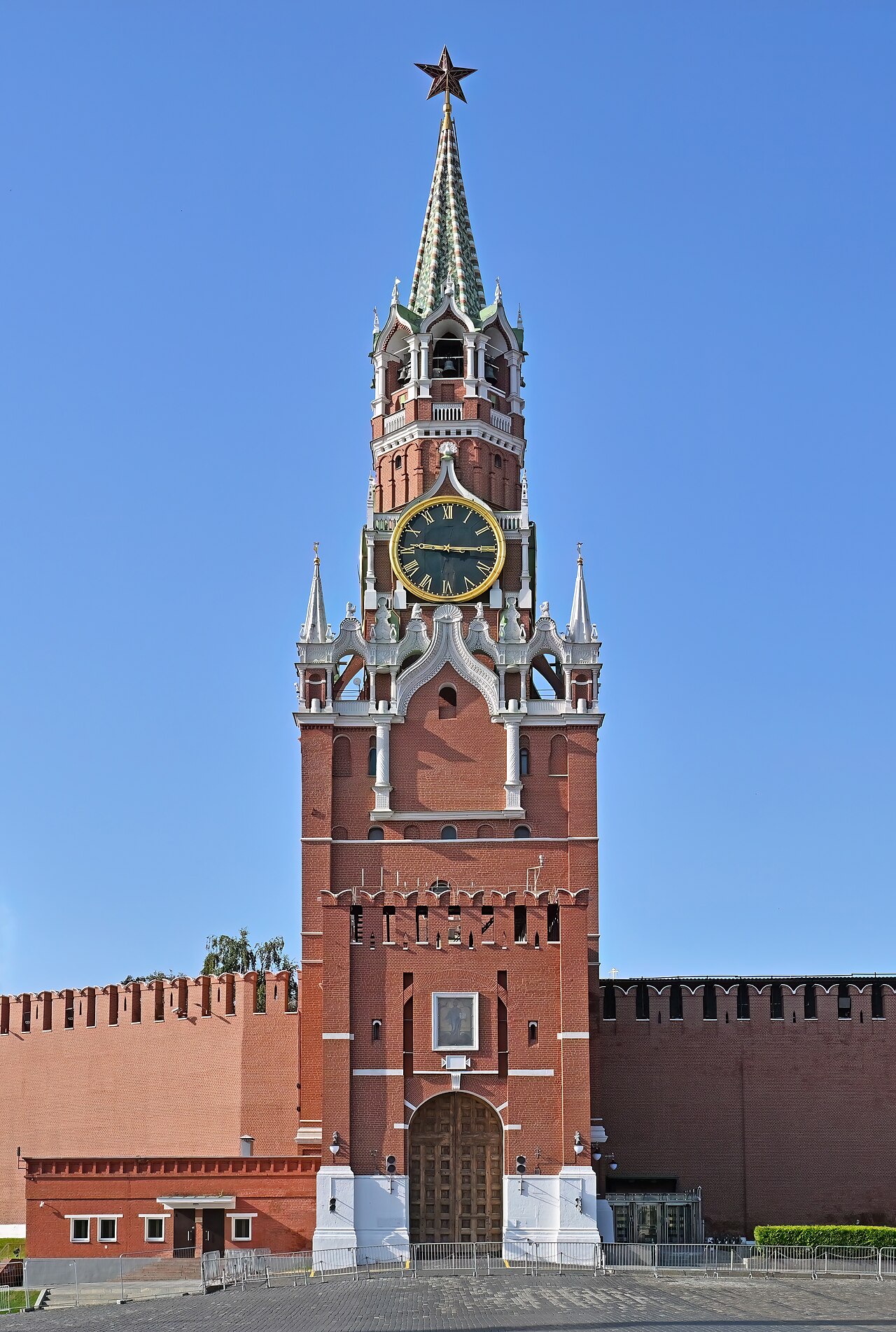
Image: Moscow Kremlin, photo by A.Savin, Wikimedia Commons, licensed CC BY-SA 3.0. Second image: Spasskaya Tower, photo by Юрий Д.К., Wikimedia Commons, licensed CC BY 4.0.
The US State Department’s October 2026 Visa Bulletin, the first of fiscal year 2027, moves several employment-based green card dates forward but pulls back EB-2 for most countries. USCIS has confirmed that adjustment-of-status applicants may use the Dates for Filing chart this month, which widens who can file.
What changed
According to Ogletree Deakins and Manifest Law, EB-1 dates for India and China advanced by about seven months, EB-2 India became available again after being unavailable in September, and EB-5 India unreserved reopened at 1 December 2023. EB-2 for the rest of the world, Mexico and the Philippines retrogressed. Both summaries say the State Department attributed the pull-back to quarterly and annual numerical limits and said it will keep monitoring demand. Law-firm summaries differ on some exact dates, so confirm figures in the official bulletin before acting.
Which chart USCIS accepts
Ogletree reports that USCIS confirmed employment-based applicants may use the Dates for Filing chart in October 2026. That chart is more generous than the Final Action Dates chart, so more people can submit applications even though approval still waits for a visa number. USCIS reassesses the chart choice monthly, so October’s position may not carry into November.
India, China and the retrogression
Consider an Indian software engineer with an approved petition in EB-2. The bulletin’s return to availability for India is good news, but it is a monthly position and can move again. Applicants from the rest of the world face the opposite situation in EB-2, where final action dates went backward. Family categories also moved: Manifest Law reports gains for Mexico and the Philippines in F1 and for India and the Philippines in F4. For context on why this month’s bulletin was late, read our earlier explainer and our note on the H-1B fee extension.
What applicants should do
Check your priority date and category against both charts, ask your attorney whether to file now under Dates for Filing, and keep documents current in case a date retrogresses. A visa bulletin is not a guarantee of an interview or approval. You can test your own options with our visa eligibility checker.
Questions readers ask
What is the October 2026 Visa Bulletin?
It is the State Department’s monthly list of cut-off dates for immigrant visas, and the first bulletin of fiscal year 2027.
Which chart can employment-based applicants use?
USCIS said applicants may use the Dates for Filing chart in October 2026, according to Ogletree Deakins.
What happened to EB-2 India?
It returned to availability after being unavailable in September, per law-firm summaries.
Did EB-2 for the rest of the world get worse?
Yes. EB-2 for the rest of the world, Mexico and the Philippines retrogressed, and the State Department cited quarterly and annual limits.
Will these dates stay the same next month?
Not necessarily. The chart choice and dates are reassessed monthly.