Britain’s PM Won’t Rule Out the Question That Divides His Party

UK Prime Minister Andy Burnham declined to rule out including a pledge to rejoin the European Union in Labour’s next election manifesto. He made the remark to reporters on September 22, while traveling to the United Nations General Assembly. It has reopened the UK rejoin EU debate at a moment when Burnham’s government is trying to project stability heading into this year’s Labour Party conference.

Reporters asked directly whether he could exclude an EU-rejoin commitment from the party’s platform. Burnham said the question was “for another day,” according to Euronews. He steered the conversation instead toward his government’s efforts to rebuild ties with Brussels through diplomatic channels already underway.

What Burnham actually said to reopen the UK rejoin EU debate

Burnham told reporters his “immediate priority” was to “build on the good work that Keir did in rebuilding bridges” with the EU. He wants to reach a “practical agreement that will further boost the British economy,” a reference to his predecessor’s efforts to repair post-Brexit relations. He stopped well short of endorsing a formal rejoin campaign. But his refusal to rule it out was enough to restart a debate many in his own party had hoped to leave behind.

The comments were notable given Burnham’s own history on the issue. He has previously spoken in favor of the UK rejoining the EU. He moderated that position during his leadership campaign earlier in 2026, telling supporters at the time that “the last thing we should do right now is rerun those arguments.”

European Union flags outside Brussels amid the UK rejoin EU debate

Why this is politically dangerous for Labour

Opposition leaders moved quickly to frame Burnham’s comments as a return to Brexit-era hostilities. Conservative leader Kemi Badenoch warned that Labour risked “restarting the Brexit wars.” Reform UK’s Richard Tice went further, calling a potential rejoin debate “a new Battle of Britain.”

Within Labour itself, senior figures have not been unanimous on how forcefully to raise the subject. Defence Secretary Wes Streeting has previously called Brexit “catastrophic,” reflecting a wing of the party more comfortable revisiting the question. Others have urged caution after Labour’s disappointing results in local elections in May 2026. Some in the party blamed those results partly on unresolved arguments over Britain’s relationship with Europe.

The Labour conference backdrop

CNN’s coverage of Labour’s party conference this week described Burnham as riding high politically, even as “tough choices” loom on multiple fronts. The EU question adds another difficult decision to that list. Raising it energizes a segment of Labour’s base that never accepted Brexit. But it also risks alienating voters in areas where opposition to EU membership remains strong.

What Burnham does next

Burnham has signaled that any substantive move on EU membership would follow, not precede, the outcome of ongoing UK-EU summit talks aimed at practical economic cooperation. That sequencing gives him room to defer a firm answer on the manifesto question for now. But the issue is unlikely to disappear before Labour finalizes its platform ahead of the next general election.

What it would take to actually rejoin

Even if Labour did commit to a rejoin pledge, the path back into the EU would be long. It would involve a fresh accession process, renewed negotiations over the terms of membership, and almost certainly another public vote, given how the original Brexit referendum was decided. None of that groundwork has begun. That is part of why Burnham’s critics argue raising the question now is premature at best. Even sympathetic voices within Labour have acknowledged that a rejoin campaign would consume years of political capital and diplomatic effort. The government is already juggling economic pressures and a demanding legislative agenda closer to home.

What the EU rejoin debate means — answered

Did Andy Burnham commit to rejoining the EU?

No. He declined to rule out a rejoin pledge in Labour’s next manifesto. But he stopped short of endorsing the idea, saying the question was “for another day.”

When did Burnham make these comments?

He spoke to reporters on September 22, 2026, while traveling to the United Nations General Assembly.

What has Burnham said about the EU in the past?

He previously supported the UK rejoining the EU. He moderated that stance during his 2026 leadership campaign, saying at the time that rerunning Brexit arguments was “the last thing we should do.”

How have opposition parties reacted?

Conservative leader Kemi Badenoch warned of “restarting the Brexit wars,” and Reform UK’s Richard Tice called a potential debate “a new Battle of Britain.”

Is Labour united on this issue?

No. Some senior figures, including Defence Secretary Wes Streeting, have previously called Brexit “catastrophic.” Others have urged caution after Labour’s setbacks in May 2026 local elections.

What would it actually take for the UK to rejoin the EU?

It would require a full accession process, fresh negotiations over membership terms, and very likely another public referendum, none of which has begun.

More on UK and EU relations

Where this reporting comes from

  • Euronews — British prime minister Burnham declines to rule out rejoining EU. euronews.com
  • CNN — Andy Burnham is on a high. When will he fall to earth? cnn.com
Norway’s Prime Minister Has to Explain Himself to Parliament This Week

Norway’s parliament, the Storting, opens public hearings today into ties between Norwegian officials and the late financier Jeffrey Epstein. Prime Minister Jonas Gahr Store is among those set to testify. The Norway Epstein parliamentary hearings mark the most visible stage yet of an inquiry that began earlier this year. It followed newly released documents connected to the Epstein case that put Norwegian diplomats and politicians under scrutiny.

The Standing Committee on Scrutiny and Constitutional Affairs is running the inquiry. It is examining both the personal conduct of individual officials and how Norwegian state institutions responded once concerns about Epstein’s conduct became known.

Who testifies at the Norway Epstein parliamentary hearings

Committee adviser Kristian Haugeland confirmed a schedule for three witnesses on September 30. They are Prime Minister Jonas Gahr Store, former Foreign Minister Borge Brende, who held the post from 2013 to 2017, and former Foreign Minister Ine Eriksen Soreide. The committee scheduled a second round of testimony for October 1. Current Foreign Minister Espen Barth Eide and former Foreign Minister Anniken Huitfeldt will appear that day.

That lineup spans more than a decade of Norwegian diplomacy. Norway’s current and several recent foreign ministers will all face questions from the same committee within a two-day span.

Witness testimony setting during the Norway Epstein parliamentary hearings

How the inquiry got here

The Storting voted earlier in 2026 to establish the commission. Al Jazeera described the trigger as a “political storm” set off by Epstein-related documents naming Norwegian diplomats and their associates. Norwegian authorities separately opened a probe into a diplomat and the diplomat’s husband over alleged Epstein links, according to earlier reporting on the case.

The hearings beginning this week mark a first. The prime minister and multiple former foreign ministers will answer questions on the record in the same forum, rather than through separate written statements or isolated media interviews.

What the committee is trying to establish

The inquiry goes beyond the conduct of any individual official. It is examining whether Norwegian state institutions acted appropriately once information about Epstein’s activities became available to them. That institutional question, rather than any single allegation against a named person, is what gives the hearings their broader political weight in Norway.

What happens after this week’s testimony

The committee has not announced when it expects to conclude its work or publish findings. Parliamentary inquiries of this kind in Norway typically continue gathering testimony and documentary evidence before issuing a public report. That process can extend well beyond the initial round of hearings. Norwegian media plan to cover each day of testimony closely, given the seniority of the officials involved.

Why this inquiry is being watched beyond Norway

Epstein-related parliamentary and government inquiries have surfaced in multiple countries in recent years. Norway’s hearings add to that pattern with a notably senior set of witnesses. A sitting prime minister testifying before a parliamentary committee on this subject is uncommon. The outcome could influence how other governments handle similar questions about official conduct connected to the Epstein case.

Norway is not alone in facing renewed scrutiny over Epstein-related connections. Legislatures and government bodies in several countries have opened their own reviews in recent years, as previously sealed documents and court records tied to the case have become public. What sets Norway’s inquiry apart is the seniority of those called to testify in a single, compressed window. A sitting prime minister and four current or former foreign ministers are all appearing before the same committee within two days.

How the hearings are expected to unfold

Committee hearings of this type in Norway are typically open to the public and broadcast. That gives Norwegian voters direct access to the testimony, rather than relying solely on official summaries or media reports. Committee members are expected to question each witness on two things: their personal knowledge of any contacts with Epstein or his associates, and decisions made within their ministries at the time. The witnesses span more than a decade of Norwegian foreign policy leadership. Their answers may reveal how much information about Epstein’s conduct was shared, or not shared, across successive governments.

Answers to key questions on the Epstein hearings

What are the Norway Epstein parliamentary hearings about?

A Storting committee is holding hearings on ties between Norwegian officials and diplomats and the late Jeffrey Epstein. It is also examining how Norwegian state institutions responded once concerns about his conduct emerged.

Is Norway’s prime minister actually testifying?

Yes. Prime Minister Jonas Gahr Store will testify on September 30, alongside former Foreign Ministers Borge Brende and Ine Eriksen Soreide.

Who testifies on October 1?

Current Foreign Minister Espen Barth Eide and former Foreign Minister Anniken Huitfeldt will appear on October 1.

What triggered the inquiry?

The Storting voted to establish the commission after newly released Epstein-related documents named Norwegian diplomats and politicians. Al Jazeera described the fallout as a political storm in Norway.

Has any wrongdoing been confirmed?

No. No specific findings have come out publicly as of the start of this week’s hearings. The inquiry is still gathering testimony.

When will the inquiry conclude?

No end date has been set. Parliamentary inquiries of this scope typically continue for some time after initial hearings before a final report comes out.

Related world coverage

Reporting sources

  • Caliber.az — Norway’s prime minister to testify in parliament over Epstein case. caliber.az
  • Al Jazeera — Epstein files set off Norwegian political storm: What we know. aljazeera.com

Hurricane Polo Was the Strongest Storm Almost No One Saw Coming

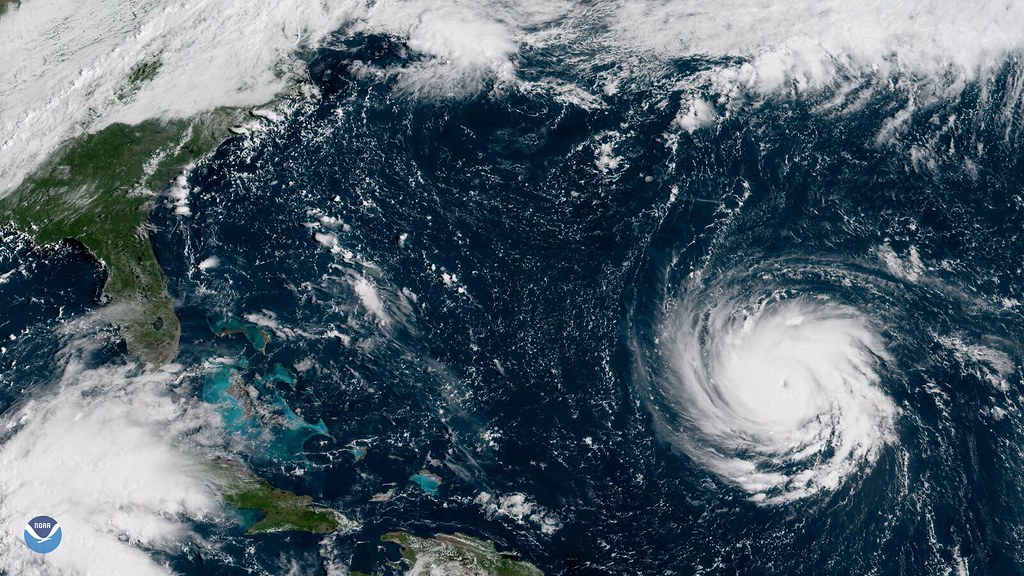
Ten days ago, Hurricane Polo was a modest tropical storm off Mexico’s Pacific coast. By September 22, it had exploded into a Category 5 hurricane with sustained winds of up to 180 mph. That made it the second-strongest hurricane on record in the Eastern Pacific basin. The Hurricane Polo Mexico landfall that followed has triggered evacuations, school closures and flood watches. Those now stretch far beyond the coastline where the storm first hit.

Polo’s rapid intensification, gaining more than 100 mph in wind speed in roughly 24 hours, caught many forecasters off guard. It gave coastal communities in Baja California Sur only a short window to prepare.

The Hurricane Polo Mexico landfall, step by step

By the time Polo reached the coast, it had weakened considerably from its Category 5 peak. CBS News reported the storm made its first landfall in Baja California Sur as a strong Category 2 hurricane, with maximum sustained winds of 110 mph. It then weakened further, to Category 1 strength with 80 mph winds. Mexican authorities expected a second landfall in southern Sonora on the mainland shortly afterward.

Even at reduced strength, the storm carried enough moisture to trigger serious flooding concerns. The U.S. National Hurricane Center forecast 6 to 12 inches of rainfall across Baja California Sur. Sonora was forecast to see 4 to 6 inches, and locally up to 8 inches.

Heavy tropical rain and flooding linked to the Hurricane Polo Mexico landfall

Evacuations, shelters and school closures

Mexican authorities evacuated residents from vulnerable coastal areas, opened emergency shelters, and deployed military personnel ahead of the storm’s arrival, according to CBS News. Schools suspended classes in Acapulco as a precaution, even though the city sits well away from Polo’s direct path. That step alone shows how seriously officials treated the storm’s potential for widespread disruption.

Hurricane warnings were issued for parts of Baja California Sur and for a stretch of mainland Mexico running from Bahia Kino to Huatabampito. Tropical storm warnings covered both coasts of Baja California Sur as well as additional sections of the mainland.

A flood threat that reaches deep into the United States

Polo’s remnants are forecast to continue moving north into the southwestern United States. The National Weather Service has issued flood watches across 11 U.S. states, including Arizona, New Mexico, Utah, Colorado, Kansas, Nebraska, Iowa and Texas. Yale Climate Connections reported the flood threat extends from the Four Corners region eastward into the Central Plains. That puts more than 14 million Americans within the affected area.

That reach illustrates a pattern that has become increasingly common with Pacific hurricanes in recent years. A storm can weaken well below hurricane strength at the coast and still deliver its most dangerous impacts hundreds of miles inland. Those impacts usually take the form of flash flooding rather than wind damage.

What happens as Polo moves north

Forecasters will be watching how much of Polo’s moisture survives the journey north. They are also tracking how it interacts with existing weather patterns over the southwestern U.S. Local officials in the affected states are urging residents in flood-prone areas to monitor forecasts closely over the coming days. Low-lying and canyon terrain, where flash flooding can develop with little warning, carries the greatest risk.

Why Polo’s intensification matters beyond this storm

Polo jumped from a 45 mph tropical storm on September 21 to 150 mph winds by the next day. That kind of rapid intensification has become a growing focus for climate scientists. They are studying how warming ocean temperatures affect storm behavior. Faster intensification gives coastal communities less time to prepare, a pattern forecasters have flagged in several major storms in recent hurricane seasons.

FAQ: Hurricane Polo and travel to Mexico

Did Hurricane Polo make landfall as a Category 5 storm?

No. Polo peaked at Category 5 strength on September 22 while still offshore, then weakened before making landfall in Baja California Sur as a Category 2 storm with 110 mph winds, later dropping to Category 1 strength.

Which parts of Mexico were affected?

Baja California Sur took the first landfall, with a second landfall expected in southern Sonora on the mainland. Hurricane warnings covered Baja California Sur and the mainland coast from Bahia Kino to Huatabampito.

Which US states are under flood watches because of Polo?

The National Weather Service issued flood watches across 11 states, including Arizona, New Mexico, Utah, Colorado, Kansas, Nebraska, Iowa and Texas, as the storm’s remnants moved north.

How many people are at risk from flooding?

Yale Climate Connections reported the flood threat, stretching from the Four Corners region into the Central Plains, affects more than 14 million Americans.

Were there any casualties reported from Hurricane Polo?

As of the most recent reporting, no casualties or damage figures had been confirmed, though evacuations and shelter openings were underway in Mexico ahead of landfall.

Is it safe to travel to Los Cabos or Baja California Sur right now?

Travelers should check official advisories and airline notices before departure, since coastal areas of Baja California Sur were under direct hurricane and tropical storm warnings at the time of landfall.

More travel coverage

Sources for this report

  • CBS News — Hurricane Polo makes landfall over Mexico. See its path. cbsnews.com
  • Yale Climate Connections — After two landfalls in Mexico, Hurricane Polo’s rainmaking journey has just begun. yaleclimateconnections.org

Morocco Names First Woman Prime Minister After Election

Morocco’s King Mohammed VI has appointed Fatima Zahra El Mansouri as prime minister, making her the first woman to head the country’s government. The appointment came on 29 September 2026, days after legislative elections held on 23 September, according to Al Jazeera. The royal palace has asked her to form a new government, PBS News reports. Her appointment as Morocco’s first woman prime minister now turns on whether she can assemble a working majority.

Contents

A lawyer who became mayor, then minister

El Mansouri, who is 50, was born in Marrakesh in 1976 and studied law at the University of Montpellier in France. Al Jazeera adds that she also studied at New York University. She became mayor of Marrakesh in 2009, the first woman to hold that post, and has served as minister of national spatial planning since October 2021. PBS News says she became a top leader of her party in 2024 and that her father, Abderrahmane El Mansouri, was a prominent local official and Morocco’s ambassador to the United Arab Emirates.

The appointment also has a regional footnote. Al Jazeera notes she is the second woman to lead an Arab government, after Tunisia’s Najla Bouden, who was prime minister from October 2021 to August 2023.

The vote and the coalition arithmetic

Her party, the Authenticity and Modernity Party (PAM), was founded in 2008 and is widely described as aligned with the monarchy. Al Jazeera reports it won 97 of the 395 seats in the House of Representatives, the largest bloc but well short of the 198 needed for a majority. PBS News describes the result as the party’s first electoral victory since its creation.

Morocco’s electoral system makes single-party majorities unusual, so coalition talks are the next phase. PAM has said it is willing to work with other parties. Two potential partners have ruled themselves out: both outlets report that the Justice and Development Party, a moderate Islamist party, and the left-wing Federation of Democratic Left will stay in opposition. The arithmetic therefore depends on other parties that have not yet publicly committed.

The in-tray waiting for her

PBS News lists the pressures on the new government: heavy public investment linked to the 2030 FIFA World Cup, which Morocco will host jointly with Portugal and Spain; inflation; wage demands; and job creation. The World Cup is a fixed deadline that shapes the budget, and partner countries watch delivery closely. For context on one co-host, see our earlier report on Madrid’s housing protests. For the wider regional economic picture, read our summary of the EBRD’s growth outlook for Africa.

Steps to watch in October

The constitutional task now is to present a government. Watch for which parties join PAM, how many ministries it concedes, and whether economic portfolios stay with technocrats or go to coalition partners. Neither source reviewed gives a date by which the government must be formed, so any timeline quoted elsewhere should be checked against an official announcement. Investors and foreign governments will read the cabinet list as the first real signal of policy direction.

Common questions

Who is Fatima Zahra El Mansouri?

She is a lawyer and politician born in Marrakesh in 1976, who studied law at the University of Montpellier in France. She has been mayor of Marrakesh since 2009 and held the national spatial planning portfolio in government since October 2021, according to Al Jazeera.

How many seats did her party win?

Al Jazeera reports the Authenticity and Modernity Party (PAM) won 97 of the 395 seats in the House of Representatives. A majority requires 198 seats, so PAM needs coalition partners.

Is she the first woman to lead a government in the Arab world?

No. Al Jazeera notes she is the second Arab woman to become prime minister, after Tunisia’s Najla Bouden, who served from October 2021 to August 2023.

Which parties have said they will stay in opposition?

Both Al Jazeera and PBS News report that the Justice and Development Party and the Federation of Democratic Left said they would remain in opposition.

What are the first tasks for the new government?

PBS News lists billions in investment tied to hosting the 2030 World Cup, reducing inflation, raising wages and creating jobs.

European Ministers Push Border Controls and Faster Returns

In this article

Interior ministers from 17 European countries met on 26 September 2026 to discuss tougher border controls and faster returns of rejected migrants, with Germany pushing for a new European migration crisis mechanism. The proposals concern irregular migration, not visas for workers or students, but they shape the political climate around European immigration.

What was discussed

The gathering, summarised by Visasupdate and covered by AP and InfoMigrants, brought together ministers from 17 countries. Separate talks involved Germany, Denmark, Austria, Greece and the Netherlands on third-country return centres. We have not independently verified details beyond these reports.

The proposals

German Interior Minister Alexander Dobrindt called for a new European migration crisis mechanism and a rapid-response Frontex force with expedited deportations, InfoMigrants reports. The Visasupdate summary adds a proposal to expand Frontex into a border protection and return agency. EU Commissioner Magnus Brunner was reported saying that illegal migration has fallen 55% in two years and by one-third in the last year. That is an official claim from an institution with a stake in the policy, so treat it as the Commission’s framing. Background is on the European Commission migration and home affairs site.

Nothing reported from the meeting changes visa or residence permit rules for skilled workers, students or families. A Mexican welder applying for a German skilled-worker visa, for example, still follows current national rules. Coverage of recent legal-route changes includes the Netherlands work permit rules. To test eligibility, use the visa eligibility checker.

What happens next

Ministers’ proposals normally need Commission drafting, Council agreement and often Parliament approval. No adoption dates were reported. Watch for a formal Commission proposal or a further ministerial meeting.

Common questions

Who met on 26 September?

Interior ministers from 17 European countries, according to the Visasupdate summary, with separate talks among Germany, Denmark, Austria, Greece and the Netherlands on return centres.

What did Germany propose?

Interior Minister Alexander Dobrindt called for a new European migration crisis mechanism and a wider Frontex mandate, per the same summary.

What did the EU say about irregular migration?

Commissioner Magnus Brunner was reported saying illegal migration has fallen 55% in two years and by one-third in the last year.

Does this change visa rules for workers or students?

No. These are border and return proposals, not changes to work or study visas.

Are these proposals law?

No. They were discussed by ministers and would need formal EU legislative steps.