• Mon - Fri 9.00 - 19.00

Tag Archives: United Nations

Dozens of Countries Walked Out on Netanyahu’s UN Speech — Here’s Why

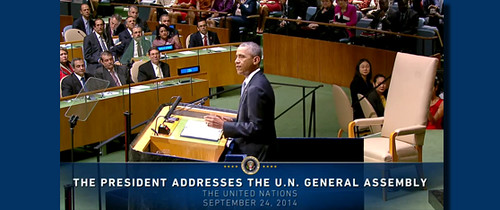
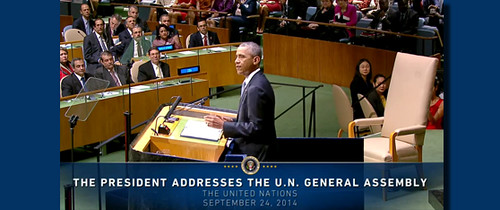
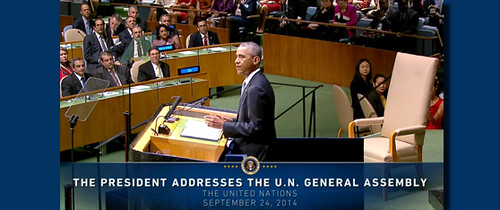
The Netanyahu UN Assembly speech on September 24 emptied large sections of the chamber before he even reached the podium. Delegates from dozens of countries walked out in a coordinated show of protest over Israel’s Gaza campaign. The Israeli prime minister used the platform to defend the war, reject accusations of genocide, and take direct aim at foreign leaders who have grown more critical of Israel over the past year.

What happened during the Netanyahu UN Assembly speech

According to Al Jazeera’s account of the address, Netanyahu told the assembly Israel had carried out the “opposite of genocide” in Gaza, a claim that came despite a Palestinian death toll that has climbed past 73,000 over the course of the war. He also claimed that some of the leaders who walked out had privately thanked Israel for “taking out Iran’s nukes,” a reference to the May strikes on Iranian nuclear-linked sites.

Reaction split sharply along familiar lines
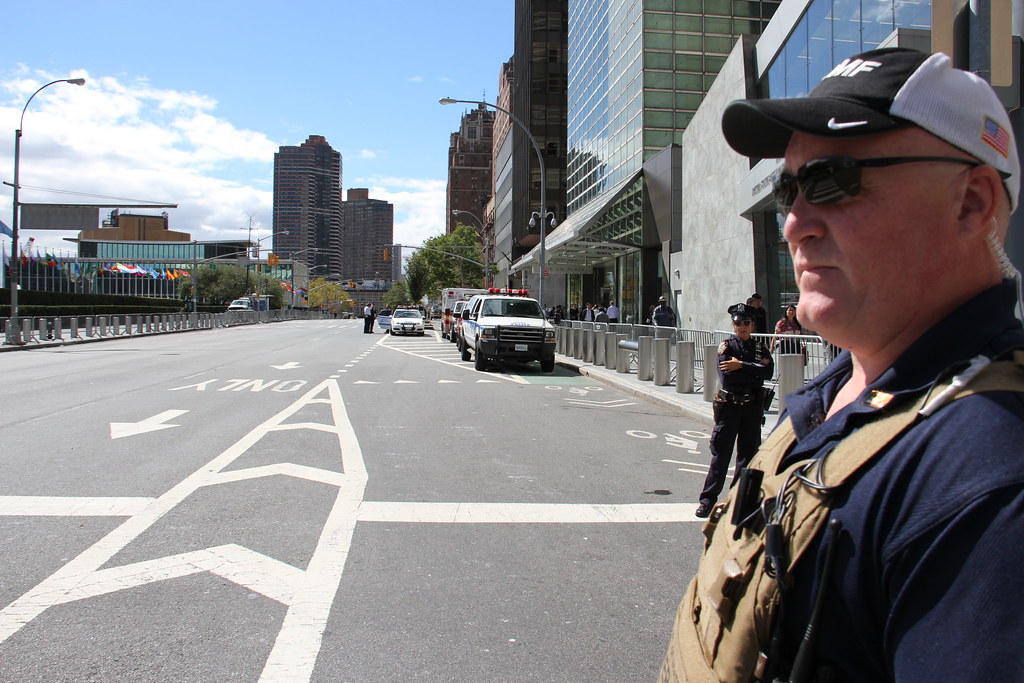
Netanyahu UN Assembly speech flags outside UN headquarters

At home, the speech played well with Netanyahu’s base. Israeli pollster Mitchell Barak called it “a great performance,” and right-wing outlets highlighted his defiant framing of Israel fighting on seven fronts against enemies seeking its destruction. Outside Israel, the response was far less favorable. Security analyst Ahron Bregman said the speech “was littered with lies,” calling Netanyahu a “serial liar.” He pointed to more than 80 Palestinians killed in the West Bank by Israeli forces and settlers so far this year, a toll separate from the Gaza casualty figures.

Coverage of the speech, including a report from NPR, noted Netanyahu also directed criticism at New York political figures who have been outspoken on Gaza, folding domestic American politics into a speech nominally addressed to the UN membership.

The timing is not accidental

The speech landed roughly a month before Israeli parliamentary elections that could end his time in office. Much of its content was aimed as squarely at domestic voters as at the international audience in the chamber. Framing Israel as isolated but unbowed has been a consistent Netanyahu theme through 2026. The UN stage gave him a global platform to repeat it days before a campaign that will test whether that message still holds with Israeli voters.

Israeli commentators have noted that UN speeches have functioned this way for Netanyahu before, providing a moment of unfiltered, camera-ready defiance that plays differently to a domestic audience than to the diplomats in the room.

What the walkout signals about Israel’s isolation

The scale of the walkout, drawing delegates from dozens of countries before Netanyahu had spoken a word, is itself being read as a marker. It shows how far Israel’s diplomatic standing has slipped over the course of the Gaza war. It followed a broader pattern at this year’s General Assembly session, where the war has dominated speeches from leaders across the Arab world, Europe and parts of Latin America. Several used their own remarks to call for an arms embargo or expanded sanctions.

What Netanyahu’s speech means going forward

With Israeli elections roughly a month away, the speech is likely to be replayed heavily in domestic campaign coverage rather than shift international opinion, which had already hardened well before Netanyahu took the podium. Diplomats expect little practical change in how governments engage with Israel in the near term, though the size of the walkout may embolden further coordinated diplomatic gestures at future UN sessions.

Further reading on the Gaza war and the UN

See our related coverage of the UN Secretary-General’s General Assembly remarks, the Gaza reconstruction plan, and the UN Security Council’s AI briefing.

Frequently asked questions on the walkout

How many countries walked out?

Reports describe delegates from dozens of countries leaving before Netanyahu spoke, though no single official tally of walkout participants has been published.

What did Netanyahu say about Gaza casualties?

He described Israel’s conduct as the “opposite of genocide,” a claim made despite a Palestinian death toll that has passed 73,000 during the war.

Did Netanyahu address Iran in the speech?

Yes. He claimed leaders who walked out had privately thanked Israel for strikes on Iran’s nuclear program, without naming which leaders made such comments.

Why is the timing significant?

The speech came about a month before Israeli parliamentary elections that could remove Netanyahu from office, and much of it was aimed at domestic voters.

How was the speech received in Israel versus abroad?

Domestically it was praised by supporters as a strong performance; internationally, critics including security analyst Ahron Bregman characterized its claims as false.

Sourcing and further reading

Guterres Just Gave His Last UN Speech — And Issued a Warning

World leaders converged on New York this week for the opening of the 81st UN General Assembly, and the session carried extra weight: it is the last one Antonio Guterres will open as Secretary-General before his second term ends. The UN General Assembly Guterres opening drew a call for “a world built on interdependence,” as he used his final address to press leaders on climate change, conflict and the rise of artificial intelligence.

What Guterres told the UN General Assembly Guterres session

Guterres opened the General Assembly in New York on Tuesday, September 22, delivering his annual report and final address before UNGA President Khalilur Rahman formally opened the debate. He pleaded for greater global cooperation, framing the challenges facing the UN, climate change, war, inequality and artificial intelligence, as a “formidable menu” that no country can manage alone. It was a valedictory tone from a Secretary-General whose second and final term ends on December 31, 2026.

A packed podium on day one

Guterres was followed at the podium by Brazilian President Luiz Inacio Lula da Silva, US President Donald Trump and French President Emmanuel Macron, each addressing a different slice of the same agenda. Macron used his remarks to argue there could be “no peace without justice,” a line aimed squarely at ongoing conflicts still unresolved on the Security Council’s docket. The juxtaposition of speakers, an outgoing UN chief followed immediately by heads of state jockeying over the institution’s future direction, set the tone for a High-Level Week already being described as unusually consequential.

Why this General Assembly carries extra stakes

Beyond the substantive agenda, this session doubles as the informal start of the race to succeed Guterres. Diplomats in New York have spent the run-up to the session gauging support for potential successors, even though no formal selection has been made. That undercurrent shaped how closely delegations listened to Guterres’s closing arguments, treating them less as routine remarks and more as an attempt to set the agenda his successor will inherit.

UN General Assembly Guterres

What happens through the rest of the week

The general debate runs through Saturday, September 26, before resuming on Monday, September 28, with dozens more heads of state and government scheduled to speak. Side meetings on climate finance, AI governance and Middle East diplomacy are expected to run in parallel with the formal floor speeches, as they typically do during General Assembly week. Guterres is expected to remain active in select side events even as the floor debate shifts to other leaders.

Climate and conflict dominate the substantive agenda

Beyond the diplomatic theater of who speaks when, the substance of this year’s General Assembly centers on a familiar but unresolved list: stalled climate finance commitments, active conflicts across multiple regions that the Security Council has struggled to address, and rising economic inequality between wealthy and developing nations. Guterres devoted a significant portion of his address to each, framing them not as separate crises but as symptoms of the same underlying failure of international cooperation that has defined much of his tenure. Delegates from smaller nations have used the opening days to press for concrete funding commitments rather than renewed rhetorical pledges, a frustration that has grown louder in recent General Assembly sessions.

The undercurrent shaping every hallway conversation

Diplomats gathered in New York are also quietly positioning for what comes after Guterres. His second term ends December 31, 2026, and while no successor has been formally chosen, informal soundings among member states have already begun. That race adds a layer of strategic calculation to speeches that might otherwise read as routine, since delegations are listening for signals about which candidates carry support from key blocs, and which policy priorities a new Secretary-General might inherit or abandon.

The agenda items competing for attention

Climate finance, artificial intelligence governance and Middle East diplomacy are all vying for space on a crowded week of side events running alongside the formal floor speeches. Guterres used part of his address to argue that AI oversight can no longer be treated as a secondary issue behind traditional security concerns, framing it as core to the interdependence he called for. Delegations from smaller and developing nations have used side sessions to press wealthier member states on climate finance commitments that have repeatedly fallen short of pledged targets in recent years, a tension likely to resurface throughout the week’s remaining sessions.

Frequently Asked Questions

What did Guterres say in his final address?

He called for ‘a world built on interdependence,’ urging cooperation on climate change, conflict, inequality and the rise of artificial intelligence as his second and final term as UN Secretary-General nears its end.

When does Guterres’s term end?

His second term as UN Secretary-General ends on December 31, 2026, making this his last General Assembly opening as the sitting chief of the UN.

Who spoke after Guterres?

UNGA President Khalilur Rahman formally opened the debate, followed at the podium by Brazilian President Luiz Inacio Lula da Silva, US President Donald Trump and French President Emmanuel Macron.

How long does the General Assembly debate run?

The high-level debate opened Tuesday, September 22, and runs through Saturday, September 26, before resuming Monday, September 28.

Is a new Secretary-General being chosen this session?

The race to succeed Guterres is part of the backdrop to this year’s session, though no successor had been formally selected as world leaders gathered in New York.

Related coverage on Tamara News

For more context, see our reporting on Trump delcy rodriguez meeting and Iran ceasefire diplomatic progress.

Sources

Why UN Investigators Say the Iran School Strike Was No Accident

UN Iran war crimes findings released this week say investigators found “reasonable grounds” to believe the United States committed war crimes in Iran. The findings cover two strikes from February 2026. One hit the Shajareh Tayyebeh Primary School in the southern city of Minab. The other hit a sports complex in Lamerd. Together, the strikes killed at least 178 civilians, the mission’s report says.

What the UN Iran War Crimes Findings Say

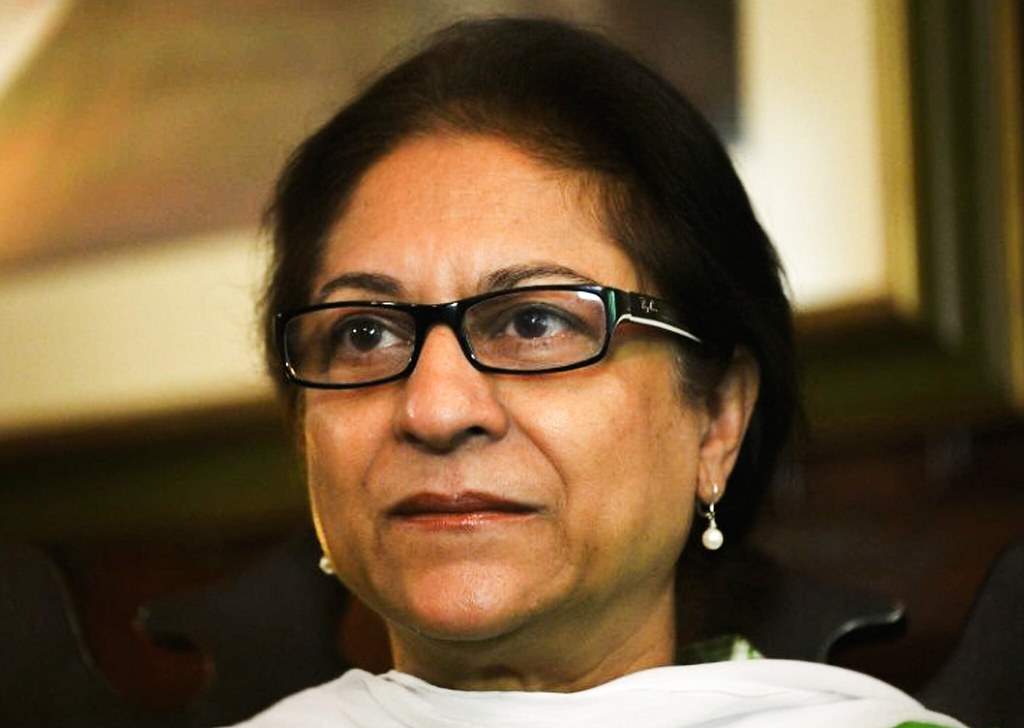
The findings come from the Independent International Fact-Finding Mission on the Islamic Republic of Iran. The UN Human Rights Council created this body in 2022. Bangladeshi jurist Sara Hossain chairs the mission. The council extended its mandate for two more years in January 2026.

UN Iran war crimes findings: investigators reviewing evidence documents

The mission submitted its report to the Human Rights Council in Geneva. It planned to present the findings to the 47-member council. The mission said it found “reasonable grounds to believe the United States committed the war crime of launching indiscriminate attacks,” resulting in civilian deaths, injuries and damage, according to a statement from the UN’s human rights office, OHCHR.

Investigators wrote that the school building in Minab “was the intended point of impact.” They ruled out an errant strike. They also ruled out collateral damage from a nearby military compound. The report is not legally binding. It could still feed into cases at international courts, since it documents witness accounts, satellite imagery and weapons analysis.

Inside the Minab School and Lamerd Strikes

The Minab strike happened around 10:30am local time on February 28. It hit Hormozgan province in southern Iran. Missiles struck the Shajareh Tayyebeh Primary School twice. The first hit the lower floor. Staff then moved children to a prayer room upstairs. A second strike hit the upper floor and killed many of them, the mission said.

The school sat roughly 72 metres from a naval facility linked to Iran’s Revolutionary Guard. A wall separated the two sites, and the school had its own entrance. Satellite imagery showed a functioning school with a playground and children’s murals. Local Iranian officials put the death toll at 156, including 120 schoolchildren and 26 teachers. Iranian state media reported 168 dead, most of them children. Weapons analysts identified fragments at the site as parts of a US Tomahawk missile, a weapon Iran does not possess.

Hours later, a separate strike hit the Shahid Haj Khalil Naimi Cultural and Sports Complex in Lamerd, Fars province. The mission said Precision Strike Missiles dispersed tungsten pellets over the complex and a nearby residential area. Local officials reported 22 deaths, including four children, and more than 100 injuries. The US has confirmed using Precision Strike Missiles in Iran for the first time in this conflict.

Why Investigators Call the Strikes ‘Reckless,’ Not Intentional

The mission did not accuse the US of deliberately targeting the school. Instead, it applied a legal standard known as recklessness. International law sometimes calls this “dolus eventualis.” This standard applies when a party knows of a serious risk of an unlawful outcome and proceeds anyway. Legal experts say this threshold, not intent, can establish the war crime of launching an indiscriminate attack.

The mission pointed to outdated targeting data as one factor behind the Minab strike. It also said the school was “readily identifiable” from the air and on satellite imagery. Other news organizations separately reported on a preliminary Pentagon investigation, which the mission cited. That investigation blamed outdated intelligence. The intelligence had wrongly linked the school to the adjacent military site.

Reed Brody, a human rights lawyer with the International Commission of Jurists, said not every violation of the laws of war rises to a war crime. But he said the mission’s recklessness finding rested on three points: stale targeting data, a building that was plainly civilian, and a wider pattern of the US scaling back safeguards meant to limit civilian harm.

How Washington and Tehran Have Responded

The US has not disputed that its forces struck the Minab school. In May, US Central Command’s Admiral Brad Cooper said preliminary Pentagon findings linked the strike to American forces. In June, President Donald Trump said “nobody” had purposefully attacked the school. The Trump administration has not released the full findings of its internal investigation into the Minab strike.

Washington does dispute responsibility for the Lamerd strike. US Central Command says the damage there matches an Iranian Hoveyzeh cruise missile. The mission rejected that. It cited weapons experts who found design differences ruling out a Hoveyzeh. Those experts instead pointed to a US-made Precision Strike Missile.

White House Deputy Press Secretary Anna Kelly rejected the report outright. She said the Human Rights Council “has accomplished nothing for human rights” for decades. She said Iran’s government is “the only party in this conflict that has committed war crimes,” citing its own crackdown on protesters and attacks in the Strait of Hormuz. The Trump administration withdrew the US from the Human Rights Council in February 2025. The State Department did not immediately respond to a request for comment from the Associated Press.

Iran has rejected the US denial over Lamerd. It points to both strikes as evidence of indiscriminate American attacks on civilians. Iranian officials have published their own casualty counts, which match the mission’s figures for both sites. Iran has separately called for international accountability over the strikes. The same UN mission, though, accused Tehran’s own security forces of crimes against humanity against protesters since 2025. It cited mass arrests, torture allegations and dozens of executions.

Neither Washington nor Israel gave the mission access to military personnel. Neither government answered the mission’s requests for information. Investigators relied instead on satellite imagery, verified video, weapons analysis and witness accounts.

Where These War Crimes Findings Go From Here

Legal experts say the report carries no automatic consequences on its own. Brody said such UN findings can still “form the basis for other proceedings.” He pointed to how past fact-finding reports fed into The Gambia’s genocide case against Myanmar. The US has withdrawn from the International Court of Justice’s general jurisdiction. Iran is also unlikely to join the International Criminal Court, since that would expose its own record to scrutiny.

Accountability will likely depend on political pressure, Brody said, not legal mechanics alone. He noted that Congress has grown more willing to press the administration as midterm elections approach. That could push the Pentagon to release its Minab findings. The mission itself urged the US and Iran to halt further violations. It also called for full reparations to victims and a lasting diplomatic end to the conflict.

Tamara News has covered the wider diplomatic backdrop to this conflict, including reporting on signals that the Iran war may be nearing an end and on a separate Pentagon watchdog review of the Iran strikes. For comparison on how war-crimes accountability has played out elsewhere, see our coverage of the war crimes sentencing of former Kosovo leader Hashim Thaci.

Frequently Asked Questions

What did the UN Iran war crimes findings actually conclude?
The mission found reasonable grounds to believe the US committed the war crime of launching indiscriminate attacks. This covers strikes on a school in Minab and a sports complex in Lamerd. Together they killed at least 178 civilians.

Did the UN accuse the US of intentionally bombing a school?
No. Investigators applied a recklessness standard. They said the US failed to verify the target properly, not that it deliberately chose to strike a school.

How has the US government responded?
The White House rejected the findings and accused the Human Rights Council of bias. The Pentagon has not released its internal investigation. The State Department did not immediately comment when the Associated Press asked.

Does the US dispute both strikes?
The US has not disputed hitting the Minab school. It denies responsibility for the Lamerd strike and blames an Iranian missile. The UN mission rejected that explanation based on weapons analysis.

Could this report lead to prosecutions?
Not directly. The report is not binding. Experts say the US and Iran’s positions outside key international courts make direct prosecution unlikely, though the findings could support other efforts.

Did the report also cover Iran’s own conduct?
Yes. The same mission said Iran’s government committed crimes against humanity against its own citizens during the 2025-2026 protest crackdown. It cited mass killings, torture, arbitrary detention and executions.

Sources

UN General Assembly High-Level Week 2026: The Full Agenda

The UN General Assembly high-level week opens on 18 September 2026 and runs to 28 September, with heads of state and government gathering in New York for the 81st session under the theme “Restoring trust, managing transformation: A United Nations that delivers for all”. The calendar the UN has published is unusually front-loaded with formal outcomes rather than speeches alone.

Jump to a section

The dates that matter

The UN’s official high-level week page sets the window at 18 to 28 September. The week opens with the SDG Moment on 18 September, a three-hour session in the General Assembly Hall convened by the Secretary-General under General Assembly Resolution 74/4, which showcases national and community-level progress on the Sustainable Development Goals.

Two supporting platforms bracket the week. The SDG Media Zone, produced by the UN Department of Global Communications, runs 21 to 25 September. The Goals Lounge, convened by the Deputy Secretary-General and hosted by the UN Office for Partnerships, runs longer, from 14 to 25 September.

The General Debate

The General Debate runs 22 to 28 September in the General Assembly Hall. It is the annual meeting of heads of state and government at the opening of a session, where leaders set out national positions and priorities. Khalilur Rahman of Bangladesh presides over the 81st session.

The Secretary-General set the framing in June, returning to the Charter’s opening words. “The Charter of the United Nations begins with three simple words: ‘We the peoples,'” António Guterres said, adding that the phrase is not “we the powerful” or “we the victorious”. It is a deliberate signal ahead of a session in which several of the scheduled meetings turn on whether smaller states can get commitments from larger ones.

Climate action and the just transition

The Climate Summit on 23 September, convened by Guterres in the Trusteeship Council Chamber, is the week’s centrepiece on emissions. The UN’s own framing is notably blunt: ten years after the Paris Agreement, it says, the climate crisis has entered a new phase in which overshoot is now inevitable, even as the energy transition accelerates.

Leaders from major economies, developing and vulnerable countries, and major energy producers and consumers are being brought into the same room to set out how they will accelerate the transition, strengthen energy security and advance climate justice. The backdrop is a year of records — our report on the hottest August on record covers the temperature data leaders will be asked about.

Four high-level meetings

Beyond the debate and the climate event, four commemorative or negotiated meetings sit on the calendar.

On 23 September, a high-level meeting marks the 40th anniversary of the Declaration on the Right to Development, adopted in 1986. On 24 September, a high-level plenary addresses the existential threats posed by sea level rise, aimed at small island developing states and low-lying coastal areas.

On 25 September, the President of the General Assembly convenes a one-day meeting on pandemic prevention, preparedness and response, themed around a multilateral and intergenerational approach built on equity and solidarity. This is the one scheduled to produce a concise, action-oriented political declaration agreed by consensus through intergovernmental negotiations — the closest thing the week has to a binding output.

On 28 September, a high-level meeting marks the 25th anniversary of the Durban Declaration and Programme of Action on racial justice, followed on 29 September by the annual plenary for the International Day for the Total Elimination of Nuclear Weapons.

What to look for

Three tests are worth applying as the week runs. Whether the pandemic declaration survives consensus negotiation intact, or is thinned to language every delegation can accept. Whether the climate event produces named national commitments or restates existing pledges. And whether the sea level rise plenary moves from recognition to financing, which is the step small island states have pressed for across several sessions.

The geopolitical context is heavier than usual. Our coverage of the BRICS New Delhi declaration and of the EU’s renewal of Russia sanctions sets out the blocs that will be arguing past each other in the hall.

Where to follow it

All listed events are live-streamed on UN Web TV. Sessions in the General Assembly Hall and Trusteeship Council Chamber run on published times in New York, and the UN posts the speaker list for the General Debate as it firms up during the week.

Common questions about the session

When does the UN General Assembly high-level week run in 2026?

The UN lists high-level week as 18 to 28 September 2026, with the General Debate itself running from 22 to 28 September in the General Assembly Hall.

Who is presiding over the 81st session?

Khalilur Rahman of Bangladesh presides over the 81st session, under the theme “Restoring trust, managing transformation: A United Nations that delivers for all.”

What is the Climate Summit on 23 September?

It is a high-level event on climate action and the just transition convened by Secretary-General António Guterres, bringing together major economies, vulnerable states and large energy producers and consumers.

Is there a formal outcome document this year?

The high-level meeting on pandemic prevention, preparedness and response on 25 September is scheduled to conclude with a political declaration agreed by consensus through intergovernmental negotiation.

Where can the sessions be watched?

The UN streams the events on UN Web TV, and runs the SDG Media Zone from 21 to 25 September alongside the Goals Lounge from 14 to 25 September.

More world coverage

The Iran Sanctions Panel Vote Facing a Russian and Chinese Veto

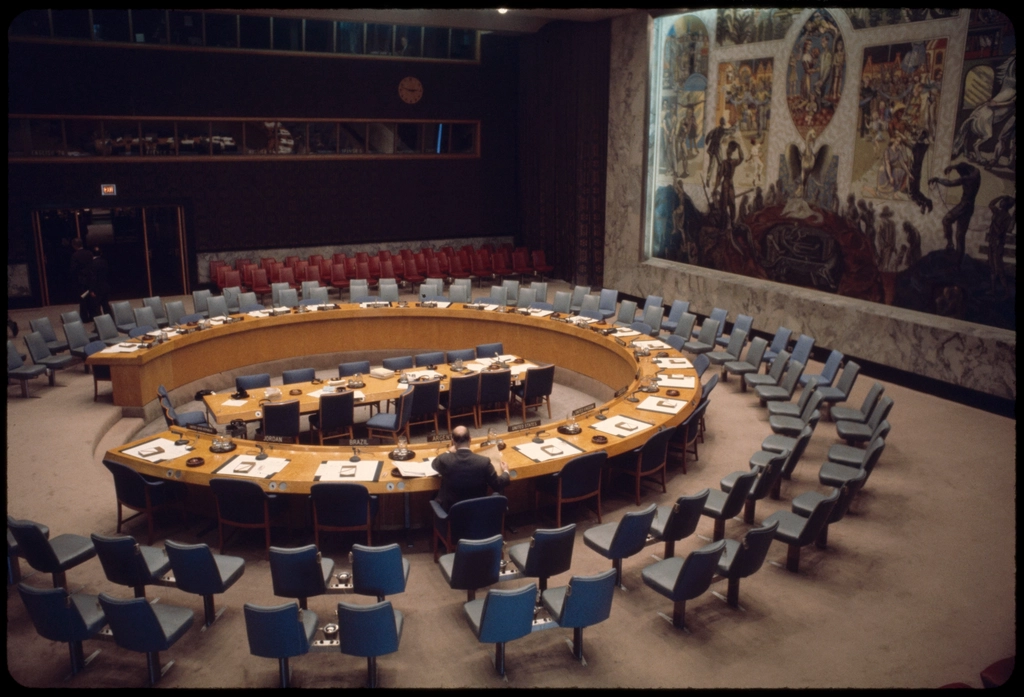
The UN Security Council is expected to hold an Iran sanctions panel vote on 17 September, according to diplomats cited by wire reporting, on whether to renew the mandate of the expert panel that monitors compliance with sanctions on Iran. The mandate expires on 26 September. France announced the vote; Russia and China have signalled they do not accept that the Council has the standing to hold it at all.

What the panel of experts actually does

A UN panel of experts is a small standing team that reports to a Security Council sanctions committee. It investigates alleged violations, tracks procurement networks and shipping, and publishes findings that member states use to justify enforcement. It has no power to punish anyone. Its value is evidentiary: without a panel, the sanctions committee is largely dependent on what individual governments choose to tell it, and those governments have interests.

That is why mandate renewals, which look procedural, matter. Letting a panel lapse does not lift sanctions. It removes the independent reporting that makes them legible.

How the Council got back to Iran sanctions

UN sanctions on Iran, including measures under resolution 1737 (2006), were reimposed on 27 September 2025 through the snapback mechanism, after findings of Iranian non-compliance with its nuclear obligations. Snapback was the enforcement device built into the 2015 nuclear agreement: it allowed a participant to restore previously lifted UN measures without a fresh Council vote that could be vetoed.

Since then the Council has been arguing about whether that reimposition was valid. At a Council session earlier this year, Russia and China challenged the legality of the snapback and the Council’s continuing role on the Iranian nuclear file. In a joint statement in March, the two governments said the Council “cannot proceed to re-establish the 1737 Committee or its Panel of Experts.”

Strip out the diplomacy and there are two incompatible positions. The Western position is that snapback was lawfully triggered, the pre-2015 sanctions architecture is back in force, and the Council therefore needs a committee and a panel to run it. The Russian and Chinese position is that the snapback was procedurally invalid, that the underlying resolution had already terminated, and that anything built on it — committee, panel, mandate renewal — has no legal basis.

Neither side can win that argument inside the Council, because the Council has no mechanism for ruling on its own competence. What it has is votes and vetoes. A renewal resolution needs nine affirmative votes and no veto from a permanent member, which is precisely the constraint in play.

The Security Council Report’s September forecast places this alongside a crowded month: continued attention to the Middle East and the effects of disruption to navigation in the Strait of Hormuz, possible meetings on Ukraine, and the 81st General Assembly’s high-level week, whose session opened on 8 September under a new Assembly president, Bangladesh’s Khalilur Rahman.

Three ways 17 September can go

The resolution is vetoed. The most widely anticipated outcome. The panel’s mandate lapses on 26 September, the sanctions committee continues on paper without independent monitoring, and enforcement shifts almost entirely to national and regional measures — US, EU and UK designations that operate outside the UN framework.

A short technical rollover passes. Councils under pressure often buy time with a brief extension that nobody treats as a precedent. It would require Russia and China to abstain rather than veto, which is a lower bar than support but still a concession on the legality argument they have been making.

The vote slips. With the mandate running to 26 September, the sponsors have a few days of slack. Postponing past high-level week is possible if they judge the numbers are not there and want to avoid a public defeat during the General Assembly.

Whichever way it goes, the practical effect on Iran’s economy in the near term is limited — the binding constraints are national sanctions and the wider regional conflict. The effect on the Council’s own authority is larger, and harder to reverse.

Common questions

When is the Iran sanctions panel vote?

Diplomats have indicated 17 September 2026, with the panel’s mandate due to expire on 26 September.

What is a panel of experts?

A small investigative team reporting to a Security Council sanctions committee. It documents violations and procurement networks but has no enforcement power of its own.

Why do Russia and China object?

They argue the 2025 snapback that reimposed the sanctions was procedurally invalid, so the committee and panel built on it have no legal basis. They stated in March that the Council cannot re-establish the 1737 Committee or its panel.

Would a veto lift sanctions on Iran?

No. It would end the UN’s independent monitoring mandate. The measures themselves, and separate US, EU and UK sanctions, would remain.

What is snapback?

A mechanism from the 2015 nuclear agreement allowing a participant to restore previously suspended UN sanctions without a new Council vote that a permanent member could veto.

How many votes does renewal need?

Nine of fifteen in favour, with no veto from any of the five permanent members.

Follow the thread