• Mon - Fri 9.00 - 19.00

Yearly Archives: 2026

Congress Bought Itself Until December 11 to Avoid a Shutdown

A US government funding bill signed into law this month has bought Congress breathing room until December 11, 2026, but it has not resolved the underlying gridlock over a full-year budget — and that unfinished business is what will define Washington’s next fiscal fight. The House passed the continuing resolution 370-48 on September 1, 2026, after the Senate had already cleared it in July on a lopsided 90-6 vote, sending it to the president’s desk with bipartisan margins that belie how little progress has actually been made on the twelve individual spending bills the stopgap was meant to buy time for.

What the stopgap actually does

The continuing resolution keeps federal funding at current levels through December 11, 2026, according to reporting from Government Executive. Beyond simply extending existing funding levels, the bill temporarily blocks a proposed Office of Management and Budget rule that would have subjected federal grants to political review, and it prevents the administration from transferring funds out of other programs to bolster Border Patrol funding — both provisions that Democrats had pushed for as a condition of their support.

The appropriations math that hasn’t changed

The stopgap’s real purpose was to buy time for Congress to pass a full slate of fiscal year 2027 spending bills, and that work remains far behind schedule. As of the bill’s passage, the House had passed only three of the twelve required appropriations bills, while the Senate had passed none, according to Nextgov/FCW’s coverage. House Speaker Mike Johnson said the extension lets lawmakers “avoid the threat” of a shutdown while work continues, and House Appropriations Chair Tom Cole acknowledged that the December deadline is “outpacing the work that remains” — an unusually blunt admission from the committee chair tasked with getting the bills done.

Why December 11 was chosen

The date is not arbitrary. It sits safely after the 2026 midterm elections, giving lawmakers room to negotiate a comprehensive spending package without a shutdown fight complicating campaign season. House leadership has indicated that the bulk of the substantive appropriations work will happen in November and December, once the political pressure of the election has passed — a familiar pattern in recent budget cycles, where election-adjacent deadlines get pushed just past the vote itself.

What a shutdown would still cost

Because only a quarter of the required spending bills have cleared the House and none have cleared the Senate, the risk of a funding lapse in December has not gone away — it has simply been deferred. Federal agencies, contractors and the millions of federal employees whose pay depends on appropriations moving on time are effectively on a two-and-a-half month grace period, with the same partisan disagreements over spending levels, policy riders and the blocked OMB grants rule still unresolved underneath the calm.

What happens next

Watch for appropriations activity to pick up through November as the December 11 deadline approaches, with the blocked OMB grants-review rule and Border Patrol funding transfer restrictions likely to resurface as sticking points in the full-year negotiations. If the twelve individual bills remain stalled by early December, expect another short-term stopgap rather than a shutdown, given the wide bipartisan margins that passed this one.

More business coverage

Related reading: the Federal Reserve’s latest rate decision, the recent Treasury yields bond rout, and the Swiss National Bank’s policy decision.

US funding bill questions answered

How long does the stopgap bill fund the government?

Through December 11, 2026, at current funding levels, after the House passed it 370-48 on September 1, 2026 and the Senate had already passed it 90-6 in July.

What does the bill block?

It temporarily blocks a proposed OMB rule that would subject federal grants to political review, and it prevents the administration from transferring funds from other programs to Border Patrol.

How much of the FY2027 budget is actually done?

Very little. As of the bill’s passage, the House had passed only 3 of the 12 required appropriations bills, and the Senate had passed none.

Why was December 11 chosen as the deadline?

It falls after the 2026 midterm elections, giving lawmakers room to negotiate a full spending package without a shutdown fight overlapping campaign season.

Could there still be a shutdown in December?

It’s possible, since most appropriations work remains unfinished, but given the wide bipartisan margins on this stopgap, another short-term extension is seen as more likely than a lapse.

Sources

One Lawmaker Says Big Tech Has ‘More Money Than God’ — and a Tax Break

Ohio state lawmaker Tristan Rader is pushing to claw back sales-tax exemptions worth more than $1.5 billion. Those data center tax breaks let Amazon, Google and Meta avoid tax last year alone, a figure he says blew past original state estimates by more than tenfold. Rader, a Democrat representing Lakewood, wants new data-center-specific taxes. He also wants requirements that the companies pay more toward the power and electrical infrastructure their facilities consume.

Data center tax breaks apply to cloud computing server infrastructure like this

How the data center tax breaks ballooned

Ohio’s sales-tax exemption for data centers was designed to attract investment. It lets operators avoid tax on qualifying equipment purchases in exchange for long-term commitments to build and hire in the state. Rader says the exemption’s actual cost to Ohio surged past $1.5 billion last year. That is more than ten times what state officials originally projected when the incentive was designed. The overshoot is large enough that it has drawn bipartisan attention to how the program is structured going forward.

Why one lawmaker is pushing back now

Rader’s objection is blunt: he argues Amazon, Google and Meta no longer need the incentive to justify building in Ohio. “They seem to have more money than God and they’re able to build without the need for these types of incentives,” he said. That framing casts the exemptions as an unnecessary subsidy to some of the world’s most profitable companies. It is not, he argues, a targeted tool for attracting investment that would not otherwise happen. His proposals include new data-center-specific taxes. He also wants operators to contribute more directly to the cost of power and electrical grid upgrades.

Ohio isn’t acting alone

The pushback fits a broader pattern of states rethinking how generously they court data centers. Ohio Governor Mike DeWine paused new applications for the sales-tax exemption in May 2026, effectively freezing the program while the state reassesses its cost. New York went further in July 2026, enacting a one-year statewide moratorium on new hyperscale data centers altogether. Both moves reflect growing concern among state officials. Hosting these facilities mainly brings construction jobs and a smaller number of permanent operations roles. Officials increasingly doubt that benefit still outweighs the tax revenue given up, and the strain the facilities place on local power grids.

What the companies have said

Amazon, Google’s parent Alphabet, and Meta did not immediately respond to requests for comment on Rader’s proposal. Their silence leaves the political framing largely to critics for now. All three companies have previously defended data-center investment in other states. They point to local job creation, community infrastructure spending, and long-term tax revenue once exemption periods expire.

What happens next for data center incentives nationally

Rader’s proposal would need to move through the Ohio legislature. Its prospects depend on how much appetite Republican leadership has for revisiting an incentive program tied to some of the state’s largest recent capital investments. More broadly, expect other state legislatures to watch Ohio and New York closely. Either state might successfully claw back incentives, or hold firm on a moratorium without scaring off future investment. If so, other states weighing similar hyperscale data-center proposals are likely to write tighter terms into their own incentive packages. Utility regulators are also part of this conversation. Much of the recent criticism centers as much on the strain hyperscale facilities place on regional power grids as on the tax revenue foregone. Several states are separately weighing whether data-center operators should pay a larger share of the transmission and generation capacity their facilities require.

Frequently asked questions

How large are the data center tax breaks in question?

Ohio’s sales-tax exemption for data centers cost the state more than $1.5 billion last year, according to state Rep. Tristan Rader, more than ten times the original estimate.

Which companies are named in the dispute?

Amazon, Google and Meta are the companies Rader specifically cited as beneficiaries of Ohio’s data center sales-tax exemption.

What is Rader proposing instead?

New data-center-specific taxes and requirements that operators pay more toward the cost of power and electrical infrastructure their facilities require.

Have other states taken similar action?

Yes. Ohio’s governor paused new exemption applications in May 2026, and New York enacted a one-year moratorium on new hyperscale data centers in July 2026.

Have Amazon, Google or Meta responded?

None of the three companies immediately responded to requests for comment on the proposal.

Why states offered these incentives in the first place

Sales-tax exemptions for data centers became a common economic-development tool over the past decade. States competed for the large capital investments hyperscale computing facilities represent, often running into the billions of dollars per site. The pitch to state legislatures was straightforward: exempt the equipment purchases from tax. In exchange, the state gains construction jobs, a smaller number of permanent operations positions, and property-tax revenue once any abatement period ends. What has changed is the sheer scale of recent AI-driven data center buildouts. That scale has made the true cost of these exemptions far larger than the modest programs originally designed for a handful of facilities per state.

More on the AI infrastructure buildout

For more on the infrastructure race behind this fight, see our reporting on Oracle’s delayed Project Jupiter data center and AMD’s climb to a trillion-dollar valuation.

Sources

UK Immigration Rules Change October 8 — Here’s What’s New

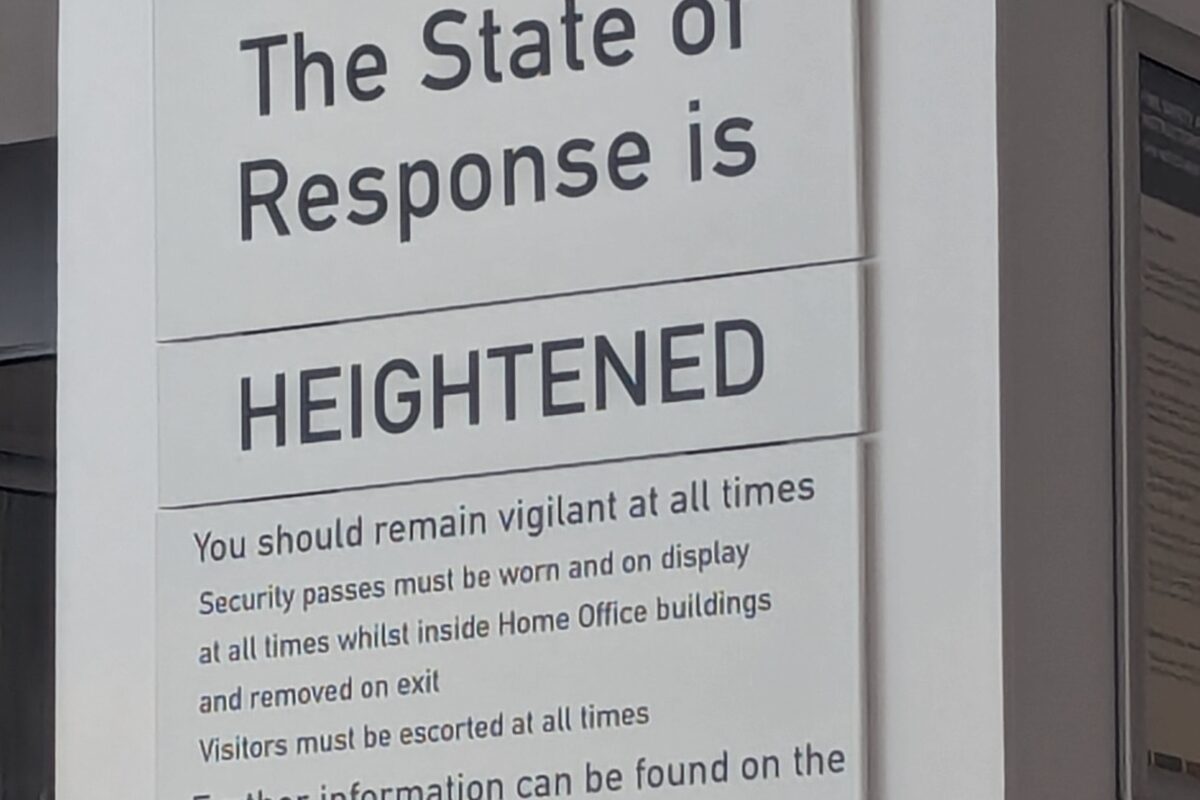
UK immigration rules are about to shift again, with the government’s Statement of Changes HC 584, published September 3, 2026, rolling out in four stages between October and December. The changes touch a wide range of routes — Skilled Worker, Student, visitor visas, family-sponsored applications under Appendix FM, and the EU Settlement Scheme — making this one of the broader packages of the year, even without a single headline-grabbing overhaul.

The rollout, stage by stage

According to the official Home Office statement, the bulk of the package takes effect October 8, 2026, including new definitions and the changes to visitor, student, skilled worker and family routes — though transitional provisions mean applications submitted before that date will still be assessed under the rules as they stood on October 7. Minister of Religion and Religious Worker appendices follow on October 29. Student cost-of-living allowances rise on November 30. EU Settlement Scheme identity documentation rules change last, on December 9.

What changes for students and Erasmus+ participants

The Student route gets two notable tweaks: Erasmus+ participants gain exemptions from existing work placement duration restrictions, and the visitor category expands to authorize new Erasmus+ activities — including traineeships, job shadowing and coaching assignments — for participants aged 18 and over attached to UK Erasmus+ organizations. Separately, the maintenance funds students must show for cost-of-living rise from £1,529 to £1,570 for those studying in England, Wales or Northern Ireland, effective November 30.

Family, religious worker and EU Settlement changes

The family returns process gets a new pathway, with enhanced protections specifically for domestic abuse victims. The Minister of Religion and Religious Worker routes are restructured, with the Religious Worker route redefined to exclude pastoral duties and new maintenance and accommodation provisions for sponsors unable to pay the minimum wage. On the EU Settlement Scheme, the definition of a “joining family member” expands, derivative rights for children are clarified, and non-EEA citizens gain the option to use specified documents instead of a passport when applying — changes that take effect December 9 alongside transitional provisions for Hong Kong BN(O) adult children previously classified as household members.

Who needs to act before October 8

Applicants across the affected routes should check which specific date applies to their category rather than assuming a single cutover, according to guidance summarized by Visa Atlas’ policy tracker, which notes that Skilled Worker and Student visa applicants are among those most directly affected and should review the official statement to confirm which provisions apply to their route and timeline. Anyone with an application close to ready has a practical incentive to submit before October 8, since doing so locks in assessment under the pre-October 7 rules where transitional provisions apply.

What happens next

Expect a wave of guidance updates from UK visa caseworkers and universities’ international offices as the October 8 date approaches, particularly around the Student route changes tied to cost-of-living allowances and Erasmus+ eligibility. The EU Settlement Scheme changes in December will likely draw the most attention from families navigating the “joining family member” definition, given how much turns on how that term is interpreted in individual cases.

More immigration coverage

Related reading: Canada’s IRCC processing time update, the September 2026 US Visa Bulletin, and new social media vetting for visa applicants.

UK HC 584 questions answered

When do the HC 584 changes take effect?

In four stages: October 8, 2026 for the bulk of student, skilled worker, visitor and family route changes; October 29 for religious worker appendices; November 30 for the student cost-of-living increase; and December 9 for EU Settlement Scheme changes.

Will applications submitted before October 8 be affected?

No. Transitional provisions mean applications submitted before October 8, 2026 will still be assessed under the immigration rules as they stood on October 7.

What is changing for students?

Erasmus+ participants gain exemptions from work placement duration limits, new Erasmus+ visitor activities are authorized, and the required cost-of-living maintenance funds rise from £1,529 to £1,570 from November 30.

What is changing on the EU Settlement Scheme?

From December 9, the definition of a ‘joining family member’ expands, derivative rights for children are clarified, and non-EEA citizens can use specified documents instead of a passport when applying.

Who should pay closest attention to these changes?

Skilled Worker and Student visa applicants, family-sponsored applicants under Appendix FM, and anyone using the EU Settlement Scheme, since all four routes are affected at different stages of the rollout.

Sources

Insurers Say AI Just Added $942 Million to America’s Hospital Bills

The Blue Cross Blue Shield Association said on September 26, 2026, that AI coding tools have added roughly $942 million in extra hospital spending over two years. The figure puts a hard number on a dispute over insurers AI healthcare costs, one that has played out behind closed doors for months. The association’s analysis found a sharp rise in patients documented as having complex conditions. It found no matching change in the actual care those patients received.

Insurers AI healthcare costs tracked through hospital computer documentation systems

What the insurers AI healthcare costs analysis found

Blue Cross Blue Shield Association’s internal review looked at claims submitted using AI-assisted coding tools. That software helps hospitals translate patient charts into the billing codes insurers use to determine reimbursement. The analysis found patients increasingly coded as having complex, higher-reimbursement conditions. But BCBSA found no evidence of a corresponding change in the treatment those patients actually received. In other words, the diagnosis codes got more expensive on paper without the underlying care changing to match. That is exactly the pattern insurers watch for when coding practices shift from accurate documentation toward inflated billing.

Who is building the tools in question

The article names Abridge, an AI documentation startup, as one of the higher-profile companies in this space. The broader trend spans a wider set of AI coding and documentation vendors. Hospitals have adopted them over the past two years to speed up clinical paperwork. Abridge founder Shiv Rao acknowledged the risk of what he called “a horrible dystopic future.” In that future, hospital-side and insurer-side AI systems increasingly negotiate with each other, rather than humans reviewing claims directly. He also argued AI could eventually reduce friction and cost, rather than add to it.

Insurers say they are losing ground

Luke Chalker of BCBSA offered a blunter assessment. He described the current dynamic as “a completely one-sided blood bath” in disputes between hospitals and insurers over these claims. The framing reflects a broader anxiety inside the insurance industry. Hospitals have adopted AI coding tools faster and more aggressively than insurers have adopted AI systems that catch the resulting changes in coding patterns. That leaves payers reactive rather than in control of the trend.

Why this matters beyond the two industries fighting over it

Higher documented complexity translates into higher reimbursement. Those costs eventually show up somewhere in the system: premium increases, tighter prior-authorization rules, or renegotiated contracts between insurers and hospital networks. Patients rarely see the AI coding dispute directly. But its incentives can shape how aggressively their bills get coded, and how closely insurers scrutinize claims before paying them. The dispute also previews a wider pattern. AI tools are embedding themselves on both sides of high-stakes negotiations, from insurance claims to legal contracts to procurement.

What happens next in the AI coding fight

Expect insurers to push for their own AI-assisted auditing tools, capable of flagging documentation that looks statistically unusual. That would mirror the arms-race dynamic Rao described. Regulators and state insurance commissioners already scrutinize coding practices for signs of upcoding. A dollar figure this specific, from a major insurer trade group, is likely to draw their attention. Hospital associations, in turn, can be expected to push back on BCBSA’s methodology in the coming weeks.

Frequently asked questions

How much extra cost do insurers say AI added to healthcare billing?

The Blue Cross Blue Shield Association estimated roughly $942 million in additional spending over a two-year period tied to AI-assisted hospital coding.

What exactly did the analysis find?

It found a sharp increase in patients coded as having complex conditions without a matching change in the actual care those patients received.

Which company is mentioned as a coding-tool provider?

Abridge, an AI documentation startup, is cited as a notable player. The trend, though, involves a broader set of AI coding vendors that hospitals have adopted.

Do hospitals dispute the insurers’ AI healthcare costs claim?

No formal hospital-industry rebuttal is detailed here. Disputes of this kind are typically contested, though, given the financial stakes on both sides.

What might change as a result?

Insurers are likely to invest in their own AI-based claim-auditing tools, and regulators who track coding practices may scrutinize the trend more closely.

How hospital coding actually works

Hospitals bill insurers using standardized diagnosis and procedure codes. Those codes determine how much a given claim gets reimbursed. More complex diagnoses generally attract higher payments, reflecting the added resources complex cases require. Hospitals adopted AI documentation tools largely to reduce the administrative burden on clinicians. The software transcribes patient encounters and suggests codes automatically, rather than requiring a doctor or coder to do that translation by hand. BCBSA is not arguing the tools are inaccurate in a technical sense. Its concern is that the pattern-matching may be nudging documentation toward higher-complexity codes faster than patient acuity is actually changing. That distinction is hard to prove definitively. It shows up clearly, though, in aggregate billing data over time.

More on AI and sensitive institutions

For more on how AI systems are reshaping sensitive institutions this month, see our coverage of the OpenAI Medicare portal breach and the simultaneous outage that hit major AI platforms.

Sources

How a Chip Export Loophole Let Blackwell GPUs Reach China Anyway

A chip export loophole is at the center of a fresh dispute over how effectively Washington is actually policing advanced AI hardware headed toward China. At issue is Aivres, a California-based server maker that is a subsidiary of Inspur Group — a Chinese firm that has been on the US Entity List since 2023. Because Aivres itself was never added to that list, it has been able to legally export advanced Nvidia chips to Southeast Asia, where Chinese companies including ByteDance and Alibaba have reportedly gained access to them anyway.

What the loophole looks like in practice

According to a New York Times investigation cited by Asia Times’ reporting, Aivres exported $5.6 billion in advanced technology to Southeast Asia between April 2024 and February 2026, including more than $3 billion in computers equipped with Nvidia’s most advanced Blackwell chips. Because the export controls target the blacklisted parent company rather than every entity connected to it, the shipments were technically legal even as the hardware ultimately found its way to restricted end users. Inspur’s own stock fell 3.8% on the news, closing at 74.74 yuan (about $11.13).

The policy this loophole is exploiting

The loophole sits inside a broader chip export framework that critics say was already built with gaps. The Commerce Department’s January 13, 2026 regulations, implementing a policy President Trump announced on December 8, permit exports of Nvidia H200 and AMD MI325X chips that were previously banned outright, subject to performance thresholds and a cap limiting exports to 50% of the volume sold to US customers. Analysis from the Council on Foreign Relations estimates the rule could allow roughly one million H200 chips into China annually — potentially lifting China’s AI compute capacity by 250% relative to domestic chips alone — and warns that the certification requirements exporters must meet will be difficult to enforce given the documented military ties of likely buyers such as Alibaba, Tencent and DeepSeek.

Timed to a high-stakes summit

The loophole story broke just as Xi Jinping traveled to the United States on September 24, 2026, coinciding with the UN General Assembly, for the first official US-China AI dialogue of Trump’s second term. Treasury Secretary Scott Bessent led the American delegation into those talks, which were meant to set ground rules for exactly this kind of technology transfer — making the Aivres revelations an awkward backdrop for negotiators on both sides.

Congress is trying to close the gap

Two bills aim to plug loopholes like this one. The Remote Access Security Act (RASA) passed the House 369-22 in January 2026 and would extend export controls to remote access, preventing foreign firms from circumventing restrictions by simply renting computing power located overseas rather than shipping hardware outright. The Chip Security Act cleared the House Foreign Affairs Committee in March 2026. Neither has yet become law, leaving exactly the kind of subsidiary-level workaround Aivres used unaddressed for now.

What happens next

Expect scrutiny of Aivres and similar server integrators to intensify, along with pressure on Commerce to either add subsidiaries automatically when a parent company is blacklisted or to fast-track RASA and the Chip Security Act through the Senate. Until one of those changes happens, the current framework leaves room for exactly the kind of technically-legal, practically-circumventing shipments this loophole describes.

More tech and business coverage

Related reading: AMD’s trillion-dollar valuation, the EU AI Act’s new compliance audits, and the Trump-Xi trade summit.

Chip export loophole questions answered

What is the Aivres chip export loophole?

Aivres, a California-based server maker owned by blacklisted Chinese firm Inspur Group, was never itself added to the US Entity List, letting it legally export advanced Nvidia chips to Southeast Asia even though the hardware reportedly reached companies like Alibaba and ByteDance.

How much technology did Aivres export?

A New York Times investigation found Aivres exported $5.6 billion in advanced technology to Southeast Asia between April 2024 and February 2026, including more than $3 billion in computers equipped with Nvidia’s Blackwell chips.

What does current US policy allow?

Since January 13, 2026, Commerce Department rules allow exports of Nvidia H200 and AMD MI325X chips to China under performance thresholds and a cap limiting shipments to 50% of the volume sold to US customers.

What legislation is meant to close loopholes like this?

The Remote Access Security Act (RASA), which passed the House 369-22 in January 2026, and the Chip Security Act, which cleared a House committee in March 2026. Neither has passed the Senate yet.

Why did this surface now?

The loophole story broke as Xi Jinping traveled to the US on September 24, 2026 for the first official US-China AI dialogue of Trump’s second term, led on the US side by Treasury Secretary Scott Bessent.

Sources