• Mon - Fri 9.00 - 19.00

Yearly Archives: 2026

Four of America’s Biggest Banks Report Earnings Today

Bank earnings season opens today, October 13, with JPMorgan Chase, Goldman Sachs, Wells Fargo and Citigroup all due to report third-quarter results. JPMorgan releases its numbers around 7:00 a.m. ET ahead of an 8:30 a.m. call, setting the tone for a reporting window that will shape how investors read the health of the US economy heading into year-end. Bank of America and Morgan Stanley follow on October 14, with U.S. Bancorp and Charles Schwab reporting October 15.

Analysts polled ahead of the releases expect JPMorgan to post earnings of roughly $5.82 to $5.84 per share on about $50.6 billion in revenue. Goldman Sachs is expected to report between $16.00 and $16.40 per share, Wells Fargo around $1.85, and Bank of America between $1.17 and $1.18 when it reports Tuesday.

Why this bank earnings season matters more than usual

The results land against an unusual economic backdrop. The Federal Reserve raised its benchmark rate to a range of 3.75% to 4.00% in September, the 10-year Treasury yield sits above 5%, and the 30-year Treasury is at its highest level in 24 years. At the same time, the US added only 29,000 jobs in September and unemployment rose to 4.2% — a combination of high rates and a cooling labour market that puts competing pressures on bank balance sheets.

Financial stocks make up roughly one-eighth of the S&P 500, so how these four banks perform against expectations — not simply whether they turn a profit — will move markets well beyond the banking sector itself.

Bank building representing the lenders reporting results as bank earnings season opens

The three numbers investors are actually watching

Net interest income is the first battleground. Higher rates generally lift what banks earn on loans, but rising deposit costs can offset much of that gain, and Wells Fargo has already guided to roughly $50 billion in net interest income for the full year. Trading and dealmaking revenue is the second. JPMorgan expects investment banking and markets revenue to rise in the mid-to-high teens percentage range from a year earlier, and Citigroup has guided to single-digit growth, building on what was already a record second quarter across Wall Street. Bank of America is the outlier, projecting investment banking fees to fall 10% to 20%.

Credit quality is the third and most closely watched figure. Slower hiring and the uptick in unemployment could push banks to set aside more money for loan losses, particularly on credit cards and auto loans — a trend that tends to show up first in consumer-facing lenders like Wells Fargo and Bank of America rather than in Goldman’s more trading-heavy book.

A bond-market risk hiding in the balance sheet

Rising Treasury yields also reduce the market value of the government bonds banks hold on their balance sheets, a risk that matters most at smaller regional banks with less diversified income but is still worth watching at the four majors reporting this week. None of the four is expected to report a loss, but any sign that bond losses are eating into capital ratios would likely draw sharp analyst questions on the earnings calls.

Wall Street has already priced in a fairly optimistic quarter, with major indexes near record highs heading into the results. That sets a high bar: strong absolute numbers that still miss elevated expectations could trigger sharp stock moves regardless of year-over-year growth.

What investors should watch this week

With JPMorgan and Goldman out first, their commentary on net interest income trends and credit provisioning will likely set expectations for Wells Fargo and Citigroup later the same day, and for Bank of America and Morgan Stanley on Thursday. Analysts will be listening closely to management guidance on 2027, since a single quarter’s beat or miss matters less to long-term stock moves than what executives say about the trajectory of rates, credit costs and trading revenue heading into next year.

U.S. Bancorp and Charles Schwab round out the week on October 15, giving a fuller picture of how regional and wealth-management-focused institutions are faring compared with the Wall Street giants that report first.

Earnings season: your questions answered

Which banks report today?
JPMorgan Chase, Goldman Sachs, Wells Fargo and Citigroup all report third-quarter results on October 13.

What is JPMorgan expected to earn?
Analysts expect roughly $5.82 to $5.84 per share on about $50.6 billion in revenue.

Why does net interest income matter so much?
It reflects the gap between what banks earn on loans and pay on deposits; higher rates can widen that gap, but rising deposit costs can erode it.

Are banks expecting more loan losses?
Slower hiring and rising unemployment are pushing some banks to set aside more for potential credit losses, especially in consumer lending.

Which banks report later in the week?
Bank of America and Morgan Stanley report October 14, followed by U.S. Bancorp and Charles Schwab on October 15.

How much of the stock market do banks represent?
Financial stocks make up about one-eighth of the S&P 500, so their results tend to move the broader market.

Sources

  • RiskStock — Bank Earnings Start October 13: A Simple Guide to What JPMorgan, Goldman and the Rest Will Tell Us. riskstock.com
  • MarketBeat — JPMorgan Chase & Co. (JPM) Q3 2026 Earnings Date, Time & Estimates. marketbeat.com

For related coverage, see our reports on the Fed’s October rate decision, the gap between stock highs and consumer sentiment, and mortgage rates hitting a three-year high.
Commonwealth Master’s Scholarships Close in 7 Days: Are You Eligible?

The Commonwealth Master’s Scholarships for 2027/28 close at 16:00 BST on Tuesday 20 October, according to the Commonwealth Scholarship Commission (CSC). That leaves seven days from today, 13 October 2026. The awards fund study at a UK university from September or October 2027. Candidates cannot apply directly, so the real clock is often earlier than 20 October.

On this page

Who can apply for the Commonwealth Master’s Scholarships

You must be a citizen of an eligible Commonwealth country, or hold refugee status granted by one, or be a British Protected Person. You must also live permanently in an eligible country. The CSC list includes Bangladesh, Ghana, India, Kenya, Malaysia, Nigeria, Pakistan, South Africa, Sri Lanka and Uganda, plus many small island states, which the CSC says it particularly welcomes.

You need a first degree of at least upper second-class (2:1) honours by September 2027. A lower second-class degree can work if you also hold a relevant postgraduate qualification. You must show that you cannot afford UK study without the award. The CSC does not normally fund a second master’s, and anyone who has studied at master’s level in the UK is not eligible.

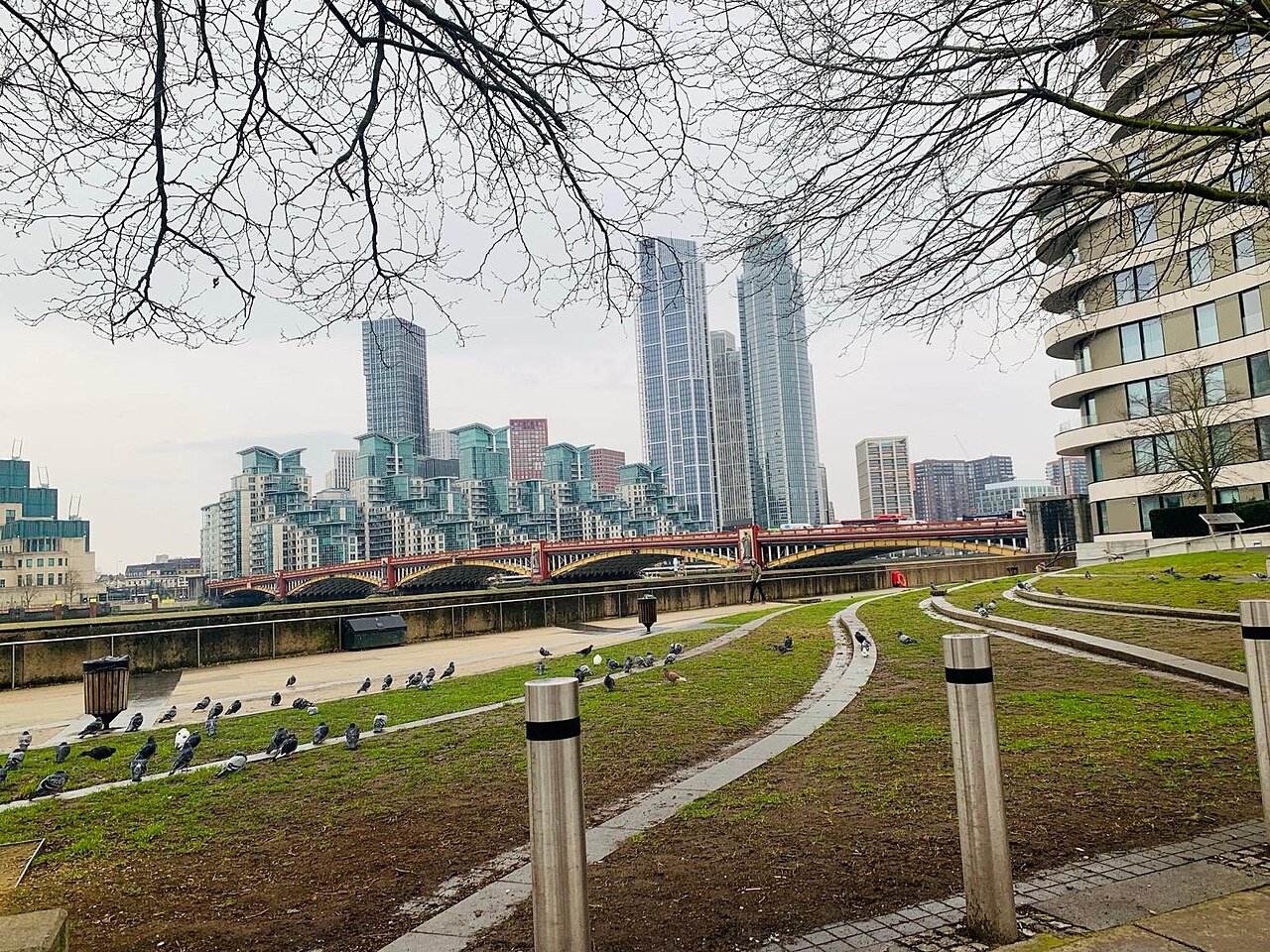
The London skyline, where many Commonwealth Master's Scholarships holders study
Many scholars study in London, where the stipend is higher.

What the award pays for

The CSC lists four main items. It pays approved airfare to the UK and back, and it pays full tuition fees by agreement with the university. The monthly stipend is £1,712, or £2,000 at universities in the London area, at current rates. A study travel grant covers study-related travel. Scholars who are widowed, divorced or single parents can also receive a partial contribution of £622 a month for a first child and £154 for the second and third children under 16. Dependants’ airfares are not covered.

Why your nominator’s date matters

This is the point most readers miss. The CSC accepts no direct applications. You apply to a nominating body, such as a national nominating agency, and each one sets its own closing date and extra criteria. The CSC says nominators must put their candidates forward by December 2026, and results are expected by July 2027.

Here is a hypothetical case. Chidi is a Nigerian doctor with a 2:1 who wants a public health master’s in Edinburgh. He sees the 20 October date and plans to apply on 19 October. His national nominator, however, closed three weeks earlier. Chidi is an illustration, not a real applicant, but the lesson is real: confirm your nominator’s date today.

Documents to upload before the deadline

Applications go through the CSC’s online system only, and there is no application fee. You upload a copy of your passport or national ID, full transcripts for all higher education, and two signed PDF references. Transcripts not in English need certified translations. The CSC says applications cannot be edited after submission, and late applications are not accepted. Ask your referees now, because two signed references often take the longest.

The week ahead: a short checklist

Start with the nominator, not the portal. Confirm the closing date and any extra rules. Next, order transcripts and translations. Then brief both referees. Finally, submit a day early to leave room for upload problems. If you miss this round, other UK and European awards close soon. Our guides cover the Chevening 2027/28 timeline and the Gates Cambridge deadlines. A scholarship listing compiled by Global South Opportunities on 8 October also shows Commonwealth PhD awards closing on 20 October.

Not sure which route fits your profile? Try our visa eligibility checker to plan the student visa step that follows an award.

Eligibility traps to check before you apply

Four details trip up strong candidates. First, the CSC prefers applicants who have already finished their undergraduate degree. Second, it does not normally fund a second master’s. Third, anyone who studied at master’s level at a UK institution is not eligible, and neither is anyone who held a Commonwealth Master’s scholarship before. Fourth, you must be free to start in the UK by September 2027. There is no age limit, so mid-career professionals can apply.

Commonwealth scholarship FAQ

When is the Commonwealth Master’s Scholarships deadline?

The CSC states 16:00 BST on Tuesday 20 October for the 2027/28 round. Your nominating body may close earlier.

Can I apply to the CSC directly?

No. You apply through a nominating body, and each sets its own closing date. The main route is a national nominating agency.

What is the monthly stipend?

The CSC lists £1,712 a month, or £2,000 for universities in the London area, at current rates.

Is there an application fee?

No. The CSC states that there is no application fee.

Can I edit my application after I submit it?

No. The CSC says applications cannot be edited after submission, and it does not accept late applications.

Sources

Hackers Turned French Supermarket Fridges Into Ovens

A French supermarket cyberattack disabled refrigeration systems at hundreds of stores this week, pushing fridges and freezers as high as 50°C and forcing retailers to throw out large volumes of spoiled food. Carrefour said 80 of its stores were hit, Les Mousquetaires (owner of Intermarché) reported about 150 affected locations, Monoprix said roughly 5% of its 490 stores were struck, and Cooperative U also confirmed it was targeted. E.Leclerc and Auchan did not respond to requests for comment.

At Intermarché, cooling units stayed overheated for six hours overnight, well past the point where stored food becomes unsafe to sell. The retailer’s chief executive said the attack would cost “tens of millions of euros nationwide in a single day” once spoiled stock across the network is tallied.

How the French supermarket cyberattack worked

Supermarket cold aisles are typically run by networked control panels that let maintenance contractors adjust temperatures remotely over the internet — a convenience that also creates an attack surface. A source close to Prime Minister Sébastien Lecornu said France’s national cybersecurity agency, ANSSI, traced the intrusion to a vulnerability in refrigeration control software made by the Danish manufacturer Danfoss.

Danfoss said the affected units were running outdated firmware and that it had repeatedly urged customers to update their systems. Security researchers at Claroty’s Team82 had already published findings in August about vulnerabilities in a specific Danfoss controller model, the AK-SM 800A, which later firmware updates addressed — though the company has not confirmed that this was the exact model exploited in this week’s attack.

Computer code on a screen representing the hack behind the French supermarket cyberattack

A wider European footprint than first reported

France was the hardest-hit country, but security researcher Felix Aime of the firm Sekoia said similar disruptions also hit retailers in Spain, Portugal, Poland, Germany and Belgium. No group has claimed responsibility for the campaign, and investigators have not yet said whether the European incidents share a single origin or represent copycat activity exploiting the same known flaw.

The Paris prosecutor’s office has opened an investigation and described the campaign as a large-scale attack. Lecornu ordered ANSSI to lead the technical response, and French officials are coordinating with counterparts elsewhere in Europe while assessing whether other companies using similar industrial control systems are exposed.

Food safety and the clean-up

Affected stores discarded spoiled stock rather than risk selling food that had sat above safe temperatures for hours, a decision retailers described as necessary to eliminate health risk rather than optional caution. The French retail federation FCD publicly called on Danfoss for full transparency about the scope of the vulnerability, and some of the hardest-hit stores had reopened for business by midweek once technicians restored manual control over the cooling systems.

The incident echoes a smaller episode in late August, when roughly a dozen US military commissaries reported similar refrigeration failures and food losses, though officials have not formally linked the two events. Separately, Dutch retailer Ahold Delhaize reported what it called a “security issue” on its own network around the same time, while stating there was no reason to connect it to the French attacks.

Where this investigation goes from here

With no group claiming responsibility and the entry point only partly confirmed, French investigators face a familiar challenge in industrial-control cyberattacks: proving exactly how attackers got in versus simply patching the hole they used. Retailers across the affected countries are now under pressure to audit which of their own refrigeration and building-management systems run outdated firmware, since the underlying weakness — internet-connected equipment nobody got around to updating — is common across the sector, not unique to Danfoss customers in France.

Expect regulators in Brussels and national cybersecurity agencies to use the episode to push for mandatory patching timelines on industrial control systems, a debate that has simmered in EU policy circles for years without resulting in binding rules for retail infrastructure specifically.

Common questions about the attack

How many stores were affected?
At least 80 Carrefour stores, about 150 Intermarché locations, roughly 5% of Monoprix’s 490 stores, and an unconfirmed number of Cooperative U stores — likely several hundred in total across France.

What caused the fridges to overheat?
Investigators say attackers exploited a vulnerability in Danfoss refrigeration control software running outdated firmware, letting them remotely push temperatures as high as 50°C.

Did other countries get hit?
Yes. A security researcher reported similar disruptions in Spain, Portugal, Poland, Germany and Belgium, though France was hit hardest.

Has anyone claimed responsibility?
No group had claimed the attack at the time of reporting.

How much will this cost retailers?
Intermarché’s CEO estimated losses of tens of millions of euros nationwide in a single day; no industry-wide total has been published.

Is the food safe once stores reopen?
Retailers discarded stock that sat above safe temperatures and reopened only after restoring manual control of cooling systems, according to the French retail federation.

Sources

  • ABC News Australia — Hackers raise fridge temperatures at hundreds of French supermarkets to spoil food. abc.net.au
  • BleepingComputer — Cyberattack shuts down refrigerators at French supermarkets. bleepingcomputer.com

For more on recent breaches, see our coverage of the Denmark CPR register breach and the Berlin ransomware attack.

The UK Just Named Iran’s Spy Chief in an Airbase Plot

The UK sanctions Iranian nationals it accuses of directing a suspected plot against RAF Fairford, the Gloucestershire airbase that serves as the main European staging point for US bombers. Foreign Secretary Ed Miliband announced the sanctions on October 12, hours after Prime Minister Andy Burnham told Parliament the alleged scheme was “almost certainly” directed by Iran’s Islamic Revolutionary Guard Corps (IRGC).

The two men named are Ruhollah Bazghandi, described by the UK as the head of IRGC counterespionage operations, and Shahram Ali Reza Tamarzadeh Jakki, identified as a facilitator for the Zindashti criminal network, which London already sanctions over alleged plots against Iranian dissidents abroad. Both now face an asset freeze and a UK travel ban; Bazghandi is additionally barred from serving as a company director in Britain.

What happened at RAF Fairford

The case traces back to September 27, when police arrested five British men in their 20s near RAF Fairford on suspicion of terrorism and explosives offences. Officers found petrol stored in three vans linked to the suspects but no explosives, and all five were released on bail without charge. Two more people, including a British-Iranian national, were arrested later and also released without charge. No one has been charged in the case to date, and the precise nature of the threat remains publicly unclear.

Fairford’s significance comes from its role as the preferred European base for US B-52 and B-1 bombers supporting the war against Iran that began in February. Earlier in October, the US moved bomber aircraft from the base over concerns about a suspected Iranian plot involving a complex drone attack, according to officials who spoke to American outlets.

Government building in Iran, the country named after the UK sanctions Iranian nationals over Fairford

Why the UK sanctions Iranian nationals over the IRGC link

Burnham told MPs the UK “will not tolerate these threats on our soil” and pledged further sanctions against Iran and the IRGC specifically over its alleged use of criminal networks on British territory. Miliband also summoned Iran’s ambassador to the Foreign Office over the allegations. The government has not published the underlying intelligence behind its assessment, and the case remains under active investigation with no charges filed.

Iran denies any involvement. Ambassador Ali Mousavi met UK Middle East minister Stephen Doughty and rejected the claims, urging Britain to avoid what he called unsubstantiated accusations. Iran’s state news agency IRNA reported that Tehran says it is willing to cooperate with the investigation. Earlier, in September, Iran’s embassy in London dismissed the accusations as “unfounded and malicious speculations” that it said would fuel “Iranophobia propaganda.”

A 29-country statement adds diplomatic weight

On the same day as the sanctions announcement, 29 countries — including the US, most of Europe, Canada, Australia and New Zealand — issued a joint statement condemning Iran’s alleged use of violent attacks abroad, citing lethal plotting, arson, sabotage and cyber-attacks. The coordinated statement signals that the Fairford case is being treated as part of a wider pattern Western governments say they have tracked across multiple countries, rather than an isolated incident.

The sanctions come at a moment of heightened friction between London and Tehran. Burnham’s government has already imposed several rounds of IRGC-linked sanctions this year, and Monday’s announcement extends that pattern rather than marking a sudden shift in UK policy.

Where the Fairford case goes from here

With no charges filed against any of the seven people arrested in connection with Fairford, the case remains open. British prosecutors would need to bring formal charges before any courtroom test of the government’s claims, and Iran’s denial means the diplomatic standoff is likely to continue regardless of how the criminal investigation proceeds. The newly sanctioned pair are unlikely to have meaningful UK-based assets to freeze, so the measures function mainly as a diplomatic signal rather than a financial one.

Analysts will also be watching whether the 29-country statement leads to coordinated sanctions elsewhere, since joint statements of that kind have sometimes preceded synchronized diplomatic or economic measures against Tehran in the past.

Readers’ questions, answered

Who exactly did the UK sanction?
Ruhollah Bazghandi, described as the IRGC’s counterespionage chief, and Shahram Ali Reza Tamarzadeh Jakki, a facilitator the UK links to the Zindashti criminal network.

Has anyone been charged over the Fairford plot?
No. Seven people were arrested in connection with the case and all were released without charge; the investigation remains open.

What does Iran say about the allegations?
Iran denies any involvement, calls the claims unsubstantiated, and says through its London embassy that it is willing to cooperate with investigators.

Why is RAF Fairford significant?
It is the main European base for US bombers supporting operations tied to the war against Iran, making it a high-value target in the eyes of UK and US officials.

What do the sanctions actually do?
They freeze any UK-based assets belonging to the two men, bar them from travelling to Britain, and in Bazghandi’s case prevent him from serving as a UK company director.

Did other countries join in?
Yes. Twenty-nine countries, including the US and most of Europe, issued a joint statement the same day condemning Iran’s alleged use of violent plots abroad.

Sources

  • Al Jazeera — UK blames Iran for airbase plot, sanctions two Iranian nationals. aljazeera.com
  • The National — ‘Iran smells weakness’: Burnham challenged over IRGC after airbase plot. thenationalnews.com

For related coverage, see our reports on the Strait of Hormuz standoff, the US strike on Kermanshah, and the renewed US travel warning for Iran.

Riyadh’s Main Airport Just Got Shut Down Until October 17 — Here’s Why

The Riyadh airport closure at King Khalid International Airport (RUH) has been extended to October 17, Saudi officials said this week, after Houthi forces fired missiles and drones at the Saudi capital for a third straight day. The closure follows a deadly weekend strike that killed at least 14 people and injured roughly 320 more, and it has already forced airlines on four continents to cancel or reroute flights.

Saudi Arabia’s air defences intercepted a ballistic missile aimed at Riyadh and two more aimed at the southwestern city of Khamis Mushait on Monday, according to coalition spokesperson Turki al-Maliki, who said all three were “intercepted and destroyed.” The Houthis claimed credit for both strikes, saying their main target was King Khalid International Airport itself, with a secondary drone launched at a military airbase near Khamis Mushait.

Why the Riyadh airport closure keeps getting pushed back

Saudi authorities first shut the airport after Saturday’s attack, which Houthi spokesman Yahya Saree said targeted the facility directly. A Saudi investigation, described to the Associated Press by officials speaking anonymously, found that Houthi forces launched a wave of drones first to draw out air defences, then followed with cruise and ballistic missiles that travelled more than 1,000 kilometres (620 miles) to reach the capital. Investigators are now trying to work out why the kingdom’s Patriot interceptor batteries gave no earlier warning for weapons flying that distance.

Saudi Arabia’s civil aviation authority says crews are still checking the airport’s physical safety and operational readiness before reopening, which is why the closure has already been pushed back once, from an initial reopening target to October 17.

Closed airport terminal building similar to the one affected by the Riyadh airport closure

Airlines cancel flights as the closure drags on

The disruption has rippled across the global aviation map. Etihad Airways cancelled all Riyadh flights until next week and suspended services to Dammam and Jeddah as a precaution. Gulf Air cancelled Riyadh flights through Saturday. Delta Air Lines postponed the planned launch of its new nonstop Atlanta–Riyadh route, which had been due to start October 23. Turkish Airlines, Air India Express, SriLankan Airlines and several Gulf carriers also cut services earlier in the week, and flight-tracking data showed aircraft actively diverting around Riyadh airspace while traffic built up at Jeddah instead.

The disruption has also hit Saudi Arabia’s events calendar. The kingdom’s flagship investment conference and the World Petroleum Congress energy gathering were both disrupted, and several oil executives were pulled from the WPC programme as a result.

Saudi officials signal a tougher response

Saudi Energy Minister Prince Abdulaziz bin Salman told reporters the airport attacks have tested the kingdom’s resilience and that “our response must be equally serious,” while insisting that Vision 2030 investment plans would continue regardless. The Houthis, for their part, warned international airlines and travellers to avoid Saudi airports entirely — except those serving Mecca and Medina — calling the facilities “unsafe,” and separately warned workers at Saudi oil sites and airports to stay away, describing them as “legitimate targets.”

US President Donald Trump said the Houthis are “misbehaving very badly” but gave no indication Washington would intervene militarily, even as Saudi officials privately pushed for more direct US involvement. A UAE diplomat, Anwar Gargash, called for “joint Gulf action,” arguing that attacks on Saudi Arabia threaten the security of the wider Gulf region.

What happens next for travelers

Passengers with bookings through Riyadh in the coming days should check status directly with their airline rather than assume flights will resume on schedule, since the October 17 date itself has already slipped once. Travelers connecting through Jeddah may see knock-on congestion as traffic diverts there. Airlines serving Mecca and Medina have largely kept those routes running, since the Houthis have specifically exempted the two holy cities from their warnings.

The Houthis are fighting forces aligned with Yemen’s internationally recognised government, and the Saudi-led coalition has run an air campaign against them for years. The latest escalation has unfolded alongside wider regional tensions tied to the broader US-Israel confrontation with Iran, which Houthi leaders have cited as part of their motivation for targeting Saudi infrastructure.

Frequently asked questions

When will Riyadh’s airport reopen?
Saudi authorities currently say King Khalid International Airport will reopen October 17, though that date has already been extended once and could move again depending on the security assessment.

How many people have been killed in the attacks?
At least 14 people have died and roughly 320 have been injured across the string of attacks this month, according to Saudi officials cited by international wire services.

Which airlines have cancelled Riyadh flights?
Etihad, Gulf Air, Turkish Airlines, Air India Express, SriLankan Airlines and Delta have all cancelled, suspended or postponed Riyadh services, with several extending cancellations into next week.

Are flights to Mecca and Medina affected?
The Houthis have said those two cities are not targets, and most carriers have kept those routes operating.

Is the US getting involved militarily?
Not directly. The US has provided intelligence and planning support to Saudi Arabia, but President Trump has stopped short of ordering strikes on Houthi positions.

Why do the attacks keep happening?
The Houthis say the strikes are tied to the broader regional conflict involving the US and Israel’s confrontation with Iran, and they have vowed to continue targeting Saudi airports and oil facilities they consider linked to that fight.

Sources

  • Al Jazeera — Houthi missile attack targets Saudi capital Riyadh for third day in a row. aljazeera.com
  • ABC News Australia — Saudis probe Houthi attack on Riyadh airport amid ongoing attack. abc.net.au

For more on the regional fallout, see our coverage of the Bab el-Mandeb shipping disruption, the US travel advisory for Saudi Arabia, and the earlier first Houthi strike on Riyadh that began this run of attacks.