• Mon - Fri 9.00 - 19.00

Yearly Archives: 2026

Singapore ONE Pass Replaces Tech.Pass, With a S$30,000 Bar

The Singapore ONE Pass will gain a dedicated AI and Technology track on 28 January 2027, and it replaces Tech.Pass. An EY tax alert says the Ministry of Manpower (MOM) confirmed the opening date and the eligibility rules. The same alert says the track was first announced on 3 March 2026. From 28 January 2027, the Economic Development Board (EDB) stops taking new and renewal Tech.Pass applications.

In this guide

What the Singapore ONE Pass AI and Tech track requires

The pay test is the first hurdle. Applicants must have earned at least S$30,000 a month, or the foreign-currency equivalent, for 12 consecutive months before applying. At least S$22,500 of that monthly figure must be fixed salary. The rest can come from vested non-cash pay such as employee stock options and share awards, and MOM assesses that portion.

The experience test is just as firm. Applicants need at least five cumulative years in the past ten as a founder, a C-suite officer, a technical professional, or a mix of those roles. The applicant’s current or most recent employer must be a tech company, the tech division of a larger company, or a tech venture capital firm.
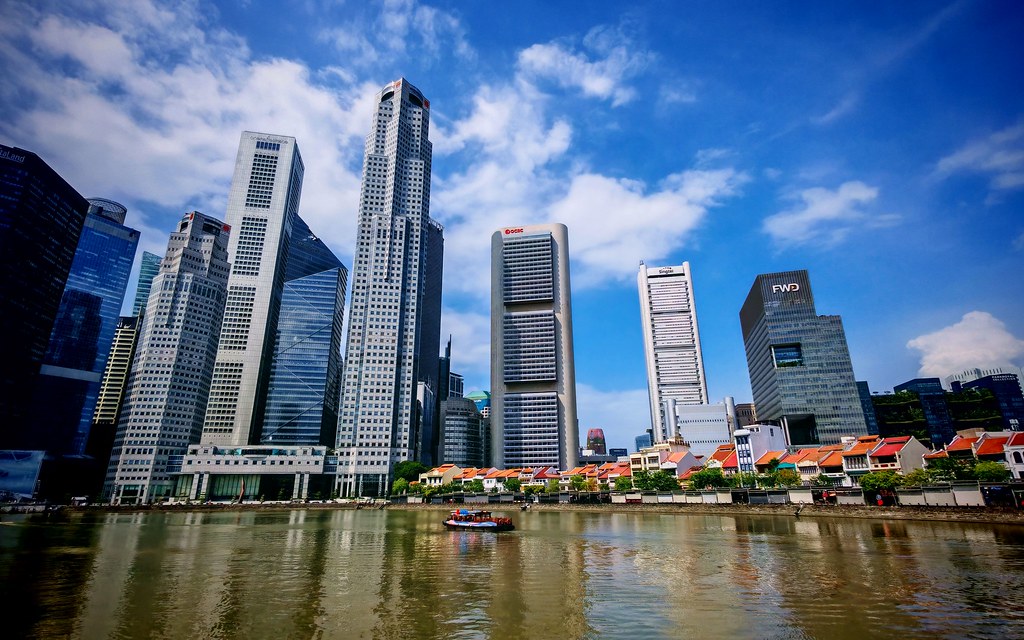
Singapore ONE Pass applicants will work in the Raffles Place financial district
Raffles Place, Singapore’s financial district.

The company-size test

The employer must also meet a scale threshold. It needs at least one of these: a valuation or market capitalisation of US$500 million, annual revenue of US$200 million, assets under management of US$500 million, or, for a tech start-up, US$30 million in funds raised. This rule screens out smaller employers even when the individual’s pay clears the bar.

Applicants must submit 12 months of payslips, proof of the qualifying founder, C-suite or technical roles, and recent financial information about the employer’s scale. The law-firm summary at Clark Hill lists the same documents and the same thresholds.

If you hold Tech.Pass today

Existing Tech.Pass holders keep their passes until those passes expire. The EY alert says eligible holders can then apply for the AI and Tech track or choose another work pass. The EDB’s own Tech.Pass page remains the place to confirm how the scheme winds down.

Consider a hypothetical case. Priya is a senior machine-learning engineer from Bengaluru who earns S$32,000 a month at a large AI company. Her fixed salary is S$24,000 and the rest is vested stock. She clears the pay test, because S$22,500 a month in fixed salary equals S$270,000 a year, and her total pay comes to S$384,000. She would still need to show that her employer meets one of the scale thresholds. Priya is an illustration, not a real applicant.

What the pass gives you

The pass runs for up to five years per issuance. According to EY, it is exempt from the Complementarity Assessment Framework (COMPASS) and the Fair Consideration Framework. Holders can take on several professional activities, or move between employers, without a fresh work pass application.

Renewal has two routes. A holder can show an average fixed monthly salary of at least S$30,000 over the preceding five years in Singapore. Alternatively, a holder can run a Singapore company with at least five local employees who each earn at least the prevailing Employment Pass qualifying salary.

Who will likely fall short

Many strong candidates will miss the bar. A founder whose start-up has raised less than US$30 million fails the scale test. An engineer paid mostly in cash below S$22,500 a month fails the fixed-salary test. A consultant who moved between non-tech employers fails the employer test. The pass targets a narrow group, so most skilled workers should look at other Singapore work passes instead.

Key dates and next steps

Three dates matter. Applications open on 28 January 2027. Tech.Pass stops accepting new and renewal applications the same day. Existing passes stay valid until they expire. If you plan to apply, start collecting 12 months of payslips now, and ask your employer’s finance team for the scale evidence.

The sources reviewed do not say how the pass treats dependants. Check MOM’s official guidance before you plan a family move. Readers who want a quick read on their own options can try our visa eligibility checker. Founders weighing a Singapore base can read our company formation guide.

Questions on the ONE Pass change

When does the AI and Tech track open?

Applications open on 28 January 2027, according to the MOM announcement summarised by EY. Tech.Pass stops taking new and renewal applications on that date.

What salary does the pass require?

Applicants need at least S$30,000 a month for 12 consecutive months. At least S$22,500 of that must be fixed salary, and vested non-cash pay can cover the rest.

Does my employer have to be a big company?

Yes. The employer must meet one scale test: a US$500 million valuation or market cap, US$200 million revenue, US$500 million assets under management, or US$30 million raised for a start-up.

What happens to my current Tech.Pass?

You keep it until it expires. After that, you can apply for the AI and Tech track if you qualify, or choose another work pass.

How long does the new pass last?

It is issued for up to five years at a time, with renewal rules based on salary history or on running a Singapore company with local staff.

Related coverage

For more on talent and business rules, read our report on the UAE commercial companies law changes and our explainer on Australia’s skilled visa salary thresholds.

Sources

Kevin Warsh Faces His Biggest Fed Decision Yet on October 27

The Fed October rate decision on October 27-28 will be the first real test of Kevin Warsh’s young tenure as Federal Reserve chair. Coming weeks after his first rate increase in September and with US inflation still running above the Fed’s target for a fifth straight year.

Warsh, confirmed by the Senate in a narrow 54-45 vote in May. Replaced Jerome Powell after eight years in the role and promised what he called “regime change” at the central bank. Criticising the institution as too political and too open in how it explains its decisions.

Why the Fed October rate decision matters this time

Warsh’s first meeting as chair, in June. Set the tone for a leadership style built on fewer public signals and more deference to incoming data. Since then, the Fed raised rates once, in September. Even as inflation has stayed stuck above the 2% goal. Economists tracking the Fed describe the US as lodged in what amounts to a 3% inflation regime rather than the 2% world the central bank officially targets.

Fed October rate decision illustration

That combination, a new chair, sticky inflation and a tightening bias. Has pushed the US 10-year Treasury yield up to around 5.25%. From roughly 4% a year earlier. Bond investors price in the chance of further increases rather than the rate cuts many had expected when Powell’s term ended.

What markets expect from the October 27 meeting

Officials tracking the Fed’s calendar say the central bank’s rate-setting committee meets on October 27 and 28. A decision due at 2pm Eastern time on the second day. Commentary circulating ahead of the meeting, including from the Official Monetary and Financial Institutions Forum. Suggests markets are bracing for further tightening rather than a pause. Given Warsh’s stated priorities and the inflation data so far.

The decision also lands squarely inside the week of the IMF and World Bank’s Annual Meetings in Bangkok. Where delegates are already discussing US fiscal deficits of roughly 6% of GDP and a Treasury market showing signs of strain.

The political backdrop Warsh cannot ignore

Warsh takes over an institution that had grown accustomed to detailed forward guidance under Powell. His pledge to pull back from that approach means each meeting now carries more uncertainty for markets trying to anticipate the Fed’s next move. His background, including time on the Fed’s Board of Governors from 2006 to 2011 and a stint in the George W. Bush White House, gives him institutional credibility. His public criticism of the Fed’s prior communication style marks a deliberate break from his predecessor.

What to watch once the decision lands

If the Fed raises rates again on October 27. Expect an immediate reaction in Treasury yields and mortgage rates. Along with renewed debate over whether a 3% inflation world is becoming the new normal rather than a temporary overshoot. If the committee instead holds steady, watch Warsh’s public remarks closely. He has promised a less chatty Fed. Markets will have less to go on between meetings than they are used to.

Either way, the decision will shape borrowing costs for mortgages. Business loans and government debt well into 2027. At a moment when several major economies are already navigating their own fiscal strain.

Also on Tamara News

For the view from this week’s global economic summit, read our report on theIMF and World Bank meetings in Bangkok, and for how markets have been pricing risk heading into earnings season. See our coverage of theOPEC decision to hold oil output steady.

How this compares with past Fed transitions

Chair transitions at the Fed have historically come with a period of market uncertainty as investors recalibrate how the new leadership will balance growth against inflation. Warsh’s preference for fewer public signals makes that recalibration harder than usual. Traders have less of the detailed guidance they leaned on under Powell to anticipate the October decision.

What a less talkative Fed means for everyone else

Markets have spent more than a decade building strategies around detailed Fed communication. From dot plots to carefully worded post-meeting statements. Warsh’s preference for a quieter approach forces investors. Mortgage lenders and corporate treasurers to rely more heavily on raw economic data between meetings. Rather than parsing central bank language for hints about the next move.

That shift could make markets more volatile around each rate decision. Including the one due October 27-28. Simply because there will be fewer advance signals to soften the reaction when the committee’s decision is finally announced.

Frequently Asked Questions

When is the Fed’s October 2026 rate decision?

The Federal Reserve’s rate-setting committee meets October 27-28, 2026. The decision expected at 2pm Eastern time on October 28.

Who is the current Federal Reserve chair?

Kevin Warsh, confirmed by the Senate 54-45 in May 2026, succeeded Jerome Powell. Who completed eight years in the role and remains on the Fed’s Board of Governors.

Has the Fed raised rates recently?

Yes. The Fed raised rates in September 2026 under Warsh. Analysts expect the October meeting to determine whether that tightening continues.

Why is US inflation still above target?

US inflation has run above the Fed’s 2% target for roughly five years. Some economists describing the economy as settled into a de facto 3% inflation regime.

How does the Fed decision connect to the IMF meetings in Bangkok?

The Fed’s October decision falls during the same week as the IMF and World Bank’s Annual Meetings. Where officials are already discussing elevated US fiscal deficits and bond-market stress.

Sources

France’s Biggest Budget Cuts in Years Face a Revolt

French Prime Minister Sebastien Lecornu is pushing ahead with France 2027 budget cuts worth 54 billion euros. A package he has called “almost unprecedented” as parliament opens a contentious debate this month that could decide whether his government survives into next year.

The plan, outlined on September 17 and sent to the Council of Ministers on October 1. Aims to stop France’s budget deficit from sliding further out of control. Without the cuts, Lecornu has warned, the 2027 deficit would approach 6.5% of GDP. Up from a 2026 shortfall that has already slipped to 5.4%. Above the government’s own 5% target.

Where the France 2027 budget cuts would land

The state would absorb the first round of savings. Local governments asked to slow their own spending growth. Pensioners face roughly 6 billion euros in combined savings. Lawmakers choosing between de-indexing pensions from inflation or scrapping a 10% tax allowance that retirees currently receive. Lecornu insists no pension payment will fall in absolute terms. He has not ruled out freezing the largest pensions or housing benefits.

France 2027 budget cuts illustration

Civil servants would see their pay index frozen. The labour ministry has been told to find 2.5 billion euros of its own. A surtax on large companies’ profits would be trimmed. Cutting its yield from close to 8 billion euros a year to about 5 billion. Separately, officials expect sick-leave reforms to save roughly 2 billion euros. Changes to mutually agreed job terminations to save 800 million euros annually. A new waiting period before some benefits reach foreign nationals is also part of the package.

A fragile government staring down a no-confidence vote

Lecornu has promised not to force the budget through by decree or bypass a full parliamentary vote. Provided opposition parties don’t obstruct the debate outright. That promise has not bought him comfort. The left-wing La France Insoumise has threatened a formal no-confidence motion. The Socialists have accused Lecornu of abandoning a promised compromise. The Communist Party has called the plan a “social breakdown.”

The far-right National Rally has signalled it may not join a censure motion. Lecornu has ruled out negotiating with a party he describes as his main political opponent. A nationwide civil-service strike, billed by union leader Sophie Binet as a “black day. ” took place in late September, underscoring how combustible the debate has already become.

Why the timing makes this harder

The budget fight is unfolding in the shadow of France’s 2027 presidential election. Lecornu has argued publicly that “waiting for the presidential race means choosing disorder.” Markets appear to share some of that unease. The gap between French and German government borrowing costs has widened sharply this year as investors price in the risk that Paris cannot pass a credible budget at all.

What comes next for France’s budget fight

Parliamentary debate opened in October and is expected to run for weeks. Lawmakers voting separately on the most contested measures. Including pension indexation, before a final vote on the full budget. A successful no-confidence motion at any point could collapse Lecornu’s government altogether. A scenario France has already lived through once this year.

Investors, French households and the European Central Bank will all be watching whether the 54 billion euros in savings survives the process intact. Is watered down in negotiation. Triggers the kind of political crisis that forces yet another change of prime minister before 2027.

More on global economic policy

France’s budget standoff is unfolding just as officials from around the world convene for thewider debate over sovereign debt and growthand amid continuing volatility covered in our report onthe EU’s trade talks with Beijing.

How France got here

France’s deficit problem did not appear overnight. The country has run persistent budget shortfalls for years. This year’s 5.4% figure already overshoots the government’s own 5% target. A pattern that has repeated across several recent budget cycles regardless of which coalition has held power. Rising debt-interest payments, projected to climb by about 10 billion euros. Add further pressure on top of underlying spending growth.

That history matters for how seriously investors take Lecornu’s current plan. A government that has repeatedly promised consolidation and repeatedly missed its own targets faces a credibility gap that a single. Even ambitious, budget proposal may not fully close. Helps explain why French borrowing costs have moved as much as they have this year.

Frequently Asked Questions

How big are France’s proposed 2027 budget cuts?

Prime Minister Sebastien Lecornu’s plan targets 54 billion euros in savings. Spread across the state, local governments, pensions, civil service pay and corporate tax.

Will French pensions be cut?

Lecornu says no pension payment will fall in absolute terms. Lawmakers must choose between de-indexing pensions from inflation or removing a 10% tax allowance for retirees. He hasn’t ruled out freezing the largest pensions.

Could the French government fall over this budget?

It’s a real risk. La France Insoumise has threatened a no-confidence motion. France has already seen one government collapse over budget disputes this year.

When will the French parliament vote on the 2027 budget?

Debate opened in October 2026 and is expected to continue for weeks. Separate votes on sensitive measures before a final vote on the overall budget.

Why does this matter outside France?

Investors have pushed French borrowing costs sharply higher relative to Germany’s. A prolonged crisis could add pressure on the eurozone just as the European Central Bank weighs further rate moves.

Sources

The World’s Top Finance Officials Just Landed in Bangkok

Finance ministers and central bankers from around the world began gathering in Bangkok on Monday for the 2026 Annual IMF World Bank meetings. A week-long event running through October 18 that comes as officials weigh a resilient but fragile global economy.

The IMF and World Bank chose Bangkok to spotlight Thailand’s role as a regional hub and Asia’s growing weight in global finance. Delegates arrive with the world economy still expanding. Several warning lights are flashing at once. Rising bond yields in major economies, a widening gap between France and Germany’s borrowing costs. Inflation that has stayed above target in the United States for roughly five years.

What the IMF World Bank meetings are actually for

The Bangkok gathering is the Fund and the Bank’s twice-yearly check-in with their full membership. Officials use it to present updated growth forecasts, debate debt relief for struggling economies. Set policy priorities for the year ahead. This year’s agenda includes China’s investment-led growth model. Debt relief talks tied to Senegal’s programme under the Common Framework. Argentina’s finances ahead of its 2027 elections. Continued financial support for Ukraine.

IMF World Bank meetings illustration

A commentary published ahead of the meetings by the Official Monetary and Financial Institutions Forum (OMFIF) framed the mood bluntly. Resilience on the surface, delegates should arrive “filled with angst” about what sits underneath it.

The numbers behind the angst

The IMF’s World Economic Outlook, due to be updated during the week. Is expected to keep its global growth call near 3%. But several figures cited ahead of the meetings point to strain. The US 10-year Treasury yield has climbed to around 5.25%. Up from about 4% a year earlier. The spread between French and German borrowing costs has widened to roughly 140 basis points. More than double where it stood previously, reflecting investor unease over France’s budget fight. The European Central Bank has delivered two quarter-point rate increases this year. Markets pricing in more.

In the United States, the Federal Reserve raised rates in September under its new chair, Kevin Warsh. Faces its next decision on October 27. US inflation has run above the Fed’s 2% target for half a decade. Squeezing the central bank from two directions at once.

Debt, China and the unfinished business

Officials in Bangkok are also expected to weigh whether the Fund’s own lending tools match the scale of the problem. Some economists argue that struggling IMF programme countries are being refinanced rather than pushed into harder adjustments. Treating what looks like insolvency as a temporary cash squeeze. A long-promised increase in IMF member quotas remains stalled by inaction in the US Congress. European members have resisted using the Fund’s excess income to subsidise lending to low-income countries.

China’s growth model, built on investment rather than household spending. Sits alongside the usual discussion of global imbalances that a managed currency tends to produce for trading partners.

Where this goes once the delegates go home

The meetings run through October 18. After which the IMF typically publishes its full updated World Economic Outlook with country-by-country forecasts. Any changes to debt relief terms for Senegal or new financing steps for Ukraine would likely surface in the days immediately following the summit rather than mid-week.

For now, the practical takeaway for businesses and travellers is that the Fund’s base case still rules out a recession. It is flagging bond-market stress. Sticky inflation and geopolitical risk as the things that could knock a resilient-looking global economy off course.

Related coverage

For more on how central-bank policy is shifting under a new generation of officials. See our coverage of theWall Street earnings seasonkicking off this month, and our report on thewidening gap between stock prices and consumer sentiment heading into the final quarter of 2026.

Why ordinary households should care

None of this is abstract for travellers, exporters or anyone with a mortgage. A weaker renminbi or a wobble in French bond markets can ripple into exchange rates and borrowing costs well beyond the countries directly involved. Is exactly why a week of closed-door meetings in Bangkok tends to move markets even before any formal communique is published.

Bangkok as a venue, not just a backdrop

Holding the meetings outside Washington is itself a signal. The IMF and World Bank have periodically moved their annual gathering to emerging and middle-income economies to underline that global economic governance is not solely a Western conversation. Thailand’s selection follows that pattern while also showcasing a Southeast Asian economy that has rebuilt its standing as a regional financial and logistics hub.

For Bangkok itself, hosting thousands of delegates. Journalists and bankers for a week carries its own economic benefit. From hotel occupancy to the kind of visibility that can influence future investment decisions. Thai officials have leaned into that framing publicly. Describing the meetings as a chance to showcase the country’s convening capacity on the world stage.

Frequently Asked Questions

Where are the 2026 IMF World Bank meetings being held?

They are taking place in Bangkok, Thailand, from October 12 through October 18, 2026.

What is the IMF’s current global growth forecast?

Ahead of the meetings, analysts expected the IMF’s updated World Economic Outlook to keep global growth near 3% for the year. A formal update due during the week.

Why is everyone talking about French and German bond yields?

The gap between France’s and Germany’s borrowing costs has widened to about 140 basis points, up sharply. Investors price in risk around France’s contested 2027 budget.

Is the IMF planning more debt relief for low-income countries?

Debt sustainability for low-income countries, including Senegal’s programme under the Common Framework, is on the agenda. No formal decisions were announced as the meetings opened.

What does this mean for interest rates?

The meetings don’t set rates directly. They come days before the US Federal Reserve’s October 27 decision and follow two rate increases by the European Central Bank this year.

Sources

UAE Companies Law Changes: What Founders Should Check

Founders setting up in the Emirates should know how the UAE Commercial Companies Law amendments change day-to-day company management. According to Business Dubai, Federal Decree-Law No. 20 of 2025 amended the original 2021 companies law and took effect on 1 January 2026. The changes touch shareholder meetings, share classes, capital contributions and exit terms.

Founder checklist

What the amendments cover

The base law is Federal Decree-Law No. 32 of 2021, which the UAE legislation portal shows as issued on 20 September 2021 and effective 2 January 2022. The portal entry lists one amendment but does not detail it. The specifics below therefore come from a secondary source, Business Dubai, which says Decree-Law No. 20 of 2025 was published on 14 October 2025. We could not check them against the official gazette text, so treat them as a guide and confirm with your licensing authority or lawyer.

Meetings and shareholder rights

Business Dubai reports that shareholders can now request a general assembly with 10% ownership, down from 25%, and that the notice period for a general assembly rose from 15 to 21 days. For founders with investors, a lower threshold means minority holders can force a meeting more easily, so shareholder agreements and board calendars matter more.

Share classes and capital

The same source says onshore LLCs can issue multiple share classes with different rights, that shareholders may contribute assets other than cash if valued by accredited valuers or agreed by partners, and that articles can include drag-along, tag-along and advance succession arrangements. It also says non-profit companies are now expressly recognised.

What is still pending

Two features depend on further rules. Business Dubai says Cabinet implementing regulations for share classes were expected later in 2026, and regulations allowing companies to move between emirates, or between mainland and free zones, while keeping their legal identity were expected around mid-2026. The page was last reviewed in April 2026, so check whether these regulations have since been issued before building a plan around them.

Practical steps

Consider a hypothetical Brazilian founder, Marina, forming a mainland LLC in Dubai with two angel investors. Based on the reported changes, she should check whether her articles allow the exit terms her investors expect, set a calendar for the longer 21-day notice period, and ask her adviser whether share classes are usable yet. Our company formation page explains the options at a high level, and the visa eligibility checker helps with the residency side. This is general information, not legal advice.

UAE company law: FAQs

When did the UAE companies law amendments take effect?

Business Dubai reports 1 January 2026, under Federal Decree-Law No. 20 of 2025.

What is the new threshold to call a shareholder meeting?

Shareholders with 10% ownership can request a general assembly, down from 25%, per Business Dubai.

Can LLCs now issue different share classes?

Reportedly yes, but implementing regulations were expected later in 2026, so confirm with your authority.

Can a company move between a free zone and the mainland?

The amendments reportedly allow it while keeping legal identity, with regulations expected around mid-2026.

Where can I check the official law?

Start with the UAE legislation portal entry for Federal Decree-Law No. 32 of 2021 and the official gazette.

See also: our company formation overview.