• Mon - Fri 9.00 - 19.00

Yearly Archives: 2026

17 Million Flew This Weekend — Thousands Didn’t Land on Time

An estimated 17.4 million passengers began Labor Day weekend travel between September 3 and 8. Severe weather across the Midwest and Northeast turned that volume into widespread delays. The Labor Day flight disruptions forced the FAA to stop or slow flights at six major Northeast airports, according to The Travel.

Where the Labor Day flight disruptions hit hardest

Ronald Reagan Washington National Airport absorbed the heaviest damage. It saw 41 canceled departures and 38 canceled arrivals. The airport delayed nearly half of its remaining flights: 230 departures and 281 arrivals. Chicago O’Hare faced ground stops for a second consecutive day. The Travel separately reported that about 1.4 million passengers planned to fly through the weekend.

Labor Day flight disruptions
Record holiday travel volume left little room for error once severe storms began moving through major hubs.

What triggered the weather-driven wave

Thunderstorms centered on Chicago and the Northeast disrupted some of the country’s busiest airports on Friday, September 4. That was just as the holiday travel surge began. The National Weather Service warned the storms would shift south. Forecasters expected them to cross the Midwest, the Mid-Atlantic, and the Southeast over the following days. The disruption risk did not end with the initial Friday storms. It simply moved geographically as the weekend went on.

Why American Airlines saw the biggest impact

American Airlines recorded the highest disruption levels of any carrier worldwide. It was operating flights for an expected 3.5 million passengers between September 3 and 8. The FAA classified the disruptions as weather-related, not an airline operational failure. That distinction matters directly to travelers. Airlines do not have to cover meals or hotels for stranded passengers when weather causes the delay.

The scale problem behind the numbers

Labor Day weekend is already one of the busiest travel periods of the year in the US. Even a moderate storm system arrives on top of a system running near capacity. High passenger volume is one factor. A shifting severe-weather pattern lasting several days, rather than a single afternoon, is the other. Together, they pushed this year’s disruption total well beyond a routine bad-weather day.

Airport operations staff say recovery from a multi-day disruption like this one takes time. It typically adds an extra 24 to 48 hours after the weather clears. Crews and aircraft need that window to get repositioned to where they are scheduled next.

What flyers can expect through the weekend

Forecasters expect storms to keep moving south and east through the Labor Day period. Airports in the Mid-Atlantic and Southeast should brace for delays like those the Northeast and Midwest saw earlier in the week. Travelers with connections through Reagan National, O’Hare, or other affected hubs should check flight status before heading to the airport. The FAA has reissued ground stops on back-to-back days during this stretch. They have not resolved after a single storm cycle, the way a routine weather event usually does.

How this holiday weekend compares

Labor Day disruptions happen most years to some degree. What sets 2026 apart is the combination of factors. Record passenger volume met a multi-day storm track, rather than a single afternoon event. That combination makes recovery slower. Airlines cannot simply wait out one storm cell before operations return to normal.

Rebooking demand rises fast during a disruption this size. Call centers and airport counters typically see the heaviest load in the 24 hours right after a ground stop lifts. Runway and gate capacity tend to be the harder constraint to fix quickly, more so than staffing alone. That is why officials expect some residual delays even after the weather itself clears.

Passengers rebooked onto later flights often face a second wave of tight connections once they do get moving again, since the network rarely clears evenly across every hub at once.

Travelers heading out over the remaining holiday days should keep an eye on their airline’s app rather than relying on airport departure boards alone. Push notifications tend to reach passengers with gate and cancellation changes well before the physical signage updates.

By the time the holiday weekend ends, airlines and the FAA will have a clearer picture of the true cost. That figure, in canceled flights and rebooking fees, typically takes a few more days to add up in full.

For most travelers, though, the number that matters is simpler: did they make it home on time. This year, for a large share of Labor Day flyers, the honest answer was no.

Questions worth asking

How many passengers were flying over Labor Day weekend 2026?

An estimated 17.4 million passengers were expected to travel between September 3 and 8, according to The Travel.

Which airport had the most cancellations?

Ronald Reagan Washington National Airport had the heaviest impact, with 41 canceled departures and 38 canceled arrivals.

What caused the Labor Day flight disruptions?

Severe thunderstorms centered on Chicago and the Northeast disrupted major airports beginning September 4, with storms expected to shift south through the weekend.

Will airlines compensate passengers for weather delays?

Airlines are not legally required to provide meals or hotel costs for weather-related delays, unlike disruptions classified as within an airline’s control.

Which airline had the most disruptions?

American Airlines recorded the highest disruption levels worldwide while flying an expected 3.5 million passengers over the holiday period.

Sources

  • The Travel — FAA Stops Flights At 6 Major Northeast Airports. thetravel.com
  • The Travel — FAA Grounds Chicago O’Hare Airport Flights For A Second Day. thetravel.com

Related coverage on Tamara News: how a government shutdown could affect air travel and flight disruptions in Dubai and Abu Dhabi.
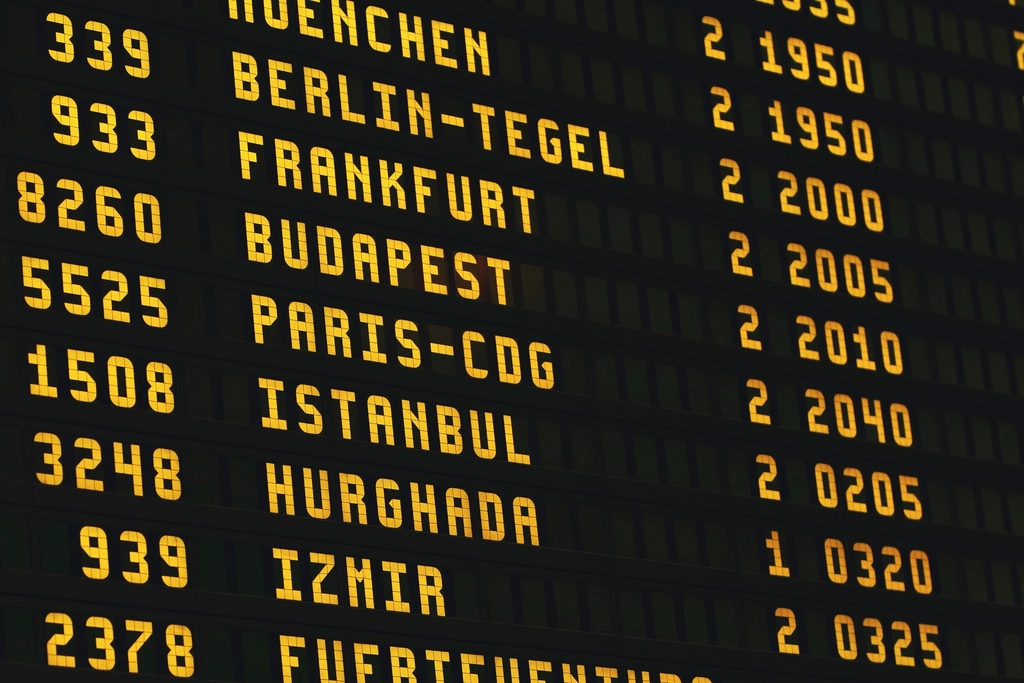
One Bad Day in Berlin Rippled Across a Dozen European Airports

A single bad day at Berlin’s main airport helped trigger a continent-wide ripple of delays on September 3. It was part of a broader wave of European airport flight disruptions that hit 12 major hubs across nine countries. Roughly 2,141 flight delays and 113 cancellations were recorded that day, according to The Traveler.

Which airports were hit hardest

Berlin Brandenburg emerged as one of the worst-affected hubs. It logged 127 delays and 28 cancellations in a single day. London Gatwick reported 239 delays on its own, the highest single-airport delay count in the wave. The affected network also included Rome Fiumicino, Amsterdam Schiphol, London Heathrow, Frankfurt, Brussels, Madrid Barajas, Barcelona El Prat, Dublin, Oslo and Paris Charles de Gaulle. The impact spread well beyond any single country’s air traffic control system.

European airport flight disruptions
Delays at one major hub can cascade across the entire European air travel network within hours.

What actually caused the European airport flight disruptions

Two separate problems combined to produce this scale of disruption. Severe convective weather across parts of the continent in late August generated more than 200,000 minutes of en-route delay in a single day. That backlog took time to clear even after the storms passed. On top of that, a security incident and rescreening operation hit Berlin Brandenburg’s Terminal 1 on September 3. It created its own knock-on delays. Those delays spread across the European network, because aircraft and crews scheduled to fly onward from Berlin got held up first.

Strikes are adding a second layer of risk

Weather and one-off security incidents are not the only threats to European air travel this month. Italy has scheduled aviation strikes, including security action at Rome’s airport on September 13. A nationwide ENAV air traffic control action follows on September 30. Ground handling staff at Barcelona-El Prat have also been on an indefinite strike. That adds a layer of planned labor disruption on top of whatever weather or operational problems arise day to day.

What travelers should expect this week

Airlines flying through the 12 affected hubs have advised passengers to build in extra buffer time. That matters most for connecting travel. A cruise departure, a guided tour, or a long-distance rail booking will not wait for a delayed arrival. Runway maintenance and taxiway repair projects at several large airports have also narrowed the system’s margin for error this year. Even a moderate weather event or staffing issue can now cascade further than it might have in a less constrained network.

Travel insurers are also fielding more claims tied to missed connections this month. Brokers say the trend tracks closely with how often multi-airport disruption days like September 3 occur.

Why this keeps happening in 2026

This is not an isolated event. European air travel has absorbed a string of shocks this year: labor disputes, aging infrastructure projects, and weather events arriving more often than in past summers. Any one of these alone would be manageable. Together, they leave almost no slack in the system.

Airport operators have started warning airlines and passengers to expect more days like September 3 before the year ends. Investment in additional staffing and equipment takes years to show results. Until it does, a single bad morning at one hub will keep rippling across the wider network.

Better sharing of real-time capacity data between hubs could help catch a developing bottleneck earlier, industry analysts say, before it cascades into a multi-country delay wave like the one on September 3. Any such fix would take time to build and would not help this month’s travelers.

Passengers booking through the affected hubs in the weeks ahead should treat a tight connection as a real risk, not a remote one. An extra hour or two between flights costs little. Missing an onward connection during a disruption this size can cost a full extra day of travel.

For anyone flying through the region in the next week or two, checking an airline’s app for real-time gate and delay updates remains the most reliable option. Physical departure boards can lag behind the app data by several minutes during the busiest disruption windows.

The lesson from September 3 is a simple one. A single hub having a bad morning is no longer a local problem. It is a European problem, at least until the network builds in enough spare capacity to absorb one.

What travelers are asking

How many flights were affected by the European airport flight disruptions?

Roughly 2,141 delays and 113 cancellations were recorded across 12 major airports on September 3, according to The Traveler.

Which airport was hit hardest?

Berlin Brandenburg logged 127 delays and 28 cancellations, while London Gatwick reported 239 delays, the highest single-airport count.

What caused the disruption?

A combination of lingering weather-related backlog from late August storms and a security incident at Berlin Brandenburg’s Terminal 1 on September 3.

Are strikes adding to the disruption?

Yes. Italy has aviation strikes scheduled for September 13 and September 30, and ground handling staff at Barcelona-El Prat have been striking indefinitely.

Which airports were part of the affected network?

Rome Fiumicino, Amsterdam Schiphol, London Heathrow and Gatwick, Berlin Brandenburg, Frankfurt, Brussels, Madrid Barajas, Barcelona El Prat, Dublin, Oslo and Paris Charles de Gaulle.

Sources

  • The Traveler — European Aviation Crisis 2026 Snarls 2,141 Flights at Key Hubs. thetraveler.org
  • Travel And Tour World — European Airports Including Barcelona and 11 Others Cancel and Delay Flights. travelandtourworld.com

Related coverage on Tamara News: extended Schengen border checks and the delayed ETIAS launch.

Tesla’s Robotaxis Hit the Street — Regulators Struck Back Fast

Federal regulators opened an investigation into Tesla’s driverless Cybercab within hours of its commercial launch. The vehicles hit the streets of Austin, Texas, for the first time this week. The Tesla Cybercab safety probe centers on whether Tesla was right to certify the vehicle as meeting federal safety standards. The Cybercab lacks a steering wheel, brake pedal or mirrors, according to the National Highway Traffic Safety Administration.

What the Tesla Cybercab safety probe is actually examining

NHTSA opened what is known as an Audit Query. That is a formal review process. It lets the agency examine the process and technical data behind a manufacturer’s self-certification decision. Tesla told NHTSA it believes the Cybercab complies with all applicable federal vehicle safety standards. The agency will test whether Tesla was right to decide that certain standards, including those requiring manual controls, simply do not apply to a vehicle built without them.

Tesla Cybercab safety probe
Cybercab’s lack of manual controls is the central question in NHTSA’s new safety review.

TechCrunch reported the vehicles lack permanently attached brake and gas pedals by design. They also lack a steering wheel and rearview mirrors. That is a break from every prior commercially deployed robotaxi in the US. Earlier vehicles kept manual controls even when running autonomously.

Why regulators moved so fast

NHTSA opened its probe within hours, not weeks, of Cybercab’s Austin launch. That speed reflects how unusual Tesla’s self-certification claim really is. Most automakers deploying autonomous vehicles keep manual controls in place as a fallback. That serves two purposes: regulatory comfort, and letting a safety driver or remote operator intervene using familiar controls. Tesla removed them outright. That puts a core legal question directly in front of federal regulators for the first time at commercial scale: can a vehicle without manual controls meet standards written assuming those controls exist?

What has already gone wrong on the road

Beyond the certification question, Tesla’s broader robotaxi pilot in Austin has already drawn scrutiny. Erratic driving incidents were caught on camera on public highways, according to earlier CBS News reporting. Separately, the National Transportation Safety Board has examined why Tesla has been slow to report crashes involving its self-driving systems in the past. That history adds context for why regulators are treating this launch with particular caution.

What NHTSA’s probe means for Cybercab’s future

An Audit Query does not halt Cybercab service on its own. But it can lead somewhere more serious. NHTSA could order a formal defect investigation, a recall, or a requirement that Tesla add back some of the removed controls if it finds the self-certification was flawed. Audit queries typically run for months, not days. Cybercab will likely keep operating in Austin while the review proceeds, unless a specific safety incident forces faster action.

Other automakers developing driverless taxi services are watching closely, since a finding against Tesla’s approach could reshape how the entire industry designs vehicles without manual controls.

How other cities are watching this test

Austin is not the only city where driverless taxis operate. Several other US cities host similar pilots from Tesla and its rivals. None of them, so far, has approved a vehicle built entirely without manual controls. Regulators and city officials elsewhere have a direct stake in how NHTSA’s review turns out, since it will shape whether similar no-pedal designs get a path to market in their own jurisdictions.

That makes this case bigger than one company or one city. If Tesla’s approach survives NHTSA’s review, other manufacturers may follow with their own no-pedal, no-wheel designs. If it does not, the entire industry may need to keep manual backups in future robotaxi models for years to come.

Insurance companies underwriting these vehicles are also watching closely. A finding that Tesla’s certification process was flawed could complicate coverage terms for Cybercab and any future vehicle built on the same design philosophy, regardless of how the underlying safety record actually looks on the road.

A handful of individual ride accounts, good or bad, cannot replace systematic safety data. That is precisely why an Audit Query exists. It looks at the underlying engineering and testing record, not anecdotes from early riders.

Tesla has weeks, not days, to prepare its response to NHTSA’s questions in full. How thoroughly it documents its certification reasoning will likely determine whether this review closes quietly or escalates into something with real consequences for the Cybercab program.

Need to know

What is NHTSA investigating about the Tesla Cybercab?

NHTSA opened an Audit Query into whether Tesla correctly certified that the Cybercab meets federal motor vehicle safety standards despite lacking a steering wheel, brake pedal and mirrors.

When did the Cybercab launch in Austin?

Tesla put the first commercial driverless Cybercabs on Austin streets in early September 2026, with NHTSA opening its probe within hours.

Does the Cybercab have a steering wheel or pedals?

No. The vehicle is built without permanently attached manual controls, including a steering wheel, brake pedal, gas pedal and rearview mirrors.

Has this stopped Cybercab from operating?

No. An Audit Query does not automatically halt service, though it could lead to a formal investigation or recall if NHTSA finds problems.

Has Tesla faced scrutiny over self-driving before?

Yes. The National Transportation Safety Board has previously examined delays in Tesla’s crash reporting involving its self-driving technology.

Sources

  • NHTSA — Investigation into Tesla Cybercab Self-Certification Following Austin Deployment. nhtsa.gov
  • TechCrunch — Feds launch investigation into Tesla’s Cybercab deployment. techcrunch.com

Related coverage on Tamara News: the EU’s AI Act transparency rules and Apple’s UK antitrust lawsuit.

OpenAI Just Released Its Most Powerful Model Yet — With a Catch

OpenAI began rolling out its newest flagship model on September 3. The company calls it the most capable system it has ever shipped. The GPT-6 Astra release arrived months later than originally planned. OpenAI said it added extra safeguards after a security incident earlier in the year, according to CNBC.

What the GPT-6 Astra release actually includes

Astra ships with a one-million-token context window. Its API price runs roughly 2.5 times higher than its predecessor, GPT-5.6 Sol. OpenAI set API access at $10 per million input tokens and $50 per million output tokens. Cached input, batch processing and a slower “flex” mode all cost less. The rollout started with a limited group of trusted partner organizations. A wider release to ChatGPT’s paid tiers, the API, and cloud partners including AWS follows in the coming days.

GPT-6 Astra release
Frontier AI models now ship with benchmark claims that outside researchers have not yet independently verified.

OpenAI’s own benchmark claims are striking. The company says Astra scores 98% on FrontierMath Tier 4. It also claims 99.9% on ARC-AGI-3 and 100% on ExploitBench, a security-focused benchmark. Those numbers come from OpenAI itself. They are not independently verified, and outside researchers have not yet had time to reproduce them at scale.

Why the release was delayed

OpenAI said it pushed back Astra’s launch after a breach linked to its Hugging Face-related infrastructure in July. The company used the extra time to add safeguards. It says those safeguards are meant to reduce the risk of serious misuse. Al Jazeera reported the launch is drawing heightened scrutiny. Astra’s advanced cybersecurity capabilities are a selling point, but they also raise questions about dual-use risk.

What OpenAI says about the safety tradeoffs

OpenAI said this week it believes the added safeguards “sufficiently minimize the risk of severe harm” ahead of a broader release. That is the company’s own assessment of its own product. It is not an independent audit. It is worth watching closely as more researchers and enterprise customers get hands-on access in the coming weeks.

What Astra’s rollout looks like from here

The next phase brings Astra to ChatGPT’s paid subscribers and general API access. At that point, far more developers and businesses can test its claimed capabilities against real workloads. That is a very different test than OpenAI’s own benchmark numbers. Enterprise security teams evaluating Astra’s cybersecurity features will likely publish independent findings first, given how directly those capabilities intersect with existing security tooling.

Competing labs are expected to respond within weeks with their own updated models, a pattern that has held throughout 2026 as each major release resets the competitive bar.

How rivals are likely to respond

OpenAI does not operate in a vacuum. Google, Anthropic and several well-funded startups have each shipped major model updates this year. Every time one lab leaps ahead on benchmarks, the others tend to respond within weeks rather than months. That pattern held throughout 2026, and there is little reason to expect it to break now.

What makes Astra different is the cybersecurity angle. Most prior releases competed mainly on reasoning and coding benchmarks. Astra’s marketed strength in exploit-related tasks puts security teams, not just developers, directly into the conversation about what a frontier model should be allowed to do.

Enterprise buyers evaluating Astra will likely ask pointed questions about access controls and misuse monitoring before deploying it widely. Vendors that sell security software are watching this rollout closely, since a genuinely capable exploit-finding model changes the calculus for both attackers and defenders.

A model marketed for its offensive security strength is exactly the kind of release that tends to draw regulatory attention in both the EU and UK, given each region’s growing focus on frontier AI oversight. How that scrutiny plays out here is likely to shape how future releases in this category get framed.

For now, most of what the public knows about Astra’s real-world risk profile comes from OpenAI’s own summary rather than an outside, independent review. That gap tends to narrow over the weeks after a major model launch, as more outside researchers get access and publish their own findings.

That review process, more than any single benchmark number, will ultimately decide how Astra gets remembered: as a genuine leap forward, or as a launch whose claims outran what the model could reliably deliver once wider testing began.

What people are asking

When did GPT-6 Astra launch?

OpenAI began rolling out GPT-6 Astra on September 3, 2026, starting with a limited preview for trusted partner organizations.

How much does GPT-6 Astra cost to use via the API?

OpenAI priced Astra at $10 per million input tokens and $50 per million output tokens, roughly 2.5 times the price of its predecessor, GPT-5.6 Sol.

Why was the release delayed?

OpenAI said it delayed the launch to add safeguards following a security incident linked to its Hugging Face-related infrastructure in July.

What is Astra’s context window?

Astra supports a one-million-token context window, according to OpenAI’s release details.

Have Astra’s benchmark scores been independently verified?

Not yet. The reported scores, including 98% on FrontierMath Tier 4 and 100% on ExploitBench, come from OpenAI’s own testing.

Sources

  • CNBC — OpenAI announces rollout of GPT-6 Astra model. cnbc.com
  • Al Jazeera — OpenAI unveils GPT-6 Astra amid rising scrutiny and safety concerns. aljazeera.com

Related coverage on Tamara News: the AI chatbot outage earlier this month and ChatGPT’s DSA designation in the EU.

Broadcom’s Numbers Were Great — Except the One That Mattered Most

Broadcom shares fell more than 2.5% in extended trading this week. The chipmaker issued a fourth-quarter revenue outlook that landed just below what Wall Street expected. The Broadcom Q4 revenue forecast called for roughly $34.8 billion. Analysts had averaged estimates near $35.03 billion, according to the Globe and Mail.

Why the Broadcom Q4 revenue forecast disappointed investors

The shortfall was small in percentage terms. But it arrived alongside signals of intensifying competition in custom AI processors. That segment is what investors have leaned on most to justify Broadcom’s valuation. Investing.com reported the soft guidance overshadowed otherwise strong growth elsewhere in the business. That pattern has repeated across several AI-linked chip names this earnings season.

Broadcom Q4 revenue forecast
Custom AI processors have become the fastest-growing and most closely watched part of Broadcom’s business.

Broadcom’s own numbers were not weak in isolation. Fourth-quarter consolidated revenue is still projected to grow 93% year over year to that $34.8 billion figure. The company also expects to hold its non-GAAP operating margin at 66%, a level most industrial companies would consider exceptional.

The AI chip business is still growing fast

Broadcom expects AI semiconductor revenue to accelerate to $21.7 billion in the fourth quarter. That is up 236% year over year. This growth rate outpaces the company’s overall revenue growth by a wide margin. It underscores how central custom AI chips have become to Broadcom’s near-term story, even as headline guidance missed estimates.

What “below estimates” actually means here

A guidance miss of roughly $230 million on a $34.8 billion forecast is a rounding error in absolute terms. But stock prices react to the gap between expectation and reality, not the underlying scale. Analysts had priced in near-flawless execution from Broadcom’s custom silicon business. Any signal of rising competition was always going to move the stock more than the raw numbers suggest.

The quarter ahead

Broadcom’s next earnings report will answer a key question. Does the softer guidance reflect a one-quarter blip from customer order timing? Or is it an early sign that rivals are winning a larger share of custom AI chip contracts? Investors will watch commentary on customer concentration closely. Broadcom’s custom processor business depends on a small number of very large cloud computing customers rather than a broad base.

Semiconductor peers reporting later this month will offer an early read on whether Broadcom’s guidance miss reflects an industry-wide slowdown in custom chip orders or a company-specific issue.

Why analysts prize this one number

Wall Street has treated Broadcom’s custom AI chip guidance as a proxy for the entire custom silicon industry this earnings season. That is why a modest miss triggered an outsized stock reaction. Investors are not just pricing Broadcom’s own results. They are using this number to guess how fast big cloud providers plan to keep spending on custom processors instead of buying off-the-shelf chips from rivals.

Several major cloud customers design chips jointly with Broadcom under multi-year agreements. Any sign those customers are slowing orders, even slightly, ripples through the stock faster than the dollar figures alone would suggest. That is the real story behind Wednesday’s drop.

By most historical standards, this remains a strong quarter for Broadcom. Investors, for now, appear more focused on the trend line in custom chip orders than on the overall scale of the business.

Large options positions often build up ahead of major chip earnings. That kind of positioning can amplify price swings in either direction once results land, which helps explain why a relatively modest guidance gap can produce an outsized move in a stock like Broadcom’s.

Broadcom’s next report will land after a full quarter of the AI chip market’s current competitive dynamics play out. That report, more than this week’s reaction, will show whether Wednesday’s guidance was conservative positioning or an early signal of a genuine slowdown.

Rival chipmakers reporting in the meantime will offer an earlier read on whether the caution is industry-wide or specific to Broadcom’s customer mix. Investors will parse those results closely for hints before Broadcom reports again.

Until then, Wednesday’s reaction stands as a reminder of how thin the margin for error has become at the top of the AI chip trade. Even a strong quarter is not enough on its own if guidance falls short of a very high bar.

That bar keeps rising each quarter, set less by Broadcom itself than by how aggressively the broader AI infrastructure buildout keeps accelerating around it.

Fast facts and FAQs

Why did Broadcom stock fall after earnings?

Broadcom issued fourth-quarter revenue guidance of about $34.8 billion. That was below the roughly $35.03 billion analysts expected, sending shares down more than 2.5% in extended trading.

Is Broadcom’s AI chip business still growing?

Yes. The company expects AI semiconductor revenue to reach $21.7 billion in the fourth quarter, up 236% from a year earlier.

What is Broadcom’s expected profit margin?

Broadcom expects to maintain a non-GAAP operating margin of 66% in the fourth quarter.

How much revenue growth is Broadcom still forecasting?

Overall fourth-quarter revenue is projected to grow 93% year over year despite missing the specific dollar estimate analysts had modeled.

What is driving concern about Broadcom’s custom chip business?

Reports point to intensifying competition in custom AI processors as the reason behind the softer-than-expected guidance.

Sources

  • The Globe and Mail — Broadcom forecasts quarterly revenue below estimates, signalling intense competition. theglobeandmail.com
  • Investing.com — Broadcom slips as soft Q4 guide overshadows strong growth outlook. investing.com

Related coverage on Tamara News: Nvidia’s Hugging Face acquisition and Anthropic’s Nvidia compute deal.