• Mon - Fri 9.00 - 19.00

Yearly Archives: 2026

Missed the Disney Settlement? You’ve Still Got Time for This One

Several class action settlements September consumers have been watching are now moving through their claim windows. Payouts tie to Disney, Equifax and Tesla this round. Two of the three deadlines have already passed as of this week. One major settlement, though, remains open for claims right now.

The class action settlements September deadlines already closed

Disney agreed to a $50 million partial settlement fund. It resolves allegations that its conduct raised prices for streaming live pay-TV services. That claim deadline was September 3, and it has now passed, according to Yahoo Finance. A second settlement closed even earlier. The Equifax settlement covers consumers mailed a Duplicate Reporting Letter in August or September 2022. It required an official notice ID beginning with “EQB” plus a PIN to file a claim online. That window closed September 1. Anyone who missed either date is no longer eligible for a payout.

The Tesla settlement still accepting claims
US dollar bills, representing payouts from this round of class action settlements September consumers can still claim

Tesla’s settlement remains open through September 25, 2026. That gives affected owners more time to file a claim. The case concerns specific allegations against Tesla. It allegedly charged Supercharger idle fees improperly to early vehicle purchasers. Those purchasers had been promised free lifetime Supercharging. Tesla then disabled or threatened to disable their Supercharger access over unpaid fees, according to Top Class Actions.

Who actually qualifies for the Tesla payout

The Tesla settlement is narrowly defined, so read the fine print carefully. It applies only to a specific California class. Eligible owners received a Tesla before December 16, 2016, and continued owning it after that date. They also needed to be California residents as of June 21, 2021. On top of that, they must have purchased under one of three specified Supercharger contract descriptions. Owners outside California do not qualify. Neither do those who bought vehicles after the cutoff date.

Settlement funds that go unclaimed after the deadline typically revert to the defendant company or get redirected to a court-approved charity, depending on the terms of each individual settlement agreement. That structure gives companies an incentive to keep notice periods relatively short, since the earlier a claims window closes, the sooner any unclaimed funds settle their final disposition.

Why so many settlements land in the same month

September’s cluster of settlement deadlines is partly coincidental. It is also partly a function of how class action timelines actually work. Cases that settled months or years earlier often converge on similar notice-and-claim periods. That happens as courts finalize approval and administrators open claim portals around the same time. Consumers should expect a similar wave of unrelated settlements most months, not just September specifically.

Both cases remain subject to final court approval before any money moves, a step that typically follows the claims deadline by several months. Class members who did file on time should expect payment notices only after a judge signs off on the settlement’s final terms.

What to do if you missed the Disney or Equifax deadlines

Missing the September 1 or September 3 windows means no late filing, typically. Once a settlement’s claims-administration deadline passes, there is usually no way around it. The practical next step is simple: watch for future settlements in the same space. Both credit-reporting and streaming-pricing litigation remain active legal areas. Filing promptly whenever a new claim period opens is the best strategy going forward.

Consumer advocates recommend signing up for settlement-tracking alerts through nonprofit or legal-aid organizations, since notice letters mailed by administrators do not always reach current addresses. Missing a filing window over an outdated address is one of the most common reasons eligible consumers never collect money they are owed, according to consumer attorneys who handle these cases regularly.

FAQ: what’s covered and what’s not

Can I still file for the Disney or Equifax settlements?
No. The Disney claim deadline was September 3, 2026. The Equifax deadline was September 1, 2026. Both have already passed.

Is the Tesla settlement still open?
Yes, the claim deadline for the Tesla Supercharger settlement is September 25, 2026.

Who qualifies for the Tesla settlement?
Only a defined California class qualifies. Eligible owners received a Tesla before December 16, 2016, kept it past that date, were California residents as of June 21, 2021, and had one of three specified Supercharger contracts.

What was the Disney settlement about?
It resolved allegations that Disney’s conduct raised prices for streaming live pay-TV services, with a $50 million partial settlement fund.

What was the Equifax settlement about?
It covered consumers mailed a Duplicate Reporting Letter by Equifax in August or September 2022.

Where can I check for new class action settlements?
Settlement administrators and consumer-law trackers regularly publish new claim windows as cases finalize. Checking periodically is the only way to catch a new filing period in time.

For related consumer and business coverage, see our reporting on the FTC’s case against Amazon over advertiser overcharging and Microsoft’s September cloud outage.

Featured image: Joe Gratz, CC0, via Wikimedia Commons.

Flying Through Dubai or Abu Dhabi This Week? Check Your Flight First

Dubai Abu Dhabi flight disruptions have grounded or delayed dozens of services this week. Renewed hostilities between the United States and Iran are the trigger. Those tensions have forced airspace restrictions across parts of the Gulf. Travelers connecting through either hub should expect changes at short notice right now.

What’s behind the Dubai Abu Dhabi flight disruptions

The National tracked departures and arrivals on September 3 and 4. The data showed clusters of delayed and cancelled flights. Both Abu Dhabi’s Zayed International Airport and Dubai International Airport saw the impact. Disruptions concentrated on routes that cross or skirt sensitive airspace. The root cause traces back to renewed conflict between the US and Iran. That conflict has forced airlines to reroute or cancel flights that would otherwise pass near contested airspace.

Which airlines are hit hardest

A commercial airliner in flight, amid ongoing Dubai Abu Dhabi flight disruptions

Etihad Airways has been among the worst affected carriers. Delays span more than a dozen routes across Europe, Asia and the Middle East, according to Gulf News. Air Arabia Abu Dhabi and Air India Express have also felt the impact. Multiple routes to Cairo, Bahrain and Delhi have been disrupted. Emirates flight EK206 runs from New York to Dubai; it was cancelled on September 3. The carrier’s Dubai-to-Kuwait network remains suspended as well.

Airport authorities in both Dubai and Abu Dhabi have activated contingency staffing to help manage rebooking queues during the disruption. Ground handling delays have compounded the airspace issues in some cases, adding to wait times for passengers even on flights that ultimately depart close to schedule.

Why the Gulf’s airspace is suddenly a problem

The current disruption traces directly back to renewed exchanges between US and Iranian forces. Those exchanges raised the risk profile for commercial aircraft. Any plane operating near shared or contested airspace in the region now faces added scrutiny. Airlines have responded by rerouting flights, or simply cancelling them. Nobody wants to risk flying through zones flagged as unsafe. Past Gulf tensions followed a similar pattern. This time, the sheer volume of traffic through Dubai and Abu Dhabi complicates things further. Both are among the world’s busiest connecting hubs.

What travelers are being told to do

Airlines have issued a clear warning. Flight timings “remain subject to change at short notice,” carriers say. Both The National and Gulf News report the same advice for passengers. Anyone with connections through the UAE should monitor their itineraries closely in the days ahead. This applies even to travelers not flying to or from the country directly. Passengers with tight connections should build in extra buffer time. Considering alternative routings is also worth exploring where possible.

Cargo carriers operating through the region have also adjusted routings, with knock-on effects for freight schedules tied to Gulf hub connections. Shippers moving goods between Asia and Europe via UAE hubs have been advised to build extra time into delivery estimates until the airspace situation stabilizes.

What happens if the airspace tensions continue

Disruptions at Dubai and Abu Dhabi could extend well beyond the current window. That depends entirely on whether the underlying US-Iran tensions persist. Both airports remain central to long-haul connections between Europe, Asia and beyond. Airlines are expected to keep adjusting schedules day by day. Nobody is committing to a fixed recovery timeline yet. Everything hinges on how the regional airspace situation stabilizes in the coming days.

Travel insurers have reported a rise in inquiries related to Gulf routing changes, and several airlines have temporarily loosened rebooking fees for passengers affected by the disruptions. Analysts note that Dubai and Abu Dhabi’s role as connecting hubs means the ripple effects extend well beyond travelers who are actually flying to the UAE itself, touching itineraries routed through the region toward Asia, Africa and Europe.

FAQ: before you fly

What is causing the Dubai Abu Dhabi flight disruptions?
Renewed hostilities between the US and Iran have triggered airspace restrictions across parts of the Gulf. That has forced airlines to reroute or cancel flights.

Which airports are affected?
Dubai International Airport and Abu Dhabi’s Zayed International Airport are both seeing delays and cancellations.

Which airlines have been hit hardest?
Etihad Airways, Air Arabia Abu Dhabi, Air India Express and Emirates have all reported disrupted routes.

Was any specific flight cancelled?
Emirates flight EK206 from New York to Dubai was cancelled on September 3. The airline’s Dubai-Kuwait network remains suspended too.

Should I avoid connecting through Dubai or Abu Dhabi right now?
Airlines advise travelers with connections through the region to monitor their itineraries closely. Timings can change at short notice.

How long will the disruptions last?
There is no fixed timeline yet. Airlines are adjusting schedules day by day depending on how the regional airspace situation develops.

For related travel disruption coverage, see our reporting on KLM’s Beirut flight disruptions and the tanker attack in the Strait of Hormuz.

Featured image: Mhp1255, CC BY-SA 3.0, via Wikimedia Commons. In-content image: N509FZ, CC BY-SA 4.0, via Wikimedia Commons.

One Country Is Blocking the EU’s Russia Sanctions — Again

The EU sanctions Russia extension due to take effect this month is stuck right now. Slovakia is blocking a push to move the renewal cycle from six months to twelve. The deadline is close: current measures expire September 15, just 12 days out. The standoff covers sanctions against more than 2,700 Russian individuals. That list includes President Vladimir Putin and Foreign Minister Sergei Lavrov.

Why the EU sanctions Russia extension is stalled

Eastern Herald reported on the standoff’s real cause. Slovak Prime Minister Robert Fico’s government is resisting the European Commission’s twelve-month plan. It is not opposing the underlying sanctions themselves. Instead, it wants compensation for economic losses tied to lost Russian gas transit revenue. A unanimity rule in the European Council makes this possible. Any single member state can block renewal under that rule. Slovakia has used that leverage repeatedly throughout this year.

Why the Commission wants a longer renewal cycle

A jetliner on an airport runway, illustrating the aviation-adjacent tensions around the EU sanctions Russia extension

The European Commission wants to move from six-month renewals to twelve-month ones. Two goals drive this push. First, cutting administrative friction across dozens of listed individuals and entities. Second, reducing the leverage individual holdouts get from frequent renewal votes. A twelve-month cycle would mean fewer chances for governments like Slovakia’s to extract concessions at each deadline. That is precisely why Bratislava is resisting the change now, rather than later.

Not the first time Slovakia has held up sanctions

This is not an isolated incident by any measure. In March 2026, both Slovakia and Hungary blocked a sanctions renewal together. They sought the removal of two Russian businessmen from the EU’s blacklist: Mikhail Fridman and Alisher Usmanov. That pattern reveals something structural. The bloc’s unanimity requirement gives individual governments recurring chances to reopen negotiations most member states consider settled.

Energy markets have watched the standoff closely, since further sanctions could affect residual Russian gas flows still moving through European pipelines. Slovakia has historically depended more heavily on Russian energy imports than most EU members, which helps explain why Bratislava keeps returning to compensation demands rather than outright opposition to sanctions.

The broader push for tougher sanctions

European Commission President Ursula von der Leyen has separately made her own vow. She wants to intensify sanctions on Russia and close loopholes used to evade existing restrictions. That statement followed an August 4 incident. Germany attributed a drone found near Leipzig/Halle Airport to Russian intelligence that day. The episode has hardened rhetoric in Brussels. Meanwhile, the more mundane fight over the renewal mechanism keeps dragging on separately.

Ukrainian officials have urged the EU to resolve the standoff quickly, warning that any lapse in sanctions enforcement, even a brief one, could be read in Moscow as a sign of fracturing Western resolve. Kyiv has no formal vote in the process but has lobbied individual EU capitals directly on the issue.

What happens if Slovakia doesn’t budge by September 15

EU officials have a fallback option if no agreement emerges before the deadline. They will likely pursue a short technical extension instead. That would avoid the sanctions lapsing outright. This pattern already played out in previous standoffs with Slovakia and Hungary. A longer-term fix to the twelve-month proposal looks unlikely for now. Bratislava’s compensation demands need addressing first. This fight is likely to resurface at the next renewal point, regardless of how the current deadline gets resolved.

Diplomats in Brussels have privately described the twelve-month proposal as a test case for whether the bloc can insulate its Russia policy from being renegotiated every few months by whichever government feels most aggrieved. Hungary has stayed quieter on this particular dispute than in past rounds, suggesting Budapest may be waiting to see how Slovakia’s gambit plays out before deciding whether to align with it or not.

Questions and answers

What is the EU sanctions Russia extension dispute about?
The EU wants to extend its sanctions renewal cycle from six months to twelve. Slovakia is blocking the change ahead of a September 15 deadline.

Why is Slovakia blocking the extension?
Slovakia is seeking compensation for economic losses linked to lost Russian gas transit revenue. It is not objecting to the sanctions themselves.

How many people are covered by the sanctions in question?
More than 2,700 Russian individuals, including President Putin and Foreign Minister Lavrov.

Has Slovakia blocked EU sanctions before?
Yes. In March 2026, Slovakia and Hungary jointly blocked a renewal. They demanded two Russian businessmen be removed from the sanctions list.

What happens if no deal is reached by September 15?
The EU would likely pursue a short technical extension. That would prevent the sanctions from lapsing while negotiations continue.

Why does one country have this much power over EU sanctions?
Individual EU sanctions require unanimous approval from all member states in the European Council. That structure gives any single government an effective veto.

For related coverage, see our reporting on Germany’s consulate closure with Russia and the Latvia import ban on Russia and Belarus.

Featured image: European Parliament from EU, CC BY 2.0, via Wikimedia Commons.

Musk and Bezos Are Skipping Macron’s Space Summit — On the White House’s Orders

A Paris space summit boycott by major American space companies is underway. The White House pressured firms including SpaceX and Blue Origin to skip a high-profile event. French President Emmanuel Macron organized the summit. It runs September 9-10. Organizers expected it to showcase European ambitions. A core goal: reducing dependence on US space companies for launches and satellite communications.

How the Paris space summit boycott came together

Yahoo News reported how the pressure campaign unfolded. The White House’s Office of Science and Technology Policy held a call about a week before the summit. It reached out to US space companies planning to attend. The message was blunt: their presence could be read as support for European policy positions the US disagrees with. Elon Musk’s SpaceX and Jeff Bezos’s Blue Origin were among the firms that pulled out. Stoke Space and Starcloud also withdrew, according to Modern Diplomacy.

What the summit was meant to showcase

The Eiffel Tower in Paris, host city of the summit at the center of the Paris space summit boycott

The event was set to feature speeches from Macron himself. European Commission President Ursula von der Leyen also planned to speak. European governments are ramping up investment in both civil and military space capabilities right now. A central theme of the summit: reducing Europe’s reliance on companies like SpaceX for satellite communications and rocket launches. The last-minute US absences may end up reinforcing that exact message, ironically.

Why the White House sees this as a policy fight

The pressure campaign reflects broader friction between Washington and European capitals. Disagreements span space policy and technology regulation more generally. Regulatory approaches to satellite communications and data remain a sore point. By discouraging attendance, the administration signaled something clear. It does not want American companies seen as endorsing Europe’s independent space strategy, even informally or by mere presence.

Germany and Italy have both signaled interest in joint European launch projects in recent months, adding momentum to the continent’s push for independence from American providers. None of those projects are expected to reach operational capacity for several years, which is part of why SpaceX and Blue Origin still dominate European commercial launch contracts today.

France’s response: more spending, not less

Macron did not scale back in response to the pressure. Instead, he used the moment to announce more spending. An additional $4.88 billion in military space spending is planned between 2026 and 2030. That brings France’s total planned military space spending to $11.85 billion. The move suggests something important. The boycott may accelerate European efforts toward space independence, rather than slow them down.

Japanese and Indian space agencies have also confirmed attendance at the Paris event, underscoring that the summit’s relevance extends beyond the transatlantic dispute. Their presence suggests the gathering will still carry weight as a venue for shaping international space policy, even without the biggest American commercial players in the room.

What happens at the summit without US companies

SpaceX, Blue Origin, Stoke Space and Starcloud will all be absent. The September 9-10 event will proceed anyway. Its lineup will skew toward European and other international space players instead. Analysts will watch two things closely. First, whether the outcome speeds up European contracts moving away from American launch providers. Second, whether other US companies face similar pressure ahead of future international space events.

The episode highlights a broader tension shaping global space policy: as more countries build independent launch and satellite capacity, Washington’s ability to informally coordinate industry behavior through companies like SpaceX may weaken over time. European officials have framed their space push as a matter of strategic autonomy rather than hostility toward the US, but the optics of a coordinated American boycott make that distinction harder to sustain publicly.

What readers are asking

What is the Paris space summit boycott?
It refers to major US space companies withdrawing from a Paris summit. The withdrawal followed direct White House pressure not to attend.

Which companies pulled out?
SpaceX, Blue Origin, Stoke Space and Starcloud all canceled their attendance.

Why did the White House object to the summit?
It said company attendance could suggest support for European policy positions the US disagrees with.

Who organized the summit?
French President Emmanuel Macron organized it. European Commission President Ursula von der Leyen planned to appear as well.

When is the summit taking place?
September 9-10, 2026, in Paris.

How did France respond to the US pressure?
Macron announced an additional $4.88 billion in military space spending through 2030. That brings France’s total to $11.85 billion.

For related coverage, see our reporting on the Roman Space Telescope launch and the EU’s new AI Act transparency rules.

Featured image: SpaceX, CC0, via Wikimedia Commons. In-content image: Benh LIEU SONG, public domain, via Wikimedia Commons.

A New Public Charge Rule Could Change Your Green Card Odds Next Week

A new public charge rule green card applicants need to know about takes effect September 18, 2026. It gives USCIS officers far more discretion. Officers can now weigh an applicant’s use of public benefits when deciding whether to approve a green card. The change rescinds a 2022 regulation that had narrowed which benefits counted against applicants. It reopens a broader test, one last used before that 2022 rule took hold.

What the public charge rule green card change actually does

The Department of Homeland Security published a final rule on July 20, 2026. It rescinds the 2022 public charge regulation. The new framework becomes effective September 18, according to Mondaq. Under the new approach, USCIS officers can consider a wider range of means-tested public benefits. That list includes food stamps, Medicaid and housing vouchers. Officers will weigh these when assessing whether an adjustment-of-status applicant is likely to become a public charge.

Which benefits count, and from when

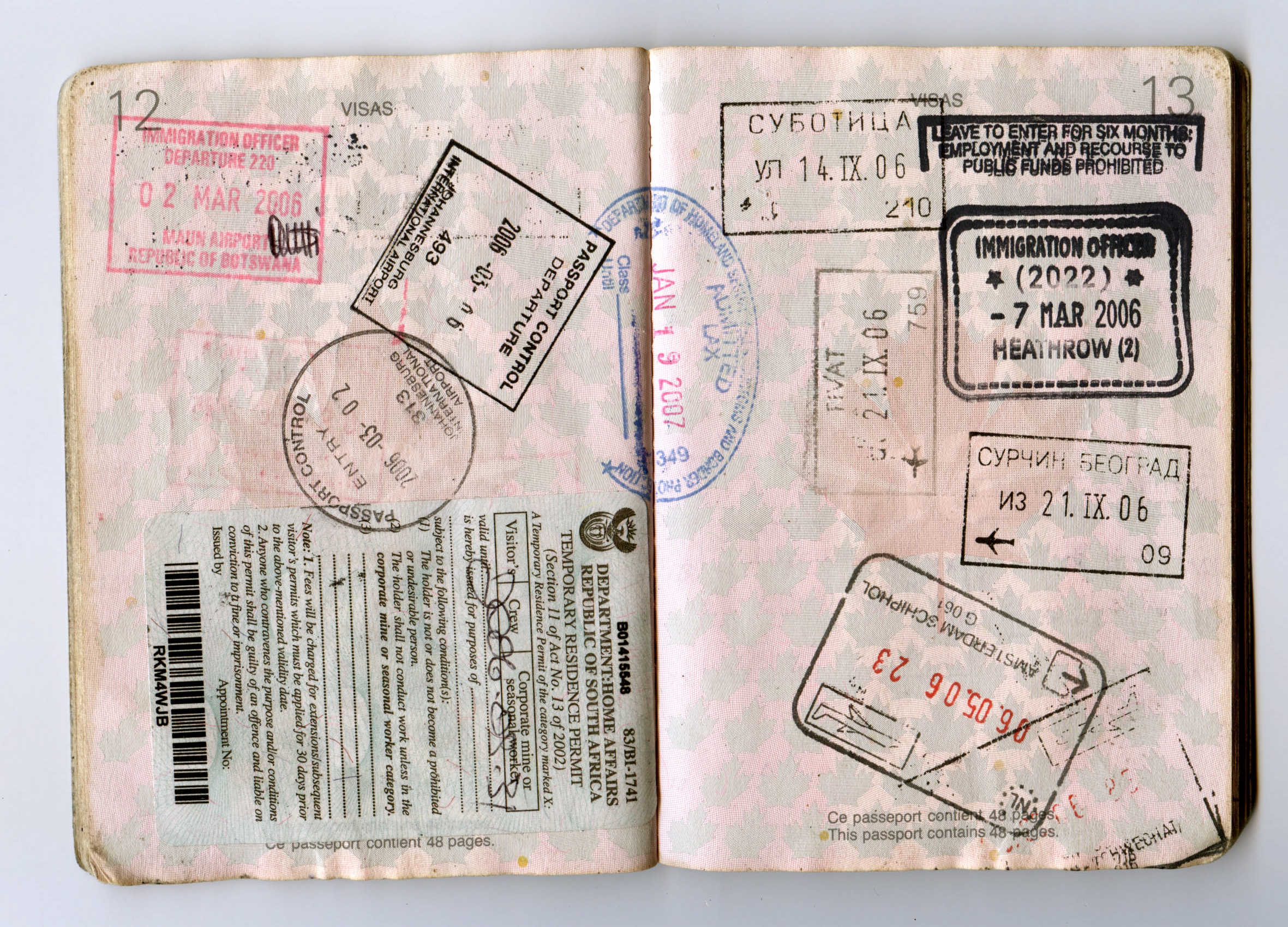
Passport pages with stamps, relevant to the new public charge rule green card standard

Timing matters here quite a bit. USCIS issued its own policy alert explaining the split. Means-tested benefits received before September 18, 2026 still get evaluated under the older, narrower standard. That standard is largely limited to cash assistance for income maintenance and long-term institutionalization at government expense. Benefits received, applied for, or approved on or after September 18 fall under the new, broader framework instead. USCIS issued updated Policy Manual guidance on August 18, 2026. That guidance helps officers apply the change consistently across cases.

The wider factors officers can now weigh

Public benefits are not the only factor here. Officers evaluating a public charge rule green card case will also weigh an applicant’s health. Family situation matters too, along with employment history, education, skills, assets and other circumstances. All of these bear on an applicant’s ability to remain financially self-sufficient over time. This approach mirrors the broader “totality of circumstances” test used before the 2022 rule narrowed the standard.

Legal aid groups have set up hotlines to field questions from applicants confused by the transition. Immigration courts and USCIS field offices are expected to see a temporary bump in processing questions as the new standard beds in, based on patterns observed after previous major public charge policy shifts.

A new form is coming too

USCIS will publish a revised edition of Form I-485. That is the Application to Register Permanent Residence or Adjust Status. The revision reflects the new rule’s requirements. Older editions of the form will not work after a certain point. Any version postmarked or submitted electronically on or after September 18 must be the current one. Applicants filing around that date need to double-check which version they are using.

USCIS has said it will offer transitional guidance for cases already in process when the rule takes effect, though the agency has not detailed exactly how pending applications filed before September 18 will be handled during the changeover period. Applicants with cases already under review should watch for further updates directly from USCIS in the coming weeks.

What green card applicants should do before the deadline

Anyone with a pending or upcoming adjustment of status application should act now. First, confirm which version of Form I-485 is current as the rule takes effect. Second, prepare for more detailed questions about financial circumstances than the 2022 standard required. Immigration attorneys are already advising clients on this. They recommend reviewing public-benefits history now, since receipt before September 18 gets treated differently than receipt afterward.

Immigration attorneys note that the change effectively restores a standard similar to the one used for decades before 2022, meaning officers and applicants alike are returning to a more familiar, if broader, framework. Advocacy groups on both sides of the immigration debate have signaled they will watch closely how consistently USCIS field offices apply the new guidance once it takes effect, since uneven application was a criticism of similar rules in the past.

FAQ: the details that matter

When does the new public charge rule green card standard take effect?
September 18, 2026.

What benefits can now count against an applicant?
USCIS can weigh a wider range of means-tested benefits. That includes food stamps, Medicaid and housing vouchers, if received on or after September 18, 2026.

Does this rule apply retroactively to benefits received earlier?
No. Benefits received before September 18, 2026 get evaluated under the narrower prior standard.

Do I need a new form to apply for a green card?
Yes. USCIS is publishing a revised Form I-485. Older editions submitted on or after September 18 will not be accepted.

What other factors will officers consider?
Health, family situation, employment history, education, skills, assets, and other financial circumstances all factor in.

Why was the 2022 rule rescinded?
DHS published a final rule on July 20, 2026 rescinding the 2022 regulation. That returns the system to a broader discretionary standard for public charge determinations.

For related immigration policy coverage, see our reporting on the elimination of Duration of Status for student visas and the September 2026 visa bulletin retrogression.

Featured image: Don Ramey Logan, CC BY 4.0, via Wikimedia Commons. In-content image: Jon Rawlinson, CC BY 2.0, via Wikimedia Commons.