• Mon - Fri 9.00 - 19.00

Yearly Archives: 2026

If You Won the DV-2026 Green Card Lottery, Your Clock Runs Out This Month

The DV-2026 diversity visa deadline is September 30, 2026 — the end of the U.S. government’s 2026 fiscal year. It is a hard cutoff. The State Department will not approve any visa numbers or adjustments of status for DV-2026 selectees after midnight Eastern time that day. That is according to official State Department guidance.

Selectees in the DV-2026 program could only apply for visa issuance during fiscal year 2026. That window ran from October 1, 2025 through September 30, 2026. Once it closes, a selectee’s entry cannot be converted into a visa. It does not matter how promising their case number looked earlier in the year. There is no appeal, extension or rollover into the following year’s program.

Why the DV-2026 Diversity Visa Deadline Matters More This Year

This year’s deadline carries extra weight because of a disruption earlier in 2026. The State Department resumed issuing diversity visas on August 28, 2026. A federal court order forced that move. The order lifted a months-long suspension the Trump administration had imposed on the program. The suspension ate into months selectees would otherwise have used to complete interviews, medical exams and document processing before the fiscal year closes.

For anyone whose case was delayed by that suspension, the runway left is short. The gap between the program’s resumption and the hard deadline is now measured in weeks, not months. That makes prompt action far more urgent than in a typical DV cycle. Consular posts abroad face a compressed schedule too. Embassies would normally spread DV-2026 interviews across the full fiscal year. Now they have a fraction of that time to clear a comparable caseload. Appointment slots in the final weeks will likely be scarcer than usual, even for selectees who have done everything right on their end.

What Selectees Should Do Before the DV-2026 Diversity Visa Deadline

Applicants should confirm their case status through the State Department’s Consular Electronic Application Center right away, if they have not already. They should complete any outstanding steps next — medical examinations, document submission, or a scheduled interview — as soon as slots open up. The timeline is compressed enough that waiting even a week to start outstanding paperwork could cost someone their visa entirely.

This deadline sits alongside other fiscal year-end pressure points in the U.S. immigration system this month. Tamara News has also covered visa bulletin retrogression affecting several employment-based categories as the same fiscal year closes. It is a separate but related squeeze tied to annual numerical limits.

Immigration attorneys who work with diversity visa cases generally advise against assuming a pending interview slot will simply appear before September 30. Following up directly, and in writing, tends to surface scheduling problems early. That leaves enough time to still fix them, rather than discovering a gap only once the fiscal year has already closed.

What Happens to Unused DV-2026 Selections

Selectees who do not complete the process by September 30 lose their eligibility entirely. The diversity visa program does not carry forward unused selections into the next fiscal year’s lottery. A new DV-2027 selection process runs independently, with its own separate applicant pool. Someone whose DV-2026 case lapses would need a separate selection in a later year’s lottery to get another chance.

What DV-2026 Applicants Should Do Now

With the deadline just weeks away, selectees still waiting on interviews or document processing should treat every remaining business day as consequential. Contact the relevant U.S. embassy or consulate directly to confirm scheduling. That is the most reliable way to know where a case actually stands this close to the cutoff, rather than waiting for a status update to change on its own.

Family members counting on a DV-2026 selectee’s success face the same pressure indirectly. A spouse or child included on a winning application shares the same September 30 cutoff. If the primary applicant’s case slips past the deadline, the whole family’s chance disappears with it — not just the selectee’s own.

Selectees who already completed their interview but are waiting on a visa printing or final administrative step should not assume that part is automatic either. Processing delays inside individual consulates can still push a nearly finished case past the cutoff. Confirming exactly what step remains is worth doing, even for cases that feel almost done. A case that looks 90% finished in early September can still miss the deadline entirely if the last document never gets filed.

US green card document ahead of the DV-2026 diversity visa deadline

Quick Answers

What is the exact DV-2026 diversity visa deadline?
Midnight Eastern Daylight Time on September 30, 2026 — the end of U.S. government fiscal year 2026.

Can a DV-2026 selection be extended past the deadline?
No. The State Department will not approve visa numbers or adjustments of status for DV-2026 after the deadline, with no extension or rollover mechanism.

Why did the program pause earlier in 2026?
The Trump administration imposed a months-long suspension on diversity visa issuance, which a federal court order lifted, with issuance resuming August 28, 2026.

What should selectees do if their case is still pending?
Confirm case status through the Consular Electronic Application Center immediately and complete any outstanding interview, medical exam or document steps without delay.

Does an expired DV-2026 selection carry over to next year?
No. Selectees would need to be chosen separately in a future year’s diversity visa lottery, which operates as an independent selection process.

In-content image: “Covid-19 Greece airport (50147297063).jpg” by Mark Hodson Photos (CC BY 2.0), via Wikimedia Commons.


Related Guides

Palo Alto Networks Has Quietly Bought Five Companies This Year Alone

The Palo Alto Networks acquisition spree added its fifth company of 2026 on September 1. The cybersecurity giant completed its purchase of Console, an AI-native IT service automation startup backed by Thrive Capital, for approximately $500 million. Tech Startups reported the deal terms.

Console applies AI-driven analysis and automated action across enterprise IT operations. It helps organizations resolve alerts and routine requests without waiting on human staff. That is according to Palo Alto Networks’ own announcement. The company calls this “agentifying security.” AI agents now handle tasks that used to require a security analyst’s direct attention.

Every Deal in the Palo Alto Networks Acquisition Spree So Far

Console is the latest in a run of deals stretching back to January. Palo Alto Networks completed its acquisition of Chronosphere on January 29, 2026. That deal gave the company visibility into the massive data volumes modern AI-era businesses generate. CyberArk followed on February 11. That deal made identity security a core pillar of its platform strategy — securing human, machine and AI-agent identities alike.

April brought the Koi acquisition. Koi introduced what the company calls Agentic Endpoint Security, a category built around protecting AI agents on enterprise devices. May brought Portkey, a pioneer in “AI Gateways” — control points that manage how enterprise AI traffic flows and gets secured. Console, completed September 1, rounds out five acquisitions in eight months.

Taken in sequence, the five deals read less like opportunistic shopping. They look more like a deliberate build-out of a full stack. Chronosphere brought visibility. CyberArk brought identity. Koi brought endpoints. Portkey brought traffic control. Console now brings automated response. Few cybersecurity vendors have assembled all five layers this quickly. A single company controlling every layer can sell a tighter, more integrated pitch than a customer stitching together five separate vendors alone.

Why the Palo Alto Networks Acquisition Spree Is Happening Now

Every deal in this run targets a different layer of one problem: securing organizations that are rapidly adopting AI agents, not just AI chatbots. Identity security, endpoint protection, AI gateways and IT service automation each address a piece of the same bet. AI agents acting autonomously inside company systems need fundamentally different security tools than the software they replace.

This mirrors a pattern playing out across the AI infrastructure market more broadly. Tamara News covered Anthropic’s compute deal with Nvidia this week. That deal is part of the same wave of AI-era consolidation. Companies across the industry are racing to control critical layers of the AI stack before rivals lock them up first.

What This Means for Enterprise Security Buyers

Companies that already use Palo Alto Networks products will likely see these acquired technologies folded into existing platform bundles over the coming quarters. Few will be sold as fully separate products. That consolidation can simplify vendor management for large enterprises. It also concentrates more of a company’s security posture with a single vendor. That trade-off is worth weighing for organizations that currently spread risk across multiple security providers.

Smaller competitors face a harder question. Matching Palo Alto Networks’ pace would require either raising significant acquisition capital or accepting a narrower, more specialized role in the market. Neither path is easy. Some smaller vendors may become acquisition targets themselves rather than try to keep pace.

Customers who standardize on a single vendor this heavily also lose some negotiating leverage over time. Fewer alternative suppliers in a given category tends to mean less pricing pressure at renewal time. That is a trade-off procurement teams at large enterprises will need to weigh against the convenience of one integrated platform.

Security teams evaluating the bundle will also want to check how deeply each acquired product actually integrates, rather than assuming a shared parent company means a shared codebase on day one. Integration timelines for large acquisitions often run longer than initial announcements suggest, and gaps between “acquired” and “fully integrated” can leave real security coverage holes in the meantime.

Where Palo Alto Networks Goes From Here

Five acquisitions in eight months is an aggressive pace, even by cybersecurity industry standards. Nothing in the company’s public statements suggests it plans to slow down. Watch how quickly Console, CyberArk, Koi and Portkey get folded into Palo Alto Networks’ existing product lines. Watch too whether the next earnings report shows the acquisition spending turning into new platform revenue, rather than just added headline complexity. Rival security vendors are almost certainly reviewing their own acquisition pipelines in response. A competitor assembling a full AI-security stack this fast raises the bar for anyone hoping to compete on breadth alone.

Security operations center reflecting the Palo Alto Networks acquisition spree

What People Are Asking

What is Palo Alto Networks’ most recent acquisition?
Console, an AI-native IT service automation startup, acquired for approximately $500 million and completed September 1, 2026.

How many companies has Palo Alto Networks acquired in 2026?
Five: Chronosphere, CyberArk, Koi, Portkey and Console, completed between January and September 2026.

What does Console actually do?
It applies AI-driven analysis and automated action to enterprise IT operations, helping resolve alerts and requests without direct human intervention.

Why is Palo Alto Networks focused on AI agent security specifically?
Each acquisition targets a different layer of securing AI agents operating inside enterprise systems — identity, endpoints, AI traffic gateways and IT automation.

Will these acquisitions change existing Palo Alto Networks products?
The company has signaled it plans to fold the acquired technologies into its existing platform over time, though a specific integration timeline has not been published.

Featured image: “Computer-security-emergency-response-process(high-res).png” by Michael Berman (Tanjstaffl) (CC BY 2.5), via Wikimedia Commons.

Related Guides

Canada’s Central Bank Held Rates Steady — but Its Warning Is the Real Story

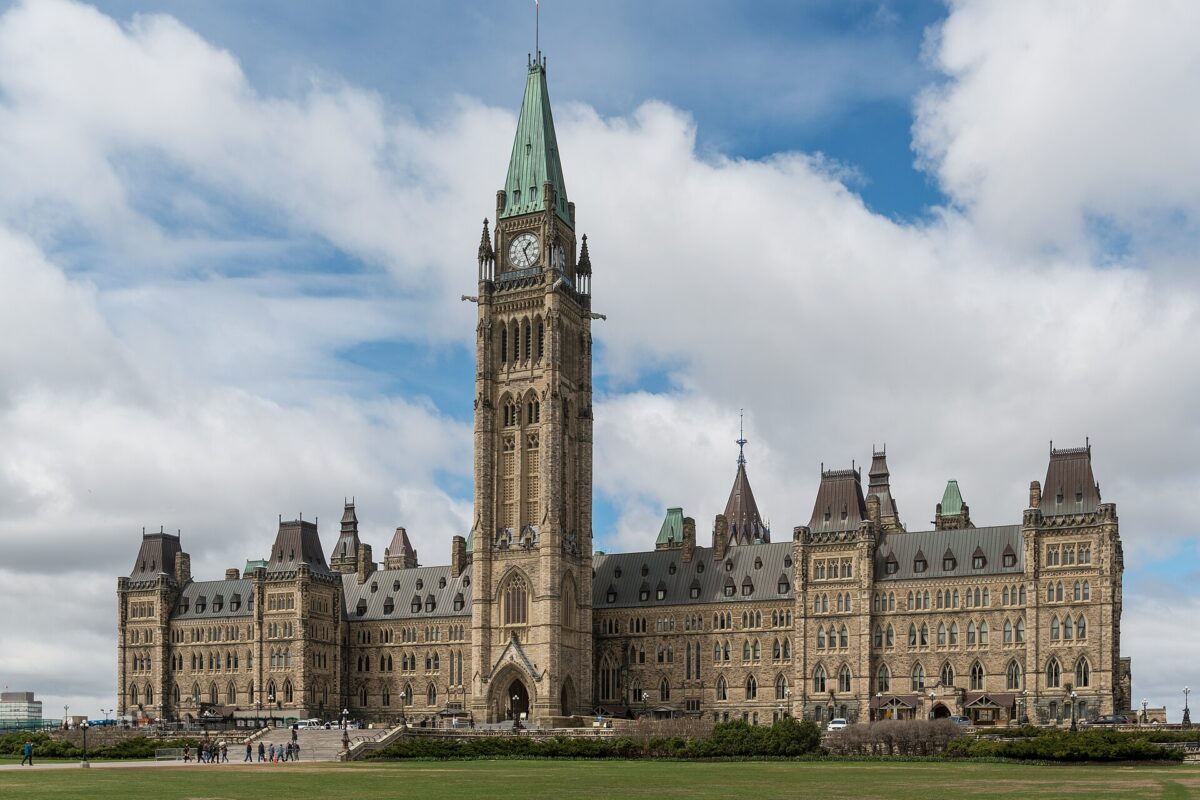
The Bank of Canada rate hold came on September 2, 2026. The central bank kept its target for the overnight rate unchanged at 2.25%, with the Bank Rate at 2.5% and the deposit rate at 2.20%. The decision matched what most economists had expected, according to the bank’s own official press release.

The tone of Governor Tiff Macklem’s remarks drew more attention than the hold itself. He said inflation risk is rising. He pointed to higher energy costs and new dollar-for-dollar tariffs on U.S. goods as the two biggest potential drivers of price increases ahead. CBC News flagged that warning as more hawkish in tone than the decision itself suggested.

Why the Bank of Canada Rate Hold Came With a Warning Attached

Macklem’s opening statement described recent economic data as suggesting growth has “regained some momentum” — ordinarily a reason for confidence. He paired that with a caution: renewed trade tensions and geopolitical uncertainty could shift the inflation outlook quickly. That left the bank unwilling to commit to a clear path for its next move.

The tariff dynamic sits at the center of that caution. Canada has been rolling out retaliatory tariffs on U.S. goods amid an ongoing trade dispute, a policy Tamara News covered in our report on Canada’s retaliatory tariffs. Tariffs typically raise costs for businesses and consumers — exactly the inflationary pressure Macklem flagged.

Energy costs add a second layer to that risk. Canada’s economy is more exposed to swings in oil and gas prices than many peer economies, both as a major producer and as a country where heating and transport costs move household budgets noticeably. A tariff-driven cost increase arriving alongside higher energy prices would compound rather than offset each other. That is likely why Macklem flagged both risks together instead of treating them separately.

How This Bank of Canada Rate Hold Compares to Other Central Banks

Canada’s hold sits alongside a broader split among major central banks this month. The Bank of England is leaning toward no change at its own September meeting. The U.S. Federal Reserve faces a closer call — Tamara News detailed the Fed’s mixed signals in our coverage of the Federal Reserve’s rate outlook. Some other central banks are leaning toward raising rates rather than holding, which shows how differently inflation pressure is playing out across economies this year.

What a Held Rate Means for Canadians

A hold keeps borrowing costs — mortgages, lines of credit, business loans — unchanged rather than cheaper or more expensive. For households renewing mortgages this year, stability generally beats a surprise increase. But Macklem’s warning suggests the bank is leaving room to raise rates later if tariff-driven inflation materializes, rather than promising continued stability indefinitely.

Businesses planning capital spending face a similar calculus. A steady rate makes financing costs predictable in the near term. Macklem’s language leaves little doubt that predictability could end at the next meeting if incoming data shows tariffs and energy costs feeding through into broader prices faster than expected.

What the Bank of Canada Watches Next

The bank’s next scheduled interest rate announcement is October 28, 2026. Between now and then, watch how quickly the retaliatory tariffs with the U.S. actually feed through into consumer prices. Watch too whether energy costs keep climbing. Either trend accelerating would raise the odds of a rate increase at the October meeting rather than another hold. Financial markets will parse every public comment from Macklem and other officials for hints of which way that decision is leaning. Central bank communication between meetings often moves borrowing costs and currency markets almost as much as the meetings themselves.

The Canadian dollar’s performance against the U.S. dollar will be one signal worth watching too. A currency that weakens sharply on tariff news would add yet another inflation channel. A cheaper loonie makes imported goods more expensive for Canadian consumers, regardless of what the Bank of Canada does with its policy rate.

Provincial governments with energy-heavy economies, including Alberta, face a different calculus than provinces more exposed to manufacturing trade with the U.S. A rate decision built around a national average inevitably lands unevenly across regions with very different economic profiles. That is part of why the bank’s public commentary tends to stay carefully general rather than naming specific sectors or provinces by name.

Fixed-rate mortgages have generally stayed more popular than variable-rate products with Canadian borrowers in recent years. That preference tends to strengthen whenever a central bank signals it may not hold steady indefinitely, since locking in a known rate removes the risk of a future increase entirely.

Canadian currency notes after the Bank of Canada rate hold

FAQs on the Bank of Canada Rate Hold

What is Canada’s overnight interest rate after this decision?
2.25%, unchanged from the previous setting, with the Bank Rate at 2.5% and the deposit rate at 2.20%.

Why did the Bank of Canada hold rates instead of cutting or raising them?
Governor Tiff Macklem said growth has regained some momentum, but flagged rising inflation risk from tariffs and energy costs that make the future path uncertain.

What tariffs is Macklem referring to?
New dollar-for-dollar retaliatory tariffs between Canada and the United States, part of an ongoing trade dispute between the two countries.

When is the Bank of Canada’s next rate decision?
October 28, 2026.

How does this compare to what other central banks are doing?
The Bank of England is also leaning toward holding, while the U.S. Federal Reserve’s September decision remains a closer call between a hold and a hike.

Featured image: “Centre Block, Ottawa, Southeast view 20170422 1.jpg” by DXR (CC BY-SA 4.0), via Wikimedia Commons.

A UN Expert Says Zambia’s Post-Election Crackdown Is Getting Worse

The Zambia opposition crackdown has intensified in the roughly three weeks since the country’s contested presidential and parliamentary elections. A UN Human Rights Council-appointed special rapporteur issued a public statement urging Lusaka to reverse course. UN News and the Office of the High Commissioner for Human Rights both reported the warning. It describes systemic violence, mass arrests and detentions that extend beyond legally mandated limits without formal charges.

What the Zambia Opposition Crackdown Looks Like on the Ground

Security forces have arrested hundreds of opposition supporters since the election. Many were held past the timeframes Zambian law allows before charges must be filed, the UN statement said. Some detainees face what the rapporteur’s office called disproportionate or “concocted” charges. That group includes senior opposition alliance leader Brian Mundubile and his running mate Makebi Zulu, who face treason charges.

Zambian authorities have said the arrests connect to an alleged insurrection plot. Security forces reportedly seized weapons and arrested 11 people, including senior opposition figures, in a raid in the capital, Lusaka. Mundubile himself was found present at the scene, according to reporting compiled by People Daily. Tamara News has not independently verified the insurrection allegations. The government’s stated justification is reported here alongside the UN’s characterization of the crackdown as disproportionate.

The gap between the two accounts is stark. Government officials describe a security operation against an active plot. The UN’s rapporteur describes a pattern of mass detention without charge that extends well beyond anyone connected to the alleged raid. Both descriptions can be partly true at once. A genuine security concern does not, on its own, justify holding hundreds of people past legal time limits — the specific practice the rapporteur’s statement singles out.

A Pattern Beyond Individual Arrests

The rapporteur’s office also pointed to the government’s de facto cancellation of RightsCon, a summit on human rights and technology that had been expected to draw more than 5,000 attendees. Officials framed this as part of a broader pattern of closing space for civil society and independent scrutiny, not an isolated response to the election alone.

Why the Zambia Opposition Crackdown Is Drawing International Attention

UN special rapporteurs have no enforcement power. Their public statements still carry diplomatic weight, and they often precede more concrete responses from bodies like the UN Human Rights Council or individual governments considering aid conditions. The rapporteur has called for the immediate release of political detainees and protection of democratic freedoms. That framing turns the situation into a test of whether Zambia’s institutions can constrain executive power after a disputed vote.

Zambia’s situation echoes tensions playing out elsewhere on the continent this election season. Tamara News has also covered Morocco’s general election, part of a busier-than-usual African election calendar in September 2026.

What Comes Next for Zambia’s Opposition

Watch for whether the government responds to the UN rapporteur’s statement, or dismisses it as outside interference. That choice will likely shape whether the crackdown escalates or eases in the coming weeks. Mundubile and Zulu’s treason case is the one to watch most closely. How it proceeds through Zambia’s courts will be read internationally as a signal of whether due process survives a contested election, or whether it becomes a template for handling future opposition challenges. Regional bodies including the African Union and the Southern African Development Community have a track record here. Both have weighed in on post-election disputes elsewhere on the continent before. Pressure from those blocs, more than from the UN alone, has historically shifted outcomes in similar standoffs.

Neither body had issued a public statement on Zambia as of this report. Their silence so far stands in contrast to the UN rapporteur’s swift intervention. Diplomats watching the situation say regional bodies often move slower. They tend to prefer quiet pressure over public statements. That pattern could still shift if the crackdown escalates further.

Zambia’s own courts remain the most immediate venue where this plays out. Independent legal observers inside the country will be watching whether judges hearing the treason case face any political pressure of their own. A visibly fair trial process would do more to ease international concern than any diplomatic statement from Lusaka. A rushed or opaque one would likely deepen it instead, regardless of the eventual verdict. Zambia’s own bar association has historically been vocal on judicial independence issues, and its response to this specific case will be an early indicator worth watching in the weeks ahead.

UN Human Rights Council chamber addressing the Zambia opposition crackdown

A Few Common Questions

What triggered the Zambia opposition crackdown?
Zambia’s contested presidential and parliamentary elections, held roughly three weeks before the UN statement, which the opposition disputed.

Who are the main opposition figures facing charges?
Opposition alliance leader Brian Mundubile and his running mate Makebi Zulu, who face treason charges the UN rapporteur’s office described as disproportionate.

What does the Zambian government say about the arrests?
Authorities have linked the arrests to an alleged insurrection plot, saying weapons were seized and 11 people arrested in a raid in Lusaka.

What has the United Nations done in response?
A UN Human Rights Council-appointed special rapporteur issued a public statement calling for the immediate release of political detainees and an end to the crackdown.

Has any independent event been affected by the crackdown?
Yes. RightsCon, a human rights and technology summit expected to draw over 5,000 attendees, was effectively canceled by the government.

Featured image: “CGI Zambia Flag.png” by Aerra Carnicom (CC BY-SA 4.0), via Wikimedia Commons. In-content image: “UN Human Rights Council Chamber, Geneva” by U.S. Mission Geneva (CC BY 2.0), via Wikimedia Commons.

Related Guides

Xi Jinping Hadn’t Visited Egypt in a Decade. Here’s Why He Just Did

The Xi Jinping Egypt visit began on the evening of September 1, 2026. China’s president landed in Cairo for a state visit at the invitation of Egyptian President Abdel Fattah El-Sisi. It was Xi’s first trip to Egypt in ten years. The stop capped a longer swing through Central Asia. That trip also took Xi to Kyrgyzstan for the Shanghai Cooperation Organisation summit. The full itinerary ran from August 30 to September 3, 2026.

Xi and El-Sisi held formal talks on September 2. Xi visited the Grand Egyptian Museum near the pyramids of Giza during his three days in the country, according to Al Jazeera.

Why the Xi Jinping Egypt Visit Is Landing Now

The timing is not incidental. Xi’s visit comes as U.S. influence in the region has been strained by the ongoing military confrontation between the United States and Iran, which has flared again after a month-long lull. During his meeting with El-Sisi, Xi called on Middle Eastern countries to oppose external influence and to consider reshaping the region’s security order. Al Jazeera reported those remarks as a direct signal of Beijing’s ambition to position itself as an alternative security partner while Washington is preoccupied elsewhere.

ABC News described the visit as part of a broader pattern: “China seeking deeper influence across the Mideast” at a moment when traditional U.S. partners in the region are recalibrating their alliances.

Tamara News has covered the diplomatic backdrop to this moment in detail this week, including the opening of this year’s UN General Assembly session, where competing claims to global leadership are already a central theme. The Iran conflict has drawn most of Washington’s diplomatic bandwidth in recent weeks — exactly the gap Xi’s Cairo trip appears designed to exploit.

The Economic Relationship Behind the Xi Jinping Egypt Visit

China’s investment in Egypt already exceeds $10 billion. That includes stakes in Egypt’s New Administrative Capital east of Cairo and an electric rail line serving industrial zones in the Nile Delta. Egyptian exports to China nearly doubled in the first half of 2026, a trend that gives the diplomatic visit real economic weight rather than symbolic value alone.

Infrastructure financing of this kind has become China’s signature approach to expanding influence across Africa and the Middle East. Beijing trades capital and construction expertise for political goodwill and long-term economic ties, without the conditions typically attached to Western aid or loans.

Critics, including some Western officials, argue this model can leave recipient countries carrying debt tied to projects with uncertain returns. Egypt’s government has not raised that concern publicly about its own arrangements with Beijing. Nothing in the reporting around this visit suggests strain in the relationship — if anything, the near-doubling of Egyptian exports to China points the other direction.

How Egypt Is Positioned Between Two Powers

Egypt has long balanced two relationships. Washington provides significant military aid. Beijing has become an increasingly important economic partner. Hosting Xi for a rare state visit lets Cairo signal strategic flexibility. It does this without formally breaking from Washington, even while the U.S. stays consumed by the Iran conflict. Other regional governments are watching this hedging posture closely as they weigh their own positioning.

Egypt is not alone in this balancing act. Morocco’s own general election this month unfolds against a similar backdrop. Governments across the region are recalibrating alliances as global power dynamics shift. Both countries have deep, decades-old ties to Washington. Both have also deepened economic links with Beijing in recent years. That pattern is playing out across much of the region at once.

Analysts who track Chinese foreign policy note a consistent playbook. Beijing tends to lead with infrastructure and trade, then follow with security rhetoric once the economic relationship is established. Egypt fits that sequence closely. A decade of investment came first. Xi’s call for a new regional security order came only now, after the economic groundwork was already in place.

What Xi’s Visit Sets in Motion

Watch for concrete follow-through on the security framework Xi floated during talks with El-Sisi. Vague calls for a new regional order tend to either firm up into specific proposals within weeks or quietly disappear from official statements. Also worth tracking: whether Gulf states, several of which have their own extensive trade ties with China, echo Xi’s language about reduced external influence. They may instead keep their distance to avoid antagonizing Washington while the Iran conflict stays active.

Flag of Egypt, host of the Xi Jinping Egypt visit

Common Questions, Answered

When did Xi Jinping visit Egypt?
Xi arrived in Cairo on the evening of September 1, 2026, and held talks with President El-Sisi on September 2, staying three days.

Why was this visit significant?
It was Xi’s first trip to Egypt in a decade, and it came while U.S. attention and influence in the region are strained by the ongoing conflict with Iran.

What did Xi say during the visit?
He called on Middle Eastern nations to oppose external influence and consider a new regional security framework, according to Al Jazeera’s reporting on his remarks with El-Sisi.

How large is China’s economic relationship with Egypt?
Chinese investment in Egypt exceeds $10 billion, and Egyptian exports to China nearly doubled in the first half of 2026.

Did Xi visit other countries on this trip?
Yes. The same trip included a stop in Kyrgyzstan for the Shanghai Cooperation Organisation summit before Xi continued to Egypt.

Featured image: “Pyramids of Giza, Egypt – Cairo skyline in the background – panoramio.jpg” by David Broad (CC BY 3.0), via Wikimedia Commons. In-content image: “CGI Egypt Flag.png” by Aerra Carnicom (CC BY-SA 4.0), via Wikimedia Commons.