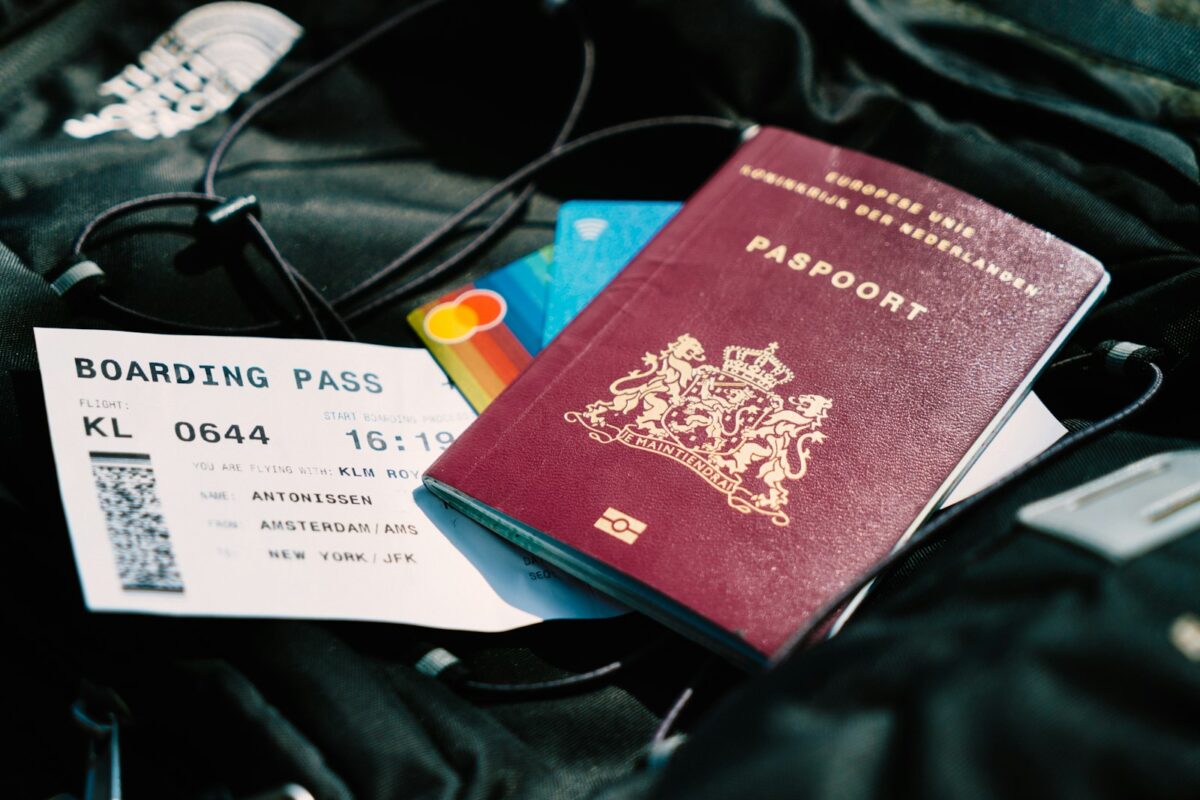
ETIAS 2026 Launches Q4: What Visa-Exempt African Travellers Must Know Before Booking

ETIAS 2026 — the European Travel Information and Authorisation System — goes live across the Schengen area in Q4 of this year. It is not a visa; it is a pre-travel screening check for citizens of visa-exempt countries entering the 30 Schengen states for short stays. For African travellers, the rule splits the continent neatly: passport holders from countries already visa-exempt for Europe (Kenya, Mauritius, Seychelles, and a small handful of others) will need ETIAS, while passport holders from countries that already require a Schengen visa (Nigeria, Ghana, Cameroon, Egypt, South Africa and most of the continent) keep filing for a Schengen visa as before.

This brief separates the noise from the practical detail. If you are flying into Paris, Amsterdam, Frankfurt or Madrid on a Kenyan passport for a business trip in November 2026, ETIAS is the new thing on your checklist. If you are flying on a Nigerian or South African passport, the Schengen visa process is unchanged.

What ETIAS is — and is not

ETIAS is a digital authorisation linked to your passport. You apply online, pay a small fee, answer a set of security and immigration-history questions, and receive a decision within minutes in most cases (up to 30 days in complex cases). Once approved, the authorisation is valid for three years or until the passport expires, whichever comes first. It allows multiple short stays of up to 90 days in any 180-day rolling period across the Schengen area.

What ETIAS is not: it is not a visa. It does not guarantee entry — the final entry decision rests with the border officer at the Schengen external border, exactly as it does today. It does not extend the 90/180 short-stay rule. And it does not replace residence permits, study visas or work permits, which continue under their existing rules.

Which African passports need ETIAS

ETIAS applies only to nationals of countries on the EU visa-exempt list. From Africa, that means primarily Kenya, Mauritius, Seychelles, and a few others — check the official ETIAS portal for the complete list at launch. Passports from countries that require a Schengen visa today (Nigeria, Ghana, Cameroon, Côte d’Ivoire, Senegal, Egypt, South Africa, Tanzania, Uganda, Zimbabwe and most of the continent) continue under the Schengen visa process. For those passport holders, ETIAS has no effect — you keep applying for a Schengen short-stay visa at the consulate of your main destination.

A common confusion: South African passport holders sometimes assume ETIAS will replace the Schengen visa for them. It will not. South Africa is not on the visa-exempt list and is therefore not eligible to use ETIAS at all. The full visa-exempt list is published on the EU Travel-Europe ETIAS FAQ.

ETIAS 2026 fees, timing and validity

  • Fee — EUR 20 per applicant (free for under-18s and over-70s).
  • Validity — three years from issue, or passport expiry if sooner.
  • Coverage — all 30 Schengen states (no separate authorisation needed per country).
  • Stay length — 90 days in any rolling 180 days, unchanged.
  • Decision time — minutes for most clean applications, up to 30 days for cases that need manual review.
  • Transitional period — six months after launch during which the requirement is advisory; after that, ETIAS becomes mandatory.

For a Kenyan business traveller making three trips a year to European clients, EUR 20 once every three years is a marginal cost compared to the time saved at the border under the linked Entry/Exit System.

Not sure which route fits your case? Talk to Travel Explore — https://linktr.ee/travelexpore

How to apply once it goes live

The application takes around 10 minutes. You will need your passport (machine-readable), an active email address, and a payment card. The form asks for biographic details, travel history (countries visited in the last decade), employment information, and a small set of security-screening questions (criminal history, prior immigration refusals, war-zone travel). Most clean applications return an approval within minutes. Manual review can take up to 30 days, and in rare cases an interview at a consulate is requested.

Apply at least 96 hours before travel as a buffer. Apply only via the official Travel Europe ETIAS portal — third-party sites charging higher fees are not authorised and offer no advantage. The authorisation is digitally linked to your passport number; there is no sticker or document to carry.

What it changes on the ground

For travellers in the visa-exempt category, ETIAS adds a five-minute online step weeks before travel and removes most of the friction at the border. The Entry/Exit System (EES), launched in late 2025, has already replaced passport stamps with biometric self-service kiosks at most major Schengen airports. Together, EES and ETIAS turn the Schengen border into a near-automated process for visa-exempt travellers.

For travellers needing a Schengen visa, the process is unchanged in 2026 — consulate appointment, biometrics, document bundle, fee. We cover the country-by-country Schengen visa process in our EU travel guides.

Frequently asked questions about ETIAS 2026

Does ETIAS 2026 replace the Schengen visa for Nigerians and South Africans?

No. ETIAS applies only to visa-exempt nationals. Nigerian, South African, Ghanaian, Egyptian and most other African passport holders continue under the Schengen visa process unchanged.

How much does ETIAS 2026 cost?

EUR 20 per applicant. Applicants under 18 and over 70 are exempt from the fee.

How long is ETIAS valid?

Three years from approval, or until the passport expires, whichever comes first.

Can I work or study on ETIAS?

No. ETIAS authorises short visits only — tourism, business meetings, family visits. Work, study and long-stay activities require the relevant national visa.

What is the difference between ETIAS and EES?

EES is the Entry/Exit System — the biometric border check that replaced passport stamps. ETIAS is the pre-travel authorisation. The two systems work together but are separate.

What happens if my ETIAS is refused?

You will receive a written explanation and can either appeal or apply for a standard Schengen visa, which the consulate will assess under the usual rules.

The short version

  • ETIAS 2026 launches in Q4 across the Schengen area, with a six-month transitional period after launch.
  • It is a pre-travel authorisation for visa-exempt nationals — not a visa, and not a replacement for the Schengen visa process.
  • African nationals who need a Schengen visa today (Nigeria, Ghana, Cameroon, Egypt, South Africa and others) continue under the existing visa process; ETIAS does not apply to them.
  • Kenyan, Mauritian, Seychellois and other visa-exempt African travellers will need ETIAS, valid three years for EUR 20.
  • Apply only via the official Travel Europe ETIAS portal, at least 96 hours before travel.

Plan your ETIAS travel right

Want fewer surprises at the visa interview? Practice with Travel Explore — https://linktr.ee/travelexpore

Related reads on Travel Explore

Share this story

  • ETIAS is coming in Q4. Here is who actually needs it.
  • EUR 20, three years, 30 countries: the new Schengen pre-screen for visa-exempt travellers.
  • Kenyan passport? You need ETIAS. South African passport? You still need a Schengen visa.

Denmark Pay Limit Scheme 2026: New DKK 552,000 Threshold for African Skilled Workers

The Denmark Pay Limit Scheme 2026 lifted the minimum qualifying salary to DKK 552,000 on 1 January — a DKK 38,000 jump from the 2025 floor. That is roughly EUR 74,000 at current exchange rates, and it lands squarely on senior African professionals in IT, engineering, biotech and finance who were previously approved at the lower threshold. The Supplementary Pay Limit Scheme, designed to handle shortage occupations from a defined list of countries, runs in parallel at DKK 446,000.

For an Egyptian software engineer relocating to Copenhagen this autumn, the practical implication is straightforward: the offer letter has to clear DKK 552,000 in base salary, employer pension contributions and paid holiday allowance combined. Bonuses, share options and benefits in kind are excluded from the calculation.

The new salary floor

Denmark uses base salary plus pension contributions plus paid holiday allowance to compute the qualifying figure. Variable pay components are excluded. The 1 January 2026 figures are DKK 552,000 for the main Pay Limit Scheme and DKK 446,000 for the Supplementary Pay Limit Scheme. Both apply to applications submitted on or after 1 January 2026; cases already in the queue under the 2025 threshold are processed at the figure in force at submission.

SIRI (Danish Agency for International Recruitment and Integration) checks the salary against the most recent labour-market collective agreement for the role. Even where your offer hits the headline DKK 552,000 figure, SIRI can refuse if the salary is materially below the collective rate — a check that catches roughly one in seven applications for tech roles in Copenhagen.

What counts as salary under the scheme

  • Base salary — counted.
  • Employer pension contributions — counted, where mandatory under the contract.
  • Paid holiday allowance (feriepenge) — counted.
  • Performance bonuses — not counted, even if guaranteed.
  • Share options or restricted stock — not counted.
  • Benefits in kind (company car, lunch, gym) — not counted.
  • Overtime pay — not counted.

A Tunisian biotech researcher with an offer of DKK 510,000 base plus DKK 60,000 annual bonus would not clear the threshold — the bonus is excluded, leaving the qualifying figure at DKK 510,000. Reworking the contract to convert the bonus into a higher base salary is the standard fix, and most Danish employers are familiar with the calculation. Push back on this during the offer-letter stage rather than after the application is filed.

Denmark Pay Limit Scheme 2026: the application process

The Denmark Pay Limit Scheme 2026 application has five stages. Stage one is securing a signed Danish employment contract that meets the salary floor and the collective-agreement test. Stage two is gathering biometric ID, passport, education documents and the employer’s CVR registration. Stage three is filing online via the SIRI portal and paying the fee (around DKK 4,485 for the main applicant in 2026). Stage four is biometric capture at a Danish embassy or consulate — for Nigerian, Ghanaian and Egyptian applicants, the embassy in Cairo or the consulate in Lagos handles this. Stage five is travel to Denmark once the residence permit is issued.

Processing is typically 30 to 45 calendar days for complete files. The official Pay Limit Scheme guidance on nyidanmark.dk sets out the document checklist and the SIRI portal entry points.

Want help packaging documents the way the consulate expects? https://linktr.ee/travelexpore

The Supplementary Pay Limit route at DKK 446,000

The Supplementary Pay Limit Scheme runs at DKK 446,000 and is open to nationals of a defined list of countries (the list was expanded in early 2026 to include 16 non-EU jurisdictions). The route is targeted at shortage occupations — nursing, certain engineering disciplines, IT specialists, skilled trades. Eligibility under this route is checked against the published Positive List, which is updated twice a year. The Deloitte January 2026 Danish immigration briefing sets out which countries and occupations are on the current Supplementary list.

For African workers, the Supplementary route is most relevant where the occupation is on the Positive List and the offer salary sits between DKK 446,000 and DKK 552,000. Below DKK 446,000, neither route is open. Above DKK 552,000, the main Pay Limit route is the simpler path.

Frequently asked questions about the Denmark Pay Limit Scheme 2026

Does the Denmark Pay Limit Scheme 2026 apply to part-time roles?

The full-time equivalent salary must clear the threshold. Part-time roles are eligible only if the pro-rated annual salary at full-time hours would clear DKK 552,000.

Can my spouse work in Denmark on an accompanying permit?

Yes. Accompanying spouses receive a residence permit that allows full-time employment without a separate work permit.

How long is the residence permit issued for?

Typically up to four years initially, tied to the employment contract. Extensions are available as long as the salary continues to meet the threshold in force at renewal.

Does the salary need to be paid in DKK?

Yes. The qualifying salary must be paid in Danish kroner under a Danish employment contract. Foreign-currency salaries paid by an overseas branch do not qualify.

What happens at salary review if my pay falls below the threshold?

You must notify SIRI. A salary that drops below the qualifying figure can lead to permit revocation. Most extensions are filed at the same threshold in force at issue, but renewals are re-tested.

Can I bring my Master’s-aged dependent children?

Children under 18 are admitted as dependants. Older children must apply separately under student or work routes.

Quick recap

  • The Denmark Pay Limit Scheme 2026 floor is DKK 552,000 for applications submitted from 1 January, a DKK 38,000 jump from 2025.
  • Only base salary, employer pension and paid holiday allowance count toward the figure — bonuses, share options and benefits in kind are excluded.
  • SIRI also checks the offer against collective-agreement rates; a salary below the role’s collective rate can still be refused.
  • The Supplementary Pay Limit Scheme runs at DKK 446,000 for nationals of 16 listed countries in shortage occupations on the Positive List.
  • Application fee is around DKK 4,485, processing 30 to 45 days, residence permit up to four years initially.

Build your Denmark application with help

Travel Explore reviews applications case-by-case before submission. Start here: https://linktr.ee/travelexpore

Related reads on Travel Explore

Share this story

  • Denmark just lifted the salary floor to DKK 552,000. Negotiate accordingly.
  • Pay Limit Scheme 2026: what counts as salary, and what is silently dropped.
  • 16 non-EU countries get an easier Danish work route at DKK 446,000. Who is on the list?

Finland Specialist D Visa 2026: 10-Day Fast Track for African IT and AI Professionals at EUR 4,086

The Finland Specialist D Visa 2026 is one of the fastest immigration routes anywhere in the Nordics. Migri (the Finnish Immigration Service) rolled out an upgraded fast-track lane in January 2026 that clears specialist applications in 10-14 days at a salary of EUR 4,086 a month, with spouses and children processed on dependent permits in parallel. The route was designed to attract tech and AI talent — software engineers, machine-learning specialists, quantum-computing researchers, health-technology builders — and it is genuinely open to African applicants with the right qualification and job offer. A Lagos-based ML engineer with five years of Python and a Helsinki job offer can be issued a residence permit faster than they could pack their flat.

Why Finland is putting on the visa charm offensive

Finland’s working-age population has been shrinking since 2010 and the government has decided to compete openly for global tech talent. The 2026 fast-track lane is the most aggressive Nordic offer on the table: a published two-week processing target, online filing, biometrics on arrival rather than at the consulate, and a parallel dependent-permit channel. The political logic is simple — every year Finland adds 4,000-5,000 specialist permits to its working population, it gets a measurable bump to its tax base and pension system. The pool of countries actively targeted has expanded beyond the US and India to include Nigeria, Egypt, Kenya, South Africa and Morocco, the African markets Finnish recruiters say generate the strongest CVs.

Worth keeping in mind: this is a residence permit, not a citizenship fast-track. You get a four-year permit, renewable, and the path to permanent residence after four continuous years (with Finnish language B1 by then). Citizenship comes after five years of permanent residence plus language and integration testing.

Helsinki waterfront illustrating the Finland Specialist D Visa 2026 ten-day fast-track decision route

Finland Specialist D Visa 2026 salary and timing maths

Migri publishes two specialist thresholds: a standard rate and a fast-track rate. The numbers matter because they determine which queue you sit in:

  • Standard specialist permit: EUR 3,937 per month gross
  • Fast-track specialist permit: EUR 4,086 per month gross — gets you to the 10-14 day queue
  • Application fee: EUR 380 online, EUR 480 paper
  • Permit validity: up to 4 years initially, renewable
  • Family permits: processed in parallel, no separate income test

A Nigerian senior software engineer offered EUR 4,500 a month at a Helsinki SaaS firm meets the fast-track floor comfortably. The same engineer on EUR 3,950 would still qualify but would sit in the standard queue (4-8 weeks rather than 10-14 days). The EUR 4,086 line is psychological as well as procedural — Finnish employers know it and quote offers around or above it precisely to keep candidates in the fast lane. Migri’s specialist permit landing page publishes the live thresholds.

Who actually qualifies as a “specialist” in Migri’s eyes

Migri’s definition is wider than it looks. You need either a higher education degree (any country, though Finnish-equivalent verification helps) or “special expertise acquired through work experience or other education”. The roles Migri has approved most consistently sit in five buckets: software engineering and DevOps, AI and machine learning, cybersecurity, health technology, and advanced research roles in quantum computing or biotech. A Cameroonian cybersecurity analyst with seven years’ SOC experience and no master’s still qualifies under the “special expertise” clause if the job offer is from a Finnish cybersecurity firm and pays above EUR 4,086. A South African data engineer with a master’s in computer science and a Helsinki SaaS offer at EUR 5,200 is the textbook fast-track applicant.

What does not qualify: general administrative roles, customer-service positions even at tech firms, junior data-entry or QA roles unless explicitly tied to a specialist deliverable. Migri reads the job description carefully — if the offer letter says “junior support analyst”, the case officer will downgrade the file out of the specialist track regardless of salary.

Not sure which route fits your case? Talk to Travel Explore — https://linktr.ee/travelexpore.

Filing the Finland Specialist D Visa 2026 from Lagos, Nairobi or Cairo

The 2026 process is the cleanest in the Nordics. You file online through Migri’s Enter Finland portal, upload supporting documents (signed job contract, passport scan, degree certificate, CV), pay the EUR 380 fee, and wait. There is no embassy interview unless Migri flags the file. Once approved, you book a biometrics appointment at the Finnish embassy in your country — Lagos, Cairo, Nairobi and Pretoria all serve African applicants — collect your residence card and travel. A Ghanaian DevOps engineer can be in Helsinki within four weeks of filing if everything lines up. Coverage of the January 2026 launch from VisaHQ confirms the operational details.

For African couples, the family upside is the headline. Spouses get an unrestricted work permit issued in parallel — no separate income test, no occupational restriction. Children under 18 are included on the main applicant’s residence card. Compare this with the German family reunification timeline (which involves separate filing and German language requirements) and the EU Blue Card 2026 comparison, where dependent permits also exist but with more friction.

Frequently asked questions about Finland Specialist D Visa 2026

Do I have to speak Finnish for the Finland Specialist D Visa 2026?

No. The work permit and the fast-track lane have no language requirement. Finnish or Swedish at B1 level becomes necessary when you apply for permanent residence after four years.

Can I apply from Nigeria or Kenya before relocating?

Yes. The 2026 fast-track is designed for offshore filing. You file online through Enter Finland, then book a biometrics slot at the Finnish embassy in Lagos, Nairobi, Cairo or Pretoria after Migri makes a decision.

How does my spouse get a work permit?

The dependent permit issued alongside yours grants unrestricted right to work — your spouse does not need their own employer or salary threshold. They can take any job they find in Finland once the permit is issued.

What happens if I lose my job during the permit period?

You get three months to find a new specialist-qualifying role. The new employer files an extension request; the salary floor must still be met. If you don’t find a job in 90 days, the permit can be revoked.

Is the Finland Specialist D Visa 2026 a path to citizenship?

Eventually, yes. After four continuous years on the work permit, you can apply for permanent residence. After five years on permanent residence (so nine years total), citizenship is possible if you have B1 Finnish or Swedish and pass the civics test.

What to remember

  • Finland Specialist D Visa 2026 fast-track lane clears applications in 10-14 days at EUR 4,086 per month or higher.
  • Standard track at EUR 3,937 a month is slower (4-8 weeks) but still open.
  • Specialist definition covers software, AI/ML, cybersecurity, health-tech and advanced research roles.
  • Spouses get an unrestricted work permit; children under 18 join the main residence card.
  • Total fee for online filing: EUR 380; biometrics happen at the Finnish embassy after Migri’s decision.

Get expert help with your Finland visa application

Book a Finland Specialist D Visa consultation with Travel Explore at https://linktr.ee/travelexpore.

Related reads on Travel Explore

Share this story

  • Finland just made 10-day visas the standard for tech and AI talent — here is how it works
  • EUR 4,086 a month is the fast-lane threshold every African specialist should know
  • How a Nigerian ML engineer goes from job offer to Helsinki in four weeks

Norway Skilled Worker Visa 2026: How African Engineers and Nurses Land in Oslo Without an EU Passport

The Norway Skilled Worker Visa 2026 is the most common route African professionals use to settle in Oslo, Bergen, Trondheim or Stavanger. The Norwegian Directorate of Immigration (UDI) lifted salary floors on 1 September 2025 to NOK 522,600 a year for bachelor-level roles and NOK 599,200 a year for master-level roles — figures that still apply through 2026. A Ghanaian software engineer, a Kenyan registered nurse and a Nigerian offshore mechanical engineer can all use the same route, but UDI weighs the documentation differently for each. This guide walks through the framework, the paperwork and the moves that get a file approved on the first try.

UDI’s definition of a skilled worker in 2026

Three qualifying paths exist. The first is a completed degree from a university or university college — bachelor’s, master’s or PhD. The second is a completed vocational programme of at least three years at upper secondary level, useful for tradespeople like welders, electricians, and HVAC technicians. The third is “special qualifications acquired through long professional experience” — a narrower path UDI generally limits to specialised technical roles where formal credentials are rare. For African applicants, the cleanest path is degree-based: have NUC (Nigeria), GTEC (Ghana) or CHE (South Africa) recognition on hand and apply for NOKUT verification once you arrive.

A Cameroonian petroleum engineer with a BSc plus seven years on offshore rigs sits in the easiest tier. A South African data analyst with a postgraduate diploma but no full master’s needs to either get the diploma equated through NOKUT or argue the “long professional experience” route, which extends processing time by a month or two. Worth keeping in mind: UDI does not pre-assess your qualifications — that happens once a complete file is in. Filing without recognition statements is fine; the case officer will simply ask later if the credential is ambiguous.

The Norway Skilled Worker Visa 2026 salary floors

UDI publishes two thresholds because the salary requirement scales with the qualification level of the role:

  • NOK 522,600 a year pre-tax for jobs that require a bachelor’s degree as their minimum entry qualification
  • NOK 599,200 a year pre-tax for jobs requiring a master’s degree as their minimum entry qualification
  • Pay-and-working-conditions test: the offer must not be poorer than is normal in Norway for the role
  • Full-time minimum: at least 80% of full-time hours is accepted, anything below is rejected

The collective bargaining agreement for your sector almost always beats the floor. A Nigerian civil engineer joining an Oslo infrastructure firm at NOK 720,000 a year — common for that role and that city — is way clear of the threshold, but UDI still tests against the union scale to make sure the offer is market-aligned. UDI’s skilled-worker landing page has the official rates and updates them annually.

The job-offer requirement and what makes it bulletproof

You cannot apply for the Norway Skilled Worker Visa 2026 without a concrete job offer from one specific Norwegian employer. UDI does not accept “letters of interest”, recruitment-agency teasers or LinkedIn DMs as proof. The job offer must be on the employer’s letterhead, naming you in full, naming the role, listing the gross monthly salary in NOK, and signed by both you and an authorised representative of the employer. Most Norwegian employers use UDI’s pre-filled offer template, which removes the guesswork. A Lagos-based mechanical engineer should ask their Norwegian employer to use that template the day the offer arrives — it shaves weeks off processing later.

The second pillar of a bulletproof offer is the employer’s confirmation submitted to UDI before you file your applicant-side paperwork. The employer logs into the UDI portal, completes the offer-of-employment form and uploads supporting docs (organization number proof, salary scale, working hours). Once that is in, UDI emails you an application reference; you then pay the fee (NOK 6,300) and file your applicant paperwork through the same portal or at the Norwegian embassy in your country.

Want a personalised eligibility check before you spend on visa fees? Travel Explore runs free initial reviews at https://linktr.ee/travelexpore.

Documents African applicants need from day one

The clean version of a Norway Skilled Worker Visa 2026 file lands UDI in this order: cover letter, passport bio page (must be valid 3+ months beyond the requested permit period), passport-style photo, two copies of the signed job offer, employer’s UDI offer-of-employment confirmation, salary slip projection or contract, copy of your highest degree certificate with notarised translation if not in English, transcript, evidence of accommodation in Norway (rental contract or employer-provided housing letter), bank statements for the last three months, and travel insurance. African nurses and doctors need the relevant healthcare body’s recognition (Helsedirektoratet for nurses, Statens autorisasjonskontor for doctors); a Kenyan registered nurse should start that recognition process the same week the offer lands, because Norwegian medical authorisation can take 4-8 weeks.

Spouses and children under 18 can apply for family reunification permits in parallel using the spouse-and-children family pathway. Norway recognises customary and religious marriages from most African countries if they are legally registered and certified by the foreign affairs ministry of the home country — a useful detail for Nigerian, Ghanaian and Cameroonian couples whose marriage is not on a Western civil register. Compare this to our deep dive on the German family reunification rules in 2026 and our overview of EU Blue Card thresholds compared, both of which sit alongside Norway as Nordic-EU alternatives.

Frequently asked questions about Norway Skilled Worker Visa 2026

How long does UDI take to decide a skilled-worker file in 2026?

UDI’s service target is 60 days for complete files filed at a Norwegian embassy abroad. In practice, files from countries with high application volume (Nigeria, Egypt, South Africa) average 70-100 days, while files from smaller-volume countries clear in 45-70 days. Filing during October-December is fastest; January-March is the slowest window.

Can I bring my family on the same Norway Skilled Worker Visa 2026 application?

Yes. Spouses, registered partners and children under 18 can file family reunification permits at the same time or after your work permit lands. Spouses get unrestricted right to work in Norway, and children get free schooling.

Do I need to speak Norwegian to qualify?

No, not for the work permit itself. But for permanent residence after three years on the work permit, UDI requires Norwegian language A2 and Norwegian society course completion. Most African professionals start lessons in their first six months in Norway to be ready for the PR application.

What if my degree is from a less-known African university?

UDI accepts NOKUT-equated degrees from any country. If your university is not on NOKUT’s pre-cleared list, you submit the diploma plus transcript and a description of the institution; NOKUT will issue an equivalence statement. Allow 6-12 weeks for that step.

Can I apply on a tourist visa already in Norway?

Generally no. UDI requires the work-permit application to be filed from abroad unless you already hold a residence card under another category. There are narrow exceptions for spouses of skilled workers already in Norway and for international graduates of Norwegian universities.

The bottom line

  • Norway Skilled Worker Visa 2026 sets NOK 522,600 for bachelor-level jobs and NOK 599,200 for master-level jobs.
  • UDI requires a concrete signed job offer plus employer-side UDI confirmation before your applicant file goes in.
  • NOKUT degree recognition is not mandatory upfront but speeds the case officer’s work — start the process early.
  • Healthcare workers need professional licensure from Helsedirektoratet or Statens autorisasjonskontor on top of UDI.
  • Spouses and children under 18 join the file with full work and schooling rights once the permit is issued.

Apply with confidence

If you’d rather not navigate Norway’s UDI alone, Travel Explore handles it end-to-end: https://linktr.ee/travelexpore.

Related reads on Travel Explore

Share this story

  • NOK 522,600 for a bachelor’s, NOK 599,200 for a master’s — Norway’s salary maths for 2026
  • Inside UDI’s skilled-worker file: what an African engineer should pack into the application
  • Norway’s family reunification rule that most African couples don’t know about

Sweden Skilled Worker Permit 2026: New SEK 33,390 Salary Floor Takes Effect 1 June

Sweden’s Migrationsverket has confirmed that from 1 June 2026 every new Sweden Skilled Worker Permit 2026 applicant must earn at least SEK 33,390 per month — up from the SEK 29,680 floor in force since June 2025. The figure is now pinned to 90% of the Swedish median wage rather than 80%, which is a much steeper bar than most African applicants modelled when they started their job search last year. If your offer letter sits below 33,390 kronor a month, the application will not even be assessed on its merits.

What is actually changing on 1 June

The 90% rule comes out of the labour-immigration package passed in late 2025 after two years of political argument over wage dumping. The government’s position is that work-permit holders should not be the cheapest hires on the team, so the floor is now indexed to Statistics Sweden’s monthly median earnings figure. That number is revised every spring, so the 2027 floor is likely to be higher again.

Two practical points get lost in the headlines. First, the salary requirement is gross, not net — before tax, before deductions, in your contract. Second, the employer must demonstrate it through a signed offer and union opinion, not through a verbal promise. Migrationsverket’s official notice spells out the documentary chain.

The numbers in plain Swedish kronor

SEK 33,390 a month is roughly €2,940 or USD 3,180 at mid-May 2026 exchange rates. Over a year that is about SEK 400,680. The previous SEK 29,680 floor worked out to roughly €2,615. The gap of SEK 3,710 a month is the difference between a permit being granted and being refused on the spot.

Take a Nairobi-based software engineer with five years of backend experience: a typical Stockholm mid-level offer of SEK 42,000–48,000 clears the new floor comfortably. A junior data analyst on SEK 30,000 does not. The same employer can make both offers in the same week — the second one will be rejected without the consultant ever reading the CV.

The Sweden Skilled Worker Permit 2026 process step by step

The order of steps has not changed but the documentary bar has. Your employer initiates the application in Migrationsverket’s online portal and uploads an employment offer that itemises the gross monthly salary, the trade-union opinion on pay and conditions, and proof that the job was advertised in the EU’s EURES database for at least ten days. The relevant union must explicitly endorse the offer in writing.

Once the employer files, you complete the applicant side: passport copy, CV, qualification certificates, and proof of any required Swedish or English language certification. Decision times currently sit at 2 to 5 months for non-shortage roles and 1 to 2 months for shortage roles. For more on the alternate Nordic route see our coverage of the Denmark Pay Limit Scheme 2026, which uses a parallel salary-floor model.

  • Confirm the gross monthly salary in your offer letter clears SEK 33,390 before signing.
  • Ask the employer for a copy of the union opinion before applying.
  • Get your degrees attested by your home-country ministry of education first.
  • Budget for a 2–5 month wait if your role is not on the shortage list.

Need a second pair of eyes on your Sweden offer before your employer files? Travel Explore can review it — https://linktr.ee/travelexpore

The 152 shortage occupations that escape the new floor

The new law preserves a long list of in-demand professions where the 90% median rule is waived. Healthcare roles (registered nurses, specialist physicians, medical lab scientists), IT specialists (software developers, cyber-security analysts, DevOps engineers), and skilled metalwork trades (welders, CNC operators, electricians) all feature. EY’s May 2026 analysis publishes the full 152-entry list. If your offer is on that list, your minimum salary still follows the collective-agreement floor for the role — usually lower than SEK 33,390 — but the documentary chain is identical.

A Cameroonian welder with five years on offshore platforms, for example, can take an offer at SEK 27,500 a month and still qualify because the role is on the exemption list. The same person on the same salary, but listed as “general labourer” in the contract, would be refused.

What about people already on a Swedish work permit

If you already hold a valid work permit under the pre-June 2026 rules and apply for an extension between 1 June and 1 December 2026, the new SEK 33,390 floor does not apply to you. After 1 December 2026 the transitional carve-out closes and extensions follow the new rule. That six-month window is the single most important date in this whole reform for the 14,000-odd permit holders already inside Sweden — many of them on starter salaries that the new floor would now rule out.

Frequently asked questions about the Sweden Skilled Worker Permit 2026

What is the new salary threshold for the Sweden Skilled Worker Permit 2026?

From 1 June 2026 the minimum gross monthly salary is SEK 33,390, equivalent to roughly €2,940 at mid-May 2026 rates. The figure is set at 90% of the Swedish median wage and will be revised each spring.

Does the SEK 33,390 floor apply to all jobs?

No. Migrationsverket maintains a list of 152 shortage occupations — mainly healthcare, IT and skilled trades — where the rule is waived and the salary follows the collective-agreement minimum for the role.

Can I bring my spouse and children to Sweden on this permit?

Yes. Dependants can apply alongside the main applicant and receive open work rights, but the main applicant’s salary must be high enough to support the household — Migrationsverket uses its maintenance-requirement calculator to test this.

How long does the Sweden Skilled Worker Permit 2026 take to process?

Standard processing is 2 to 5 months for non-shortage roles and 1 to 2 months for shortage roles. Employer certification and complete documentation cut the timeline by weeks.

Will the SEK 33,390 floor go up again next year?

Almost certainly. The figure is indexed to Statistics Sweden’s median wage and is reset each spring. Plan a 5–8% annual increase into your budgeting.

Does an existing permit holder need to meet the new floor at extension?

Only if they apply after 1 December 2026. Extensions filed between 1 June and 1 December 2026 are assessed under the old SEK 29,680 floor as a transitional carve-out.

Key takeaways

  • The Sweden Skilled Worker Permit 2026 requires SEK 33,390 a month from 1 June — a 12.5% jump on the SEK 29,680 floor that applied since June 2025.
  • 152 shortage occupations are exempt from the 90% median rule; check the official list before negotiating salary.
  • Employers must file first in Migrationsverket’s portal with a union-endorsed offer and EURES advertising proof.
  • Existing permit holders extending before 1 December 2026 stay under the old SEK 29,680 floor.
  • The annual reset means the 2027 floor will almost certainly rise again — build a buffer into your salary negotiation now.

Get your Sweden work permit reviewed before 1 June

Ready to start your application? Talk to a Travel Explore consultant: https://linktr.ee/travelexpore

Related reads on Travel Explore

Share this story

  • Sweden just made its work permit 12.5% harder to get — here is who survives the cut.
  • SEK 33,390 a month from 1 June: the new Swedish reality for African skilled workers.
  • 152 shortage jobs still escape Sweden’s new salary floor — here is the list.