• Mon - Fri 9.00 - 19.00

Category Archives: EU

ETIAS Not Live Yet: What Travellers to Europe Need Now

The ETIAS start date has not been announced. ETIAS is not yet in operation, and no travel authorisation applications are being accepted. The Dutch government’s ETIAS page says the EU will announce the start date several months before launch, and it names no date. Meanwhile the Entry/Exit System (EES) is already running: the European Commission says it became fully operational on 10 April 2026. Travellers from visa-exempt countries should treat any website selling an ETIAS application today with suspicion.

In this guide

Where ETIAS stands

The Netherlands says ETIAS will apply to travellers from 59 visa-exempt countries entering 30 European countries for short stays, usually up to 90 days in any 180-day period. VisasNews reported in May that ETIAS remains expected in the final quarter of 2026, that it could slip, and that a six-month phase-in would follow. That article cites no official EU document for the timetable, so treat the quarter as a press expectation rather than a confirmed date. Nothing on the Dutch page confirms it.

What EES already requires

According to the European Commission, EES replaces passport stamping for non-EU nationals on short stays. Each time they cross an external border of the 29 countries using the system, travellers are registered with their name, travel document details, fingerprints and facial image, plus the date and place of entry and exit and any refusal of entry. VisasNews adds that implementation varies by airport and that biometric collection can be temporarily suspended when queues are long. Allow extra time at first-time crossings.

Fee and validity

CIBT, a visa services firm, reports that the European Commission announced a rise in the ETIAS fee from EUR 7 to EUR 20 on 17 July 2025, that the fee applies to travellers aged 18 to 70, and that an approval lasts three years or until the passport expires. CIBT also says the Commission had not confirmed an exact launch date. This is a secondary source, and the Dutch page does not mention the fee, so confirm the amount on the official EU site once applications open.

Who will need ETIAS

ETIAS is for people who can enter without a visa, not for those who already need a Schengen visa. Consider a hypothetical case. Diego is a Colombian chef invited to a food fair in Amsterdam. He does not need a Schengen visa for a short stay today. Once ETIAS is live and the phase-in ends, he would need an authorisation before boarding. Until then he needs only a valid passport and to register at the border under EES. Travellers heading to Britain face a similar tool, covered in our report on UK ETA enforcement.

What travellers should do

Do not pay for an ETIAS application now, because none exists. Check your passport validity, keep return-ticket and accommodation details to hand, and expect biometric registration at the border. Bookmark the official EU travel site and the foreign ministry page for your destination, since the start date will be announced there. For other short-stay rules, see our guide to Thailand’s visa exemption rules, and use our visa eligibility checker to compare destinations.

ETIAS questions

Is ETIAS in force?

No. The Dutch government says it is not yet in operation and no applications are being collected.

When will ETIAS start?

No official date has been given. The Dutch page says the EU will announce it several months ahead. One news report expects the final quarter of 2026.

Is EES already running?

Yes. The European Commission says EES became fully operational on 10 April 2026.

How much will ETIAS cost?

A visa services firm reports EUR 20 for travellers aged 18 to 70. Confirm on the official EU site when applications open.

Who needs ETIAS?

Travellers from visa-exempt countries making short stays in the participating European countries. Those who need a visa are not covered.

Can I apply for ETIAS now?

No. Any site offering an application today is not an official service.

Sources

Erasmus Mundus Scholarship 2027: Deadlines and How to Apply

Applications for the Erasmus Mundus scholarship 2027 intake are opening programme by programme this autumn, and several deadlines fall between December and January. There is no central application. According to the European Commission’s Erasmus+ page, students apply directly to the institution running their chosen Joint Master’s, and each programme’s website lists its own steps, requirements and dates. That makes the next few weeks the time to build a shortlist.

In this guide

How Erasmus Mundus Joint Masters work

An Erasmus Mundus Joint Master’s is a degree delivered by a consortium of universities in several countries, so students typically study in at least two of them. The Commission says some programmes offer full scholarships to the best-ranked students worldwide, covering participation costs and contributing to travel, visa and living costs. Not every student on a programme receives one. You can read the Commission’s own announcement of the latest 87 selected projects.

What the scholarship covers

The Commission page does not state amounts. Two guides published this year, which are not official sources, give a rate of EUR 1,400 a month for up to 24 months and say that cost contributions depend on programme conditions. Scholarships Central describes this as a contribution toward eligible costs rather than a guaranteed lump sum. Treat these figures as indicative and confirm the amount on the programme page before you rely on it. Students who have previously held an Erasmus Mundus scholarship cannot receive another, according to the same guide.

Deadlines to expect

The Commission says applications usually open between October and January for courses starting the following academic year. VisaWise Travel reports that most programme deadlines for the 2027-28 intake fall between December 2026 and January 2027, many around mid-January, with a few in February or March, and that some close earlier. A second guide says the newly selected 2027 programmes were expected to open in autumn 2026 for a September 2027 start. Because no central calendar exists, the only reliable date is the one on each programme’s own page.

Who can apply

You need a bachelor’s degree or be in your final year and graduate before the master’s begins. Applicants with equivalent learning can apply if the degree-awarding country recognises it. Each programme adds its own academic, language and mobility requirements, and some ask for work experience or a research proposal. Typical documents include transcripts, a motivation letter, references, a CV and an English test score unless waived.

A practical plan

Consider a hypothetical applicant. Amina is a Pakistani graduate in public health. She lists six programmes, notes each portal’s deadline, and asks her referees for letters in October instead of December. Because the guides do not set a limit on the number of applications, she applies to several but writes a separate motivation letter for each. She also checks visa rules for each study country. If you want to compare other awards, see our reports on the Commonwealth Master’s scholarships and the Gates Cambridge scholarship. Our visa eligibility checker can help with the study-country visa side.

Erasmus Mundus questions

Is there one Erasmus Mundus application?

No. You apply directly to the institution running each Joint Master’s programme, according to the European Commission.

When are the deadlines?

They vary. One guide reports most fall between December 2026 and January 2027, but the only reliable date is on each programme’s website.

How much is the scholarship?

The Commission page gives no figure. Unofficial guides cite EUR 1,400 a month for up to 24 months, so confirm with the programme.

Who can apply?

Applicants with a bachelor’s degree, or in their final year and graduating before the master’s starts, subject to each programme’s own criteria.

Can I apply to more than one programme?

The guides we read set no universal limit, but individual programmes may have their own rules.

Does admission guarantee funding?

No. Scholarships are competitive, and admission to a programme does not guarantee one.

Sources

Europe Is Sitting on €210 Billion of Frozen Russian Money. It Still Won’t Touch It

European Council leaders gathered in Brussels on October 15-16, 2026, for a summit that put EU frozen Russian assets back on the agenda. Once again, they left without resolving what to do with them. A senior European diplomat briefed reporters on condition of anonymity ahead of the meeting. Ukraine’s financing needs beyond 2026 would be discussed, the diplomat said — but no funding decision was expected this time around.

That holding pattern has defined the debate for the better part of a year. Roughly €210 billion in Russian central bank assets remain frozen across European institutions, most of it held through the Brussels-based clearing house Euroclear. Using that money to fund Ukraine’s defense and reconstruction has obvious appeal on paper. In practice, the EU has been unable to agree on how, or whether, to do it.

Why the EU Frozen Russian Assets Question Keeps Resurfacing

The idea came close to a breakthrough at the European Council’s December 2025 summit. The Commission proposed a so-called “reparations loan”: EU governments would advance Ukraine funds backed by the frozen Russian assets, to be repaid once Russia compensates Ukraine for the war. Belgium, which hosts most of the frozen holdings through Euroclear, blocked it. Belgian officials have repeatedly warned that unilaterally seizing sovereign assets, rather than merely freezing them, could expose Euroclear and the eurozone to legal and financial retaliation. That risk includes claims from Moscow and knock-on damage to confidence in European asset custody more broadly.

Instead of the reparations loan, the EU adopted a conventional €90 billion support package for Ukraine covering 2026 and 2027, approved in December. Officials say that package was expected to cover only around two-thirds of Ukraine’s financing needs over that period. That leaves a gap that frozen Russian assets were meant to help close — and still might, if Belgium’s objections can eventually be overcome.

EU frozen Russian assets illustration

What EU Leaders Actually Discussed in Brussels

According to the diplomat who briefed Interfax-Ukraine ahead of the summit, the October 15-16 talks were expected to revisit Ukraine’s financing gap without producing a concrete decision. Positions on using the frozen assets “have not changed” since December, the diplomat said. It remained unclear how the discussion among the 27 heads of state and government would unfold once they sat down.

A separate EU spokesperson confirmed that the €90 billion package was never meant to be the whole answer. Work with international partners is continuing to help close the remainder of Ukraine’s funding needs, the spokesperson said. Those partners include the United Kingdom, Canada and Norway. The spokesperson gave no timeline for when, or whether, the asset question itself would be resolved.

Belgium’s Objection Is the Real Obstacle

Belgium’s position matters disproportionately because of where the money physically sits. Euroclear’s Brussels headquarters makes Belgium the custodian of most of the EU’s frozen Russian holdings. That gives Brussels effective veto power over any scheme that touches the underlying assets, rather than just the interest they generate. EU governments have so far relied on windfall profits from the frozen assets, interest income rather than the principal, to help fund Ukraine. It’s a far more legally conservative approach than the reparations loan Belgium rejected.

That caution reflects a genuine legal question EU lawyers have not fully settled. Is seizing a sovereign state’s central bank reserves defensible under international law, even in response to an illegal invasion? Or would it set a precedent that other states, and markets, come to see as confiscation rather than enforcement? The EU has not answered that question yet.

What Happens Next on Ukraine’s Funding Gap

Nothing in the Brussels talks suggests the stalemate breaks soon. The €90 billion package keeps Ukraine funded through 2027 on paper, but officials acknowledge it falls short of the full bill. The reparations loan idea has not been formally withdrawn, only shelved pending a legal and political fix that satisfies Belgium. Expect the topic to return at the next European Council meeting. Expect the UK, Canada and Norway to keep absorbing some of the gap in the meantime through bilateral support, rather than a unified EU mechanism.

For Ukraine, the practical effect is a financing plan built one summit at a time, rather than the multi-year certainty a resolved asset question would provide. For more on how the EU’s internal politics are shaping Europe’s response to the war, see Tamara News’ coverage of France’s 2027 budget cuts and the IMF and World Bank’s October meetings in Bangkok, where Ukraine’s financing also featured on the sidelines.

Frequently Asked Questions

How much Russian money is actually frozen by the EU?
EU officials put the figure at roughly €210 billion, most of it held through the Euroclear clearing system in Belgium.

What did EU leaders decide about EU frozen Russian assets at the October summit?
No new decision. A diplomat briefed on the talks said positions remain unchanged from December, when Belgium blocked a plan to use the assets as collateral for a “reparations loan.”

Why does Belgium object to using the frozen assets?
Belgium hosts most of the holdings through Euroclear. It has warned that seizing the underlying assets, rather than just their interest income, carries legal and financial risk that a windfall-profits approach avoids.

Does the EU’s €90 billion package cover all of Ukraine’s needs?
No. EU officials have said it was expected to cover only about two-thirds of Ukraine’s financing needs for 2026-2027, with the rest meant to come from partners or an eventual resolution on the frozen assets.

Who else is helping fund Ukraine besides the EU?
The United Kingdom, Canada and Norway are named as continuing partners working alongside the EU, though no unified mechanism has replaced the stalled reparations loan.

Is a decision on the frozen assets likely before the end of 2026?
Nothing from the October summit suggests an imminent breakthrough. Officials describe the legal and political questions as unresolved, rather than close to agreement.

Sources

Europe’s New Border Rule Was Supposed to Start This Year. It Didn’t.

Europe’s new travel authorization system was supposed to be live by now. It isn’t. The ETIAS launch delay has pushed the start date past the end of 2026. Nobody has set a new one yet. Travelers heading to Europe from visa-exempt countries can relax a little longer. But the uncertainty is starting to cause its own problems.

The official EU travel portal says only that ETIAS “is not currently in operation.” No applications are being collected. That wording replaced a firmer “last quarter of 2026” target in mid-July 2026.

Why the ETIAS Launch Delay Keeps Happening

ETIAS launch delay

ETIAS, the European Travel Information and Authorisation System, screens visa-exempt travelers before they reach the Schengen area. Think of it as Europe’s answer to the US ESTA system. Travelers from the UK, the US, Canada, and Australia would apply online. They would pay a small fee and get approval before departure.

The system kept slipping for years before this latest delay. Officials once aimed for 2024. Then they pushed to 2025. Then they settled on the last quarter of 2026. That target held through March 2026. At that point, eu-LISA, the EU agency running the technology, still called ETIAS a project “preparing to go live at the end of 2026.” Then the picture changed. By mid-July 2026, the 2026 window disappeared from the official site entirely.

The Entry/Exit System Problem Behind the ETIAS Postponement

ETIAS depends on a separate system first. That system is the Entry/Exit System, or EES. It records biometric data for non-EU travelers at Schengen borders. EES became mandatory at all external borders on April 10, 2026. The rollout has not gone smoothly.

Airports reported queues running several hours at peak times. Temporary flexibility rules let border staff scale back biometric registration during the worst congestion. Those rules expired on September 6, 2026. Nobody has announced an extension yet, even though airline groups including IATA and ABTA asked for one running into 2027. The Financial Times reported that eu-LISA now sees a 2026 ETIAS launch as unfeasible, given how unsettled EES still is.

The logic from Brussels is simple. Regulators want the biometric checks already in place to stabilize first. Only then will they add a second layer of screening on top. Stacking two unfinished systems invites more of the airport chaos EES has already caused on its own.

What the ETIAS Delay Means for Travelers Right Now

Nothing changes for travelers today. Visa-exempt visitors from eligible countries can enter the Schengen area the same way they always have. No ETIAS application exists to file. No fee is due yet.

That matters because third-party websites have already started advertising ETIAS “pre-approval” and paid processing services. None of them are legitimate yet. The European Commission has not opened applications. The Commission has promised several months of public notice before launch, followed by a transition period once it starts. Watch the official EU travel portal for that notice. Don’t trust a travel agency or booking site to announce it first.

Once ETIAS does launch, the basics are already set. Adults aged 18 to 70 will pay €20. Approval will last three years, or until the traveler’s passport expires, whichever comes first. A single approval will cover multiple short trips to any Schengen country during that window, much like a multi-entry visa does today. The rest of the Schengen area’s entry rules keep working independently of ETIAS. That includes the reintroduced border checks between Spain and Italy covered separately this week. None of that has changed.

Travel agents and airlines also face a planning headache of their own. Booking platforms built around a 2026 ETIAS rollout now need to rework their timelines, and some have quietly removed references to the system from their checkout pages rather than guess at a date.

No Confirmed ETIAS Date, But a Meeting on the Calendar

Press reports point to 2027 as the likely new launch window. No EU body has confirmed that in writing. The European Commission sets the actual start date only after eu-LISA finishes its technical sign-off. That process carries no public deadline right now.

One date is on the calendar, though. The eu-LISA Management Board holds its next scheduled meeting from November 17 to 19, 2026, in Dublin. The board may well discuss a revised ETIAS timetable there, though nobody has formally promised to announce one. Until then, plan around a simple assumption: ETIAS could appear sometime in 2027, without a specific month attached. Travelers from the UK should also track separate changes to UK immigration rules that took effect this week. Those rules apply on top of whatever Europe eventually decides about ETIAS, not instead of it.

ETIAS Delay: Your Questions Answered

  • Is ETIAS live yet? No. The official EU travel portal states that ETIAS is not currently in operation and that no applications are being accepted as of October 2026.
  • When will ETIAS launch? No confirmed date exists. Press reports point to 2027, but the European Commission has not announced an official start date.
  • Do I need to apply for ETIAS to travel to Europe right now? No. Visa-exempt travelers can still enter the Schengen area under existing rules, with no ETIAS application required.
  • Why was the ETIAS launch delayed again? Regulators cite ongoing problems with the Entry/Exit System, the biometric border-check system that has to stabilize before ETIAS adds a second screening layer.
  • How much will ETIAS cost once it launches? €20 for travelers aged 18 to 70, with approval valid for three years or until the passport expires.
  • Should I pay a website that offers ETIAS pre-approval? No. No legitimate ETIAS application process exists yet. Any site charging for one is not an official channel.

Spain and Italy Just Brought Back Border Checks Between Them. Here’s Why That’s Allowed

Spain Italy border checks have returned at air and sea crossings between the two countries, temporarily suspending one of the basic freedoms of the Schengen Area — travel without routine document checks — for travelers moving directly between them. Spain’s controls run from September 23 through October 7, under a series of orders published in the country’s official state gazette, while Italy’s checks extend further, from October 1 through October 16, citing concerns that include what it called “the continuing situation in the Spanish autonomous city of Ceuta.”

Both countries have framed the move as a response to irregular migration risks, potential secondary movements of migrants within the Schengen Area, and broader public order and internal security concerns, rather than any change in the two countries’ underlying relationship. As Italy’s Ministry of the Interior put it in its notification, the two nations “remain open to each other” — but travelers should still expect identity and document checks they would not normally face.

Who the Spain Italy border checks actually affect

The reinstated checks apply to all passengers on air and sea routes directly between Spain and Italy — a route normally exempt from border controls under Schengen rules, since both countries are full members of the passport-free zone. EU citizens travelling the route must still carry a valid passport or national ID card even though they aren’t normally required to present documents on intra-Schengen routes. Non-EU citizens holding a Schengen visa need a valid passport and visa, and third-country nationals with a residence permit in either country should expect their documentation checked as well.

Both governments have notified the European Commission’s Schengen registration system of the controls, a step required under EU rules whenever a member state temporarily reinstates internal border checks — confirming this is a legally sanctioned, time-limited exception rather than a unilateral breach of Schengen rules.

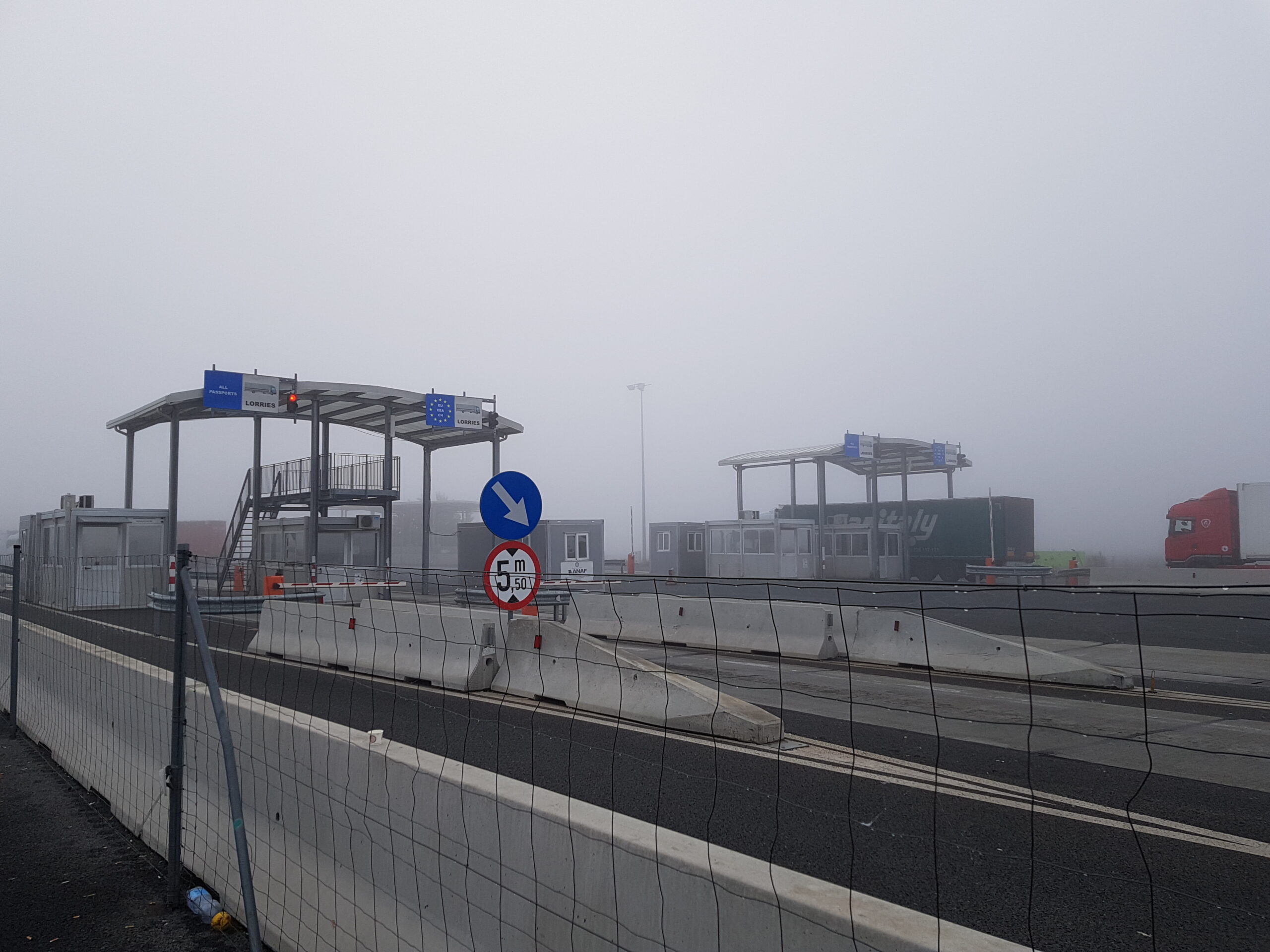
Spain Italy border checks: highway border crossing checkpoint

Why Spain and Italy can legally do this

The Schengen Borders Code allows member states to temporarily reintroduce internal border controls in response to a serious threat to public policy or internal security, provided the measure is proportionate, time-limited, and formally notified to the European Commission and other member states. Spain’s orders — tracked under reference numbers INT/846/2026, INT/932/2026, and INT/977/2026 — and Italy’s parallel notification both follow that framework, which is why the checks can be legally justified as an exception rather than treated as a breach of the Schengen Area’s core principle of free movement.

This is not the first time Schengen states have used this mechanism in 2026, and the specific reference to Ceuta — the Spanish enclave on Morocco’s coast that has repeatedly been a flashpoint for irregular crossings — signals that migration routes through North Africa remain the primary driver behind the current controls, rather than any dispute between Madrid and Rome themselves.

What travelers should actually expect

In practice, travelers on direct Spain-Italy air and sea routes during the control periods should budget extra time for identity checks that would not normally happen on an intra-Schengen trip, and should make sure they are carrying valid passport or ID documentation rather than relying on being waved through. The controls do not affect travel between either country and other Schengen states, only the direct routes between Spain and Italy specified in the respective national orders.

What happens when the controls expire

Spain’s current authorization runs through October 7 and Italy’s through October 16, after which the countries will need to either let the checks lapse and return to normal Schengen rules, or file a fresh notification to extend them if migration pressures and security concerns persist. Given how frequently member states have renewed similar temporary controls elsewhere in the Schengen Area in recent years, a further extension would not be unusual if the underlying pressures driving the current controls haven’t eased by mid-October.

Travelers’ most common questions

Why did Spain and Italy reinstate border checks?
Both countries cited concerns about irregular migration, potential secondary movements within the Schengen Area, and public order and internal security risks, with Italy specifically referencing the situation in Ceuta.

How long will the checks last?
Spain’s controls run from September 23 through October 7, 2026; Italy’s run from October 1 through October 16, 2026.

Which travelers are affected?
All passengers on direct air and sea routes between Spain and Italy, including EU citizens, Schengen visa holders, and third-country nationals with residence permits.

Is this a breach of Schengen rules?
No. The Schengen Borders Code permits temporary reinstatement of internal border checks for security reasons, provided it is proportionate, time-limited, and formally notified to the European Commission.

Does this affect travel to other Schengen countries?
No. The controls apply only to direct routes between Spain and Italy, not to travel between either country and other Schengen states.

What documents should travelers carry?
EU citizens should carry a valid passport or national ID card; non-EU travelers should carry a valid passport and, where required, a valid Schengen visa or residence permit.

More on European travel rules

For more on European travel and study routes, see our coverage of the Erasmus Mundus scholarship deadlines for 2027 and the DAAD and Chevening scholarship deadlines this October. We also previously reported on the UK’s refugee resettlement scheme.

Sources