
• Mon - Fri 9.00 - 19.00

Category Archives: EU

Erasmus Mundus Scholarships 2027: Deadlines and How to Apply

Erasmus Mundus scholarships 2027 applications are opening across Europe, and most programmes close between October and January for courses starting the following academic year, according to the European Commission Erasmus+ site. Unlike many scholarships, there is no single portal: you apply directly to the programme you want.

Quick guide

How Erasmus Mundus applications work

The Commission says students apply directly to the institution running their chosen Erasmus Mundus Joint Master. A new batch of selected programmes is added to the list each year, so a programme you saw last year may or may not be running. The official course catalogue sits on the EACEA site, and each programme sets its own deadline, entry requirements and procedure.

What the scholarship covers

Selected programmes offer full scholarships covering participation costs plus support for travel, visa fees and a living allowance. The Commission describes the awards as merit-based and open to top-ranked applicants worldwide. Amounts vary, so read the programme page instead of relying on a blog post.

Who can apply

You need a bachelor’s degree or be in your final undergraduate year before the master’s begins. Equivalent qualifications recognised in your country can also count. Programmes run one to two academic years, and graduates receive either a single joint degree or separate degrees from the consortium institutions.

Picture a Vietnamese engineering student finishing a bachelor’s next summer. She would shortlist two or three programmes from the catalogue, note each deadline, and prepare one core set of documents she can adapt for each application. This is a hypothetical illustration, not a record of a real applicant.

A sensible plan for the next three months

Start by listing programmes in the catalogue that match your field. Check each programme’s own page for its deadline, since the Commission only gives a general October-to-January window. Then work backwards: language tests and transcripts take the longest, so request them first. Applying to several programmes is common, and the programme pages will say whether that is allowed.

Erasmus Mundus is one of several routes. Our recent guides cover the Chevening 2027-28 timeline, the DAAD scholarship deadline and Gates Cambridge rounds. Before applying anywhere, confirm visa rules for your destination country with its official immigration authority.

What happens next

Programmes will publish or refresh their calls through the autumn. Check each programme’s site regularly, because deadlines are set programme by programme and can differ by weeks.

Questions about Erasmus Mundus

Is there one central application portal?

No. The Commission says students apply directly to the programme they choose.

When are the deadlines?

Most programmes require submissions between October and January, per the Commission. Check each programme for its exact date.

What does the scholarship cover?

Participation costs plus support for travel, visa fees and living allowance, for selected programmes.

Who is eligible?

Holders of a bachelor’s degree, or students in their final undergraduate year, or those with an equivalent recognised qualification.

How long are the programmes?

One to two academic years, ending in a joint degree or separate degrees from consortium members.

Browse our study abroad section for more deadlines as they open.
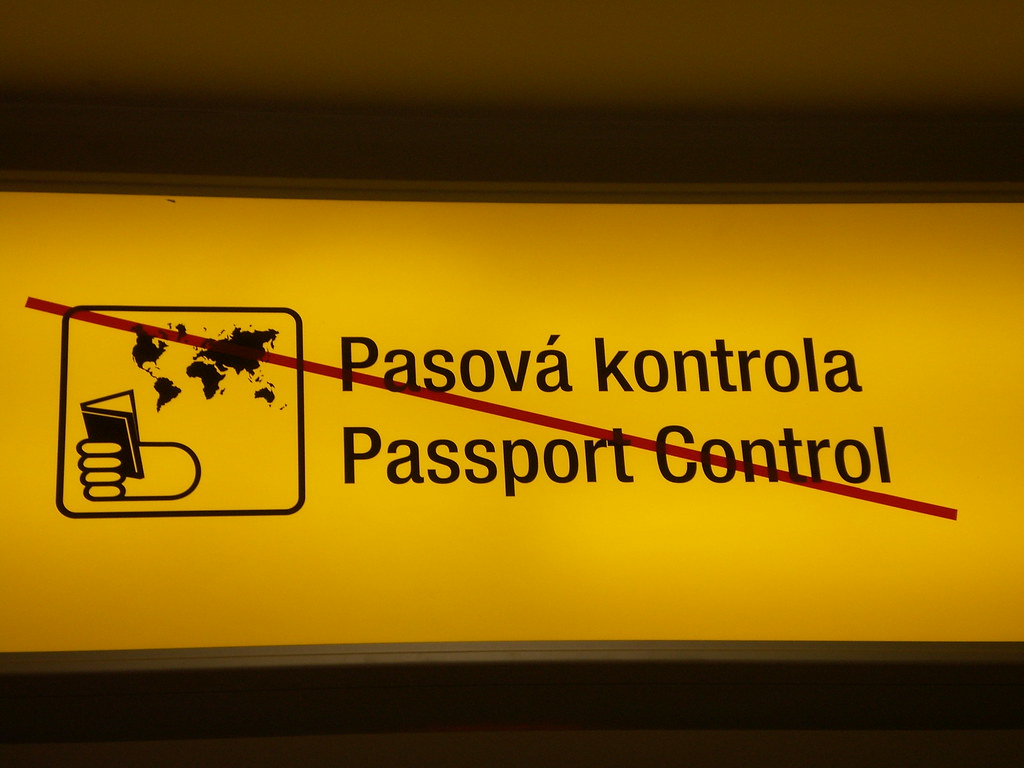
Europe’s New Travel Rule Is About to Arrive for US and UK Flyers

The final quarter of 2026 has arrived. The European Union has said its new travel authorization system, ETIAS, is due to start operating in this window. The ETIAS launch Q4 2026 timeline means travelers from the United States, United Kingdom and dozens of other visa-exempt countries should start paying attention. Brussels has not yet named an exact start date, though officials have promised advance notice once one is set.

The system will not function like a visa. It is a pre-travel authorization, similar in spirit to the United States’ ESTA program. Once it takes effect, it should become a routine step for millions of travelers heading to Europe each year.

What the ETIAS launch Q4 2026 actually requires

ETIAS stands for the European Travel Information and Authorisation System. It will require citizens of the United States, the United Kingdom and 57 other visa-exempt countries to apply for authorization online. That applies before traveling to 30 European countries across and beyond the Schengen Area. The authorization costs €20, or roughly $23, for applicants between the ages of 18 and 70. Once approved, it remains valid for three years and covers multiple entries during that period.

Travelers who already hold a separate European visa will not need ETIAS on top of it. For everyone else in the visa-exempt category, ETIAS approval will permit stays of up to 90 days within any 180-day period. That matches the existing rule that already governs short-term Schengen travel.

Travelers walking through an airport terminal ahead of the ETIAS launch Q4 2026

Why there’s still no exact launch date

The European Union’s official position, as cited by The Points Guy, is direct: “ETIAS will start operations in the last quarter of 2026,” and “no action is required from travellers at this point.” The EU has said it will announce the specific start date several months before the system actually goes live. That notice period has not yet been triggered as of this reporting.

Travelers currently booking trips to Europe for later in 2026 or into 2027 are in a genuine gray zone. ETIAS could take effect before, during or after their travel dates. It all depends on exactly when Brussels pulls the trigger.

What has caused the repeated delays

The EU has anticipated ETIAS for several years, and the project has already missed multiple earlier target dates. The system depends on the separate Entry/Exit System, a biometric border-tracking program that itself has faced a long rollout. EU officials have generally tied ETIAS’s own timeline to that underlying infrastructure being stable first. The Q4 2026 window represents the latest in a series of revised targets, not a brand-new commitment.

What travelers should do before Q4

For now, the EU’s own guidance tells travelers to hold off. They do not need to apply for anything yet. Existing visa-free travel rules remain in effect until ETIAS formally launches. Once a specific start date is announced, travelers should complete the online application well before departure. The EU has described the process as short, but approval is not guaranteed to be instant for every applicant.

Who it affects, and who it doesn’t

ETIAS applies specifically to visa-exempt travelers, roughly 60 nationalities including the US and UK that can currently enter much of Europe without a visa for short stays. It does not apply to EU citizens. It also does not apply to travelers who already hold a Schengen visa or other national visa, or to those who require a full visa application under existing rules. For the visa-exempt group, ETIAS adds a new administrative step without changing the 90-day allowance they already have.

Common questions travelers are asking about ETIAS

When exactly does ETIAS start?

No specific date has been set yet. The European Union says ETIAS will begin operating in the last quarter of 2026 and will announce the exact date several months in advance.

How much does ETIAS cost?

The authorization costs €20, or approximately $23, for applicants aged 18 to 70. Applicants younger than 18 or older than 70 pay no fee.

How long is ETIAS valid once approved?

An approved ETIAS authorization lasts three years and covers multiple entries during that period, or until the traveler’s passport expires, whichever comes first.

Do US and UK citizens need a visa for Europe under ETIAS?

No. ETIAS is not a visa. It is a lighter-weight travel authorization for visa-exempt travelers, including US and UK citizens, who can still enter for stays of up to 90 days within any 180-day period.

Do I need to apply for ETIAS right now?

No. The European Union says no action is required from travelers at this point. Applications will only become necessary once the system formally launches.

Which countries will require ETIAS?

ETIAS will cover 30 European countries across and outside the Schengen Area for travelers from the US, UK and 57 other visa-exempt nationalities.

More visa and travel coverage

Sources cited

  • The Points Guy — Everything to know about ETIAS, Europe’s new travel authorization. thepointsguy.com
  • Groups Today — Don’t forget: ETIAS scheduled to go into effect Q4 of 2026. groupstoday.com

European Ministers Push Border Controls and Faster Returns

In this article

Interior ministers from 17 European countries met on 26 September 2026 to discuss tougher border controls and faster returns of rejected migrants, with Germany pushing for a new European migration crisis mechanism. The proposals concern irregular migration, not visas for workers or students, but they shape the political climate around European immigration.

What was discussed

The gathering, summarised by Visasupdate and covered by AP and InfoMigrants, brought together ministers from 17 countries. Separate talks involved Germany, Denmark, Austria, Greece and the Netherlands on third-country return centres. We have not independently verified details beyond these reports.

The proposals

German Interior Minister Alexander Dobrindt called for a new European migration crisis mechanism and a rapid-response Frontex force with expedited deportations, InfoMigrants reports. The Visasupdate summary adds a proposal to expand Frontex into a border protection and return agency. EU Commissioner Magnus Brunner was reported saying that illegal migration has fallen 55% in two years and by one-third in the last year. That is an official claim from an institution with a stake in the policy, so treat it as the Commission’s framing. Background is on the European Commission migration and home affairs site.

Nothing reported from the meeting changes visa or residence permit rules for skilled workers, students or families. A Mexican welder applying for a German skilled-worker visa, for example, still follows current national rules. Coverage of recent legal-route changes includes the Netherlands work permit rules. To test eligibility, use the visa eligibility checker.

What happens next

Ministers’ proposals normally need Commission drafting, Council agreement and often Parliament approval. No adoption dates were reported. Watch for a formal Commission proposal or a further ministerial meeting.

Common questions

Who met on 26 September?

Interior ministers from 17 European countries, according to the Visasupdate summary, with separate talks among Germany, Denmark, Austria, Greece and the Netherlands on return centres.

What did Germany propose?

Interior Minister Alexander Dobrindt called for a new European migration crisis mechanism and a wider Frontex mandate, per the same summary.

What did the EU say about irregular migration?

Commissioner Magnus Brunner was reported saying illegal migration has fallen 55% in two years and by one-third in the last year.

Does this change visa rules for workers or students?

No. These are border and return proposals, not changes to work or study visas.

Are these proposals law?

No. They were discussed by ministers and would need formal EU legislative steps.

The Netherlands Just Rewrote Its Work Permit Rules

The Netherlands has rewritten a chunk of its work permit rulebook, and the changes — in force since May 22, 2026 — cut both ways for foreign workers: longer processing windows in some cases, but real new protections in others, most notably a doubling of how long unemployed permit holders can search for a new job before losing their status.

What changed and why

The Dutch Immigration and Naturalisation Service, the IND, updated its procedures to align with revised EU Directive 2024/1233, the bloc’s updated single permit rules for non-EU workers, according to Newland Chase’s summary of the changes. The update touches several of the most common Dutch work-permit categories: paid employment, highly skilled migrants, EU Blue Card holders, researchers and work-experience permits.

Longer waits, but firmer deadlines

First-time applications for paid-employment and highly-skilled-migrant permits can now take up to 30 additional days if the IND documents its reasons for the extension, according to Erickson Immigration Group’s analysis of the directive’s implementation. Where a permit holder is changing employers, the IND now must decide within 45 days for most categories — 30 days for EU Blue Card holders — extendable by 15 days only in exceptional circumstances. Permit extensions bundled with an employer change follow a 90-day timeline. The trade-off is transparency: applicants get a defined deadline where none existed cleanly before, even if that deadline is sometimes longer than they’d like.

A safety net if the IND misses its own deadline

The most employer-friendly change may be procedural: if the IND fails to decide an employer-change application within its required window, the applicant is legally permitted to keep working for the new employer under their existing permit until it expires. That closes a gap where administrative delay could otherwise have forced a worker to stop working through no fault of their own while a decision was pending.

Six months, not three, to find new work

The change most likely to matter to workers directly is the extension of the job-search period after unemployment. Permit holders who have held a valid Dutch residence permit for at least two years now get up to six months to find new employment if they lose their job — double the previous three-month window. That same extended window also applies to victims of labor exploitation, a protection aimed at workers who may otherwise feel pressured to stay in an abusive employment situation rather than risk losing status during a short search period.

What it means for employers

Companies sponsoring Dutch work permits now have clearer planning horizons but less flexibility to push decisions through informally. An EU Blue Card transfer, for instance, has a firm 30-day clock the IND cannot exceed without documenting exceptional circumstances, which HR and immigration teams will need to build into onboarding timelines for transferring staff between roles or employers.

Part of a wider EU rollout

The Netherlands is not implementing these changes in isolation. Directive 2024/1233 updates the EU’s single permit framework across all member states, meaning other EU countries are working through similar transpositions of decision-timeline rules and job-search protections on their own schedules. Workers considering a move within the EU under a single-permit route should check the specific implementation date and terms in their destination country rather than assume the Dutch timeline applies uniformly across the bloc.

What happens next

Employers sponsoring Dutch work permits should expect to build the new 45- and 90-day timelines into hiring and transfer planning, particularly for EU Blue Card transfers where the shorter 30-day clock applies. For workers, the extended six-month job-search window is now active for anyone who already holds — or is approaching — two years of valid residence, and is worth confirming directly with the IND or an immigration adviser given how recently the rule took effect.

Who should pay closest attention

The practical impact of these changes falls hardest on two groups: highly skilled migrants and EU Blue Card holders who change employers mid-permit, who now operate under firm IND decision deadlines for the first time, and workers nearing the two-year residence mark, for whom the extended six-month job-search window can be the difference between having to leave the country and having a realistic runway to find new sponsorship. Employers should flag both groups internally so HR teams are not caught off guard by the new timelines.

More immigration coverage

Related reading: the UK’s HC 584 immigration rule changes, South Korea’s new university visa sponsorship restrictions, and Australia’s cut to working holiday visa renewals.

Netherlands work permit questions answered

When did the new Dutch work permit rules take effect?

May 22, 2026, implementing revised EU Directive 2024/1233 on single permits for non-EU workers.

How long can the IND now take to decide employer-change applications?

Up to 45 days for most categories, 30 days for EU Blue Card holders, extendable by 15 days in exceptional circumstances.

What happens if the IND misses its deadline?

The applicant is legally permitted to keep working for the new employer under their existing permit until it expires.

How long do unemployed permit holders now have to find new work?

Up to six months, if they have held a valid residence permit for at least two years — double the previous three-month allowance.

Does the extended job-search window apply to anyone else?

Yes. It also applies to victims of labor exploitation.

Sources

EU AI Act High-Risk Deadline Moves to December 2027

The EU AI Act high-risk deadline that was due to bite on 2 August 2026 has moved to 2 December 2027 for standalone systems, and to 2 August 2028 for AI built into products already governed by EU product-safety law. The shift came through Regulation (EU) 2026/1744, the Digital Omnibus package amending the AI Act, which entered into force on 27 July 2026.

On this page

What moved, and to when

The Digital Omnibus was tracked through the European Parliament as a simplification measure and published in the Official Journal on 24 July 2026. Its effect on timing is narrow but consequential.

Annex III covers standalone high-risk systems — the categories such as biometrics, critical infrastructure, education, employment, essential services, law enforcement and administration of justice. Compliance for those moves from 2 August 2026 to 2 December 2027. Annex I covers AI embedded in products already regulated under EU product-safety legislation, and that moves to 2 August 2028.

The obligations themselves are unchanged in substance: risk management, data governance, technical documentation, record-keeping, human oversight, accuracy and robustness, cybersecurity, conformity assessment, post-market monitoring and incident reporting. Only the date on which they become enforceable has moved.

What did not move

This is where several summaries have gone wrong. Three tranches stayed on their original schedule.

Article 5 prohibited practices — the outright bans, including certain biometric categorisation and social scoring — have been in force since February 2025. General-purpose AI provider obligations have applied since August 2025. And Article 50 transparency duties, including the labelling of AI-generated content and disclosure when users are interacting with an AI system, took effect on 2 August 2026 as originally written.

So a provider of a large model selling into the EU gained nothing from the omnibus. A provider of, say, a CV-screening tool gained sixteen months.

The AI Office now has teeth

The other thing that happened on 2 August 2026 is that the European AI Office’s supervision and enforcement powers became exercisable. Analyses from firms advising on the file, including Gibson Dunn, set out the scope: the Office can request information from providers, demand access to models, order mitigation measures, and require withdrawal or recall from the EU market.

Those are enforcement powers attached to obligations that are already live, chiefly the general-purpose AI and transparency provisions. The practical exposure for frontier model developers is therefore now, not December 2027.

The reason given

The justification offered for the deferral is capacity rather than policy reversal: harmonised standards under the Act were not finalised, and notified body capacity to run conformity assessments was not in place. Without a standard to build against and an assessor to certify against it, providers could not have demonstrated compliance on the original date.

Critics read the same facts differently, as evidence that the Act’s conformity architecture was over-specified relative to what European standards bodies could deliver. Both readings are consistent with the text; the Commission’s own framing is the capacity one.

The deferral also lands in a year of hardening technology policy elsewhere. Our coverage of the US chip export bills and of China’s intelligent computing plan to 2030 traces the parallel tracks.

What providers should do with the extra time

The obvious risk of a sixteen-month deferral is that teams stand down. The obligations that arrive in December 2027 are documentation-heavy and retrospective — technical files, data governance records and post-market monitoring plans are easier to build while a system is being developed than to reconstruct afterwards.

Two near-term items remain unavoidable. Transparency labelling is live now for anyone shipping generative output into the EU. And for organisations that also build or deploy general-purpose models, the AI Office’s information-gathering powers are exercisable today. Our report on Microsoft’s AI code of conduct shows how large vendors are documenting these commitments ahead of formal requirements.

What people are asking about the delay

What is the new EU AI Act high-risk deadline?

Compliance for standalone high-risk systems listed in Annex III now falls due on 2 December 2027, moved from 2 August 2026. AI embedded in products already covered by EU product-safety law has until 2 August 2028.

Which obligations were not delayed?

Article 50 transparency and AI-content labelling duties, the general-purpose AI provider obligations in force since August 2025, and the Article 5 prohibited-practices regime in force since February 2025.

What changed on 2 August 2026?

The AI Office’s supervision and enforcement powers became exercisable, alongside the transparency obligations and the penalty framework for the provisions already in force.

Why did the EU postpone the high-risk rules?

The stated reason is that harmonised standards and notified body capacity were not ready in time for providers to demonstrate conformity.

Where is this written down?

Regulation (EU) 2026/1744, the Digital Omnibus simplification package amending the AI Act, published in the Official Journal on 24 July 2026 and in force from 27 July 2026.

Does the delay apply outside the EU?

The AI Act applies to providers placing systems on the EU market regardless of where they are established, so the revised dates matter to non-EU developers selling into Europe.

Further technology coverage