• Mon - Fri 9.00 - 19.00

Author Archives: Francisca Samuel

Author: Francisca Samuel

Francisca Samuel is an editor at Tamara News, where she covers immigration, travel, business and technology news for readers across Africa and the Gulf.

Trump Just Signed a Law That Could Slap 100% Tariffs on Russian Oil Buyers

President Trump signed a sweeping new sanctions law on September 18, 2026, giving his administration fresh authority to punish Russia’s energy trade and to keep pressure on Iran through the next decade. The Russia Iran sanctions act, formally the Lindsey O. Graham Sanctioning Russia and Iran Act of 2026, lets the president impose tariffs of up to 100% on the five largest buyers of Russian oil and natural gas, and targets the “shadow fleet” of tankers Moscow has used to dodge existing restrictions.

What the Russia Iran sanctions act actually does

The law, known in Congress as H.R. 5334, passed the Senate 86-11 in August and the House of Representatives 262-159 on September 16, before reaching the president’s desk two days later. Its core provisions authorize sanctions and steep tariffs on Russian officials, financial institutions and defense-related networks, as well as on foreign governments and companies that help Russia evade existing restrictions. The legislation also extends the Iran Sanctions Act of 1996 through 2031, locking in restrictions on Tehran for another five years beyond their prior expiration.

Named for a senator who did not live to see it signed

The bill carries the name of Senator Lindsey Graham, the South Carolina Republican who championed tougher Russia sanctions for years before his death in July 2026. Colleagues who pushed the measure through in the months that followed described it as completing work Graham had spent years building support for, and the White House signing ceremony referenced his role directly.

The shadow fleet and the new tariff threat

The centerpiece of the new authority targets Russia’s so-called shadow fleet, tankers that move Russian oil while obscuring ownership and insurance to sidestep Western price caps. Under the new law, the administration can now threaten tariffs as high as 100% against the countries that buy the most Russian oil and gas, a tool intended to squeeze the revenue Moscow uses to fund its war in Ukraine without direct military confrontation.
Russia Iran sanctions act

What comes next for Moscow and Tehran

The administration has not yet named which countries or companies will face the new tariffs, and officials say implementation will roll out over coming weeks as the Treasury and State Departments identify targets. Energy analysts are watching whether major buyers of Russian crude adjust their purchasing to avoid becoming a designated target, which could reshape global oil-trade patterns heading into 2027. For Iran, the extension of the 1996 sanctions framework removes any near-term prospect of that law lapsing, a scenario that had been debated in Washington earlier in the year.

How the shadow fleet actually evades sanctions today

The shadow fleet typically relies on ship-to-ship transfers in open water, flags of convenience registered to obscure shell companies, and insurance arranged outside Western providers who would otherwise be bound by sanctions compliance rules. Maritime trackers have documented hundreds of vessels operating this way since the initial round of price-cap sanctions took effect, moving Russian crude to buyers in Asia and elsewhere at prices well above the official cap. The new law gives US authorities more direct tools to sanction the intermediaries who arrange this insurance and financing, rather than only targeting the tankers themselves, which officials argue was a major gap in the earlier sanctions regime.

How Congress got here

The bill’s path through Congress was unusually smooth for sanctions legislation of this scope. It cleared the Senate 86-11 in August, a margin that reflected rare bipartisan appetite for tougher measures against Moscow even amid disagreement over other foreign policy questions. The House followed with a 262-159 vote on September 16, clearing the way for the president’s signature just two days later. Supporters argued the shadow-fleet provisions closed a gap that existing sanctions regimes had failed to address, since tankers that obscure ownership and insurance have let billions of dollars in Russian oil revenue continue flowing despite earlier restrictions.

How allies and adversaries are reacting

European governments, which have pursued their own sanctions against Russia’s energy sector since the war in Ukraine began, broadly welcomed the new US authority as complementary to their existing measures. Russian officials dismissed the law as further evidence of Washington’s hostility, while analysts in Moscow cautioned that the shadow fleet has proven adaptable before and may again find workarounds. Whether the new tariff threat proves more effective than earlier sanctions rounds will likely become clear only once the administration names its first targets.

Frequently Asked Questions

What is the Russia Iran sanctions act?

It is the Lindsey O. Graham Sanctioning Russia and Iran Act of 2026, a law signed by President Trump on September 18, 2026, that expands sanctions and tariff authority against Russia’s energy trade and extends existing Iran sanctions through 2031.

Who does the law target?

Russian officials, financial institutions and defense-related networks, the shadow fleet of tankers used to evade oil price caps, and any foreign government or company that helps Russia dodge existing sanctions.

How high could the new tariffs go?

The law authorizes tariffs of up to 100% on the five largest purchasers of Russian oil and natural gas, though the administration has discretion over which countries or entities are actually designated.

Why is the bill named after Lindsey Graham?

Senator Lindsey Graham championed tougher Russia sanctions for years before his death in July 2026; lawmakers named the bill for him after it passed.

Does this affect separate Iran ceasefire diplomacy?

The law runs alongside, not in place of, separate diplomatic efforts around Iran; it primarily extends an existing sanctions framework rather than introducing new ceasefire-related measures.

Related coverage on Tamara News

For more context, see our reporting on Oil prices iran war fears, Ukraine drone attack moscow refinery and Iran ceasefire diplomatic progress.

Sources

Germany’s CDU Just Posted Its Worst Result Since World War II

Germany’s Christian Democratic Union suffered its worst result in any state election since World War II on Sunday, as the far-right Alternative for Germany overtook it to become the strongest party in Mecklenburg-Vorpommern. The CDU state election defeat pushed Chancellor Friedrich Merz’s party below the 5% threshold needed to enter the state parliament at all, a result Merz himself called a “disaster.” The vote adds fresh strain to a governing coalition already under pressure from a broader far-right surge across several German states this autumn.

How the CDU state election defeat unfolded

The Mecklenburg-Vorpommern state election was held on September 20, 2026, with turnout reaching 78.1%, a high figure for a regional vote. The AfD won 38.2% of the vote and 32 seats, making it the strongest party in the state legislature for the first time. The CDU collapsed from 13% in the previous election to just 4.9%, falling under the 5% cutoff and losing every seat it held. The Social Democrats finished second with 35.5% and 29 seats, while the Greens took 5.7% and five seats and The Left won 6.5%, also for five seats.

Why the AfD surge matters beyond one state

Mecklenburg-Vorpommern was one of several German states to hold elections this September, and the pattern has been consistent: the AfD gaining ground while the CDU’s traditional base erodes. Analysts covering the vote described it as part of a wider realignment in eastern Germany, where economic anxiety and migration policy have become dominant campaign issues. A result this stark, a governing national party shut out of a state parliament entirely, is without recent precedent for the CDU.

What it means for Merz’s coalition

Merz, who leads the federal coalition government in Berlin, does not face a national election because of this result, but the symbolism is difficult to contain. A chancellor’s party being wiped out in a state legislature raises questions about his authority within his own party ahead of tougher budget and migration votes later this year. Coalition partners are watching closely for signs that CDU lawmakers grow more cautious about defending unpopular policy positions.

Where German politics goes from here

The immediate practical effect is a Mecklenburg-Vorpommern state government that will likely be negotiated between the SPD, Greens and Left, since no mainstream party will govern with the AfD. The bigger question is whether the CDU can regroup before the next round of state votes, or whether Sunday’s result marks the start of a longer decline in its eastern German strongholds. For now, Merz has said he intends to stay in his post, but the pressure inside his own party is unlikely to ease soon.

CDU state election defeat

What travelers and businesses watching Germany should note

Political instability at the state level rarely disrupts daily life immediately, but investors and multinational employers with operations in eastern Germany are watching for policy shifts around energy subsidies and labor rules that a weakened CDU may struggle to defend. Germany’s national government has not signaled any change in course, and coalition talks in Mecklenburg-Vorpommern are expected to take weeks rather than days.

How this fits Germany’s wider election calendar

Mecklenburg-Vorpommern was not an isolated data point. Berlin and Saxony-Anhalt also held state elections in the same window this September, and in each case the AfD gained ground while support for the traditional governing parties softened. Taken together, the results suggest eastern Germany’s political map is shifting faster than national polling had captured, with implications for how federal lawmakers approach migration and energy policy ahead of budget negotiations later this year. Regional analysts note that the CDU’s collapse in this particular state was unusually severe even against that broader backdrop, since the party did not simply lose ground, it lost every seat.

How other parties are responding

Leaders from the SPD, Greens and The Left have publicly ruled out any coalition involving the AfD, a position that has held across Germany’s states despite the far-right party’s growing vote share. That leaves the three parties needing to negotiate a workable governing arrangement in Mecklenburg-Vorpommern despite holding fewer combined seats than a comfortable majority would typically require. Party officials from all three have signaled they expect talks to be difficult, given how differently they have historically approached spending priorities and industrial policy in the state.

Frequently Asked Questions

What caused the CDU state election defeat in Mecklenburg-Vorpommern?

A combination of AfD gains on migration and economic messaging, and eroding CDU support in eastern Germany, produced a 4.9% result for the CDU, well below the 5% threshold needed for parliamentary seats.

Did the CDU lose all its seats?

Yes. Falling under the 5% threshold means the CDU holds zero seats in the new Mecklenburg-Vorpommern state parliament, compared with 13% and a governing role in the prior term.

Is Chancellor Merz’s national government affected directly?

Not immediately. Merz remains federal chancellor, but the result increases internal pressure on his leadership and complicates upcoming coalition negotiations in Berlin.

Who will govern Mecklenburg-Vorpommern now?

With the AfD shut out by other parties’ refusal to form a coalition with it, a government is expected to be negotiated among the SPD, Greens and The Left, who together hold a workable majority.

Is this part of a wider trend in Germany?

Yes. The AfD has posted gains across several eastern German state elections in 2026, part of a broader realignment analysts have been tracking since the party’s rise began in the mid-2010s.

Related coverage on Tamara News

For more context, see our reporting on Alberta independence referendum vote and Ukraine drone attack moscow refinery.

Sources

Applying for a TN Visa? The State Department Now Wants Your Social Media Set to Public

The US Department of State is expanding its online presence review to three more nonimmigrant visa categories starting 1 October. The new social media vetting visa applicants rules apply to TN and TD applicants under the USMCA. They also apply to I visa applicants who work as foreign media representatives. The expansion adds to a screening program that already covers H-1B, F, M and J visa holders.

A laptop social media screen reflecting new social media vetting visa applicants rules

What the social media vetting visa applicants rules require

Applicants in the newly covered categories must set the privacy settings on all their social media profiles to “public” or “open” ahead of their consular interview. The State Department says the goal is to help consular officials spot public safety or national security risks before granting entry. The policy builds directly on the online presence review already used for student and employment-based visa categories.

TN and TD visas cover Canadian and Mexican professionals seeking temporary entry under the USMCA, along with their spouses and children. The addition of I visa applicants extends the policy to foreign journalists and other media workers seeking to report from inside the United States. That is a category that had not previously faced this level of online screening.

Why this expansion matters for Canadian and Mexican professionals

TN visas are among the most commonly used work authorizations for Canadian and Mexican professionals in fields like engineering, science and healthcare. The USMCA framework was designed to streamline cross-border professional mobility. Adding a social media review requirement changes that picture. Applicants in this category, until now, faced a comparatively lighter vetting process than H-1B or student visa applicants.

TN status is typically renewed annually. It is usually processed at the border or a US port of entry rather than through a traditional consular interview. Immigration attorneys say it remains unclear how the online presence review will apply to renewal applicants versus first-time entrants. The State Department’s guidance so far has focused on consular processing, leaving that question open for the large share of TN professionals who renew status without ever visiting a US embassy.

Canadian professional associations in engineering and healthcare have asked the State Department for clearer implementation guidance. Many of their members keep separate professional and personal social media accounts. They are unsure whether the public-profile requirement covers both. Until that guidance appears, immigration attorneys are advising clients to assume the broadest possible interpretation and adjust every account accordingly.

Media freedom organizations have raised a separate concern about the I visa expansion. Foreign journalists asked to make their entire social media presence public face a different risk calculus than most other applicants. That is especially true for those reporting on countries with limited press freedom protections. The State Department has not addressed that concern directly in its public guidance on the October rollout.

Press freedom advocates note that journalists covering authoritarian governments or organized crime often keep deliberately limited public profiles as a basic safety precaution. A blanket public-visibility rule could expose sources or reporting methods that a private profile would otherwise protect. Whether the State Department allows any case-by-case flexibility for that scenario remains an open question as the 1 October start date approaches.

How this fits the broader visa vetting expansion this year

This announcement follows a year of steadily expanding screening across US visa categories. That includes a new $250 visa integrity fee applied to most categories and the closure of routine visa services at numerous embassies. Immigration attorneys tracking the changes note a consistent pattern. A category once exempt from enhanced screening gets folded into the existing framework, rather than getting an entirely new system built from scratch. Employers and applicants in the newly covered categories are now watching for whatever expansion comes next. This year’s pattern suggests few visa categories will stay outside the online presence review for long.

What happens next for affected applicants

The rules take effect 1 October, giving applicants roughly a week to adjust their social media privacy settings before appointments scheduled on or after that date. Applicants who keep profiles private may face delays or added scrutiny at their consular interview. That is according to guidance from immigration law firms tracking the announcement. The State Department has not published a specific penalty structure for non-compliance beyond potential processing delays.

Frequently asked questions

Which visa categories are affected by the new social media vetting rules?
TN and TD applicants under the USMCA, and I visa applicants who work as foreign media representatives.

When do the new rules take effect?
The expanded online presence review begins 1 October 2026.

What do applicants need to do with their social media?
Set the privacy settings on all social media profiles to public or open ahead of the consular interview.

Which visa categories were already covered by this screening?
H-1B, F, M and J visa applicants were already subject to online presence review before this expansion.

What happens if an applicant keeps their profiles private?
Guidance from immigration law firms suggests applicants may face delays or additional scrutiny, though the State Department has not published a specific penalty structure.

Related coverage

Sources

Typhoon Dujuan Grounded 275 Flights Into Tokyo — Right in the Middle of a Holiday Rush

Typhoon Dujuan forced at least 275 flight cancellations across Tokyo’s two main airports on 21 September. As the storm brought record-threatening rainfall to the Japanese capital during a busy holiday period. The Typhoon Dujuan Tokyo flights disruption hit both Haneda and Narita. With Japan Airlines and All Nippon Airways cancelling the bulk of the affected services.

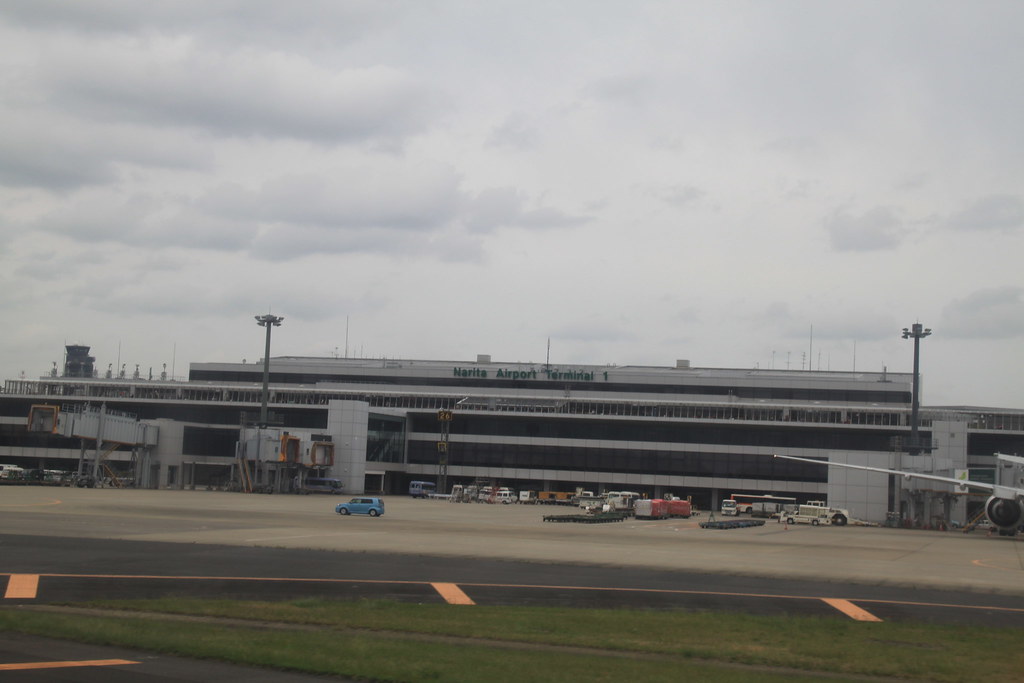
Passengers at a Tokyo airport terminal after Typhoon Dujuan Tokyo flights were cancelled

How bad the Typhoon Dujuan Tokyo flights disruption got

Japan Airlines cancelled 120 domestic flights and 15 international services. Meanwhile, all Nippon Airways cancelled 140 domestic flights as the storm approached. The Japan Meteorological Agency warned that total rainfall through Tuesday could exceed the average monthly total for September. A threshold that typically forces airlines into precautionary cancellations well before the worst of a storm actually arrives.

Typhoon Dujuan reached a central atmospheric pressure of 965 hectopascals as it neared the Japanese coast. With wind gusts up to 180 kilometers per hour. Those readings put it firmly in the range that triggers mandatory ground-stop procedures at Japan’s busiest airports.

Why the timing made this worse

The disruption landed during a five-day holiday period in Japan, a stretch when domestic leisure travel typically peaks. That timing amplified the practical impact for travelers far beyond the raw cancellation count. That is because rebooking options on already-full holiday-period flights were scarcer than they would be during an off-peak storm. International carriers including WestJet issued flexible-booking advisories for Tokyo Narita services spanning 19 to 21 September. Anticipating the disruption days ahead of the storm’s actual arrival.

Hotels and rail operators in the greater Tokyo area also reported disruption. Shinkansen services on several lines running through the storm’s path ran reduced schedules as a precaution. Compounding the travel headache for anyone attempting to route around the airport cancellations by train instead. Convenience stores and supermarkets in low-lying parts of the metro area reported temporary stock shortages as residents prepared for the rainfall warnings. A reminder that airport disruption was only one visible piece of a broader regional weather response.

How this compares with other regional storm disruptions

Typhoon season disruptions at Tokyo’s airports are not unusual. But the scale of this event, with cancellations at both Haneda and Narita simultaneously. Put it among the more disruptive storms to hit the region this year. The overlap with a national holiday period also meant knock-on effects for connecting international travelers using Tokyo as a transit hub. Not just domestic Japanese travelers.

Regional aviation trackers note that simultaneous disruption at both of Tokyo’s major airports is less common than disruption at just one. That is because haneda and Narita sit far enough apart that storms sometimes affect one more severely than the other. Dujuan’s size and track put both directly in its path. This is part of why the 275-flight tally climbed as high as it did compared with typical September storm events in the region.

Insurance industry estimates for typhoon-related travel claims typically lag the event itself by several weeks. But early assessments from travel insurers suggest this storm will generate a higher-than-average volume of claims given the holiday-period timing. Travelers whose trips were disrupted are being advised to keep all rebooking correspondence and receipts. That is because claims processing depends heavily on documentation of the specific cancellation notice each airline issued.

Foreign visitors caught in the disruption faced an added complication. Many had booked the holiday period specifically because it aligned with school breaks in their home countries, leaving little flexibility to extend a Tokyo stay by a day or two while waiting out the storm. Airport staff at both Haneda and Narita set up additional rebooking counters to handle the volume. Still, wait times still stretched past two hours at peak points during the worst of the disruption.

For travelers with flights booked through Tokyo in the coming weeks. Meteorologists note that late-September typhoon activity in the Western Pacific has been above average this year. That means a repeat disruption before the season winds down in October cannot be ruled out. Checking a carrier’s weather advisory page a day or two before departure has become standard practice for frequent Tokyo travelers this season.

What happens next for Tokyo air travel

Airlines typically resume full schedules within a day or two once a typhoon clears the immediate area. Assuming no runway or terminal damage requires longer repairs. Japan Airlines and All Nippon Airways both advised passengers to keep checking flight status directly rather than relying on a fixed resumption date. That is because post-storm schedule recovery depends on how quickly ground crews can clear standing water and resume normal ground operations at both airports.

Frequently asked questions

How many flights were cancelled because of Typhoon Dujuan?
At least 275 flights were cancelled across Tokyo’s Haneda and Narita airports on 21 September.

Which airlines cancelled the most flights?
Japan Airlines cancelled 120 domestic and 15 international flights, while All Nippon Airways cancelled 140 domestic services.

How strong was Typhoon Dujuan?
The storm reached a central pressure of 965 hectopascals with wind gusts up to 180 kilometers per hour as it neared the Japanese coast.

Why did this disruption affect so many travelers?
It coincided with a five-day holiday period in Japan, when domestic leisure travel and flight bookings were already at their peak.

When will flight schedules return to normal?
Airlines typically resume full schedules within a day or two once a typhoon clears, but passengers should check flight status directly rather than assume a fixed date.

Related coverage

Sources

Brussels Just Sent Its First Round of AI Audit Letters — Here’s Who Got One

The European Commission’s AI Office has opened its first wave of formal compliance checks under the bloc’s AI Act. Sending information requests to more than 30 AI model providers. These EU AI Act compliance audits mark the first concrete use of the law’s investigative powers since high-risk obligations became applicable in August.

Compliance documents reviewed during EU AI Act compliance audits

How the EU AI Act compliance audits are structured

The European AI Office in Brussels is working alongside 24 national market surveillance authorities on the first scheduled inspection wave. France’s CNIL, Germany’s BfDI and Spain’s AESIA are focusing their initial requests on three specific sectors. Automated resume screening tools used in human resources, algorithmic credit assessment systems in retail banking. And aI triage tools deployed in private healthcare clinics. Those three sectors were chosen because they combine high-risk classification under the Act with large numbers of affected consumers.

Regulators are examining whether providers maintained the technical documentation required under Article 11 and Annex IV of the Act. That includes version-controlled model weights, pre-processing scripts and detailed descriptions of human-override mechanisms built into each system.

Which AI systems fall under scrutiny

The scope of the audits covers systems deployed after 2 August 2026. The date high-risk obligations under the Act became fully applicable. Any model released or meaningfully updated since that date in one of the three targeted sectors is now subject to inspection. Providers outside those three sectors are not exempt long-term. Regulators have signaled this is the first of several planned waves rather than a one-time exercise.

Legal advisers working with AI vendors say the sector selection was deliberate. Resume screening, credit scoring and medical triage all involve automated decisions that directly affect individual consumers’ access to jobs. Loans and healthcare, making them the clearest test cases for whether the Act’s human-oversight requirements function in practice rather than only on paper. A weak response from providers in these three sectors would likely accelerate scrutiny of AI systems in other consumer-facing industries sooner than originally planned.

How this differs from August’s transparency rules

This audit wave is distinct from the transparency requirements that took effect in late August. This focused on disclosure obligations for general-purpose AI models regardless of sector. The current compliance checks go further, testing whether companies can actually produce the technical documentation the law requires. Not just whether they have published the right disclosures. Companies that met the August transparency deadline are not automatically in the clear for this new documentation-focused review.

That distinction matters for compliance planning. A company can publish a fully compliant transparency notice while still lacking the underlying version-controlled documentation regulators are now requesting. That is because the two requirements test different things. What a company tells the public versus what a company can actually prove internally. Companies that treated the August deadline as the finish line for EU AI Act compliance are now discovering it was closer to a starting point.

Compliance consultants working with mid-size AI vendors report a scramble in the days since the requests went out. As legal and engineering teams try to reconstruct documentation for models that were built and shipped quickly during the competitive rush of the past two years. For companies that treated documentation as an afterthought while racing to deploy. The audit letters have turned into an unplanned. Resource-intensive project with a regulator-set deadline rather than an internal one.

Smaller AI startups face a particular bind. Unlike the largest labs. Many lack dedicated compliance staff and had assumed enforcement would focus first on the biggest. Most visible model providers. The decision to open initial audits within three sector-specific use cases rather than by company size caught some smaller vendors in HR-tech and health-tech off guard. That is because a startup with a single flagship product in one of these three sectors now faces the same documentation demands as a much larger competitor.

What happens next for audited companies

Companies that receive information requests typically have a defined window to respond with documentation before regulators decide whether to escalate to a formal investigation. The EU AI Act allows for significant fines for non-compliance, scaled to global revenue for the largest providers. Given that this is the first wave of a stated multi-wave process. How these initial 30-plus companies respond is likely to shape enforcement patterns for every subsequent round. That includes in sectors beyond the three targeted so far.

Frequently asked questions

Who is conducting the EU AI Act compliance audits?
The European Commission’s AI Office in Brussels, working with 24 national market surveillance authorities including France’s CNIL, Germany’s BfDI and Spain’s AESIA.

Which sectors are being audited first?
Automated resume screening in HR, algorithmic credit assessment in retail banking, and AI triage tools in private healthcare clinics.

What documentation are regulators requesting?
Technical files required under Article 11 and Annex IV, including version-controlled model weights, pre-processing scripts and descriptions of human-override mechanisms.

Which AI systems are covered?
Systems deployed after 2 August 2026, when high-risk obligations under the EU AI Act became fully applicable.

Is this different from the August transparency rules?
Yes. The August rules covered disclosure obligations for general-purpose models, while this audit wave tests whether companies can produce required technical documentation.

Related coverage

Sources