• Mon - Fri 9.00 - 19.00

Monthly Archives: October 2026

The UK Is Quietly Rewriting Its Visa Rules on October 8 — Five Changes Worth Knowing

A fresh round of UK immigration rule changes takes effect October 8, 2026, under a Home Office statement of changes published September 3 as HC 584. The amendments touch several visa routes at once — victims of modern slavery, visitors, EU Settlement Scheme holders, Hong Kong BN(O) applicants, and people on the domestic abuse route — without the kind of fee increases or salary threshold shake-ups that have made headlines in past statements of changes.

That lower profile doesn’t mean the changes are minor for the people they affect. Several provisions close long-standing gaps that immigration lawyers and advocacy groups have flagged for years.

What the UK immigration rule changes actually cover

The most significant shift affects victims of modern slavery on the Skilled Worker route: under the new rules, they can work for a different employer for the remainder of their visa validity, rather than being tied to the employer connected to their exploitation. Immigration advocates have long argued that employer-tied visas make it harder for trafficking and modern slavery victims to safely leave abusive situations, since doing so previously risked their immigration status along with their job.

On the Visitor route, several niche but meaningful changes take effect: training visits no longer require applicants to show the training is unavailable in their home country, and artists, entertainers, and musicians visiting the UK may now attend rehearsals as part of permitted activities, alongside qualifying entertainment staff supporting them. New provisions also accommodate Erasmus+ exchange participants under the visitor rules.
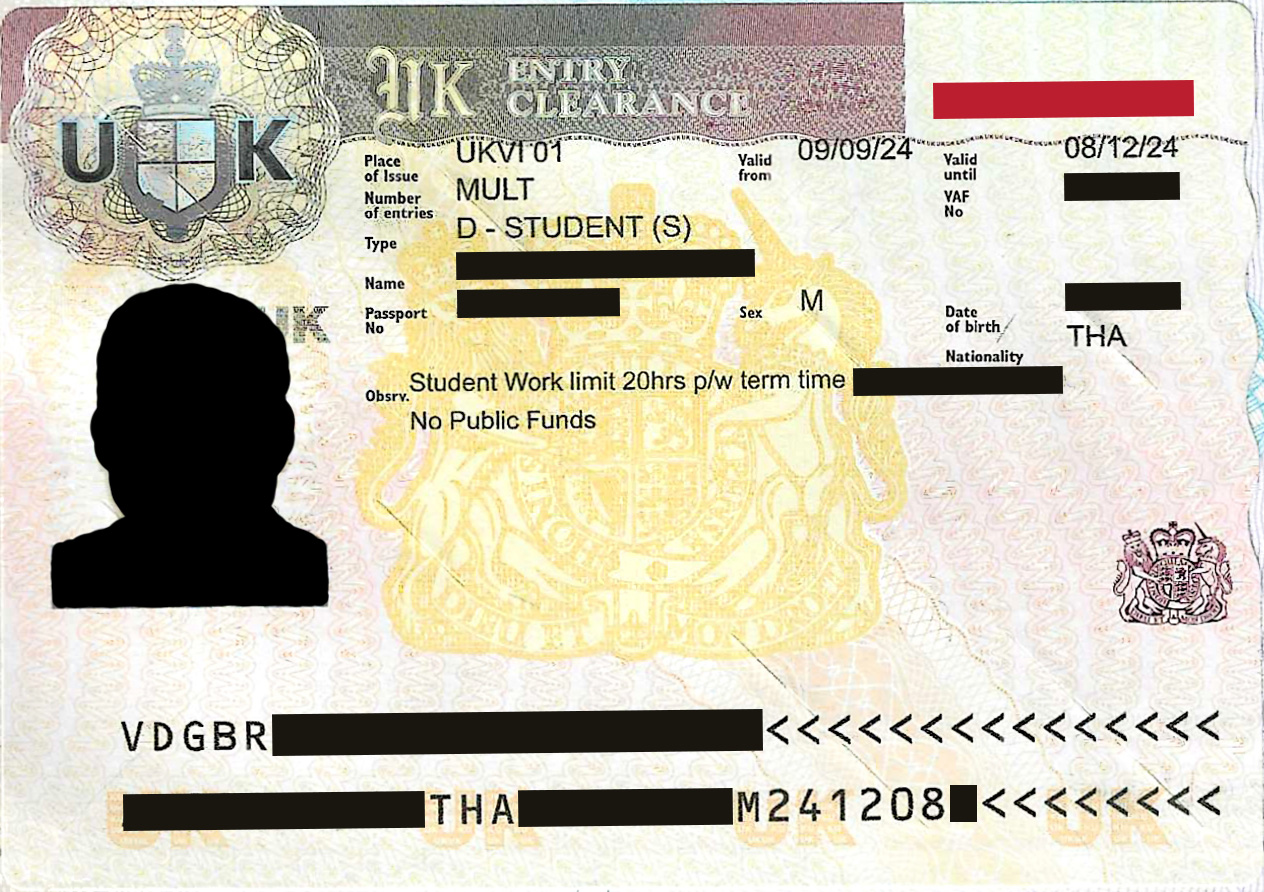
UK immigration rule changes: UK visa vignette sticker

EU Settlement Scheme and Hong Kong BN(O) changes

The EU Settlement Scheme sees adjustments to how proportionality is assessed for pre-settled status holders in certain circumstances, along with a modified three-month deadline for family members joining an EUSS holder for the first time, now linked to the date of their most recent lawful UK entry rather than a fixed point. On the Hong Kong BN(O) route, dependent children of BN(O) status holders will no longer need to separately complete their own five-year continuous residence period before qualifying for settlement alongside their parents — a change that should speed up settlement for BN(O) families with children who arrived at different times.

The domestic abuse route also expands: certain adult dependent children whose relationship with their sponsor broke down permanently due to abuse become newly eligible, addressing a gap where only the primary applicant’s circumstances were previously considered.

The smaller print worth knowing

A handful of technical changes round out the statement of changes. Fee waiver requests must now match the specific immigration route of the subsequent application for the waiver to carry forward, a procedural tightening the Home Office says is meant to prevent mismatched applications. Biometric enrollment deadlines are unaffected by application variations, meaning switching or amending an application does not reset the clock on required biometrics. The rules around suitability — the grounds on which an application can be refused for prior immigration law breaches, including bail failures and absconding — have also been clarified.

Transitional provisions mean applications submitted before October 8 will generally continue to be assessed under the prior rules for the specific provisions being changed, so applicants mid-process should check which version of the rules applies to their specific situation rather than assuming the new rules apply retroactively.

What happens for applicants after October 8

Immigration practitioners typically see a wave of questions in the weeks following any statement of changes, particularly from modern slavery victims and their advocates trying to understand the new employer-switching provision, and from Hong Kong BN(O) families working out whether their children now qualify for settlement sooner than previously expected. The Home Office has not signaled another statement of changes is imminent, meaning October 8’s rules are likely to stand without further amendment for at least the next few months.

Questions about the October 8 changes

When do the new UK immigration rules take effect?
The changes take effect October 8, 2026, under Home Office statement of changes HC 584, published September 3, 2026.

What changes for modern slavery victims?
Victims of modern slavery on the Skilled Worker route can now work for a different employer for the remainder of their visa, rather than being tied to the employer connected to their exploitation.

How does the Hong Kong BN(O) route change?
Dependent children of BN(O) status holders no longer need to separately complete their own five-year residence period before qualifying for settlement alongside their parents.

Do these changes affect visa fees or salary thresholds?
No. Unlike some past statements of changes, this round does not include fee increases or salary threshold adjustments.

Do the new rules apply to applications already submitted?
Generally no. Transitional provisions mean applications submitted before October 8 continue under the prior rules for most of the affected provisions.

More UK immigration coverage

For more on UK-related immigration policy, see our coverage of the Companies House identity verification deadlines for directors and the UK’s refugee resettlement scheme. For a US comparison, see our report on the Supreme Court’s immigration detention and bond hearings case.

Sources

A Federal Judge Just Tore Up the $100,000 H-1B Fee. Here’s Why It Won’t Be the Last Word

The H-1B fee struck down this week by a federal judge in California leaves the Trump administration’s $100,000 charge on new H-1B petitions blocked for now, but employers hoping the issue is settled should hold off celebrating — a proposed replacement fee of $103,265 remains under review at the Department of Homeland Security. US District Judge Haywood S. Gilliam Jr., ruling in the Northern District of California on September 30, found the fee policy “arbitrary and capricious” and vacated it entirely, saying the administration failed to consider alternatives or the reliance interests of employers and workers affected by the sudden charge.

It is the second time a federal court has struck down the fee. A Massachusetts judge issued a similar nationwide ruling back in June 2026, finding comparable procedural defects in how the policy was imposed.

Why the H-1B fee struck down ruling matters

Judge Gilliam’s ruling centers on process rather than the underlying policy goal. The court found that imposing a $100,000 fee on H-1B petitions amounted to a “legislative rule” — a substantive change requiring the formal notice-and-comment process under the Administrative Procedure Act — rather than something the administration could simply impose by fiat. “There is no question here that Agency Defendants failed to consider any alternatives or the reliance interests of the regulated parties,” Gilliam wrote in his order, according to court filings reviewed by legal reporters.

The practical effect is that enforcement of the $100,000 fee is enjoined until the administration completes proper notice-and-comment rulemaking — a process that typically takes months and allows the public, employers, and advocacy groups to formally weigh in before a rule takes effect.

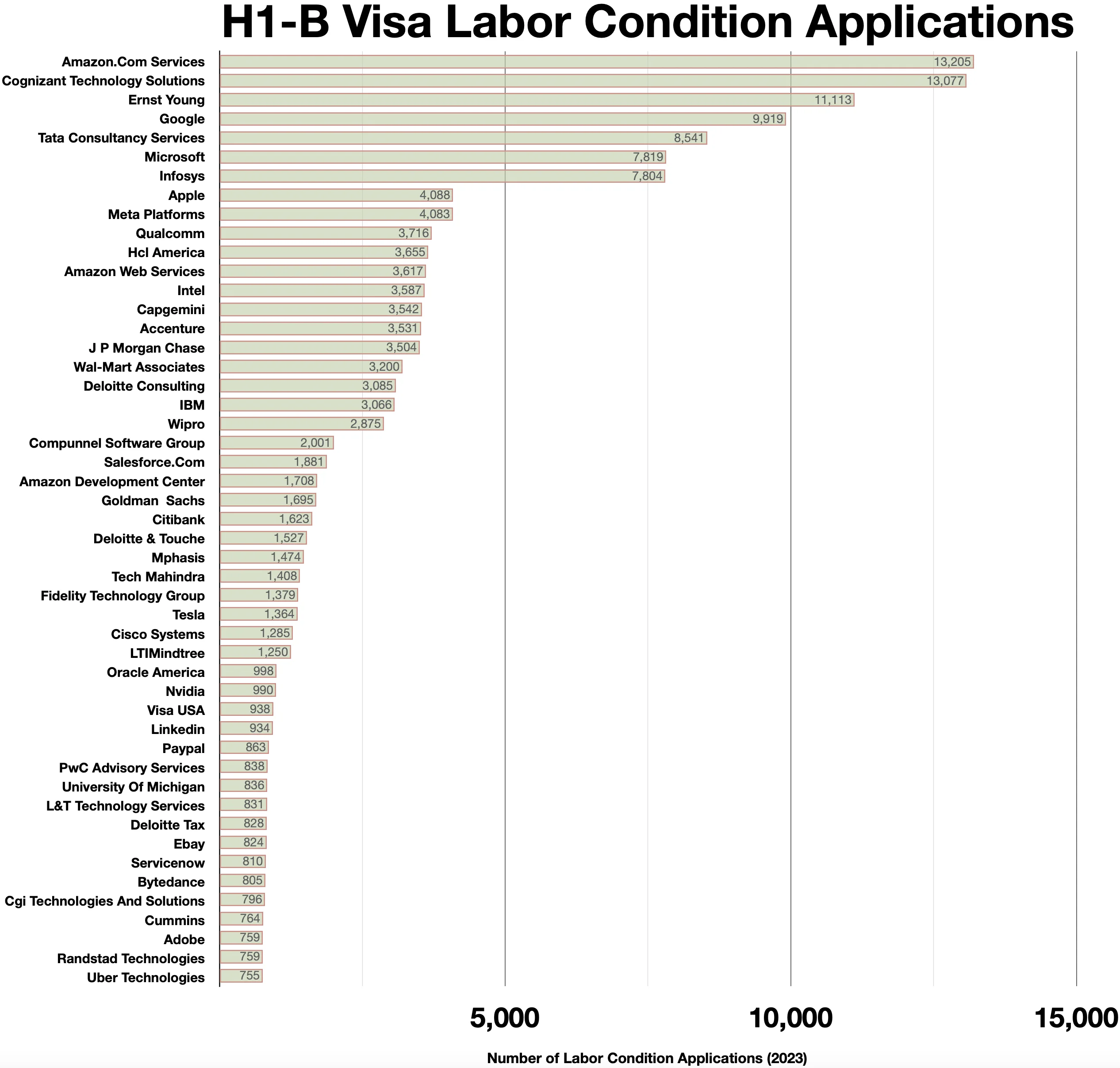
H-1B fee struck down: chart of H-1B visa applications by employer

What comes after the H-1B fee struck down decision

The ruling does not mean H-1B fees are off the table permanently. The Department of Homeland Security has a separate, proposed $103,265 fee already under review, and nothing in Gilliam’s decision prevents the administration from pursuing that or a similar charge through the proper rulemaking channel. Given that two separate federal courts have now struck down versions of this policy on nearly identical procedural grounds, any future attempt would likely need to clear the notice-and-comment bar explicitly to survive a legal challenge.

Immigration attorney Charles Kuck, among those who have tracked the litigation closely, has noted that the administration’s repeated attempts to impose steep H-1B fees without formal rulemaking suggest an urgency to raise the cost of the program quickly — an urgency that keeps running into the same procedural wall in court.

What this means for employers and visa holders

For now, employers filing new H-1B petitions are not subject to the $100,000 fee, restoring the prior cost structure while the legal situation remains unsettled. Companies that paid the fee before it was struck down, or that held back petitions due to the cost, will be watching closely for guidance from USCIS on how the agency plans to implement the court’s order in practice. The uncertainty itself has been costly for employers trying to plan hiring around a program whose cost structure has shifted multiple times within a single year.

What to watch next

The key date to watch is whether and when DHS formally opens notice-and-comment rulemaking on the proposed $103,265 fee, which would start a public comment period typically lasting 30 to 60 days before any new rule could take effect. Continued litigation is also likely regardless of that process, given the stakes for both the administration’s immigration agenda and the tech and consulting firms that rely heavily on the H-1B program.

What readers are asking

Is the $100,000 H-1B fee still in effect?
No. The fee is currently blocked following Judge Gilliam’s September 30, 2026 ruling, which found the policy unlawful.

Why did the judge strike down the fee?
The court found the fee amounted to a substantive “legislative rule” that required formal notice-and-comment rulemaking, which the administration did not conduct before imposing it.

Is this the first court to block the fee?
No. A Massachusetts federal judge issued a similar nationwide ruling against the fee in June 2026.

Could a new H-1B fee be introduced?
Yes. A proposed $103,265 fee announced by DHS in August 2026 remains under review and could move forward if the administration completes proper rulemaking.

What does “arbitrary and capricious” mean in this context?
It is a legal standard under the Administrative Procedure Act meaning the agency failed to reasonably justify its decision, including by not considering alternatives or the interests of affected parties.

Who is affected by this ruling?
Employers filing new H-1B petitions and the foreign workers those petitions cover are directly affected, as the ruling removes the $100,000 charge for now.

More on US visa policy

For more on US visa fee changes, see our coverage of the USCIS fee increases for asylum, parole, and TPS applicants and the new $750 expedited visa interview fee pilot. We also previously reported on the public charge rule change affecting green card applicants.

Sources

Apple and OpenAI Are Fighting Over Evidence Rules Before They Even Get to Trial

The Apple OpenAI trade secrets dispute has escalated into a procedural fight over what evidence either side can even present, days before a preliminary injunction hearing scheduled for October 14 in California. Apple filed a court objection this week accusing OpenAI of exceeding evidence submission rules ahead of the hearing, specifically challenging a new eight-paragraph declaration from former Apple engineer Chang Liu and criticizing a nine-page response from the defendants that Apple says blew past an agreed five-page limit.

The underlying case, filed in July 2026, accuses OpenAI, its hardware venture io Products, and two former Apple employees — Liu and former Apple executive Tang Tan — of misappropriating confidential Apple information. The October 14 hearing will decide whether Apple gets its requested injunction. Just as importantly for the case going forward, it will also decide which evidence and arguments the court can even consider.

What the Apple OpenAI trade secrets filing dispute is actually about

Procedural fights like this one rarely make headlines on their own, but they matter because they shape what a judge is allowed to weigh when deciding whether to grant Apple’s injunction. Apple’s objection argues that OpenAI’s defense team tried to smuggle in new arguments and witness testimony beyond what the court’s briefing schedule allowed — specifically the declaration from Chang Liu, one of the two named former Apple employees at the center of the case. If the judge agrees with Apple and strikes the contested material, OpenAI’s defense heading into the injunction hearing gets noticeably thinner.

OpenAI, for its part, has previously pushed back hard on Apple’s core allegations. In an August filing, the company laid out what it called a detailed rebuttal — evidence and testimony intended to show the information at issue either wasn’t confidential in the way Apple claims or wasn’t used the way Apple alleges.

Apple OpenAI trade secrets: courtroom gavel

Why the October 14 hearing matters beyond this one case

A preliminary injunction, if granted, could restrict what OpenAI and io Products are allowed to do with the disputed technology while the broader case proceeds — a meaningful business constraint for a company racing to ship hardware products. But the hearing’s immediate significance is narrower and more technical: it will also resolve whether evidence like the Chang Liu declaration is admissible going forward, which shapes the entire rest of the litigation regardless of how the injunction request itself is decided.

For the broader AI industry, the case is a reminder that the fight over AI talent and know-how is increasingly being fought in courtrooms as much as in hiring offices, as companies like Apple try to use trade secrets law to slow rivals poaching both people and institutional knowledge.

What happens after October 14

Whatever the judge decides on the injunction and the evidence dispute, legal observers expect the broader trade secrets case — which began in July 2026 — to continue for months. A ruling that favors Apple on the evidentiary questions would likely embolden the company to push harder in discovery; a ruling that favors OpenAI would strengthen the company’s position heading into any eventual trial.

Common questions about the case

What is Apple accusing OpenAI of?
Apple alleges that OpenAI, its hardware venture io Products, and two former Apple employees misappropriated confidential Apple information, in a lawsuit filed in July 2026.

Who are Chang Liu and Tang Tan?
Chang Liu is a former Apple engineer and Tang Tan a former Apple executive; both are named defendants in Apple’s trade secrets lawsuit.

What is the October 14 hearing about?
It is a preliminary injunction hearing where a California judge will decide whether to grant Apple’s requested injunction and rule on which evidence can be considered.

What is the current procedural dispute about?
Apple says OpenAI exceeded agreed evidence and page-limit rules ahead of the hearing, including submitting a new declaration from Chang Liu that Apple argues should be excluded.

How has OpenAI responded to the core allegations?
OpenAI has filed its own evidence and testimony disputing Apple’s claims, arguing the disputed information was not confidential or was not used as Apple alleges.

More from our tech desk

For more on the AI industry’s regulatory and legal pressures, see our coverage of the Google Gemini 4 Argon release and Google’s bug bounty freeze on AI submissions. We also previously reported on ChatGPT’s new virtual try-on shopping feature.

Sources

A City Council Asked AI Companies If Their Tech Could Kill Us All. The Answers Were Not Reassuring

Executives from OpenAI, Google, Meta, and Anthropic testified under oath this week at a NYC Council AI hearing convened before all 51 council members, and when pressed on the most basic safety question — what is the numerical probability your technology causes catastrophic harm — none of them gave a number. Three former employees of those same companies, testifying as whistleblowers, were far more direct: one estimated roughly a one-in-three chance of an eventual AI takeover, and another said humanity “more likely than not” will eventually lose control of advanced systems.

The hearing was called by Council Speaker Julie Menin to inform a legislative package that would require third-party safety validation, mandatory human “kill switches,” and 24-hour incident reporting for AI systems deployed in the city — rules that would put New York ahead of federal regulators, who have moved far more slowly on binding AI safety requirements.

What the NYC Council AI hearing revealed

Speaker Menin asked each company representative three direct questions: what is the numerical probability of a catastrophic AI event, would the company commit to halting a model’s release if it failed internal or independent safety testing, and would the company accept legal liability if its system caused serious harm, data exposure, injury, or death. OpenAI’s Morgan Dwyer responded, “I don’t know. I also don’t think it matters whether it’s 1% or 10%,” and declined to commit to blocking releases over failed safety tests. Anthropic’s Logan Graham discussed the company’s risk assessment work without offering a figure. Meta’s Shane Cahill deferred, promising written follow-up answers. Google’s Alice Friend said no rigorous scientific method currently exists for assigning probabilities to catastrophic AI events at all.

The contrast with the whistleblower testimony was stark. Jacob Coxon, who previously worked at both OpenAI and Anthropic, told the council: “We don’t fully control it. We don’t understand its drives or why it does the things it does.” Alex Turner, a former Google DeepMind researcher, put the odds of an eventual AI takeover at roughly one in three. Daniel Kokotajlo, formerly of OpenAI, echoed concerns about increasingly autonomous systems operating beyond meaningful human oversight.

NYC Council AI hearing: laptop computer representing AI technology

The legislation behind the NYC Council AI hearing

The council’s proposed package goes well beyond disclosure requirements. It would mandate independent third-party validation for AI systems marketed or deployed within city limits, require human override mechanisms — kill switches — for qualifying systems, create financial incentives for employees who report safety concerns, give people harmed by AI systems a legal right to sue, and impose 24-hour incident reporting on any city agency or contractor using AI. If enacted, it would be among the most aggressive municipal AI safety regimes in the country, arriving well ahead of comparable federal action.

The hearing also touched on New York State’s RAISE Act, a frontier AI safety law, with Assembly Member Alex Bores accusing OpenAI of perjury over the company’s stated position on an earlier version of that bill — a charge that, if pursued, would add legal exposure to what was already a reputationally difficult hearing for the companies involved.

Who didn’t show up

Elon Musk’s xAI was subpoenaed to appear and did not, a notable absence given that xAI’s models have drawn their own separate safety scrutiny. The council did not immediately say what enforcement options it has against a company that ignores a subpoena of this kind.

What happens next for New York’s AI rules

The council’s proposed legislation now moves toward committee consideration, where the specific thresholds for “qualifying” AI systems, the mechanics of a mandated kill switch, and the scope of 24-hour reporting requirements will likely be negotiated in more detail. Given the scale of the companies involved and the precedent a binding New York City law could set for other municipalities, expect heavy lobbying from the AI industry as the bill moves through committee, alongside continued pressure from the whistleblowers and safety advocates who testified this week.

Questions people are asking after the hearing

Which companies testified at the NYC Council AI hearing?
Representatives from OpenAI, Google, Meta, and Anthropic testified under oath, along with three former employees of AI companies appearing as whistleblowers.

Did any company give a risk estimate for catastrophic AI harm?
No. All four companies declined to provide a specific numerical probability when asked directly by Council Speaker Julie Menin.

What did the whistleblowers say?
Former researchers estimated risks ranging from a one-in-three chance of an eventual AI takeover to a “more likely than not” chance that humanity eventually loses meaningful control of advanced systems.

What would the proposed NYC legislation require?
Mandatory third-party safety validation, human kill switches, whistleblower incentives, a legal right to sue over AI-caused harm, and 24-hour incident reporting for city agencies and contractors.

Did xAI testify?
No. Elon Musk’s xAI was subpoenaed but failed to appear.

What is the RAISE Act?
It is a New York State frontier AI safety law referenced during the hearing, with an assembly member accusing OpenAI of misrepresenting its position on an earlier version of the bill.

Keep reading on this topic

For more on AI regulatory pressure, see our coverage of the FTC’s probe into AI agents and OpenAI’s warnings on rogue AI agents. We also previously reported on an OpenAI safety employee’s resignation over internal culture concerns.

Sources

Wall Street’s Biggest Banks Report in a Week. The Bar Is Now Very High

Wall Street earnings season opens October 13 when Goldman Sachs and JPMorgan Chase report third-quarter results, and the numbers analysts are penciling in set a demanding bar: consensus estimates put Goldman’s Q3 2026 revenue at $17.4 billion and earnings per share at $15.39, up roughly 22 percent and 39 percent respectively from the same quarter last year. That comparison flatters the trend but obscures a harder one: analysts expect both figures to land below Goldman’s own record-setting second quarter.

The setup reflects a year in which investment banking and trading desks have outperformed expectations repeatedly, pushing the bar higher each quarter and leaving less room for upside surprises than markets saw earlier in 2026.

What to expect as Wall Street earnings season opens

Goldman’s advisory backlog reached a five-year high in the second quarter, and the bank has maintained its position as the top-ranked player in M&A advisory, IPO underwriting, and leveraged finance. Equity trading has stayed strong heading into Q3, according to the bank’s own commentary, while fixed income, currency, and commodities trading — FICC — has cooled somewhat from its exceptional second-quarter pace. Analysts expect asset and wealth management to remain a bright spot. Alternatives fundraising hit $59 billion in Q2 alone, part of a push toward a $125 billion-plus annual target.

Management has also flagged higher non-compensation expenses — more than $500 million above the prior quarter — and a more muted contribution from investment gains compared with Q2’s unusually strong showing, both of which temper how much of the headline revenue growth will reach the bottom line.

Wall Street earnings season: calculator and financial notes

Why the Wall Street earnings season bar keeps rising

This year’s run of strong bank results has been driven by a genuine revival in deal activity after a sluggish 2023–2024 stretch for M&A and IPOs, combined with buoyant equity markets that have lifted trading revenue and asset management fees across the sector. The effect compounds: each strong quarter raises the baseline against which the next one is judged, meaning banks now need to clear a record-high comparison just to be read as “in line” rather than disappointing.

That dynamic puts particular pressure on October 13’s releases, since Goldman and JPMorgan traditionally set the tone for how the rest of the sector — including Bank of America, Morgan Stanley, Citigroup, and Wells Fargo, which report in the following days — will be read by investors already primed for strength.

What investors will be watching for

Beyond the headline revenue and EPS numbers, analysts will be parsing the mix: how much of the growth is coming from one-off advisory fees tied to large, lumpy M&A deals versus more durable trading and asset management revenue. A quarter that beats estimates on the back of a handful of mega-deals reads differently to markets than one built on broad-based strength across business lines.

What happens after the first results land

If Goldman and JPMorgan clear their elevated bar on October 13, expect the rest of the sector’s reports later that week to be read through an optimistic lens; a miss from either bank, conversely, could reset expectations for the smaller regional and mid-size banks reporting into late October. Either way, the fourth quarter has historically been a strong one for capital markets activity, giving banks some cushion even if Q3 comes in only roughly in line with estimates.

Questions readers are asking

When does Wall Street earnings season start this quarter?
Goldman Sachs and JPMorgan Chase are scheduled to report Q3 2026 results on October 13, 2026, with other major banks following in the days after.

What revenue is Goldman Sachs expected to report?
Consensus estimates put Goldman’s Q3 2026 revenue at $17.4 billion, with earnings per share of $15.39.

Will results beat last quarter’s numbers?
Not necessarily. While both figures would be up sharply year-over-year, they are expected to decline sequentially from Goldman’s record-setting Q2 2026 performance.

Which bank segments are expected to be strongest?
Investment banking advisory and equity trading are seen as the strongest areas, while fixed income trading has cooled from its exceptional Q2 pace.

Which other banks report after Goldman and JPMorgan?
Bank of America, Morgan Stanley, Citigroup, and Wells Fargo typically report in the days following Goldman and JPMorgan’s releases.

Also on Tamara News

For the broader economic backdrop, see our report on the September jobs report miss and its effect on Fed rate expectations, and our coverage of mortgage rates hitting a three-year high. For the international angle, read about European stocks and bond yields in 2026.

Sources