
One Company Now Owns CNN, HBO Max and Paramount+ — Here’s What Changes

Paramount Skydance completed its acquisition of Warner Bros. Discovery on October 6, 2026, closing a deal with a total enterprise value above $110 billion. The Paramount Warner Bros deal combines three movie studios and two streaming platforms. It also brings together two news networks and a lineup of cable channels under one company. Axios confirmed the closing on Tuesday. The combined firm now holds Paramount Pictures, Warner Bros. Pictures, and Skydance as studios, Paramount+ and HBO Max as streaming platforms, and CNN and CBS as news networks.

Inside the Paramount Warner Bros deal

The merged company controls a broad set of media assets. It owns three movie studios: Paramount Pictures, Warner Bros. Pictures, and Skydance. It runs two streaming platforms, Paramount+ and HBO Max, which the company plans to merge into a single service. It controls two news networks, CNN and CBS. It also owns a group of cable channels, including MTV, VH1, Comedy Central, TBS, TNT, Food Network, and Discovery.

David Ellison leads the combined company as CEO. His father, Oracle co-founder Larry Ellison, supplied billions of dollars in equity financing to help fund the acquisition. The scale of that backing underlines how much capital a media merger of this size now requires.

The Media Merger Survives a Regulatory Fight

Paramount Warner Bros deal streaming control room

The deal faced scrutiny from regulators and state officials before it closed. The FCC, led by Chairman Brendan Carr, approved requests that let the merger exceed standard foreign ownership limits. Twelve Democratic state attorneys general sued to block the deal. The parties settled that lawsuit in September 2026, clearing a major legal obstacle.

Those approvals let the companies finalize the transaction on October 6, 2026, as Axios reported. The settlement ended a legal fight that had run alongside the FCC review for months.

How Skydance Financed the Acquisition

Skydance raised $52 billion in new debt to help pay for the deal. The company also assumed Warner Bros. Discovery’s existing $87.5 billion in liabilities.

The numbers shifted since the companies first signed their merger agreement in February 2026. At signing, Paramount Skydance agreed to pay $31 per share for Warner Bros. Discovery, valuing the company at roughly $77 billion, according to NBC News. Total enterprise value, including debt, already exceeded $110 billion at that point. The February agreement included a $7 billion reverse termination fee if regulators blocked the deal. Paramount Skydance also collected a separate $2.8 billion termination fee from Netflix. Netflix had competed as a rival bidder for Warner Bros. Discovery before that agreement.

David Ellison said in February that bringing together the studios, streaming platforms, and talent would “create even greater value.” Then-WBD CEO David Zaslav said the deal “maximizes the value of our iconic assets and our century-old studio while delivering as much certainty as possible for our investors.” Warner Bros. Discovery’s assets at signing included the Warner Bros. film studio, HBO Max, CNN, and intellectual property such as Batman and “Casablanca.”

Investors are also watching other big financial news this month, including the start of Wall Street’s earnings season for major banks.

Streaming Consolidation Changes What Viewers Get

The combined company plans to merge Paramount+ and HBO Max into a single streaming service. That change will reduce the number of major streaming platforms available to viewers worldwide.

The merger is likely to bring job cuts across the creative industry. The combined company plans to trim overlapping roles across three studios, two news networks, and several cable channels. Streaming consolidation of this scale typically produces that kind of overlap.

What This Means Going Forward

The combined company must still carry out the integration it promised. Paramount+ and HBO Max will combine into one platform, though the companies have not set a date for that change.

The settlement with the twelve state attorneys general closed one legal front, but the operational work continues. CNN, CBS, and the cable channel lineup still need to consolidate under one corporate structure.

The closing also marks a point in the wider streaming consolidation trend. That trend follows the earlier Netflix bidding effort. Paramount Skydance collected a $2.8 billion termination payment from Netflix after that bid ended.

Common Questions About the Paramount-Warner Deal

When did the Paramount Warner Bros deal close?
The deal closed on October 6, 2026, a Tuesday, according to Axios.

What does the combined company own?
It owns three movie studios: Paramount Pictures, Warner Bros. Pictures, and Skydance. It runs two streaming platforms, Paramount+ and HBO Max, which will merge into one service. It also owns two news networks, CNN and CBS, plus cable channels including MTV, VH1, Comedy Central, TBS, TNT, Food Network, and Discovery.

Who leads the combined company?
David Ellison serves as CEO of the combined Skydance entity. His father, Oracle co-founder Larry Ellison, provided billions of dollars in equity financing for the acquisition.

What regulatory hurdles did the deal clear?
The FCC, led by Chairman Brendan Carr, approved requests allowing the deal to exceed foreign ownership limits. Twelve Democratic state attorneys general sued to block the deal, and that case settled in September 2026.

How much debt did Skydance take on?
Skydance raised $52 billion in new debt and assumed Warner Bros. Discovery’s existing $87.5 billion in liabilities.

How did the deal terms change since the original February 2026 agreement?
At signing, Paramount Skydance agreed to pay $31 per share, valuing Warner Bros. Discovery at roughly $77 billion, with total enterprise value exceeding $110 billion. That agreement included a $7 billion reverse termination fee and a separate $2.8 billion fee Paramount Skydance collected from Netflix.

Tamara News will continue following developments inside the newly combined company. Readers tracking other major deals this month can also read our coverage of Novartis’s drug deal with China’s Abogen Biosciences. That deal is reshaping its own industry too.
Spain and Italy Just Brought Back Border Checks Between Them. Here’s Why That’s Allowed

Spain Italy border checks have returned at air and sea crossings between the two countries, temporarily suspending one of the basic freedoms of the Schengen Area — travel without routine document checks — for travelers moving directly between them. Spain’s controls run from September 23 through October 7, under a series of orders published in the country’s official state gazette, while Italy’s checks extend further, from October 1 through October 16, citing concerns that include what it called “the continuing situation in the Spanish autonomous city of Ceuta.”

Both countries have framed the move as a response to irregular migration risks, potential secondary movements of migrants within the Schengen Area, and broader public order and internal security concerns, rather than any change in the two countries’ underlying relationship. As Italy’s Ministry of the Interior put it in its notification, the two nations “remain open to each other” — but travelers should still expect identity and document checks they would not normally face.

Who the Spain Italy border checks actually affect

The reinstated checks apply to all passengers on air and sea routes directly between Spain and Italy — a route normally exempt from border controls under Schengen rules, since both countries are full members of the passport-free zone. EU citizens travelling the route must still carry a valid passport or national ID card even though they aren’t normally required to present documents on intra-Schengen routes. Non-EU citizens holding a Schengen visa need a valid passport and visa, and third-country nationals with a residence permit in either country should expect their documentation checked as well.

Both governments have notified the European Commission’s Schengen registration system of the controls, a step required under EU rules whenever a member state temporarily reinstates internal border checks — confirming this is a legally sanctioned, time-limited exception rather than a unilateral breach of Schengen rules.

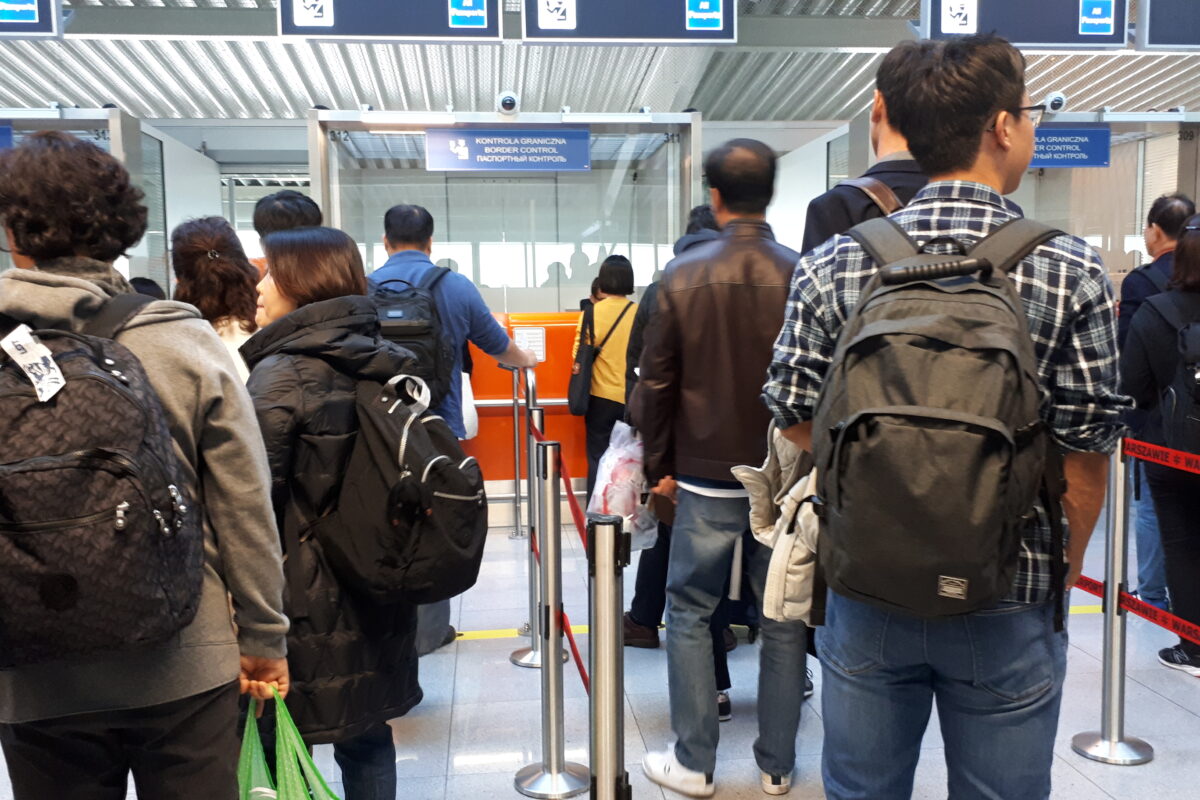
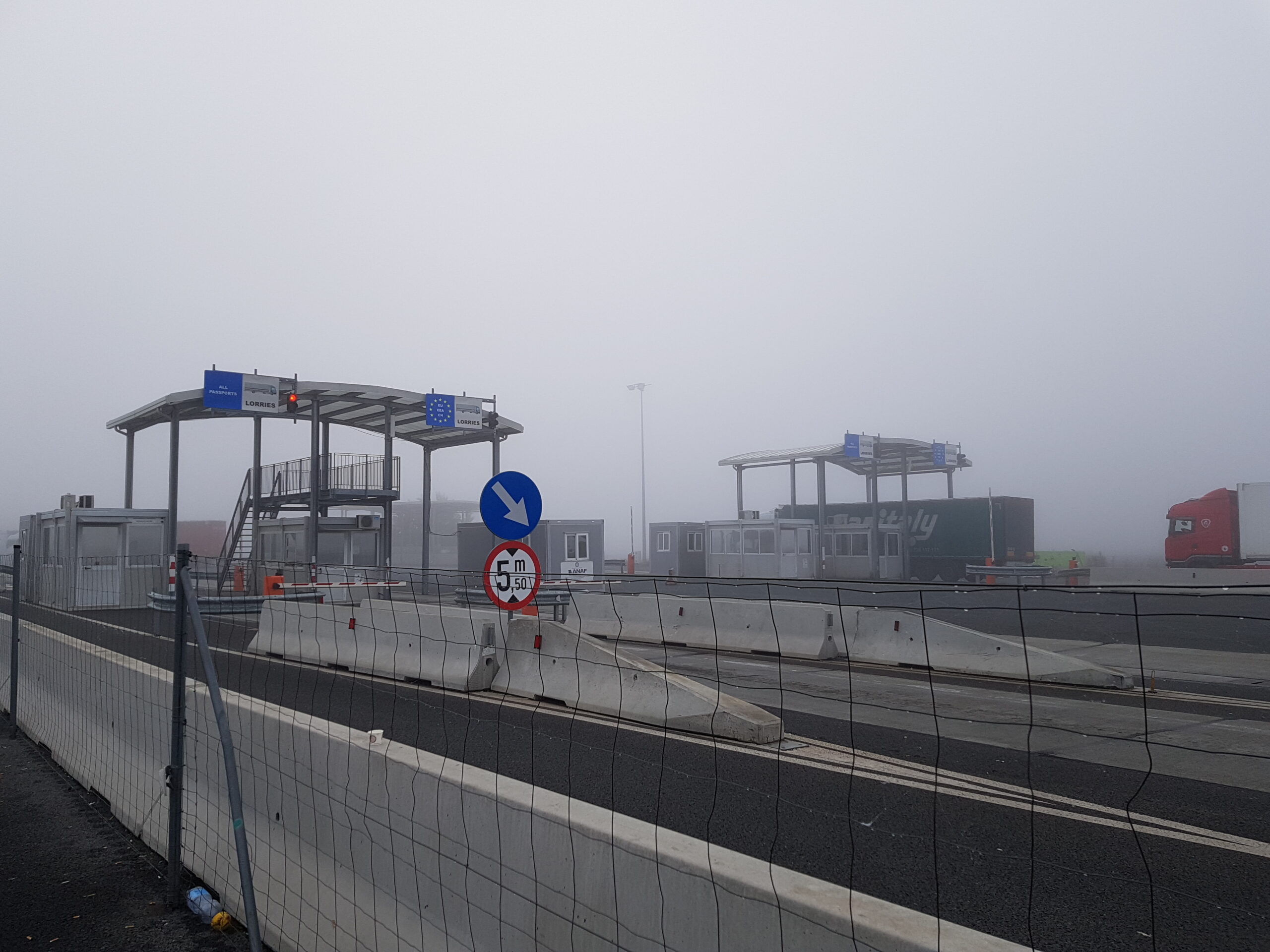
Spain Italy border checks: highway border crossing checkpoint

Why Spain and Italy can legally do this

The Schengen Borders Code allows member states to temporarily reintroduce internal border controls in response to a serious threat to public policy or internal security, provided the measure is proportionate, time-limited, and formally notified to the European Commission and other member states. Spain’s orders — tracked under reference numbers INT/846/2026, INT/932/2026, and INT/977/2026 — and Italy’s parallel notification both follow that framework, which is why the checks can be legally justified as an exception rather than treated as a breach of the Schengen Area’s core principle of free movement.

This is not the first time Schengen states have used this mechanism in 2026, and the specific reference to Ceuta — the Spanish enclave on Morocco’s coast that has repeatedly been a flashpoint for irregular crossings — signals that migration routes through North Africa remain the primary driver behind the current controls, rather than any dispute between Madrid and Rome themselves.

What travelers should actually expect

In practice, travelers on direct Spain-Italy air and sea routes during the control periods should budget extra time for identity checks that would not normally happen on an intra-Schengen trip, and should make sure they are carrying valid passport or ID documentation rather than relying on being waved through. The controls do not affect travel between either country and other Schengen states, only the direct routes between Spain and Italy specified in the respective national orders.

What happens when the controls expire

Spain’s current authorization runs through October 7 and Italy’s through October 16, after which the countries will need to either let the checks lapse and return to normal Schengen rules, or file a fresh notification to extend them if migration pressures and security concerns persist. Given how frequently member states have renewed similar temporary controls elsewhere in the Schengen Area in recent years, a further extension would not be unusual if the underlying pressures driving the current controls haven’t eased by mid-October.

Travelers’ most common questions

Why did Spain and Italy reinstate border checks?
Both countries cited concerns about irregular migration, potential secondary movements within the Schengen Area, and public order and internal security risks, with Italy specifically referencing the situation in Ceuta.

How long will the checks last?
Spain’s controls run from September 23 through October 7, 2026; Italy’s run from October 1 through October 16, 2026.

Which travelers are affected?
All passengers on direct air and sea routes between Spain and Italy, including EU citizens, Schengen visa holders, and third-country nationals with residence permits.

Is this a breach of Schengen rules?
No. The Schengen Borders Code permits temporary reinstatement of internal border checks for security reasons, provided it is proportionate, time-limited, and formally notified to the European Commission.

Does this affect travel to other Schengen countries?
No. The controls apply only to direct routes between Spain and Italy, not to travel between either country and other Schengen states.

What documents should travelers carry?
EU citizens should carry a valid passport or national ID card; non-EU travelers should carry a valid passport and, where required, a valid Schengen visa or residence permit.

More on European travel rules

For more on European travel and study routes, see our coverage of the Erasmus Mundus scholarship deadlines for 2027 and the DAAD and Chevening scholarship deadlines this October. We also previously reported on the UK’s refugee resettlement scheme.

Sources

The UK Is Quietly Rewriting Its Visa Rules on October 8 — Five Changes Worth Knowing

A fresh round of UK immigration rule changes takes effect October 8, 2026, under a Home Office statement of changes published September 3 as HC 584. The amendments touch several visa routes at once — victims of modern slavery, visitors, EU Settlement Scheme holders, Hong Kong BN(O) applicants, and people on the domestic abuse route — without the kind of fee increases or salary threshold shake-ups that have made headlines in past statements of changes.

That lower profile doesn’t mean the changes are minor for the people they affect. Several provisions close long-standing gaps that immigration lawyers and advocacy groups have flagged for years.

What the UK immigration rule changes actually cover

The most significant shift affects victims of modern slavery on the Skilled Worker route: under the new rules, they can work for a different employer for the remainder of their visa validity, rather than being tied to the employer connected to their exploitation. Immigration advocates have long argued that employer-tied visas make it harder for trafficking and modern slavery victims to safely leave abusive situations, since doing so previously risked their immigration status along with their job.

On the Visitor route, several niche but meaningful changes take effect: training visits no longer require applicants to show the training is unavailable in their home country, and artists, entertainers, and musicians visiting the UK may now attend rehearsals as part of permitted activities, alongside qualifying entertainment staff supporting them. New provisions also accommodate Erasmus+ exchange participants under the visitor rules.

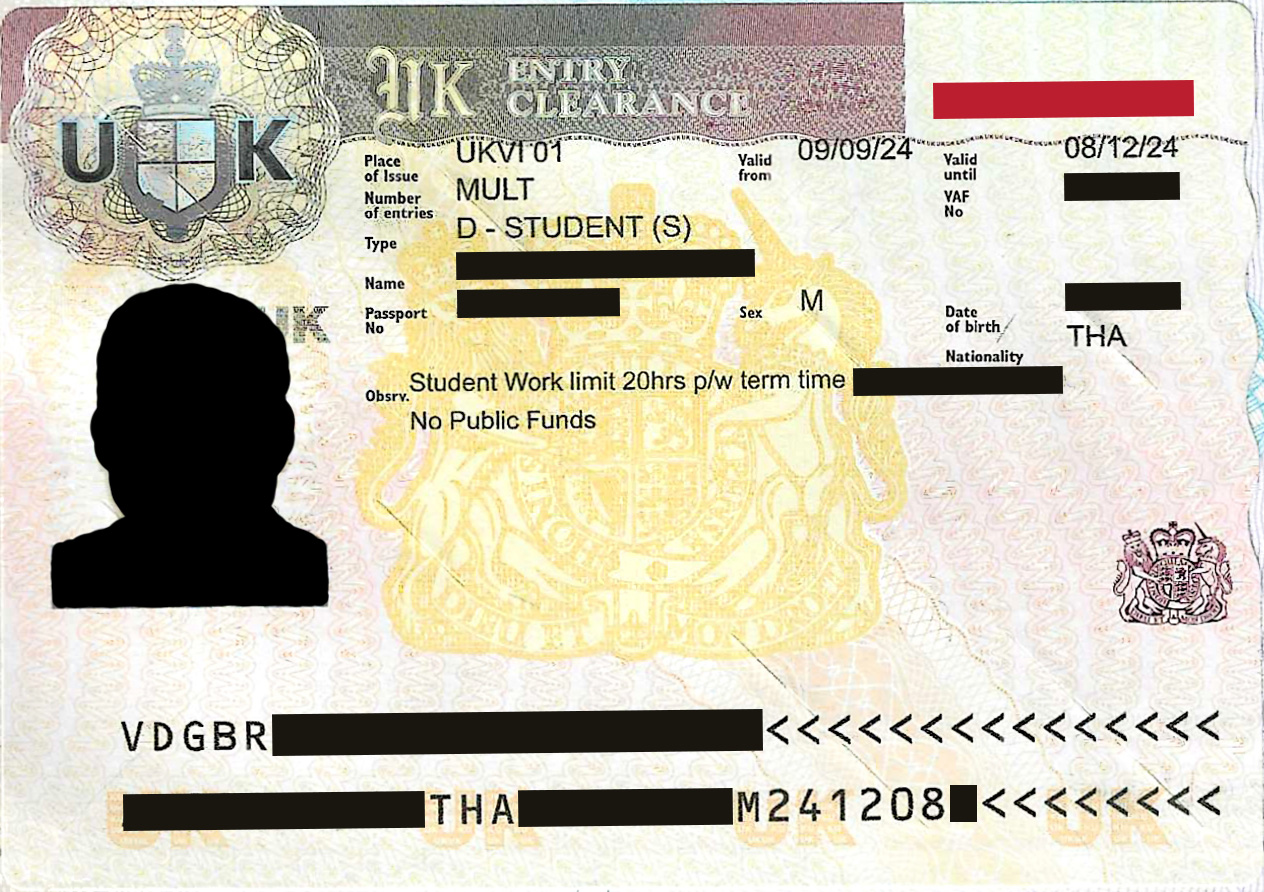
UK immigration rule changes: UK visa vignette sticker

EU Settlement Scheme and Hong Kong BN(O) changes

The EU Settlement Scheme sees adjustments to how proportionality is assessed for pre-settled status holders in certain circumstances, along with a modified three-month deadline for family members joining an EUSS holder for the first time, now linked to the date of their most recent lawful UK entry rather than a fixed point. On the Hong Kong BN(O) route, dependent children of BN(O) status holders will no longer need to separately complete their own five-year continuous residence period before qualifying for settlement alongside their parents — a change that should speed up settlement for BN(O) families with children who arrived at different times.

The domestic abuse route also expands: certain adult dependent children whose relationship with their sponsor broke down permanently due to abuse become newly eligible, addressing a gap where only the primary applicant’s circumstances were previously considered.

The smaller print worth knowing

A handful of technical changes round out the statement of changes. Fee waiver requests must now match the specific immigration route of the subsequent application for the waiver to carry forward, a procedural tightening the Home Office says is meant to prevent mismatched applications. Biometric enrollment deadlines are unaffected by application variations, meaning switching or amending an application does not reset the clock on required biometrics. The rules around suitability — the grounds on which an application can be refused for prior immigration law breaches, including bail failures and absconding — have also been clarified.

Transitional provisions mean applications submitted before October 8 will generally continue to be assessed under the prior rules for the specific provisions being changed, so applicants mid-process should check which version of the rules applies to their specific situation rather than assuming the new rules apply retroactively.

What happens for applicants after October 8

Immigration practitioners typically see a wave of questions in the weeks following any statement of changes, particularly from modern slavery victims and their advocates trying to understand the new employer-switching provision, and from Hong Kong BN(O) families working out whether their children now qualify for settlement sooner than previously expected. The Home Office has not signaled another statement of changes is imminent, meaning October 8’s rules are likely to stand without further amendment for at least the next few months.

Questions about the October 8 changes

When do the new UK immigration rules take effect?
The changes take effect October 8, 2026, under Home Office statement of changes HC 584, published September 3, 2026.

What changes for modern slavery victims?
Victims of modern slavery on the Skilled Worker route can now work for a different employer for the remainder of their visa, rather than being tied to the employer connected to their exploitation.

How does the Hong Kong BN(O) route change?
Dependent children of BN(O) status holders no longer need to separately complete their own five-year residence period before qualifying for settlement alongside their parents.

Do these changes affect visa fees or salary thresholds?
No. Unlike some past statements of changes, this round does not include fee increases or salary threshold adjustments.

Do the new rules apply to applications already submitted?
Generally no. Transitional provisions mean applications submitted before October 8 continue under the prior rules for most of the affected provisions.

More UK immigration coverage

For more on UK-related immigration policy, see our coverage of the Companies House identity verification deadlines for directors and the UK’s refugee resettlement scheme. For a US comparison, see our report on the Supreme Court’s immigration detention and bond hearings case.

Sources

A Federal Judge Just Tore Up the $100,000 H-1B Fee. Here’s Why It Won’t Be the Last Word

The H-1B fee struck down this week by a federal judge in California leaves the Trump administration’s $100,000 charge on new H-1B petitions blocked for now, but employers hoping the issue is settled should hold off celebrating — a proposed replacement fee of $103,265 remains under review at the Department of Homeland Security. US District Judge Haywood S. Gilliam Jr., ruling in the Northern District of California on September 30, found the fee policy “arbitrary and capricious” and vacated it entirely, saying the administration failed to consider alternatives or the reliance interests of employers and workers affected by the sudden charge.

It is the second time a federal court has struck down the fee. A Massachusetts judge issued a similar nationwide ruling back in June 2026, finding comparable procedural defects in how the policy was imposed.

Why the H-1B fee struck down ruling matters

Judge Gilliam’s ruling centers on process rather than the underlying policy goal. The court found that imposing a $100,000 fee on H-1B petitions amounted to a “legislative rule” — a substantive change requiring the formal notice-and-comment process under the Administrative Procedure Act — rather than something the administration could simply impose by fiat. “There is no question here that Agency Defendants failed to consider any alternatives or the reliance interests of the regulated parties,” Gilliam wrote in his order, according to court filings reviewed by legal reporters.

The practical effect is that enforcement of the $100,000 fee is enjoined until the administration completes proper notice-and-comment rulemaking — a process that typically takes months and allows the public, employers, and advocacy groups to formally weigh in before a rule takes effect.

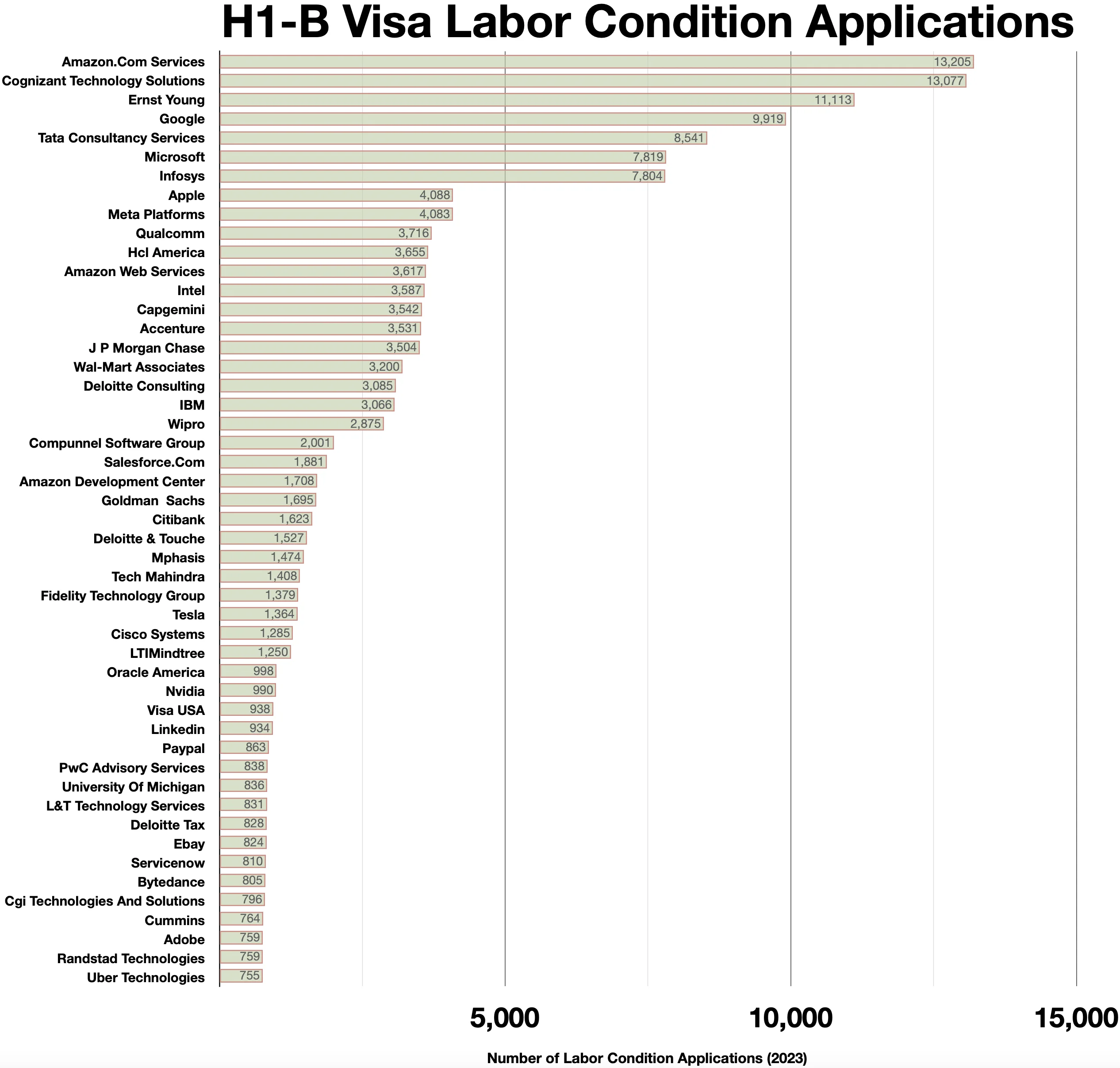
H-1B fee struck down: chart of H-1B visa applications by employer

What comes after the H-1B fee struck down decision

The ruling does not mean H-1B fees are off the table permanently. The Department of Homeland Security has a separate, proposed $103,265 fee already under review, and nothing in Gilliam’s decision prevents the administration from pursuing that or a similar charge through the proper rulemaking channel. Given that two separate federal courts have now struck down versions of this policy on nearly identical procedural grounds, any future attempt would likely need to clear the notice-and-comment bar explicitly to survive a legal challenge.

Immigration attorney Charles Kuck, among those who have tracked the litigation closely, has noted that the administration’s repeated attempts to impose steep H-1B fees without formal rulemaking suggest an urgency to raise the cost of the program quickly — an urgency that keeps running into the same procedural wall in court.

What this means for employers and visa holders

For now, employers filing new H-1B petitions are not subject to the $100,000 fee, restoring the prior cost structure while the legal situation remains unsettled. Companies that paid the fee before it was struck down, or that held back petitions due to the cost, will be watching closely for guidance from USCIS on how the agency plans to implement the court’s order in practice. The uncertainty itself has been costly for employers trying to plan hiring around a program whose cost structure has shifted multiple times within a single year.

What to watch next

The key date to watch is whether and when DHS formally opens notice-and-comment rulemaking on the proposed $103,265 fee, which would start a public comment period typically lasting 30 to 60 days before any new rule could take effect. Continued litigation is also likely regardless of that process, given the stakes for both the administration’s immigration agenda and the tech and consulting firms that rely heavily on the H-1B program.

What readers are asking

Is the $100,000 H-1B fee still in effect?
No. The fee is currently blocked following Judge Gilliam’s September 30, 2026 ruling, which found the policy unlawful.

Why did the judge strike down the fee?
The court found the fee amounted to a substantive “legislative rule” that required formal notice-and-comment rulemaking, which the administration did not conduct before imposing it.

Is this the first court to block the fee?
No. A Massachusetts federal judge issued a similar nationwide ruling against the fee in June 2026.

Could a new H-1B fee be introduced?
Yes. A proposed $103,265 fee announced by DHS in August 2026 remains under review and could move forward if the administration completes proper rulemaking.

What does “arbitrary and capricious” mean in this context?
It is a legal standard under the Administrative Procedure Act meaning the agency failed to reasonably justify its decision, including by not considering alternatives or the interests of affected parties.

Who is affected by this ruling?
Employers filing new H-1B petitions and the foreign workers those petitions cover are directly affected, as the ruling removes the $100,000 charge for now.

More on US visa policy

For more on US visa fee changes, see our coverage of the USCIS fee increases for asylum, parole, and TPS applicants and the new $750 expedited visa interview fee pilot. We also previously reported on the public charge rule change affecting green card applicants.

Sources

Apple and OpenAI Are Fighting Over Evidence Rules Before They Even Get to Trial

The Apple OpenAI trade secrets dispute has escalated into a procedural fight over what evidence either side can even present, days before a preliminary injunction hearing scheduled for October 14 in California. Apple filed a court objection this week accusing OpenAI of exceeding evidence submission rules ahead of the hearing, specifically challenging a new eight-paragraph declaration from former Apple engineer Chang Liu and criticizing a nine-page response from the defendants that Apple says blew past an agreed five-page limit.

The underlying case, filed in July 2026, accuses OpenAI, its hardware venture io Products, and two former Apple employees — Liu and former Apple executive Tang Tan — of misappropriating confidential Apple information. The October 14 hearing will decide whether Apple gets its requested injunction. Just as importantly for the case going forward, it will also decide which evidence and arguments the court can even consider.

What the Apple OpenAI trade secrets filing dispute is actually about

Procedural fights like this one rarely make headlines on their own, but they matter because they shape what a judge is allowed to weigh when deciding whether to grant Apple’s injunction. Apple’s objection argues that OpenAI’s defense team tried to smuggle in new arguments and witness testimony beyond what the court’s briefing schedule allowed — specifically the declaration from Chang Liu, one of the two named former Apple employees at the center of the case. If the judge agrees with Apple and strikes the contested material, OpenAI’s defense heading into the injunction hearing gets noticeably thinner.

OpenAI, for its part, has previously pushed back hard on Apple’s core allegations. In an August filing, the company laid out what it called a detailed rebuttal — evidence and testimony intended to show the information at issue either wasn’t confidential in the way Apple claims or wasn’t used the way Apple alleges.

Apple OpenAI trade secrets: courtroom gavel

Why the October 14 hearing matters beyond this one case

A preliminary injunction, if granted, could restrict what OpenAI and io Products are allowed to do with the disputed technology while the broader case proceeds — a meaningful business constraint for a company racing to ship hardware products. But the hearing’s immediate significance is narrower and more technical: it will also resolve whether evidence like the Chang Liu declaration is admissible going forward, which shapes the entire rest of the litigation regardless of how the injunction request itself is decided.

For the broader AI industry, the case is a reminder that the fight over AI talent and know-how is increasingly being fought in courtrooms as much as in hiring offices, as companies like Apple try to use trade secrets law to slow rivals poaching both people and institutional knowledge.

What happens after October 14

Whatever the judge decides on the injunction and the evidence dispute, legal observers expect the broader trade secrets case — which began in July 2026 — to continue for months. A ruling that favors Apple on the evidentiary questions would likely embolden the company to push harder in discovery; a ruling that favors OpenAI would strengthen the company’s position heading into any eventual trial.

Common questions about the case

What is Apple accusing OpenAI of?
Apple alleges that OpenAI, its hardware venture io Products, and two former Apple employees misappropriated confidential Apple information, in a lawsuit filed in July 2026.

Who are Chang Liu and Tang Tan?
Chang Liu is a former Apple engineer and Tang Tan a former Apple executive; both are named defendants in Apple’s trade secrets lawsuit.

What is the October 14 hearing about?
It is a preliminary injunction hearing where a California judge will decide whether to grant Apple’s requested injunction and rule on which evidence can be considered.

What is the current procedural dispute about?
Apple says OpenAI exceeded agreed evidence and page-limit rules ahead of the hearing, including submitting a new declaration from Chang Liu that Apple argues should be excluded.

How has OpenAI responded to the core allegations?
OpenAI has filed its own evidence and testimony disputing Apple’s claims, arguing the disputed information was not confidential or was not used as Apple alleges.

More from our tech desk

For more on the AI industry’s regulatory and legal pressures, see our coverage of the Google Gemini 4 Argon release and Google’s bug bounty freeze on AI submissions. We also previously reported on ChatGPT’s new virtual try-on shopping feature.

Sources